
Brotia pagodula
Pagoda Snail - Freshwater Snails UK
Add a Pagoda Snail to your tank for natural algae control and a unique look. Moderate care, peaceful and ideal for planted aquariums. Buy online today.
Care at a Glance
Premium Quality
Healthy, vibrant fish from trusted suppliers
Expert Care
Detailed care guides and support
Live Arrival Guarantee
Your fish arrives healthy or we'll replace it
Acclimated
Properly quarantined and ready for your tank
Quick Care Guide
Water Parameters
Maintain these water conditions for optimal health and vibrant colors
Why Choose This Fish?
Add a Pagoda Snail to your tank for natural algae control and a unique look. Moderate care, peaceful and ideal for planted aquariums. Buy online today.
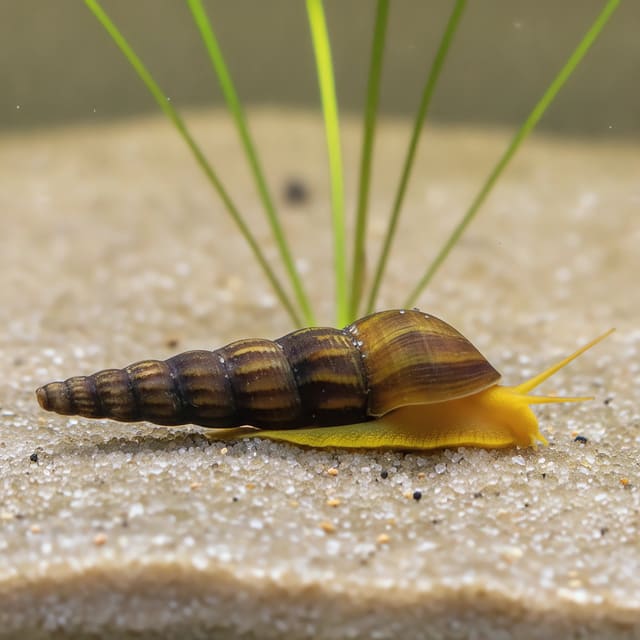
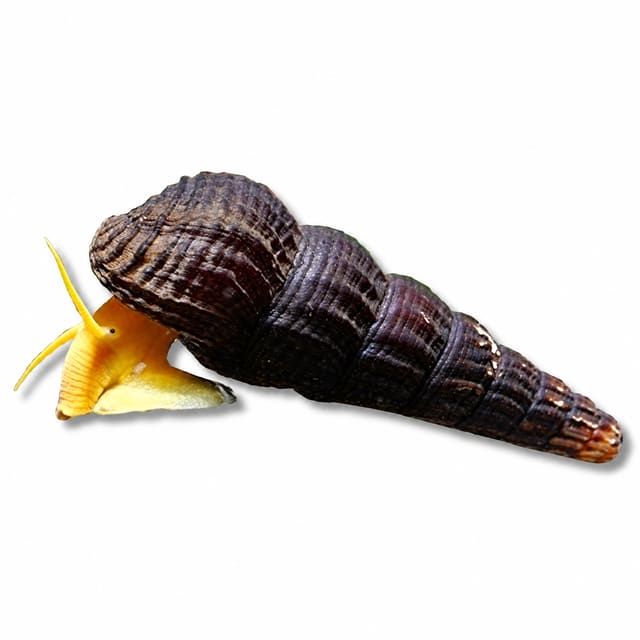
The Pagoda Snail, Brotia pagodula, is one of the most distinctive freshwater snails UK keepers can add to a tropical aquarium. With its sculpted, turret-like shell and calm grazing behaviour, this unusual species stands out from more common aquarium snails UK options. Native to flowing waters in Southeast Asia, the Pagoda Snail reaches around 5 cm, lives for up to 5 years, and suits aquarists looking for peaceful aquarium snails with real character. It is not the fastest grazer, but it is among the best freshwater snails for aquarium displays where texture, movement, and natural algae browsing all matter. For hobbyists searching buy aquarium snails UK, buy aquarium snails online UK, or comparing types of aquarium snails uk, this species offers something genuinely different from nerites, ramshorns, and mystery snails. It also works well as one of the more unusual freshwater aquarium snails uk choices for tanks with shrimp, peaceful fish, and sturdy plants. See our detailed photos showing the ridged shell profile and horned armour appearance in the product image freshwater-snails-uk.webp. If you want live snails for aquarium UK that combine ornamental value with useful biofilm grazing, the Pagoda Snail is a rewarding, long-lived choice.
🔹 Quick Facts
- Scientific Name: Brotia pagodula
- Care Level: Moderate
- Min Tank Size: 40 litres (about 10.5 gallons)
- Temperature: 22-26°C (72-79°F)
- pH Range: 7.0-8.0
- Lifespan: Up to 5 years
- Temperament: Peaceful
- Diet: Herbivore grazer
Classification
- Order: Cerithioidea
- Family: Pachychilidae
- Genus: Brotia
Brotia pagodula belongs to a group of river snails known for sturdy, sculptured shells and a preference for mineral-rich, oxygenated water. In the aquarium hobby, the species is often sold as Pagoda Snail or Horned Armor Snail because of its layered, pagoda-like shell ridges. It sits apart from common pond or ramshorn species and is especially valued by aquarists who want a decorative grazer rather than a rapidly breeding clean-up snail.
Where Do Pagoda Snails Come From? Natural Habitat Explained
The Pagoda Snail comes from Southeast Asia, especially parts of Myanmar and Thailand, where it inhabits streams and river systems with steady flow, hard water, and good oxygen levels. Understanding this natural setting is the key to long-term success. When aquarists ask where do freshwater snails live country, this species is a great example of a snail adapted to tropical river habitats rather than still ponds.
Its natural pagoda snail habitat includes rocky bottoms, mixed sand and gravel, leaf litter, and surfaces coated in biofilm and algae. Unlike many pond snails uk keepers may know from garden ponds, this is not a soft-water marsh species. That matters because many losses in captivity happen when people treat it like one of the common freshwater pond snails uk or assume all uk freshwater snails need the same care.
Searches such as are freshwater snails in the uk, are there freshwater snails, are there freshwater snails in uk, and do freshwater snails live in the uk usually refer to native or pond species. Pagoda Snails are not uk native freshwater snails; they are tropical imports kept in heated aquariums. That also means they are not part of uk pond snails identification lists, and they should never be released outdoors.
Compared with species sold as pond snails for sale uk, live pond snails for sale uk, large pond snails for sale uk, or garden pond snails for sale uk, the Pagoda Snail is a specialist aquarium animal. It is one of the more interesting aquatic snails uk for aquarists who want a river-style display. If you are researching freshwater snail species uk or trying to compare tropical species with local pond snails, the main difference is that Pagoda Snails need warm, stable indoor conditions and mineral support for shell growth.
💡 Expert Tip
Mimicking the natural river habitat improves shell condition and activity. Use a mature tank with stable alkalinity, visible biofilm on hardscape, and moderate water movement. Pagoda Snails often become much more active once they settle into a well-oxygenated setup with stones, wood, and grazing surfaces.
How to Set Up the Perfect Tank for Pagoda Snails
Good setup is the difference between a snail that merely survives and one that thrives for years. The most important parts of Pagoda Snail tank requirements are stable mineral-rich water, a mature aquarium, and enough floor area for grazing.
Tank Size Requirements
The minimum pagoda snail tank size is 40 litres, which also makes this species suitable for some carefully planned smaller aquariums. Hobbyists often search freshwater snails for 10 gallon tank or freshwater snails for small tanks; yes, a single Pagoda Snail or small group can live in a 10-gallon aquarium if water quality is stable and the tank is not overstocked. A larger setup of 60-90 litres is better because it gives more grazing area and keeps parameters steadier.
People also ask about a pagoda snail for nano tank. In practice, very small nano tanks are not ideal unless they are mature, well-maintained, and not subject to swings in pH or hardness. For best results, keep 2 or more in a tank with enough hardscape and biofilm.
Water Parameters
The ideal Pagoda Snail water parameters are 22-26°C, pH 7.0-8.0, and hardness around 8-15 dGH. These values reflect the species' natural preference for alkaline, mineral-rich water. Soft, acidic conditions can lead to shell erosion, inactivity, and poor long-term health. If you are learning how to care for pagoda snail, focus first on hardness and pH rather than only temperature.
pagoda snail calcium requirements are significant. They need dissolved minerals in the water as well as access to calcium-rich foods. Crushed coral in the filter, mineral stones, or snail-safe calcium supplements can help in softer tap water areas. Stable Pagoda Snail aquarium conditions matter more than constant adjustment, so avoid chasing numbers day to day.
Filtration and Flow
A common question is do freshwater snails need a filter. For Pagoda Snails, the answer is yes in almost all home aquariums. A quality filter keeps oxygen levels up, processes waste, and supports the biofilm they graze on. Gentle to moderate flow is ideal. Sponge filters work in small tanks, while canister or internal filters suit larger river-style setups.
Pagoda Snails appreciate clean, well-oxygenated water more than many beginner friendly aquarium snails. They are not difficult once established, but they are less forgiving of stale, under-filtered tanks. If you are building a dedicated snail setup, combine biological filtration with surface movement.
Substrate
The best pagoda snail substrate preference is smooth sand or fine rounded gravel. Sharp gravel can damage the foot as the snail moves and forages. A natural-looking dark substrate also helps the shell texture stand out. This species spends most of its time on the bottom, so floor area matters more than height.
Plants and Decor
The Pagoda Snail for planted tank setup works very well because mature planted aquariums provide biofilm, stable water chemistry, and shaded surfaces. Use hardy plants attached to wood or stone, plus rooted species that tolerate moderate flow. Pagoda Snails usually leave healthy plants alone and are a great fit for a natural aquascape.
For variety in your snail collection, compare the Pagoda Snail with the Yellow Rabbit Snail - Tylomelania Sp., another striking grazer with a very different shell shape, or the Giant Tower Cap Snail - Herculean if you enjoy unusual bottom-dwelling snails.
Lighting
Moderate lighting for 6-8 hours a day is usually enough. Strong light can encourage algae growth, which may benefit grazing, but balance it with plant health and temperature control. The goal is a mature aquarium with natural surfaces to browse rather than a sterile tank.
Quick Setup Checklist
- Tank of at least 40 litres, with more floor space preferred
- Temperature set to 22-26°C
- pH maintained between 7.0 and 8.0
- Hardness kept at 8-15 dGH for shell health
- Established filter with good oxygenation
- Smooth sand or rounded fine gravel
- Wood, stones, and mature plant surfaces for grazing
💡 Pro Tip
Always cycle the aquarium for 4-6 weeks before adding Pagoda Snails. In a newly set-up tank there is often too little biofilm, and unstable ammonia or nitrite can quickly kill invertebrates even when fish seem unaffected.
What Do Pagoda Snails Eat? Complete Feeding Guide
The Pagoda Snail diet is mainly herbivorous. In nature they graze on algae films, soft aufwuchs, decaying plant matter, and microorganisms coating rocks and wood. In captivity, they do best when this natural grazing is supported with prepared foods and vegetables. If you have ever asked what do i feed freshwater snails, the answer for this species is a varied, calcium-aware menu rather than leftovers alone.
Staple Foods
A good pagoda snail feeding guide starts with algae wafers, spirulina wafers, and mature biofilm in the aquarium. While they contribute to pagoda snail algae eating, they should not be expected to survive on nuisance algae alone. They are among the best algae eating snails for slow, steady browsing, but not a miracle clean-up crew.
That is why many aquarists include them when searching for best snails for algae control or algae eating snails UK, especially in planted tanks with wood and stone surfaces. They are useful, but they still need regular feeding.
Supplemental Foods
Blanched courgette, spinach, cucumber, green beans, and shelled peas are excellent supplements. Offer small portions and remove uneaten food within 12-24 hours. Calcium-enriched pellets can be used once or twice a week to support shell growth.
For mixed grazing and supplemental feeding, many keepers pair Pagoda Snails with quality algae wafers and mineral-rich invertebrate foods. If you are comparing species, the Parallel Nerite Snail - Neritina Sp. and Batik Nerite Snail - Neritina Variegata are also popular choices for algae-focused setups.
Treats and Foods to Avoid
Occasional treats can include leaf litter wafers or soft vegetable mixes, but avoid salty foods, oily kitchen scraps, and anything containing copper. Never assume that because people search can you eat freshwater snails, are freshwater snails safe to eat, or eating freshwater snails that aquarium snails are food animals. Pagoda Snails sold for aquariums are ornamental livestock and should be kept only for aquarium use.
Feeding Frequency and Portion Control
In a mature aquarium, feed 4-6 times per week, adjusting to algae growth and stocking level. A small wafer section or a thin slice of vegetable per 1-2 snails is usually enough. Watch the shell and body condition: active movement, strong attachment, and steady grazing suggest the diet is working.
| Time | Food | Amount |
|---|---|---|
| Morning | Natural biofilm and algae grazing | Available in tank |
| Evening | Algae wafer or blanched vegetable | Small portion, remove leftovers next day |
⚠️ Feeding Warning
Overfeeding causes ammonia spikes, bacterial blooms, and poor oxygen levels. This is a common reason for unexplained snail losses that later get mislabelled in searches such as freshwater snails deaths uk or freshwater snail deaths uk map. Feed lightly, remove leftovers, and keep the tank mature and clean.
For a full Pagoda Snail care guide, remember that feeding and water chemistry go together. A well-fed snail in soft, acidic water can still suffer shell damage, while a mineral-rich tank with no supplemental food can lead to slow starvation.
What Does a Pagoda Snail Look Like? Colors, Patterns & Varieties
The Pagoda Snail is named for its shell, which rises in stacked whorls with pronounced ridges and a carved, architectural look. Adult size is usually around 4-5 cm, answering the common question how big do freshwater snails get with a species-specific answer: large enough to be noticed, but still suitable for medium aquariums.
Shell colour is usually dark brown to chocolate, sometimes with lighter worn edges on older growth. The body tends to be grey to dark brown. Our photos show the intense earthy tones and rugged shell texture that make this one of the most decorative freshwater snails in uk aquarium collections. In mixed snail displays, the contrast with smoother species is striking.
If you are browsing freshwater snails uk for sale or looking for freshwater snails near me, the Pagoda Snail stands out immediately because it does not resemble common pond snails. It is not the largest freshwater snail in the hobby, but it has a much heavier, more sculptural shell than many alternatives.
Sexing is difficult, and there is little obvious external dimorphism for most keepers. Colour can improve with a good mineral balance, darker substrate, and a varied herbivore diet. For those comparing a list of freshwater snails, this is one of the most recognisable species by shell form alone.
What Fish Can Live With Pagoda Snails? Compatibility Guide
Pagoda Snail behaviour is calm, deliberate, and non-aggressive. This makes it ideal as a pagoda snail for community tank species with peaceful fish and invertebrates. The best Pagoda Snail tank mates are fish that ignore snails and do not nip at antennae or attempt to flip them over.
Ideal Tank Mates
Small rasboras, peaceful tetras, Corydoras, Otocinclus, and dwarf shrimp all work well. Many aquarists specifically ask about pagoda snail with shrimp; yes, this is usually an excellent pairing. Both enjoy mature tanks with biofilm, and neither bothers the other.
Among other snails, the Pagoda Snail mixes well with species that occupy similar but not identical niches. Good companions include the Hair Nerite Snail - Neritina Sp., the Parallel Nerite Snail - Neritina Sp., and the Pink Ramshorn Snail - Planorbella Duryi in larger planted aquariums. For a more unusual mixed snail display, the Yellow Rabbit Snail - Tylomelania Sp. is another eye-catching option.
Species to Avoid
Avoid puffers, loaches known to crush snails, snail-eating cichlids, and large predatory fish. Also be cautious with the Assassin Snail - Bumblebee Snail -, which is sold for controlling pest snails and should not be housed with valuable ornamental snails like Pagodas.
Community Tank Examples
In a 60-litre aquarium, a good setup could include 2 Pagoda Snails, a group of nano schooling fish, and a shrimp colony. In a 90-litre planted tank, 3-4 Pagoda Snails can share space with Corydoras and nerites. Because of their moderate size and bioload, they are better in thoughtfully stocked tanks than heavily crowded ones.
| Species | Compatible? | Notes |
|---|---|---|
| Yellow Rabbit Snail - Tylomelania Sp. | ✅ Yes | Similar peaceful temperament; needs stable, mature water |
| Batik Nerite Snail - Neritina Variegata | ✅ Yes | Excellent algae grazer; complements rather than competes heavily |
| Assassin Snail - Bumblebee Snail - | ❌ Avoid | Predatory snail that may attack or stress ornamental snails |
If you are comparing pagoda snail vs nerite snail, nerites are stronger glass and hardscape grazers, while Pagoda Snails are more ornamental and prefer a richer bottom environment. In pagoda snail vs mystery snail, Pagodas are less likely to uproot plants and are better suited to hard, alkaline water. In pagoda snail vs ramshorn snail, Pagodas breed far less readily and are usually chosen for display rather than population growth.
For shoppers exploring freshwater snails for sale UK, aquarium snails for sale uk, tropical snails UK, or tropical aquarium snails uk, the Pagoda Snail is one of the best choices for a calm, display-worthy invertebrate in a mature tropical aquarium.
💡 Compatibility Tip
Always quarantine new arrivals for 2-4 weeks where possible. Snails can carry hitchhiking parasites, leeches, or planaria on shells and packaging water even when they appear healthy on arrival.
How to Breed Pagoda Snails: Complete Breeding Guide
Pagoda Snail breeding is considered moderate rather than easy. Unlike pest snails that explode in number, Pagoda Snails reproduce slowly, which is one reason they are valued by aquarists who do not want overpopulation. If you are searching freshwater aquarium snails for sale uk because you want a controlled ornamental species, this slow breeding habit is a major advantage.
Breeding Setup
Use a mature tank of at least 40 litres with hard, alkaline water, steady temperature, and abundant biofilm. Conditioning with algae wafers, vegetables, and calcium support helps. Because sexing is difficult, start with a small group rather than a pair.
Reproductive Behaviour
The species is believed to be livebearing or to produce very few well-developed young compared with egg-laying pest snails. That means you should not expect clusters of visible eggs all over the glass like with some other species. Young are produced slowly, often only when the adults are very well established.
Raising Young
Juveniles need the same basics as adults: stable minerals, soft biofilm, and protection from hungry fish. Fine sand, leaf litter, and mature hardscape improve survival. Avoid over-cleaning, as spotless tanks remove the food films young snails depend on.
Some hobbyists researching are pond snails good uk or are snails bad for a freshwater tank are really asking whether snails will take over. Pagoda Snails generally do not. They are one of the better aquatic snails for sale uk choices if you want controlled numbers and slow, deliberate reproduction.
Questions like are freshwater snails dangerous in the uk, are uk freshwater snails dangerous, or even do freshwater snails kill people in the uk come up surprisingly often online. In the aquarium hobby, properly sourced tropical snails like Pagoda Snails are not dangerous household pets. The real risk is poor hygiene, cross-contamination, or releasing livestock into the wild, not the snail itself.
Advanced Breeding Tip
If you want the best chance of seeing young Pagoda Snails, keep a species-focused setup with strong mineral support, visible natural biofilm, and very gentle maintenance. Many breeders report that reproduction improves only after several months in a mature, undisturbed aquarium with stable hardness and no shell-eating tank mates.
Pagoda Snail vs Similar Species: Which Should You Choose?
Comparing species matters because different snails solve different aquarium problems. Some are chosen for algae control, some for colour, and some for unusual appearance. The Pagoda Snail is mainly a display grazer with slow reproduction and a very distinctive shell.
| Feature | Pagoda Snail | Parallel Nerite Snail |
|---|---|---|
| Max Size | About 5 cm | About 2.5-3 cm |
| Care Level | Moderate | Easy to moderate |
| Temperature | 22-26°C | 22-28°C |
| Price | £9.68 | Varies |
| Best For | Ornamental river-style tanks | Strong algae control on glass and hardscape |
| Feature | Pagoda Snail | Giant Ramshorn Snail |
|---|---|---|
| Shell Style | Spired, ridged, pagoda-like | Flat coiled shell |
| Breeding Rate | Slow | Moderate to fast |
| Water Preference | Hard, alkaline | Adaptable |
| Best For | Collectors of unusual snails | Visible activity and easy keeping |
| Price | £9.68 | Varies |
If your priority is one of the best aquarium snails comparison options for appearance, the Pagoda Snail is hard to beat. If your priority is algae control first, a nerite may be stronger. If you want a more active, more prolific species, a ramshorn may suit you better. For aquarists searching best aquarium snails uk, nerite snails uk, or tropical aquarium snails for sale uk, the Pagoda Snail is the right pick when shell texture, rarity, and slow breeding matter most.
It also appeals to people searching buy Pagoda Snail UK, Pagoda Snail for sale UK, live pagoda snail for sale UK, and order Pagoda Snail online UK because it offers something more specialised than common clean-up snails.
Common Health Problems in Pagoda Snails & How to Prevent Them
A healthy Pagoda Snail moves with a firm grip, extends its body normally, and shows a shell free from active pitting or chalky erosion. Slow movement is normal, but long periods upside down, repeated falling, or failure to attach can signal trouble.
Common Problems
The biggest issue is shell erosion from soft or acidic water. This is why Pagoda Snail water hardness and calcium support matter so much. Another common problem is starvation in new tanks with too little biofilm. Sudden deaths may also follow exposure to copper, ammonia, nitrite, or large swings in temperature.
Online searches such as freshwater snails uk dangerous, is freshwater snail dangerous, or freshwater snails deadly uk often confuse human health concerns with aquarium care. In practical fishkeeping terms, the danger is usually not the snail but poor husbandry, contamination, or unsuitable medication.
Treatment and Prevention
Test water first. Correct pH and hardness slowly, improve oxygenation, and add calcium support if needed. If the snail is inactive, check for copper in plant fertilisers or medications. Perform partial water changes with dechlorinated water matched to tank temperature.
⚠️ Medication Warning
NEVER use copper-based medications with invertebrates. Copper is lethal to snails and shrimp even at low doses. Always read treatment labels before medicating a community aquarium.
Quarantine Protocol
- Use a separate mature tank for 2-4 weeks
- Match temperature, pH, and hardness to the main aquarium
- Observe feeding response and shell condition daily
- Check for hitchhikers such as leeches or planaria
- Never medicate with copper in quarantine
If you are wondering where can i buy freshwater snails, where can you find freshwater snails, or where to buy aquarium snails uk, choose a source that keeps snails in stable mineral-rich systems and packs them carefully for transit. Good sourcing prevents many health issues before they start.
Understanding Pagoda Snail Behavior in the Aquarium
Pagoda Snail behaviour is slow, steady, and reassuringly predictable. These snails spend most of their time on the substrate, wood, or rocks, grazing on biofilm and resting in shaded areas. They are most active after feeding and often explore more at dusk.
The species is peaceful and works well in groups, though it does not school in the way fish do. Keeping 2 or more often makes the tank feel more natural and increases the chance of seeing interaction and possible reproduction. Their deliberate movement is part of their appeal; they bring texture and quiet activity to the lower levels of the aquarium.
In a mature pagoda snail for planted tank layout, they often follow regular grazing routes across hardscape. This makes them especially enjoyable in aquascapes where you want visible but non-destructive invertebrate life. Their pagoda snail lifespan of around 5 years also means they become long-term residents rather than short-lived novelty animals.
Why Buy from Tropical Fish Co?
Pagoda Snails are not generic pond snails pulled from mixed holding tanks. They need the right mineral balance, careful acclimation, and mature holding systems to arrive in good condition. For this species, that matters more than flashy marketing. Buyers searching aquarium snails uk for sale, freshwater snails for sale UK, live aquarium snails for sale uk, or freshwater aquarium snails for sale uk usually want healthy stock with strong shells, not just the cheapest listing.
Before dispatch, each Pagoda Snail is checked for shell condition, foot strength, and responsiveness. They are held in appropriate tropical conditions rather than mixed into unsuitable soft-water systems. This helps reduce transit stress and means your snail arrives better prepared for typical UK home aquarium conditions.
For customers comparing Pagoda Snail price UK, cheap pagoda snail UK, and Pagoda Snail delivery UK, the key value is careful handling. Snails are packed in insulated materials, with seasonal heat protection in cold weather, and sent by tracked delivery. That is especially important for a species that dislikes temperature swings and stale water.
We also include practical acclimation guidance because many first-time keepers of freshwater snails UK underestimate how important gradual adjustment is for invertebrates. Slow drip acclimation, matched hardness, and a mature tank make a visible difference in how quickly Pagoda Snails settle and start grazing.
Whether you are looking for aquatic snails for sale uk, aquarium snails uk, or a standout addition to a planted community, this species rewards careful keepers with years of unusual beauty. Order your Pagoda Snail today with confidence and build a more interesting bottom level in your aquarium.
Why Choose Tropical Fish Co for Pagoda Snails
- Pagoda Snails are selected for intact shell ridges and active grazing response before dispatch
- Held in suitable tropical, mineral-supported conditions rather than generic mixed snail systems
- Packed for UK transit with insulation and seasonal heat protection to reduce invertebrate stress
You Might Also Like
Build a more complete snail and invertebrate setup with a few carefully chosen additions. The Yellow Rabbit Snail - Tylomelania Sp. is a great companion if you enjoy unusual shell forms and larger bottom grazers. For stronger algae work on glass and décor, consider the Hair Nerite Snail - Neritina Sp. or Parallel Nerite Snail - Neritina Sp.. If you want a rounder shell shape for contrast, the Giant Ramshorn Snail - Marisa Cornuarietis adds very different movement and appearance. For colourful variety in a planted setup, the Pink Ramshorn Snail - Planorbella Duryi is another eye-catching option. Browse the wider freshwater snails UK collection to compare more species for tropical community tanks.
You Might Also Like


Aulonocara sp. 'Firefish' - Tropical Fish for Sale UK

Best Food for Tropical Fish - White Worms (90 ML) | UK

Orange Venezuelan Cory (Corydoras venezuelanus var. 'Orange') - UK

Yellow Lepturus Cichlid - UK

Apistogramma agassizii “Super Red” - UK

X Neon Green Rasbora - UK

Rasbora Heteromorpha (Trigonostigma heteromorpha) - UK
Popular Right Now

Endler Gold Guppy Breeding (Poecilia wingei) - UK

Chindongo saulosi 'Coral Red' - UK
10x Assorted Swordtails – Xiphophorus Hellerii

Glass Catfish (Kryptopterus vitreolus) - UK

Blood Red Dwarf Gourami - UK

Striped Kribensis Dehane - Tropical Fish for Sale UK