Easy
Parallel Nerite Snail (Neritina sp.)
17–27°C · pH 6.5–8
£4.99

The Batik Nerite Snail (Neritina sp.) is a freshwater aquarium snail in Neritidae; the genus includes marine, brackish and freshwater gastropods. It suits a mature, filtered aquarium; OATA’s group guidance gives 17–27°C, pH 6.5–8.0 and 4–18°dH, and fish that eat snails must be avoided. Sold individually as one live snail at a 1 cm dispatch grade.
Neritina sp.
Lives in groups: kept together they stay settled, active and show their best colour.
Minimum of 2 per order.
The Batik Nerite Snail (Neritina sp.) is a freshwater aquarium snail in Neritidae; the genus includes marine, brackish and freshwater gastropods. It suits a mature, filtered aquarium; OATA’s group guidance gives 17–27°C, pH 6.5–8.0 and 4–18°dH, and fish that eat snails must be avoided. Sold individually as one live snail at a 1 cm dispatch grade.
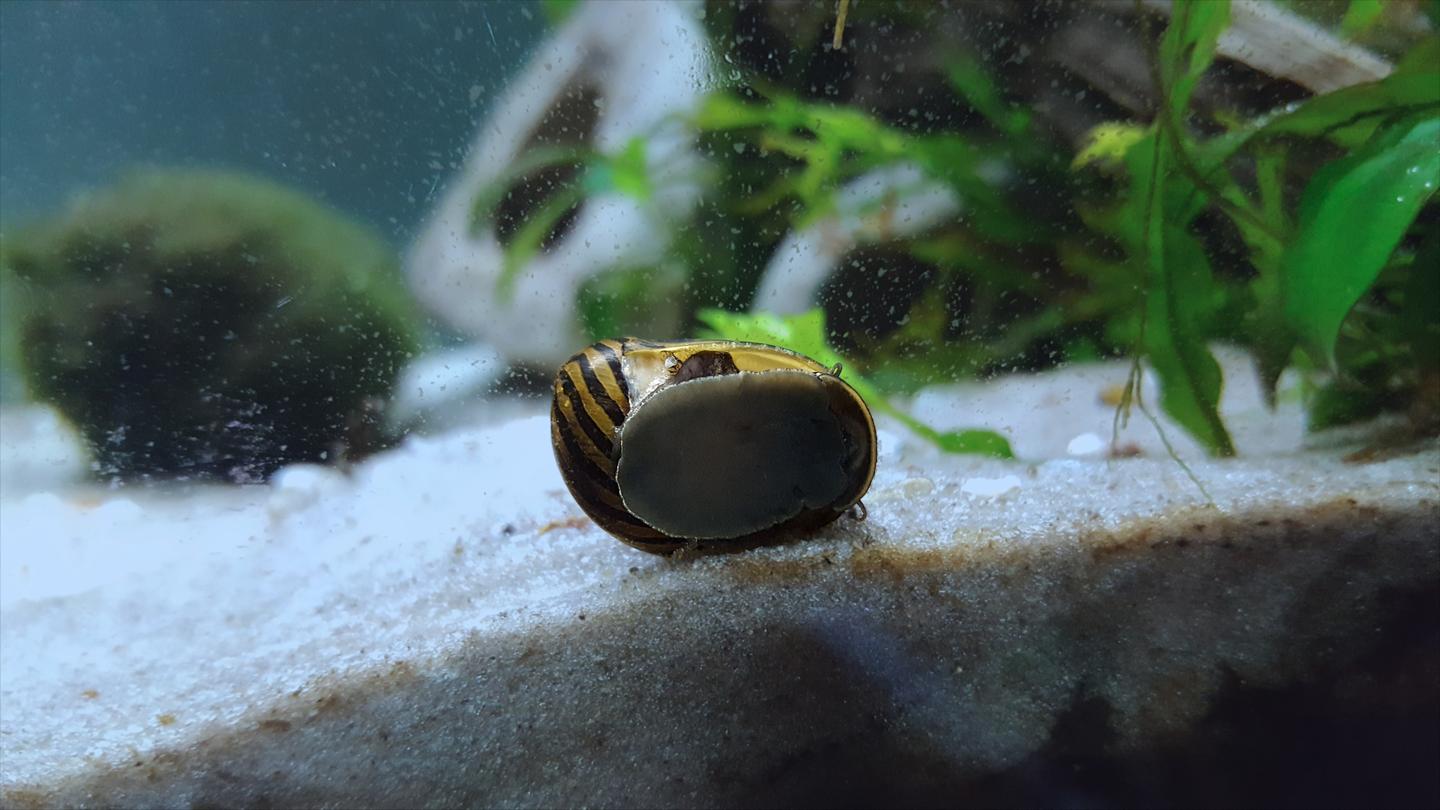
Nerite snail is a trade umbrella, not one species. Confirm the supplied taxon and holding water, use a mature covered aquarium with established grazing surfaces, stock from food availability rather than a litre formula, and treat egg capsules, medicines and tank mates as species-specific decisions.
Maintain these water conditions for optimal health and vibrant colors
Batik Nerite Snail is the trade name for this patterned freshwater aquarium snail. The World Register of Marine Species places Neritina as an accepted genus in the nerite family Neritidae. The scientific label therefore remains Neritina sp.: “sp.” means the animal is identified to genus rather than to one named species. It suits a keeper with a mature, filtered aquarium who can test the water, maintain stable conditions and exclude fish that eat snails.
Prepare a mature, filtered aquarium within the stated water boundaries and with enough space for its full population.
As natural-history context, the genus summary for Neritina describes small aquatic gastropod molluscs with an operculum. Members of the genus occur in marine, brackish and sometimes freshwater environments. Keep this Batik form in a freshwater aquarium.
OATA’s freshwater shrimp and snail sheet gives 17–27°C, pH 6.5–8.0, general hardness of 4–18°dH and carbonate hardness of 3–15°dKH as group guidance. Treat these as aquarium boundaries rather than a narrow target centred on one unidentified species. Keep ammonia and nitrite at zero, and keep nitrate from exceeding 20 mg per litre above the normal level in your tap water.
| Planning point | Decision for this snail |
|---|---|
| Temperature | Keep within 17–27°C |
| pH | Keep within 6.5–8.0 |
| General hardness | Keep within 4–18°dH |
| Carbonate hardness | Keep within 3–15°dKH |
| Ammonia and nitrite | Maintain both at 0 mg per litre |
| Nitrate | Up to 20 mg per litre above the tap-water level |
For a group of small freshwater shrimp or snails, OATA recommends an aquarium of at least 10 litres. Use that figure as a floor for the small-invertebrate setup it describes, not as a promise that every aquarium above 10 litres is suitable. Choose a larger aquarium when fish are included, and assess the complete population rather than the snail in isolation. More water also makes environmental conditions such as temperature and water quality more stable.
For adult-scale planning, freshwater aquarium snails in the same guidance are described as unlikely to grow larger than 5 cm. That is a ceiling for the wider aquarium-snail group, not a promised final size for this animal. Do not use the 1 cm dispatch grade as its adult measurement. Leave enough room for an aquarium snail approaching the wider 5 cm planning figure while judging the live animal by its development over time.
| Suits | Not suited to |
|---|---|
| A mature aquarium with an established filter | A newly filled or biologically immature aquarium |
| Water within OATA’s group boundaries | Water outside 17–27°C or pH 6.5–8.0 |
| A weekly testing and maintenance routine | A setup where ammonia or nitrite is detectable |
| Animals that do not eat snails | Pufferfish, loaches or other snail-eating fish |
| A keeper prepared to supplement algae grazing | A plan relying on visible aquarium algae alone |
The exact species has not been identified, so the care advice here follows the genus Neritina and its care group.
Sex is guaranteed only when the selected option explicitly states male or female. This Batik Nerite Snail listing has no sex-guaranteed option.
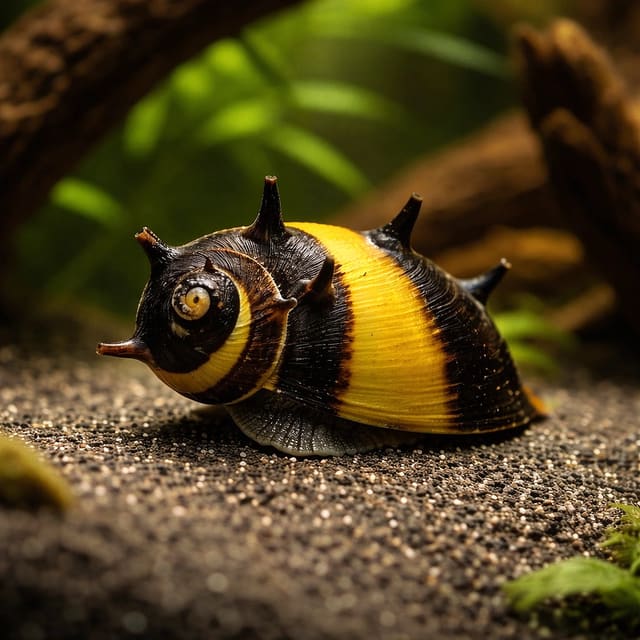
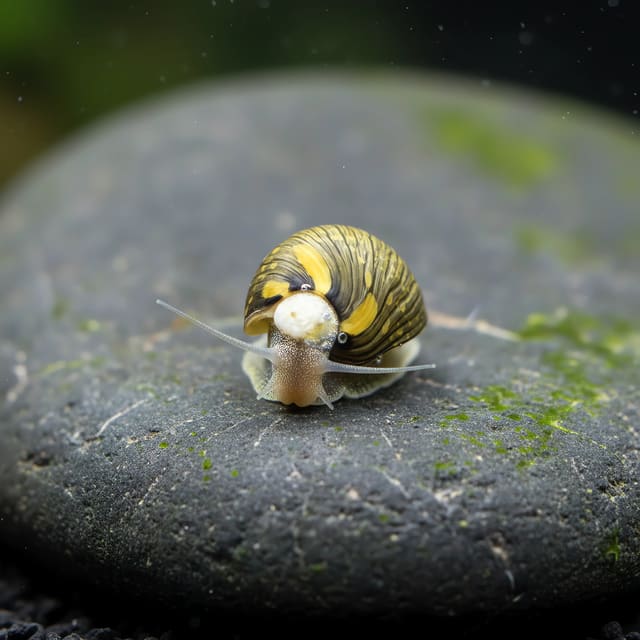
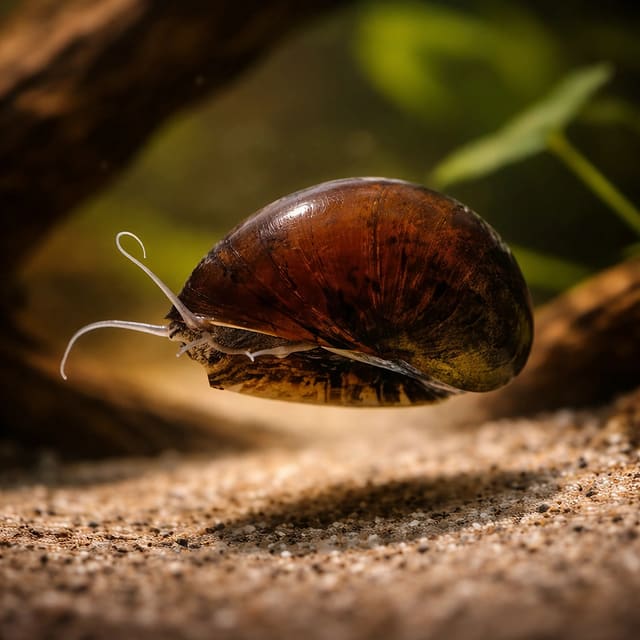
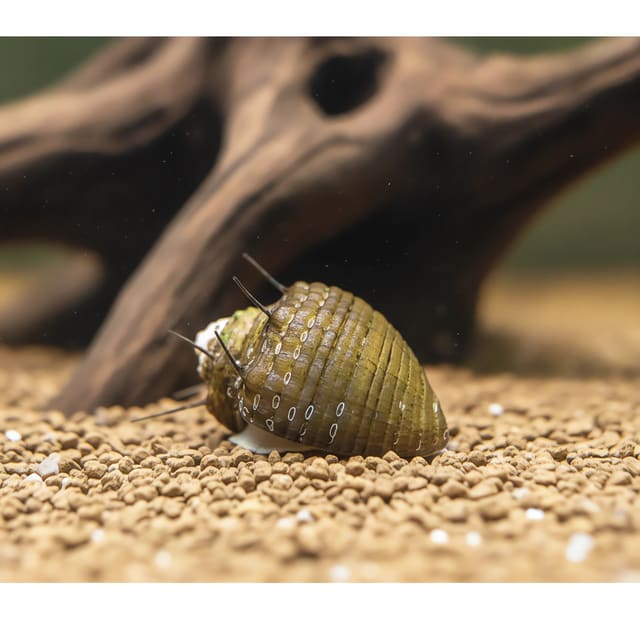
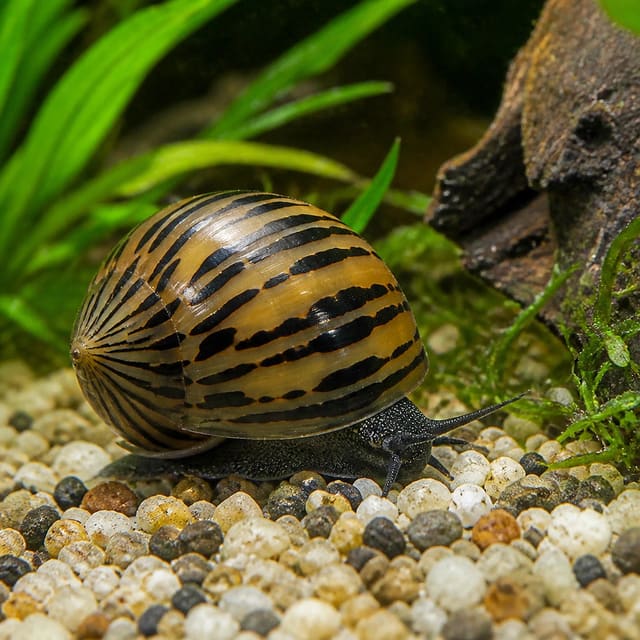
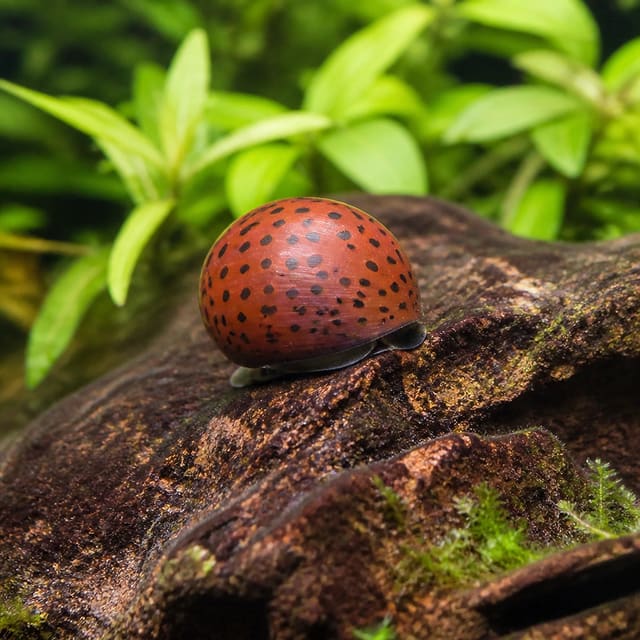
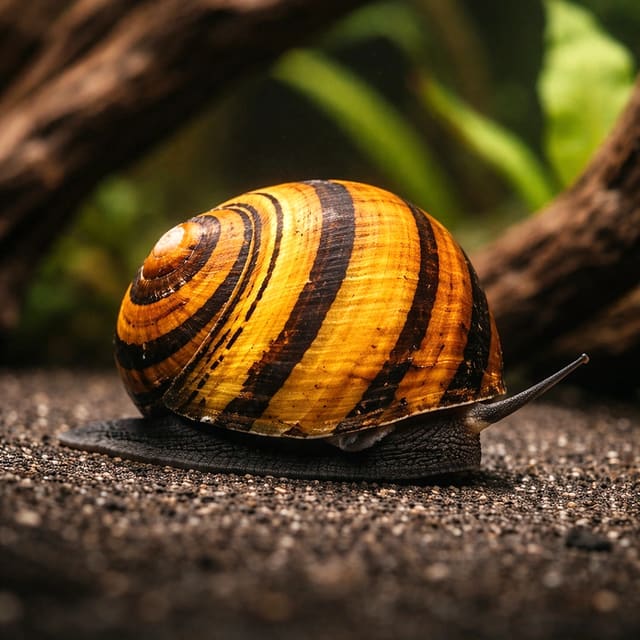
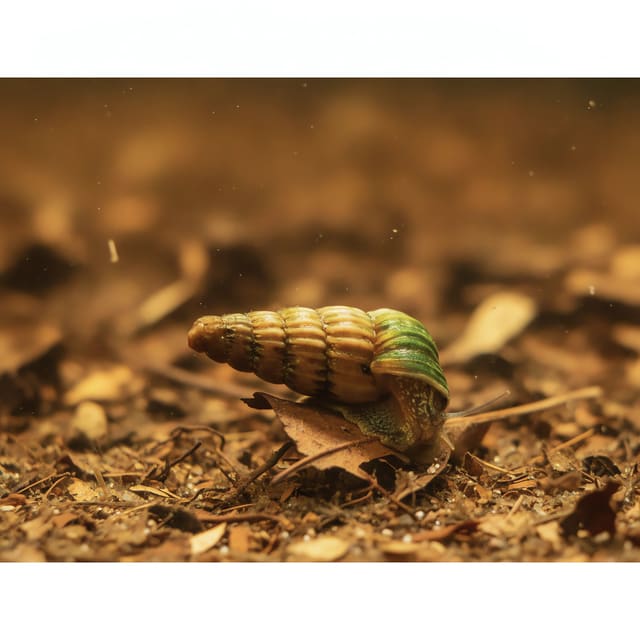
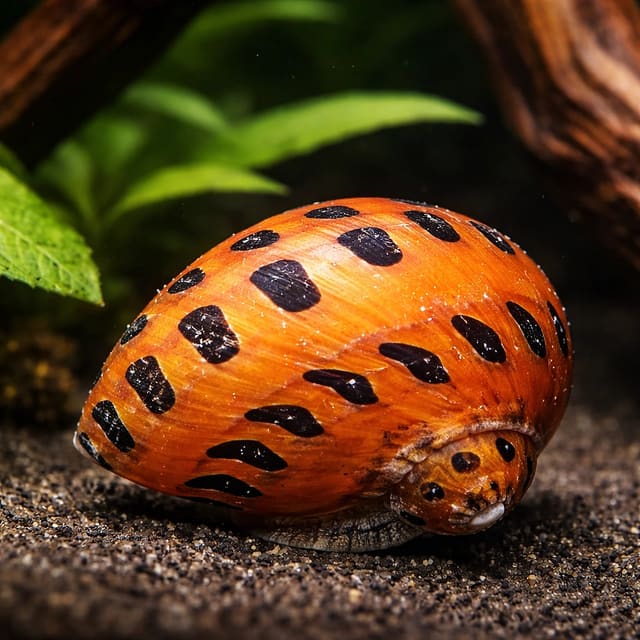
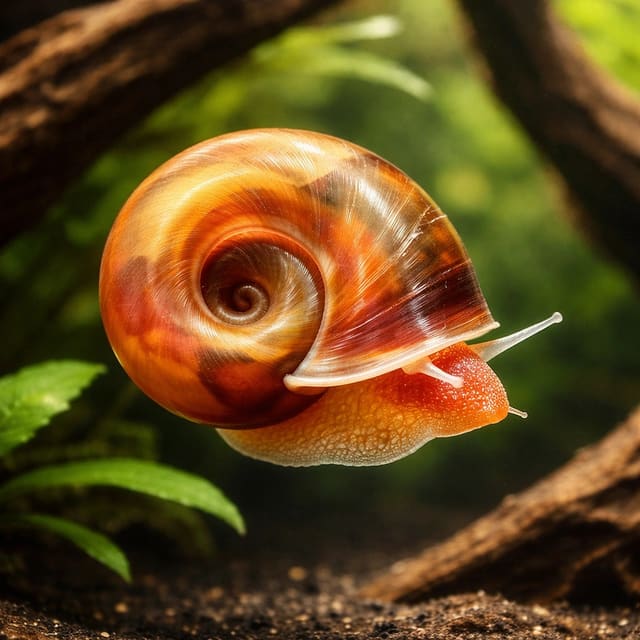
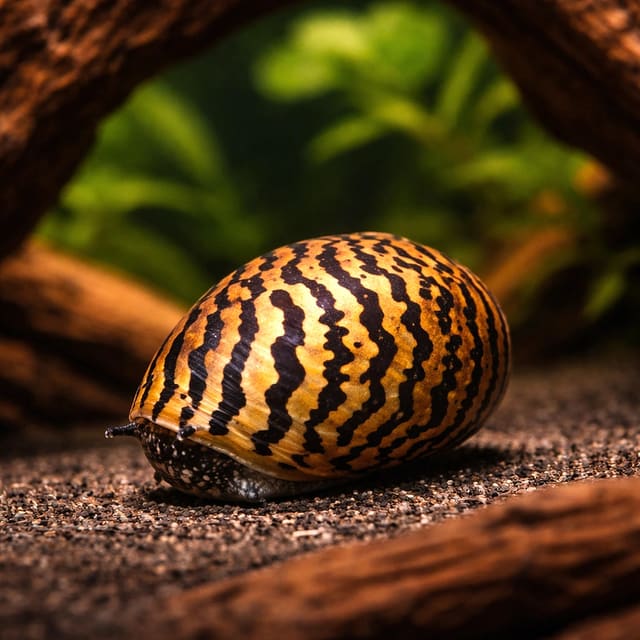
The gallery images are representative of this type of animal rather than photographs of the exact animal supplied, so colours can look slightly different from the live animal. The gallery image shows one snail with a domed yellow-gold shell, irregular black markings, a dark speckled body and extended tentacles moving over gravel among wood and green plants.
Prepare and mature the aquarium before the snail arrives. A filter must already be operating, and tests must show zero ammonia and zero nitrite. Adding an animal before the biological filter can process the extra waste risks new tank syndrome, in which ammonia or nitrite rises to unhealthy levels.
The RSPCA’s aquarium filtration guidance explains why a working biological filter matters: livestock waste produces toxic ammonia, beneficial bacteria convert it to toxic nitrite, and another stage converts nitrite to the safer nitrate. A filter is therefore part of the animal’s life-support system rather than an optional way to keep the water looking clear.
If this is your first invertebrate aquarium, the shop’s guide to preparing and maturing an aquarium provides a useful setup sequence before livestock is introduced. Apply the same core decisions here: establish filtration, measure the water and avoid adding several animals at once.
A larger aquarium gives more room for water conditions to remain steady, but volume does not replace preparation. A large tank with an immature filter can still develop ammonia or nitrite, while a carefully matured smaller system still needs weekly testing. Readiness is demonstrated by the filter, water results, maintenance routine and planned inhabitants working together.
Measure temperature, pH, general hardness and carbonate hardness rather than judging water by appearance. Clear water can still sit outside the working boundaries, and ammonia or nitrite cannot be ruled out by looking at the aquarium. Establish the normal readings for both the tank and replacement tap water so that weekly results have a meaningful comparison.
| If the test shows | What to do |
|---|---|
| Ammonia above 0 mg/L | Do not add the snail; restore the aquarium to zero first |
| Nitrite above 0 mg/L | Do not add the snail; restore the aquarium to zero first |
| Nitrate more than 20 mg/L above tap water | Review feeding, stocking and the water-change routine |
| Temperature outside 17–27°C | Bring the aquarium into range before introduction |
| pH outside 6.5–8.0 | Prepare suitable water before moving the animal |
| GH outside 4–18°dH | Resolve the difference before adding livestock |
| KH outside 3–15°dKH | Resolve the difference before adding livestock |
Use the shop’s aquarium water chemistry guide to identify which values your test kit measures and why each result belongs in the routine. Once you have current readings, the water matcher can help compare them with the 17–27°C, pH 6.5–8.0, 4–18°dH and 3–15°dKH boundaries used here.
Write down the aquarium result, the tap-water result and the date. For nitrate, compare the aquarium directly with the normal tap-water baseline because the limit is expressed as no more than 20 mg per litre above that level. For ammonia and nitrite, the acceptable result remains zero regardless of the aquarium’s age.
Do not rush to add livestock after one convenient reading. Test again as part of the normal weekly routine and after changes that affect feeding or animal numbers. Stable results within the working boundaries provide a better basis for introduction than selecting a single middle value and overlooking the rest of the aquarium.
Carry out a 25% partial water change at least once a week. Treat replacement tap water with a conditioner that removes harmful chlorine or chloramine before it enters the aquarium. A siphon can remove solid waste from the gravel during the same maintenance session.
Test the water at least weekly, with ammonia and nitrite remaining at zero. Record nitrate against the tap-water result so you can see whether the aquarium has approached the limit of 20 mg per litre above its normal baseline. Regular results make a developing problem easier to spot than a single test taken after behaviour changes.
Never rinse established filter media under the tap. Chlorine or chloramine may kill part of the beneficial bacterial population living in it. Using removed aquarium water reduces the number of bacteria lost while still allowing loose debris to be cleared.
Stocking and feeding affect how much work the filter must perform. Add snails or other livestock slowly because the beneficial bacterial population needs to increase as waste and feeding increase. Adding several animals together can outpace that adjustment even when the aquarium was previously mature.
| Maintenance result | Next decision |
|---|---|
| Zero ammonia and nitrite | Continue the established weekly routine |
| Filter blockage | Clear it without washing media under the tap |
| Rising nitrate difference | Review stocking, feeding and water changes |
| Recent livestock increase | Test closely while the filter population adjusts |
Freshwater snails generally graze algae in the aquarium, but visible algae alone is not a complete feeding plan. Supplement that grazing with an algae wafer so the animal receives food when the aquarium does not produce enough suitable growth. Commercial pellets made for freshwater shrimp can also be used for both shrimp and snails.
Offer supplementary food two or three times a week. Leave a pellet or wafer for at least 30 minutes so the snail has time to reach and eat it. After that feeding opportunity, remove uneaten material rather than allowing it to break down in the aquarium.
Overfeeding creates a second problem instead of solving a food shortage. Uneaten food breaks down and releases waste into the water, increasing the burden on filtration and potentially contributing to toxic conditions. A large portion is not safer simply because the snail can continue grazing after the keeper leaves.
| Observation | Feeding decision |
|---|---|
| Active algae grazing | Continue to supplement on the measured weekly schedule |
| Wafer eaten within the feeding period | Repeat a similar modest portion next time |
| Food remains after the feeding period | Remove it and reduce the next portion |
| Reduced interest in food | Remove leftovers and test the aquarium |
| Several grazers share the tank | Observe whether each animal can reach supplementary food |
Keep feeding decisions tied to both consumption and water quality. The aim is to make food accessible without leaving excess material to decay. Weekly ammonia, nitrite and nitrate results will show whether feeding and filtration remain balanced as the aquarium population changes.
Snails are not social animals, so this animal can be kept singly. Do not buy several simply to create a social group. If more snails are planned for a practical or visual reason, assess aquarium size, filtration and food for the total number and add them gradually.
OATA recommends at least 10 litres for a group of small freshwater shrimp or snails and a larger aquarium when fish are included. That recommendation describes the system as a whole. It does not create a fixed number of snails per 10 litres, so avoid calculating a stocking rate from volume alone.
New tank syndrome occurs when there are too few nitrifying bacteria to process the waste created by added livestock and feeding. Ammonia and nitrite can then reach unhealthy levels and may cause freshwater snails to become ill or die. A previously mature aquarium can still be challenged if stocking increases too quickly.
| First-month checkpoint | Decision |
|---|---|
| Before introduction | Confirm mature filtration and zero ammonia and nitrite |
| After feeding begins | Remove leftovers and watch the nitrate trend |
| At each weekly test | Compare results with the previous week and tap water |
| Before another animal | Confirm the aquarium remained stable after the last addition |
Solitary keeping simplifies the stocking decision but does not remove the need for suitable water, food or maintenance. One snail still depends on a working filter, conditioned replacement water, safe treatments and an aquarium large enough for all inhabitants sharing it.
Freshwater snails are invertebrates and are very sensitive to copper. They will die if exposed even to low levels, so every treatment added to the aquarium must be labelled safe for the invertebrates present. Check medications before dosing rather than assuming that a product intended for aquarium fish is also suitable for a snail.
Observation helps identify a developing problem early. Look for changes in normal activity, unusually prolonged inactivity or restlessness, a darker or paler appearance, more hiding than normal, lesions, discolouration, abnormal growths, swelling, damage or reduced interest in food. Judge changes against the animal’s normal pattern rather than reacting to one brief pause.
| If you notice | First action |
|---|---|
| Reduced food intake | Remove leftovers and test ammonia and nitrite |
| Unusual inactivity | Check water results and recent treatment history |
| Darkening or paling | Compare with normal appearance and test the aquarium |
| Lesions or abnormal growth | Review water quality and seek prompt help |
| Damage after sharing with fish | Reassess the tank-mate combination immediately |
Test before reaching for medication because poor water quality and chemical exposure can both coincide with altered behaviour. Keep ammonia and nitrite at zero, maintain the weekly 25% water-change routine and remove uneaten food so the environment is addressed alongside the visible sign.
If a change persists, the animal stops feeding or its appearance deteriorates, contact us promptly with the aquarium volume, current test results, temperature, recent additions and treatment history. Those details allow the health change to be assessed without exposing a sensitive invertebrate to an unsuitable product.
Prepare the receiving aquarium before the parcel arrives. Someone must be home to receive a live-animal delivery, and the mature filter should already be running. Test ammonia and nitrite, confirm the temperature sits within 17–27°C and make sure any recent treatment was safe for freshwater invertebrates.
Use the shop’s current delivery and Live Arrival Guarantee policy for the arrival procedure and claim requirements. Film every delivery continuously from the sealed parcel as it is opened, keeping the animal inside the sealed bag visible before anything is disturbed.
The receiving aquarium must already meet the water-quality requirements because floating the bag does not mature a filter or remove ammonia and nitrite from the display.
| Before opening | Ready condition |
|---|---|
| Recipient | Someone is present for the parcel |
| Filter | Mature, operating and checked for blockages |
| Ammonia and nitrite | Both 0 mg per litre |
| Temperature | Within 17–27°C |
| Treatments | Safe for freshwater invertebrates |
| Arrival record | Continuous video begins with the sealed parcel |
During the first week, keep the normal feeding and testing routine simple. Avoid adding further livestock while you confirm that the filter continues to hold ammonia and nitrite at zero and that the snail is showing its normal activity and feeding response.
Freshwater snails can share aquariums with many other inhabitants, but they must be mixed with caution because common aquarium fish may eat them. Compatibility therefore begins with feeding behaviour: do not combine this snail with a fish that can eat it.
Avoid pufferfish and loaches. OATA names these as examples of fish that eat snails, so their predatory role rules them out even if temperature or pH appears to overlap. Apply the same rule to any other fish known to consume snails.
| Screen result | Decision |
|---|---|
| Pufferfish present | Avoid the combination |
| Loach present | Avoid the combination |
| Another snail-eating fish | Avoid the combination |
| Predatory behaviour is uncertain | Complete an individual stocking assessment first |
| Water requirements do not overlap | Choose a different combination |
| Fish increase the load beyond the setup | Use a larger, appropriately filtered aquarium |
A peaceful or community label by itself is not enough to decide. The useful question is whether the particular fish eats snails and whether both animals share suitable water. Where a species has not been assessed for this combination, treat the outcome as uncertain rather than turning a general temperament label into a guarantee.
For a stocking and compatibility assessment, contact us with the aquarium volume, temperature, pH, hardness readings and the scientific names of the other animals. That allows the predator screen and water overlap to be considered together.
Compatibility is a whole-aquarium decision rather than a list of universally safe companions. Start with the snail-eating screen, then compare water requirements, aquarium volume, filtration, feeding and chemical history. A combination should pass every part of that check before the snail is introduced.
Snails are not social animals, so another snail is not required as a companion. Keeping one can be an appropriate choice where the aquarium meets its needs. If several are introduced, add them slowly and test the water while the biological filter adjusts to increased livestock and feeding.
| Existing aquarium | Decision before purchase |
|---|---|
| Snail-eating fish | Do not add this snail |
| Fish with unclear feeding behaviour | Resolve the compatibility question first |
| Water outside the working boundaries | Prepare a suitable aquarium first |
| Recent copper exposure | Do not expose the snail |
| Immature or unstable filter | Delay livestock until ammonia and nitrite remain zero |
| Suitable established setup | Add slowly and continue weekly testing |
Use the nerite snail collection to compare the identities and appearance of other nerite offers. Similar trade names or shell forms do not make two animals interchangeable, so return to the scientific label and care boundaries for each one.
The honest limit is individual behaviour. Even after a combination passes the general screen, watch feeding and activity after introduction. If another animal attempts to eat the snail, the combination has failed and the animals need separate suitable aquariums.
The 1 cm figure is its dispatch grade, not its adult size. OATA’s freshwater shrimp and snail guidance says popular aquarium snails are unlikely to grow larger than 5 cm, so use 5 cm as a broad planning ceiling rather than a promised final size.
OATA recommends an aquarium of at least 10 litres for a group of small freshwater shrimp or snails and says the aquarium must be larger when fish are included. Use a mature, filtered setup and assess the complete population.
One can be kept singly because OATA states that snails are not social animals. Add further snails only gradually, with enough space, food and filtration for the complete aquarium population.
It suits a keeper who can mature the filter before arrival, test ammonia and nitrite, complete weekly maintenance, provide supplementary food and prevent copper exposure. Do not use it as the first inhabitant of an immature aquarium.
OATA’s group guidance says freshwater snails graze aquarium algae and should receive algae wafers or commercial freshwater-shrimp pellets two or three times a week. Leave the food for at least 30 minutes and remove uneaten material.
OATA’s freshwater shrimp and snail guidance gives 17–27°C and pH 6.5–8.0 for the group, with general hardness of 4–18°dH and carbonate hardness of 3–15°dKH. Keep ammonia and nitrite at 0 mg per litre.
Treat it as an algae-grazing snail and plan compatibility around danger to the snail. OATA says snails are not social animals and warns that common aquarium fish may eat them.
Consider only animals that do not eat snails, share the stated water boundaries and fit the aquarium’s total livestock plan. Avoid pufferfish, loaches and any other fish known to eat snails.
Film every delivery continuously from the sealed parcel as it is opened, with the animal still visible inside the sealed bag. Someone must be present to receive it; float the bag for 20–30 minutes before release, and never pour the bag water into the aquarium.
No reviews for this item yet. Bought one? Honest reviews only, good or bad.
What customers say about ordering from us
I have a small group of long finned mountain minnows. So was delighted to be able to order ten of this variety to increase the genetics in my tank . The ones I recieved are healthy but it’s to early to give a verdict on wether they are of a long finned type since they are small currently.
Gordon Walker · 23 Sept 2026
100% success travel and "installation". Pleased with quality of purchase. The Siamese fighter a bit "shy" so have not yet seen him at his best yet but looking good. Happy customer. GG
George E Garratt · 21 Sept 2026
Reviews of our shop, collected by Judge.me, an independent third-party review collector. Newest first.