Easy
Parallel Nerite Snail (Neritina sp.)
17–27°C · pH 6.5–8
£4.99
The Thorn Horned Nerite Snail (Clithon sp.) is an aquatic gastropod in Neritidae, a genus of freshwater or brackish snails. It suits a mature, filtered aquarium; OATA’s group guidance is 17–27°C, pH 6.5–8.0 and 4–18°dH. Sold individually at approximately 0.5–1 cm.
Clithon sp.
Lives in groups: kept together they stay settled, active and show their best colour.
Minimum of 2 per order.
The Thorn Horned Nerite Snail (Clithon sp.) is an aquatic gastropod in Neritidae, a genus of freshwater or brackish snails. It suits a mature, filtered aquarium; OATA’s group guidance is 17–27°C, pH 6.5–8.0 and 4–18°dH. Sold individually at approximately 0.5–1 cm.
Nerite snail is a trade umbrella, not one species. Confirm the supplied taxon and holding water, use a mature covered aquarium with established grazing surfaces, stock from food availability rather than a litre formula, and treat egg capsules, medicines and tank mates as species-specific decisions.
Maintain these water conditions for optimal health and vibrant colors
The Thorn Horned Nerite Snail is an aquatic gastropod identified as Clithon sp. The World Register of Marine Species places Clithon in the nerite family Neritidae. It suits a keeper who can provide a mature, filtered aquarium, stable water and safe companions.
Wikipedia describes Clithon as a genus of freshwater or brackish aquatic snails with an operculum. Plan around the genus and its care group without attaching the distribution, adult dimensions or specialist requirements of a particular named species.
OATA’s freshwater shrimp and snail guidance gives 17–27°C, pH 6.5–8.0, general hardness of 4–18°dH and carbonate hardness of 3–15°dKH for the group. These are group-level working parameters rather than a species-specific optimum.
| Decision | Planning figure |
|---|---|
| Dispatch size | Approximately 0.5–1 cm |
| Long-term size planning | Do not treat the dispatch measurement as the adult size |
| Aquarium volume | Use the larger OATA category of approximately 20 litres because the adult size is not defined; choose a larger aquarium when fish share the space |
| Water quality | Zero ammonia, zero nitrite and nitrate no more than 20 mg/l above the normal tap-water level |
| Suits | Not suited to |
|---|---|
| A mature aquarium with an established filter | A newly started aquarium with an immature biological filter |
| Water kept within OATA’s group ranges | Water with detectable ammonia or nitrite |
| A setup with algae to graze and controlled supplementary feeding | A plan that expects the snail to live on uncertain grazing alone |
| Tank mates screened for snail-eating behaviour | Pufferfish, loaches or other fish able to eat snails |
This snail is most appropriate for a mature aquarium in which the filter is functioning, water readings are stable and grazing surfaces carry some algae. Freshwater snails generally graze algae, but their presence does not replace filtration, testing, partial water changes or controlled feeding. The practical benefit is an animal that browses nuisance algae while remaining dependent on the same disciplined water care as the aquarium’s other inhabitants.
Do not choose the aquarium around the 0.5–1 cm dispatch measurement. That figure describes the animal when sent, whereas conservative long-term planning and the needs of every animal sharing the aquarium should guide space. A larger volume is generally more stable, and mixed-species stocking needs more room than a snail-only setup.
One purchase supplies one Thorn Horned Nerite Snail. Its approximate dispatch size is 0.5–1 cm. Dispatch size describes the animal sent rather than its eventual adult dimensions, so leave room for growth and judge capacity from the whole aquarium rather than the arrival measurement.
The exact species has not been identified, so the care advice here follows the genus Clithon and its care group.
Sex is guaranteed only when the selected option explicitly states male or female. This Thorn Horned Nerite Snail listing has no sex-guaranteed option.
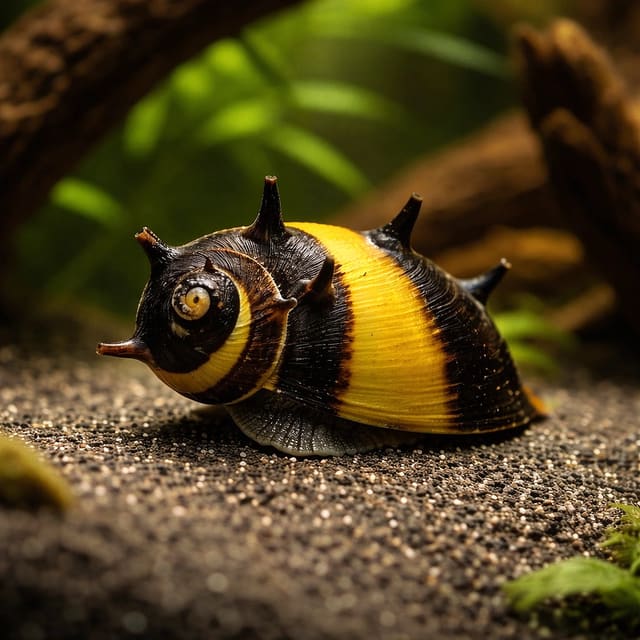
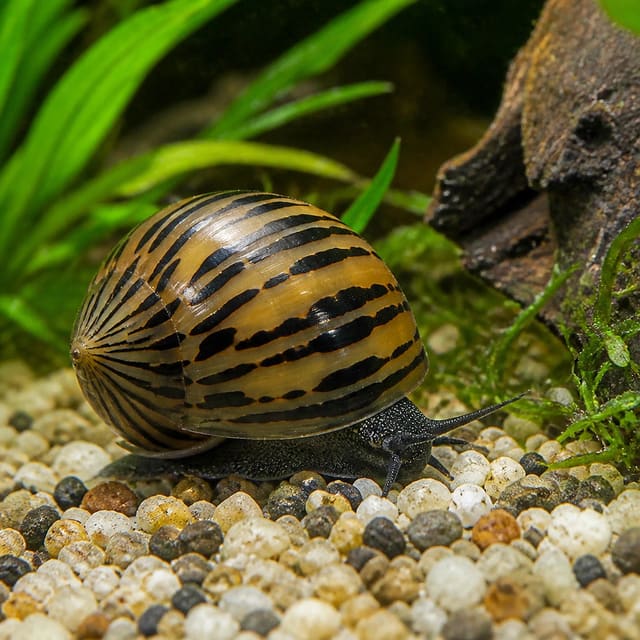
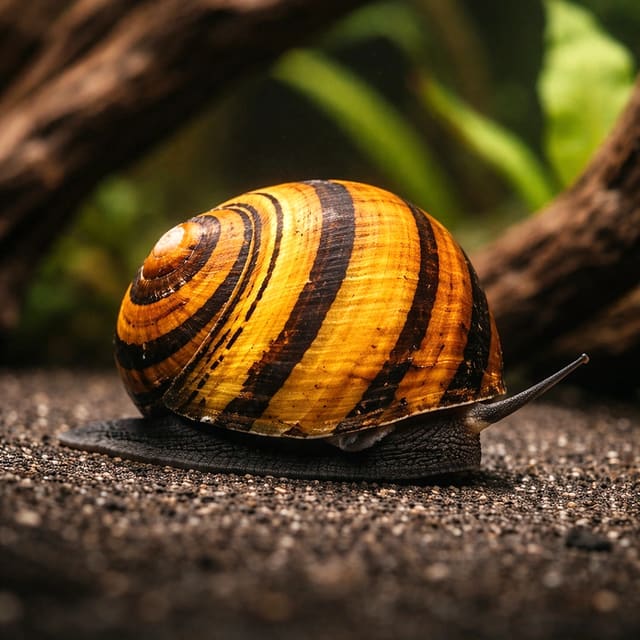
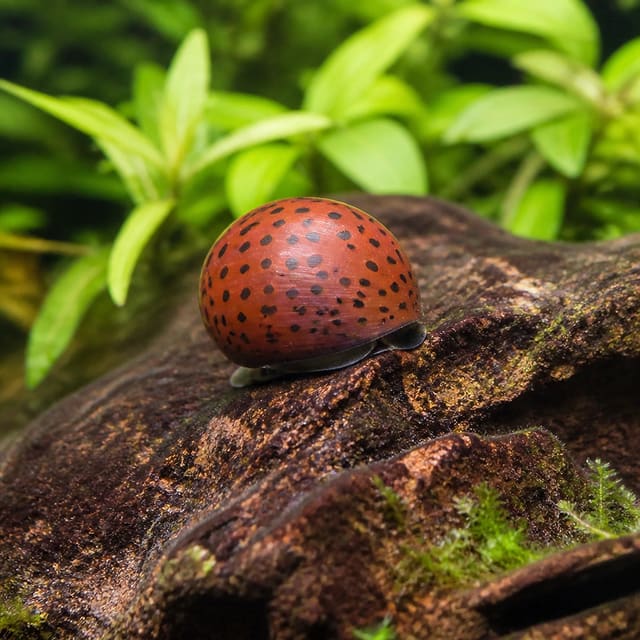
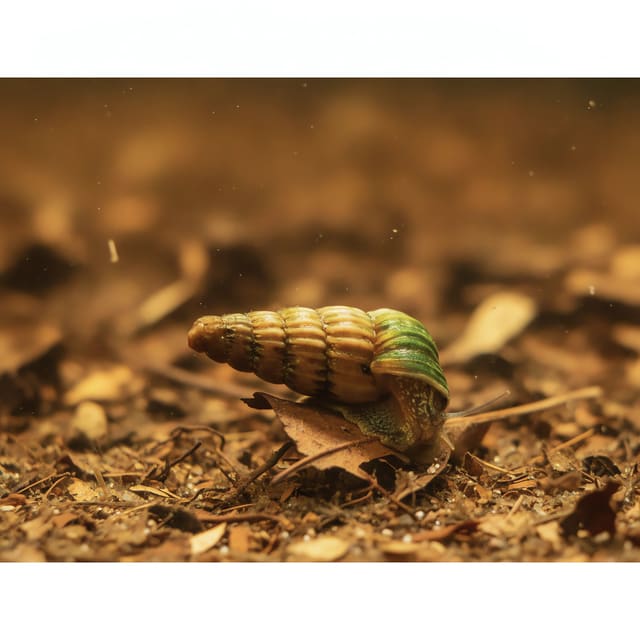
The common name refers to the horn-like shell form associated with this offer, while Clithon sp. keeps the scientific identity at genus level. It should not be treated as a named Clithon species merely because another nerite has a similar pattern or trade name. If you are comparing appearances, browse the nerite snail collection and base the final choice on identity, aquarium conditions and compatibility rather than shell pattern alone.
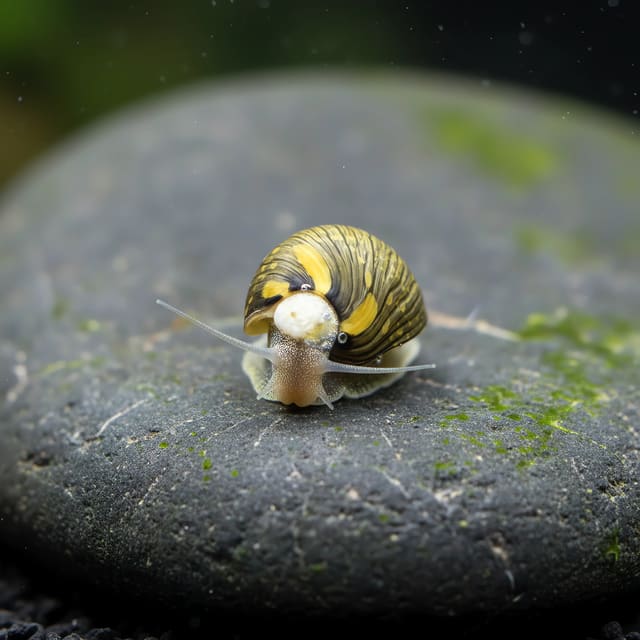
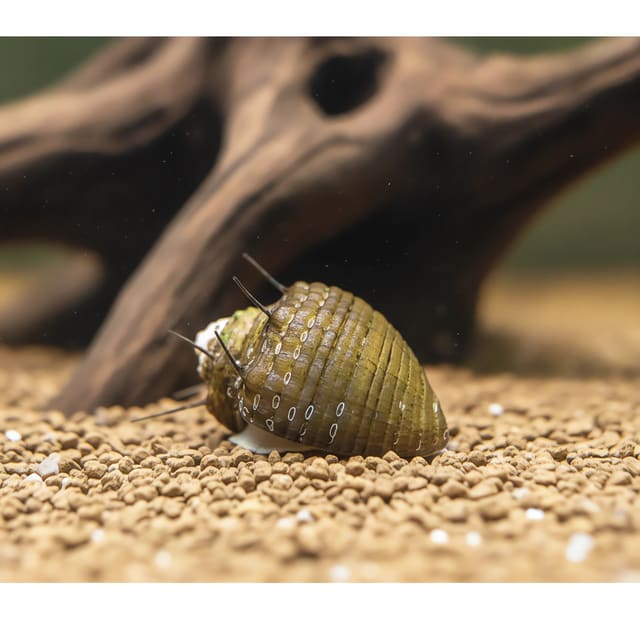
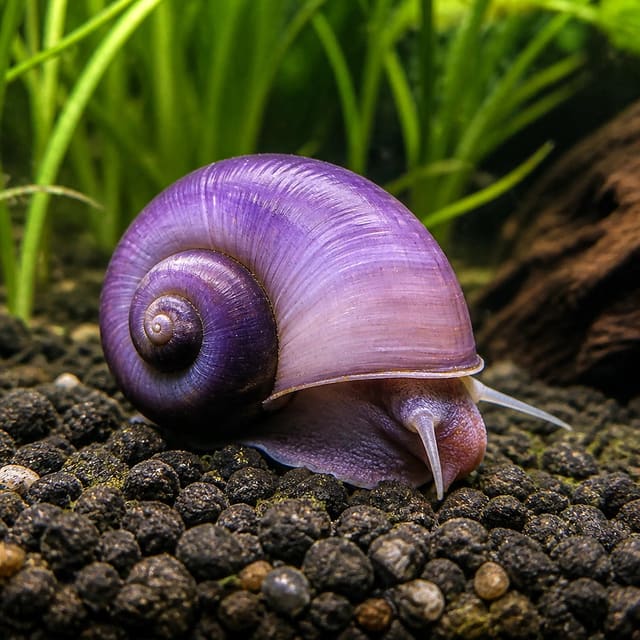
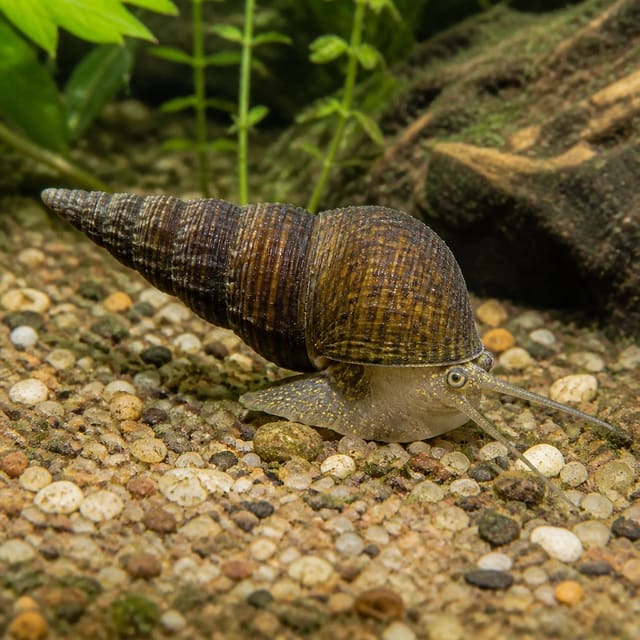
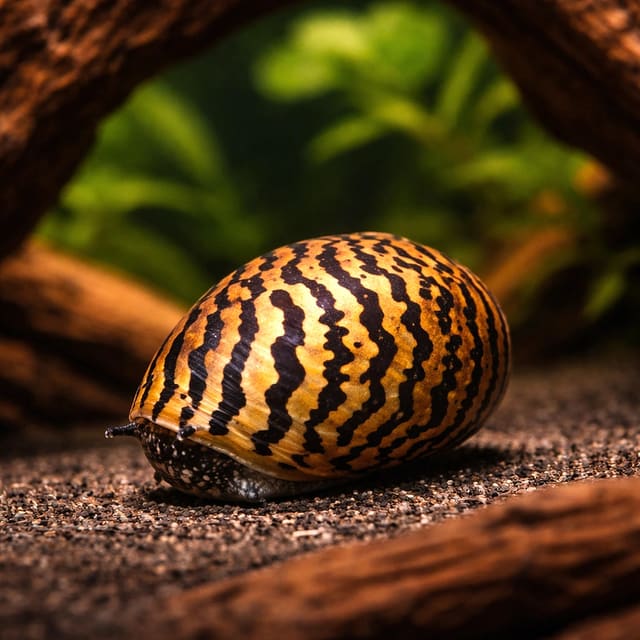
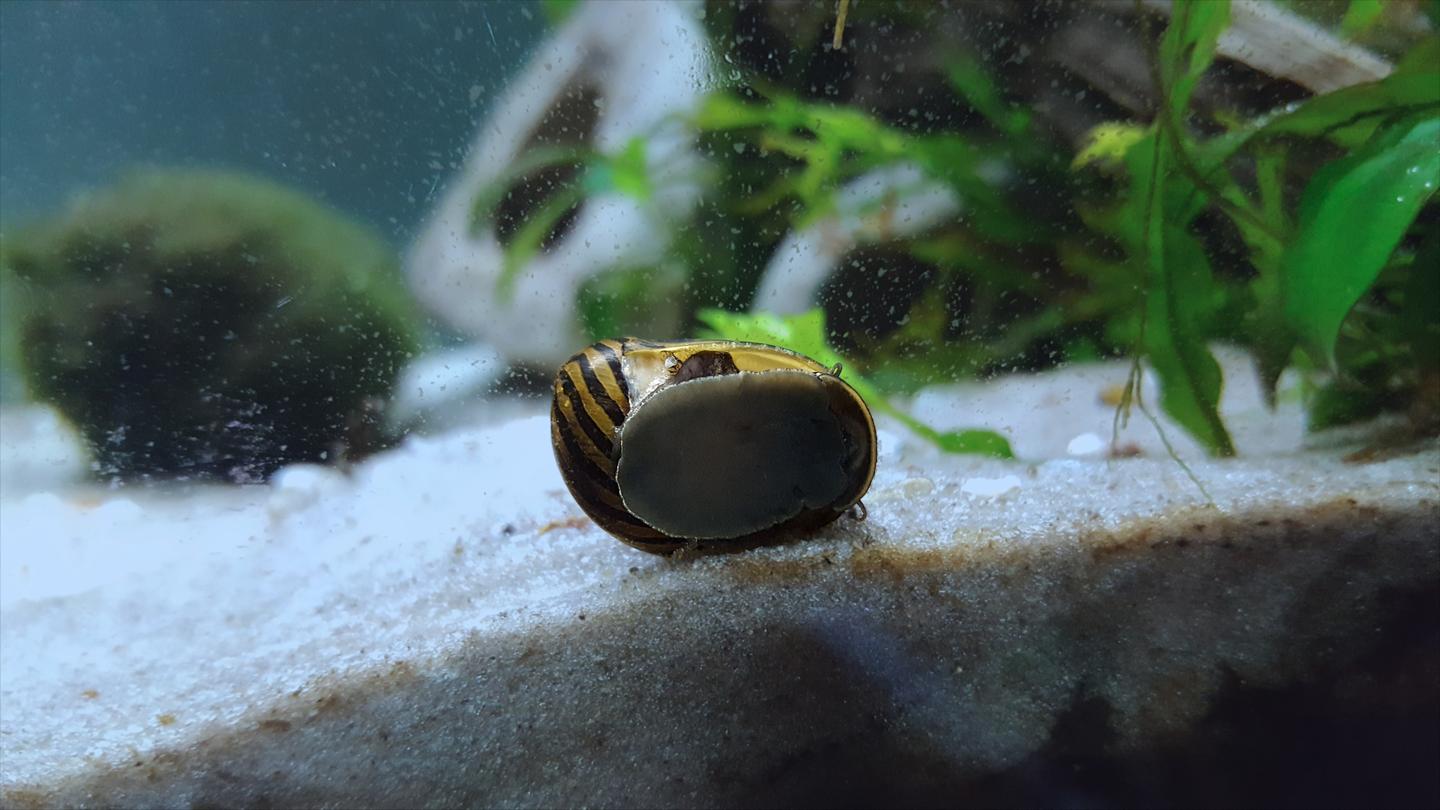
The gallery shows a representative animal with a black-and-gold mottled shell, short pale horn-like projections, a grey foot and visible tentacles resting on an algae-covered rock. These representative gallery images have been digitally enhanced for presentation, so colours can look slightly different from the live animal.
This checklist matters more than labels such as beginner, nano or community animal. A small dispatch size does not make an immature aquarium suitable, and a peaceful-looking fish is not automatically safe with a snail. Choose this animal when the measured water, established filtration, feeding plan and tank-mate behaviour all fit.
Begin with a fully functioning aquarium rather than adding the snail while the biological filter is still developing. OATA uses approximately 20 litres for its larger freshwater shrimp or snail category, which is the conservative category to apply when adult size is not defined, and calls for a larger aquarium when these animals live with fish. Choose as large a practical volume as you can manage because a greater volume makes temperature and water quality more stable.
Our guide to preparing and maturing a first invertebrate aquarium explains the setup sequence. Maturation is a water-quality decision, not a description of the water itself: beneficial bacteria must be established in the filter so the aquarium can process waste after livestock and food are introduced.
The RSPCA’s aquarium filtration guidance explains why biological filtration matters: ammonia is toxic, filter bacteria convert it to nitrite, and further bacteria convert nitrite to the safer nitrate. OATA requires ammonia and nitrite to remain at zero for freshwater shrimp and snails. A filter that has merely been switched on is not equivalent to one with an established bacterial population.
| Check | Ready-to-add result |
|---|---|
| Ammonia | Zero mg/l |
| Nitrite | Zero mg/l |
| Nitrate | No more than 20 mg/l above normal tap water |
| Filter | Running, unobstructed and biologically established |
| Food plan | Algae present, with suitable supplementary food ready |
| Tank mates | Screened for snail-eating behaviour |
If ammonia or nitrite is detectable, pause the introduction and restore water quality before adding the snail. Adding livestock while either reading is above zero increases the biological load when the filter is already failing the required test.
Use 17–27°C, pH 6.5–8.0, general hardness of 4–18°dH and carbonate hardness of 3–15°dKH as the working range. These figures come from OATA’s guidance for freshwater shrimp and snails, not a species-specific optimum. Record the aquarium’s normal readings so that a later test can reveal a change instead of producing an isolated number with no baseline.
The aquarium water chemistry guide explains what each measurement represents. Temperature describes heat, pH tracks acidity or alkalinity, general hardness reflects dissolved minerals, and carbonate hardness helps describe buffering. Treat these as separate measurements rather than assuming that a suitable pH guarantees suitable hardness or that clear water guarantees zero ammonia.
| Measurement | Action range |
|---|---|
| Temperature | Keep between 17 and 27°C |
| pH | Keep between 6.5 and 8.0 |
| General hardness | Keep between 4 and 18°dH |
| Carbonate hardness | Keep between 3 and 15°dKH |
| Ammonia | Maintain at zero mg/l |
| Nitrite | Maintain at zero mg/l |
| Nitrate | Do not exceed 20 mg/l above the tap-water baseline |
Use the water matcher to compare measured aquarium values with these ranges. Enter measurements taken from the aquarium itself, and compare tap water separately when assessing the nitrate limit. For example, if tap water measures 15 mg/l nitrate, the group limit is 35 mg/l in the aquarium because it is 20 mg/l above that baseline. If tap water measures 30 mg/l, the corresponding ceiling is 50 mg/l.
Stability does not mean ignoring the stated limits. It means keeping the aquarium consistently inside them, using repeat measurements and routine maintenance instead of chasing a single ideal number.
Freshwater snails generally graze algae in the aquarium. Keep suitable algae-bearing surfaces rather than making every pane, ornament and hard surface spotless immediately before the animal arrives. Grazing contributes food, but a very clean aquarium still needs a deliberate supplementary feeding plan.
Offer an algae wafer or a commercial pellet suitable for freshwater shrimp and snails two or three times a week. Give the snail at least 30 minutes to feed. Control the portion carefully because uneaten food breaks down, adds waste and can push ammonia, nitrite or nitrate in the wrong direction.
| Observation | Feeding decision |
|---|---|
| Visible algae remains | Continue controlled supplementary feeds rather than assuming grazing covers every need |
| Aquarium is kept very clean | Make the supplementary food especially consistent and observe whether it is being used |
| Food is still excessive after feeding | Reduce the next portion and remove the excess before it decays |
| Water readings worsen | Review portion size, uneaten food and filter condition before the next feed |
| Snail shows reduced interest in food | Test the water and check for other changes in activity or appearance |
A schedule of two or three feeds each week is a ceiling on frequency, not a reason to add a large piece at every session. Start with a controlled amount, allow at least 30 minutes and use the remaining food as feedback. When substantial food remains, the answer is a smaller future portion rather than a longer period in which waste can soften and disperse.
Use algae grazing as part of the diet, not as a promise that the snail will clean every surface or solve an algae problem by itself. Algae levels also depend on aquarium conditions, while the animal’s welfare depends on enough food and clean water. The useful outcome is balanced grazing backed by measured supplementary feeding and prompt removal of excess.
Carry out a partial water change of 25% at least once every week. Use a siphon where practical to remove solid waste from the gravel, and treat replacement tap water with a conditioner that removes harmful chlorine or chloramine before it enters the aquarium.
Test the water at least weekly for ammonia and nitrite, alongside the other working measurements. A regular test taken at a similar point in the maintenance cycle is easier to compare with earlier results. Record the tap-water nitrate value as well as the aquarium value because the nitrate limit is defined relative to the normal tap-water level.
Never rinse filter media under the tap. Chlorine or chloramine can kill the beneficial bacteria that process aquarium waste. If cleaning is needed, rinse the media lightly in aquarium water removed during the partial water change. This preserves more of the bacterial population while clearing material that is blocking the filter.
A filter clean and a water change are not reasons to replace every component or strip the aquarium at once. The purpose is to remove waste while retaining biological stability. If flow remains normal and the media is not blocked, avoid unnecessary disturbance and continue monitoring.
| If you find | Do this |
|---|---|
| Blocked filter | Rinse the affected media lightly in removed aquarium water |
| Detectable ammonia or nitrite | Pause further stocking and restore water quality |
| Rising nitrate | Complete the water change and review feeding and waste |
| Missed maintenance | Test before deciding the next step rather than doubling every action automatically |
Freshwater snails are invertebrates and are extremely sensitive to copper. They will die if exposed even to low levels, so check every treatment before it enters the aquarium and use only products identified as safe for invertebrates. This applies whether the product is intended for the snail, a fish sharing the aquarium or the aquarium as a whole.
Routine observation helps distinguish the animal’s usual pattern from a meaningful change. Watch for increased inactivity, restlessness, unusual behaviour, a darker or paler appearance, increased hiding, changes in breathing effort, time spent in higher-oxygen areas, white spots, discolouration, lesions, abnormal growths, visible damage, swelling, weight change or reduced interest in food.
| Change | First action |
|---|---|
| Reduced activity | Test ammonia, nitrite, temperature and the rest of the working water range |
| Less interest in food | Check water quality and remove food that would otherwise decay |
| Darker or paler appearance | Compare with the animal’s normal appearance and test the aquarium |
| Lesion or abnormal growth | Avoid speculative medication, especially any treatment that is unsafe for invertebrates |
| Several animals change together | Investigate shared conditions such as water quality, treatment exposure and filtration |
Do not select a medicine from appearance alone. Similar visible changes can occur alongside different water or husbandry problems, while an unsuitable treatment can add copper or another invertebrate hazard. Correct any measured environmental failure first and contact us about significant health changes before introducing medication to the shared aquarium.
Keep observations concrete: record what changed, when it began, the measured water values, recent maintenance, food offered and any product recently added. That sequence provides a stronger basis for the next decision than a general impression that the snail looks different.
Arrange for someone to receive the live-animal parcel so it is not left unattended. Before arrival, apply OATA’s aquarium checks: confirm zero ammonia and nitrite and complete any corrective maintenance before the animal is introduced.
Follow the delivery and acclimatisation policy: film the sealed parcel before opening it, continue recording as it is opened with the animal still inside the sealed bag, float the bag for 20–30 minutes before release and never pour the bag water into the aquarium.
The 0.5–1 cm dispatch size does not reduce the required 20–30-minute float time or change the need for suitable destination water. A small snail can still be exposed to an unsuitable temperature, detectable ammonia, detectable nitrite or unsafe treatment residue.
If the aquarium fails a water test on the expected arrival day, restore the aquarium to safe conditions before release. Acclimatisation cannot compensate for an unestablished filter or for water outside the working range. The float period addresses the arrival transition; ongoing safety still depends on the mature filter, stable parameters and invertebrate-safe aquarium.
For a Live Arrival Guarantee claim, keep the continuous unboxing video and contact us the same day with the order number. The video must show the parcel still sealed, the parcel being opened and the animal still in the sealed bag before release.
Add freshwater snails and other livestock gradually. Every added animal and every increase in feeding raises the amount of waste the biological filter must process. The beneficial bacterial population needs time to increase with the load; stocking too quickly can lead to new tank syndrome, with ammonia and nitrite rising to harmful levels.
Observe the snail’s activity, colour, appearance and feeding response without expecting a single fixed behaviour. Continue the established maintenance routine and test promptly if the animal becomes unusually inactive, restless, darker, paler or less interested in food. Any detectable ammonia or nitrite means the aquarium has failed the required water-quality target and further stocking should pause.
Do not respond to uncertain behaviour by adding extra food automatically. First test the water, look for uneaten food and check the filter. Extra food can worsen a waste problem, whereas measured readings distinguish a feeding decision from a filtration or maintenance issue.
| Checkpoint | Decision |
|---|---|
| Weekly water test | Continue only while ammonia and nitrite remain zero and nitrate stays within its tap-water-relative limit |
| 25% water change at least once a week | Condition replacement water and siphon visible solid waste |
| Two or three feeds weekly | Allow at least 30 minutes, then use leftovers to reduce the next portion |
| Filter inspection | Clear blockages without rinsing media under the tap |
| Further livestock | Add slowly and only after the aquarium remains stable at its existing load |
These checkpoints turn “mature aquarium” into measurable actions. The aim is not to make constant changes, but to establish a repeatable baseline and recognise departures from it. Stable results, controlled feeding and gradual stocking give the filter time to support the aquarium’s actual biological load.
Freshwater shrimp and snails can live in mixed aquariums, but they must be combined cautiously because common aquarium fish may eat them. For this snail, the decisive screen is whether another animal can eat, injure or persistently target it. Do not rely on the broad label “community fish” as a guarantee.
Avoid pufferfish and loaches. OATA names these as fish that can eat snails, and the same exclusion applies to any other fish known to eat them. The genus-level identity does not justify a universal list of safe companions, so assess the behaviour and feeding biology of each proposed tank mate.
| Question | Decision |
|---|---|
| Is it a pufferfish or loach? | Avoid the combination |
| Is it known to eat snails? | Avoid the combination |
| Could it consume or injure this small snail? | Do not mix without a clear species assessment |
| Will fish share the aquarium? | Use more than the approximately 20-litre conservative planning benchmark |
| Will several animals be added together? | Reduce the stocking pace so the biological filter can adjust |
Dispatch size matters to the immediate risk assessment. An animal sent at approximately 0.5–1 cm is physically small, but that measurement should not be turned into a permanent compatibility rule because the snail can grow and fish behaviour can change. Screen the actual animals and the long-term aquarium plan rather than assuming that a shell makes the snail protected.
Matching temperature or pH is necessary, but it does not make a predator suitable. Conversely, an animal that ignores snails still needs water compatible with 17–27°C, pH 6.5–8.0 and the aquarium’s hardness range. Complete both checks: shared environmental requirements and low predation risk.
When a proposed fish falls outside the explicit pufferfish and loach exclusions, uncertainty remains until its snail-eating behaviour and adult interaction are assessed. Contact us with the species names, aquarium volume, measured water and existing livestock for a stocking and compatibility assessment. That produces a more useful decision than a generic list of supposedly peaceful fish.
Freshwater snails are not social creatures, so this animal does not require companions of its own kind. One purchase supplies one animal, and one can be kept without creating a social shortfall. A group remains a stocking choice based on aquarium volume, food, filtration and water quality rather than a behavioural minimum.
Use OATA’s approximately 20-litre larger-category aquarium benchmark because the adult size is not defined for this genus-level offer. Treat that as a conservative planning benchmark, not as a formula saying every 20 litres can support another fixed number. Aquarium capacity also depends on the filter, existing inhabitants, feeding load and the stability shown by repeated tests.
| Your plan | Decision |
|---|---|
| One snail in a prepared aquarium | No same-kind companion is required; keep the mature filter and feeding plan in place |
| A snail group | Use approximately 20 litres as the conservative starting benchmark and add animals gradually rather than all at once |
| Snails with fish | Choose a larger aquarium and complete the predation screen for every fish species |
| More livestock later | Wait for stable zero-ammonia and zero-nitrite readings at the existing load |
| Limited visible algae | Plan controlled supplementary feeding rather than increasing the group first |
Food availability should influence group planning. Several grazing animals share the algae present in the aquarium and also create a greater supplementary feeding requirement. Extra wafers or pellets can increase uneaten waste, so group size and feeding must stay within what the filter and weekly maintenance can support.
Check ammonia and nitrite before adding another animal. Both must be zero. After a stocking increase, retain the weekly testing minimum and test sooner if activity, colour, feeding or water clarity changes. Detectable ammonia or nitrite is a stop signal for further additions.
The most reliable group plan is deliberately conservative: begin with the intended aquarium fully mature, add livestock slowly, watch how much food is consumed and use measured water quality before the next addition. This respects the fact that snails do not need a social group while still allowing a keeper to maintain several where space and filtration genuinely support them.
The 0.5–1 cm figure is its approximate dispatch size, not its adult size. Plan aquarium capacity conservatively and do not treat the arrival measurement as the animal’s final size.
Use approximately 20 litres as the conservative starting benchmark because its adult size is not defined. OATA uses approximately 20 litres for its larger freshwater shrimp or snail category and advises a larger aquarium when fish share the space.
One can live alone because OATA says freshwater snails are not social creatures. Any group is a stocking choice rather than a social requirement, so add animals slowly and keep ammonia and nitrite at zero.
Choose it only when you can provide a mature, filtered aquarium, test the water, complete a 25% water change at least once a week and exclude copper and snail-eating fish.
Let it graze aquarium algae and supplement this with an algae wafer or a suitable commercial pellet two or three times a week. Allow at least 30 minutes for feeding and remove excess before it breaks down.
OATA’s freshwater shrimp and snail guidance gives 17–27°C, pH 6.5–8.0, general hardness of 4–18°dH and carbonate hardness of 3–15°dKH for the group, rather than a species-specific optimum.
OATA generally describes freshwater snails as compatible with most aquarium species, but fish may eat them. Its care plan does not require a social group, and every proposed companion still needs a predation and water-requirement check.
Avoid pufferfish, loaches and any other fish able to eat snails. Screen every other proposed tank mate for snail-eating behaviour and shared water requirements, and use a larger aquarium when fish share the space.
Start filming before opening the sealed parcel and continue in one take as it is opened with the animal still inside the sealed bag. Have someone present to receive it, float the bag for 20–30 minutes and never pour the bag water into the aquarium.
No reviews for this item yet. Bought one? Honest reviews only, good or bad.
What customers say about ordering from us
Easy website plenty of info on fish your buying great to pick a time slot
TRACEY DURRANT · 7 Oct 2026
Got some lovely fish thank you
Kevin Mackie · 7 Oct 2026
Reviews of our shop, collected by Judge.me, an independent third-party review collector. Newest first.