−14%
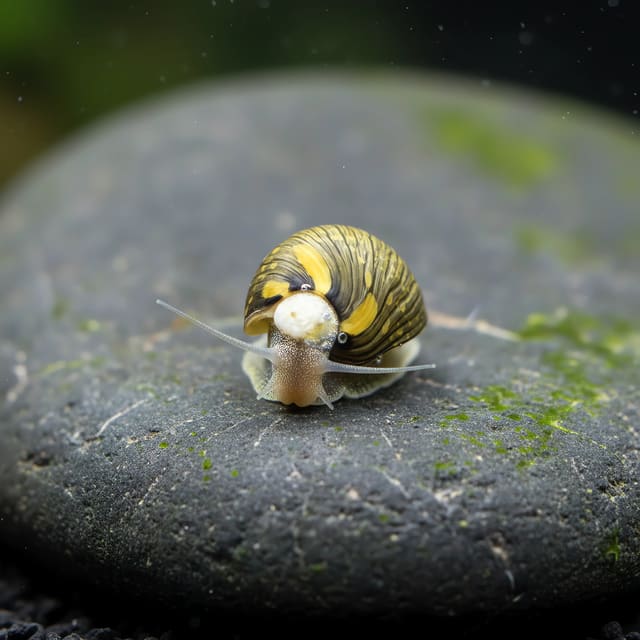
Spotted Nerite Snail (Neritina sp.)
17–27°C · pH 6.5–8
£4.29£4.99

Cappuccino Snail (Faunus ater) is a long-shelled bottom grazer for a mature aquarium with suitable water and gentle companions. Feed deliberately and allow room for growth. One purchase supplies one live snail.
Faunus ater
Lives in groups: kept together they stay settled, active and show their best colour.
Cappuccino Snail (Faunus ater) is a long-shelled bottom grazer for a mature aquarium with suitable water and gentle companions. Feed deliberately and allow room for growth. One purchase supplies one live snail.
Maintain these water conditions for optimal health and vibrant colors
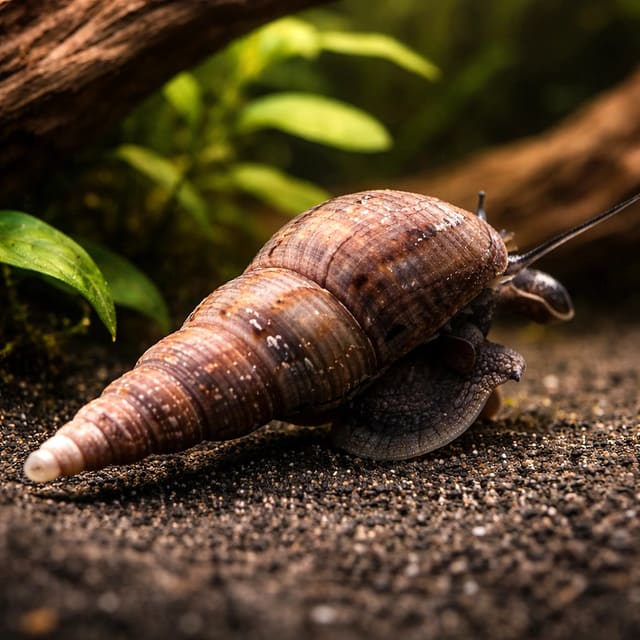
The Cappuccino Snail (Faunus ater) brings a very different shape to an aquarium: a long, tapering shell and an animal whose activity is best enjoyed at the bottom of the display. It suits a keeper who likes watching small details, from the way a snail works around a leaf to the slow progress it makes between feeding spots. A mature aquarium with room to forage, suitable water and gentle companions is the starting point.
One purchase supplies one live snail. The dispatch grade is 3–5 cm; this listing has a single purchase form rather than a choice of sizes. Treat that measurement as the size supplied, and allow room for growth. Sex is guaranteed only when the selected option explicitly states male or female. This Cappuccino Snail listing has no sex-guaranteed option.
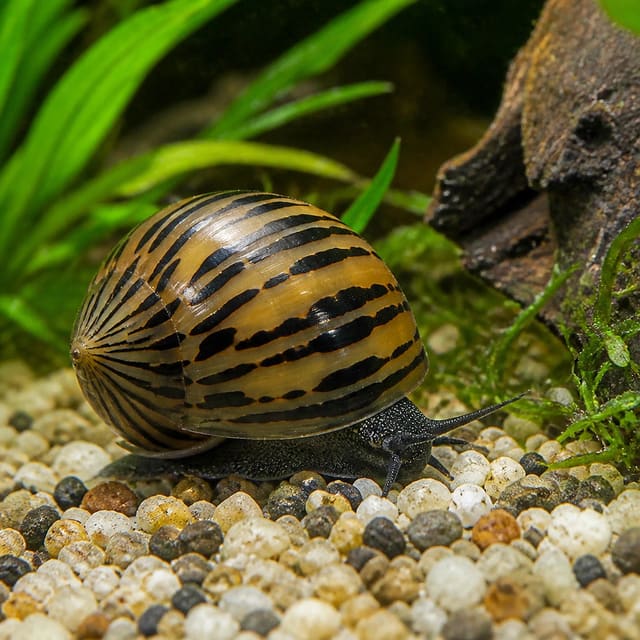
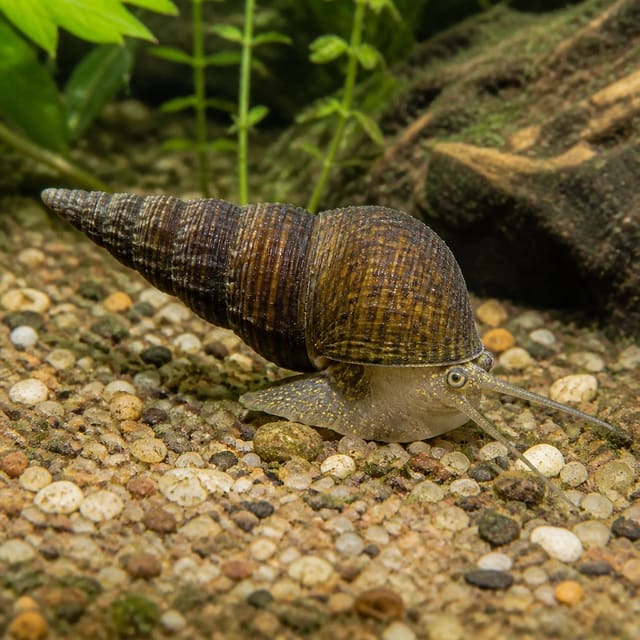
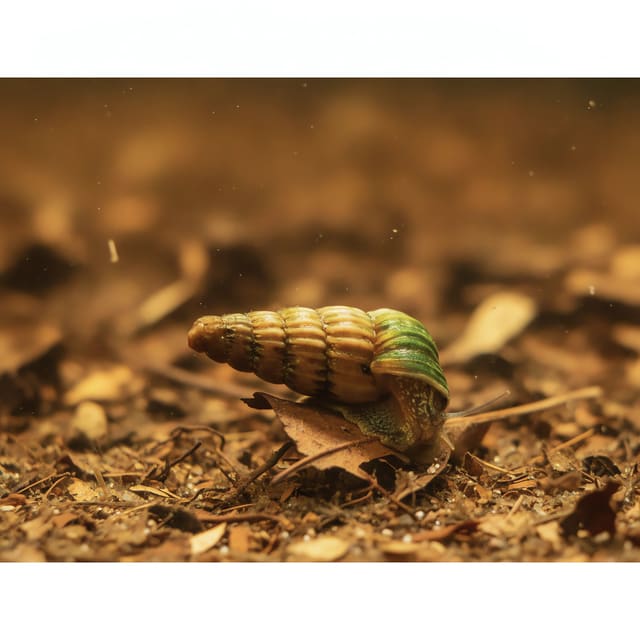
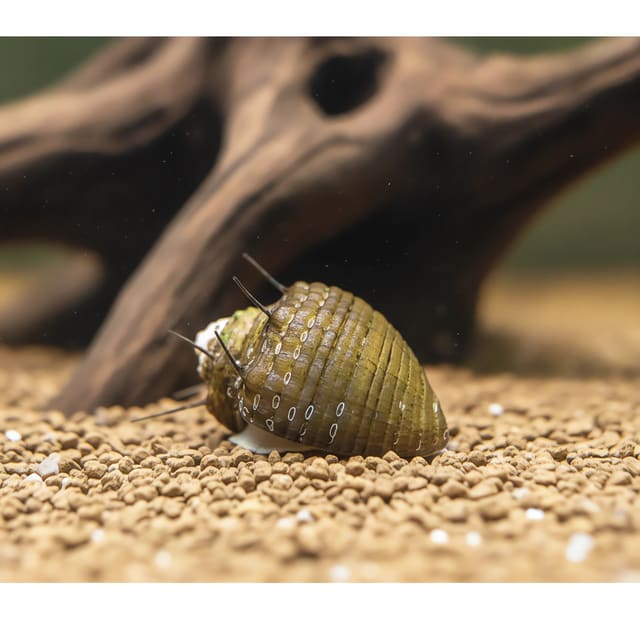
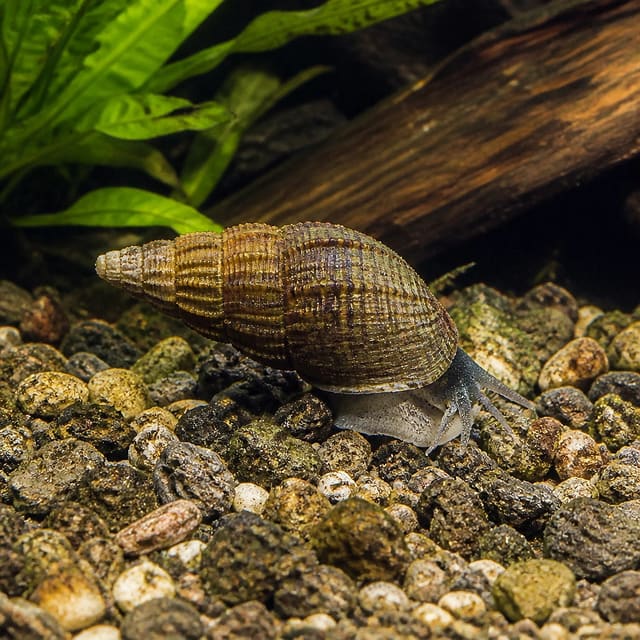
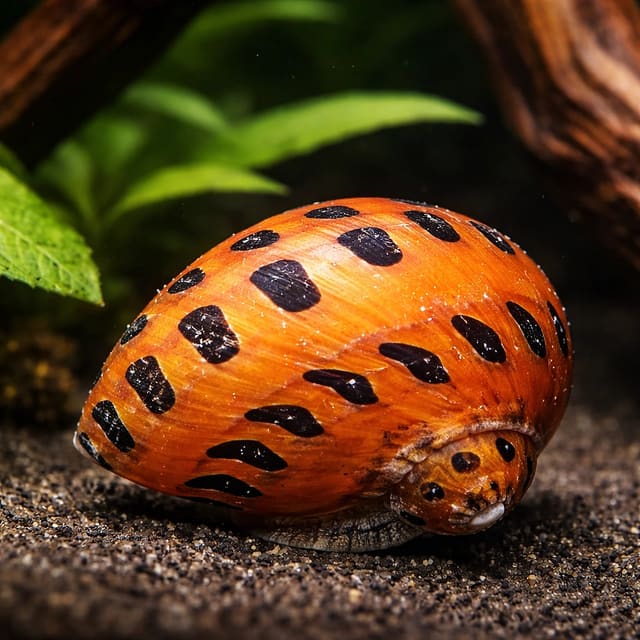
The gallery images are representative of this type of animal rather than photographs of the exact animal supplied, so colours can look slightly different from the live animal. The main image shows two prominent snails resting on leaf litter, with pale tips and progressively darker shell sections. It is a useful view of the long shell shape, but the number pictured does not change the single-snail purchase.
Think about the aquarium from the snail's position. It needs a usable route over the bottom, places where food reaches it, and surfaces that have had time to develop life. A recently filled tank can look attractive while offering very little to eat and no dependable biological filtration. Establish those foundations before adding an animal, even when the aquarium is intended mainly for invertebrates rather than fish.
This species is better chosen for its appearance and bottom-foraging habits than for a promise of spotless glass. Plan to feed it deliberately. A snail may contribute to grazing and processing organic material, but it still produces waste and depends on the keeper to remove excess food and maintain the filter. Seeing a little natural growth on a sheltered surface is different from letting the whole aquarium accumulate uneaten food.
Its natural history is also more varied than the label “freshwater snail” suggests. Faunus ater is recorded from coastal freshwater and brackish habitats across a broad region including Southeast Asia and northern Australia. Those records describe the species, not the origin of an individual in this listing. For an aquarium, consistency and an agreed water plan matter more than trying to recreate every condition found across that range.
Published shell measurements reach up to 90 mm, or 9 cm, with 50–60 mm described as usual in the cited natural-history account. These are shell lengths, not the length of the extended animal. Give the snail space to turn between ornaments and reach food without becoming wedged. A tall tank with a crowded base can offer less useful room than its litre figure suggests.
If you are deciding which sort of snail interests you most, the Parallel Nerite Snail is a relevant separate listing to compare before choosing a display animal. Compare its own adult size, feeding and water advice with your aquarium rather than assuming that all snails need the same setup. You can also browse the wider aquarium snail collection to see the different forms.
The most useful preparation is straightforward: know your water, establish the filter, make food accessible and check every companion for snail predation. Once those decisions are in place, the pleasure is in the unhurried details. Leave a clear viewing area near suitable cover so you can observe the snail without repeatedly lifting it out or dismantling its surroundings.
For a freshwater aquarium, the firsthand husbandry account linked below recommends a temperature around 25°C, pH 7–7.5 and medium hardness. These are an experienced keeper's aquarium recommendations, rather than experimentally established limits. They are more useful for a settled home aquarium than extremes the species may encounter in nature. Confirm the intended conditions before moving a snail from its previous water.
Measure what comes from your tap and what is actually in the aquarium. Substrate, ornaments and water preparation can make those readings different. The water chemistry guide explains the separate roles of pH, general hardness and carbonate hardness. Keeping a small record of results makes it easier to spot a gradual change than trying to remember whether last week's test looked a little darker.
General hardness describes dissolved minerals; it is not another name for pH. Avoid adding a mineral product simply because the shell looks pale. First check the water and the product instructions, and decide whether a correction is actually needed. If your water needs preparation, establish a repeatable method for replacement water before introducing the snail. Repeatedly improvising a different mixture makes maintenance harder.
Use a thermometer to check the water itself. Position the tank away from direct sun and strong draughts, and make any heater appropriate to the aquarium. A thermostat setting alone does not tell you whether temperature is even throughout the tank. The aim is a dependable environment through ordinary changes in room temperature, with a filter and water movement that continue working throughout the day.
For the species husbandry account, see Alex_N's observations of keeping Faunus ater. The discussion includes freshwater maintenance, bottom feeding and the importance of considering the animal's particular needs.
Choose the aquarium around adult room, feeding access and the total number of inhabitants. There is no useful shortcut in checking whether a small snail physically fits through the lid. The base needs open routes, and the water volume must support the whole population's waste. Ask for a tank assessment using the dimensions and proposed companions, especially if the aquarium is small or heavily furnished.
OATA's freshwater invertebrate sheet gives broad examples of at least 10 litres for groups of small shrimp or snails, and approximately 20 litres for larger examples such as apple snails. Those are group examples, not a minimum-tank prescription for this long-shelled species. They also require more space when fish are included. Do not use the smallest figure on a general sheet as permission to stock an already crowded aquarium.
Walk through the layout in practical terms. Can the snail turn at the front? Is there a route around the largest piece of wood? Can you place food where it will be found and remove leftovers without moving a whole rock structure? Leaving room for those jobs now keeps routine care manageable later. It also makes the animal easier to observe while it goes about its normal activity.
Arrange heavy ornaments securely and leave accessible gaps rather than narrow traps. A shell may fit into a space without allowing the extended animal to turn comfortably. Cover should offer a retreat with a usable entrance. Avoid building a display so tightly that maintenance requires pulling the snail out whenever you clean the substrate.
A filter is essential even in a snail-only aquarium. Biological filtration depends on an established population of useful bacteria that processes waste. Clear water cannot demonstrate that this system is ready: ammonia and nitrite can be present without making the tank look dirty. Test both before adding livestock, and keep them at zero mg per litre.
Maturity also matters at the feeding surface. A new ornament and an established piece of aquarium wood may look equally clean from across the room, yet offer different grazing opportunities. Supplementary food remains necessary, but a settled environment gives the animal more places to browse between feeds. Avoid stripping every surface back to a bare finish in one maintenance session.
The first invertebrate tank guide is useful for understanding preparation and filter maturity. Apply its setup principles while checking the requirements of your chosen snail separately; shrimp stocking rules are not snail stocking rules. Readiness is demonstrated by the system's performance and test results, rather than a fixed number of days on the calendar.
Add livestock gradually. Each addition increases the waste that the filter must process, and extra feeding increases that demand too. Do not introduce a whole planned community simply because the first animal has been settled for a short time. Observe feeding, check the water and give yourself the opportunity to notice a problem before increasing the load again.
Choose filtration you can maintain easily. Keep the intake and outlet accessible, and check that water continues to circulate after cleaning or a power interruption. A blocked filter hidden behind dense decoration is easy to overlook. The snail's quiet habits make those equipment checks particularly important: a calm-looking animal is not a substitute for checking that the system works.
Use aquarium-safe sand or fine, smooth gravel, with space for the snail to work over and into the surface. This species has been observed burying into the substrate, so disappearance from the front glass does not automatically mean it has escaped. Make the layout easy to inspect without repeatedly disturbing the entire bottom. Keep clear of sharp fragments where the animal will move.
Plants and ornaments provide cover and extra surface area, but they should leave a usable floor. Establish plants securely, especially small specimens with short roots. Place the most delicate planting where normal movement through the substrate is less likely to disturb it. A combination of planted margins and an open feeding area can make both the display and maintenance easier to manage.
Healthy established plants are generally a better match than expecting every kind of leaf to remain untouched. The firsthand account describes feeding on unhealthy plant material and occasional damage to floating plants. If a particular plant is central to your aquascape, observe it after introduction and judge what actually happens. Remove deteriorating leaves as part of maintenance rather than assuming that the snail will deal with all of them.
Use lighting to support the planting and a regular day-and-night rhythm. There is no need to keep the lights on continuously to produce food for a snail. A controlled lighting routine, sensible feeding and accessible surfaces make it easier to keep natural grazing growth in proportion. Dark corners and sheltered surfaces can remain useful even in a bright display.
Fit a suitable cover and check gaps around pipes and cables. The aquarium should contain the animal while still allowing the equipment to operate as intended. When moving decoration, locate the snail first; a shell partly hidden among leaves can be easy to miss. Take a moment to check before lifting wood or siphoning around an occupied resting place.
Provide food that reaches the bottom and stays available long enough for a slow feeder. Algae wafers and prepared invertebrate pellets are practical supplements to natural grazing. Read the feeding directions and begin with a modest amount, then watch what the snail actually consumes. A wafer disappearing into a group of fish does not demonstrate that the snail has eaten.
The useful distinction is between providing edible material and leaving waste. The animal may investigate detritus and softened plant matter, but decomposing surplus food can still damage water quality. Offer suitable food in a place you can inspect. If it breaks apart and spreads through the substrate, reduce the next portion and remove accessible leftovers during cleaning.
OATA's general advice for freshwater shrimp and snails is supplementary feeding two or three times a week, with at least 30 minutes for pellets or wafers to be eaten. Treat that as a starting routine for an established tank, then assess natural grazing, the number of animals sharing the food and what remains uneaten. It is not a fixed ration that suits every aquarium.
Vegetable matter can provide variety alongside appropriate prepared food. Use a small portion that can be found and retrieved, rather than filling the aquarium with scraps. Keep the feeding spot visible so you can tell the difference between slow consumption and food that is simply going untouched. A consistent location also makes it easier to notice when the snail's feeding behaviour changes.
In a mixed aquarium, feed the other inhabitants according to their own needs and confirm that some suitable food reaches the snail. If faster animals repeatedly take everything, changing where food is offered may be more useful than adding larger quantities. Continued competition is a stocking issue as well as a feeding issue; the answer should not be an endless increase in food entering the water.
Make water testing and partial changes part of an ordinary weekly routine. OATA recommends a weekly partial change of 25% for freshwater shrimp and snails, with regular checks of ammonia, nitrite, nitrate, pH and hardness. Adjust maintenance when the aquarium's actual loading and test results call for it, and seek advice if a problem persists rather than continuing an ineffective routine.
Prepare replacement water with an appropriate conditioner for chlorine or chloramine, following its instructions. Check its temperature and intended chemistry before use. A water change should improve the environment without introducing a large, avoidable difference from the aquarium. Keep aquarium buckets and cleaning equipment dedicated to the task so residues from household products are not carried into the water.
Remove collected waste where it can be reached, paying attention to the feeding area and sheltered places behind ornaments. Locate the snail before working nearby. You do not need to stir every part of the substrate to demonstrate that cleaning has been thorough; the aim is to remove accumulated waste while leaving the layout and inhabitants secure.
Check the filter for blockages. When its media needs cleaning, rinse it gently in water removed from the aquarium rather than under the tap. That protects the bacterial population the system relies on. Follow the manufacturer's directions for the different media, and avoid replacing all biological material casually just because it no longer looks new.
The water parameter matcher can help organise a comparison between your measured water and stated guidance. Use it alongside observation and species advice. A favourable set of numbers does not measure food access, predatory behaviour or whether a snail is trapped behind a stone.
Get to know the animal's usual pattern: where it rests, where food is offered and what its shell looked like when it arrived. A photograph taken through the glass can be a useful reference for a change in appearance. Observe quietly before handling. Repeatedly moving a snail to check whether it responds can make a simple observation less informative.
Changes in appetite, activity or visible condition deserve attention, particularly when several inhabitants change at once. Start by testing the water and checking the filter and temperature. Think through recent events such as a new treatment, a changed feeding routine or work on the aquarium. Give those details to an experienced retailer when asking for help; they are more useful than a description such as “the tank seems fine”.
Shell condition needs careful interpretation. An old tip mark is different from damage that is spreading, and natural-history descriptions note loss of the earliest shell whorls in adults. Do not decide that every imperfect tip proves current illness. Equally, do not dismiss progressive deterioration. Compare the animal over time, review water preparation and obtain advice if you see a developing problem.
Check the suitability of every aquarium treatment for invertebrates before use. OATA specifically warns that copper is dangerous to shrimp and snails even at low levels. A medicine intended for fish is not automatically safe for a snail sharing the tank. Keep the packaging and ingredients available when seeking advice, and do not improvise a dose or combine products because a symptom looks familiar.
If a separate observation tank is needed, prepare it as an aquarium with suitable water and filtration. An unfiltered container can create a new water-quality problem while you are trying to investigate the first one. Arrange any move around the animal's welfare and advice for the particular situation, rather than following an arbitrary isolation timetable.
Have the aquarium running and checked before delivery day. Keep the route to the tank clear, set out the equipment you need and make sure someone can receive the parcel. Read the current delivery and Live Arrival Guarantee policy so the confirmed date and claim conditions are familiar before the animal arrives.
The store uses a licensed live-animal courier and confirms the delivery date by email. For a Live Arrival Guarantee claim, provide a continuous unboxing video beginning with the sealed parcel, showing it being opened and the animal still in its sealed bag. Someone must receive the delivery, and the parcel must be opened and inspected that day. Contact the store the same day with your order number if something has gone wrong. The video is evidence for a claim.
Unpack calmly and avoid exposing the animal to abrupt temperature changes or strong light. Follow the supplied acclimatisation guidance and ask the store if the receiving water differs substantially from the holding water. Transfer the snail carefully and keep transport water out of the display. Do not pour the contents of the bag into the aquarium simply to make release quicker.
During the first days, watch food access and check water quality. Leave shelter available while making sure you can inspect the animal. A new arrival does not need an immediate rearrangement of the tank or several changes to its diet at once. Keeping the surroundings predictable helps you work out which behaviours are normal and which changes merit a closer look.
Compatibility begins with the other animal's behaviour towards snails. A shell is not complete protection from a fish that is adapted to eat molluscs. OATA specifically cautions against snail-eating fish such as puffers and loaches. Predatory assassin snails also belong outside a display intended to protect ornamental snails. Providing extra food does not turn a predator into a dependable companion.
For other fish, shrimp and snails, compare water requirements and feeding behaviour before making a decision. “Peaceful” is useful but incomplete: an animal can ignore a snail and still consume every accessible wafer, or need water that is unsuitable for the rest of the aquarium. Consider the combination as a whole, including the adults the young animals will become.
Watch interactions at the actual feeding place. Persistent pecking, repeated interruption or the snail being displaced should prompt a change in the arrangement or stocking. A mixed aquarium is successful when each inhabitant can meet its needs, not simply when no obvious injury has yet appeared. Keep enough access around the hardscape to intervene without tearing the entire display apart.
OATA distinguishes snails from social shrimp: it does not prescribe a compulsory group for snails. A single animal can therefore be considered without a shoal requirement. If you keep several, base the number on food, space and filtration, and observe them as individuals. The fact that they gather at one attractive feeding spot does not establish that every tank should contain the same number.
When browsing other snail listings, separate comparison from a stocking recommendation. Different shapes can be appealing in the same display, but the care requirements still need to match. Research any predatory or plant-eating habits of the other species. A name such as “snail” does not tell you whether its lifestyle is grazing, scavenging or hunting.
For a planted display, leave the valued plants accessible for inspection and remove deteriorating material. If grazing pressure affects a particular planting, respond to what you see rather than relying on an absolute plant-safe label. The animal and the aquascape can often be managed together, but neither should be expected to remain unaffected by all normal aquarium activity.
Choose this snail because you want to care for an individual display animal. Do not base the aquarium plan on producing offspring or maintaining a self-replacing population. Its reproductive life cycle is not a straightforward home-aquarium project. Keep any breeding ambitions separate from the everyday job of maintaining the adult in suitable conditions.
Plan who will feed and check the tank when you are away. Show that person the normal feeding amount and the equipment that should be running, and leave the store's contact details where they can find them. Clear instructions are easier to follow than asking someone to judge a new animal's appetite without a reference.
Continue to review the layout as the shell grows and the planting develops. A gap that was convenient when the aquarium was first arranged can narrow as roots spread or ornaments shift during cleaning. Check the feeding route after maintenance, and make sure the animal can still move through the places it uses regularly.
Keep ornamental livestock within suitable aquariums. If you can no longer care for an animal, arrange responsible rehoming through someone able to meet its needs. Do not release it, aquarium plants or associated material into outdoor waters. Keeping that long-term responsibility in mind is part of choosing a snail as a pet rather than treating it as a disposable maintenance accessory.
Published records describe shell length up to 9 cm, with 5–6 cm generally reported in the cited natural-history account. Shell length does not include the extended soft body. Allow room for that long shell to turn and move between ornaments.
Choose by adult room, usable floor space, feeding access and the needs of every inhabitant. General small-snail tank examples are not a verified minimum for this species. Ask for an assessment using your aquarium's dimensions, filtration and planned companions before choosing a small setup.
There is no established compulsory group number here. OATA distinguishes snails from social shrimp and does not require a snail shoal. If you keep several, ensure that each can reach suitable food and that the aquarium can support their combined waste.
A prepared keeper can assess the practical needs: a mature filter, tested water, deliberate feeding and companions that leave snails alone. It should not be the first addition to an uncycled tank or purchased on the assumption that algae will provide everything it needs.
Offer suitable sinking algae wafers or invertebrate pellets alongside natural grazing, with appropriate vegetable matter for variety. Watch the snail feed and retrieve surplus food. OATA's broad routine starts with supplementary feeding two or three times a week, adjusted to the aquarium's actual grazing and consumption.
A firsthand aquarium keeper recommends around 25°C, pH 7–7.5 and medium hardness for freshwater maintenance. Treat these as husbandry recommendations rather than proven tolerance limits. Keep ammonia and nitrite at zero mg per litre and establish a consistent way to prepare replacement water.
This is a quiet grazing snail rather than a fin-nipping fish. The more important question is whether its companions will attack it or prevent it from feeding. Check the habits and water requirements of every proposed companion, even when a tank is described as peaceful.
Consider gentle fish, shrimp and non-predatory snails only when their water and feeding needs fit the same aquarium. Avoid snail-eating puffers, snail-eating loaches and assassin snails. Observe the actual combination for food competition or harassment after introduction.
Tropical Fish Co uses a licensed live-animal courier and emails the confirmed delivery date. Arrange for someone to receive and inspect the parcel that day. For a Live Arrival Guarantee claim, contact the store the same day with your order number and a continuous video showing the sealed parcel being opened and the animal still in its sealed bag.
For the scientific name and family, see the WoRMS record for Faunus ater. Greķe's 2023 natural-history paper describes shell dimensions and habitat records. OATA's freshwater shrimp and snail guidance covers general aquarium preparation, feeding, maintenance and compatibility. The species husbandry account is linked beside the water advice above.
No reviews for this item yet. Bought one? Honest reviews only, good or bad.
What customers say about ordering from us
I have a small group of long finned mountain minnows. So was delighted to be able to order ten of this variety to increase the genetics in my tank . The ones I recieved are healthy but it’s to early to give a verdict on wether they are of a long finned type since they are small currently.
Gordon Walker · 23 Sept 2026
100% success travel and "installation". Pleased with quality of purchase. The Siamese fighter a bit "shy" so have not yet seen him at his best yet but looking good. Happy customer. GG
George E Garratt · 21 Sept 2026
Reviews of our shop, collected by Judge.me, an independent third-party review collector. Newest first.