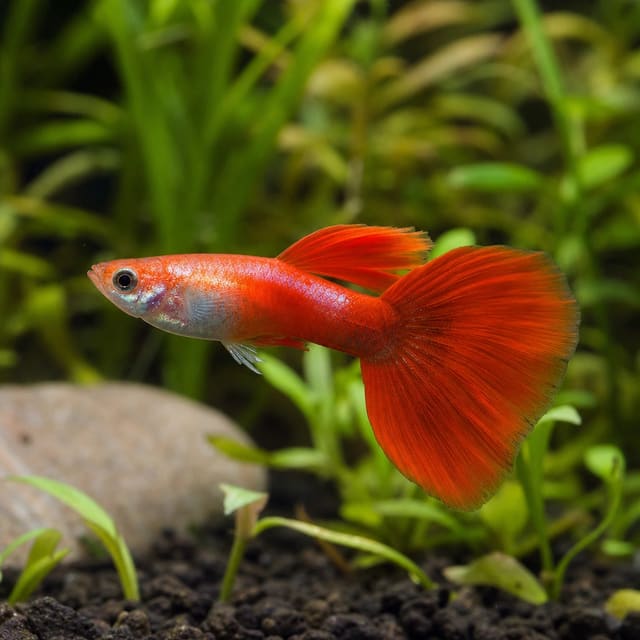
Easy
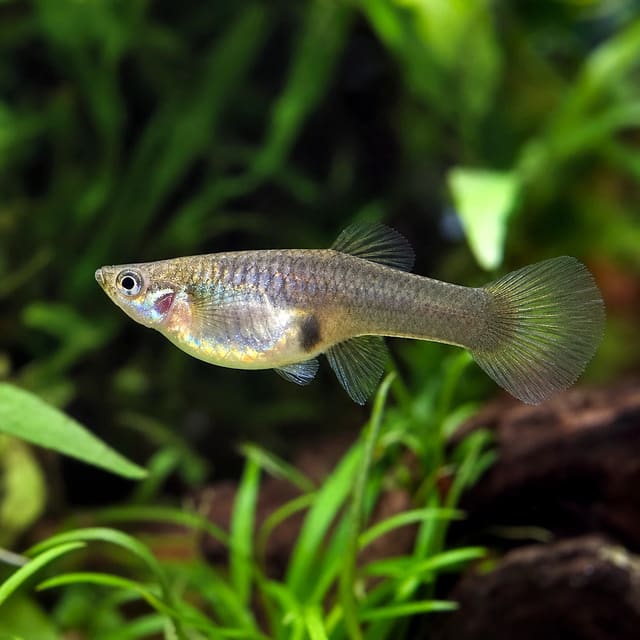
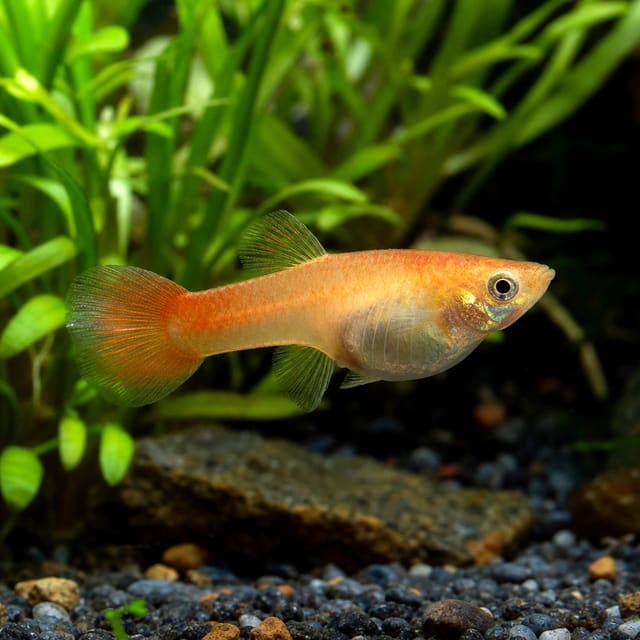
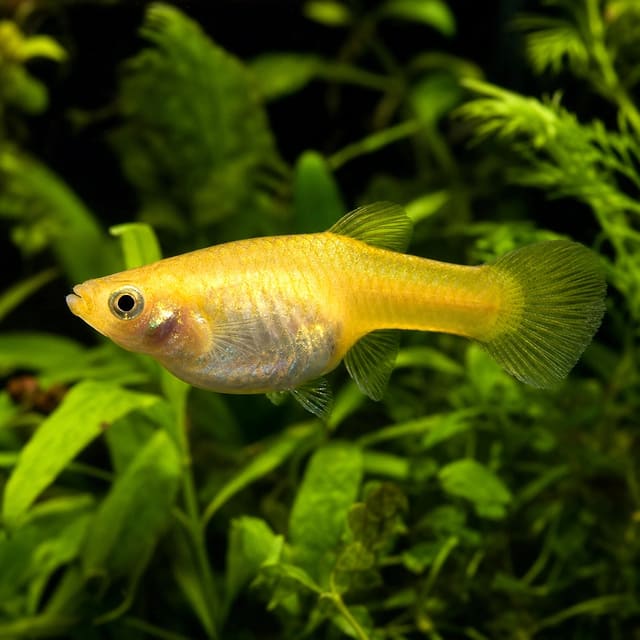
Poecilia reticulata female german yellow
22–28°C · pH 7–8 · 41L
£3.99
Photo coming soon
The size, price and care details on this page are for this listing.
A yellow female guppy sold as one fish in the 3–4 cm dispatch grade. Keep in a mature, mineral-bearing aquarium with a planned guppy group, calm companions and a response plan for possible fry.
Adult size is the maximum length this species reaches at full maturity (scientific sources). The livestock you receive will be younger and smaller. Product-photo provenance and any image-specific limitations are stated on the listing.
Poecilia reticulata
Shoaling fish: kept in a group they feel safer, stay calmer and show their best colour.
Minimum of 2 per order.
A yellow female guppy sold as one fish in the 3–4 cm dispatch grade. Keep in a mature, mineral-bearing aquarium with a planned guppy group, calm companions and a response plan for possible fry.
Adult size is the maximum length this species reaches at full maturity (scientific sources). The livestock you receive will be younger and smaller. Product-photo provenance and any image-specific limitations are stated on the listing.

Guppies are social livebearers suited to a prepared beginner, not a fish-per-litre formula. Use a mature filtered aquarium, tested neutral-to-alkaline mineral-bearing water, deliberate sex and population planning, open swimming room, cover and a separation option.
Maintain these water conditions for optimal health and vibrant colors
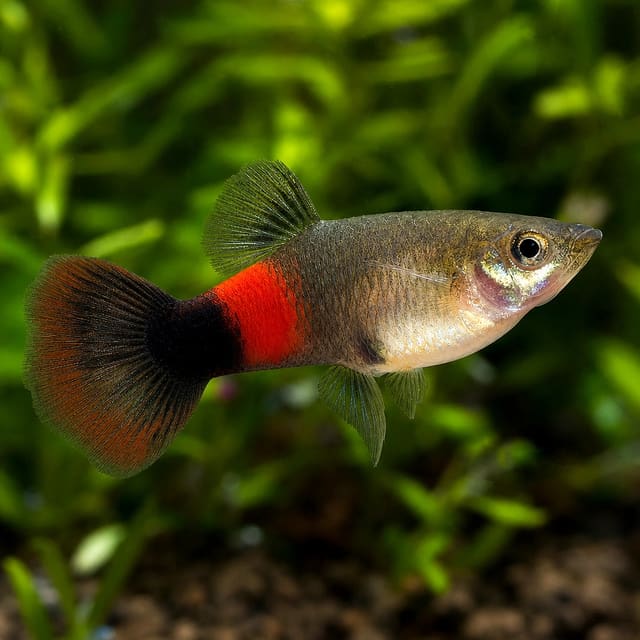
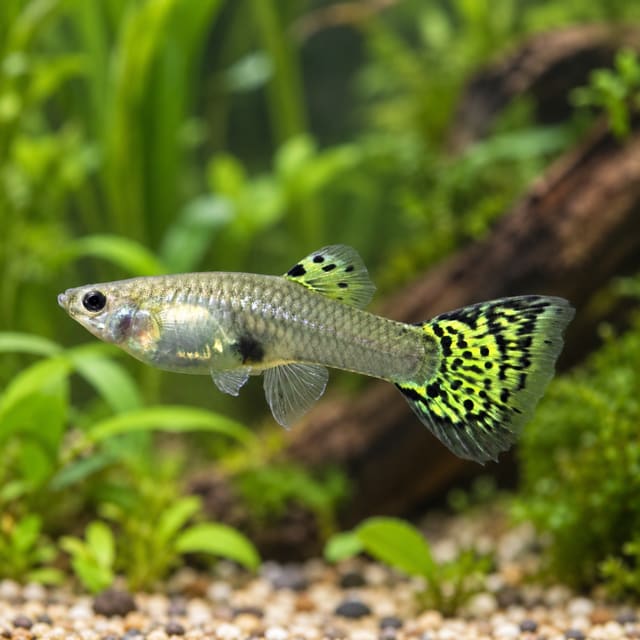
This Yellow Female Guppy is a female colour form of Poecilia reticulata, the familiar guppy. Yellow describes the trade appearance; it is not part of the scientific name or a separate species. This is the female yellow offer. Sex is guaranteed only when the exact product or selected option explicitly states male or female. This Yellow Female Guppy listing is sold as female. One purchase quantity supplies one live female guppy, with a recorded dispatch grade of 3–4 cm. That is the size supplied, not a promised adult length. Natural colour and fin detail can vary between animals.
A female guppy can suit a well-prepared keeper who wants an active, social livebearer in a mature aquarium. It does not belong in an unfiltered bowl or a newly filled tank. Tropical Fish Co's reviewed guppy care policy recommends at least a 60 cm aquarium and a planned group of five or more where sex mix, water tests, filtration and other livestock allow. A single purchased female can join a suitable group; one fish alone is not the long-term social plan. A larger community or more young fish needs more than a simple fish-per-litre calculation.
The female offer matters when planning a group. A female-only group avoids new mating within that group, but a female may have stored sperm from a previous mating and produce fry after purchase. Neither the yellow colour nor a rounded abdomen proves pregnancy. If males are present, repeated pursuit can stress females; the UK OATA combined guppy-and-molly sheet suggests at least two females per male as broad advice, but no ratio guarantees calm behaviour. Decide what you would do with fry before combining sexes.
For everyday care, the store's reviewed guide uses 22–28°C, pH 7–8 and 8–18 dGH as a practical routine range, with zero measurable ammonia and nitrite. Provide mineral-bearing water, open swimming room, cover, a gentle but effective filter and a complete diet. These figures are a planning screen for a stable aquarium, not an invitation to swing a tank quickly between endpoints. If your measured source water is very different, work out a sustainable approach or choose animals better suited to it before ordering.
The accepted species name is Poecilia reticulata. FishBase places it in Poeciliidae and records a native range that includes Venezuela, Barbados, Trinidad, northern Brazil and the Guianas. Aquarium guppies come in many selected colour forms, so a trade colour description does not establish wild provenance or a special lineage. The yellow female sold here remains a guppy with the same species-level husbandry needs. Do not treat colour as evidence of a different temperature, feeding schedule or temperament.
Adult length needs a measurement label. The store's reviewed guppy guide plans around up to about 6 cm standard length for females, drawing on its cited FishBase record; standard length excludes the tail. The frozen FishBase excerpt in this product packet records 5 cm standard length for male or unsexed fish and also contains a 5 cm female statement. Because these source extracts differ, plan swimming room for a female around the larger 6 cm figure without promising that an individual will reach it. The 3–4 cm dispatch grade is a separate retail fact.
Seriously Fish gives a 45 by 30 cm base and approximately 41 litres as a species profile example. OATA's broader combined guppy-and-molly sheet suggests at least 45 litres for a small group of the smaller livebearers. The store's 60 cm length and five-plus group rule is a more conservative house planning screen, not a scientific universal minimum. A tank can meet 45 litres yet be too short for that policy; one can be 60 cm long yet be overcrowded by its other residents. Check usable dimensions, mature filtration and the full adult community together.
Before buying, ask whether the aquarium has a stable temperature, tested suitable chemistry, open swimming room, cover, and a practical response to persistent pursuit or unexpected fry. The Guppy Care Guide explains the wider species plan. This listing adds the exact sex and sale-unit decision for the yellow female. A care label of easy is the store's assessment for a prepared keeper, not a reason to skip cycling, water tests or careful social planning.
Give the group horizontal swimming room rather than filling every corner with ornaments. Guppies move through open water, investigate plants and gather near food, so a long tank provides more choices than a short deep one of the same volume. Planting and floating cover can break lines of sight, which is useful when another guppy is persistent. Leave clear routes between patches and space at the surface. A dense thicket that forces every fish through one narrow gap can turn cover into a trap.
A secure, well-fitted lid helps prevent accidents and reduces evaporation. Check openings around cables and the filter, especially if small fry might later appear. Use smooth decorations and avoid sharp plastic plants that can damage fins. A female's fins may be shorter than those of some ornamental males, but she still needs safe surroundings. Arrange roots, plants and caves so you can observe the fish during meals and see if one individual is repeatedly cornered.
Keep the filter working but avoid a flow that pins fish against one side of the tank. Seriously Fish says strong currents should be avoided for guppies, and the reviewed store guide calls for open swimming room with monitored cover. Direct the outlet to move the surface while preserving areas of gentler water. Guard the intake if it could draw in a small fish or fry. Watch actual swimming: if every guppy fights the same current continuously, adjust the outlet or filtration arrangement.
Plants can improve shelter and make a quiet community more interesting, but they are not a substitute for mature filtration or safe water. Dense cover may increase fry survival, so the layout has consequences for population planning. If raising fry is not your aim, do not assume that a planted tank itself will solve the issue. Decide in advance whether you have room, a separate suitable system or a responsible rehoming route. Never rely on adult fish eating young as a welfare strategy.
A useful arrangement lets fish choose between open water and several sheltered edges. Observe whether all group members can move away from one another, reach food and rest without constant interruption. If one hides behind the filter for most of the day, review social pressure, water, cover and flow rather than adding decorations blindly. Layout is an adjustable tool; behaviour tells you whether it is helping.
The routine display guidance in the reviewed guppy guide is 22–28°C, pH 7–8 and 8–18 dGH. The pH and hardness figures are drawn from OATA's combined guppy-and-molly care sheet, so they are broad group guidance, not a proven optimum for this yellow female form. Seriously Fish gives a wider species range of 17–28°C, pH 7.0–8.5 and 8–30 dGH. FishBase reports wider ecological occurrence. For a normal home display, start with the store's narrower routine range and stable measured water rather than using the widest endpoint you can find.
Mineral-bearing water is important for long-term guppy care. Seriously Fish cautions that a fish may manage in softer or more acidic conditions without those being appropriate for lasting maintenance. Check the actual water you will use, including general hardness, and understand whether any household softener affects the supply. Different UK taps have different chemistry. The water parameters guide explains the tests, and the Water Parameter Matcher can help compare measured readings with the routine plan.
Do not add salt merely because FishBase lists the species in some brackish habitats. Wild tolerance does not establish a need for salt in this domestic freshwater aquarium, and other fish and plants may not tolerate it. Similarly, avoid repeated pH-correcting products when a stable suitable source is available. A measured, repeatable water-change plan is safer than a dramatic number obtained immediately after dosing. If a significant adjustment is truly needed, seek informed advice before buying a live animal.
The biological filter must be established before the fish arrives. Fish waste produces ammonia, which the filter's bacterial community converts through nitrite to nitrate. The RSPCA explains why an uncycled, apparently clear tank can still harm fish. Check zero ammonia and nitrite with repeated tests after the chosen cycling method reaches its endpoint. Adding more guppies and feeding more heavily increases the waste load, so build the group at a pace the filter can support. The first tropical tank guide covers a test-led setup.
OATA recommends regular water tests and a weekly partial water change of about 25% as general guppy-and-molly care. Your tank's results and stocking may require a different frequency. Condition replacement tap water, avoid a major temperature shift and do not wash all established filter media under chlorinated tap water. A simple record of temperature, ammonia, nitrite, nitrate and pH helps reveal a change before fish show distress. The goal is a steady routine that the keeper can repeat, not one perfect reading on purchase day.
Warm water and livestock both consume the aquarium's oxygen margin. Keep the filter and surface moving, watch for rapid breathing or prolonged gasping and check the equipment when behaviour changes. If several fish show the same sign, consider an environmental problem first. Avoid raising the temperature to treat a presumed illness without diagnosis; extra warmth can make oxygen problems worse. Seek qualified aquatic advice for a fish that remains unwell after the water and equipment have been checked.
The sale is expressly female, but that is not a promise that a new female-only aquarium will never contain fry. Guppies are livebearers, and the reviewed care guide cites evidence of sperm storage for several months. An individual female could therefore produce young after an earlier mating even when no male is currently in the tank. Plan for that possibility without claiming that this particular animal is pregnant. A colour label or a dark patch seen through a photograph cannot settle the question.
A female-only group can avoid new mating inside the aquarium. It still needs enough space, cover and food access, and individuals may compete or chase. Watch whether one fish is excluded from a feeding area or shelter. A mixed group needs deliberate sex planning because persistent male pursuit can alter female behaviour and cause stress. OATA's broad suggestion of two females to each male is a starting consideration, not a guarantee. If your available tank cannot accommodate the group and potential offspring, delay mixed-sex stocking.
Do not confine a female in a small unfiltered breeding box as a default response to possible fry. A separate nursery, if used, must have mature biological support, appropriate warmth, tiny suitable food and frequent water-quality checks. Before deliberately raising young, decide where they will live as they grow and how you will rehome surplus fish responsibly. Avoid a fixed brood count or delivery date: reproductive timing and outcome vary. A useful population plan deals with actual space and welfare, not a promise that every baby will survive.
Group size is a care decision rather than a discount or pack quantity. FishBase's secondary aquarium note suggests five or more guppies in at least a 60 cm aquarium, and the store adopts those as a conservative house screen. OATA's broader group minimum is three. If one yellow female is joining a prepared group, assess the sex balance and current social behaviour before introducing her. If starting a group, build it with repeated water tests and enough room for adults; the shop's one-fish sale unit does not include companions automatically.
Use an appropriately sized complete omnivore flake or granule as the staple. The OATA guppy-and-molly sheet mentions a good-quality prepared food with algal content and small live or frozen variety such as daphnia. Seriously Fish notes that domestic guppies accept many aquarium foods. That flexibility should support a balanced diet, not a routine of random treats. Choose a piece size this female can swallow comfortably and check that it reaches her when other fish are present.
Offer only a portion the group can consume without leaving a residue to break down. Feeding needs vary with food, age, group size and water conditions, so observe the fish and the aquarium rather than relying on an unchanging clock. A shy new female may need a second feeding position or a quieter moment. Watch for one dominant resident repeatedly intercepting every item. Correcting access may be more useful than increasing total food and degrading water quality.
Wild guppies may take zooplankton, insects and detritus, but that description is ecological context, not a request to feed aquarium waste. Use clean, biosecure foods intended for fish. Store dry food so it stays fresh, thaw frozen portions appropriately and remove uneaten material. If fry appear, they need food small enough for their mouths and closer water-quality attention than adults. Plan that separately; do not use adult flakes crushed by guesswork as a complete nursery programme.
Feeding is also a daily observation. A settled fish should show interest, swim normally and retain healthy body condition. A female with a rounded abdomen is not automatically overfed or pregnant, and a single missed meal does not diagnose a disease. Persistent refusal, sudden weight loss, clamped fins or abnormal breathing deserve a check of water, social pressure and food quality. Record what changed and seek informed aquatic advice when the cause is unclear.
Have the mature aquarium ready before delivery: stable temperature, conditioned water, tested ammonia and nitrite, safe equipment and a quiet place to release the fish. The store's delivery and Live Arrival Guarantee page describes its current packing and receiving process. A licensed live-animal courier carries a tracked parcel; fish are bagged with oxygen and insulated, with a heat pack when conditions call for it. Someone must be at the address to receive the parcel promptly.
Inspect the still-sealed bag on opening the parcel. The current store policy advises floating it for about 20–30 minutes before release and not pouring transport water into the aquarium. Keep lights low while the fish settles and observe whether existing residents chase or exclude her. A new arrival can be subdued briefly, but repeated distress, rapid breathing or inability to access food needs investigation. Check the whole tank's readings rather than treating the newcomer as the only possible problem.
If there is a Live Arrival Guarantee concern, contact the store the same day with the order number and a short continuous unboxing video beginning with the sealed parcel and showing the fish still in the sealed bag. That recording is claim evidence, not a substitute for safe handling. The current policy describes the precise conditions and should be checked when delivery is due. Do not make assumptions from a past courier schedule or an old promotional line on a product page.
A separate, mature quarantine or observation setup can reduce disease transfer to an established community. It needs its own stable filtration, testing and suitable cover; a tiny uncycled container can create new stress. If a fish shows clamped fins, spots, wounds, unusual balance or a loss of appetite, first measure water quality and review recent additions, equipment and interactions. A UK fish vet or experienced aquatic professional can advise on a diagnosis; avoid adding salt, heat or medication from one symptom alone.
Seriously Fish describes P. reticulata as very peaceful and names other livebearers, rasboras, corydoras, small loricariids and tetras as possible community companions. Those examples depend on overlapping water, appropriate adult size and enough room for each social group. A cory requires its own bottom space and companions, while a livebearer may add to the guppy population pressure. A list of names is not permission to put all of them into a small aquarium.
Avoid fin nippers such as tiger barbs and serpae tetras, which the species profile names as risks. Predatory or highly territorial animals are also poor choices for a small guppy. Even a supposedly peaceful fish can be unsuitable if it dominates food or chases a particular female. Watch the actual community after additions, especially at feeding and in the evening. Have a separation plan if pursuit or damage persists instead of waiting for a fish to adapt to avoidable harassment.
Match mineral content as well as temperature and pH. A fish described as peaceful may prefer much softer water than this guppy plan; keeping both at the extreme edge of a range is not necessarily a good compromise. Include adult size, group number, diet and swimming space in the decision. The guppy collection can help compare forms and sexes, but every exact listing must be read for its offer. Another colour form is not automatically a better tank mate or a guaranteed breeding match.
Be particularly cautious about mixing guppies with fish chosen for long fins, strong territorial display or active nipping. Cover and a larger tank can help fish avoid one another, but neither guarantees compatibility. If shrimp or fry are a priority, remember that small young animals may be eaten in a mixed display. Make the plan for the animals already present and the likely adult community rather than a decorative photograph of several species together.
Wait if the tank is uncycled, ammonia or nitrite is detectable, the source water is far outside the intended routine chemistry, or the aquarium is too short for the planned group. Also wait if there is no response plan for unexpected fry or persistent male pursuit. Fixing these conditions before an animal arrives is kinder and easier than improvising after a delivery. A small inexpensive fish still needs the same biological filtration and stable water as a more expensive one.
If the aquarium already holds several social species, count their adult groups and usable space, not just the litres printed on its box. A 60 cm tank is the store's guppy group screen, not an automatic entitlement to add five guppies on top of every current resident. Observe feeding competition, swimming room and water tests. Consider a larger aquarium, a different population plan or postponing the purchase when the group would have no room to settle.
At the same time each day, take a minute to watch normal swimming before feeding changes behaviour. A female that moves steadily, uses both open space and cover, and eats with the group establishes a useful baseline. When a new fish arrives, compare her with that baseline over several days. One quiet moment is less concerning than repeated hiding, laboured breathing or a persistent loss of appetite. Record a change rather than trying to remember exactly when it began.
Check the water-company report for your address, then test the actual tap and aquarium water. A report can describe supply averages while the water in the tank reflects substrate, decorations, top-ups and maintenance. General hardness is particularly relevant to guppies; pH alone does not tell you the mineral content. If a water softener serves part of the home, identify which tap supplies the aquarium and seek informed advice before changing it. A plan that uses water you can reproduce each week is easier to keep safe.
The reviewed store guide plans around up to about 6 cm standard length for females; standard length excludes the tail. The 3–4 cm supplier dispatch grade is not a promised adult length.
Tropical Fish Co uses a mature filtered aquarium at least 60 cm long for a planned guppy group. OATA's broad sheet gives 45 litres for a small group, but volume alone does not show usable length or room for other fish.
The store's conservative group policy is five or more where sex mix, filtration, water tests and space allow. One Yellow Female Guppy can join a suitable existing group; the purchase quantity remains one fish.
A guppy can suit a prepared beginner with a cycled, tested aquarium, suitable mineral-bearing water and a social and population plan. Easy does not mean suitable for an unfiltered bowl.
Use a complete, appropriately sized omnivore flake or granule as the staple, with safe compatible variety. Watch that this female receives food and remove uneaten portions.
The reviewed guppy guide uses 22–28°C, pH 7–8 and 8–18 dGH as routine guidance. Keep measured water stable and do not treat wider wild records as a target for sudden changes.
The species is generally peaceful, but individuals can compete and mixed-sex pursuit can stress females. Avoid known fin nippers and respond to persistent chasing rather than assuming it is harmless.
Seriously Fish names other suitable livebearers, rasboras, corydoras, small loricariids and tetras as possibilities. Check each exact species' adult size, water, group and behaviour; none is universally compatible.
Tropical Fish Co uses tracked licensed live-animal transport, oxygenated bags and insulation, adding a heat pack when conditions call for one. Someone must receive the parcel and follow the current delivery and Live Arrival Guarantee policy.
The accepted identity and native range follow FishBase's Poecilia reticulata profile. Species-level aquarium behaviour and broader water ranges come from the Seriously Fish guppy profile. The retailer's 60 cm, five-plus group screen and routine display range are explained in its reviewed Guppy Care Guide.
UK broad group care, including pH, hardness, filtration and maintenance, comes from the OATA guppy-and-molly sheet. General biological-filtration advice comes from the RSPCA fish environment guidance. The store's delivery page controls packing and any Live Arrival Guarantee process. Values from different sources are kept in context rather than averaged into a new range.
No reviews for this item yet. Bought one? Honest reviews only, good or bad.
What customers say about ordering from us
Easy website plenty of info on fish your buying great to pick a time slot
TRACEY DURRANT · 7 Oct 2026
Got some lovely fish thank you
Kevin Mackie · 7 Oct 2026
Reviews of our shop, collected by Judge.me, an independent third-party review collector. Newest first.