Easy
Sunset Blonde Male Guppy (Poecilia reticulata)
22–28°C · pH 7–8
£3.99
Photo coming soon
The size, price and care details on this page are for this listing.
One male Double Sword Guppy (Poecilia reticulata), about 3–4 cm at dispatch. Plan a social group, stable mineral-bearing water and calm companions that will not nip its tail.
Poecilia reticulata
Shoaling fish: kept in a group they feel safer, stay calmer and show their best colour.
Minimum of 2 per order.
One male Double Sword Guppy (Poecilia reticulata), about 3–4 cm at dispatch. Plan a social group, stable mineral-bearing water and calm companions that will not nip its tail.

Guppies are social livebearers suited to a prepared beginner, not a fish-per-litre formula. Use a mature filtered aquarium, tested neutral-to-alkaline mineral-bearing water, deliberate sex and population planning, open swimming room, cover and a separation option.
Maintain these water conditions for optimal health and vibrant colors
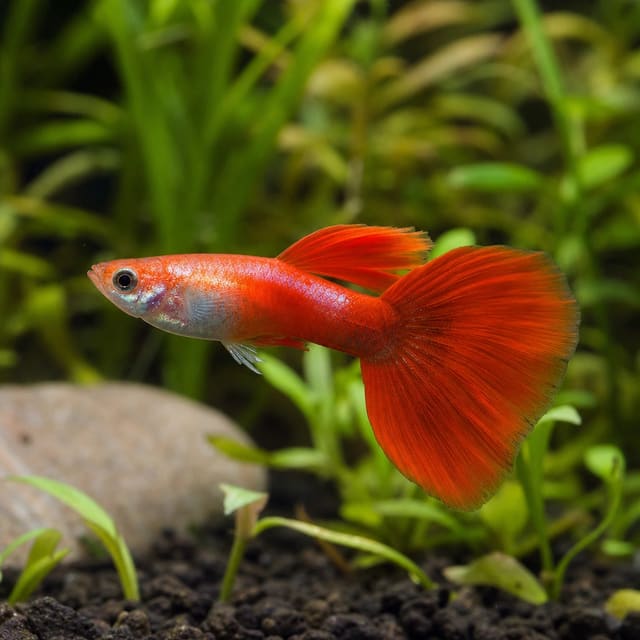
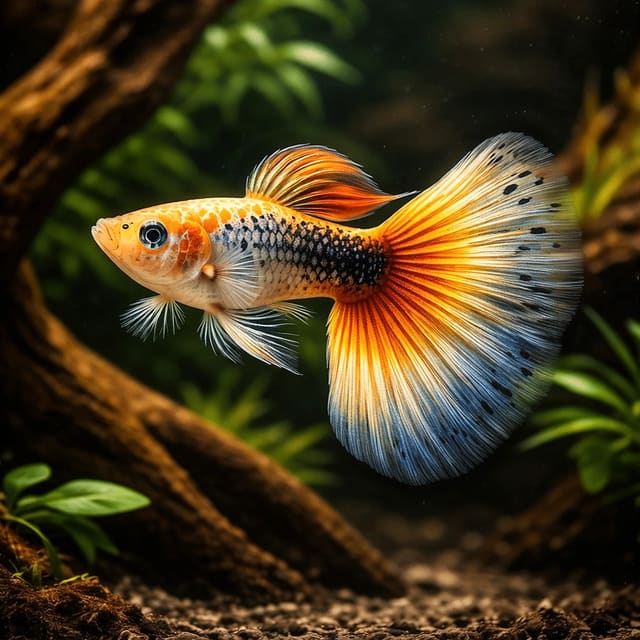
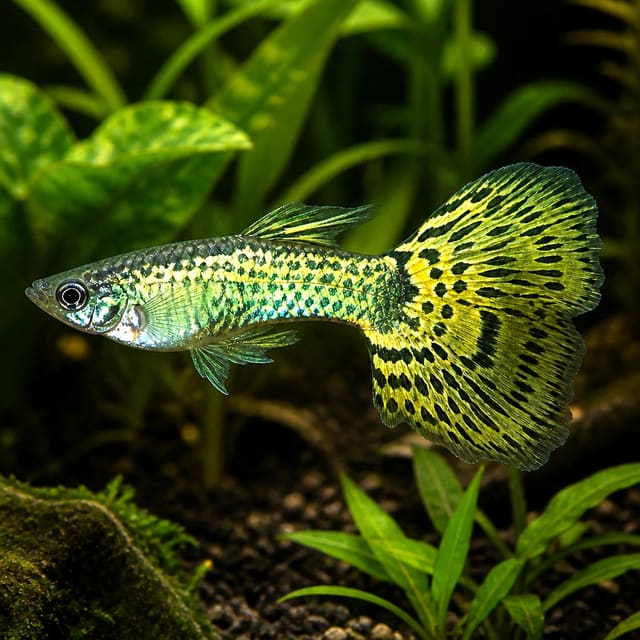
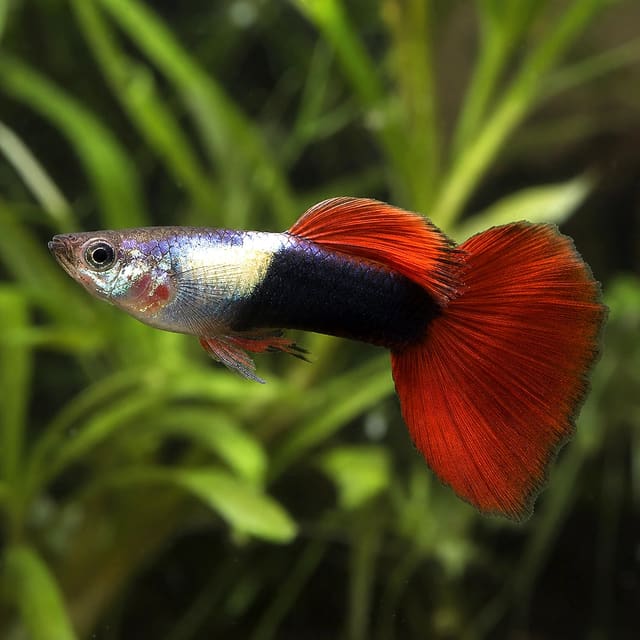
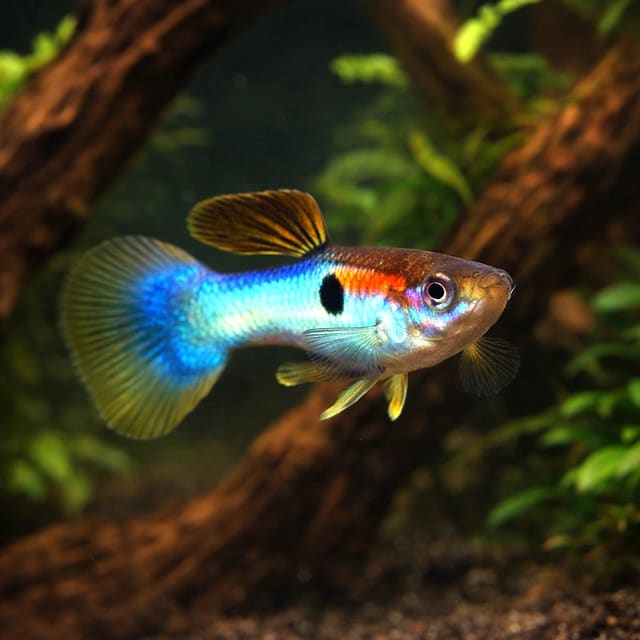
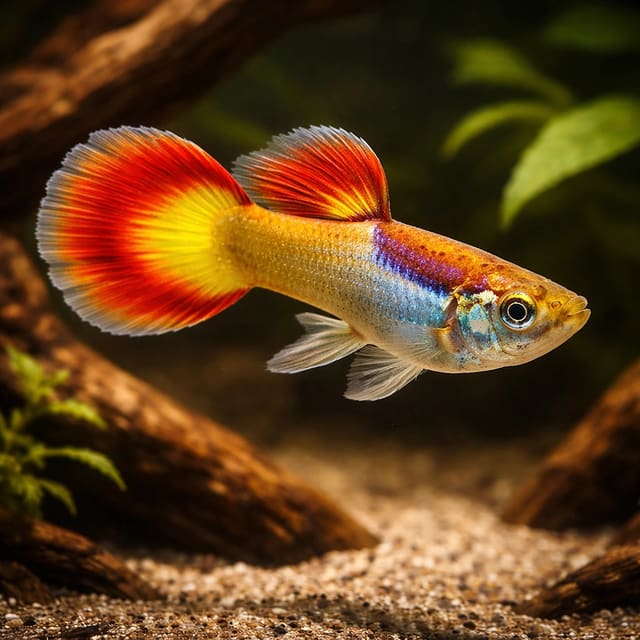
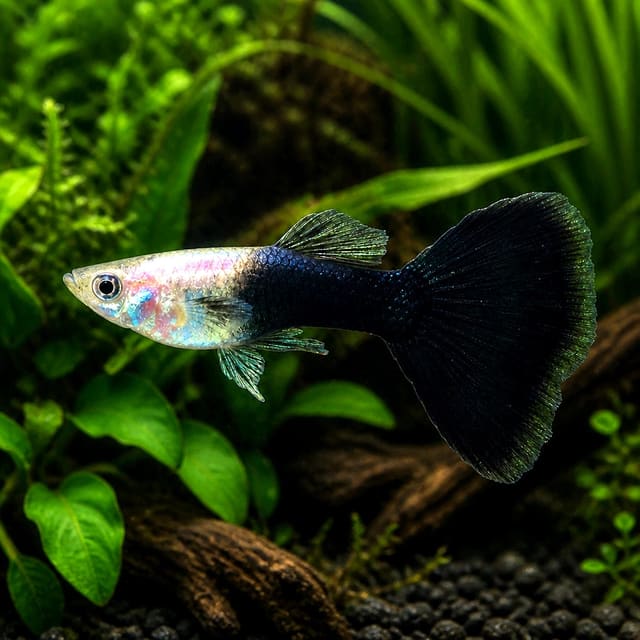
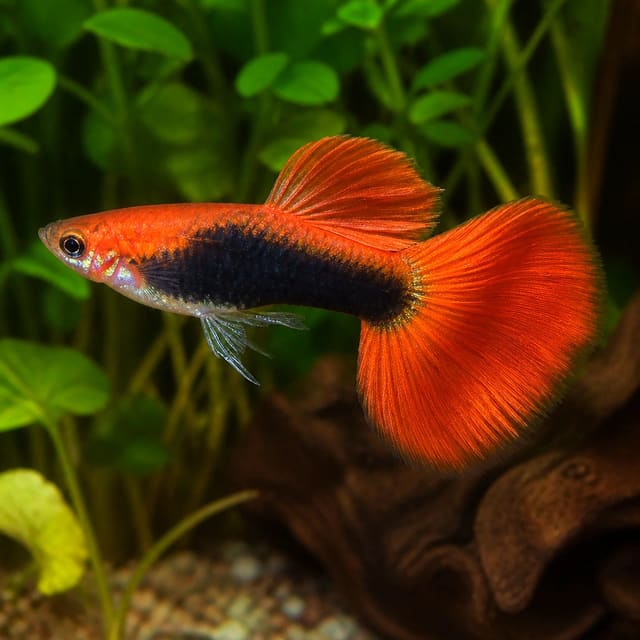
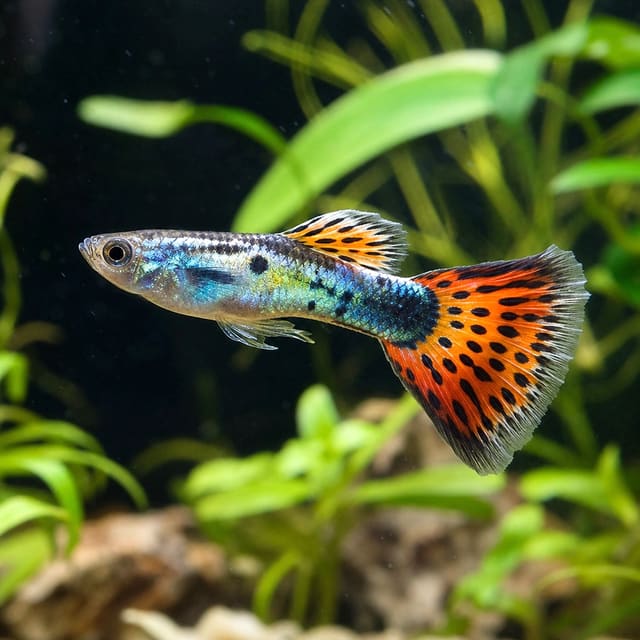
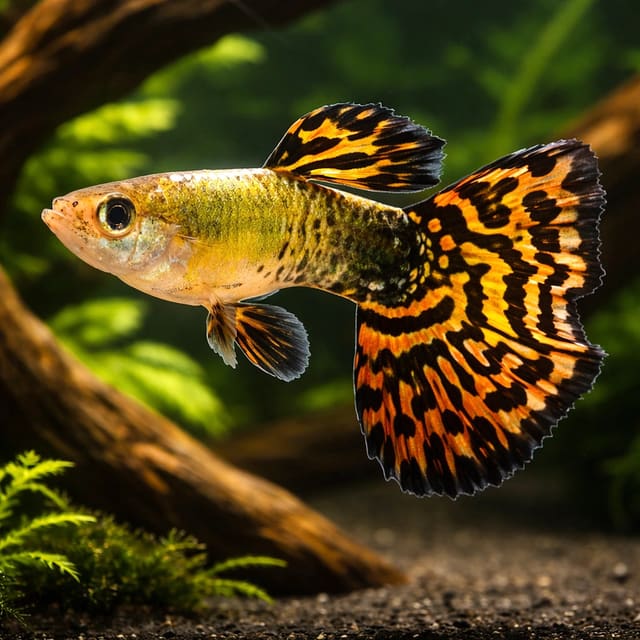
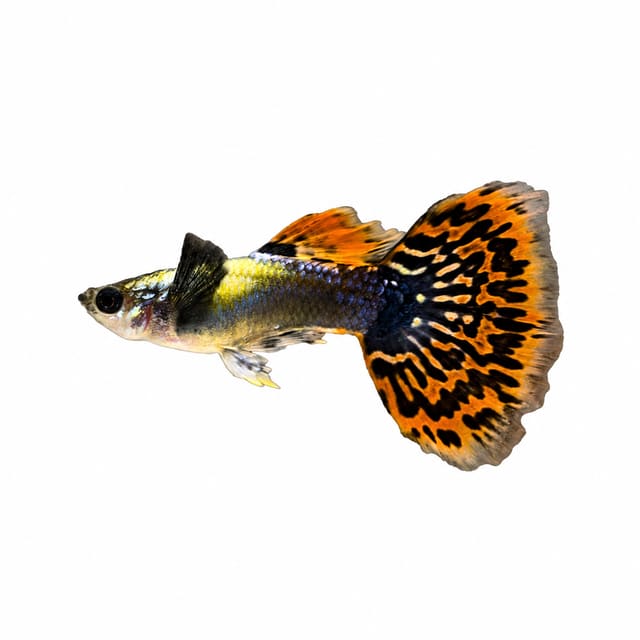
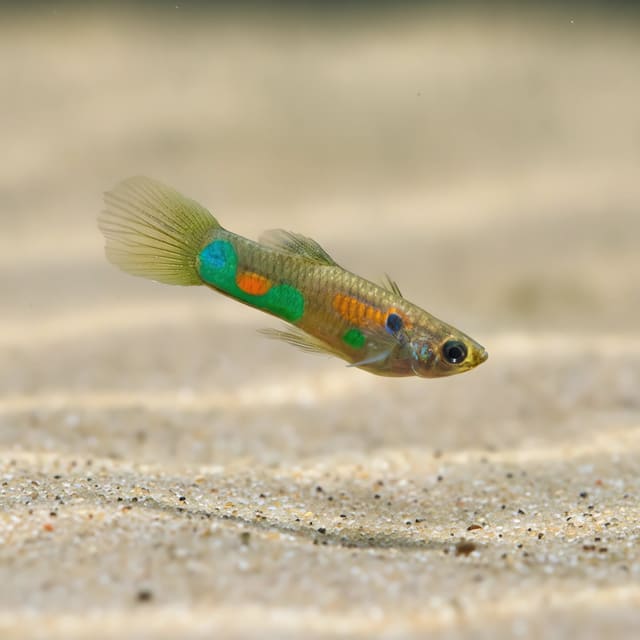
The Double Sword Male Guppy (Poecilia reticulata) is a small, active livebearer with the two extended tail points that give this fin form its trade name. One purchase supplies one male fish, with the supplier's dispatch grade of about 3–4 cm. This is a male offer: the word “double sword” describes the tail shape, not a second fish, a breeding pair or a promise that every individual has identical fin length and colour. Sex is guaranteed only when the exact product or selected option explicitly states male or female. This Poecilia reticulata male double sword listing is sold as male.
A guppy can be a rewarding choice for a prepared keeper because its behaviour is visible throughout the water column, it accepts a varied complete diet and it can live with carefully chosen peaceful fish. Its long tail also makes it vulnerable to fin nippers, strong flow and cramped or abrasive decor. The first decision is whether a mature, filtered aquarium with mineral-bearing water and a deliberate social group is ready. A single purchase adds one male to that plan; it does not create a whole group by itself.
The two extensions on the tail are a selected domestic fin form of the guppy, Poecilia reticulata. They are not a separate species, a documented pedigree or proof of a particular breeding line. Individual males can differ in colour, tail length, balance and pattern as they mature. Choose this form because the shape appeals to you, while allowing each fish's fins enough open space to swim without rubbing repeatedly against decorations. The familiar common name guppy refers to the species; “double sword” tells you the sale form.
FishBase records about 5 cm maximum standard length for male or unsexed guppies. Standard length ends at the base of the tail, so it does not include the long ornamental fin rays. A male can look longer from nose to tail tip than its 5 cm body-length figure suggests. The 3–4 cm dispatch grade describes this fish at sale; it is not a guaranteed finished body length or a way to calculate the space required for a social group. This sale is for a male, so plan around male body size and allow additional room for the ornamental tail.
Tropical Fish Co's guppy care guide uses a conservative starting screen of an aquarium at least 60 cm long for a small group of five or more, where filtration, sex mix, test results and existing livestock allow. OATA's broader guppy-and-molly sheet gives at least 45 litres and three fish for a small group; the longer store screen leaves more swimming room and a clearer way to assess actual group behaviour. Neither number means that any five guppies will fit into any tank with that label. Width, usable water after decor, existing fish, flow, cover and the ability to isolate a bullied animal all matter.
A male-only group avoids new mixed-sex mating within that group, but males may still display, pursue or nip one another. A mixed group raises courtship and fry planning questions; OATA suggests two females per male to reduce pressure on females, yet a ratio cannot promise peaceful behaviour or prevent overpopulation. Decide which social arrangement is intended before adding this male. A deliberately furnished aquarium with open swimming room, plants and sight breaks gives fish a chance to disengage. If repeated chasing or damage occurs, be ready to separate fish rather than assuming another purchase will settle them.
For an established aquarium, compare its measured temperature and chemistry with the routine guidance before ordering. The store's guppy guide uses 22–28°C for routine display; OATA's broad guppy-and-molly range is pH 7.0–8.0 and 8–18 dGH. Guppies generally do better with stable mineral-bearing water than with repeated attempts to force soft, acidic water toward a number. Ammonia and nitrite should remain at zero. These conditions must also work for any other fish, plants and invertebrates already present.
A beginner can keep guppies well when the aquarium has completed a fishless cycle, the filter is maintained, a test kit is used and a sensible population plan is in place. “Easy” is an assessment of manageable routine care in the right system, never permission to place a fish into a new untested bowl. If the setup is still being prepared, the first tropical tank guide explains how to check that the biological filter is ready before livestock arrives. The guppy collection helps compare current forms, but the aquarium must be planned for the complete adult group, not simply a striking individual tail.
Set up the aquarium around the adult group and the fish already living there. Allow at least 60 cm of useful length under the store's guppy group screen, then assess actual volume, width and water tests. Open horizontal swimming space is important for a male carrying extended tail points. Planting along the sides or rear can provide cover without turning the centre into a maze. Gentle surface movement supports oxygen exchange, while a current so strong that a fish struggles to hold position should be adjusted. The filter intake must be safe for small fish and for any fry that a mixed community might produce.
A mature biological filter turns fish waste first into nitrite and then into less toxic nitrate. Clear-looking water can still contain harmful ammonia or nitrite, so use tests rather than appearance. Confirm repeated zero readings before adding fish and continue checking after each stocking change. A filter's nominal capacity is only a starting point; performance depends on media, maintenance, flow and the full waste load of the community. Rinse suitable media in removed aquarium water when needed, preserving the useful bacteria instead of sterilising every part at once.
The actual water volume may be less than the advertised tank capacity after substrate, plants, wood and a lower waterline. That is one reason a simple number of guppies per litre is unreliable. Measure internal length and consider how much clear swimming room remains. A small group may look comfortable on the first day but become crowded as fish mature or fry appear. Leave room for observation and for the community to move without constant contact.
For routine care, aim for a steady 22–28°C, pH around 7.0–8.0 and general hardness around 8–18 dGH, following the store's guppy guide and OATA's broad guppy-and-molly guidance. Seriously Fish records a wider species-level captive range, while FishBase includes ecological occurrence values. The wider figures are not instructions to keep moving fish between extremes. Match the actual aquarium and replacement water gradually, and choose companions whose needs overlap comfortably rather than only touching at the edge of two ranges.
Use a thermostatically controlled heater where the room cannot maintain the chosen water temperature, and verify it with a separate thermometer. A heater dial is not the same as the temperature around the fish. In warm weather, oxygen availability and circulation deserve extra attention. If fish linger at the surface or breathe unusually fast, check temperature, ammonia, nitrite and circulation promptly; do not assume the behaviour has one cause.
UK tap water differs between districts and can change when supplies are blended. Test the water you actually use. Condition new tap water for chlorine or chloramine according to the product directions, and match temperature during water changes. Hardness and alkalinity are related but different measurements: a GH result describes dissolved calcium and magnesium, while carbonate hardness affects buffering. The water chemistry guide explains how to interpret these tests; the water parameter matcher can help compare readings with guidance. Repeatedly adding chemicals to chase a pH value can create more instability than a suitable, consistently maintained source.
Ammonia and nitrite should be undetectable in a mature aquarium. OATA also advises controlling nitrate in relation to the tap-water baseline. Record readings and look for trends, particularly after changing feeding, filter media or livestock. A partial water change removes dissolved waste but must be made with conditioned water at a compatible temperature. Siphon uneaten food and debris without disturbing every refuge at once. A regular routine is valuable because it makes unusual changes easier to recognise.
Guppies occur in a wide range of wild habitats, including some brackish water. That fact does not mean aquarium salt is required for a domestic guppy. Salt, minerals, heat or medication should have a measured purpose and be compatible with every species and plant in the aquarium. This male's long fins are a reason to keep conditions consistent and to investigate damage or distress, not a reason to add a routine treatment.
Give the group a clear swimming route and several places to retreat from another fish's line of sight. Living or aquarium-safe artificial plants can supply cover; choose soft edges that will not catch extended fin rays. Floating plants can dim harsh light and help shy fish settle, provided they do not block all surface movement or access for maintenance. Secure any hard decor so fish cannot be trapped beneath it. Leave enough access to observe fins and feeding and to clean the aquarium.
Guppies are active and may investigate the whole tank, but that does not make every tank mate or every water current suitable. Watch whether the double sword tail moves freely rather than folding against a constant flow. A male repeatedly hiding behind a filter or being blown across the aquarium needs a layout or flow adjustment. Conversely, completely still, poorly oxygenated areas can collect waste. Direct the outlet to move the surface gently and check the result where the fish actually swim.
A lid and safe equipment gaps are sensible for a busy community aquarium. Intake guards and carefully seated cables matter if small fish or fry are present. Avoid sharp plastic foliage, narrow ornament holes and rough seams that can scrape fins or trap a fish. When changing the layout, alter one element at a time and observe whether fish can now move and feed more freely. A visually attractive display is successful only when the animals can use it safely.
Use a complete, appropriately sized omnivore flake or granule as the dependable staple. Guppies take a variety of foods, and a little safe algal or invertebrate variety can add interest. Suitable frozen or live foods need to be appropriate in size and sourced with attention to hygiene. The fish should be able to catch its share without fighting a strong flow or more forceful tank mates. A dramatic tail does not change the species into a specialist carnivore or herbivore.
Offer a modest amount, watch who eats and remove food that is left to decay. Portion size depends on the actual fish, food density, temperature, number of tank mates and filtration. OATA suggests only what the fish can consume within a short feeding period, but no one wafer, pinch or clock interval fits every setup. Overfeeding can raise waste levels quickly; underfeeding a shy individual can be hidden when faster fish intercept everything. Look at body condition and behaviour over days, not only one exciting feeding response.
Wild guppies feed on small invertebrates and other material in their habitat, but collecting pond organisms or feeding detritus from outdoors is not an aquarium-care recipe. A complete prepared food offers more predictable nutrition and hygiene. Store dry food properly and discard old food that has become damp or stale. When adding a treat, keep the main ration balanced; a fish that eagerly eats one rich item still needs an appropriate staple.
If this male loses condition while the others appear plump, check where food enters the water and whether he is chased away. Feed in more than one place or adjust the group and layout as needed. Uneaten food at the bottom is not proof that a guppy can use it after it has begun to decompose. The goal is steady condition, active swimming and clean tested water rather than the appearance of constant feeding.
A settled guppy should swim with control, breathe at a regular pace, hold its fins reasonably open and show a consistent interest in food. Some display and brief pursuit occur in social groups, but repeated cornering, torn fins or one fish unable to eat are problems to address. Observe the aquarium at more than one time of day; a fish excluded during feeding or resting may be missed in a quick glance. Compare changes with its usual behaviour rather than diagnosing from colour alone.
Clamped fins, surface gasping, unusual balance, rapid breathing, spots, wounds, a swollen or thin body and sudden refusal of food are warning signs. First test ammonia, nitrite, nitrate, pH and temperature, then inspect the filter, heater, recent maintenance and new arrivals. Record what changed and seek advice from a fish vet when signs persist or worsen. A visible spot or damaged tail does not identify one disease or justify a guessed medicine. Some treatments can harm sensitive tank mates or filter bacteria, so follow qualified advice and the exact product label.
A separate biologically supported quarantine aquarium can reduce the chance of introducing a problem to an established community. It needs its own suitable temperature, filtration, cover and test routine; an uncycled small container creates another welfare risk. Keep nets and wet equipment separate where practical. Observe arrivals before mixing them with the main group, and get help early if breathing, swimming or appetite does not settle. Quarantine is a managed environment, not a fixed number of days that proves all risk has vanished.
Long tail points make physical damage easier to notice. Check for a clean fin edge, freedom of movement and the absence of persistent nipping. Damage can arise from aggression, rough decor or poor water, and those causes require different responses. Improving water and removing a hazard may help while the fish recovers, but continued pursuit needs a social solution. Avoid adding another male merely to distract a bully; observe the full group and keep a cycled separation option.
Prepare the mature aquarium, measured water, gentle flow and a quiet place before the fish arrives. Someone should be available to receive the parcel under the current delivery and Live Arrival Guarantee terms. Inspect the bag and the fish while it remains sealed, then acclimatise gradually and avoid pouring transport water into the display. If a claim is needed, the policy explains the same-day contact and continuous unboxing video while the parcel and bag are still sealed. The claim procedure should be completed before normal release steps disturb the evidence.
Once introduced, give the guppy room and cover while it adjusts. Observe breathing, balance, swimming and whether existing fish pursue it. A newly transported animal may initially be less colourful or more cautious; continuing distress is still a reason to test water and seek help. Feed modestly after it settles and remove uneaten food. Keep the filter running and check the aquarium again during the first days because any added fish changes the biological and social load.
This is one male guppy. Guppies are social fish, so choose a group arrangement deliberately rather than leaving a single animal isolated. FishBase's aquarium note says five or more and Tropical Fish Co follows a five-plus house recommendation when the aquarium has capacity. OATA's wider guppy-and-molly sheet gives a lower floor of three. Neither number is a guarantee that the individuals will get along or that the tank can support unlimited fish. Watch actual chasing, feeding access and body condition.
A male-only group can be attractive when a keeper does not want new mating within that group. Yet males still display, compete and sometimes damage long fins. Break lines of sight with plants and leave open swimming paths; do not crowd the tank simply to spread aggression. If one male repeatedly pins another in a corner, changes of layout may help, but a separate cycled space is essential if the problem persists. Tail shape and colour do not predict temperament reliably.
Mixing this male with females introduces courtship and possible fry. OATA's broad advice suggests two females per male to reduce pressure, but a numerical ratio is only a starting screen. Space, individual behaviour, hiding places and food access matter. Females may store sperm from earlier mating, so even a later female-only arrangement may produce young. Before combining sexes, make a realistic plan for fry, filtration, nursery capacity and responsible rehoming; never rely on predators as a population-control method.
Seriously Fish names quiet livebearers, rasboras, corydoras, small loricariids and suitable tetras as possible community companions for Poecilia reticulata. That is a shortlist for assessment, not a promise about every species in those broad groups. Check adult size, temperature, pH, hardness, minimum social group, food competition and floor or swimming space for each exact animal. A peaceful fish can still be a poor match if it requires very soft acidic water or monopolises the guppy's food.
Fin-nipping species such as tiger barbs and serpae tetras are poor choices for a male with extended tail points. A large fish able to swallow a guppy is also unsuitable. Be cautious with territorial or strongly display-oriented fish; for example, a betta-and-guppy mix can be unpredictable even when both are individually described as community fish. Shrimp and fry are not automatically safe from fish of any size. Do not use a “community” label as a substitute for observing the actual animals.
Corydoras can be possible in an appropriately sized aquarium, but they need their own group, smooth bottom area and access to sinking food. A small loricariid similarly needs its own adult space and retreat. Mollies or platies may suit some guppy communities, yet their mature size and water needs must be checked rather than inferred from their shared livebearer label. Adding another social species can push an aquarium past its practical capacity even when each species looks small on the day of purchase.
A useful compatibility check has six parts: overlapping routine water ranges; adult size and predation risk; fin and territorial behaviour; enough swimming and floor space for all required groups; reliable access to food and cover; and a separation plan if observation contradicts expectations. Run through those checks before adding any fish. After introduction, monitor more than the first few minutes: some chasing appears only at feeding time, at dusk or after individuals settle into particular areas.
The double sword tail is a selected fin appearance within the guppy species. It does not make this male biologically separate from other P. reticulata forms. If colour or fin-form purity matters to a breeding project, obtain documented lines and keep breeding groups separate. Do not infer pedigree from a bright photograph or the tail outline. Endler's livebearer is a different valid species, Poecilia wingei, and the two can hybridise; keep documented lines apart where identity preservation matters.
A peaceful male-only display can let the tail shape be seen without planning for fry, provided the fish have enough room and persistent chasing is addressed. A mixed-sex community may be more complicated than expected because births can continue and adult fish may eat young. Neither arrangement is automatically best for every keeper. Choose the group you can maintain, test and rehome responsibly, and avoid adding this male to a tank where long fins are already being nipped.
When browsing the Guppy Care Guide, use its group and water guidance for the species, then return to this exact male offer for the sold sex, fin form and dispatch grade. The broader guide explains why a 60 cm aquarium, tested mineral-bearing water and a response plan for chasing or fry are useful starting screens. The live behaviour of the actual community determines when a plan needs to change.
FishBase records up to about 5 cm standard length for male or unsexed guppies. Standard length excludes the tail, so the two sword extensions can make the fish look longer. The 3–4 cm sale grade is its dispatch size.
Tropical Fish Co uses a mature, filtered aquarium at least 60 cm long as a conservative screen for a small guppy group. Check usable space, water tests, sex mix and existing fish; a litre label alone cannot guarantee suitable capacity.
Guppies are social. The store recommends a group of five or more where the aquarium and sex plan allow, while OATA's broad guppy-and-molly sheet advises at least three. Male-only groups still need observation for chasing and fin damage.
It can suit a prepared keeper with a mature filter, stable tested mineral-bearing water, a complete diet and a social plan. It is not suitable for an uncycled bowl, and its long tail needs protection from nippers and rough decor.
Use a complete, appropriately sized omnivore flake or granule as the staple, with modest safe algal and invertebrate variety. Watch that every fish reaches food and remove uneaten portions before they spoil.
For routine display the store uses 22–28°C; OATA's broad guppy-and-molly guidance gives pH 7.0–8.0 and 8–18 dGH. Keep water stable, conditioned and tested, with zero detectable ammonia and nitrite.
Guppies are generally peaceful, but males may display and chase one another. Persistent pursuit, cornering or torn fins require more space, sight breaks or separation. Its own extended tail is vulnerable to nipping tank mates.
Some quiet livebearers, rasboras, corydoras, small loricariids or suitable tetras may work when exact water needs, adult size, group space and feeding match. Avoid known fin nippers such as tiger barbs and serpae tetras and any predator able to swallow it.
Tropical Fish Co's current delivery policy describes oxygenated protective packing and a licensed live-animal courier. Arrange for someone to receive the parcel and follow the live arrival terms. A claim needs prompt same-day contact and continuous sealed-parcel video evidence.
The accepted species identity and male standard-length figure are recorded by FishBase. Seriously Fish describes species-level aquarium conditions, diet and compatibility. The OATA guppy-and-molly care sheet provides broader UK group guidance. Tropical Fish Co's guppy care guide gives the 60 cm, five-plus group and 22–28°C house recommendations used here. Water quality and health advice also follows the RSPCA aquarium environment guidance. The exact male double sword sale form and 3–4 cm dispatch grade come from the current offer and its supplier identity.
No reviews for this item yet. Bought one? Honest reviews only, good or bad.
What customers say about ordering from us
Easy website plenty of info on fish your buying great to pick a time slot
TRACEY DURRANT · 7 Oct 2026
Got some lovely fish thank you
Kevin Mackie · 7 Oct 2026
Reviews of our shop, collected by Judge.me, an independent third-party review collector. Newest first.