Easy
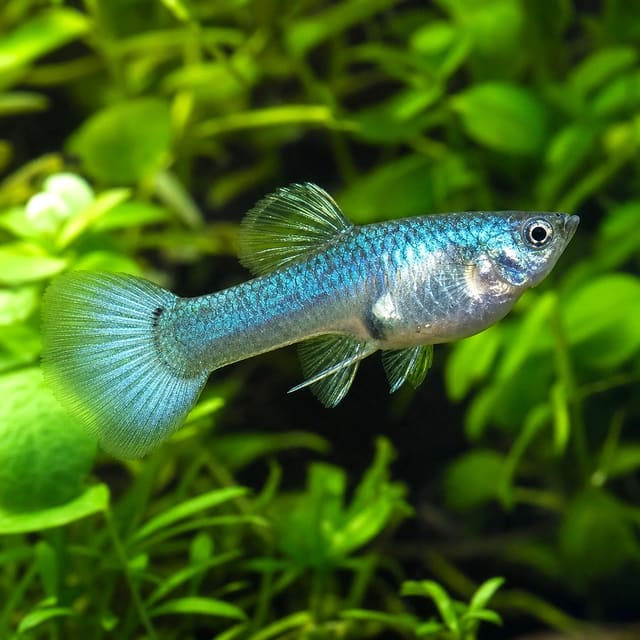
Blue Moscow Male Guppy (Poecilia reticulata)
22–28°C · pH 7–8 · 45L
£6.49
Photo coming soon
The size, price and care details on this page are for this listing.
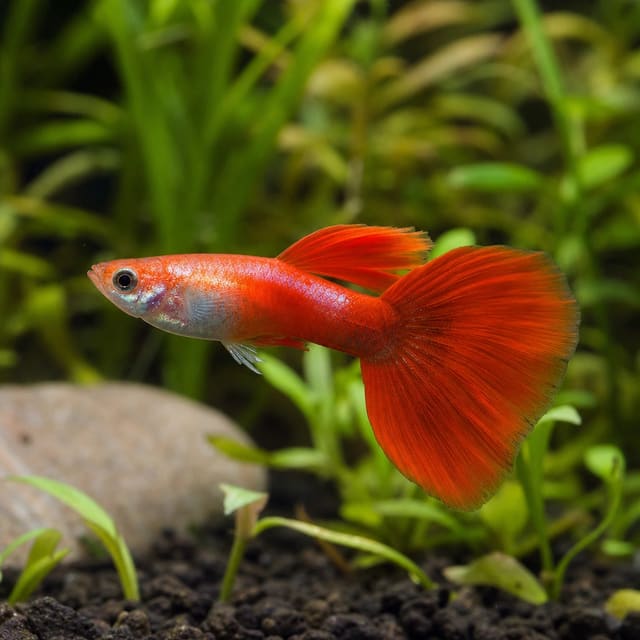
The Full Red Male Guppy is a peaceful, social Poecilia reticulata colour form sold as one 3–4 cm male. It suits a prepared beginner with a mature filtered aquarium, stable mineral-bearing water, gentle flow and a deliberate group and population plan.
Shoaling fish: kept in a group they feel safer, stay calmer and show their best colour.
Minimum of 2 per order.
The Full Red Male Guppy is a peaceful, social Poecilia reticulata colour form sold as one 3–4 cm male. It suits a prepared beginner with a mature filtered aquarium, stable mineral-bearing water, gentle flow and a deliberate group and population plan.

Guppies are social livebearers suited to a prepared beginner, not a fish-per-litre formula. Use a mature filtered aquarium, tested neutral-to-alkaline mineral-bearing water, deliberate sex and population planning, open swimming room, cover and a separation option.
Maintain these water conditions for optimal health and vibrant colors
The Full Red Male Guppy is a selectively bred colour form of Poecilia reticulata, the familiar guppy. One purchase is one live male in the full-red trade form at the 3–4 cm dispatch grade. The only option is the default variant, making this a single-size offer. The scientific name is Poecilia reticulata; “male full red” describes the sex and colour offer, not extra words in the binomial.
Sex is guaranteed only when the exact product or selected option explicitly states male or female. This Full Red Male Guppy listing is sold as male. That makes the offer useful when planning an all-male display or a deliberately managed mixed group, but it does not remove the need to think about social pressure. Guppies are social fish. Tropical Fish Co’s conservative house guidance is a group of five or more where aquarium capacity, sex plan, filtration, test results and other livestock allow.
FishBase records 5.0 cm standard length for male or unsexed P. reticulata. Standard length excludes the tail, which matters for long-finned domestic males. Seriously Fish gives a 6.0 cm SL species profile, while the store’s reviewed guide explains that 6 cm is a maximum female record and retains 5 cm SL for male or unsexed fish. For this male listing, use the 5 cm SL record for adult planning and allow additional room for the long caudal fin rather than treating the 3–4 cm dispatch grade as adult size.
The routine store range is 22–28°C. For customer planning, use pH 7.0–8.0 and 8–18 dGH from OATA’s guppy-and-molly group guidance, keeping the water stable and mineral-bearing. FishBase and Seriously Fish record broader species ranges, but combining every extreme would create a misleading “anything goes” claim. Test the aquarium you actually own, not just tap water on the day it is filled. The water matcher helps compare measured readings with the guidance.
This is rated easy by the store for a prepared beginner, not because the fish can be added to an uncycled bowl. A suitable keeper has a mature filtered aquarium, water tests, a group and sex plan, open swimming room, cover and a way to separate a fish if persistent chasing develops. A guppy is forgiving of sensible variation, but it is still vulnerable to ammonia, nitrite, unstable temperature, fin damage and unsuitable companions.
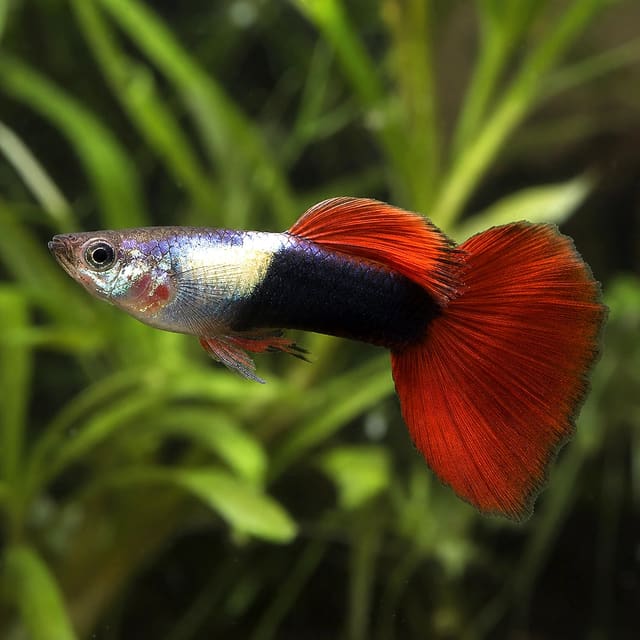
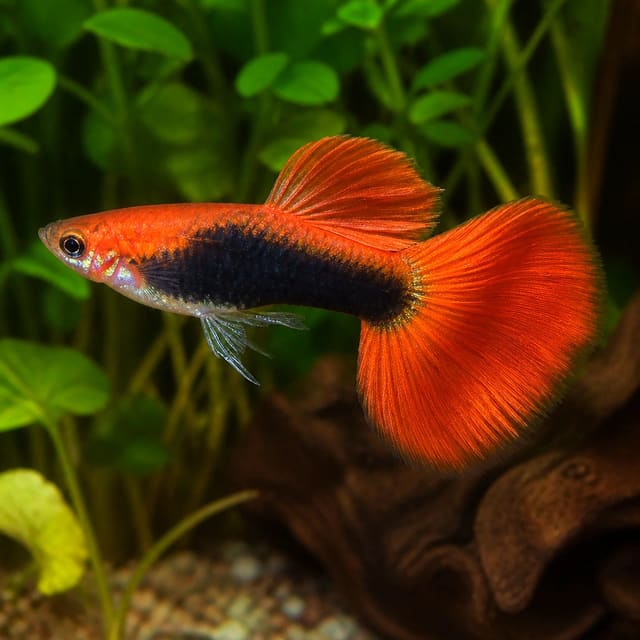
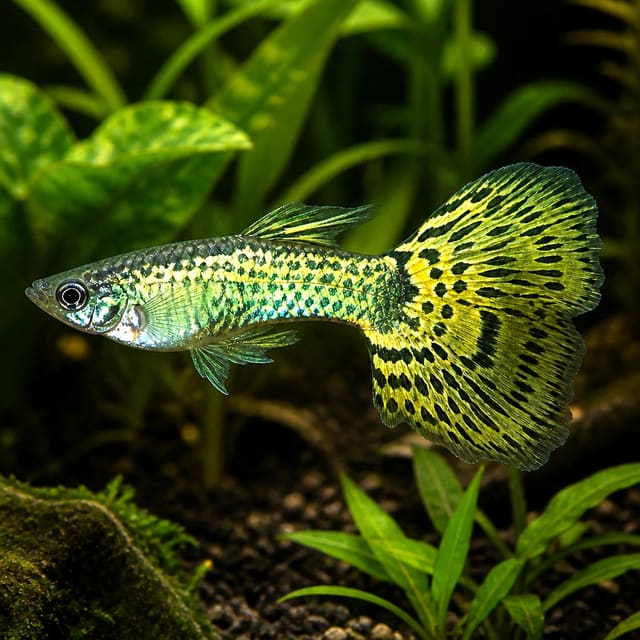
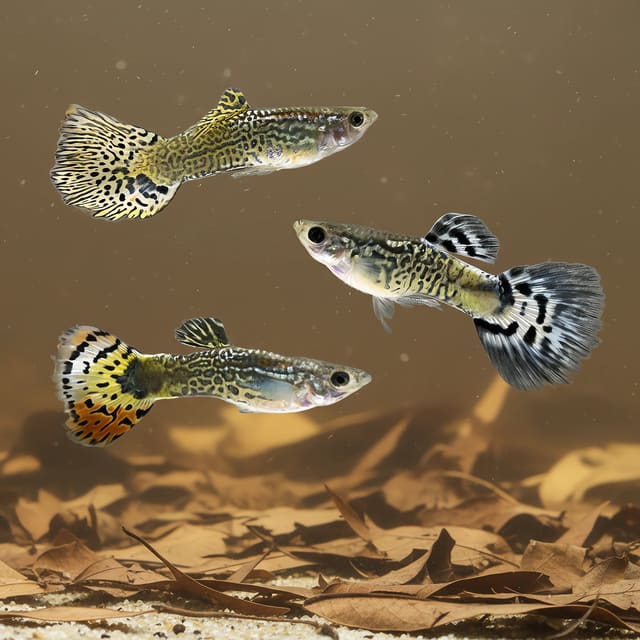
Gallery images have been digitally enhanced to improve image quality. Natural colour, pattern, size and maturity can vary between live animals. The single image visibly shows one bright red, long-finned male-type guppy against green plants. Treat the image as a visual presentation; the delivered fish can vary in fin proportions, shade and markings.
| Question | Practical answer |
|---|---|
| What does one purchase supply? | One live Full Red Male Guppy at the verified 3–4 cm dispatch grade. |
| How large should I plan for? | FishBase records 5.0 cm SL for male/unsexed fish; domestic tail length extends beyond SL. |
| What water should I prepare? | Routine store temperature 22–28°C, with pH 7.0–8.0 and 8–18 dGH used as scoped OATA group guidance. |
| How many? | Store policy favours five or more where the sex plan and aquarium capacity allow. |
| What should I avoid? | Fin-nipping fish, predatory tank mates, strong relentless flow, immature filtration and unplanned reproduction. |
Seriously Fish gives a 45 × 30 cm base and approximately 41 litres for the species profile. FishBase’s aquarium note gives a minimum length of 60 cm, and Tropical Fish Co adopts the more conservative 60 cm length for one small guppy group. These statements describe different planning measures, so they should not be collapsed into a claim that one litre number guarantees safety. Footprint, swimming room, group size, sex mix, filtration and the other inhabitants all matter.
A longer tank gives active males room to move without being forced into constant face-to-face contact. Provide open swimming space through the middle and front, then use live or fish-safe artificial plants around edges and the surface to create cover. Floating vegetation can soften bright light and give a pursued fish somewhere to pause. Keep dense growth from blocking all circulation, and leave clear access for siphoning and observation.
Guppies do not need a violent current. Seriously Fish specifically advises avoiding strong flow. Aim for steady circulation and surface movement without making a long-finned male fight the filter output all day. Use a guarded intake if there is any risk of fins being pulled against it. Watch the fish: normal exploration across the tank is more useful evidence than a pump’s advertised turnover alone.
If the aquarium is being prepared from scratch, complete the first aquarium setup before livestock is ordered. A clear tank is not necessarily cycled. The biological filter needs time and an ammonia source to establish the bacteria that process waste. Confirm performance with tests, and add fish only when the system can keep ammonia and nitrite at zero under an appropriate load.
The store’s reviewed guppy guide uses 22–28°C as its routine display range. OATA’s combined guppy-and-molly sheet gives pH 7.0–8.0 and medium-hard water at 8–18 dGH. FishBase records the species in 18–28°C, pH 7.0–8.0 and 9–19 dGH; Seriously Fish gives 17–28°C, pH 7.0–8.5 and 8–30 dGH. Those wider records show biological breadth, but they do not justify moving a domestic fish rapidly between extremes.
For a home aquarium, choose a stable point suited to all residents and avoid unnecessary correction. Guppies are better planned for neutral-to-alkaline, mineral-bearing water than chronically soft acidic conditions. Test pH and general hardness before purchase. If results are near a boundary, repeat the test and consider seasonal or water-company variation. The water chemistry guide explains the readings and why stability matters.
Check temperature with a separate thermometer rather than trusting the heater dial. Heat should be distributed through the aquarium without creating a punishing current. During a water change, match replacement temperature closely and treat tap water for chlorine or chloramine where required. Sudden changes in mineral content, pH or temperature can cause more stress than a stable value within a sensible range.
The RSPCA explains that fish release toxic ammonia and that established filter bacteria convert it first to nitrite and then to less harmful nitrate. OATA’s group sheet states that ammonia and nitrite should be zero. These are general aquarium-welfare principles rather than unique guppy facts, but they are central to keeping a small social fish healthy.
Test after adding livestock, changing the feeding routine or servicing the filter. A mature aquarium can still be overloaded. If ammonia or nitrite appears, reduce inputs, protect oxygenation and address the cause rather than adding another fish or a random medication. Do not rinse filter media under tap water or replace every piece at once. Rinse it lightly in the aquarium water removed during a water change when maintenance is necessary and preserve as much established capacity as possible.
OATA broadly recommends a weekly 25% partial water change for guppies and mollies. Treat that as a practical starting routine and adjust with measured nitrate, stocking and feeding in mind. Siphon uneaten food and debris, especially around plant bases. Condition replacement water, match it to the aquarium, and record unusual readings. Consistent modest maintenance is easier on the fish than long neglect followed by a dramatic reset.
FishBase records wild guppies eating zooplankton, small insects and detritus. Seriously Fish notes that domestic aquarium strains accept most foods offered, while OATA recommends a good-quality flake or granule with suitable small live or frozen variety. For everyday use, choose an appropriately sized complete staple and offer controlled variety rather than constructing a diet from one ingredient or relying on the word “omnivore” alone.
Feed a small amount that the group can finish promptly. Observe whether every fish gets access and whether long fins or social pressure prevent one male from reaching food. Crushed or appropriately small particles are easier for guppies to take than large pieces left to soften and pollute the water. Remove persistent leftovers. More food is not a cure for poor access; rearranging feeding points or addressing harassment may be needed.
Colour-enhancing claims should not replace nutritional quality. The full-red trade form is already the verified offer, but exact shade varies and no food can guarantee that the delivered fish will match a photograph. Good colour and fin carriage are influenced by health, water, lighting, age and genetics. Use appetite and body condition as welfare observations, not as a competition to produce the deepest red.
The store guide uses a conservative policy of five or more guppies where capacity and sex planning allow. OATA’s broader minimum is three, and FishBase’s aquarium note says five or more. This listing supplies a male, so decide whether the destination is an all-male group or a deliberately managed mixed-sex aquarium before purchase. Do not add a male first and invent the population plan later.
In a mixed group, OATA recommends two females per male to reduce pressure on females, but adding females also creates a real reproduction and rehoming responsibility. Females can store sperm and continue producing young after separation from males. The exact number of fry is not promised here, and breeding is not required for good care. If you do not want young, an intentionally all-male plan avoids that route, though males can still display, chase and need space and cover.
In an all-male display, choose enough room and visual structure that one confident fish cannot police the whole aquarium. Watch for a male kept away from food, clamped fins, persistent hiding or torn fins. Temporary display behaviour is different from repeated exclusion. A separation option should exist before fish are mixed. Adding more males simply to “spread aggression” is not automatically safe and should never exceed the aquarium’s filtration or space.
Start by checking water whenever behaviour changes. Rapid breathing, hanging at the surface, loss of appetite, clamped or damaged fins, unusual spots, erratic swimming or sudden isolation all deserve attention. The RSPCA’s fish-health guidance supports looking for changes in normal behaviour and appearance. It does not turn a symptom list into a diagnosis. Water, social stress and disease can produce overlapping signs.
A separate quarantine system helps protect an established community. The MSD Veterinary Manual supports biosecure isolation and describes at least 30 days as a professional quarantine benchmark. A quarantine aquarium must still be heated, filtered and appropriate for the fish; an uncycled jar is not biosecurity. Use separate equipment where practical, observe appetite and waste, and avoid prophylactic drug cocktails without a diagnosis.
If illness is suspected, record test results, temperature, recent additions, feeding and clear images or video. Contact an experienced aquatic retailer or use OATA’s fish-vet directory for qualified help. Do not copy a medicine dose from an unrelated species page. Diagnosis requires assessment of the individual fish, its water and its history; use qualified advice before any medicine.
Have the mature aquarium ready before delivery. Use the current arrival steps on the store’s delivery and Live Arrival Guarantee policy. The policy states that fish are hand-packed in oxygenated bags inside an insulated box, with a heat pack when conditions require it, and carried by a licensed tracked live-animal courier. Someone must be available to receive the parcel.
For a Live Arrival Guarantee claim, make a continuous unboxing video beginning with the sealed parcel, continuing through opening, and showing the fish still inside the sealed bag. Contact the store the same day with the order number. The recording is evidence for a claim, not a routine fish-care procedure, and it should not be confused with water acclimation.
Once the arrival check is complete, acclimatise according to the current store directions and do not pour transport water into the aquarium. Keep lighting subdued and observe breathing, balance and fin condition. Avoid a heavy first feed. Check that established residents do not immediately corner the new male, and be ready to use the prepared separation option if he cannot rest or feed.
Begin maintenance by watching the group for a few minutes. Note whether the Full Red Male Guppy swims freely, approaches food, holds his fins normally and can move away from other males. Check whether he is repeatedly hiding near the heater, filter or surface. This quiet observation matters because cleaning immediately changes the scene and can hide the behaviour that first signalled a problem.
Test temperature, ammonia, nitrite and the parameters relevant to your water plan. Record results rather than trusting memory. pH and hardness do not need to be chased every day in a stable aquarium, but periodic records reveal whether top-ups, water changes or substrate are moving the system. A sudden result should be repeated with a sound test before a drastic correction is made.
During the water change, siphon visible waste and uneaten food while leaving fish enough cover to feel secure. Trim plants so they continue to provide refuge without creating stagnant pockets. Inspect the intake guard and remove debris that reduces flow. Clean only the filter media that needs attention and preserve established biological material. Never replace all media just because a calendar says it is old.
Match replacement water to the aquarium, add conditioner where needed and refill in a way that does not throw fish around. After maintenance, verify heater operation, circulation and normal behaviour. If the male clamps his fins or gasps after a water change, check temperature and chemistry first. “Stress” describes a response; it is not a diagnosis and should not replace measurements.
A stocking plan is not finished on delivery day. Long fins develop, social relationships change and plants grow. Recheck whether every fish has open swimming space and whether one male controls all feeding routes. Count the actual animals, including any fry, rather than assuming the original number still describes the biological load. If a mixed-sex group produces young, filtration and space can become inadequate quickly.
Before adding another colour form, ask what customer problem the addition solves. A new fish should not be used to distract a bully, fill visual space or complete a colour palette when the aquarium is already at its practical limit. Compare adult size, sex, water, behaviour and quarantine needs first. Leaving capacity unused is often the safest choice.
A simple note of test results, water changes, new arrivals, appetite and visible fin damage can turn a vague concern into a clear pattern. It also makes retailer or veterinary advice more useful. Photograph unusual signs in consistent light, but do not diagnose by colour alone. The goal is not paperwork for its own sake; it is to notice change early enough to protect welfare without reaching for an unprescribed treatment.
Seriously Fish describes guppies as peaceful community fish and names other livebearers, rasboras, corydoras, small loricariids and suitable tetras as possible companions. Those are categories to investigate, not universal guarantees. Match adult size, temperature, pH, hardness, diet, activity and group requirements for each exact species. A peaceful label does not solve a water mismatch or an overcrowded aquarium.
Avoid known fin-nipping fish. OATA names barbs as an example, while Seriously Fish specifically mentions tiger barbs and serpae tetras. Long domestic fins are an obvious target and can also make escape slower. Also avoid fish large enough to swallow a guppy and forceful feeders that prevent the male from eating. Do not rely on the new guppy simply being faster; chronic pursuit is a welfare problem even without visible wounds.
Browse the guppy collection to compare colour and sex offers, but treat every product as a separate stocking decision. The related products field is for same-species comparisons, not a statement that all listed guppies should be purchased together. An appealing colour combination can still be the wrong choice if it creates an unplanned sex ratio or exceeds the aquarium’s capacity.
Guppies are livebearers. Seriously Fish and OATA both support the need for deliberate sex ratios in mixed groups, and Seriously Fish notes that females can retain viable sperm. A keeper can therefore receive females that later produce young even without a male currently present. If reproduction is unwanted, an all-male aquarium is the clearer plan. If mixed sexes are chosen, prepare for repeated broods, juvenile care and responsible rehoming before adding the fish.
This listing is male, which is a firm offer fact. Do not infer that every existing guppy in another retailer’s tank has been sexed equally reliably. Check the exact product and observe the group. Males may display and chase one another in an all-male aquarium, so plants, swimming space and a separation option remain useful. Females should never be added merely as a way to distract males unless the keeper accepts the breeding consequences.
During the first week, watch who eats, who occupies cover, and whether any fish remains at the surface or in a corner. Inspect long fins for fresh splits. Check water if behaviour changes. A community is working only when every fish can feed, rest and move without persistent attack. If that standard is not met, intervene by separating fish or revising the stocking plan; do not wait for severe fin loss.
The most reliable compatibility rule is conditional: peaceful, similarly sized community species that share the same stable mineral-bearing water may work in a suitably sized aquarium, while fin nippers, predators and relentless competitors should be excluded. The aquarium’s real footprint and the temperament of the individuals still decide the result.
A Full Red Male Guppy has a FishBase male/unsexed record of up to 5.0 cm standard length. Standard length excludes the tail, so a long-finned male needs room beyond that body measurement; the 3–4 cm dispatch grade is not an adult-size promise.
A Full Red Male Guppy can be planned from the Seriously Fish 45 × 30 cm base and approximately 41-litre species profile, while FishBase and Tropical Fish Co use a more conservative 60 cm aquarium length for a small group. Group size, sex plan, filtration and tank mates still determine whether the setup is suitable.
Tropical Fish Co recommends keeping the Full Red Male Guppy in a social group of five or more where aquarium capacity and the sex plan allow. This listing supplies males; an all-male group avoids fry but still needs swimming room, cover, observation and a way to separate a persistently harassed fish.
Yes, the store rates the Full Red Male Guppy easy for a prepared beginner with a mature filtered aquarium, tested mineral-bearing water and a deliberate group plan. Easy does not mean suitable for an uncycled bowl or maintenance-free care.
Feed the Full Red Male Guppy an appropriately sized complete flake or granule as the staple, with safe small live or frozen variety where suitable. Feed portions the group finishes promptly, make sure every fish gets access and remove uneaten food.
Use the store’s routine 22–28°C range with pH 7.0–8.0 and 8–18 dGH from OATA’s guppy-and-molly guidance. Other species references record broader ranges, but stable neutral-to-alkaline mineral-bearing water is the practical target.
Guppies are generally peaceful and are more often at risk from fin nippers than known as routine fin nippers themselves. Males may display and chase, so provide space and cover and act if one fish is repeatedly excluded from food or rest.
Seriously Fish lists other livebearers, rasboras, corydoras, small loricariids and suitable tetras as possible peaceful community companions. Check each exact species for matching water and adult size, and avoid fin nippers, predators and forceful competitors.
Tropical Fish Co hand-packs live fish in oxygenated bags inside an insulated box, adding a heat pack when conditions require it, and uses a licensed tracked live-animal courier. For a Live Arrival Guarantee claim, follow the current policy, including same-day contact and a continuous video from the sealed parcel to the fish still in its sealed bag.
FishBase: Poecilia reticulata supports the accepted species identity, family, native-range summary, 5.0 cm SL male/unsexed record, wild diet and environmental values. Its aquarium note supports a 60 cm minimum length and groups of five or more.
Seriously Fish’s guppy profile supplies species-level aquarium guidance for the 45 × 30 cm base, approximately 41 litres, water ranges, gentle flow, diet, sexual dimorphism, reproduction and named community categories. These are practical husbandry recommendations, not guarantees for every aquarium.
OATA’s guppy and molly care sheet provides clearly labelled group guidance on routine water, filtration, maintenance, feeding, social ratios and fin-nipper avoidance. RSPCA aquarium guidance supports the general explanation of biological filtration.
The reviewed Tropical Fish Co Guppy Care Guide is the source for the conservative 60 cm, five-or-more, 22–28°C house policy and the easy store rating. The product controls show the exact male full-red offer, one-fish sold unit and 3–4 cm dispatch grade. Biological guidance comes from the linked references; adult colour and longevity vary with the fish and its care.
Independently collected by Judge.me from customers who bought this item. All reviews are shown.
Slowly acclimatised them like with shrimp, majority have caught white spot, and now spread to my existing fish, the conditions in my tanks are perfect. Its been a nightmare trying to keep under control, not sure if il be buying from this place again.
Reply from Tropical Fish Co
Chris, that sounds miserable and I'm sorry — an outbreak jumping into an established tank is every fishkeeper's nightmare, and I'm not going to question your water. White spot travels. Stressed fish shed it, so stock that looks clean here can still carry it through a move. That part is ours. One tip that may spare you a repeat: slow drip acclimation is right for shrimp but works against bagged fish. The CO2 in the bag keeps the ammonia harmless until you open it — then the pH climbs and it turns toxic. Float the sealed bag to temperature, net them straight in, bin the water. For the outbreak: treat the whole tank, and keep dosing a week past the last visible spot — the spots aren't the stage the treatment kills, which is why it comes back. Tell me if you keep shrimp or loaches. Please contact us we will do our best to help you.