Easy
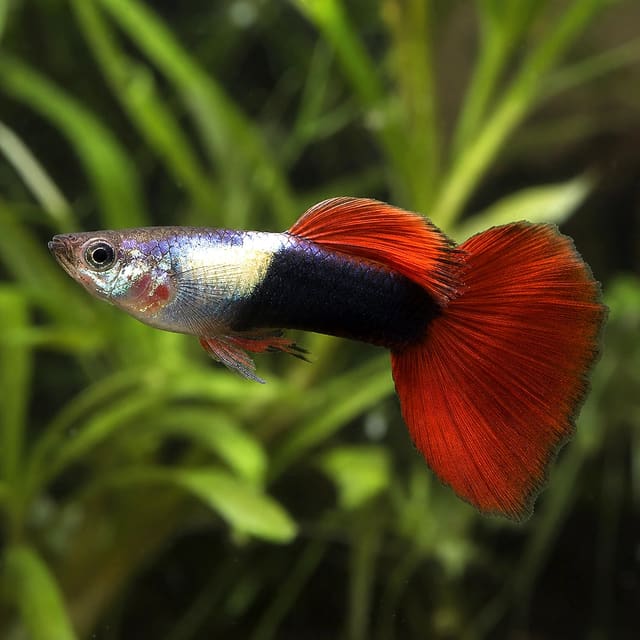
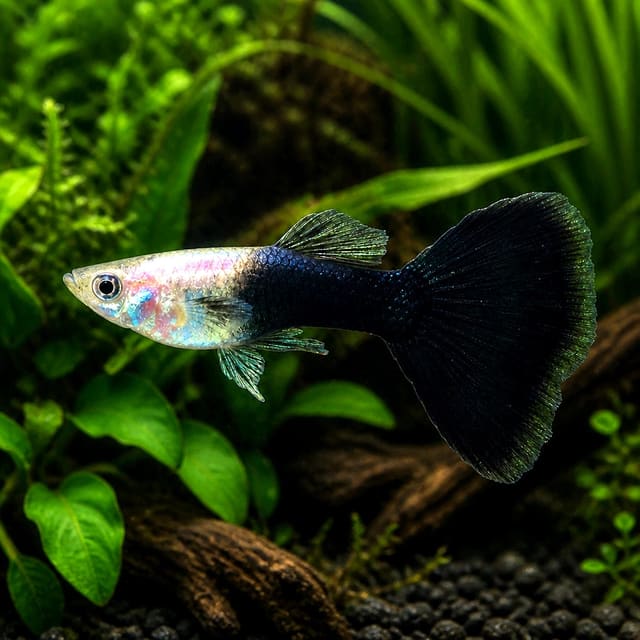
Black Male Guppy (Poecilia reticulata), 3-4 cm
20–28°C · pH 7–8 · 45L
£3.99
Photo coming soon
The size, price and care details on this page are for this listing.
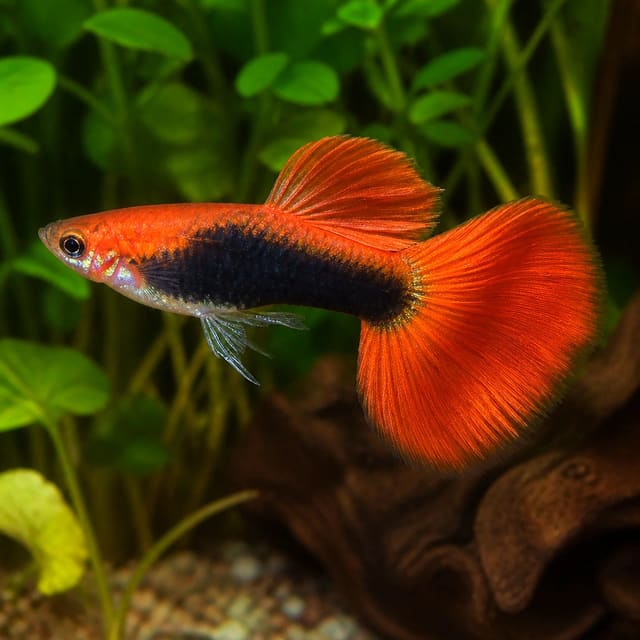
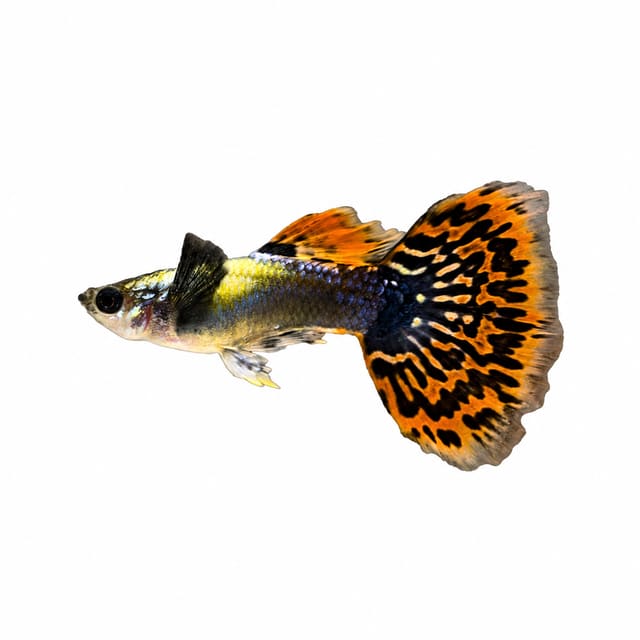
Black Phantom Male Guppy is a male colour form of Poecilia reticulata, suited to a mature, peaceful aquarium with stable mineral-bearing water. One male is supplied in the chosen size; plan companions and future population before adding him.
Adult size is the maximum length this species reaches at full maturity (scientific sources). The livestock you receive will be younger and smaller — pick a size above for the actual shipping size. Product-photo provenance and any image-specific limitations are stated on the listing.
Poecilia reticulata
Shoaling fish: kept in a group they feel safer, stay calmer and show their best colour.
Black Phantom Male Guppy is a male colour form of Poecilia reticulata, suited to a mature, peaceful aquarium with stable mineral-bearing water. One male is supplied in the chosen size; plan companions and future population before adding him.
Adult size is the maximum length this species reaches at full maturity (scientific sources). The livestock you receive will be younger and smaller — pick a size above for the actual shipping size. Product-photo provenance and any image-specific limitations are stated on the listing.

Guppies are social livebearers suited to a prepared beginner, not a fish-per-litre formula. Use a mature filtered aquarium, tested neutral-to-alkaline mineral-bearing water, deliberate sex and population planning, open swimming room, cover and a separation option.
Maintain these water conditions for optimal health and vibrant colors
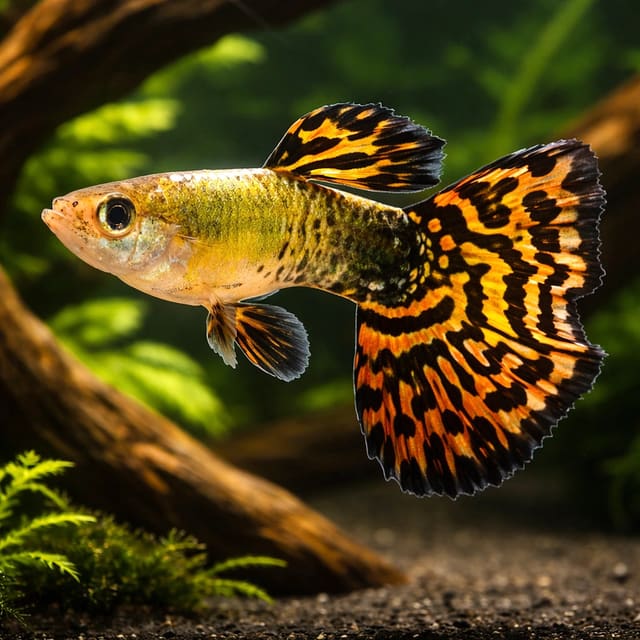
The Black Phantom Male Guppy is a selected colour form of Poecilia reticulata, the familiar guppy. It brings the movement and display of a male livebearer to a peaceful aquarium, but the attractive trade name is not a separate species or a promise that every fish has an identical pattern. The key buying decision is whether you have a mature, stable aquarium with companions suited to a small peaceful fish. A guppy can suit a prepared newcomer to fishkeeping, provided that water quality, group size and the possibility of breeding are considered before the fish arrives.
One purchase supplies one male fish in the size chosen: 3–4 cm or XL. The size you select is the size supplied, not the adult size. XL is a trade size option, not an exact centimetre guarantee, so use the live selection for the offered grade and ask for clarification if you need a precise individual measurement. The order does not include a pair, trio or female. Sex is guaranteed only when the exact product or selected option explicitly states male or female. This Black Phantom Male Guppy listing is sold as male. A gallery picture can help show a colour form, but it does not establish the exact pattern, fin shape or body length of the fish you will receive.
FishBase gives a maximum of 5 cm standard length for male or unsexed guppies. Our species care guide cites 6 cm standard length as a recorded female maximum. Standard length measures the body to the base of the tail; ornamental tail length varies substantially among domestic strains and is not included in that measure. A 3–4 cm supplied male may change in appearance as he settles and matures, but he is still a small species. Small does not mean suitable for an unfiltered bowl or a crowded aquarium. Water stability and room for a group are more useful than a fish-per-litre shortcut.
Black Phantom describes a selected appearance within P. reticulata. It should not be read as a claim of documented pedigree, a pure genetic line, guaranteed offspring colour or unusual behaviour. Male guppies have a modified anal fin called a gonopodium; sex and colour are separate parts of the offer. A male-only display can avoid new fry from its own residents, but female guppies can retain sperm from earlier mating and should never be assumed incapable of producing young merely because no male is currently in the tank. If colour-line breeding matters to you, plan dedicated housing and reliable provenance before mixing different guppy or Endler lines.
Our conservative Guppy Care Guide: Poecilia reticulata recommends a 60 cm aquarium and a planned group of five or more where filtration, sex composition and the other livestock allow. This is a house planning policy informed by FishBase's secondary aquarium note and broader OATA guidance, not an instruction to put five males into every small tank without watching their behaviour. Each fish purchased from this listing is male; buying several does not create a female-to-male ratio. Consider how a male-only group will interact, whether the aquarium has enough visual cover and whether you can separate a fish that is persistently chased.
Start with the aquarium, rather than the colour form. Test the water that actually comes from your tap, allow biological filtration to mature, choose gentle flow and leave open swimming space among plants or other safe cover. Plan companions that neither nip fins nor swallow small fish, and make sure their preferred water overlaps. A peaceful guppy is a useful display fish in a calm community, but is easily stressed by rough or predatory neighbours. If the present tank has aggressive barbs, a large predator or persistently soft acidic water, change the stocking plan before ordering this animal.
| Supplied | One male in the chosen 3–4 cm or XL size |
|---|---|
| Species | Poecilia reticulata |
| Best setting | Mature, peaceful, mineral-bearing aquarium |
Guppies thrive when the aquarium is a working ecosystem rather than a container sized to their body alone. Our Guppy Care Guide uses a conservative 60 cm aquarium for a planned group of five or more, subject to the fish actually present and the filter's capacity. FishBase's aquarium note also names a 60 cm length and a group of at least five. Seriously Fish gives a smaller 45 × 30 cm base for species care, while OATA suggests at least 45 litres for a small group of the smaller livebearers. These are different contexts, not interchangeable guarantees that any 45 litre tank can hold any chosen group. The 60 cm plan gives useful swimming length and more scope to keep water stable. Increase space when adding other fish or allowing fry to grow.
Set up a mature filter before adding the guppy. The RSPCA explains that beneficial bacteria in a biological filter convert ammonia, produced by fish waste, first into nitrite and then nitrate. Ammonia and nitrite are toxic even if the water looks clear. Cycle the aquarium, use repeatable tests and check that it can handle feeding before adding fish. The ten-step tropical tank setup guide explains the general preparation process. A tank filled yesterday is not ready simply because the heater and filter are switched on. Nor does an old tank remain safe automatically after a filter failure, full media replacement or sudden increase in stock.
Plants and floating vegetation are useful for guppies because they break up open sight lines, offer sheltered resting places and can make a quiet community feel less exposed. Seriously Fish specifically notes that a planted tank with floating cover is appreciated and that strong current should be avoided. Leave open space so males can swim and display without being forced into the filter flow. Use soft-edged decoration and avoid sharp plastic plants or rough caves that may damage ornamental fins. A dark or natural substrate can help the fish feel secure, but substrate colour does not alter the care requirement. Arrange the layout so you can still see fish well enough to spot clamped fins or a companion that has stopped feeding.
Keep the filter moving enough water for oxygen and waste processing while offering calmer swimming areas. A strong jet across the entire length makes a small fish work continuously and may push food away before it can eat. Redirect the outlet or diffuse the flow instead of switching filtration off. Check that intakes are safe for smaller fish and any future fry. A covered aquarium reduces the chance of an accidental jump and limits drafts around the water surface. Stable heating and a reliable thermometer matter more than a heater's printed setting. Locate the thermometer where it reflects the water used by the fish, not a pocket immediately beside the heater.
Stock slowly. Every new fish increases the food and waste that the established bacteria must handle. OATA warns that adding too many fish too quickly can overwhelm the filter and cause new-tank syndrome. Test ammonia and nitrite after new arrivals, and pause further additions until values remain safe. Keep an honest count of adults and fry if females are present. A group of five small guppies may become many more fish in a breeding setup, and the original water and space plan may no longer suffice. Rehome excess fish responsibly or provide a separate grow-out arrangement before an unplanned population forces rushed decisions.
Maintenance should be steady rather than dramatic. OATA recommends a weekly partial water change of around a quarter for guppies and mollies, regular tests and dechlorinated replacement water. The actual schedule should respond to nitrate, feeding, stocking and plant growth in your aquarium. Siphon visible waste from accessible areas and remove uneaten food. If filter media clogs, rinse it gently in removed aquarium water. Do not run it under the tap: chlorine or chloramine in tap water can kill the beneficial bacteria living in the media. Avoid replacing all mature media at once. Test after major work and observe the fish for stress, because water clarity by itself does not tell you whether the chemistry is safe.
Our routine display guidance for guppies is 22–28 °C, pH 7–8 and 8–18 dGH. This is the conservative store policy in the reviewed Guppy Care Guide, drawing on OATA's combined guppy-and-molly care sheet and species evidence. Seriously Fish lists a wider 17–28 °C, pH 7–8.5 and 8–30 dGH for the species. FishBase reports still another environmental range from records of wild fish. Those broader figures show why guppies are found in diverse habitats; they are not a reason to aim a home aquarium at a low extreme or swing between endpoints. A steady, mineral-bearing, neutral-to-alkaline display within the routine policy is a better starting point for a domestic male.
Hardness matters as well as pH. Seriously Fish describes the guppy as a hard-water fish and cautions that long-term maintenance should be in moderately hard or harder water, even if individuals can manage softer or acidic conditions for a time. A pH test alone cannot show mineral content or buffering. Measure general hardness with a suitable test and understand whether tap water changes seasonally or after treatment by your supplier. If the source water is naturally very soft, plan a consistent way to prepare it before bringing livestock home. Sudden corrective doses in an occupied tank can be more stressful than a stable reading that differs slightly from an idealised number.
Temperature is similarly about consistency. A suitable heater can hold the routine range, but a separate thermometer tells you what the fish experience. Check after water changes, during warm weather and if the aquarium sits near a window or radiator. Warmer water holds less dissolved oxygen, so surface movement and sensible stocking remain important. Avoid exposing a newly arrived fish to a rapid difference between bag and tank water. Prepare replacement water with conditioner if your tap supply contains chlorine or chloramine, and bring it close to the aquarium temperature before adding it steadily.
Ammonia and nitrite should test at zero in a functioning mature aquarium. OATA also advises controlling nitrate rather than allowing it to accumulate far above source water. Record your tap-water nitrate alongside tank readings so you know whether a water change can lower it. If a test changes suddenly, first confirm the result with a clean kit and inspect the filter, heater, recent food, dead plant matter and stock. Correct the cause with safe water care, not a sequence of unrelated products. The aquarium water parameters guide explains the measurements, and the water matcher can help compare measured values with care guidance.
Observe the male's posture and behaviour in the context of those tests. A healthy guppy usually moves freely, holds undamaged fins openly and takes food. Hiding continuously, clamped fins, rapid gill movement, hanging at the surface, loss of balance, rubbing, spots, wounds or persistent refusal of food may signal stress or illness. These signs do not identify one disease by themselves. Test the water, check equipment and ask about recent additions or social pressure. Use qualified fish-health advice where needed instead of choosing salt, heat or medicine from a single symptom. The store care guide and RSPCA health guidance favour a water-quality-first investigation and careful quarantine.
Guppy water care is a routine, not a one-off number printed on a card. Compare readings at similar times, keep notes on changes and look for trends. A sudden fall in hardness after repeated top-ups, a clogged filter after plant pruning or rising nitrate after fry appear can change the aquarium gradually. Small, regular corrections and appropriate stocking are easier on fish than a crisis clean. Stable conditions also make it easier to judge whether a new male is settling normally or whether something genuinely needs attention.
Guppies are flexible feeders, but a flexible appetite should not become an excuse for an unbalanced diet. OATA recommends a good quality flake or fine granule with an algae component for guppies and mollies, with occasional small suitable live or frozen foods such as daphnia. Seriously Fish notes that aquarium-bred guppies accept many foods, while FishBase describes wild fish taking small insects, zooplankton and detritus. A complete, appropriately sized staple is more dependable than assuming scraps from larger fish will meet a small male's needs. Offer pieces he can take easily and watch that stronger companions do not intercept every feed.
Feed a modest amount that is eaten promptly, and remove leftovers before they break down into waste. OATA's general guppy-and-molly sheet suggests a small daily feed; real portions depend on fish size, condition and the rest of the aquarium. A newly transported male may not feed confidently at the first opportunity, especially if it is exposed to bright activity or aggressive residents. Observe him calmly, offer a small appropriate amount later and test water if appetite remains poor. Repeatedly adding new food in hope of prompting a response can quickly spoil a modest aquarium. Vary the diet safely, but change one thing at a time so any adverse response is easier to understand.
Companionship requires a plan rather than simply adding a second male. FishBase's aquarium note describes keeping guppies in groups of five or more, and our store guide adopts a 60 cm, five-plus policy where the mix permits. OATA gives a broader minimum of three for guppies and mollies and recommends more females than males in a mixed-sex arrangement to reduce repeated male attention to one female. This exact product supplies a male. A customer ordering five of this product would receive five males, not a balanced mixed group. Male-only groups can be a deliberate choice, but monitor chasing and give them enough space and visual breaks; an unsuitable individual mix needs a response, not blind adherence to a number.
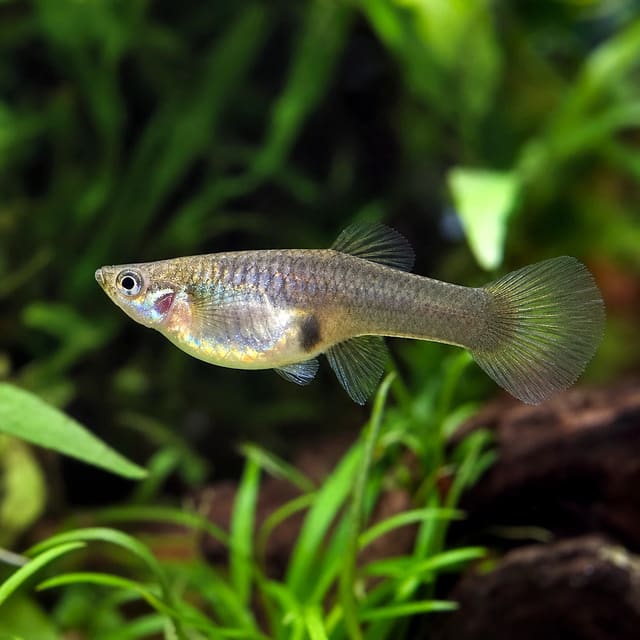
If keeping females as well, do the population arithmetic before adding this male. Guppies are livebearers, and a mixed-sex group can produce young readily. Several females per male is a welfare consideration from the species care sources, but no ratio alone prevents breeding or guarantees that no female will be harassed. Provide plant cover for retreat and enough food access. Decide whether fry will be reared, rehomed or separated, and do not release fish or aquarium organisms outdoors. Female guppies may retain viable sperm after prior mating, so even a newly male-free tank can later contain fry. If a particular colour line is important, keep breeding groups separate and avoid representing offspring as a documented strain without evidence.
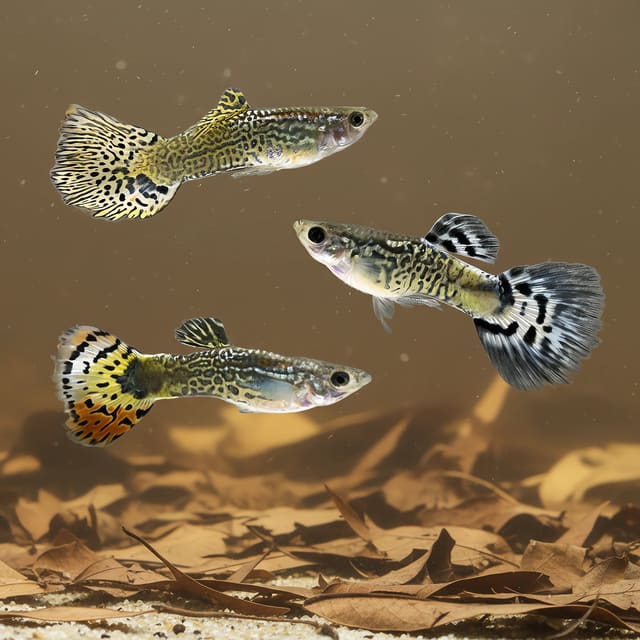
There is also a difference between Poecilia reticulata and Endler's livebearer, Poecilia wingei. The store guide cites formal taxonomy for the latter as a distinct species and explains that crossing can occur. Do not treat every small coloured livebearer as interchangeable when maintaining a line matters. For an ordinary display, focus on welfare first: suitable water, peaceful companions, room and a plan for any offspring. Trade labels such as Black Phantom describe selected appearance, not a guarantee of pure genetic ancestry, breeding result or unusually long life. Neither the product name nor the number of fish pictured replaces a careful stocking decision.
Review body condition and feeding over weeks. A fish that becomes thin while food is offered may be outcompeted, stressed or ill; a fish that grows heavy in a crowded tank may be overfed even if it still rushes to food. Look at the group's distribution during feeding and at rest. If one male spends all day hiding while others display in the open, changing the cover or separating fish may be more helpful than adding another feed. A stable food routine also helps you interpret water tests, because an increase in nitrate or a trace of ammonia after heavier feeding points to a change in biological load.
Seriously Fish describes the guppy as peaceful and gives quiet community examples: other suitable livebearers, rasboras, corydoras, small loricariids and tetras. Those are categories for consideration, not a promise that every member of each group can share one tank. Check adult size, water chemistry, temperature, feeding speed and the exact species' behaviour. A peaceful fish may still be an unsuitable companion if it needs very soft water while the guppy needs lasting mineral content. A bottom-dwelling fish may use a different part of the aquarium, but it still contributes waste and needs its own space and food.
Fin-nipping fish are a clear risk. Seriously Fish names tiger barbs and serpae tetras as examples to avoid with guppies. OATA likewise cautions against barbs that nip fins. A male guppy's fins can attract attention, and ongoing nipping may leave him hiding or injured. Watch the actual mix rather than assuming a shop label of community fish proves safety. Some species become rougher when understocked or mature; others compete so rapidly at feeding that a guppy falls behind. The safest group has compatible water and enough gentle feeding opportunities for every resident.
Predatory fish pose another obvious problem. A small guppy should never be used to test whether a larger fish will swallow it. Young predators may ignore him until they grow, and a planted area cannot guarantee protection against a determined hunter. Avoid large aggressive cichlids or other fish for which an adult guppy is prey. If a community already contains rough or predatory residents, choose a different tank for this male rather than hoping a colour form will somehow be tougher. His black pattern does not alter the species' small size or peaceful temperament.
Within a guppy group, look for persistent one-sided chasing rather than treating every brief display as a crisis. Males may investigate and follow other fish; females can be harassed in a mixed group. Give refuge, maintain the planned sex balance where relevant, and check that no fish is prevented from eating. A male-only setup may reduce unwanted fry, yet still needs observation and enough space to avoid relentless pursuit of one individual. Do not add a lone female to several males to complete the picture; that can concentrate pressure on her. If stress continues after a layout adjustment, use a mature separation tank and revise the group.
Two guppy colour strains can share broadly similar species care, but their trade names do not establish pedigree or disease status. Quarantine new arrivals when you have a suitable system, use dedicated equipment and observe them before mixing with established fish. This protects the existing aquarium and allows a small arrival to feed without competition. The store care guide refers to veterinary guidance on extended quarantine and advises seeking qualified help for unusual signs; treatment choices should be based on diagnosis and UK-appropriate products. A short introduction straight into a busy display may hide a problem until it affects more fish.
Compare candidates with the aquarium you actually run. A 60 cm mature planted tank with neutral-to-alkaline mineral-bearing water, measured filtration and calm small companions can be a promising setting. The same length filled with nipping barbs, predatory cichlids or a rapidly expanding livebearer population is a different aquarium in welfare terms. Stocking is a relationship between fish, space and water capacity, not a number of names from a list. Make observations after every addition and keep the option to change the mix. The guppy collection can help compare colours and offers, but each listing's sex and sale unit must be read on its own.
Before the male arrives, test the mature aquarium for zero measurable ammonia and nitrite, confirm the temperature and mineral-bearing water, and make sure no resident is likely to nip or eat him. Decide where he can retreat and where you will feed him without a larger fish taking everything first. If he will spend time in quarantine, that aquarium also needs mature biological filtration and measured water. A clean empty container with new water is not a safe substitute for a working system. Keep any transfer equipment dedicated where possible so organisms are not moved inadvertently between aquariums.
The current delivery and Live Arrival Guarantee policy is the source for packing, courier timing and claim terms. It describes oxygenated bags, an insulated box and a heat pack when conditions call for one, carried by a licensed live-animal courier. Someone must be at the delivery address to receive the parcel. Open and inspect it on the day it arrives. If there is a live-arrival issue, contact the store that day with the order number and follow the policy's continuous video requirement, showing the still-sealed parcel, its opening and the fish still in the bag. Eligibility depends on the full current policy; this guide cannot turn it into unconditional cover.
Follow the arrival instructions for temperature equalisation and gradual acclimation. The policy describes floating the bag for 20–30 minutes before release. Avoid pouring transport water into the mature aquarium. Release the fish gently into a place where it can find cover, and avoid repeated netting or rearrangement. Watch breathing, balance and whether fins are held normally. A recently transported guppy may take some time to behave as confidently as established residents; persistent distress should still be investigated promptly, with water tests and a review of social pressure rather than being dismissed as normal travel stress.
Offer a small suitable meal once the fish has settled, then observe whether he actually eats. Check water after the extra biological load, particularly if several fish were added together. Over the first week, look for fin damage, chasing, isolation or a fish that cannot reach food. A peaceful community can still contain one unusually assertive individual. If behaviour changes, adjust cover or separate fish using a prepared mature arrangement. Seek qualified fish-health help if breathing, posture, appetite or visible condition remain abnormal. Keeping notes on arrival and tests will make any later concern much easier to assess.
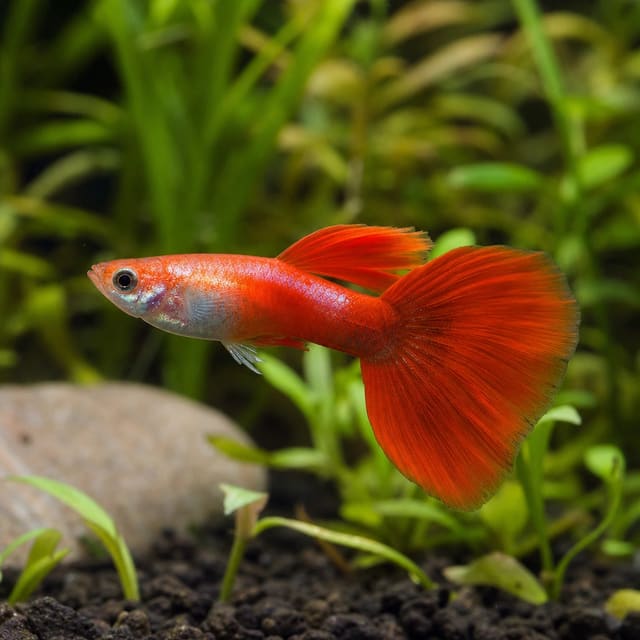
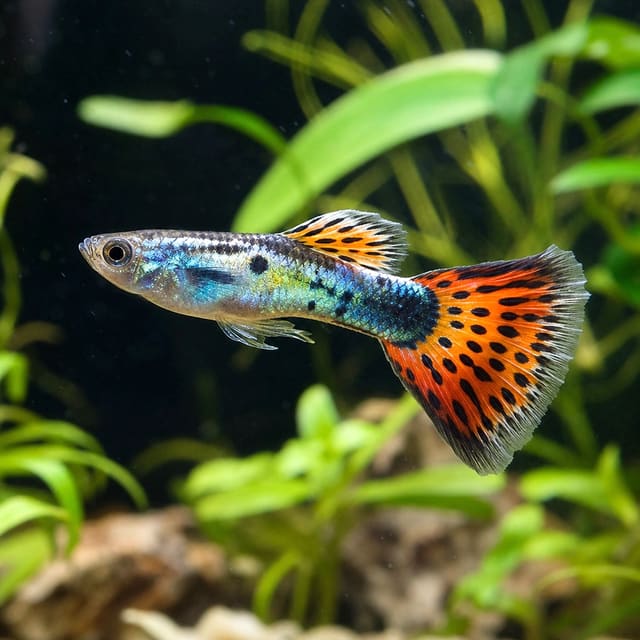
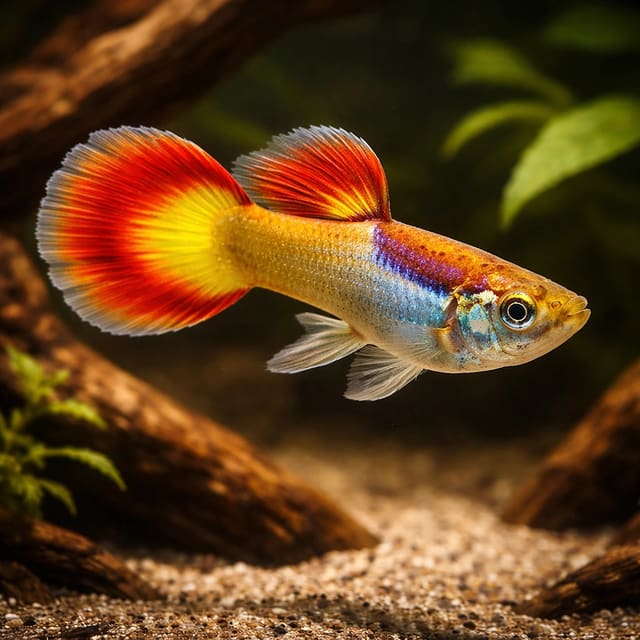
As the male settles, compare his real appearance and behaviour with the care decision rather than a perfect picture. Individual guppies differ in dark coverage, tail shape and display, and colour may look different under different aquarium lighting. The important continuing signs are steady swimming, feeding, sound fins and clean water. Review the group as it grows, especially if females or fry are introduced later. Responsible care continues after a successful arrival: the same water, space and compatibility choices that made the first week calm will keep the display workable as the aquarium changes.
FishBase records 5 cm standard length for male or unsexed guppies. Tail length varies among domestic forms; the 6 cm standard-length record in our guide concerns females.
Our conservative guppy policy uses a 60 cm mature filtered aquarium for a planned group of five or more where the sex mix and other stock allow. More fish require more room and filtration.
Our guppy guide plans for five or more guppies where the aquarium permits. Each fish on this listing is male; a male-only group needs room, cover and observation, while a mixed group needs a breeding plan.
He can suit a prepared beginner with a mature filtered aquarium, tested mineral-bearing water and peaceful companions. He is not suited to an unfiltered bowl or an aggressive community.
Offer appropriately sized complete flake or fine granule food, with small safe variety such as daphnia. Feed modestly and remove leftovers so the water remains clean.
Our routine guppy display guidance is 22–28 °C, pH 7–8 and 8–18 dGH. Keep readings steady and test the aquarium rather than making abrupt corrections.
Guppies are peaceful. The greater risk is other fish nipping a male's fins; persistent chasing within a group also calls for more space, cover or separation.
Consider peaceful livebearers, rasboras, corydoras, small loricariids or suitable tetras when their adult size, water needs and behaviour match. Avoid tiger barbs, serpae tetras and predators.
Tropical Fish Co's current policy describes oxygenated bags, insulated packing and a licensed live-animal courier. Someone must receive and inspect the parcel; Live Arrival Guarantee claims follow the policy's same-day contact and continuous sealed-parcel unboxing video terms.
FishBase: Poecilia reticulata supports the species identity, male standard-length record and secondary aquarium group note. Seriously Fish: Poecilia reticulata describes habitat, water breadth, food, sex and peaceful compatibility. OATA's guppy and molly care sheet gives broader UK group husbandry. The store's Guppy Care Guide explains its conservative routine policy and distinguishes this species from Endler's livebearer. The RSPCA aquarium environment guidance explains biological filtration. Wild records, group guidance and store policy answer different questions; the everyday display plan above is stated with its scope.
No reviews for this item yet. Bought one? Honest reviews only, good or bad.
What customers say about ordering from us
Easy website plenty of info on fish your buying great to pick a time slot
TRACEY DURRANT · 7 Oct 2026
Got some lovely fish thank you
Kevin Mackie · 7 Oct 2026
Reviews of our shop, collected by Judge.me, an independent third-party review collector. Newest first.