
X Red Parrot Platy (Xiphophorus maculatus) - UK
Vibrant X Red Parrot Platy fish for colourful community aquariums. Moderate care livebearers with plenty of character. Order now for secure UK delivery.
Premium Quality
Healthy, vibrant fish from trusted suppliers
Expert Care
Detailed care guides and support
Live Arrival Guarantee
Your fish arrives healthy or we'll replace it
Acclimated
Properly quarantined and ready for your tank
Why Choose This Fish?
Vibrant X Red Parrot Platy fish for colourful community aquariums. Moderate care livebearers with plenty of character. Order now for secure UK delivery.
The X Red Parrot Platy is one of those fish that makes a tank look instantly livelier. With its warm red body, darker fin edging, and constantly active swimming style, this is a Platy fish that suits both first-time keepers and experienced aquarists building a bright mixed community. Scientifically known as Xiphophorus maculatus, this popular livebearer comes from Central America and has earned its reputation as a hardy peaceful fish for community aquarium setups. Adults usually reach around 4-6 cm, they are easy to feed, and the typical platy fish lifespan is around 3-5 years with stable care.
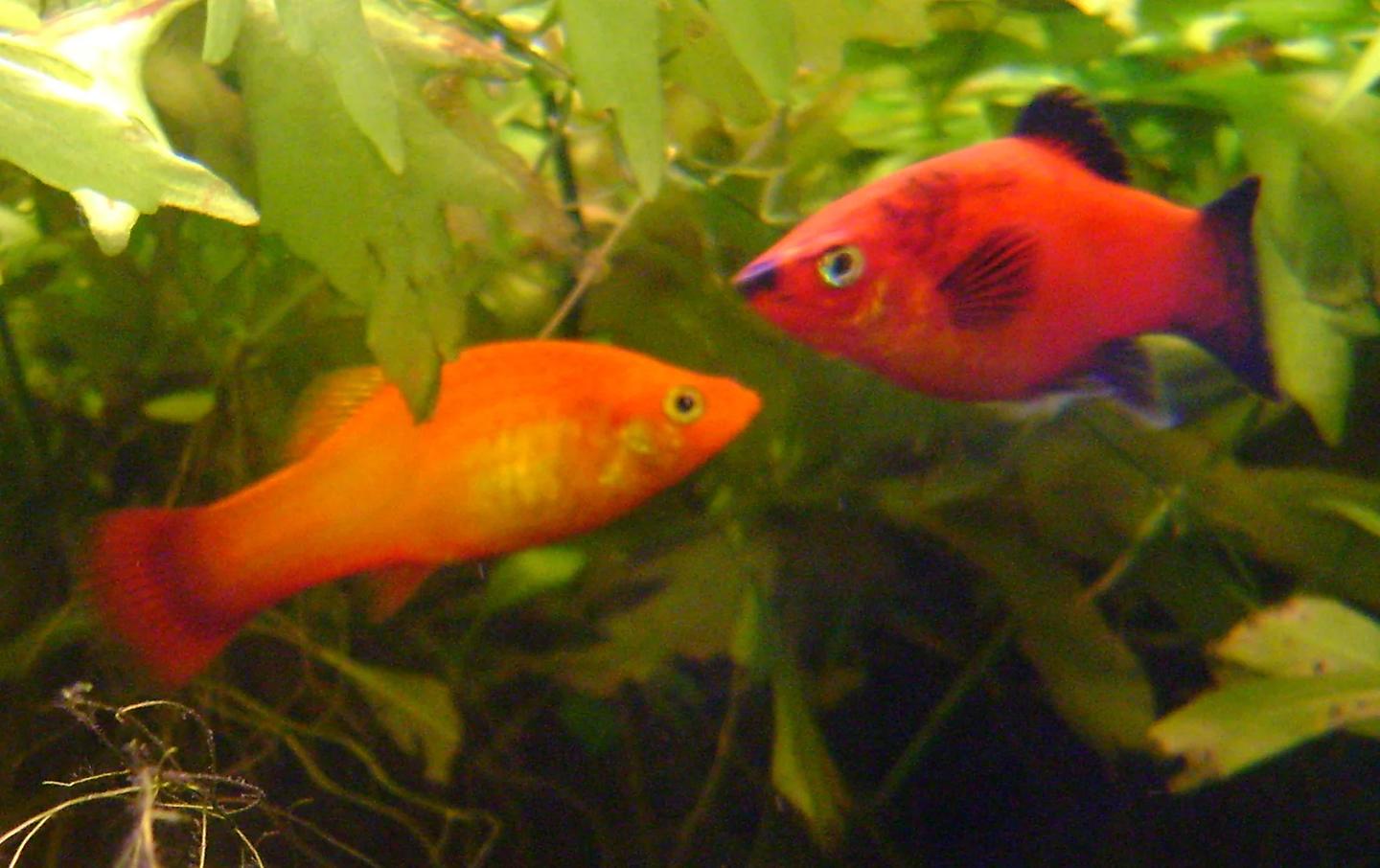
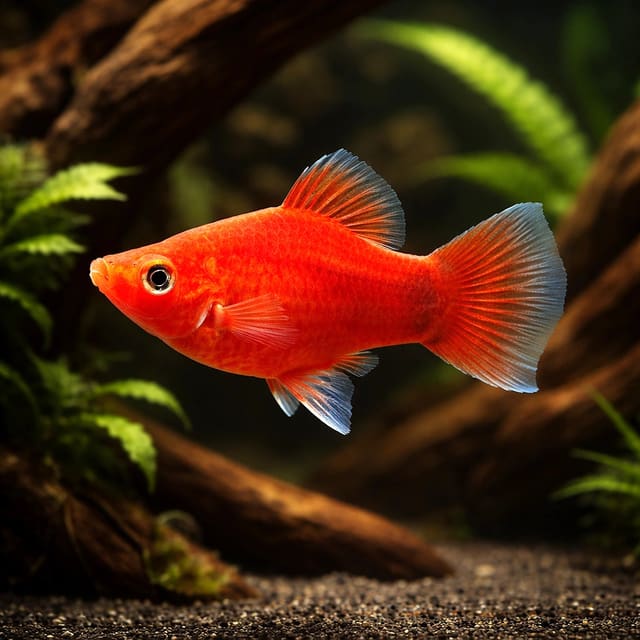
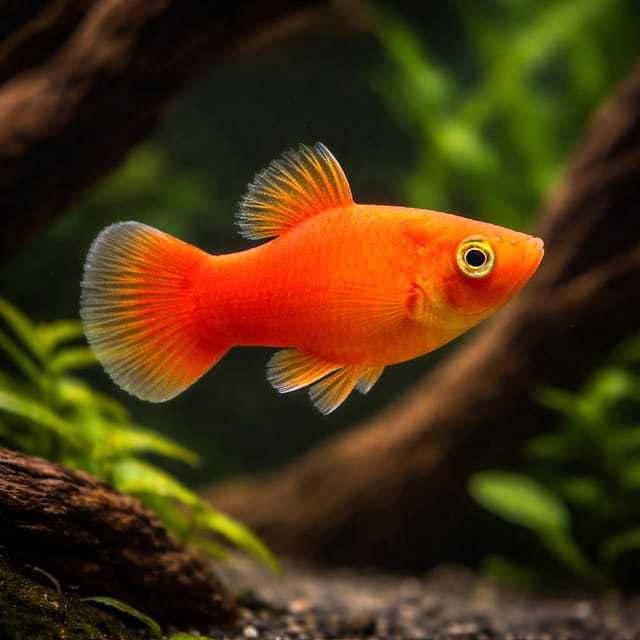
If you are looking for colourful aquarium fish that stay small enough for a sensible home setup, Red Parrot Platies are a smart choice. They are often recommended as easy care tropical fish for beginners, especially for a small tropical fish for 60 litre tank layout with plants and gentle tank mates. They are also excellent planted tank fish, and many keepers consider them among the best fish for beginners UK because they are adaptable, social, and forgiving of minor beginner mistakes. See our detailed photos showing the rich red tones and compact body shape of this tropical fish platy, including how the colour stands out against green plants and dark substrate. For aquarists wanting peaceful community aquarium fish with personality, movement, and breeding potential, the Red Parrot is a very rewarding choice.
🔹 Quick Facts
- Scientific Name: Xiphophorus maculatus
- Care Level: Easy to moderate
- Min Tank Size: 60 litres (13+ gallons recommended for a group)
- Temperature: 22-28°C (72-82°F) ideal in home aquariums
- pH Range: 7.0-8.2
- Lifespan: Up to 3-5 years
- Temperament: Peaceful, active, social
- Diet: Omnivore
Classification
- Order: Cyprinodontiformes
- Family: Poeciliidae
- Genus: Xiphophorus
Xiphophorus maculatus, often called the southern platyfish or variable platyfish in hobby discussions, is one of the best known livebearers in freshwater fishkeeping. It belongs to the same broader group as guppies, mollies, and swordtails, which explains why keepers often compare platy vs molly or ask whether platies are similar to guppies. Modern aquarium strains include many selectively bred platy fish varieties, from mickey mouse and sunset forms to red and black strains like this Red Parrot.
Where Do Red Parrot Platies Come From? Natural Habitat Explained
The Red Parrot form is a selectively bred aquarium strain of Xiphophorus maculatus, a species naturally found from parts of Mexico down into Belize. In the wild, the southern platyfish inhabits slow-moving canals, ditches, springs, and calm marginal waters with plenty of plant cover. That natural background explains why this species thrives in low to moderate flow aquariums with dense planting, open swimming space, and stable chemistry.
Wild-type fish are much less colourful than the strains seen in the hobby today. Breeders have developed many platy fish types and colour lines, including the Red and black platy, Black and red platy, blue platy fish, and the famous platy fish mickey mouse pattern. The Red Parrot is prized because it keeps the classic platy shape while adding a stronger red body colour that stands out in a mixed aquarium.
In nature, this species feeds as an omnivore. It grazes on algae, soft plant matter, tiny crustaceans, insect larvae, and organic debris. That is why a mixed diet works best in captivity too. The species is often described as a hardy fish and even a super hardy fish when water quality is consistent, but that should not be confused with tolerance for neglect. Stable conditions matter far more than chasing extremes.
Many keepers ask whether this fish is the same as a variable platyfish or a variatus platy. In practical aquarium terms, Red Parrot Platies are usually sold as Xiphophorus maculatus, while Xiphophorus variatus or xiphophorus variatus refers to a related species with slightly different body shape, pattern tendencies, and often a cooler preferred range. Both are excellent livebearers, but they are not identical. If you want a classic community platy with broad compatibility, this strain of Xiphophorus Maculatus is the more familiar choice.
💡 Expert Tip
Mimicking the natural habitat of Xiphophorus maculatus improves colour, confidence, and feeding response. Use gentle flow, groups of plants along the back and sides, and open midwater space so the fish can graze, display, and retreat when needed.
How to Set Up the Perfect Tank for Red Parrot Platies
A good Red Parrot Platy aquarium setup is simple, but the details matter. While some care sheets list smaller tanks, for a group this fish does best when you treat Red Parrot Platy minimum tank size 60 litres as the practical starting point. That gives enough room for swimming, social interaction, and the inevitable possibility of fry if males and females are kept together. For mixed groups, 60-90 litres is far easier to manage than a cramped nano.
Tank Size Requirements
For six Red Parrot Platies, 60 litres is a sensible minimum, especially if you want them as small tropical fish for 60 litre tank centrepieces with a few compatible tank mates. In a larger community, 80-100 litres gives more stable water and better long-term stocking flexibility. Because platies are active and constantly browsing, they use more of the tank than many beginners expect.
Water Parameters
The most searched care point is platy fish temperature, and for good reason. While wild references often mention cooler values, in the home aquarium the safest target temperature for platy fish is 22-28°C. That means platy fish temperature 22-28 degrees is a reliable working range for mixed tropical setups. The ideal Red Parrot Platy water temperature is usually 24-26°C, though the Red Parrot Platy temperature range 22-28C gives enough flexibility for community tanks.
Keep pH between neutral and moderately alkaline. Many hobbyists specifically look for platy fish pH 7.0 to 8.2, and that is a very practical range here. You can also describe this as Red Parrot Platy pH 7.0-8.2. Moderate hardness is preferred, and stable mineral content helps with health, growth, and breeding success. Sudden swings are more harmful than being slightly above or below your target.
Filtration
Use a gentle but effective filter that turns the tank over around 4-6 times per hour. A sponge filter works well in breeding tanks, while a compact internal or hang-on-back filter suits a display aquarium. The goal is clean, oxygen-rich water without blasting these fish around the tank. Because platies produce fry frequently, pre-filter sponges are a good idea.
Substrate
Sand or fine gravel both work. Darker substrate tends to make the red body colour appear richer, especially in a planted layout. Fine gravel is practical for rooted plants and easy vacuuming, while sand gives a softer natural look. Either option suits this Red Parrot Platy for planted aquarium display.
Plants & Decor
This fish is one of the best examples of a peaceful fish for planted community aquarium. Use dense bunch plants, floating cover, and open front swimming space. Java moss, hornwort, water sprite, anubias, and vallisneria all work well. If you enjoy different platy colours together, species such as the X Bumble Bee Platy, X Apple Platies, and X Mickey Mouse Platies can create a lively mixed livebearer display. For keepers who want more pattern variation, X Tricolour Apple Platies and X Mickey Mouse Long Fin Platies also fit well into a similar setup.
Lighting Requirements
Moderate lighting for 7-9 hours per day is usually ideal. Strong enough light will support plant growth and help the fish show their best colour, but avoid harsh all-day illumination with no shade. Floating plants help diffuse light and reduce stress for females, especially if they are carrying fry.
🔹 Quick Setup Checklist
- Use 60 litres or larger for a group
- Keep temperature stable at 22-28°C
- Aim for pH 7.0-8.2 with moderate hardness
- Choose gentle filtration with good oxygenation
- Add live plants and hiding cover for fry
- Leave open swimming space in the front and middle
- Perform weekly water changes of 25-30%
💡 Pro Tip
Always cycle the aquarium for 4-6 weeks before adding fish. Even though platies are known as hardy tropical fish for beginners and hardy tropical fish for new tank discussions often mention them, they should never be used to endure toxic ammonia or nitrite.
What Do Red Parrot Platies Eat? Complete Feeding Guide
A proper Red Parrot Platy feeding guide starts with understanding that these fish are omnivores. If you are asking what do Red Parrot Platies eat, the answer is: a little bit of everything, with a strong need for plant matter as well as protein. In the wild, Xiphophorus maculatus grazes on algae, detritus, tiny invertebrates, and insect matter. In the aquarium, the best results come from variety rather than relying on one food alone.
Staple Foods
Use a quality tropical flake or micro pellet as the base diet. Foods with spirulina or vegetable content are especially useful. This is one reason platy fish care is considered straightforward compared with fussier species. A balanced staple supports growth, fertility, and colour without making feeding complicated for beginners following a tropical fish for beginners guide.
Supplemental Foods
Offer daphnia, baby brine shrimp, cyclops, and finely crushed vegetable-based foods several times each week. Blanched spinach, courgette, or shelled peas in tiny amounts can also be accepted. If you keep them with guppy fish or mollies, feeding needs overlap nicely, which is why people often ask what tropical fish can be kept together in a livebearer tank.
Treats & Conditioning Foods
Before breeding, increase protein slightly with frozen daphnia or brine shrimp. This helps females recover condition and encourages males to display. For fish showing slightly washed-out colour, varied feeding often improves appearance more than any miracle product.
Feeding Frequency & Portion Control
Feed small amounts 1-2 times daily, only what they finish in around 30-60 seconds. These are eager feeders and will beg constantly, but overfeeding is one of the quickest ways to ruin water quality in a community tank. Juveniles can be fed a little more frequently in smaller portions.
| Time | Food | Amount |
|---|---|---|
| Morning | Quality tropical flake or micro pellet | Small pinch, fully eaten within 1 minute |
| Evening | Spirulina flake, daphnia, or baby brine shrimp | Very small portion |
A lively mixed livebearer group gives similar feeding behaviour, making mealtimes easier to manage in a peaceful community aquarium fish setup.
These related livebearers enjoy similar omnivorous foods and can help create a colourful livebearer display with matching care needs.
⚠️ Feeding Warning
Overfeeding causes ammonia spikes, cloudy water, and digestive stress. Uneaten food trapped in plants or gravel is a common reason why otherwise hardy tropical fish start clamping fins or losing colour.
What Does the Red Parrot Platy Look Like? Colors, Patterns & Varieties
The Red Parrot Platy is a compact, deep-bodied livebearer with a rounded profile and short fins. Typical platy fish size is around 4-6 cm, with females usually a little larger and fuller-bodied than males. This stout shape is part of what separates platies from the more elongated swordtail fish body form, even though the species are closely related.
Colour is the main attraction here. Most Red Parrot specimens show a rich red to orange-red body, often with darker fin margins or black accents that make them resemble a red wag platy or red wagtail platy type. Some hobbyists casually search for a red and black platy for planted tanks, and this strain fits that look very well. Against dark substrate and green planting, the contrast is especially striking.
If you are wondering platy fish male or female, the easiest clue is the anal fin. Males have a narrow, pointed gonopodium, while females have a fan-shaped anal fin and a deeper belly. This is also the key to identifying platy fish male and female pairs before breeding. Searches like red wag platy male or female often come down to this same fin difference.
Among the many types of platy fish, Red Parrot Platies sit alongside other popular strains such as sunset platy fish, mickey mouse forms, and even occasional hobby references to blue platy lines. Our photos show the intense red body colour and the darker edging that give this fish such strong visual impact in a planted display.
What Fish Can Live With Red Parrot Platies? Compatibility Guide
Red Parrot Platies are classic peaceful community fish. They are active, social, and non-territorial, which makes them ideal for a mixed setup with other small, calm species. In fact, many aquarists consider them the best livebearer for community tank use because they combine colour, movement, and easy feeding without the fin-nipping or bullying seen in some other species.
One of the most common questions is whether platy fish compatible with guppies and mollies. Yes, in most cases they are. They also do very well as platy fish compatible with corydoras and rasboras, provided the tank is not overcrowded and the water is kept clean. This makes them a strong option for anyone looking for a social livebearer fish for community tank stocking plan.
Ideal Tank Mates
Good Red Parrot Platy tank mates include guppies, mollies, peaceful rasboras, small tetras, corydoras, and other platy strains. If you want a colourful mixed livebearer group, consider the X Bumble Bee Platy, X Apple Platies, X Mickey Mouse Long Fin Platies, and X Tricolour Apple Platies. For keepers comparing species, X Sunset Variegated Platies and X Sunset Simpson Variegated Platies are related options often discussed alongside the variatus platy.
Species to Avoid
Avoid large aggressive cichlids, fin-nipping barbs, and predatory fish. These platies are not built to defend themselves. The linked Barred Sorubim is a striking fish, but it is clearly not suitable as a tank mate for platies due to size and predatory nature.
Community Tank Stocking Examples
For a 60 litre tank, a practical setup might be 6 Red Parrot Platies with 6 small rasboras and a group of pygmy or small corydoras, depending on filtration and maintenance. In 90 litres, you can keep a larger livebearer mix. This is why the fish is often recommended as Red Parrot Platy for community tank stocking and as one of the best community fish for sale choices for new aquarists.
Compatibility with Invertebrates
Adult shrimp may be safe in heavily planted tanks, but shrimplets can be eaten. Snails are generally fine. If your main goal is shrimp breeding, platies are not ideal. If your main goal is a bright mixed display, they are excellent.
| Species | Compatible? | Notes |
|---|---|---|
| X Bumble Bee Platy | ✅ Yes | Similar size, temperament, and care needs |
| X Mickey Mouse Platies | ✅ Yes | Excellent mixed platy group for colour variety |
| Corydoras catfish | ✅ Yes | Peaceful bottom dwellers; ideal companions |
| Guppies and mollies | ✅ Yes | Very good match if water is stable and not overcrowded |
| Aggressive barbs | ⚠️ Caution | May nip fins or stress slower fish |
| Large aggressive cichlids | ❌ Avoid | Too boisterous and may injure or eat platies |
💡 Compatibility Tip
Always quarantine new arrivals for 2-4 weeks before adding them to a community aquarium. This is especially important in mixed livebearer tanks, where one stressed newcomer can spread parasites quickly.
How Do You Breed Red Parrot Platies? Complete Breeding Guide
Platy fish breeding is one of the biggest reasons this species remains so popular. These fish are livebearers, which means the female gives birth to free-swimming young rather than laying eggs. For most aquarists, platy fish breeding basics are very simple: keep healthy mixed-sex adults in warm, clean water, feed them well, and nature usually does the rest.
Breeding Setup
A separate breeding tank is optional but useful. A 25-40 litre tank with sponge filtration, floating plants, and stable water works well. Keep the platy fish temperature around 24-26°C and maintain platy fish pH 7.0 to 8.2. Dense cover is essential because adults may eat fry.
How to Tell Male and Female
The key question platy fish male or female is answered by the anal fin. Males have the gonopodium; females have a broad fan-shaped fin. Females are also usually larger. If you are keeping platy fish male and female together, expect regular breeding.
Pregnancy & Birth
Many customers ask about platy fish pregnant, pregnant platy fish, or platy fish pregnancy. A gravid female becomes fuller through the abdomen and may show a dark gravid area near the rear belly. People also ask how long are platy fish pregnant for; the answer is usually around 24-30 days, depending on temperature and condition. A red platy fish giving birth may isolate herself slightly, but many females continue swimming and feeding until close to delivery.
A brood usually contains 20-40 young, though larger females may produce more. These platy fish babies are born fully formed and can eat immediately. If left in the main tank, only some platy fish fry may survive unless there is heavy planting.
Fry Care & Growth
Feed fry powdered flake, crushed quality food, baby brine shrimp, or specialist fry food 3-4 times daily in tiny portions. Perform small, frequent water changes and use a sponge filter to avoid sucking fry into equipment. Growth is fairly quick, and juveniles often show sex differences within a few months.
Advanced Breeding Tip
If you want better fry survival without using a breeder trap, pack one side of the tank with fine-leaved plants such as java moss and floating cover. This creates a natural nursery and reduces stress on the female far more effectively than confining her in a small box.
Red Parrot Platy vs Similar Species: Which Should You Choose?
Platies are often compared with mollies, guppies, swordtails, and variatus forms because all are colourful livebearers with beginner appeal. If you are deciding between platy or molly, or searching platy vs molly, the main difference is size and water demand. Platies stay smaller and are usually easier in a modest community aquarium, while mollies often need more space and can be a bit more demanding about water quality and mineral content.
| Feature | Red Parrot Platy | Molly |
|---|---|---|
| Max Size | 4-6 cm | 8-12 cm |
| Care Level | Easy to moderate | Moderate |
| Temperature | 22-28°C | 24-28°C |
| Price | Varies by group size | Usually higher per fish |
| Best For | 60 litre community tanks, planted displays | Larger livebearer tanks |
Compared with guppies, platies are slightly sturdier-bodied and often a better fit for keepers who want fish similar livebearers to platies but with less emphasis on fancy finnage. Compared with swordtails, platies stay smaller and fit better into a 60 litre tank fish plan. That is why many hobbyists see them as the best platy variety for mixed freshwater setup and one of the most practical hardy tropical fish choices.
| Feature | Red Parrot Platy | Variatus Platy |
|---|---|---|
| Species | Xiphophorus maculatus | Xiphophorus variatus |
| Body Form | Classic rounded platy shape | Slightly different profile, often pattern-heavy |
| Water Preference | Warm tropical community range | Often tolerates slightly cooler water |
| Best For | General mixed community tanks | Keepers wanting alternative platy patterns |
| Related Options | X Mickey Mouse Platies | X Sunset Variegated Platies |
If you want a bright, compact, adaptable fish for a mixed tropical tank, the Red Parrot is usually the easiest choice. If you want a slightly different look, explore X Apple Platies or X Sunset Simpson Variegated Platies as alternatives within the same broader livebearer group.
Common Health Problems in Red Parrot Platies & How to Prevent Them
Healthy Red Parrot Platies are alert, curious, and constantly moving through the mid and upper levels of the tank. Good colour, open fins, steady feeding, and smooth swimming are all positive signs. Typical platy fish behaviour includes browsing surfaces, interacting with tank mates, and occasional chasing during courtship. A fish that hides constantly, clamps fins, gasps, or loses appetite usually needs attention.
Common Problems
The most common issues are stress-related rather than species-specific disease. Poor water quality can lead to fin clamping, shimmying, bacterial infections, and increased susceptibility to whitespot. Livebearers can also suffer when kept too soft, too acidic, or too cold for long periods. Because this is a hardy tropical fish for stable water, consistency is the real key.
Treatment & Prevention
Start with water testing and a large partial water change. Check that your temperature for platy fish is stable and that pH has not crashed below the recommended range. Quarantine any sick fish and avoid mixing medications blindly. Good diet, weekly maintenance, and avoiding overcrowding prevent most issues before they start.
⚠️ Health Warning
Never use copper-based medications in a tank containing shrimp or other sensitive invertebrates. Copper can be lethal to them even at low doses, and it should only be used with a clear plan in a separate treatment system.
🔹 Quarantine Protocol
- Use a separate bare-bottom tank for 2-4 weeks
- Observe feeding response and waste output daily
- Watch for whitespot, clamped fins, flashing, or bloating
- Use a sponge filter and gentle heater
- Do small frequent water changes to keep stress low
Customers searching how long do platy fish live are often really asking how to avoid preventable losses. With proper care, this Xiphophorus maculatus platy can live 3-5 years. Stable water, a varied diet, and sensible stocking make far more difference than chasing miracle treatments.
What Is Red Parrot Platy Behavior Like in the Aquarium?
Platy fish behaviour is one of the reasons they are so enjoyable to keep. They are active throughout the day, constantly exploring plants, glass, and decor for edible bits. They are not true schooling fish, but they are social and clearly more confident in a group. That makes them a classic social livebearer fish for community tank layouts.
Males may spar lightly or display to females, but serious aggression is uncommon in a well-kept tank. If you see relentless chasing, the usual fix is to add more cover and keep more females than males. In mixed groups, a ratio of one male to two or three females helps spread attention and reduce stress.
Because they are an active colourful fish for freshwater aquarium displays, they work best in tanks with both open swimming space and plant cover. They are especially appealing in a planted setup where they can graze naturally. For many keepers, this makes them the ideal peaceful community fish care species: easy to watch, easy to feed, and easy to mix with other calm fish.
Why Buy from Tropical Fish Co?
When buying livebearers online, the difference is not just the fish itself but how it has been conditioned before dispatch. Our Red Parrot Platies are selected for strong body shape, active feeding response, and consistent red colour rather than simply being the cheapest platy fish for sale UK option. Before shipping, groups are observed for swimming behaviour, appetite, and general condition so that weak or stressed fish are not packed.
Each order is professionally packed for aquarium fish delivery UK with insulated materials, secure fish bags, and seasonal heat packs when needed. This matters with small livebearers because temperature shock during transit can undo weeks of good conditioning. Customers looking to buy tropical fish UK, freshwater fish online UK, or find peaceful tropical fish for sale UK often choose platies because they travel well when packed correctly.
We also understand that many buyers are comparing platy fish price, Red Parrot Platy price UK, and whether to order Red Parrot Platy online at all. The real value comes from receiving healthy, feeding fish that settle quickly into a community tank. If you want to buy Red Parrot Platy online UK, are checking Red Parrot Platy for sale UK, or searching Red Parrot Platies UK delivery, our focus is on safe transit, realistic care advice, and fish suited to UK home aquariums.
This species also makes a thoughtful gift for fishkeeper UK or even a carefully planned birthday aquarium fish gift for someone already running a mature tropical tank. Whether you are browsing tropical fish for sale, looking for livebearer fish for sale, or comparing platy fish sale listings, this is a dependable and colourful choice. Order your Red Parrot Platies today with confidence and build a brighter, more active community aquarium.
Why Choose Tropical Fish Co for Red Parrot Platies
- Selected for strong red colour, active feeding, and balanced body shape
- Conditioned and observed before dispatch to reduce shipping stress
- Packed for UK transit with insulation and seasonal heat protection
You Might Also Like
Build a more colourful livebearer display with compatible platy varieties and related community fish. Try the X Bumble Bee Platy for bold contrast, or add X Mickey Mouse Platies for a classic patterned companion. If you enjoy softer fruit-toned colour, X Apple Platies are another excellent option. For keepers comparing platy fish species and platy fish varieties, X Sunset Variegated Platies and X Sunset Simpson Variegated Platies are worth a look. If you want a more unusual long-fin form, consider X Mickey Mouse Long Fin Platies. Together, these choices make it easy to create a vibrant, peaceful planted aquarium fish collection.
Popular Right Now


Aulonocara sp. 'Firefish' - Tropical Fish for Sale UK

Yellow Lepturus Cichlid - UK

Apistogramma agassizii “Super Red” - UK

Endler Gold Guppy Breeding (Poecilia wingei) - UK

X Neon Green Rasbora - UK

Rasbora Heteromorpha (Trigonostigma heteromorpha) - UK