Easy
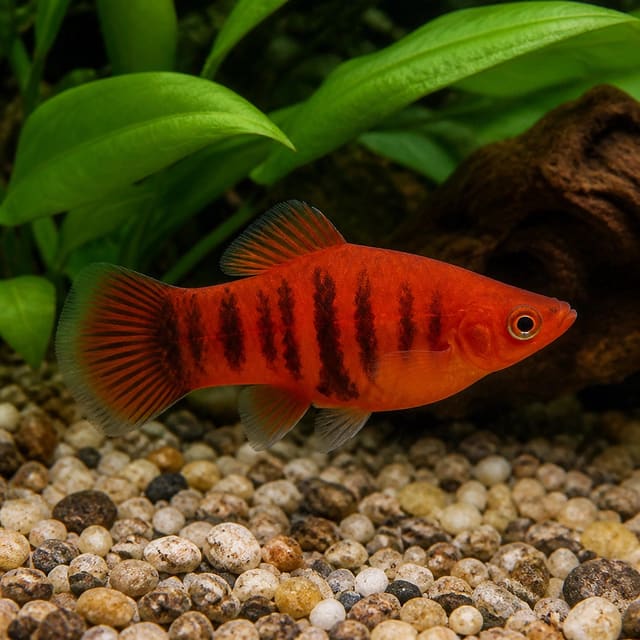
Xiphophorus maculatus red tiger
20–25°C · pH 7–8 · 54L
£3.99

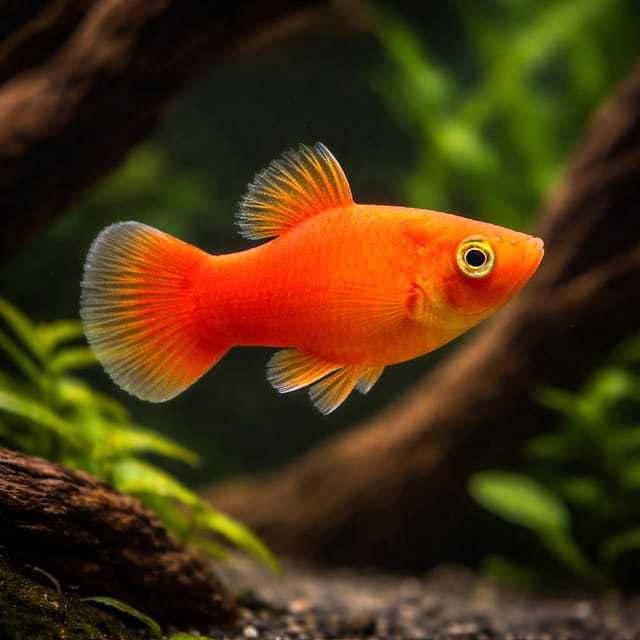
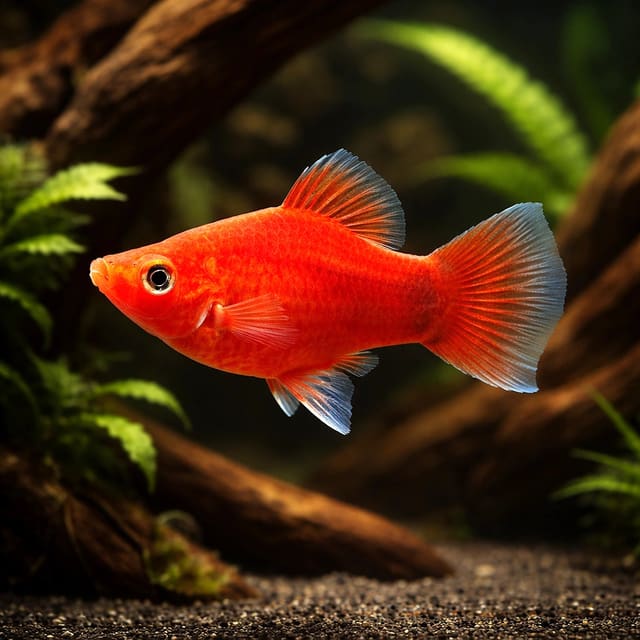
A 3-4 cm Sunset Platy, Xiphophorus maculatus, for peaceful planted community aquariums. Hardy, active and social, with warm orange-red colour, beginner-friendly care and Live Arrival Guarantee.
Adult size is the maximum length this species reaches at full maturity (scientific sources). The livestock you receive will be younger and smaller — pick a size variant above for the actual shipping size. Product-photo provenance and any image-specific limitations are stated on the listing.
Xiphophorus maculatus
Save when buying multiple fish. Each quantity is one fish; sex and pair formation are not guaranteed unless the selected variant explicitly states them.
Confirm your email, then we’ll send an availability message for this exact item if it returns within 180 days.
This request is only for this product—no newsletter or other promotions. A mail-provider retry may very rarely duplicate the same availability message. Unconfirmed addresses are removed after 48 hours. See our privacy policy.
A 3-4 cm Sunset Platy, Xiphophorus maculatus, for peaceful planted community aquariums. Hardy, active and social, with warm orange-red colour, beginner-friendly care and Live Arrival Guarantee.
Adult size is the maximum length this species reaches at full maturity (scientific sources). The livestock you receive will be younger and smaller — pick a size variant above for the actual shipping size. Product-photo provenance and any image-specific limitations are stated on the listing.
Platy is a trade name used for Xiphophorus maculatus, X. variatus and domestic forms. Start with at least three in a mature aquarium of at least 45 litres, verify the exact fish and measured water, and plan extra capacity before mixing sexes.
Maintain these water conditions for optimal health and vibrant colors
The Sunset Platy (Xiphophorus maculatus) is a popular freshwater livebearer admired for its cheerful colouration, lively behaviour and straightforward care. This Sunset strain is especially attractive, with warm tones that can add a bright accent to planted community aquariums. As with many platies, it is a social, active fish that does best when kept in a small group rather than alone.
Platies are well known for being hardy and adaptable, which makes them a favourite among aquarists building a first tropical community tank. They are also a good option for experienced keepers looking for a compact, low-drama species with plenty of movement and personality. While they are generally easy to care for, they still need clean water, a stable environment and a sensible stocking plan to stay in top condition.
We supply Sunset Platies at around 3 to 4 cm on shipping. Adult size can vary with strain, sex and care, so if you need exact size guidance for your setup, please verify against the fish you are planning to keep and the conditions in your aquarium.
The supplier identity behind this listing is the Sunset strain of Xiphophorus maculatus. The wording here is kept natural, because this page should help you understand the fish rather than repeat supplier shorthand.
This strain looks strongest against green plants, dark wood or natural gravel, where the warm body colour can stand out without looking harsh. A single fish will often feed and swim, but a small group gives more confident behaviour and more natural movement across the front and middle of the aquarium.
Plan the group before ordering. Mixed-sex groups can breed readily, and males may chase females as part of normal livebearer behaviour. More space, cover and a sensible ratio reduce pressure on individual fish.
Sunset Platies are best kept in a peaceful, well-filtered tropical aquarium with stable water quality and plenty of swimming space. Although they are not demanding, they appreciate a tank that offers a mix of open water and light planting, plus a gentle current rather than a strong blast from the filter outlet.
A covered tank is strongly recommended, as platies are active and may jump when startled. Live plants, rocks and driftwood can help break up sightlines and make the fish feel secure, but be sure to leave open areas for swimming. A mature filter, regular maintenance and sensible stocking are all important, because livebearers can be sensitive to poor water quality even when they appear hardy.
If you are planning a tank for platies, think long term rather than minimum size alone. Provide a tank of at least 40 litres, and larger is always better for a stable, established group. As with all fish, verify your local water conditions before buying and make sure your aquarium is fully cycled before introduction.
Sunset Platies are best kept in mineral-bearing freshwater rather than very soft acidic setups. A practical care range is 20-26 C, pH 7.0-8.2 and roughly 10-30 dGH. The exact number matters less than stability, so test your aquarium, avoid sudden swings and acclimate the fish gradually on arrival.
If your tap water is naturally hard and alkaline, this species is usually much easier to place than many soft-water community fish. If your aquarium is built around very soft-water species, choose tank mates carefully or consider a different livebearer setup. Keep ammonia and nitrite at zero, control nitrate with water changes and avoid adding this fish to a tank that has not fully cycled.
Sunset Platies are omnivores and should be fed a varied, balanced diet. In the wild and in the aquarium, livebearers graze throughout the day, so they do best on a mix of quality flake or micro pellet foods, along with supplementary frozen or live foods when appropriate. A varied diet helps support colour, condition and breeding readiness.
Offer small portions that can be eaten quickly, and avoid overfeeding. Like many community fish, platies will keep looking for food even when they have had enough, so it is easy to overdo it. High-quality prepared foods should form the staple, with occasional treats such as daphnia, brine shrimp or similar foods as part of a varied routine. If you keep planted tanks, platies may also enjoy nibbling soft growth and algae films, but they are not a substitute for proper feeding.
Feed little and often rather than offering large meals. Remove excess food to help preserve water quality, especially in smaller aquariums. If you are unsure about a particular food, check that it is suitable for small omnivorous livebearers and match it to the fish size you receive.
Sunset Platies are peaceful and generally easy to mix with other calm community species. They are active mid-water and surface swimmers, and their outgoing nature means they are often among the first fish to be seen after feeding. They are not aggressive, but males may occasionally display mild chasing as part of normal social and breeding behaviour.
Choose tank mates that will not bully, nip or outcompete them for food. Suitable companions usually include other peaceful livebearers and similarly sized community fish that prefer stable warm freshwater conditions. Avoid housing them with large, predatory or highly boisterous species, as these can stress platies and shorten their lifespan.
Because platies are social, they are best kept in groups. A mixed group is often ideal, but if you are keeping both sexes, be prepared for breeding. If you want to reduce fry, avoid keeping too many males or combine them carefully with suitable tank mates. As always, match fish to the aquarium, not the other way round, and verify compatibility before adding any new species.
Breeding is highly relevant for Sunset Platies because, like other platies, they are livebearers. This means females give birth to free-swimming fry rather than laying eggs. If males and females are kept together in suitable conditions, breeding can occur without any special encouragement.
Many fishkeepers find platy breeding straightforward, but it is still worth planning ahead. Pregnant females can become noticeably rounder, and fry are tiny at birth, so they need fine food and plenty of cover if you intend to raise them. Dense planting, floating plants and separate rearing arrangements can help protect young fish from being eaten by adults.
If you do not want babies, manage sex ratios carefully and be aware that livebearers can reproduce regularly. If you do want to breed them, keep the water clean, the fish well fed and the aquarium calm. As with all livebearers, exact breeding outcomes depend on strain, health and environmental conditions, so monitor your fish closely and verify any setup details that are important to your goals.
Sunset Platies are generally hardy, but they still depend on clean, stable water and sensible husbandry. Poor water quality, sudden parameter changes, overcrowding and unsuitable tank mates are common causes of stress. Stressed fish may hide, lose colour, clamp fins or become more prone to disease.
Because platies are adaptable, it can be tempting to assume they will cope with almost anything. In reality, long-term success comes from stability. Keep up with regular water changes, avoid overstocking and feed a varied diet in modest amounts. Observe the fish daily so you can spot early signs of trouble such as laboured breathing, white spots, fin damage or unusual swimming behaviour.
If you notice illness, act promptly and identify the issue before treating. Different symptoms can point to different causes, from water quality problems to parasites or bacterial infections. Quarantine new arrivals where possible, and always verify your setup, water parameters and compatibility if the fish are not settling as expected.
Eligible livestock orders are packed for transport by UK live-animal courier and supported by the Tropical Fish Co Live Arrival Guarantee. Have the aquarium ready before dispatch, keep the lights low on arrival and temperature-match the bag before gradually mixing small amounts of aquarium water.
Do not rush the first hour. Let the fish settle, avoid feeding immediately after arrival and watch behaviour closely over the first day. If you are unsure about tank readiness, compatibility or water parameters, ask before ordering so the fish has the best possible start.
If you are building a hard-water community aquarium, you may also like the Koi Tricolour Swordtail, Orange Gold Simpson Variatus Platy, Golden Tuxedo Male Guppy, Yellow Tuxedo Female Guppy or Rose Endler Guppy. Choose tank mates by water chemistry and temperament first, then by colour.
Max adult size is the length this species reaches at full maturity (from scientific sources). The livestock you receive will be younger and smaller — pick a size variant on the buy box for the actual shipping size. Product-photo provenance and any image-specific limitations are stated on the listing.
Match tank mates by water hardness, temperature, adult size and feeding pace. Plan sex ratios because mixed livebearer groups can breed readily.
Always research specific species before adding them to your tank. Consider:
No reviews for this item yet. Bought one? Honest reviews only, good or bad.
What customers say about ordering from us
I have a small group of long finned mountain minnows. So was delighted to be able to order ten of this variety to increase the genetics in my tank . The ones I recieved are healthy but it’s to early to give a verdict on wether they are of a long finned type since they are small currently.
Gordon Walker · 23 Sept 2026
100% success travel and "installation". Pleased with quality of purchase. The Siamese fighter a bit "shy" so have not yet seen him at his best yet but looking good. Happy customer. GG
George E Garratt · 21 Sept 2026
Reviews of our shop, collected by Judge.me, an independent third-party review collector. Newest first.