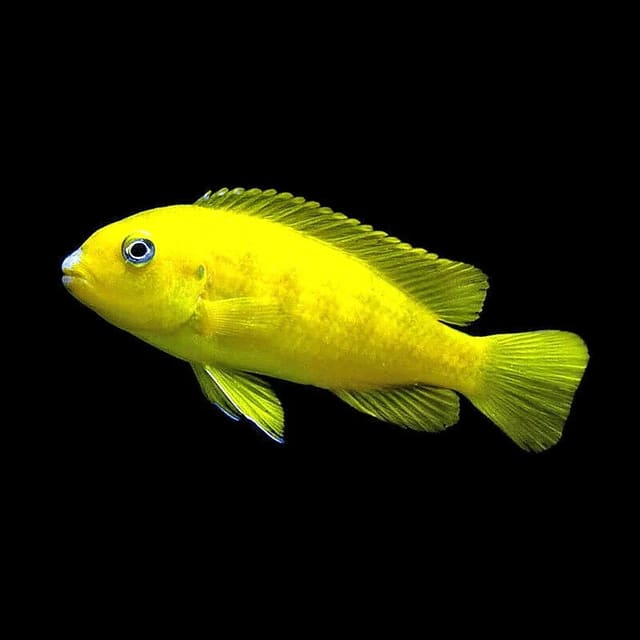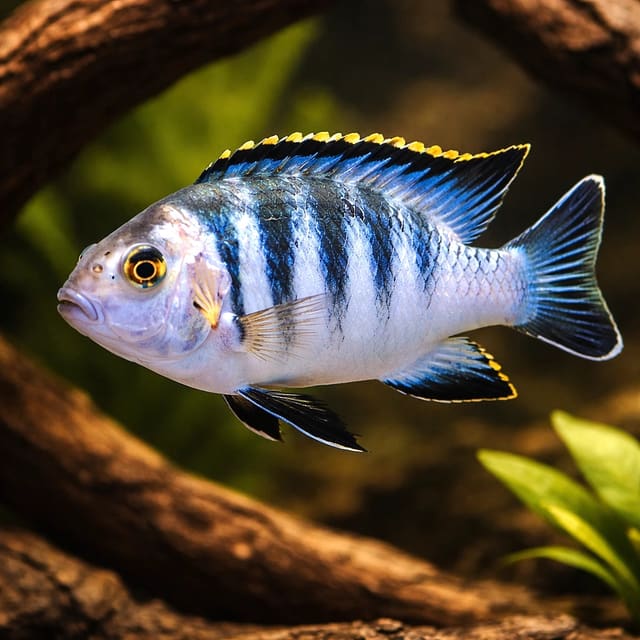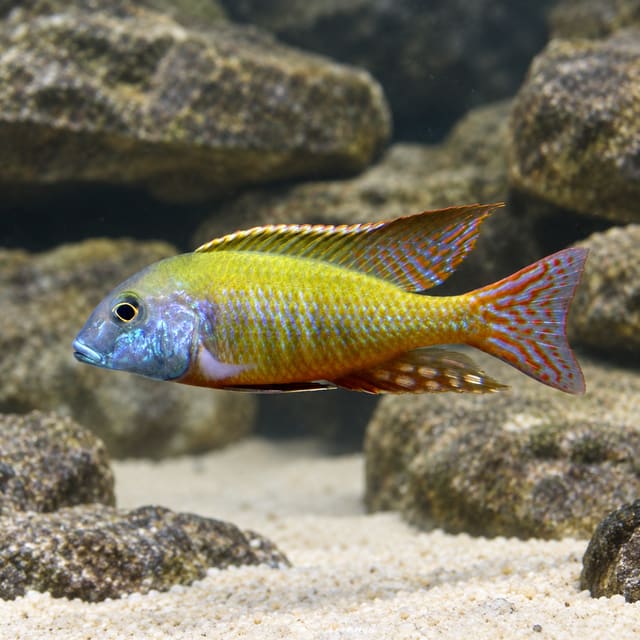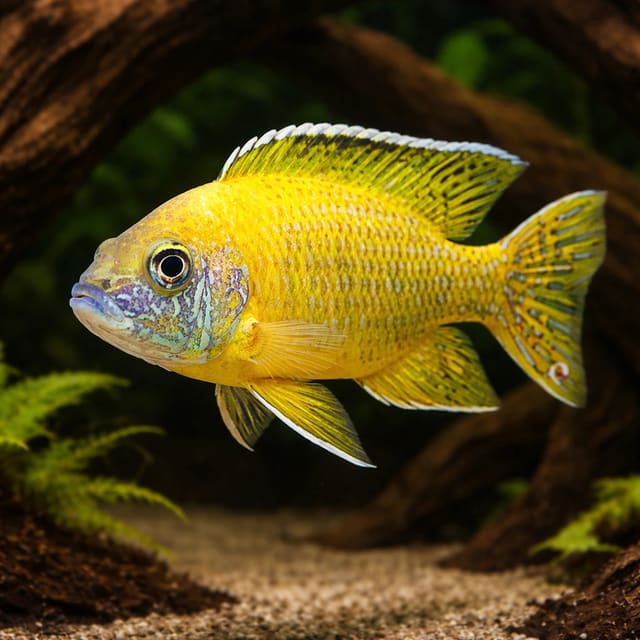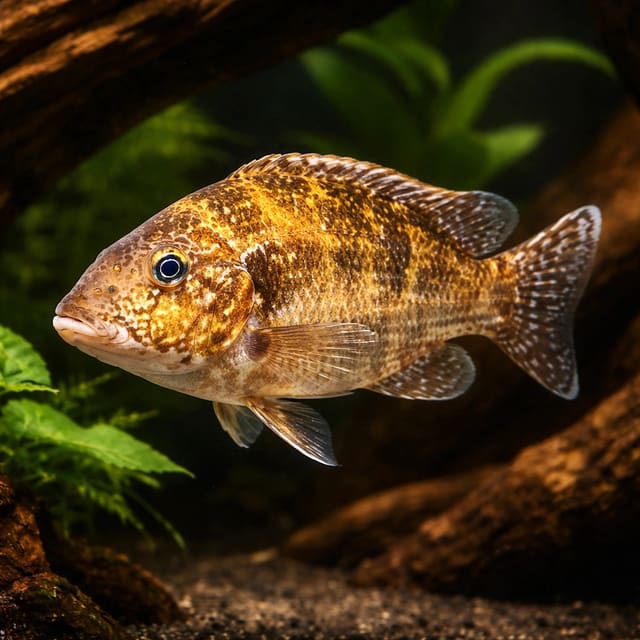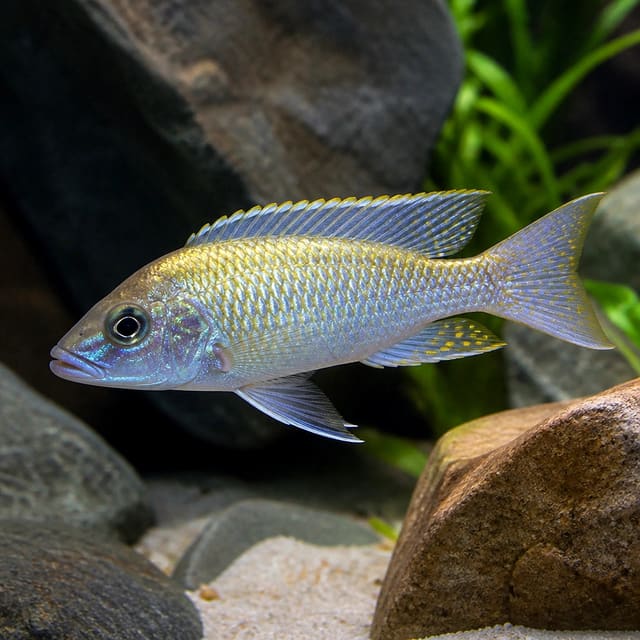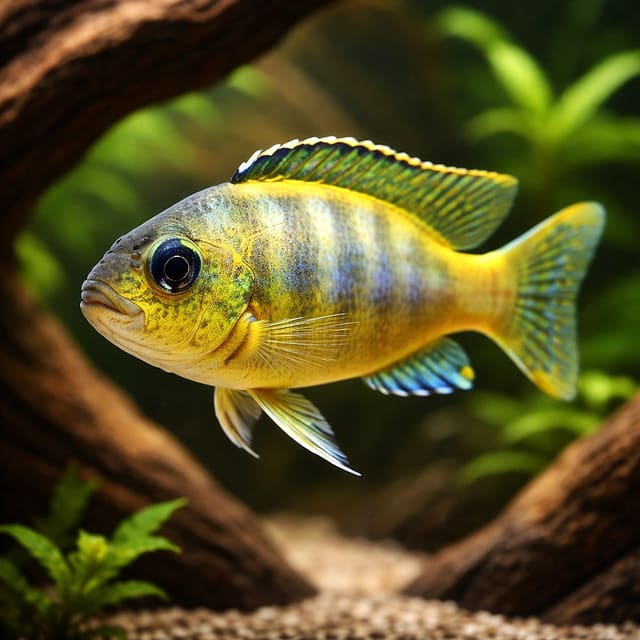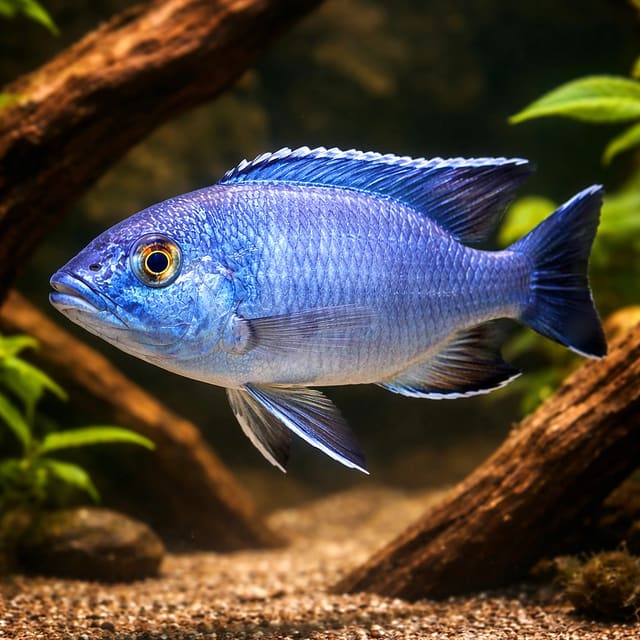
Moderate
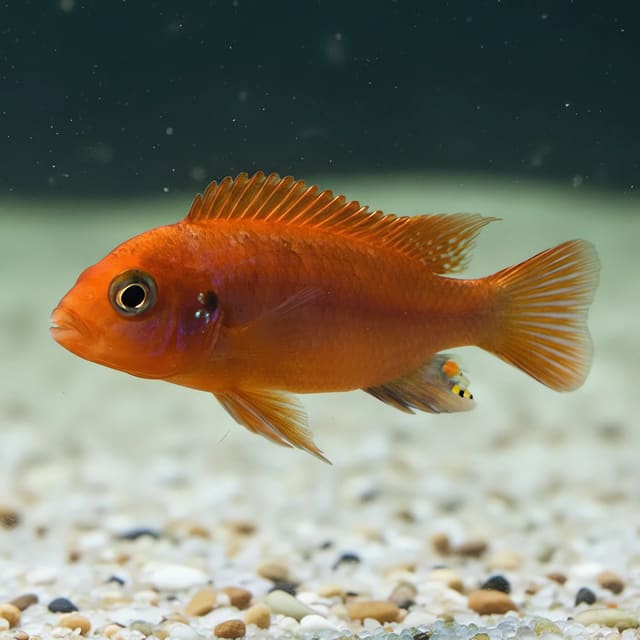
Acei Cichlid (Pseudotropheus sp. 'Acei')
24–26°C · pH 7.5–8.5 · 300L
£7.99
Photo coming soon
The size, price and care details on this page are for this listing.
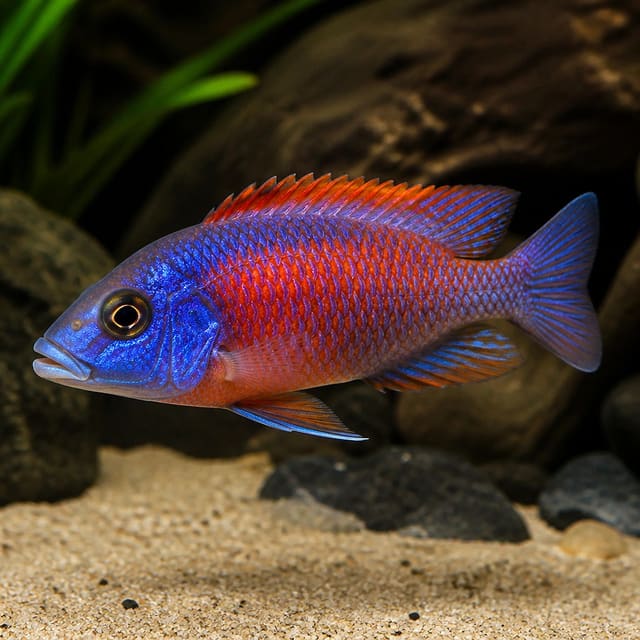
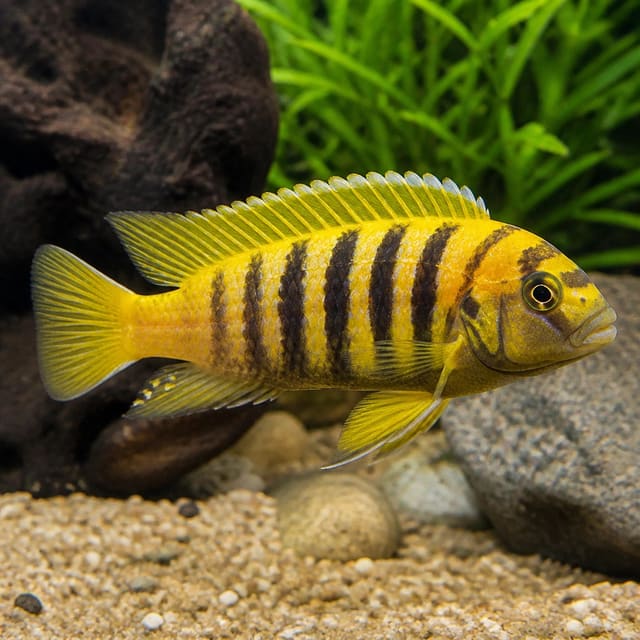
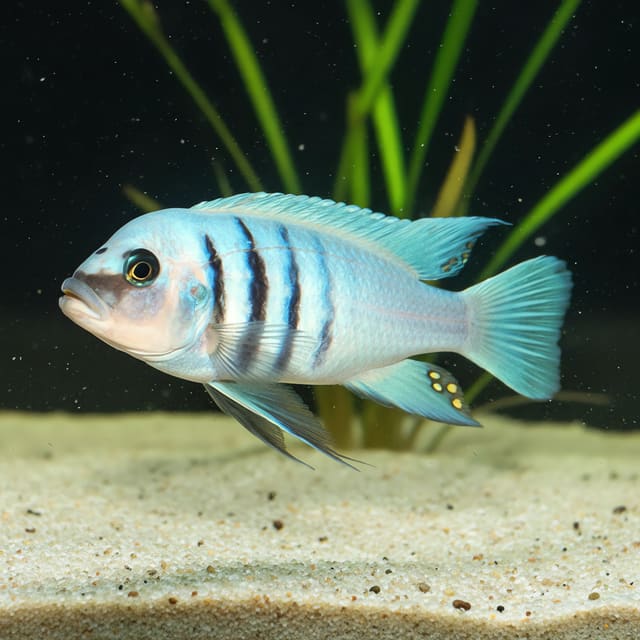
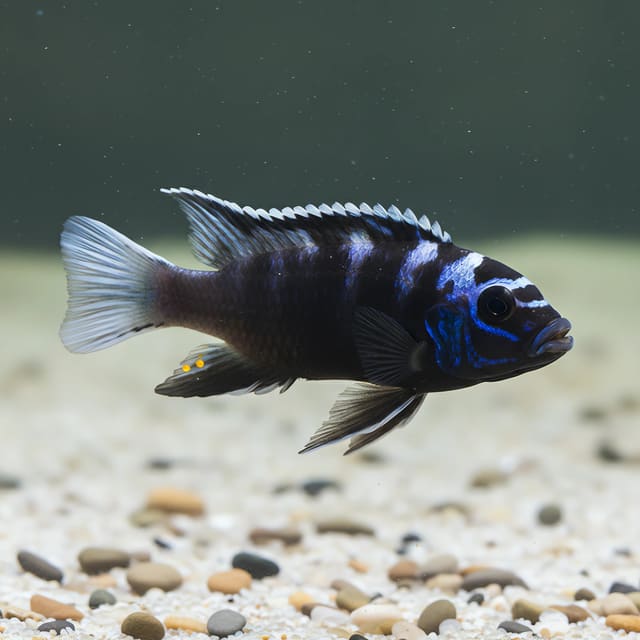
The Lobochilus Hap (Eclectochromis lobochilus) is a Lake Malawi cichlid that reaches 12.5 cm. It suits keepers planning an aggressive Malawi community: OATA says these cichlids can be kept in groups of at least 15, while the FishBase and OATA temperature overlap is 24–26°C and OATA gives pH 8.0–8.6. Sold individually as one live fish per purchase.
Adult size is the maximum length this species reaches at full maturity (scientific sources). The livestock you receive will be younger and smaller — pick a size above for the actual shipping size. Product-photo provenance and any image-specific limitations are stated on the listing.
Eclectochromis lobochilus
Save when buying multiple fish. Each quantity is one fish; sex and pair formation are not guaranteed unless the selected variant explicitly states them.
The Lobochilus Hap (Eclectochromis lobochilus) is a Lake Malawi cichlid that reaches 12.5 cm. It suits keepers planning an aggressive Malawi community: OATA says these cichlids can be kept in groups of at least 15, while the FishBase and OATA temperature overlap is 24–26°C and OATA gives pH 8.0–8.6. Sold individually as one live fish per purchase.
Adult size is the maximum length this species reaches at full maturity (scientific sources). The livestock you receive will be younger and smaller — pick a size above for the actual shipping size. Product-photo provenance and any image-specific limitations are stated on the listing.
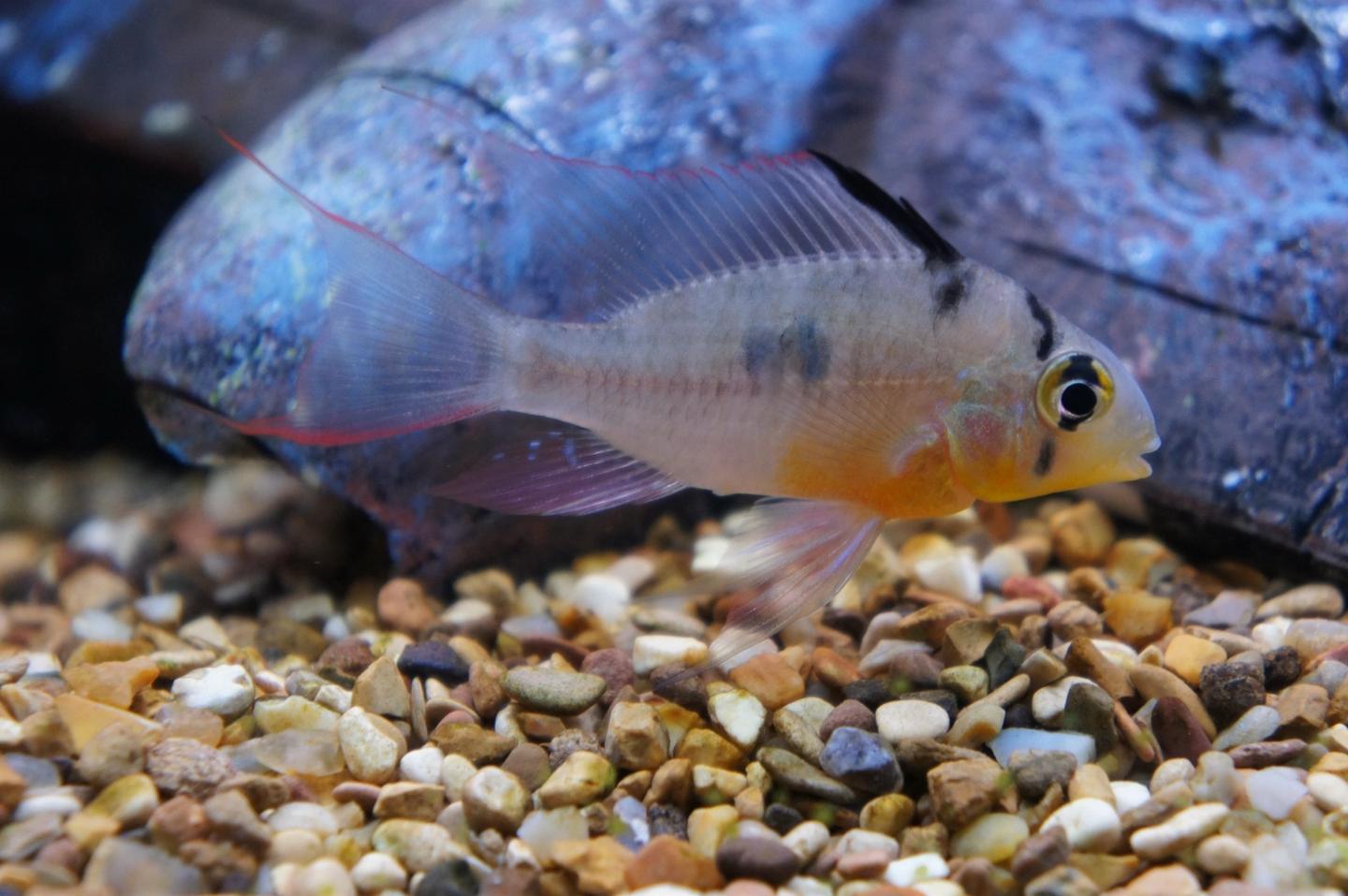
Cichlids are a family of roughly 1,800 accepted species, not one care type. Before buying, identify the exact species and source, then compare adult measurement, usable tank dimensions, social system, territory, tested water, diet and an exit plan. No family-wide minimum tank, water range or tank-mate list is safe.
Maintain these water conditions for optimal health and vibrant colors
The Lobochilus Hap (Eclectochromis lobochilus) is a freshwater cichlid from the family Cichlidae. It is endemic to Lake Malawi and reaches a recorded maximum of 12.5 cm total length. This fish suits a keeper prepared to maintain hard, alkaline water and plan an entire Malawi community around aggression, filtration and adult size. It is not a general mixed-community choice.
FishBase classifies the species as freshwater and benthopelagic, records 24–26°C in its environment and notes that it is known only from the holotype taken at Chilumba. Its 12.5 cm maximum is the figure to use when allowing swimming room, arranging décor and checking whether the intended aquarium remains suitable after growth.
Wikipedia places the species in Malawi, Mozambique and Tanzania while describing it as endemic to Lake Malawi. These statements identify the lake system and the countries in which it occurs; they do not make this fish suitable for every African-cichlid community.
Choose this cichlid when you can hold the aquarium at the required water values, run strong biological filtration and screen every companion as part of a Malawi stocking plan. Aggression is a normal planning concern for Malawi cichlids, so aquarium volume alone does not settle compatibility. Group structure, introduction order, filtration capacity and the behaviour of every intended fish matter together.
Use the 12.5 cm adult figure rather than the fish’s current length for long-term decisions. A fish that fits physically can still be a poor match if the aquarium cannot support a suitably planned Malawi community or if its residents come from an incompatible stocking scheme.
Keep the aquarium at 24–26°C, pH 8.0–8.6 and 12–18°dH general hardness. The temperature is the overlap between FishBase’s 24–26°C environmental record for this species and OATA’s Malawi cichlid guidance of 23–27°C. OATA presents the pH and hardness figures as group-level guidance and also gives 10–15°dKH carbonate hardness.
Use an aquarium of at least 200 litres when planning a reasonable-sized Malawi community. That is OATA’s community recommendation rather than a volume calculated from the current length of one fish. A larger aquarium offers more stable temperature and water quality, but it does not remove the need to assess aggression and group composition.
| Suits | Not suited to |
|---|---|
| A mature, filtered Malawi community planned around adult fish | An unfiltered or biologically immature aquarium |
| Water held at 24–26°C, pH 8.0–8.6 and 12–18°dH | Water that cannot remain hard and alkaline |
| Keepers prepared to manage an aggressive cichlid community | A general peaceful mixed-community plan |
| A community aquarium of at least 200 litres | A small group of Malawi cichlids, which OATA says will often fight |
| Other Malawi cichlids or some Lake Malawi Synodontis species | Fish other than Malawi cichlids, apart from some Lake Malawi Synodontis species |
These decisions work as a set. A 200-litre aquarium with unsuitable water is not ready, and correct water does not make an incompatible community safe. Before purchase, compare the aquarium’s measured values, intended companions and filtration capacity against the complete plan rather than checking only one number.
One purchase supplies one live Lobochilus Hap. Treat that quantity as the purchase unit, not as a recommendation to keep this fish alone or as a complete Malawi group. Work out the intended community before deciding how many fish to add, because OATA warns that Malawi cichlids kept in small groups will often fight.
Sex is guaranteed only when the selected option explicitly states male or female. This Lobochilus Hap listing has no sex-guaranteed option.
Do not estimate the sex of the fish you receive from colour, markings or size. OATA notes that many Malawi cichlids only show differences between the sexes once they become adults, not as juveniles. Where possible, its guidance recommends more females than males of each species to prevent males from harassing one individual female, but this purchase should not be used to promise a particular sex ratio.
The purchase unit and the 12.5 cm adult planning figure answer different questions. The first tells you how many live fish one purchase supplies. The second determines long-term space planning and must not be replaced by an assumption about the fish’s length at dispatch.
Use a mature, filtered aquarium of at least 200 litres for a reasonable-sized Malawi community. OATA’s figure is broad community guidance, so plan the whole population rather than treating 200 litres as a calculation for one isolated fish. Include every intended adult fish when assessing space, waste production and aggression.
A mature aquarium is defined by functioning biological filtration and suitable test results, not simply by how long it has contained water. The RSPCA explains that fish release toxic ammonia, which filter bacteria convert first to toxic nitrite and then to safer nitrate. A tank that has not established that process is not ready for this fish.
Use the adult maximum of 12.5 cm throughout this plan. Do not base the permanent aquarium on the fish’s present length, and do not assume a smaller temporary setup becomes appropriate simply because a fish has not finished growing.
Keep the temperature at 24–26°C. This routine target is the overlap of FishBase’s species-level environmental range and OATA’s 23–27°C Malawi range. Hold pH at 8.0–8.6, general hardness at 12–18°dH and carbonate hardness at 10–15°dKH, following OATA’s Malawi values.
Ammonia and nitrite must remain at zero mg per litre. Nitrate should not exceed 20 mg per litre above the normal level in the tap water. Read our water chemistry guide to understand what each test measures, then use the water matcher to compare measured aquarium values with this plan.
| Measurement | Decision |
|---|---|
| 25°C, pH 8.2 and 15°dH | These readings sit within the routine temperature, pH and hardness targets. |
| 23°C | This sits below the 24–26°C overlap; correct and stabilise it before introduction. |
| pH 7.5 | This sits below OATA’s 8.0–8.6 Malawi guidance; reassess the setup before adding the fish. |
| Ammonia above zero | The biological system is not meeting the required target; investigate filtration and loading before adding livestock. |
| Nitrite above zero | Do not add fish while the zero mg per litre requirement is unmet. |
Test trends as well as single readings. A value inside the target today is useful, but repeated checks show whether the aquarium can remain stable through feeding, maintenance and population changes. Test at least once per week as part of the normal routine and repeat checks whenever livestock or feeding increases.
Treat replacement tap water with a suitable conditioner to remove chlorine or chloramine before adding it to the aquarium.
Hard, alkaline water is a core requirement for this Malawi setup. Do not treat pH and hardness as optional details after aquarium volume has been chosen; they are part of the same suitability decision as adult size, filtration and companions.
Run a well-established biological filter at all times. The RSPCA describes filtration as vital because fish release toxic ammonia into the water. Beneficial bacteria in a working filter convert ammonia to nitrite and then to safer nitrate, so the filter protects the aquarium only when that bacterial population is established and maintained.
OATA recommends an oversized filter because successful Malawi communities need crowded environments, which increase the demand on water quality. It also recommends aggressive aeration to maintain enough dissolved oxygen. Choose filtration capacity for the intended adult community and feeding load, not for one fish or its current length.
An oversized filter does not make rapid stocking safe. OATA warns that too many fish added too quickly can produce new tank syndrome even when filtration equipment is present, because the bacterial population may not yet be large enough for the increased waste.
Aeration and filtration have connected but distinct jobs. The filter processes waste through its biological media, while strong aeration supports oxygen availability in the crowded Malawi environment. Keep both operating as parts of one life-support system rather than relying on aquarium volume alone.
Use water tests to judge performance. Clear-looking water is not a substitute for ammonia, nitrite and nitrate measurements, and a powered filter is not enough if its media is blocked or its bacterial population has been damaged.
Use coral sand or a similar substrate that helps buffer the hard, alkaline water required by Malawi cichlids. Malawi cichlids will often dig and rearrange the substrate, which will uproot any plants present. OATA therefore advises using only the hardiest plants if planting forms part of the design.
Rearranging décor is a management action, not a guarantee that incompatible fish will become compatible. Use it when aggression appears within an otherwise suitable Malawi plan, then continue observing swimming, hiding, feeding and fin condition.
Plan access for weekly maintenance. Leave room to siphon solid waste from the substrate during the partial water change, and keep the filter accessible for blockage checks. A layout that prevents routine cleaning makes it harder to maintain the zero ammonia and nitrite targets.
Connect the design to introduction order. OATA recommends adding more peaceful species first and more aggressive species later. Décor can then be rearranged when new fish are introduced so established territories do not remain the only structure available to the community.
Keep the visual plan secondary to welfare decisions. Stable hard water, strong filtration, aeration, sufficient community space and screened companions all take priority over a delicate planting scheme or a layout that cannot be adjusted if aggression develops.
Feed only what the fish can eat within a few minutes, twice a day. OATA’s Malawi feeding guidance sets this schedule for the group and warns that overfeeding leaves uneaten food to break down, releasing toxic waste into the water.
| Feeding plan | OATA examples |
|---|---|
| Herbivorous mbuna plan | Specialised Malawi cichlid feeds with a high algae content and fresh vegetables |
| More predatory utaka plan | Pellets with a higher animal content and frozen brine shrimp, prawns or cockles |
OATA says larger utaka that are more predatory will require pellets with a higher animal content, while smaller mbuna will appreciate algae-rich feeds and fresh vegetables, so do not mix every food into one routine. Use a specialised Malawi cichlid food as the staple, then keep to the portion rule: an amount eaten within a few minutes, twice daily.
Watch each meal instead of adding food and leaving the aquarium. Reduced intake or a loss of interest in food is one of OATA’s warning signs, while uneaten food increases the pressure on filtration. Observation therefore checks both the fish and the amount being fed.
When population or feeding increases, test the water because the filter bacteria must process the additional waste. A feed that disappears quickly can still contribute to waste after digestion, so the absence of visible leftovers does not replace ammonia, nitrite and nitrate testing.
This approach connects feeding with water quality. Measured portions limit uneaten waste, while weekly testing and partial water changes show whether the aquarium continues to process the established routine safely.
Start filming before the sealed parcel is opened. Keep the outer box visible and record one continuous take showing the parcel sealed, the parcel being opened and the fish still inside the sealed bag before anything is disturbed. Keep the recording and order number for any Live Arrival Guarantee claim. Be at the delivery address to receive the parcel in person, because live fish must not be left unattended.
Read the current delivery and Live Arrival Guarantee policy before the parcel arrives so the required recording can begin while it is still sealed. The first video frame matters because the policy requires the sealed parcel and continuous opening to be visible.
Complete the aquarium checks before the arrival sequence begins. Temperature should be 24–26°C, pH 8.0–8.6 and general hardness 12–18°dH, with ammonia and nitrite at zero mg per litre.
OATA advises increasing fish numbers slowly because beneficial filter bacteria need to respond whenever fish and feeding increase. It also recommends adding Malawi cichlids in groups to avoid any individual receiving unnecessary aggression as it settles, with more peaceful species added before more aggressive species.
Watch whether the fish shows appropriate swimming and interest in food. Also look for persistent surface hanging, sitting on the bottom, erratic swimming, unusual hiding, colour changes or altered breathing. Test water quality when behaviour or condition changes rather than assuming every settling problem is behavioural.
Arrival does not complete the compatibility assessment. Continue watching interactions as territories develop, especially after another group is introduced or the décor is rearranged.
Change 25% of the aquarium water at least once every week. OATA notes that a siphon device is useful for removing solid waste from the substrate during this partial change. Treat the replacement water with tap-water conditioner to remove chlorine or chloramine before adding it to the aquarium.
Test ammonia and nitrite at least once per week and keep both at zero mg per litre. Check nitrate against OATA’s limit of no more than 20 mg per litre above its normal tap-water level. Record temperature, pH and hardness at the same time so a change can be noticed before it becomes the aquarium’s new pattern.
Check the filter for blockages during maintenance. If cleaning is needed, do not rinse it under the tap. Rinse the media lightly in aquarium water removed during the partial change so fewer beneficial bacteria are lost.
| Change to notice | Next decision |
|---|---|
| Hanging at the surface, sitting on the bottom or erratic swimming | Test water quality and check filtration and aeration. |
| Darker or paler colour than normal | Compare behaviour, interactions and water-test results. |
| More aggression or hiding than normal | Review group structure, introduction order and territories. |
| Gill covers moving faster or slower than normal | Test the water and inspect aeration and filter operation. |
| White spots, fluffy growths, lost fins or scales | Check water quality and seek help rather than selecting a treatment by guesswork. |
| Weight change or reduced interest in food | Review measured feeding, interactions and water conditions. |
If you are concerned about the fish’s health, test the water quality and contact us. Give the measured temperature, pH, hardness, ammonia, nitrite and nitrate readings along with a clear description of the behaviour or appearance change.
Consistency protects both water quality and behaviour. A missed test can hide a developing filtration problem, while missed observations can allow aggression or reduced feeding to continue unnoticed.
Keep this fish only with other Malawi cichlids or with some species of Synodontis catfish that also naturally inhabit Lake Malawi. OATA supports those two companion categories and describes Malawi cichlids as aggressive fish that should be mixed with caution.
Ask us for stocking advice before buying, and check aquarium volume, adult sizes, water requirements, intended numbers, introduction order and the temperament of every proposed fish.
Use our African cichlid collection to compare identities and care requirements, not as a ready-made companion list. A shared collection category does not replace the compatibility screen.
The practical rule is simple: build one coherent Malawi community, assess the Synodontis exception individually and avoid adding unrelated community fish merely because they tolerate similar temperatures.
Treat aggression as a normal Malawi-cichlid management issue. OATA says these fish are not social and can be highly aggressive, although they can be kept in groups of at least 15 and slightly overcrowded to limit aggression. OATA also says a slight overstocking is required to spread aggression evenly throughout the population, but no group number guarantees that any 15 fish will live together safely.
A larger planned group produces more waste and places greater demand on oxygen and biological filtration. OATA therefore pairs Malawi community stocking with an aquarium of at least 200 litres, an oversized filter and aggressive aeration. Do not apply the group number without applying those water-quality safeguards.
A worked comparison shows the decision clearly. A group of four is a small Malawi group, and OATA warns that small groups often fight. A planned community of at least 15 follows the group guidance, but it still needs screened species, suitable adult space, strong filtration and observation. The number reduces no other requirement.
Where possible, OATA recommends keeping more females than males of each species so males are less likely to harass one individual female. Use that advice only when the sex of the fish is known through an explicit guarantee or reliable adult assessment. This purchase has no sex guarantee, so it cannot be used to promise a particular ratio.
If aggression increases, check whether the community has become a small subgroup, whether a more aggressive fish was introduced too early and whether established territories can be reset by rearranging décor. Test water at the same time because altered swimming, hiding and feeding can also accompany poor water quality.
Continue observing after the first calm period. Malawi cichlid interactions can change as fish settle, mature or respond to another addition, so compatibility remains an active husbandry decision rather than a one-time label.
It reaches a recorded maximum of 12.5 cm total length according to FishBase. Use that adult figure for permanent aquarium planning rather than judging space from its current length.
Use an aquarium of at least 200 litres when planning a reasonable-sized Malawi community. OATA gives this as a community recommendation, so combine it with adult-size planning, an oversized filter, strong aeration and a compatibility assessment.
OATA says Malawi cichlids can be kept in groups of at least 15 and warns that small groups often fight. Treat this as a whole-community plan requiring screened species, adequate space, oversized filtration and strong aeration, not as a requirement to buy 15 of this species.
OATA describes Malawi cichlids as usually undemanding, but this fish needs hard alkaline water, a mature filtered aquarium and active aggression management. A beginner should proceed only with a prepared aquarium of at least 200 litres and a fully screened Malawi community plan.
Use a specialised Malawi cichlid food as the staple and feed only what it can eat within a few minutes, twice daily. OATA notes that smaller mbuna are more herbivorous, while some larger utaka may be more predatory and will require pellets with a higher animal content.
Keep it at 24–26°C, the overlap between FishBase’s environmental range and OATA’s Malawi range. OATA gives pH 8.0–8.6, general hardness of 12–18°dH and carbonate hardness of 10–15°dKH.
Treat it as an aggressive Malawi cichlid. OATA advises cautious mixing; watch for chasing, increased hiding, damaged fins, altered swimming and reduced feeding, then review group structure, introduction order, territories and water quality.
Keep it only with other Malawi cichlids or some species of Synodontis catfish that naturally inhabit Lake Malawi, following OATA’s rule. Screen every exact companion and avoid treating shared water values as automatic compatibility.
Tropical Fish Co hand-bags live fish in pure oxygen, uses an insulated poly box and adds a heat pack when the weather calls for it. Start a continuous video before opening the sealed parcel, inspect it on arrival, float the bag for 20–30 minutes and keep the video and order number for any Live Arrival Guarantee claim.
No reviews for this item yet. Bought one? Honest reviews only, good or bad.
What customers say about ordering from us
Easy website plenty of info on fish your buying great to pick a time slot
TRACEY DURRANT · 7 Oct 2026
Got some lovely fish thank you
Kevin Mackie · 7 Oct 2026
Reviews of our shop, collected by Judge.me, an independent third-party review collector. Newest first.