Moderate
Acei Cichlid (Pseudotropheus sp. “acei”)
24–26°C · pH 7.5–8.5 · 300L
£7.99

Lavender mbuna is a compact Lake Malawi cichlid for a mature, carefully planned hard-water community. Give it complex rockwork, strong filtration and compatible Malawi companions. One purchase supplies one fish in the selected size choice.
Iodotropheus sprengeri
Shoaling fish: kept in a group they feel safer, stay calmer and show their best colour.
Lavender mbuna is a compact Lake Malawi cichlid for a mature, carefully planned hard-water community. Give it complex rockwork, strong filtration and compatible Malawi companions. One purchase supplies one fish in the selected size choice.
Cichlids are a family of roughly 1,800 accepted species, not one care type. Before buying, identify the exact species and source, then compare adult measurement, usable tank dimensions, social system, territory, tested water, diet and an exit plan. No family-wide minimum tank, water range or tank-mate list is safe.
Maintain these water conditions for optimal health and vibrant colors
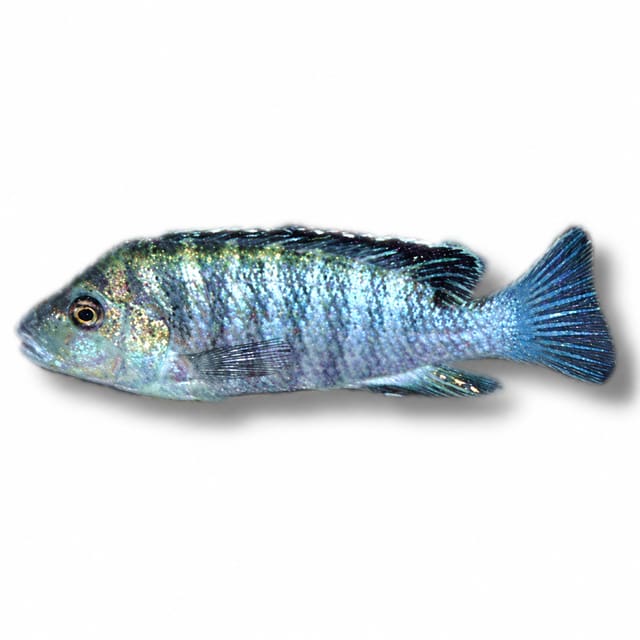
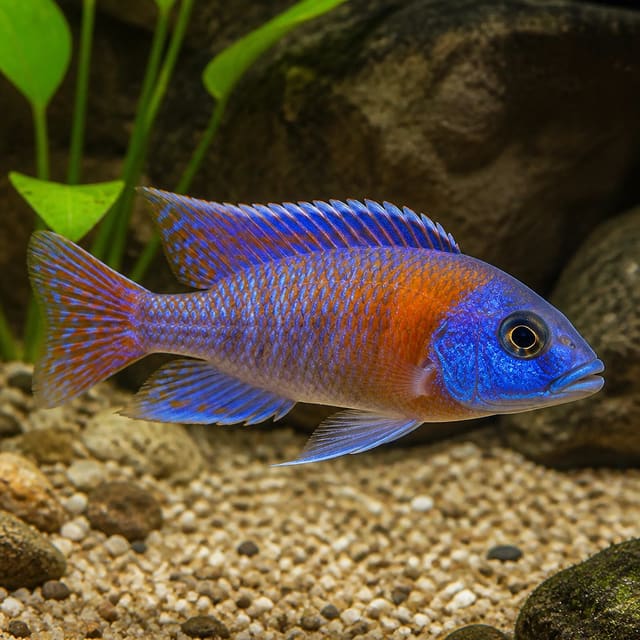
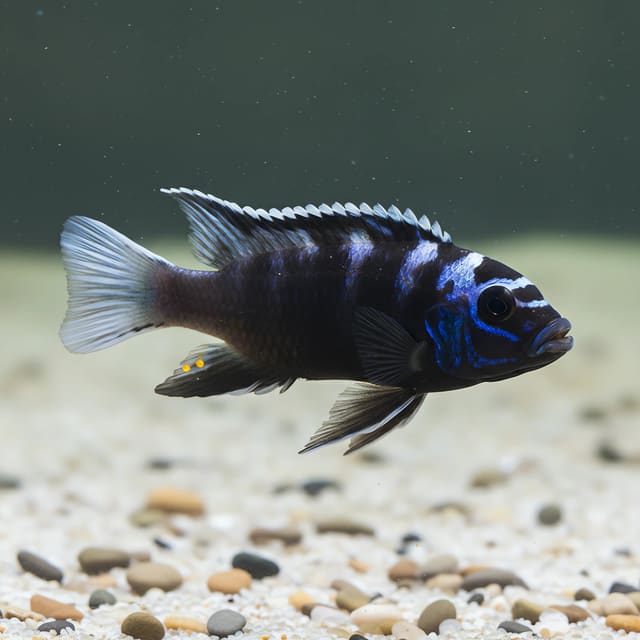
Lavender mbuna is the familiar trade name for Iodotropheus sprengerae, a small Lake Malawi cichlid also known as the rusty cichlid. FishBase lists the species as endemic to Lake Malawi and records it around Boadzulu, Chinyankwazi and Chinyamwezi islands. That restricted origin matters to the keeper: this is a rock-associated Rift Lake fish, not a general tropical-community species, and the aquarium has to be designed around hard alkaline water, territories and a deliberately chosen Malawi stock list.
The name Iodotropheus sprengerae is the scientific spelling used by FishBase and the original species description. It refers to the same Lavender mbuna sold under the closely similar trade spelling Iodotropheus sprengeri. Keeping both names together helps customers connect aquarium-trade information with modern species references without suggesting a different colour form or animal.
One purchase supplies one live fish in the size choice selected on the product page. Three genuine size choices form the recurring offer, spanning 3–7 cm. The size you select is the size supplied, not the adult size. Current availability belongs to the live size choices rather than permanent copy. Sex is guaranteed only when the selected option explicitly states male or female. This Lavender mbuna listing has no sex-guaranteed option.
| Sold unit | One live fish per purchase |
|---|---|
| Size choices | Three recurring choices spanning 3–7 cm |
| Adult record | 10.8 cm standard length; the tail is excluded |
| Water context | Hard, alkaline Lake Malawi aquarium |
| Best suited to | A keeper prepared to plan the whole cichlid community |
These quick facts work together. A small supplied fish still needs an aquarium planned for adult dimensions and community behaviour. A larger size choice does not guarantee sex, temperament or colour. The most useful buying question is therefore not simply which size looks appealing, but whether the mature aquarium, water and stock plan are already suitable.
FishBase records a maximum of 10.8 cm standard length for a male or unsexed fish. Standard length stops at the base of the tail, so it is not interchangeable with total length. That labelled record is more useful than a vague adult-size number because it tells you exactly what was measured. It also keeps the juvenile dispatch sizes separate from adult planning: a 3–4 cm fish is simply a smaller supplied animal, not a different miniature form.
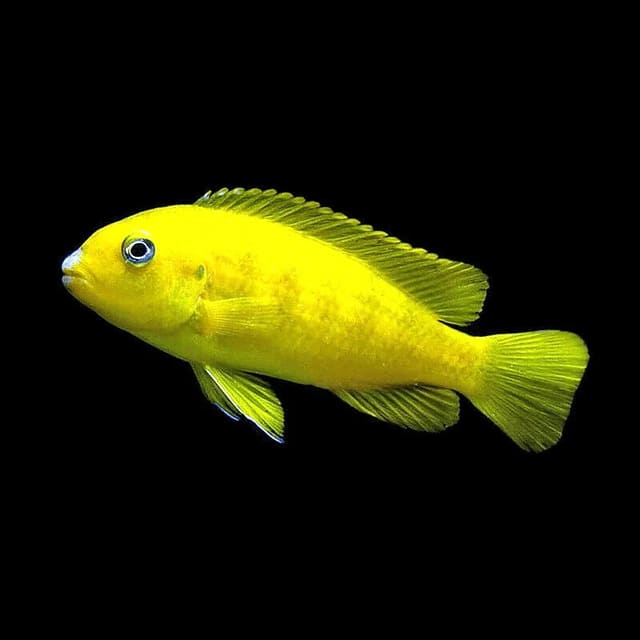
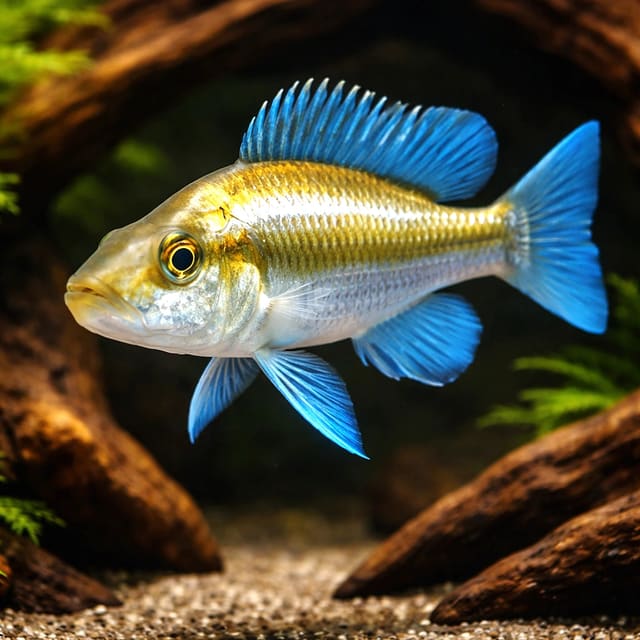
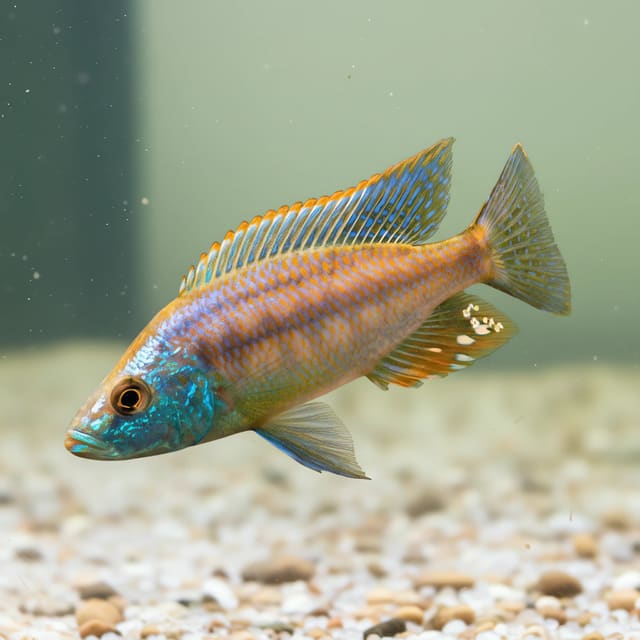
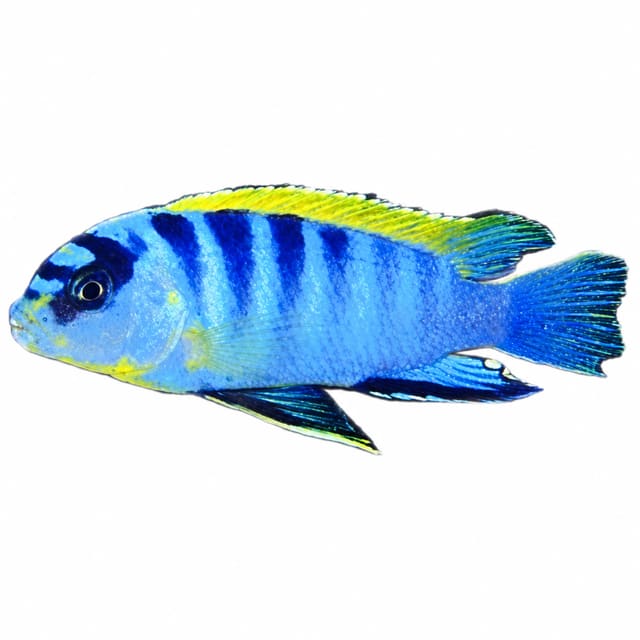
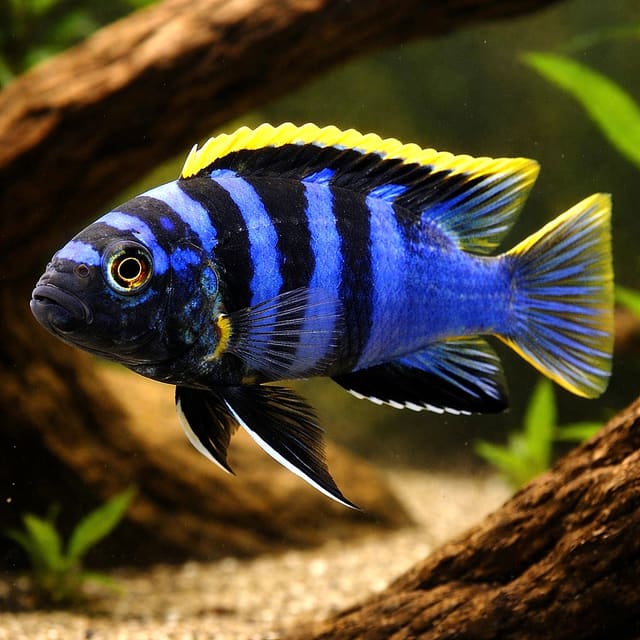
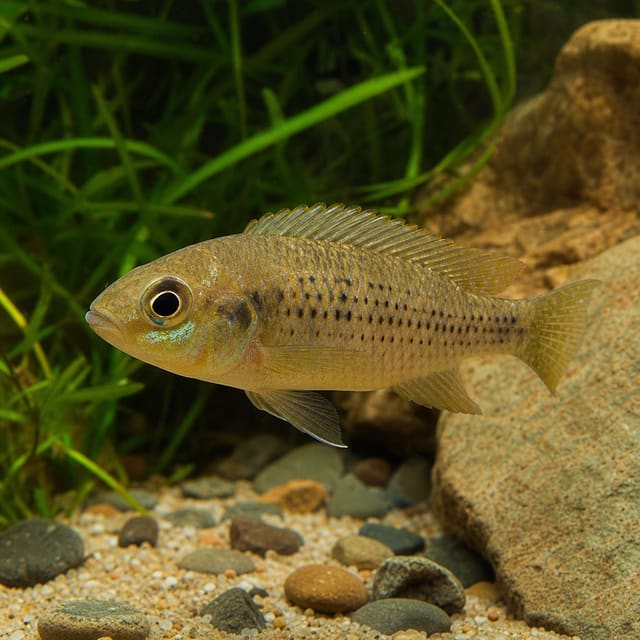
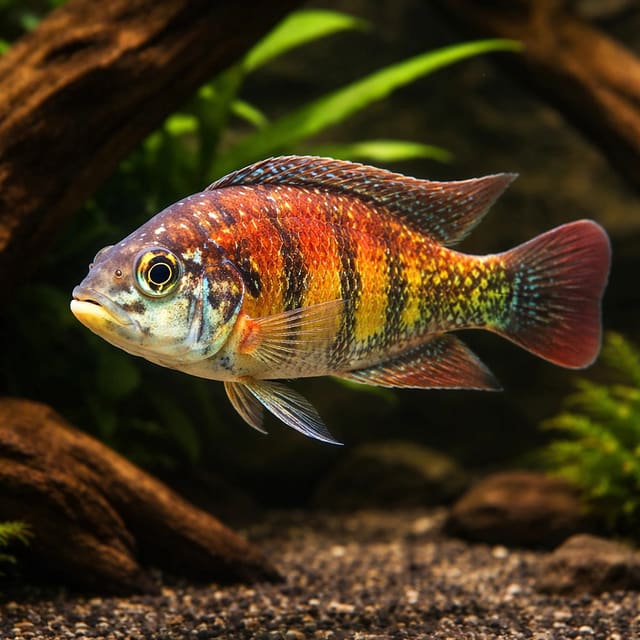
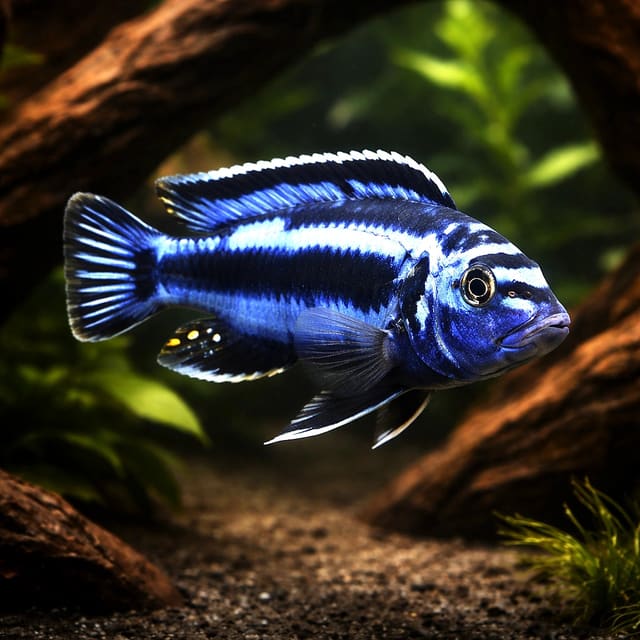
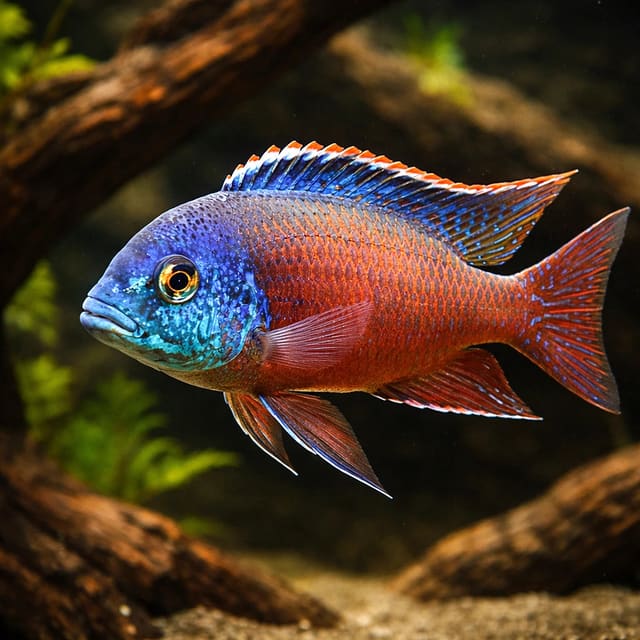
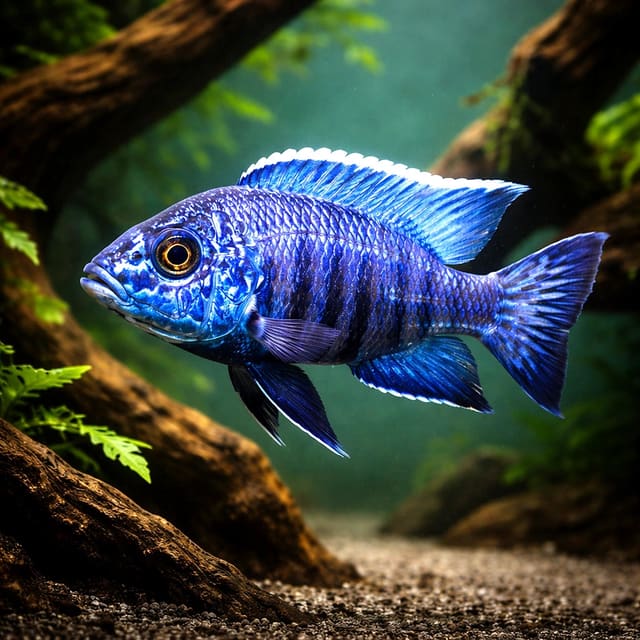
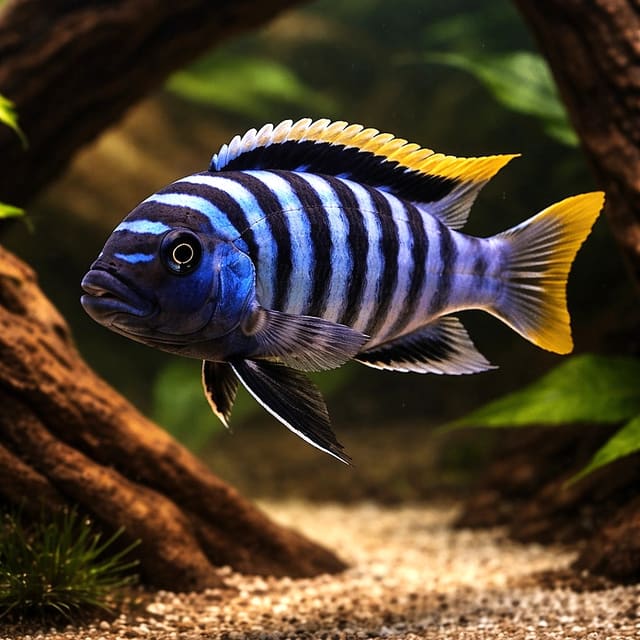
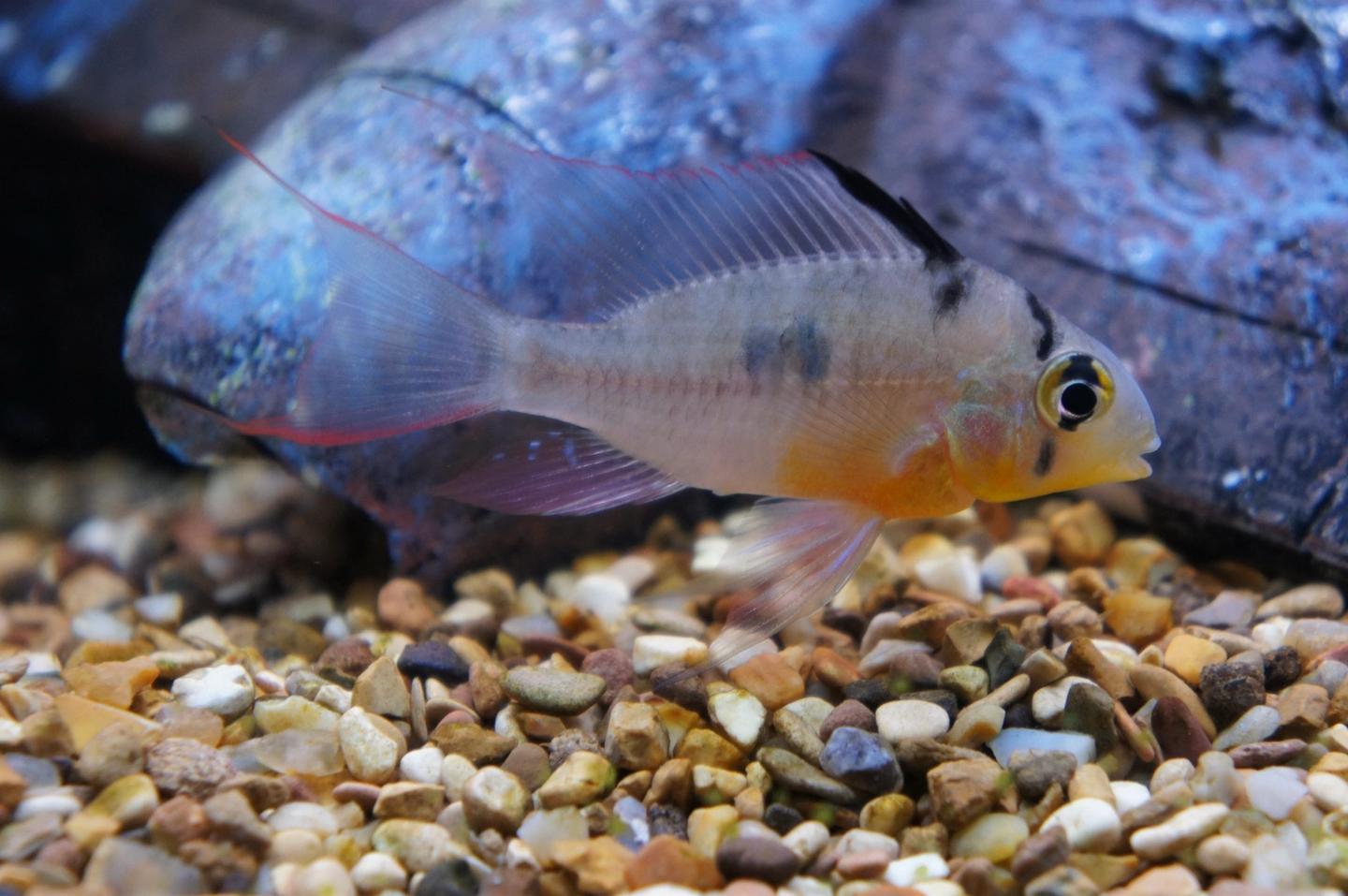
Colour can vary with the individual, age, condition, lighting and social context. The species description records a reddish-brown ground colour that may carry lavender or purple, but the listing does not promise the exact colour, sex or fin pattern shown in a picture. Gallery images have been digitally enhanced to improve image quality. Natural colour, pattern, size and maturity can vary between live animals. Use the gallery to understand the general presentation, then make the buying decision from identity, care needs and the selected size.
This is best treated as a purposeful African-cichlid project. A keeper should be comfortable testing hard alkaline water, building secure rockwork, running generous filtration and watching group dynamics. It is not the fish to add casually to a soft-water mixed community. If that is the kind of aquarium you want to build, the current African cichlid collection provides the right context for comparing other offers without implying that every listed species belongs together.
Start with the mature aquarium, not the fish count. OATA's care sheet gives 200 litres as a planning point for a reasonable Malawi cichlid community, while noting that some specialist species may use different arrangements. That is group-level guidance rather than a species-specific minimum for Lavender mbuna. The practical decision is to provide a substantial footprint and enough rock structure for the complete community you intend to keep, with room left for circulation and maintenance.
Nominal litres cannot tell the whole story. A long aquarium offers more opportunities to separate territories than a tall tank with the same volume. Before buying, sketch where caves, passageways and visual barriers will sit and where fish can leave a dominant individual's line of sight. Make sure the finished layout still has open routes for swimming, feeding and siphoning debris. If a rock pile consumes the whole usable floor or creates a single defendable corridor, extra litres alone will not fix the social pressure.
The filter must already be biologically mature. The RSPCA explains why: fish release ammonia, which is toxic; a working biological filter supports bacteria that convert it first to nitrite and then to the safer nitrate. An oversized filter and vigorous aeration are sensible under OATA's Malawi guidance because a planned cichlid community can create a high waste and oxygen demand. Size the filter for the finished stock plan, not just for the first juveniles placed in the tank.
Anyone building a new aquarium can use the first tropical tank guide to work through maturation before livestock arrives. Do not use a hardy reputation as permission to shorten cycling. Additions still increase the amount of waste that the bacterial population must process, and OATA warns that stocking too quickly can lead to new tank syndrome. Increase livestock gradually, test as you go and be willing to pause.
OATA's aquarium guidance for Malawi cichlids as a group is 23–27°C, pH 8.0–8.6, general hardness 12–18°dH and carbonate hardness 10–15°dKH. Treat those figures as the working Malawi-community range used in this listing, not as a laboratory-derived optimum for this one species. FishBase separately records 24–26°C for Iodotropheus sprengerae in its natural environment. The two records have different purposes, so there is no need to turn the narrower environmental figure into another competing aquarium target.
Stability is the daily aim. Before purchase, measure the source water and the mature tank rather than assuming local tap water is suitable. The water-chemistry guide explains what the readings mean, and the water-parameter matcher can help compare actual test results with the stated guidance. If the source water sits outside the plan, decide how you will correct and repeat the treatment consistently before introducing fish.
Ammonia and nitrite should both remain at zero. OATA's nitrate wording is no more than 20 mg/l above the normal tap-water level, which is more precise than a blanket below-20 claim. Test at least weekly and record results so changes are visible before fish behaviour becomes the alarm. After adding fish, changing feeding or cleaning filtration, test more often until the system proves stable again.
Water should be hard and buffered, but avoid chasing a number with abrupt doses. Coral sand or a similar substrate can contribute buffering under the group guidance, while carbonate hardness helps resist sudden pH movement. Make changes outside the aquarium where possible, match replacement water carefully and never subject the fish to a rapid swing simply to reach the middle of a published range. A stable result within the plan is better than a perfect-looking reading reached by repeated corrections.
Malawi mbuna are rock-dwelling cichlids, so the hardscape is working habitat rather than decoration. Build multiple caves and broken sight lines instead of one central ornament. A subordinate fish should be able to leave view without being trapped in a dead end. Arrange the largest pieces on a stable base before adding loose substrate, check that nothing can topple when Malawi cichlids dig, and leave enough clearance for water to move around and behind the structure.
OATA recommends coral sand or a similar substrate for Malawi aquariums because it can help buffer the water. OATA also says Malawi cichlids will often dig and rearrange the substrate, which will uproot all but the hardiest plants. Planting can still be used sparingly, but the design should not rely on delicate stems remaining untouched or on roots holding a rock pile together. Secure every heavy object independently of plants and loose substrate.
Keep an open swimming route across the front or centre while using rocks to divide the back and sides into several imperfect territories. The goal is not to provide one cave per fish as if each cave guaranteed peace. It is to make pursuit shorter, offer alternative routes and prevent one dominant animal from seeing the whole aquarium at once. Observe from several angles after the layout is wet; a line of sight that looks broken from the sofa may still be uninterrupted at fish level.
Vigorous aeration and useful current help support oxygen demand, but current should not turn every quiet refuge into a jet. Point returns so that waste is carried towards intakes without blasting fish against the rockwork. Check dark corners for trapped debris during maintenance. A layout that looks dramatic but cannot be cleaned will gradually undermine the stable water it was meant to support.
Diet varies across Malawi cichlids. OATA's group guidance says smaller mbuna appreciate specialised Malawi cichlid foods with a high algae content and fresh vegetables, while larger open-water forms can have very different needs. Use that smaller-mbuna guidance as the practical base: choose a reputable prepared Malawi food, use suitable vegetable matter for variety and keep portions controlled.
Feed only what the fish can eat within a few minutes, twice a day under the OATA routine. The important action is observation: distribute food so shy or subordinate animals can reach it, watch for one fish monopolising the feeding lane and remove uneaten material rather than letting it decay between rocks. More food is not a substitute for better distribution. If an individual repeatedly misses meals, reassess social pressure and layout instead of simply increasing the total portion.
Overfeeding raises waste, and waste becomes a water-quality problem long before it looks dramatic. Check nitrate trends, substrate debris and filter loading alongside body condition. A fish becoming heavier is not proof that the diet is balanced; a fish becoming thin is not always proof that too little food entered the aquarium. Appetite, access, social stress and water quality all need to be read together.
Keep the everyday plan simple and repeatable, introduce new foods gradually, and seek qualified advice if a fish loses condition, stops feeding or develops abnormal waste or swelling. A retailer or aquatic vet can assess those observations alongside water results and recommend any appropriate diagnostic or treatment steps.
OATA strongly recommends at least one partial water change of 25% every week for Malawi cichlids. Siphon accessible waste, condition replacement tap water for chlorine or chloramine and bring it close to the aquarium's temperature and chemistry before it enters. The routine should also respond to test results and the actual waste load in the aquarium.
Test ammonia, nitrite, nitrate, pH and hardness weekly. Record the readings together with temperature, water-change volume and any notable change in feeding or behaviour. A simple log makes gradual drift visible. It also stops care becoming a collection of guesses when several things change at once. If ammonia or nitrite appears, treat it as an urgent system problem: reduce avoidable feeding pressure, check filtration and aeration, test the source water and seek experienced help.
Inspect the filter for reduced flow and blockages. If the filter needs cleaning, do not run it under the tap because chlorine or chloramine may kill beneficial bacteria. Rinse the media lightly in aquarium water removed during the water change. The objective is to clear obstructing debris without stripping away the bacterial community doing the biological work.
Use the same maintenance visit to check rock stability, air flow and equipment. Look for a heater that is holding temperature, an air stone that has lost output, an intake partly blocked by leaves or a cave that has been undermined by digging. Small physical changes can alter both water movement and territory. Correct them carefully rather than dismantling the whole social map without need.
Learn the normal rhythm of your own group. OATA lists hanging at the surface, sitting on the bottom, erratic swimming, faster or slower gill movement, unusual hiding and a change in aggression as warning signs. Colour becoming markedly darker or paler, reduced feeding, loss of condition, damaged fins, white spots, fluffy growths or missing scales also deserve attention. None of these signs identifies a disease by itself.
When something changes, test the water first and look at oxygenation, temperature, recent additions and social pressure. Watch the fish from a distance before disturbing the tank. Note which individual is affected, whether the sign appears around feeding or a particular territory and whether more than one fish is involved. That information is much more useful to a retailer or aquatic vet than a quick guess at a diagnosis.
Contact the retailer or an aquatic professional with the water results and observations before choosing a treatment. Isolating a bullied fish may sometimes be necessary, but moving it into an uncycled container creates a second welfare risk; any hospital setup must itself have stable, appropriate water and filtration.
Healthy-looking new fish can still create extra pressure on the biological filter and the social structure. Introduce additions slowly, check the intended mix before purchase and monitor closely for the first week. If aggression rises after an addition, OATA suggests that rearranging décor can help reset territories, but do this deliberately and preserve safe caves rather than repeatedly rebuilding the aquarium.
Prepare the aquarium and all tests before delivery day. The current Tropical Fish Co policy says live fish are individually bagged with oxygen, placed in insulated packaging and carried by a tracked courier licensed for live animals. Someone must be present at the delivery address, because the parcel cannot be left at a door, with a neighbour or in a safe place. Read the full delivery and Live Arrival Guarantee policy before ordering because the current checkout window and claim terms control.
Open and inspect the parcel on the day it arrives. The policy's acclimation guidance says to float the sealed bag for 20–30 minutes before release. Keep the aquarium calm and avoid bright sudden light while temperatures equalise. Do not pour transport water into the aquarium. Once released, give the fish space and watch breathing, balance and the reaction of established animals without repeatedly chasing or netting it.
If anything is wrong on arrival, the Live Arrival Guarantee requires same-day contact with the order number and a continuous unboxing video showing the parcel still sealed, the outer box, the opening and the fish still inside its sealed bag. The video is evidence for the claim, not a biological care step. Record it before the fish is released so the arrival condition is clear and the team can assess replacement or refund under the policy.
After a normal arrival, monitor the new fish and water quality closely for the first week. Appetite may not be immediate, so offer a small familiar food and remove leftovers. Watch whether established fish block access to food or shelter. A settled group is the goal; constant rearranging, bright inspection and repeated capture can prolong stress.
OATA's broad rule is to keep Malawi cichlids with other Malawi cichlids or, after individual checking, some Synodontis associated with the lake. That does not make every Malawi fish a suitable companion. Adult size, diet, aggression, territory, swimming level and the final group composition still have to fit the same aquarium. Use the shared lake origin as the first filter, not the final answer.
Avoid mixing this offer into a soft, acidic community. Even a peaceful-looking companion can be a poor match if it needs different chemistry or cannot cope with territorial pressure. Slow, long-finned and timid general-community fish are not supported choices here. Tiny invertebrates and delicate planted layouts are also outside the evidence for this listing, so do not treat them as promised companions or features.
Introduce compatible Malawi fish in planned groups rather than one impulsive addition at a time. OATA describes groups of at least 15 and slight overstocking as a Malawi-group method for distributing aggression, while also warning that small groups often fight. That is not a universal number for every aquarium or a direction to exceed filtration capacity. It is a reminder that stock count, footprint, rockwork, oxygen and waste processing must be designed as one system.
More females than males can reduce persistent attention where the sex of adult fish is known, but this offer does not guarantee sex and juvenile appearance is not a safe purchasing promise. Do not infer the supplied fish's sex from colour, fins, egg spots or gallery images. If a future group needs a managed ratio, plan how sex will be established reliably as the fish mature and how surplus or incompatible adults would be rehomed.
Territorial behaviour is managed, not eliminated. Complex rockwork, interrupted sight lines and several escape routes reduce the time one fish can pursue another. Stocking strategy may spread attention, but it must never be used to excuse a fish being trapped, starved or repeatedly injured. Watch the whole group at feeding and again when no food is present; different conflicts can appear in each situation.
Good signs include several fish using different zones, normal feeding access and brief displays that end when one fish moves away. Concern rises when one animal is pinned behind equipment, excluded from food, losing condition or showing repeated fin damage. A fish hiding occasionally is not automatically in danger, but a new pattern of constant hiding alongside rapid breathing or colour change needs investigation.
When tension appears after an introduction, first check water quality and confirm that the aquarium has not become overloaded. Then look at the physical map. OATA notes that rearranging décor can reduce aggression as fish establish new territories. Move enough structure to break an entrenched boundary, but keep rocks secure and retain multiple refuges. Adding another fish blindly can compound both aggression and waste.
The related-product field lists checked alternatives for comparison, not declared tank mates. An Acei cichlid or Saulosi mbuna page may help a customer compare other Malawi offers, but each has its own group, diet and territory needs. Do not read a related link as permission to combine the fish. The complete stock plan still needs a compatibility decision for the actual aquarium.
FishBase records the female as a mouthbrooder. A female may therefore carry eggs or young in her mouth, and breeding activity can change feeding and territory use. Avoid turning that fact into a fixed incubation calendar or a promise that breeding will be easy; conditions and individual behaviour still matter.
A brooding fish needs the same stable water and freedom from persistent harassment as the rest of the group. Provide multiple retreats and observe before intervening. Do not assume a fish that stops feeding is brooding; loss of appetite can also signal stress or poor water quality. Check the aquarium first and seek experienced advice when the cause is uncertain.
The no-sex-guarantee boundary remains important. A group bought from unsexed size choices may not produce the ratio a breeder wants, and colour alone is not a guarantee. Anyone pursuing breeding should use a dedicated plan and be ready to house or rehome offspring responsibly.
FishBase records a maximum of 10.8 cm standard length for a male or unsexed fish. Standard length excludes the tail, so keep that measurement label attached rather than treating it as an unqualified total length.
For Lavender mbuna, OATA's group-level starting point is at least 200 litres for a reasonable Malawi cichlid community. Plan the final footprint, rockwork, filtration and complete stock list together rather than treating 200 litres as a species-specific guarantee.
There is no single fixed number for every aquarium. OATA describes Malawi cichlid communities of at least 15 with careful slight overstocking to distribute aggression, but the exact plan must match the aquarium, filtration and other species.
This store rates the fish as intermediate because hard alkaline water, territorial group planning, secure rockwork and generous filtration all need active management. A prepared first-time Malawi keeper can succeed, but this is not a casual mixed-community fish.
OATA's guidance for smaller mbuna is specialised Malawi cichlid food with a high algae content plus fresh vegetables. Feed only what the fish consume within a few minutes, twice daily, and make sure every individual can reach food.
Use OATA's Malawi-group aquarium guidance of 23–27°C and pH 8.0–8.6, with 12–18°dH general hardness and 10–15°dKH carbonate hardness. Test regularly and prioritise stable values within that scoped range.
Malawi cichlids can be territorial and aggressive, especially in a poorly planned small group. Use broken sight lines, secure rockwork, adequate footprint and a deliberate group plan; do not combine this fish with slow long-finned community species.
Plan around other carefully checked Lake Malawi cichlids and, where appropriate, an individually researched Lake Malawi Synodontis. Shared origin alone is not enough: water, adult size, diet, temperament and territory must all fit.
Tropical Fish Co bags each fish with oxygen, uses insulated packaging and a tracked licensed live-animal courier. For a Live Arrival Guarantee claim, contact the team the same day with your order number and a continuous video from the sealed parcel to the fish still in its sealed bag.
Species identity and measurements: FishBase's Iodotropheus sprengerae record supports the accepted spelling, Lavender mbuna common name, Lake Malawi distribution, 24–26°C environmental record, 10.8 cm SL maximum and female mouthbrooding. The Iodotropheus genus overview provides a concise public bridge between the rusty cichlid, Lavender mbuna and the species name. Standard length remains labelled and is not converted to total length.
UK aquarium guidance: the OATA Malawi cichlid care sheet supplies broad aquarium water, community, feeding, setup, maintenance, acclimation and monitoring guidance. Its figures apply to Malawi cichlids as a group. The RSPCA fish-environment guidance explains the need for a mature biological filter and the ammonia-to-nitrite-to-nitrate cycle.
Offer and delivery: one purchase supplies one fish in the selected size choice, there are three recurring size choices and no option guarantees sex. Tropical Fish Co's delivery policy supplies the packing, licensed-courier and conditional Live Arrival Guarantee wording. Lifespan, disease treatment, a species-specific minimum aquarium and a guaranteed breeding outcome are not stated as customer promises.
No reviews for this item yet. Bought one? Honest reviews only, good or bad.
What customers say about ordering from us
I have a small group of long finned mountain minnows. So was delighted to be able to order ten of this variety to increase the genetics in my tank . The ones I recieved are healthy but it’s to early to give a verdict on wether they are of a long finned type since they are small currently.
Gordon Walker · 23 Sept 2026
100% success travel and "installation". Pleased with quality of purchase. The Siamese fighter a bit "shy" so have not yet seen him at his best yet but looking good. Happy customer. GG
George E Garratt · 21 Sept 2026
Reviews of our shop, collected by Judge.me, an independent third-party review collector. Newest first.