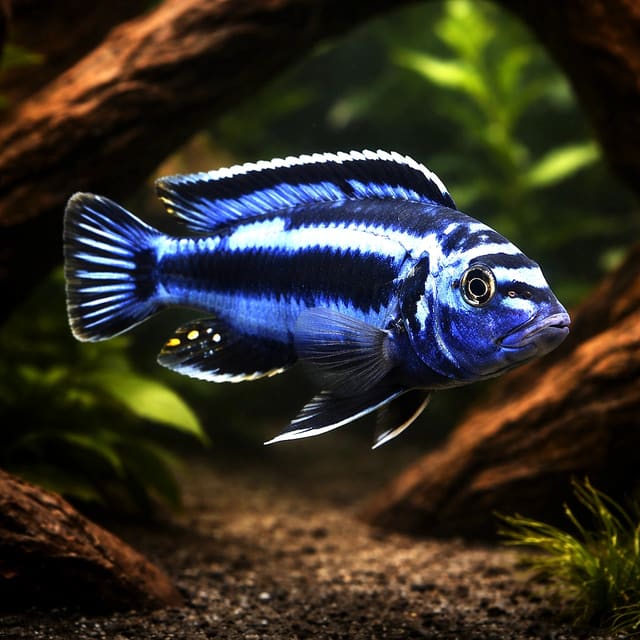
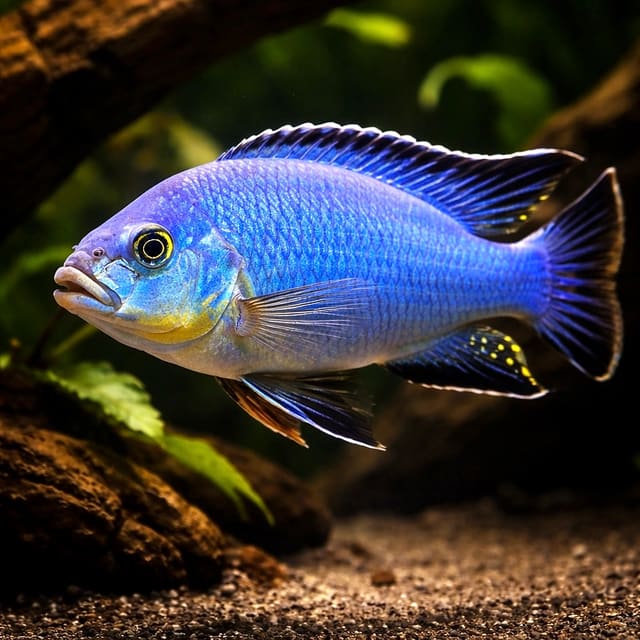
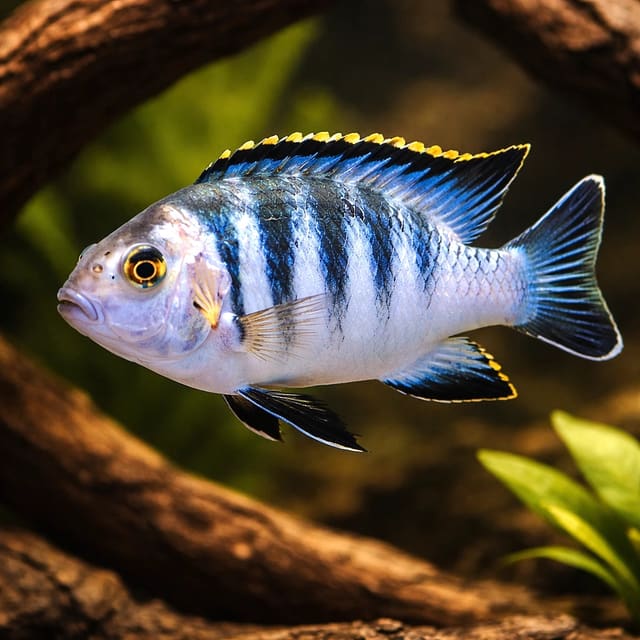
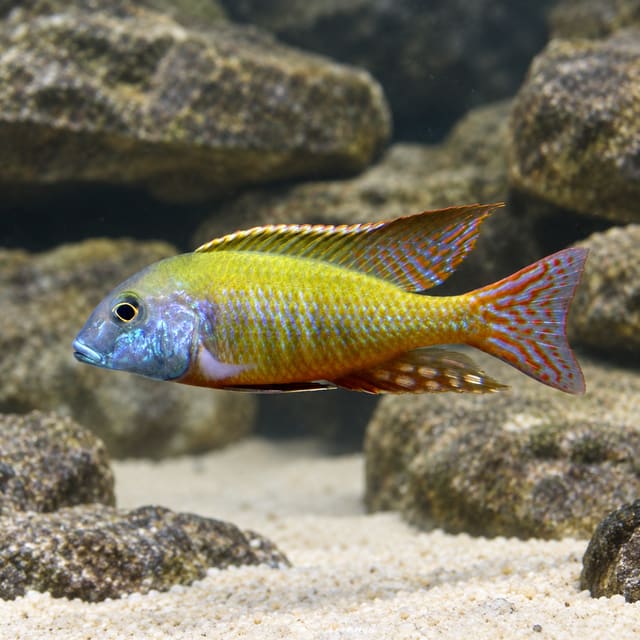
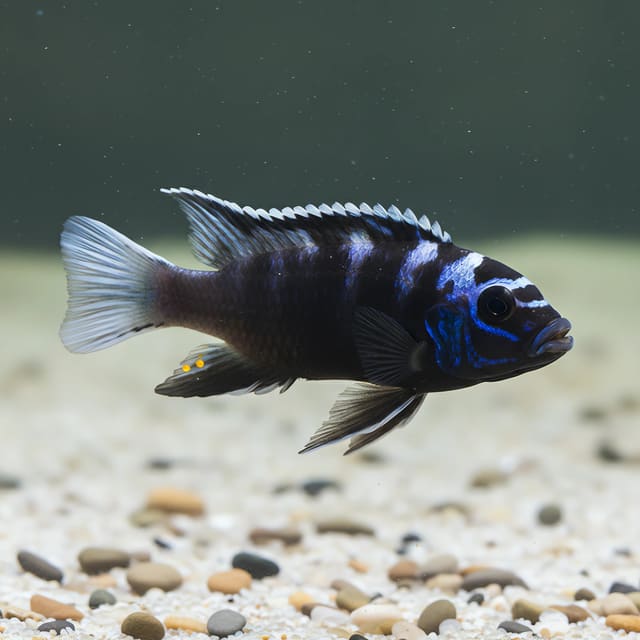
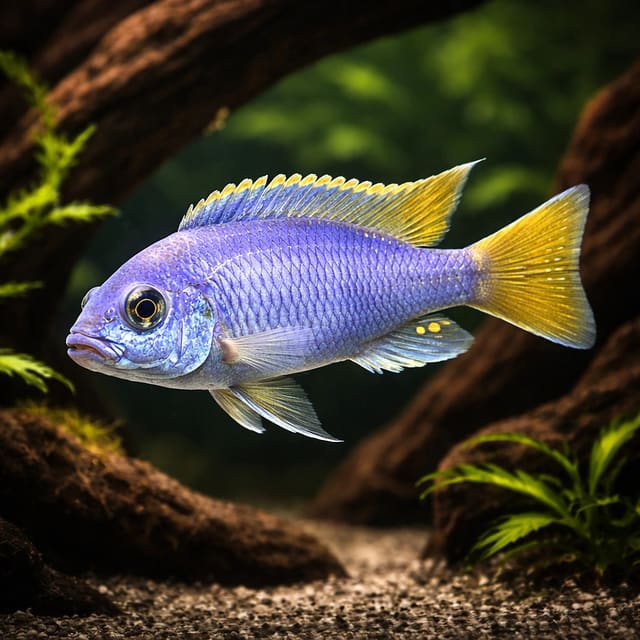
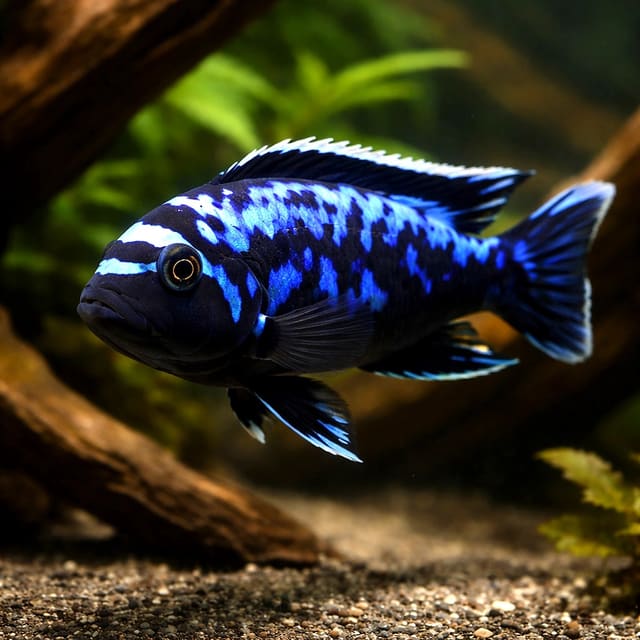
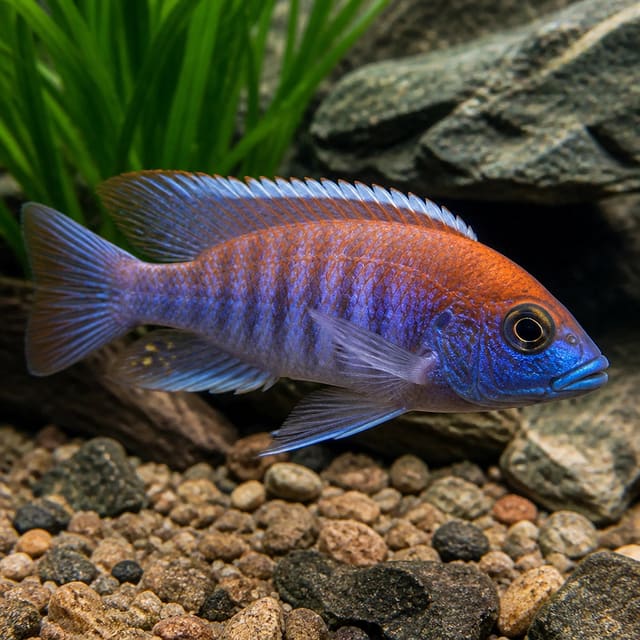
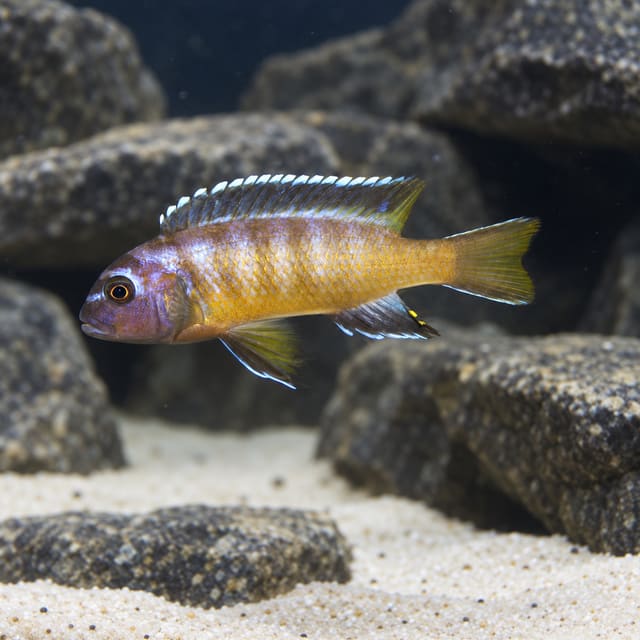
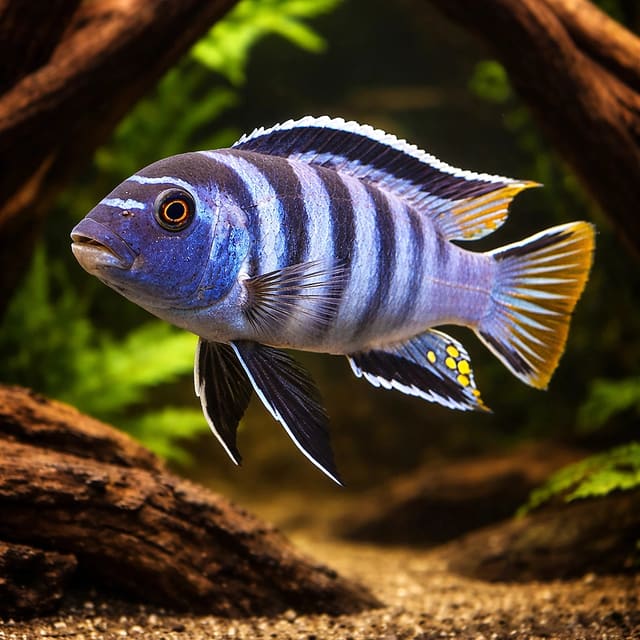
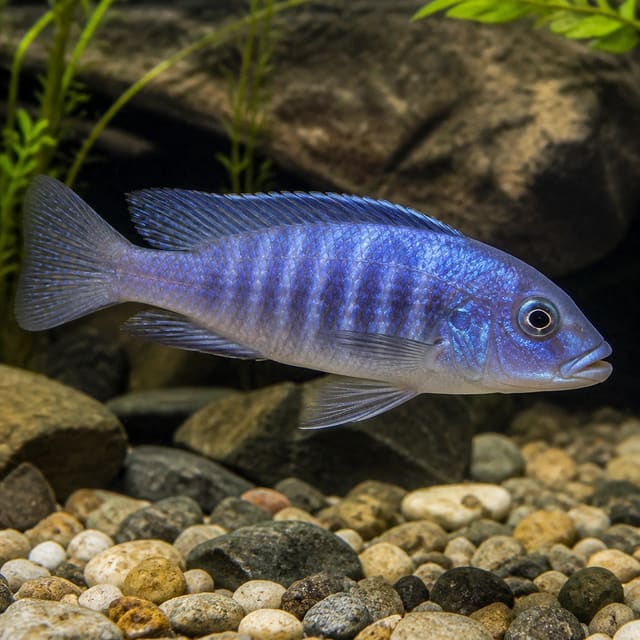
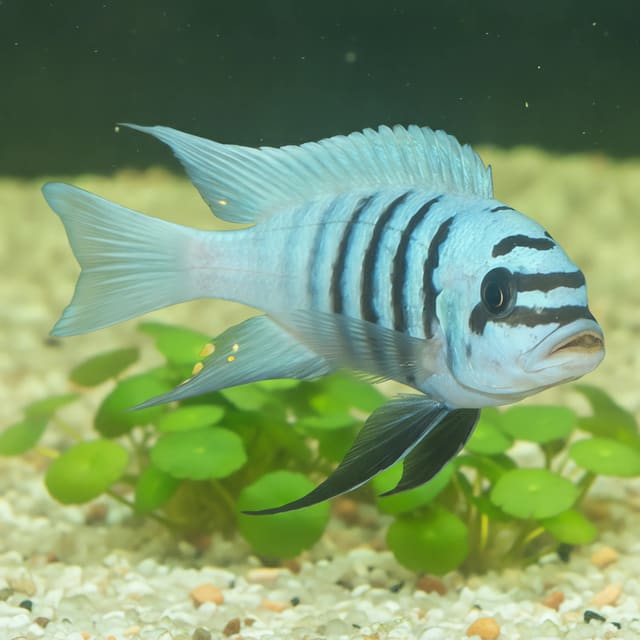
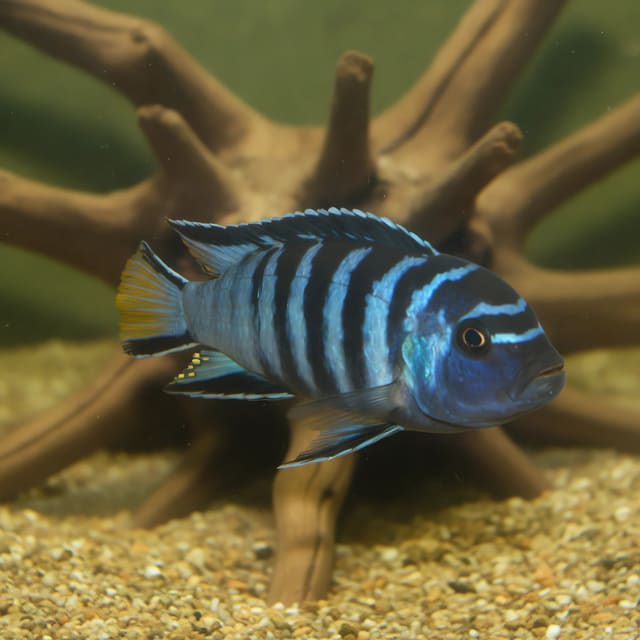
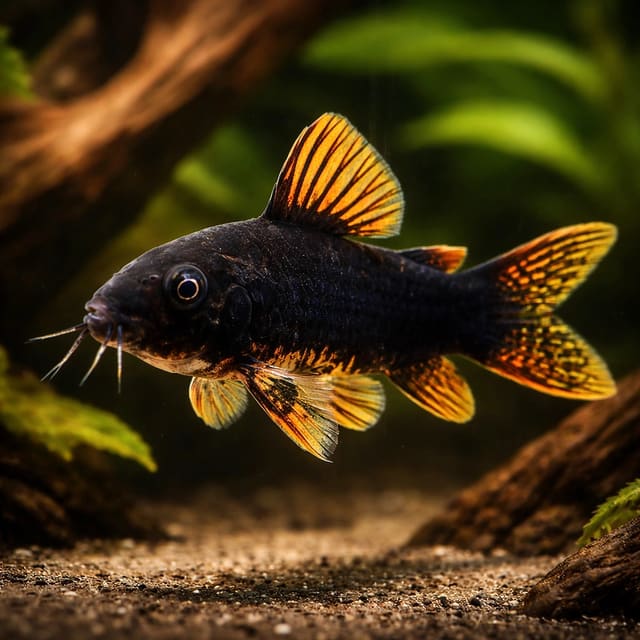
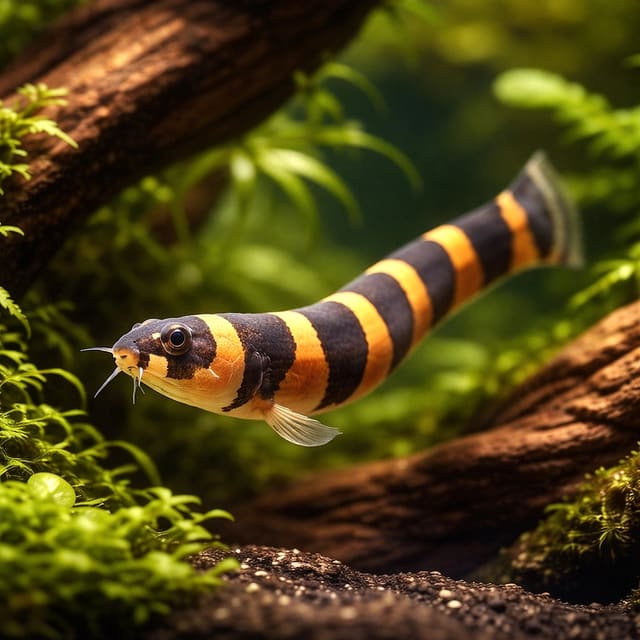
Red Dorsal Mbuna (Pseudotropheus sp.)
23–27°C · pH 8–8.6
£19.99
Photo coming soon
The size, price and care details on this page are for this listing.
Cameleo Mbuna (Pseudotropheus sp. "cameleo") is an undescribed Lake Malawi rock-dwelling cichlid known only by its trade name. One fish per unit, sex not selected. Plan a 200-litre-plus mbuna tank with hard, alkaline water, plenty of rockwork and a mainly vegetable diet.
Pseudotropheus sp. "cameleo"
Save when buying multiple fish. Each quantity is one fish; sex and pair formation are not guaranteed unless the selected variant explicitly states them.
Cameleo Mbuna (Pseudotropheus sp. "cameleo") is an undescribed Lake Malawi rock-dwelling cichlid known only by its trade name. One fish per unit, sex not selected. Plan a 200-litre-plus mbuna tank with hard, alkaline water, plenty of rockwork and a mainly vegetable diet.
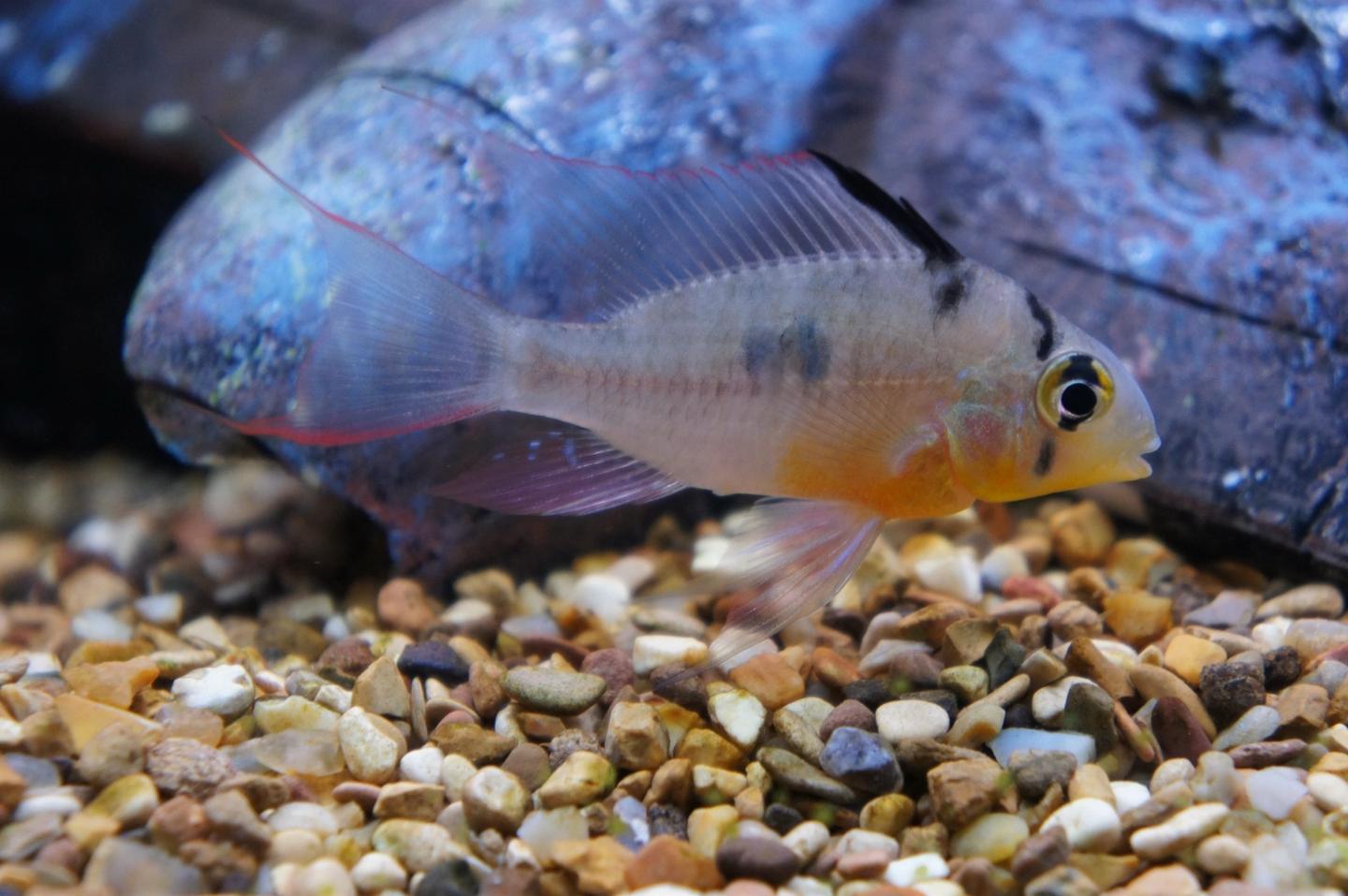
Cichlids are a family of roughly 1,800 accepted species, not one care type. Before buying, identify the exact species and source, then compare adult measurement, usable tank dimensions, social system, territory, tested water, diet and an exit plan. No family-wide minimum tank, water range or tank-mate list is safe.
Maintain these water conditions for optimal health and vibrant colors
This listing is for one Cameleo Mbuna, traded under the name Pseudotropheus sp. "cameleo". There is a single option on the page, so each unit you add to the basket is one fish. The listing does not offer a choice of sex, and we do not state a dispatch size for it, so please do not order expecting a particular sex or size. If either matters to your plans, contact us before you order.
We would rather be straight with you about this fish than dress it up. "Cameleo" is a trade name, not a scientific one. There is no species called Pseudotropheus cameleo, no published scientific description of this form, and no entry for it in FishBase or Wikipedia. That is what the "sp." in the name means: the fish has been placed in a genus by the people who trade it, but nobody has formally described it as a species. You will see the same convention on other mbuna, including our Red Dorsal Mbuna (Pseudotropheus sp.), and it is common across Lake Malawi cichlids, where many local forms are known only by trade or collection-point names.
Because there is no scientific description, we cannot give you a sourced account of its colours, markings or adult size, and this listing has no photographs for us to describe. What we can do is tell you what is known about the genus it is traded under and about mbuna in general, and give you care advice that suits mbuna of this type. The facts on this page come from FishBase, Wikipedia, Seriously Fish and the Ornamental Aquatic Trade Association (OATA), and where we are talking about a related, described species rather than this fish, we say so.
We also list the Bumblebee Cichlid (Pseudotropheus crabro), a formally described species. This listing is not sold as P. crabro, and we do not claim that the two are the same fish. If you want the bumblebee cichlid specifically, order that listing rather than this one.
No adult size has been published for this form, so the honest answer is a range. FishBase lists 17 described Pseudotropheus species, and their recorded maximum lengths run from 7.5 cm standard length for Pseudotropheus cyaneorhabdos, sold as the Maingano Cichlid, up to 16.5 cm total length for Pseudotropheus williamsi, which we list as William's Mbuna. Standard length is measured from the snout to the base of the tail; total length includes the tail fin, so the two figures are not directly comparable, but together they show the spread. Most of the described species sit between about 8 and 13 cm.
For planning, assume a medium-sized mbuna and build a tank that would comfortably hold the bigger end of that range. A tank set up for adult mbuna is never wasted on a smaller fish, while a tank sized for a small one becomes a problem if your fish keeps growing. The size of the fish we send will be its dispatch size, not its adult size, so do not use it as a guide to how big it will get.
Lake Malawi cichlid names can look like a code, so here is how this one works. Pseudotropheus is the genus, the group of closely related species the fish is placed in. In a described species, the second word would be the species name, as in Pseudotropheus williamsi. Here, "sp." stands for species and means that the species has not been named. The word in quotation marks, "cameleo", is a label used in the trade to tell this form apart from other unnamed ones. The quotation marks are deliberate: they show that the word is not a scientific name and must not be treated as one.
The genus Pseudotropheus was set up by Regan in 1922, and Wikipedia describes its members as mbuna cichlids endemic to Lake Malawi in East Africa. Its contents have changed a great deal since then. Wikipedia records that several species have been moved out to other genera, including Maylandia, Tropheops and, in 2016, Chindongo, while some species have been moved in from Melanochromis. The two main references do not even agree on the current species count: FishBase lists 17 species in the genus, while Wikipedia gives 25. Wikipedia notes that the genus's taxonomy is still being revised, and that is one reason a trade name like this one can sit in Pseudotropheus without anyone being able to say exactly where it belongs.
So treat the genus placement of an undescribed fish as provisional. It tells you the fish is regarded as a Lake Malawi mbuna of the Pseudotropheus type, and that is useful for care. It does not tell you which described species it is closest to.
You may find other spellings or other names for fish sold as "cameleo" online. We have not been able to trace the name to any scientific source, so we will not attach it to a described species or invent a Latin name for it. If a scientific description is ever published, the name on this page should change to match it. Until then, Pseudotropheus sp. "cameleo" is the most accurate label available.
Undescribed forms only stay meaningful if keepers keep them separate. Seriously Fish notes that more than 30 different forms of the elongate mbuna, Pseudotropheus elongatus, occur in Lake Malawi and that they should not be mixed in the aquarium because they hybridise freely. The same logic applies here. If you keep a Cameleo Mbuna, keep it away from other Pseudotropheus forms, and if it ever breeds, pass the young on under the same trade name and never as anything else. Keeping lines separate and honestly labelled costs nothing, and it is the only way an unnamed form stays recognisable.
"Mbuna" is the umbrella word for the rock-dwelling cichlids of Lake Malawi, and Pseudotropheus is one of its genera. Wikipedia explains that the name means "rockfish" in the language of the Tonga people of Malawi, and that most mbuna live among the piles of rocks and along the rocky shores of the lake. Its article on Pseudotropheus goes further, saying the word means "rockdweller" and that it accurately describes the lifestyle.
That lifestyle shapes everything about keeping these fish. On the rocks, food grows in a thin film over every surface, and Wikipedia notes that most pseudotrophine cichlids are algal grazers in the wild. Space among the rocks is valuable, and males defend it hard. Wikipedia's mbuna article describes a dominant male holding a spherical territory, a three-dimensional patch of rock and water around him, and only allowing females in for breeding. It calls mbuna very aggressive and territorial fish.
Wild data for a described member of the genus shows how closely these fish are tied to rock. FishBase records that Pseudotropheus crabro occurs in all kinds of habitats but is most often found in large caves or near large boulders, and it gives a temperature range of 24 to 26°C and a pH of 7.5 to 8.2 for the species. That is one species, not this fish, but it gives a sense of the conditions a Pseudotropheus is adapted to: warm, alkaline water around rocky structure.
The sections below take each of those points in turn.
Mbuna also breed in an unusual way. Wikipedia describes them as maternal mouthbrooders, with the female incubating the eggs in her mouth, and notes that they breed readily in good conditions. We cover what that means in the breeding section, but it is worth knowing early, because a well-run mbuna tank can produce young without any help from you.
OATA, the UK's ornamental aquatic trade association, recommends at least 200 litres for a Malawi cichlid community. Seriously Fish gives a minimum base of 120 × 38 cm for the elongate mbuna, a described Pseudotropheus species, which works out at around 137 litres for a tank of that footprint. We use the larger OATA figure for this listing because it is meant for a mixed group of Malawi cichlids, which is how most people keep mbuna, and because the adult size of this form is unknown.
Footprint matters more than height. A tank 120 cm long or more gives several males room to hold separate patches of rock, and lets a chased fish get properly out of sight. A short tank of the same volume puts every territory in view of every other one, which is the opposite of what you want.
Build piles of rock that form caves and hiding places, as Seriously Fish suggests, while still leaving open water for swimming. OATA recommends complex rockwork for two reasons: so that individual fish can hold territories, and so that obvious lines of sight are broken up to reduce aggression. In practice that means several separate stacks rather than one wall, with gaps and overhangs at different levels, so that a fish swimming past one cave cannot see straight into the next.
A few practical points for a rock-heavy tank:
Seriously Fish prefers a sand substrate for mbuna, and OATA recommends coral sand or something similar because it helps buffer the water towards the hard, alkaline conditions these fish need.
Seriously Fish advises that algal growth should not be discouraged in an mbuna tank. For a grazer, the film that grows on the rocks is food, so resist the urge to scrub every surface clean. Clean the front glass for viewing and leave the back and sides, and the rock faces, to grow a coat.
Mbuna tanks are usually stocked heavily on purpose, as the section on aggression explains, so they produce a lot of waste. Choose filtration rated well above the volume of the tank and plan your water changes from the start. Lighting needs are simple: bright enough to see the fish and to encourage some algae on the rocks, with a regular day length.
Lake Malawi cichlids need hard, alkaline water, and this is the first thing to check if you are coming to mbuna from soft-water fish. The sources we used agree on the general picture, though each gives slightly different figures. The table sets them side by side.
| Source | Temperature | pH | Hardness |
|---|---|---|---|
| OATA, Malawi cichlids | 23 to 27°C | 8.0 to 8.6 | GH 12 to 18°dH; KH 10 to 15°dKH |
| Seriously Fish, elongate mbuna | 24 to 28°C | 7.6 to 8.8 | 10 to 25 dGH |
| Wikipedia, mbuna | 77 to 84°F (about 25 to 29°C) | 7.5 to 8.4 | Not given |
| FishBase, Pseudotropheus crabro (a described relative) | 24 to 26°C | 7.5 to 8.2 | Not given |
For this listing we use OATA's figures as the target: 23 to 27°C, pH 8.0 to 8.6, general hardness 12 to 18°dH and carbonate hardness 10 to 15°dKH. They overlap with the ranges the other sources give, and they come from the UK trade body's care sheet for this group of fish. Aiming for the middle of OATA's ranges, around 25°C and a pH of 8.2 to 8.4, also keeps you inside most of the other sources' figures. Once you are there, keep it steady.
Hard, alkaline water resists change better than soft water, which is good news, but it still needs looking after. OATA recommends coral sand or a similar substrate to help buffer the water. If your tap water is soft, talk to us or your local aquatic shop about how to raise and hold the hardness before the fish arrive, because chasing pH with chemicals after the event is a poor substitute for a properly buffered tank.
OATA's targets for waste are zero ammonia and zero nitrite, with nitrate kept no more than 20 mg per litre above your tap water. It recommends a partial water change of 25% every week as a minimum, and testing once a week with a test kit, which it describes as essential. With a deliberately crowded mbuna tank, those weekly changes are not optional. Match the temperature of new water to the tank, use a dechlorinator, and keep the routine the same week after week.
Run the tank long enough for the filter to mature, so that ammonia and nitrite read zero. Then test everything a day or two before delivery: temperature, pH, general and carbonate hardness, ammonia, nitrite and nitrate. If any reading is outside the ranges above, fix it before the fish goes in. A newly arrived mbuna has enough to cope with without a change in water chemistry on top.
Diet matters a great deal with mbuna, and it is easy to get right once you understand what the fish is built to eat. Wikipedia notes that most pseudotrophine cichlids are algal grazers in the wild. They spend their days working over rock surfaces, grazing the film of algae that grows there. That points to a diet built mainly on plant matter rather than rich animal food.
OATA advises that smaller mbuna are more herbivorous and do well on specialised Malawi cichlid foods with a high algae content, together with fresh vegetables. Seriously Fish, writing about the elongate mbuna, says vegetable matter should form a large proportion of the diet, and gives spirulina flakes, blanched spinach and nori as examples. A sensible routine for a Cameleo Mbuna is:
Seriously Fish warns against feeding beefheart or any other red meat to mbuna, because it interferes with the digestive system. Keep rich, meaty foods to a minimum. If you keep larger, more predatory Malawi cichlids in another tank, do not use their food as a staple here: OATA notes that larger utaka can be more predatory and need pellets with more animal content, which is a different diet altogether.
OATA recommends feeding what the fish can eat within a few minutes, twice a day. In a busy mbuna tank, food goes fast and the dominant fish eat first, so watch that the quieter fish get a share. Scattering food across the tank rather than dropping it in one spot helps. If food is left on the sand after a few minutes, you are feeding too much; cut back and siphon out the leftovers.
A steady routine is easier on a tank like this than feast and famine. Feed at roughly the same times each day, keep the algae on the rocks as a constant background food, and change the diet gradually if you change it at all. If the fish go off their food, test the water and look at what you have been feeding before anything else.
Mbuna are not a fish to keep in ones and twos. Wikipedia describes them as very aggressive and territorial, and its Pseudotropheus article calls the genus relatively aggressive, usually needing large aquariums with plenty of rock. The way experienced keepers handle that aggression is counter-intuitive: they keep more fish, not fewer.
OATA suggests that Malawi cichlids can be kept in groups of at least 15 and slightly overcrowded to limit aggression, and warns that small groups will often fight. Wikipedia's mbuna article makes the same point: overcrowding helps spread out the aggression caused by territorial conflicts. Seriously Fish advises overcrowding the tank for the elongate mbuna too. The idea is that a dominant male with many targets cannot single any one fish out, while a male with only one or two other fish around him will often harass them.
Crowding only works if the tank can cope with it. A well-stocked mbuna tank needs the filtration, water changes and weekly testing set out in the water section. Overstock a poorly filtered tank and you swap an aggression problem for a water-quality one.
OATA recommends more females than males of each species, so that a male does not harass one female to exhaustion. Seriously Fish goes further for the elongate mbuna and suggests at least four to six females per male. This listing does not let you choose a sex, so you cannot order a set ratio. If you are building a group around this fish, contact us before ordering to talk it through, and be prepared to rehome surplus males as they mature.
OATA's advice is to keep Malawi cichlids only with other Malawi cichlids or some species of Synodontis catfish. Within that, a few rules help:
Tetras, rasboras, gouramis and other soft-water community fish fall outside OATA's advice, and they would struggle with mbuna behaviour in any case. The same goes for small, slow or long-finned fish of any kind.
Breeding is where undescribed forms need the most care, so this section covers both the biology and the responsibility that goes with it.
There is no published description of male and female Cameleo Mbuna, so we cannot tell you exactly how they differ. For mbuna in general, Wikipedia notes that some species are strongly sexually dimorphic while many are not, and that both sexes often have striking colours. In Pseudotropheus, Wikipedia mentions egg spots on the anal fin. For the elongate mbuna, Seriously Fish says adult males are usually larger and have brighter egg spots on the anal fin than females. Those are reasonable things to look for as your fish mature, but treat them as clues rather than rules for this form.
Wikipedia describes Pseudotropheus as maternal mouthbrooders: the female incubates the eggs in her mouth for two to four weeks depending on the species. OATA's care sheet for Malawi cichlids gives a range of 21 to 40 days for the female to hold the fertilised eggs, and Seriously Fish says the elongate mbuna female carries for around three to four weeks before releasing free-swimming fry. Wikipedia's mbuna article adds that mbuna breed readily in good conditions, so breeding in a mature tank is quite likely once you have both sexes.
The sources agree on the broad shape of it: eggs and young are carried by the female, the holding period is measured in weeks, and the young are released free-swimming. None of them gives figures for this particular form, so if your fish do breed, note the dates and let us know what you see.
Plan the space before the fish breed, not after. A group of mbuna that breeds readily will produce more young than one tank can hold, so think about where the offspring will go and keep each batch clearly labelled from the start.
Because this fish has no scientific description, the only thing that keeps its line identifiable is the honesty of the people who keep it. Breed it only with its own kind, never with other Pseudotropheus forms or other mbuna, and pass any young on as Pseudotropheus sp. "cameleo" with a clear note that it is an undescribed trade form. Never sell or give away offspring under the name of a described species.
Mbuna are hardy fish when they are kept well. Wikipedia describes Pseudotropheus species as hardy, living nearly ten years, and OATA notes that Malawi cichlids can live for several years in a well-matured set-up with good water quality. When something goes wrong, the three things to look at first are water quality, diet and aggression.
OATA's care sheet lists the changes that should make you look more closely at a Malawi cichlid:
Torn fins and missing scales in an mbuna tank can be the result of fighting rather than disease. If one fish is being singled out, look at the stocking and the layout first: too few fish, too few females per male, or rockwork with long open sightlines all make bullying worse. Adding fish in a group rather than singly spreads attention more widely, as OATA suggests.
Seriously Fish warns that red meat interferes with the digestive system of mbuna, so diet is worth checking whenever a fish looks unwell. If an mbuna goes off its food, look at what the tank has been fed as well as testing the water.
Whenever something looks wrong, test the water before doing anything else: temperature, pH, ammonia, nitrite and nitrate. OATA recommends weekly testing in any case. A reading that has drifted out of range is a common cause of trouble and the easiest to put right. If the water is fine and the problem continues, contact us or an aquatic vet for advice.
If you already keep mbuna, consider quarantining new arrivals in a separate tank for a few weeks before adding them to an established group. It lets you check that the new fish is feeding and healthy, and you can then add it to the main tank together with any other newcomers, which suits OATA's advice to add fish in groups.
Please read our delivery and live-arrival information before you order, and have the tank fully ready before the fish arrives: filter running, water tested, and the temperature matched to the 23 to 27°C range on this page.
Your Cameleo Mbuna travels in an oxygen-filled bag inside insulated packaging, with heat packs when conditions call for them, carried by a tracked courier licensed to carry live animals. We email you the confirmed delivery date and the tracking details. Someone must be at the delivery address to receive the parcel.
Begin a continuous video while the parcel is still sealed, then open it in the same recording and show the fish in its still-sealed bag. If a fish arrives dead, dying or clearly compromised, email hello@tropicalfishco.co.uk on the day of delivery, quoting your order number and attaching that video. Photos alone do not meet the policy. The resolution is a replacement with your next order or a refund for the affected fish, subject to the guarantee terms.
Mbuna newcomers are often chased while they find a place in the pecking order. Two things make that easier. Add new fish together rather than one at a time where you can, as OATA advises, so that no single newcomer takes all the attention. And release the newcomer near cover rather than in open water, so it has somewhere to go straight away.
Keep the lights low on the first day. Over the following week, watch breathing, appetite and behaviour, and test the water at least once. Offer small amounts of food from the second day and remove what is not eaten. Some chasing is normal in an mbuna tank; a fish that is pinned in a corner, hiding constantly or showing torn fins is not, and is a sign to rethink the stocking or layout. If you are worried, test the water first and then get in touch with us.
These are the sources we used. They are worth reading in full if you want to go deeper into mbuna and their care.
No reviews for this item yet. Bought one? Honest reviews only, good or bad.
What customers say about ordering from us
Easy website plenty of info on fish your buying great to pick a time slot
TRACEY DURRANT · 7 Oct 2026
Got some lovely fish thank you
Kevin Mackie · 7 Oct 2026
Reviews of our shop, collected by Judge.me, an independent third-party review collector. Newest first.