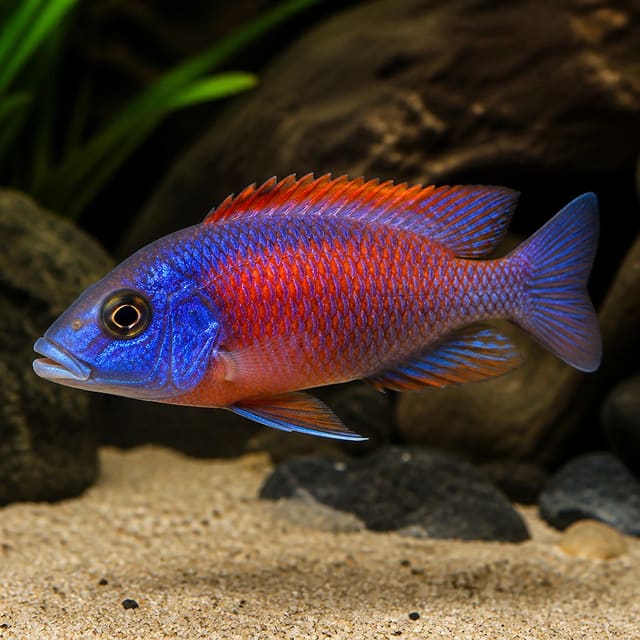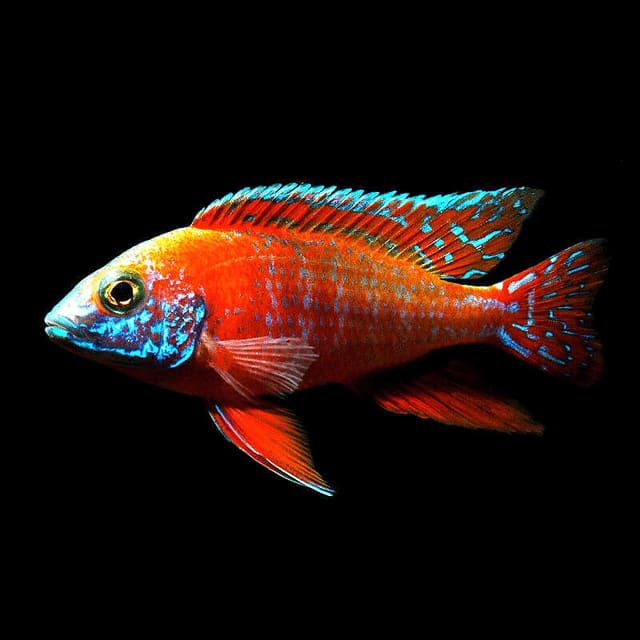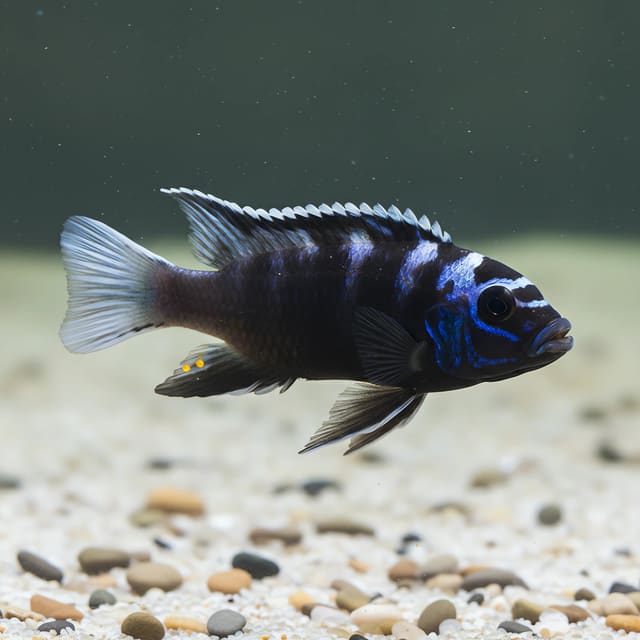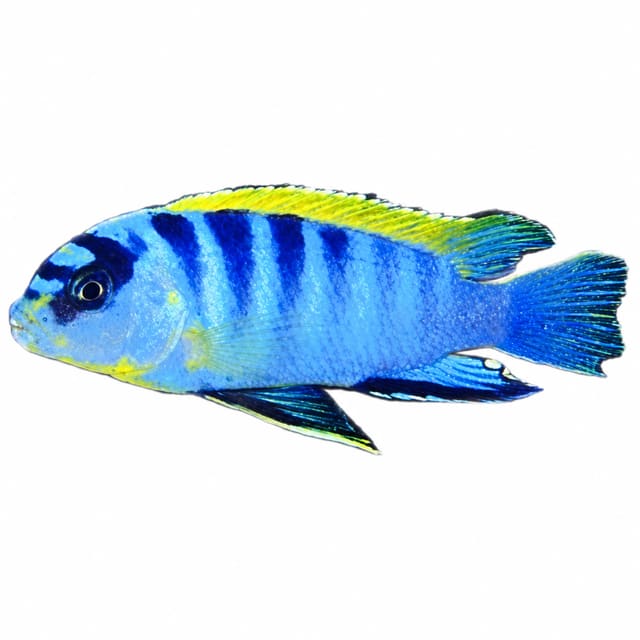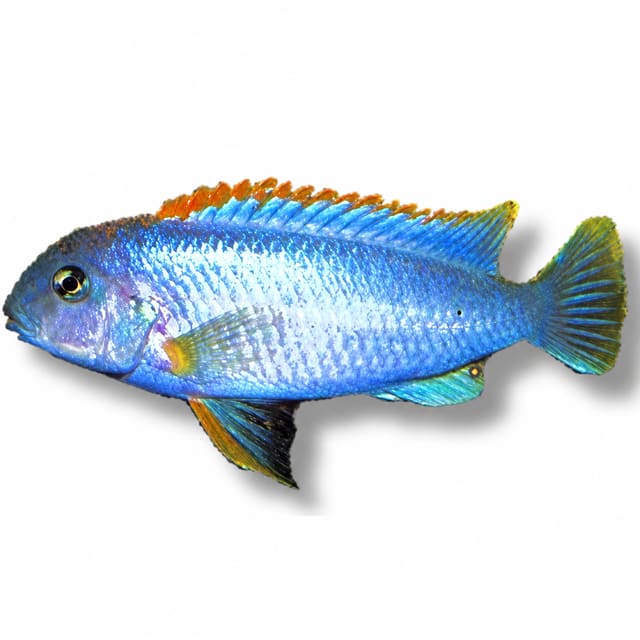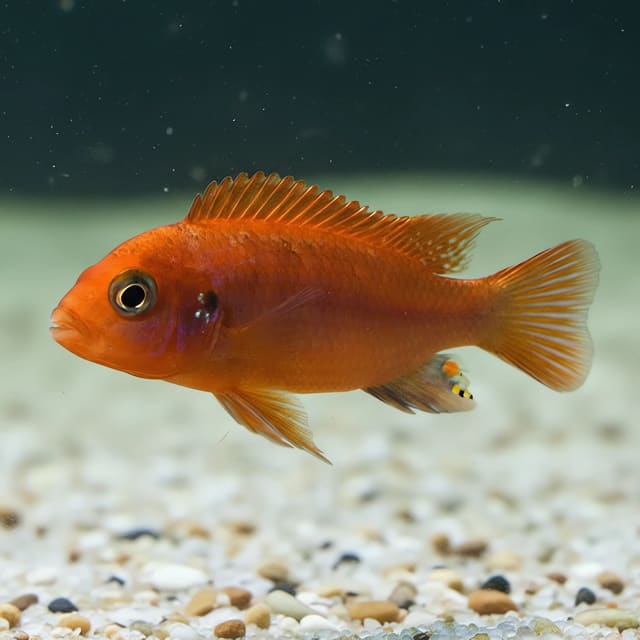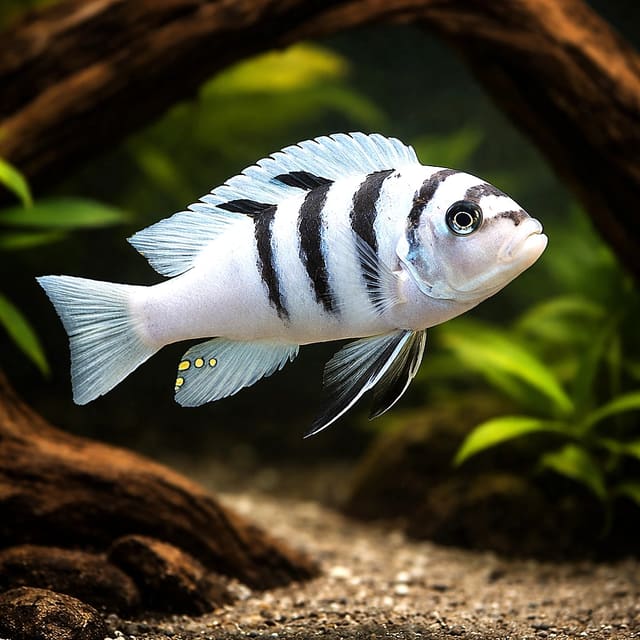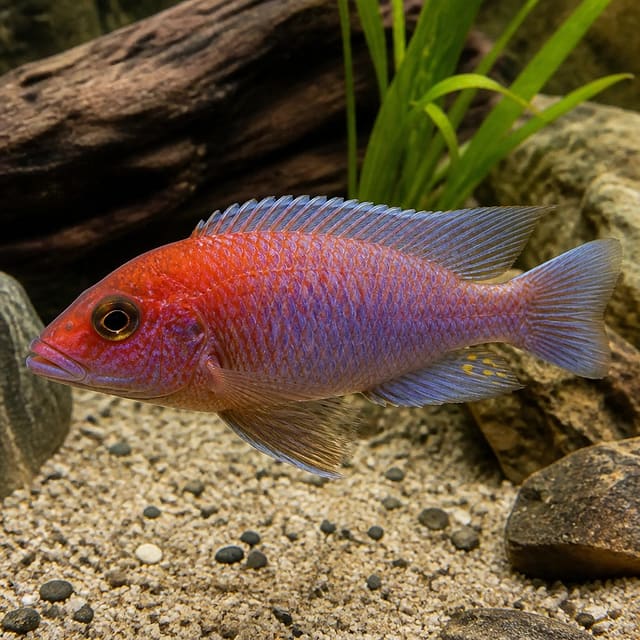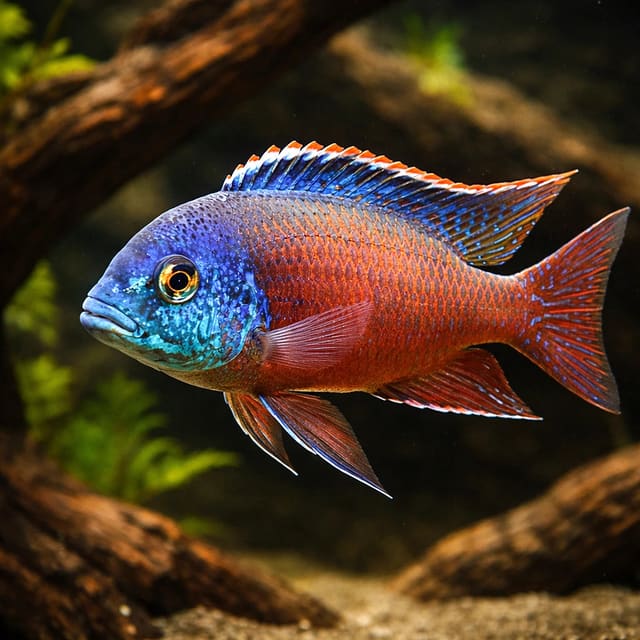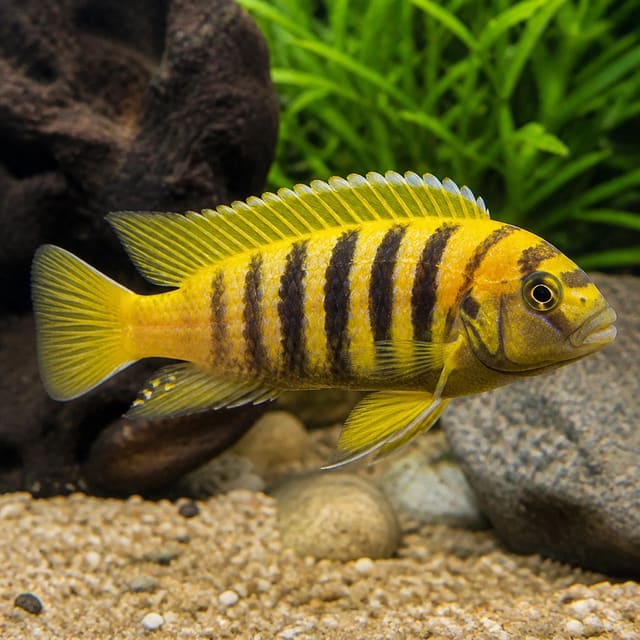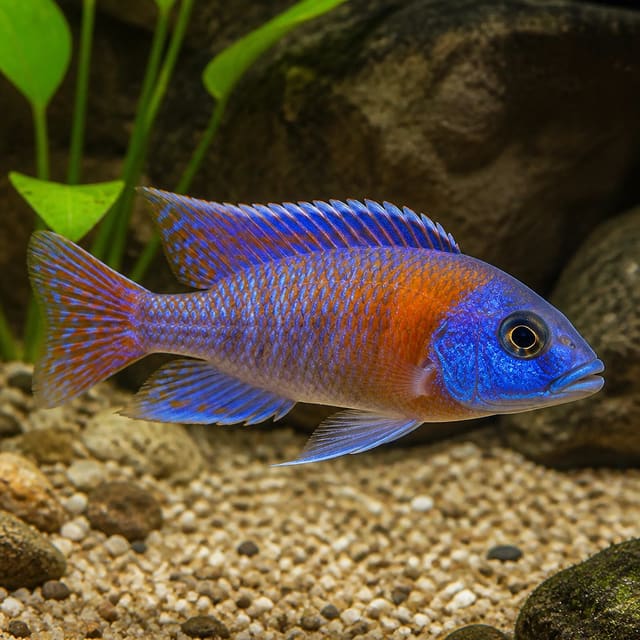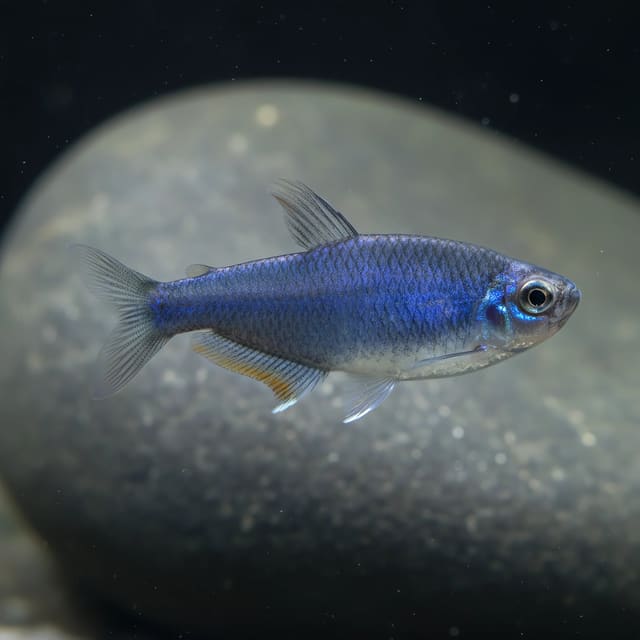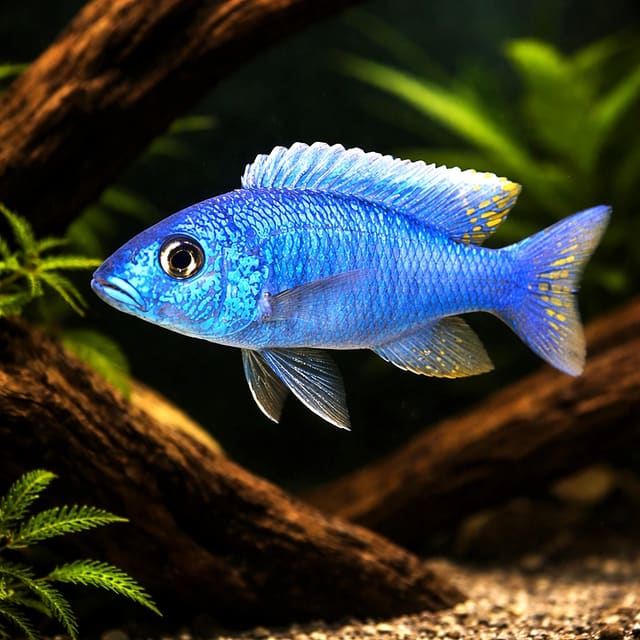
Electric Blue Hap (Sciaenochromis fryeri)
24–27°C · pH 8–8.6 · 304L
£42.99
Photo coming soon
The size, price and care details on this page are for this listing.
One randomly selected Lake Malawi cichlid per unit, available in four size grades. Species, sex, colour, adult size and exact diet are not guaranteed; quarantine and identify the fish before final stocking.
Lake Malawi Cichlidae (species not specified)
Save when buying multiple fish. Each quantity is one fish; sex and pair formation are not guaranteed unless the selected variant explicitly states them.
One randomly selected Lake Malawi cichlid per unit, available in four size grades. Species, sex, colour, adult size and exact diet are not guaranteed; quarantine and identify the fish before final stocking.
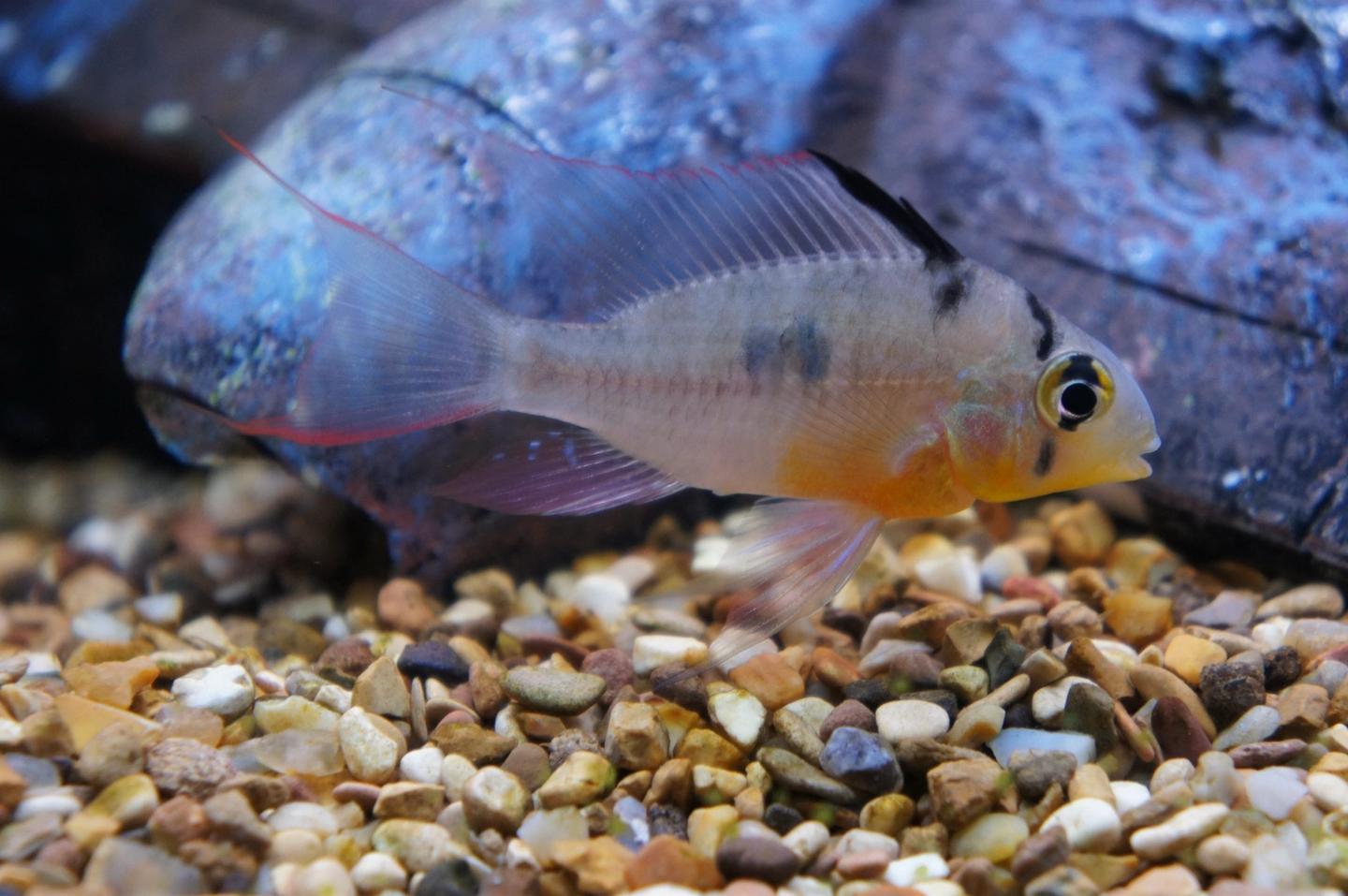
Cichlids are a family of roughly 1,800 accepted species, not one care type. Before buying, identify the exact species and source, then compare adult measurement, usable tank dimensions, social system, territory, tested water, diet and an exit plan. No family-wide minimum tank, water range or tank-mate list is safe.
Maintain these water conditions for optimal health and vibrant colors
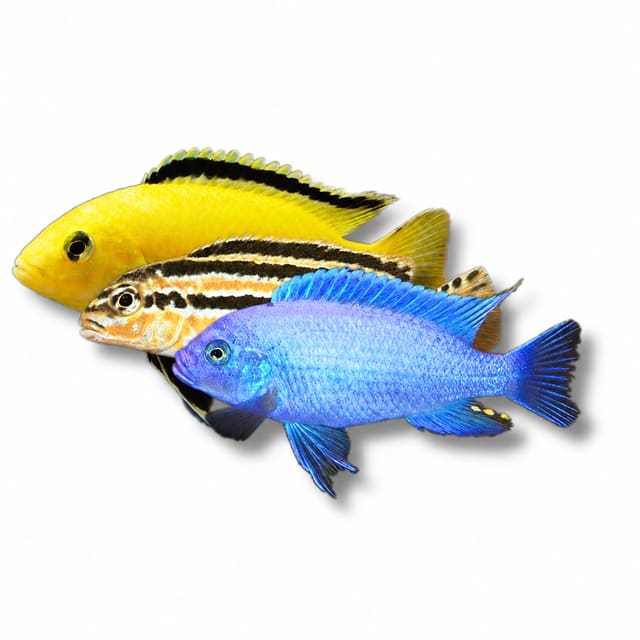
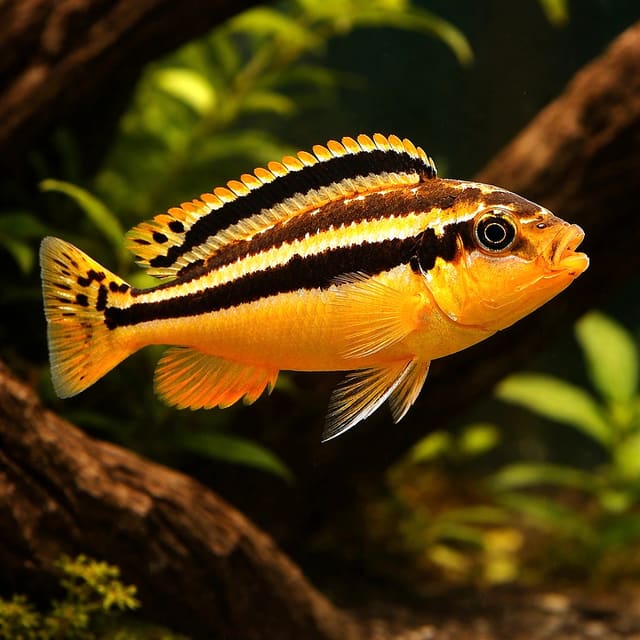
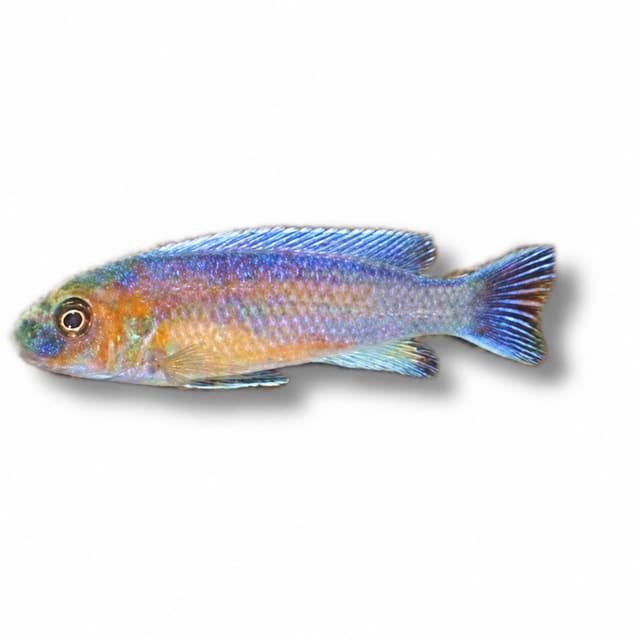
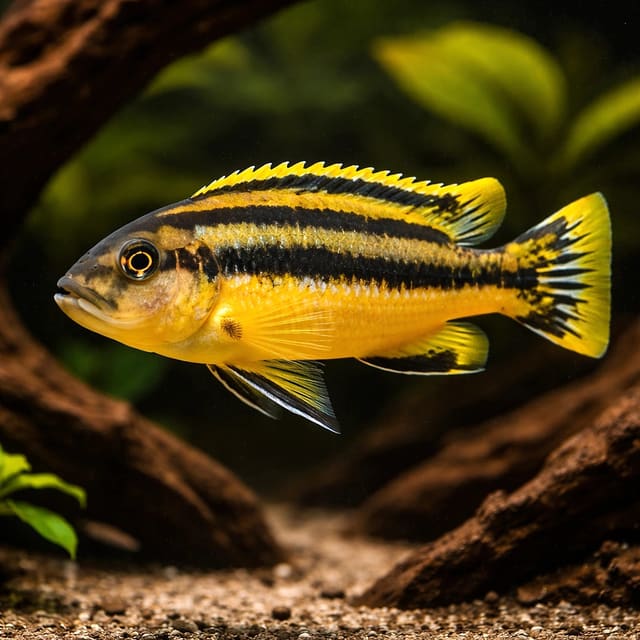
This listing is for one randomly selected Lake Malawi cichlid per unit ordered. Choose the size grade you want, then we select one fish from the current mixed Malawi stock in that grade. Species, genus, locality, sex, colour and pattern are not selectable or guaranteed. The gallery illustration shows the assortment, not the exact individual that will be dispatched.
An assorted Lake Malawi cichlid can be a rewarding choice for an experienced African-cichlid keeper who values surprise and has a flexible setup. It is not the right way to buy when you need a named species, a known male or female, a precise colour, a breeding group, a fixed adult size or a guaranteed diet. Lake Malawi supports an exceptionally diverse cichlid radiation, so "Malawi cichlid" is a geographic umbrella rather than a complete care identity. Care starts with a cautious framework and a practical identification plan because fish in the mix can differ substantially.
This is a Lake Malawi cichlid mix selection. Species, genus and collection locality are unspecified, so no particular mbuna, peacock, hap, sex, temperament or adult colour is promised. Juvenile size alone cannot reliably identify those traits.
Each basket unit represents one fish in the selected size grade. If you add two units, you receive two random fish. They are not guaranteed to be compatible, opposite-sex, related, bonded or suitable for breeding together.
| Feature | Guaranteed | Not guaranteed |
|---|---|---|
| Quantity | One live fish per unit | A curated group or any multipack |
| Size | Selected dispatch grade | Exact millimetre measurement |
| Identity | Lake Malawi cichlid assortment | Species, genus or locality |
| Appearance | A fish from the current mixed stock | Colour, pattern, adult colour or sex |
| Relationship | Separate random selections | A pair, breeding group or compatible combination |
| Photograph | Reference for the product type | The exact dispatched individual |
This listing suits a keeper who already understands hard-water African cichlid husbandry, has quarantine capacity and can adapt the final plan after identifying the fish. It can also suit a display keeper who is comfortable keeping an uncertain identity permanently labelled as an assorted Malawi cichlid rather than inventing a species name. The appeal is the surprise of colour and form, plus access to four useful juvenile or subadult size grades.
It is a poor fit for a tightly planned species aquarium, a conservation-minded breeding project, a small community tank or any setup where one unexpected aggressive or large-growing fish would create a welfare problem. It is also unsuitable when your existing fish need a precise dietary match. If certainty matters more than surprise, browse the named Lake Malawi and Victoria cichlid collection and choose a listing that states the species or trade form.
| Good reason to choose random | Choose a named listing instead when |
|---|---|
| You enjoy identifying fish and can revise the setup | You need a known adult size or temperament |
| You have a mature hard-water quarantine system | You have only one fixed community aquarium |
| You accept that sex and colour may remain uncertain | You want a male display, female group or breeding trio |
| You can separate or responsibly rehome an incompatible fish | You have no spare tank or separation plan |
| You will not sell unknown offspring as pure species | You are building a locality or species breeding programme |
The four options describe the approximate fish length at dispatch. They do not describe four different packs and they do not predict the final adult size. A 3-4 cm juvenile may be harder to identify and may change colour substantially. A 7-9 cm fish may show more useful body and colour clues, but even at that grade sex and species can remain uncertain. Always select a grade that your quarantine tank and existing livestock can safely accommodate.
| Size grade | What to expect | Planning point |
|---|---|---|
| 3-4 cm | Small juvenile; colour and identity may be undeveloped | Use gentle intake protection and close feeding observation |
| 4-5 cm | Established juvenile with more visible shape | Still do not infer adult size or sex from the grade |
| 6-7 cm | Larger juvenile or subadult depending on species | Allow more territory and stronger separation capacity |
| 7-9 cm | Subadult-sized individual in many, but not all, species | Do not assume it has finished growing |
Measure your existing fish and assess mouth size, aggression and available retreats before ordering. Similar length does not guarantee compatibility. A streamlined open-water fish and a deep-bodied rock dweller can use space differently even when the ruler measurement is the same.
A random assortment transfers some decision-making from the product page to the keeper. Complete these checks before placing the order:
Our aquarium care planner can help organise water tests and maintenance, but no calculator can turn an unknown species into a known one. Use it as a record, then make identity-specific decisions from reliable references or specialist advice.
Do not force an immediate species name from one transport photograph. Newly delivered fish can be pale, stressed or displaying subordinate colour. Juveniles often lack adult markings, and related Lake Malawi species can be difficult to separate without locality or parentage data. Keep 'assorted Lake Malawi cichlid' as the working identity until evidence improves.
Photograph both sides in neutral light after the fish is settled. Record total length, body depth, head profile, mouth position, fin shape, bar pattern, spots, egg markings and whether colour changes with mood. Note whether it grazes rock, sifts sand, remains in open water or defends a cave, but remember that aquarium behaviour alone is not a diagnostic key. Compare several independent references and seek a specialist cichlid identification group if necessary.
| Observation | Useful for | Do not conclude from it alone |
|---|---|---|
| Body and jaw shape | Narrowing ecological group | Exact species or diet |
| Bars, spots and fin edges | Comparing candidate identities | Locality or parentage |
| Adult display colour | Supporting a mature identification | Sex in every species |
| Rock grazing | Flagging a possible grazing adaptation | That every food must be plant based |
| Open-water swimming | Planning swimming room | That the fish is a particular hap or peacock |
Keep the permanent label as assorted Lake Malawi cichlid when identification remains uncertain. A cautious label is better than a confident but false scientific name. Never add a collection locality that was not supplied with the fish.
Lake Malawi cichlids are a classic adaptive radiation with extensive differences in habitat use, feeding ecology, body form and behaviour. Peer-reviewed research has linked diet with variation in sensory and craniofacial structures, including oral-jaw shape. Other studies describe exceptional trophic diversity across the radiation. This is why an unidentified selection cannot responsibly be reduced to "12 cm omnivore, 200 litres, peaceful with other Malawi fish".
The practical consequence is simple: broad lake-style water conditions are a starting point, while permanent diet, adult space, social grouping and breeding management depend on identity. Until the fish is identified, its precise adult size, diet and social behaviour remain uncertain.
There is no scientifically honest universal minimum aquarium volume for an unidentified Lake Malawi cichlid. Some commonly traded forms remain relatively compact, while others become much larger, more active or more territorial. A volume that works for one known species can be inadequate for another. The number of fish, sex ratio, rock structure, filtration and tank length also change the result.
For screening purposes, plan a long aquarium rather than a tall decorative tank. A footprint around 120 cm long and approximately 300 litres is a cautious starting point for a mixed juvenile Malawi project, not a lifetime guarantee. Do not use that number to justify an adult stocking plan before identification. If the fish proves to be a larger open-water type or a highly territorial form, increase the footprint or move it to a more suitable system.
The quarantine aquarium may be smaller than the final display for a limited observation period, but it must still let the fish swim normally, retreat, turn easily and remain in excellent water. Monitor aggression even when only two fish are present. A random pair can be less stable than a larger planned group because one fish can focus all aggression on the other.
The Ornamental Aquatic Trade Association gives a general Malawi cichlid range of 23-27°C, pH 8.0-8.6, general hardness 12-18 dGH and carbonate hardness 10-15 dKH. It also states that ammonia and nitrite should be zero and that the range is general guidance requiring species-specific checks. Those are appropriate starting guardrails for an unidentified fish, not evidence that every individual has exactly the same optimum.
| Measure | Broad starting guide | How to use it |
|---|---|---|
| Temperature | 23-27°C | Keep stable and refine after identification |
| pH | 8.0-8.6 | Avoid abrupt chemical chasing |
| General hardness | 12-18 dGH | Confirm with a liquid test or reliable meter |
| Carbonate hardness | 10-15 dKH | Support stable alkalinity |
| Ammonia | 0 mg/L | Any reading needs immediate action |
| Nitrite | 0 mg/L | Any reading needs immediate action |
| Nitrate | Keep controlled | Track the change above source-water level |
Stability matters. Do not pour strong buffer directly into an occupied tank or make large hardness changes without understanding your source water. Prepare replacement water consistently, dechlorinate it, match temperature and verify alkalinity. If your tap water is very soft, establish a repeatable remineralisation method before ordering rather than improvising after delivery.
The aquarium must be biologically mature before the fish arrives. A running filter is not necessarily a cycled filter: test that ammonia and nitrite remain at zero under the intended feeding load. Malawi cichlids are active fish and many setups are deliberately well stocked, so biological capacity, mechanical waste removal and gas exchange all matter.
Choose filtration by real media capacity and maintained flow, not only the number printed on the box. Provide visible surface movement and keep intakes protected for the 3-4 cm grade. Rinse mechanical media in removed aquarium water when necessary, preserve biological media and avoid replacing all filter media at once. A second mature filter or air-driven sponge can provide useful resilience during maintenance or quarantine.
Overfiltration does not cancel overstocking, overfeeding or poor compatibility. Test the water, inspect waste accumulation and watch respiratory rate. A fish breathing rapidly at the surface needs immediate investigation of oxygen, temperature, toxins and gill health.
A flexible unidentified-fish setup should combine secure rock structure with usable open water. Build rocks directly on a protected tank base, not on loose sand that digging fish can undermine. Test every structure for movement before filling the aquarium. Create several routes through and around the hardscape so a subordinate fish is not trapped in a single dead-end cave.
Use visual barriers to break long sight lines. This can reduce continuous chasing, but it cannot make fundamentally incompatible fish safe. Keep enough open floor and midwater space to observe the new fish's preferred zone. Once identity becomes clearer, adjust the balance: a rock-associated grazer may benefit from more surface and crevices, while an open-water fish may need fewer obstructions and greater uninterrupted length.
Sand or smooth fine gravel is usually practical. Avoid sharp substrate and decor with narrow holes that can trap a growing fish. Plants are optional and may be dug up or eaten. If used, protect roots or attach robust epiphytes to removable hardscape, while keeping the core territory plan based on stone and open water.
Lake Malawi cichlids are often described as aggressive, but the pattern varies enormously. Territory, sex, maturity, body size, species identity and tank layout all matter. Random selection removes some of the information normally used to design a group, so the margin for error must be larger.
Do not place the new fish straight into an established hierarchy. Quarantine first, then assess size and likely identity. Before introduction, consider rearranging some decor to interrupt existing territories. Add fish with the lights low and monitor continuously at first. A divider and a fully cycled spare tank should be ready before the move, not purchased after injury begins.
| Normal settling behaviour | Intervene promptly when |
|---|---|
| Brief displays followed by separation | One fish cannot leave a corner or cave |
| Temporary subdued colour after transport | Colour loss accompanies rapid breathing or refusal to feed |
| Exploring several zones of the tank | A fish is pinned at the surface or behind equipment |
| Short chases without contact | Chasing is continuous or causes scale and fin damage |
| Establishing a retreat | The retreat becomes a trap with no escape route |
Do not add more fish automatically because the tank is fighting. Deliberate group stocking can spread aggression in some planned Malawi systems, but adding unknown fish to an unstable setup can increase harm. Identify the fish and obtain tank-specific advice first.
Hard, alkaline water is only one part of compatibility. Two fish can share water chemistry yet differ in diet, adult size, swimming zone and aggression. The safest interim assumption is that this fish needs a dedicated Malawi-style quarantine and should not join peaceful community fish, small fish, long-finned fish, shrimp or snails.
Even another Malawi cichlid is not automatically safe. Similar-looking males can fight intensely; a predator can view smaller fish as food; a specialised grazer can suffer on a rich diet designed for a predatory tank mate. Synodontis catfish are sometimes recommended for Malawi displays, but species, adult size and available floor area still need checking. Do not use a generic tank-mate list as permission.
Lake Malawi cichlids occupy varied feeding niches, and scientific work shows strong links between feeding ecology and morphology. OATA similarly distinguishes more herbivorous mbuna from more predatory utaka and advises species-specific feeding.
While you are identifying the fish, use a conservative complete Malawi-cichlid food in small portions, preferably one designed for mixed African cichlid use rather than a rich carnivore formula. A moderate vegetable component is a reasonable interim precaution, but it is not proof that the fish is herbivorous. Avoid mammal meat, feeder fish, large fatty meals and repeated high-protein treats. Observe how the fish takes food and whether it maintains normal body condition and waste.
Feed only what is eaten promptly and remove leftovers. Juveniles may benefit from smaller, more frequent portions, while larger grades can usually be managed with controlled meals. The exact schedule depends on food energy, fish condition, temperature and eventual identity. Do not feed extra simply because the fish begs.
Once a credible identity or ecological group is established, compare several reliable sources. Look for information on natural food, jaw form, digestive risk, adult size and the manufacturer's feeding directions for the chosen prepared food. Change gradually rather than replacing the entire diet overnight.
| Evidence after identification | Possible adjustment | Still avoid |
|---|---|---|
| Rock-associated algae grazer | Increase suitable algae-rich complete foods | Heavy rich protein meals |
| Sand-sifting invertebrate feeder | Use appropriately sized sinking foods with controlled frozen variety | Assuming it is a strict carnivore |
| Open-water zooplankton or fish feeder | Choose a species-appropriate protein profile | Live feeder fish and uncontrolled fatty food |
| Identity remains uncertain | Stay with conservative complete food and specialist advice | Inventing a diet from colour alone |
Sudden appetite loss, swelling, stringy waste or abnormal posture requires investigation of water, aggression and disease, not an immediate assumption of "Malawi bloat". Similar signs can have different causes. Isolate when necessary and seek an aquatic veterinarian or experienced fish-health professional before medicating blindly.
Check Tropical Fish Co's current livestock-delivery and live-arrival terms before ordering. Read the current live-fish delivery information and live-arrival and evidence terms before dispatch. Delivery timing, eligible postcodes and evidence windows matter, so check the published policy before ordering.
Before delivery day, prepare the quarantine tank, matching water, a dim room, a clean net, a bucket, test kits and a phone for parcel evidence. Do not schedule major aquarium maintenance for the same day. Ensure someone can receive the parcel promptly and keep the insulated box away from direct sun, heaters and cold floors.
Inspect the sealed parcel in line with the live-arrival policy before opening. Record evidence where required. Compare the bag temperature and water condition with the prepared quarantine tank. The appropriate acclimation pace depends on transport time and chemistry; unnecessarily prolonged exposure to opened bag water can also be harmful.
Use our guided acclimation timer as a practical checklist, while following any order-specific instructions. Keep lights low, minimise handling and transfer the fish without adding shipping water to the aquarium. Do not feed immediately just to test appetite. Let respiration and posture settle first, then offer a small familiar food when appropriate.
Quarantine protects both the new fish and the established collection. It gives you time to observe disease, establish feeding, document identity and understand behaviour without an existing hierarchy masking the evidence. Use separate equipment or disinfect it correctly between systems.
| Period | Priority | Record |
|---|---|---|
| First 24 hours | Respiration, balance, injury and water quality | Temperature, pH, ammonia, nitrite and photographs |
| Days 2-3 | Small feeding response and normal waste | Food type, portion, appetite and faeces |
| Days 4-7 | Behaviour away from transport stress | Swimming zone, shelter use and aggression |
| Week 2 onward | Identity research and stable condition | Growth, colour change and candidate identification |
| Before transfer | Compatibility and mature main-tank parameters | Introduction and separation plan |
There is no magic quarantine duration that guarantees health. Extend observation if the fish shows symptoms, if treatment is required or if identity remains too uncertain for the planned aquarium. Do not medicate prophylactically with a random mixture of treatments. Diagnosis, water quality and correct dose matter.
A settled fish should hold itself normally, breathe steadily, respond to surroundings and maintain an appropriate body profile. Colour varies with species, rank and stress, so bright colour alone is not a health test. Inspect both sides, fins, eyes, mouth, gills and waste.
| Sign | Check first | Practical response |
|---|---|---|
| Rapid breathing | Oxygen, temperature, ammonia, nitrite and gills | Increase aeration and test immediately |
| Clamped fins or hiding | Water quality, aggression and transport stress | Reduce stress and isolate if targeted |
| Swollen abdomen | Diet, waste, appetite and internal disease | Stop rich food and seek diagnosis |
| White spots or flashing | Skin, temperature and recent exposure | Keep quarantined and identify the cause |
| Torn fins or missing scales | Territory and tank structure | Separate aggressor or victim before further injury |
| Refusal to feed | Stress, bullying, mouthbrooding and illness | Observe context; do not force repeated meals |
Test water before reaching for medication. Correcting ammonia, nitrite, temperature or oxygen can be urgent, while unsuitable treatment can add stress and obscure diagnosis. Contact an aquatic veterinarian for persistent or severe symptoms.
The assortment may contain blue, yellow, orange, barred, spotted or more subdued fish, but no colour is promised. Juvenile appearance can change dramatically, and dominant colour can fade when social rank changes. A photograph cannot guarantee how the fish will look in your aquarium.
Sex is not guaranteed. Egg spots, fin shape and colour can support sexing in some mature species but are not universal proof across an unidentified mixed selection. Do not buy two units expecting a male and female. If sex matters, choose a listing where it is explicitly offered or wait for confirmed adult traits with specialist help.
Do not intentionally breed an unidentified assortment for distribution. Many Lake Malawi cichlids can hybridise in aquariums, particularly where closely related fish lack appropriate conspecific partners. Natural ancestral hybridisation documented in evolutionary research does not make unknown aquarium crosses suitable to label as pure species or named localities.
If fry appear, keep clear records of the parents' uncertain identity. Do not sell, swap or donate them under a guessed species name. Prevent further breeding by separating fish, managing sex groups once identified or removing eggs/fry humanely under specialist guidance. A conservation-minded Malawi collection depends on accurate lineage labels.
Set the maintenance schedule from measured waste production. Test ammonia and nitrite regularly, monitor nitrate relative to source water, and perform consistent partial changes using conditioned, temperature-matched water. OATA recommends at least a weekly 25% change as a general baseline; a heavily stocked or fast-growing system may require more frequent or larger changes based on tests.
Vacuum accessible waste without dismantling every territory at once. Check filter intakes, impellers and air flow. Clean only the media that needs attention and protect beneficial bacteria. Inspect rock stability as fish grow and dig. Record water results so a slow decline is visible before fish show symptoms.
Weigh or measure the fish periodically using photographs against a known scale rather than catching it unnecessarily. Growth can change filtration load, territory use and food size. Reassess the permanent tank whenever body size, aggression or identity evidence changes.
Each additional quantity adds another individual from the available assortment; it does not change this into a curated community pack. We cannot promise different colours, different species, a balanced sex ratio, one fish from each ecological group or a hierarchy that will remain stable. Two fish may look similar, and several juveniles may later develop into males. If you need a deliberate combination, contact us before ordering or choose named listings separately.
Order all intended fish in the size grade your quarantine space can handle, but do not assume identical dispatch length means equal strength. Prepare more retreats than fish and watch every individual reach food. A dominant fish can appear healthy while a subordinate fish slowly loses weight. Mark individuals in your observation record by stable features rather than guessed names, for example "fish A, blue bars, deeper body" and "fish B, pale flank, yellow fin edge".
Introducing a group to the display at the same time can reduce the advantage held by one newcomer over another, but it does not solve an incompatible species mix. Complete quarantine and identity assessment first. Recheck the main tank's biological capacity, rearrange selected territories, feed lightly and monitor after lights-on as well as during the first evening. Have more than one separation option when several fish are involved.
If one individual proves unsuitable, rehome that fish rather than repeatedly changing the whole aquarium around an impossible combination. Keep the original uncertain identity in the handover notes and share the fish's actual behaviour, food response, current size and water history. Good records make an assorted purchase safer over its lifetime.
Never release aquarium fish, eggs, plants or water into a pond, river, canal or drain that reaches the environment. UK guidance restricts release of non-native animals. If the fish becomes unsuitable, contact Tropical Fish Co, a knowledgeable aquatic retailer, an established cichlid keeper or a responsible rescue/rehoming network. Explain that the identity is uncertain.
Plan transport in a secure fish bag and insulated container with suitable oxygen and temperature control. Do not hand an unknown aggressive fish to an unprepared keeper. Provide its size, water parameters, food history, behaviour and health record.
| Decision | Random selection | Named listing |
|---|---|---|
| Species certainty | Not supplied | Stated, subject to listing accuracy |
| Colour choice | Not selectable | Usually more predictable |
| Adult size planning | Must be revised after identification | Can be researched before purchase |
| Diet planning | Conservative interim diet | Species-specific plan available |
| Breeding use | Not recommended | Possible with verified lineage and sex |
| Best for | Flexible experienced keepers | Planned communities and breeding projects |
If the named route suits you better, use our Lake Malawi cichlid collection. The random option remains valuable when its uncertainty is understood and managed rather than hidden.
This option supplies one randomly selected fish in one of four size grades. Choose it only if you can accommodate uncertainty about the fish's identity and adjust its care after observation.
Check the live size selector and price at checkout. Review current delivery and live-arrival terms for your postcode, prepare quarantine before ordering, and contact us with tank dimensions and water results if you need a suitability check.
Sources describe the wider Lake Malawi radiation, not the exact identity of the randomly selected fish. The 120 cm/300 litre screening start and interim feeding approach are cautious planning advice; revise them after identification.
One randomly selected Lake Malawi cichlid is included per unit. Add two units for two random fish.
No. Two random fish are not sexed, bonded or guaranteed compatible.
No. Species, genus, locality, sex, colour and pattern are not selectable. Choose a named product listing when those details matter.
No. The supplier says only Malawi cichlid mix selection. We do not relabel an unknown fish as mbuna, peacock or hap without evidence.
Not necessarily. The gallery illustration shows the assortment, not the exact fish dispatched. Colour and body form vary.
Adult size cannot be guaranteed because the species is unknown. The selected option is the dispatch grade only. Identify the fish and revise the final aquarium plan as it grows.
There is no universal minimum for an unknown Malawi species. A long aquarium around 120 cm and approximately 300 litres is a cautious screening start for a mixed juvenile project, not a permanent guarantee.
A broad OATA starting guide is 23-27°C, pH 8.0-8.6, 12-18 dGH and 10-15 dKH, with zero ammonia and nitrite. Refine this after credible identification.
Use a conservative complete Malawi-cichlid food in small portions and avoid rich meaty feeding. Refine the food profile once the fish's identity or ecological group is credible.
Do not plan on it. Keep the fish in a dedicated Malawi-style quarantine first, then make a tank-mate decision from identity, size, diet and behaviour.
Quarantine first. An unknown new fish can introduce disease or disrupt an established hierarchy, and you need time to assess identity and feeding.
Intentional breeding is not recommended. Unknown offspring must never be sold or shared under a guessed pure-species or locality label.
Use a prepared divider or cycled spare tank, then arrange responsible rehoming with full disclosure. Never release aquarium fish into UK waterways.
Check the current delivery and returns pages for postcode, schedule, live-arrival terms and evidence requirements before ordering.
No reviews for this item yet. Bought one? Honest reviews only, good or bad.
What customers say about ordering from us
Easy website plenty of info on fish your buying great to pick a time slot
TRACEY DURRANT · 7 Oct 2026
Got some lovely fish thank you
Kevin Mackie · 7 Oct 2026
Reviews of our shop, collected by Judge.me, an independent third-party review collector. Newest first.