Moderate
Acei Cichlid (Pseudotropheus sp. “acei”)
24–26°C · pH 7.5–8.5 · 300L
£7.99

Assorted Lake Malawi Cichlids, Medium (Various Malawi species) are Cichlidae fish from Lake Malawi. They suit keepers prepared for aggression and hard, alkaline water: keep them at 24–27°C and pH 8.0–8.5, in groups of at least 15. Sold individually in dispatch sizes from 2 - 3 cm to XL.
Various Malawi species
Save when buying multiple fish. Each quantity is one fish; sex and pair formation are not guaranteed unless the selected variant explicitly states them.
Assorted Lake Malawi Cichlids, Medium (Various Malawi species) are Cichlidae fish from Lake Malawi. They suit keepers prepared for aggression and hard, alkaline water: keep them at 24–27°C and pH 8.0–8.5, in groups of at least 15. Sold individually in dispatch sizes from 2 - 3 cm to XL.

Cichlids are a family of roughly 1,800 accepted species, not one care type. Before buying, identify the exact species and source, then compare adult measurement, usable tank dimensions, social system, territory, tested water, diet and an exit plan. No family-wide minimum tank, water range or tank-mate list is safe.
Maintain these water conditions for optimal health and vibrant colors
Assorted Lake Malawi Cichlids, Medium (Various Malawi species) are colourful freshwater fish from the family Cichlidae and Lake Malawi. They suit a keeper who is prepared to maintain hard, alkaline water, manage territorial behaviour and build a dedicated Malawi community rather than a peaceful mixed aquarium. Malawi cichlids are aggressive fish that must be mixed with caution, so plan the aquarium, group and maintenance routine together.
The Malawi cichlid group contains many different fish. OATA’s African Malawi cichlid guidance loosely separates rock-dwelling mbuna from utaka that swim in open water. An assortment can therefore develop different space, diet and behavioural needs as its members grow. Treat colour as part of the display, not as the basis for choosing companions or food.
Keep the aquarium at 24–27°C, pH 8.0–8.5 and general hardness of 12–18°dH. Keep carbonate hardness at 10–15°dKH. These are general values for Malawi cichlids as a group. OATA recommends an aquarium of at least 200 litres for a reasonable-sized community and says these fish can be kept in groups of at least 15. Before buying, ask us to check that your aquarium, filter and layout can support the group you plan.
These fish come from Lake Malawi, one of the most biodiverse lakes in the world, and need specialised water conditions.
| Suits | Not suited to |
|---|---|
| A dedicated hard, alkaline Malawi aquarium | A soft, acidic community aquarium |
| A keeper prepared to manage aggression | A peaceful mixed-community plan |
| A mature, filtered aquarium of appropriate size | An unfiltered or newly stocked aquarium |
| Careful group and diet planning | A small group chosen by colour alone |
One purchase supplies one live fish from this assorted Lake Malawi cichlid offer. Use the live size selector to choose 2 - 3 cm, 4 - 5 cm, 6 - 7 cm, 7 - 9 cm or XL. The size you select is the size supplied, not the adult size. The XL option has no stated size in centimetres.
Dispatch size helps you plan the immediate introduction, but the permanent aquarium must accommodate the developing fish and its place within the community. Malawi cichlids vary in size and behaviour. Review the layout, stocking pressure and diet as each fish develops instead of treating the dispatch measurement as a final planning figure.
Sex is guaranteed only when the selected option explicitly states male or female. This Assorted Lake Malawi Cichlids, Medium listing has no sex-guaranteed option.
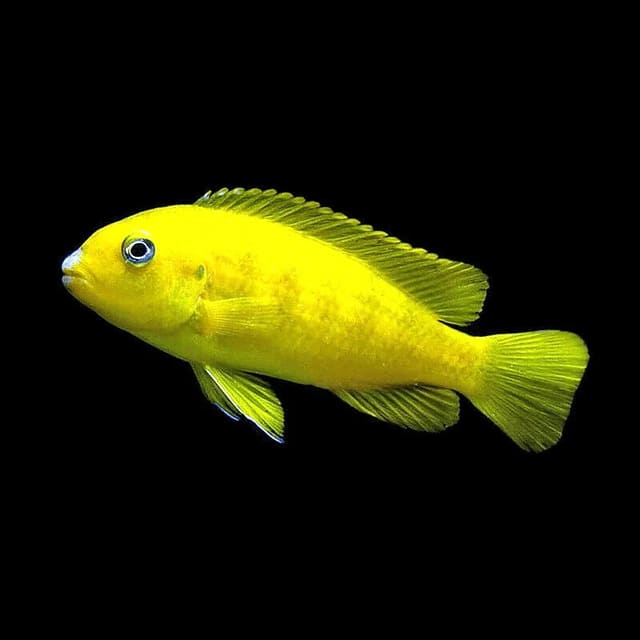
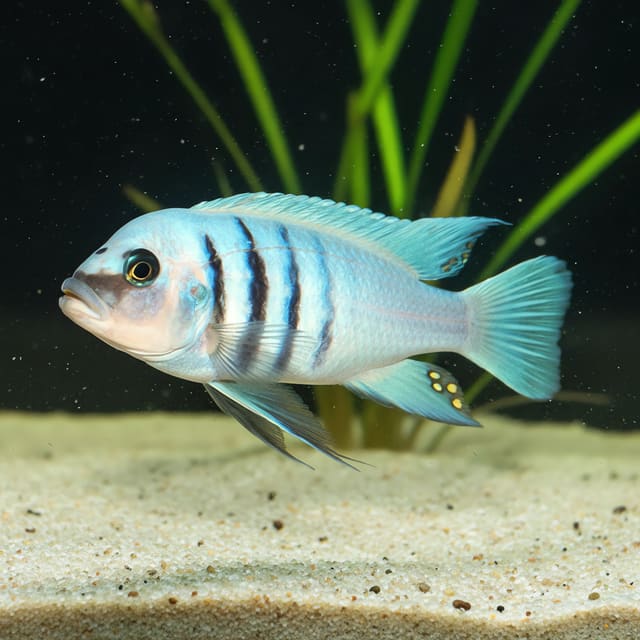
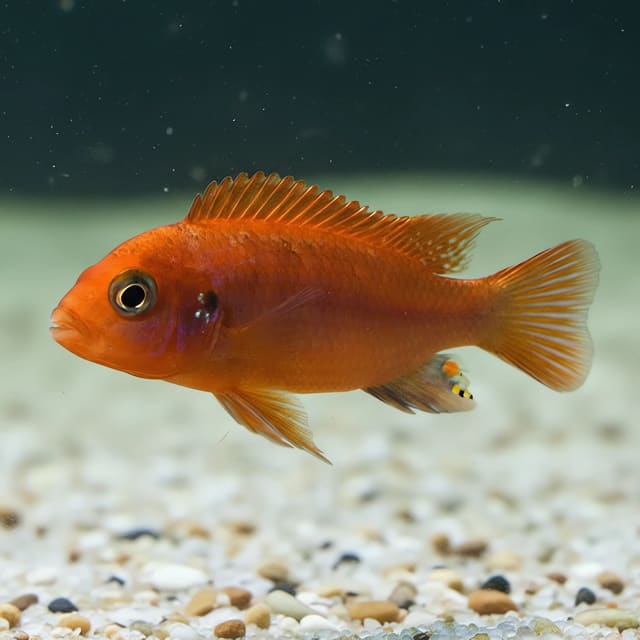
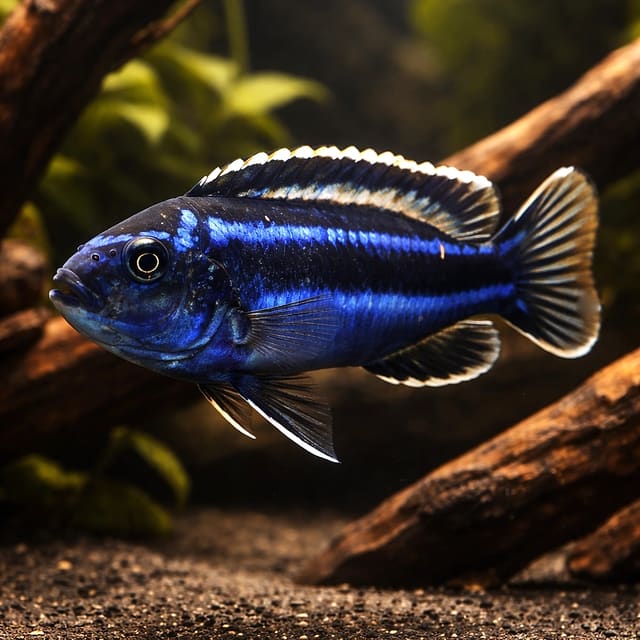
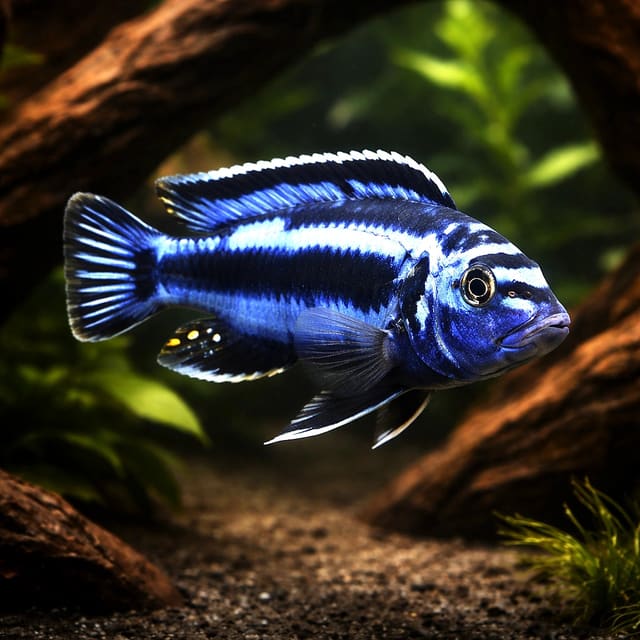
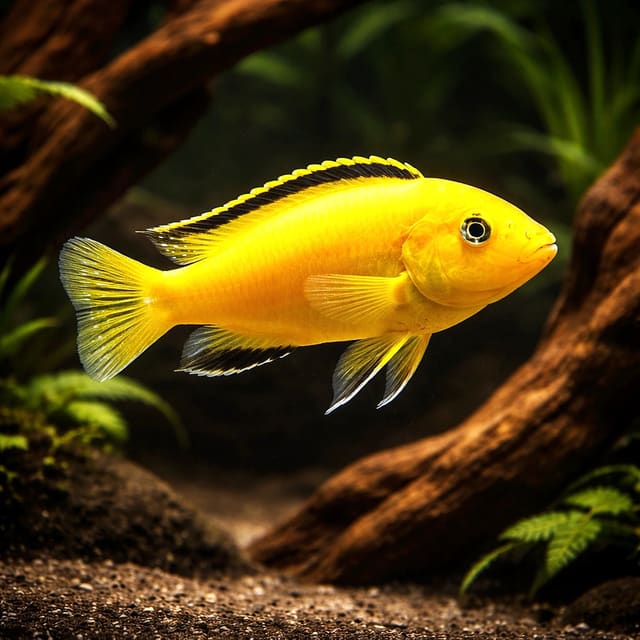
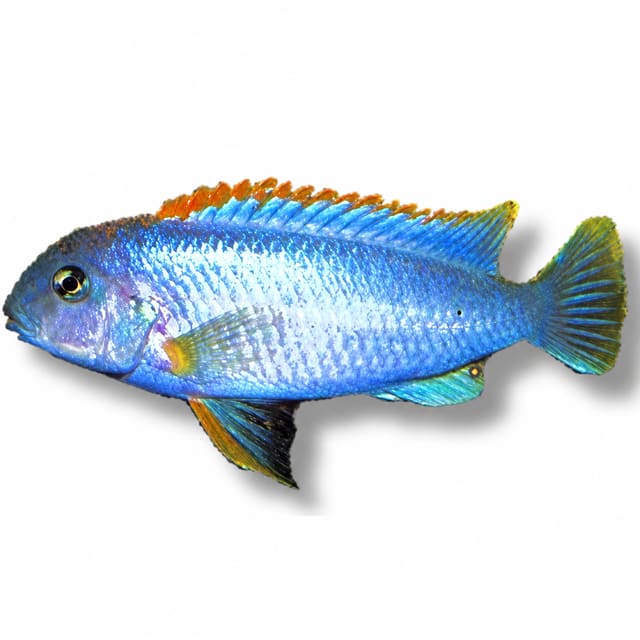
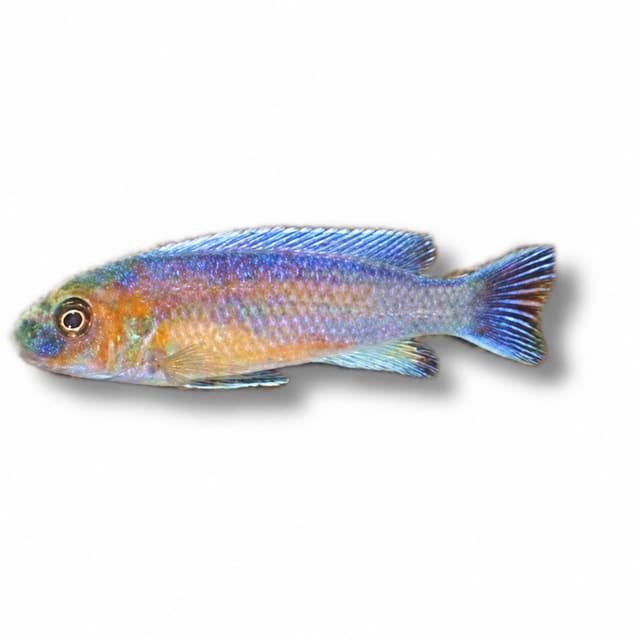
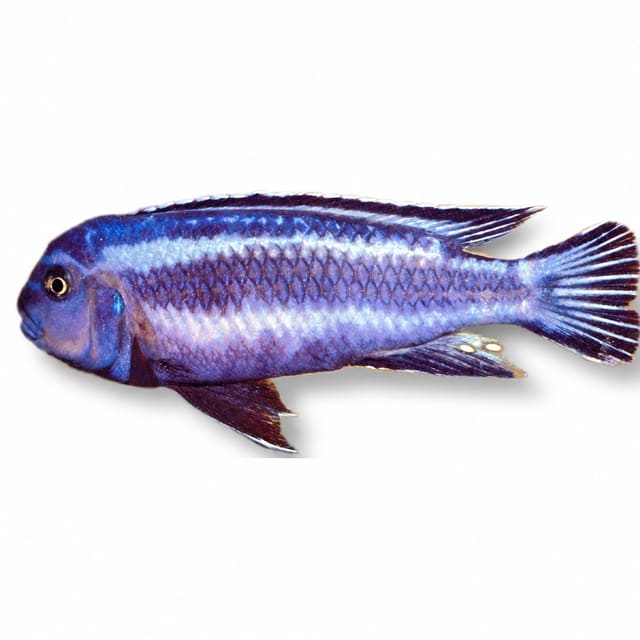
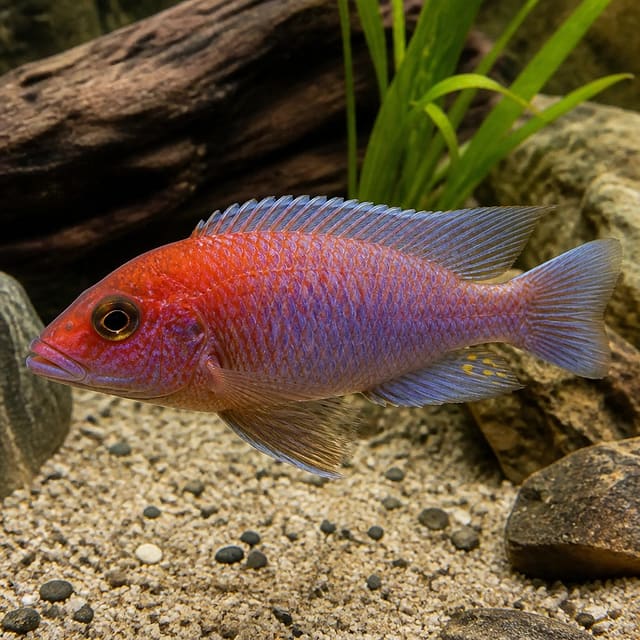
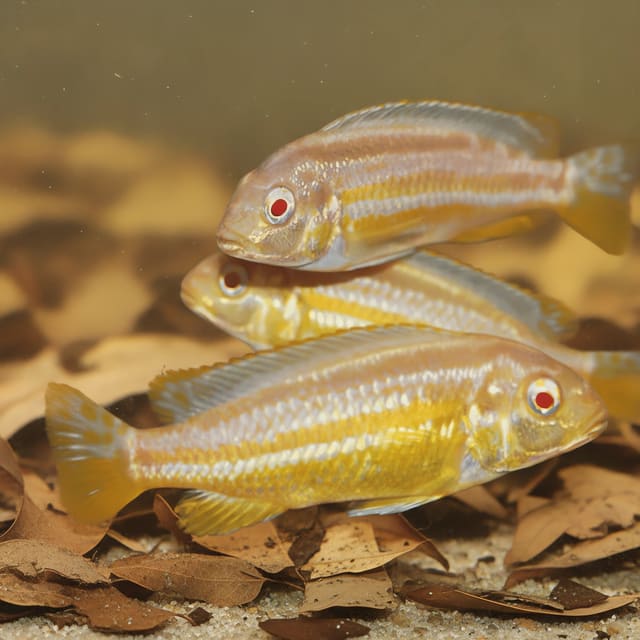
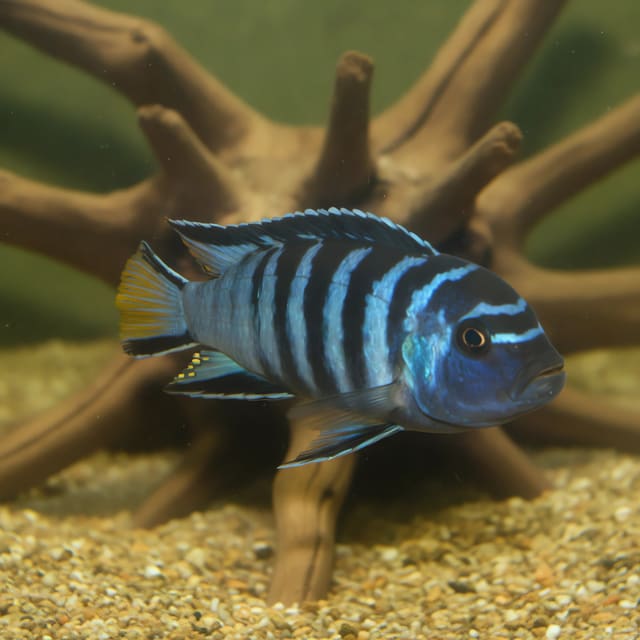
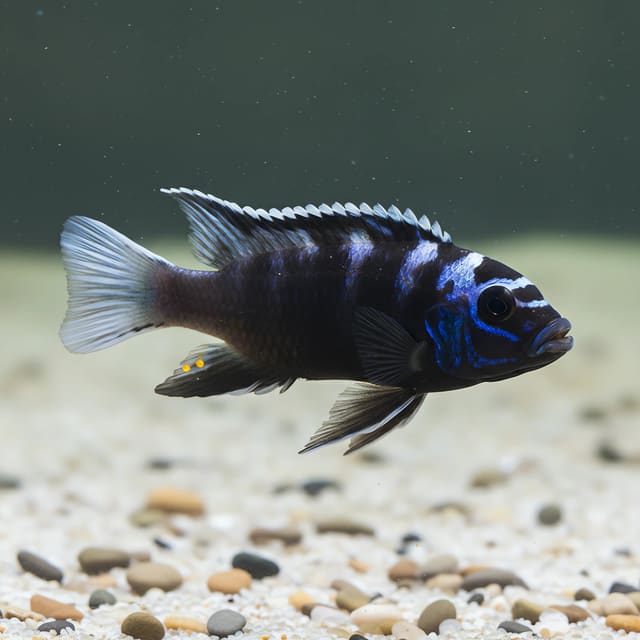
Some gallery images have been digitally enhanced to improve image quality. They show the listed type of animal rather than guaranteeing the exact markings of the individual supplied, so natural colour and pattern can vary.
The gallery illustrates the general appearance of colourful Malawi cichlids. It does not change the purchase unit, determine sex or promise that a particular pattern will be selected. Two animals are visible in one gallery scene, while the offer remains one live fish per purchase quantity.
Start with an aquarium of at least 200 litres for a reasonable-sized Malawi community, and choose a larger aquarium where practical. More water gives greater stability in temperature and water quality, but litres alone do not prevent aggression. The number of fish, their developing needs, filtration capacity and arrangement of the interior all matter.
A group of 15 or more does not automatically fit a 200-litre aquarium. Before buying, ask us to check that your aquarium is the right size for the number of Malawi cichlids you plan to keep.
Provide structured areas for rock-dwelling fish and retain open swimming water for fish that use it. Break up direct views through the aquarium so one fish cannot oversee every route. Keep all décor stable because Malawi cichlids often dig and rearrange substrate. Check structures after maintenance and whenever digging changes their support.
Use coral sand or a similar substrate that helps buffer the water. Expect the fish to uproot any plants rooted in the substrate; if you use plants, choose only the hardiest kinds attached to décor. If plants are used, choose a layout that stays functional when digging occurs rather than relying on delicate rooted planting as the main shelter.
A larger aquarium cannot make an unsuitable combination safe by itself. It gives you more scope to arrange territories and maintain stable conditions, but observation and stocking decisions remain essential.
Keep the aquarium at 24–27°C, pH 8.0–8.5, general hardness 12–18°dH and carbonate hardness 10–15°dKH. These are general values for Malawi cichlids as a group; ask us if you need species-specific advice. Stability matters because Malawi cichlids require specialised water conditions. Measure the aquarium rather than adjusting from appearance or assuming that clear water has the right chemistry.
Keep ammonia at zero mg per litre and nitrite at zero mg per litre. Nitrate should not exceed 20 mg per litre above the normal tap-water level. Measure the tap water as well as the aquarium so that the nitrate limit is applied correctly.
If the tap water measures 15 mg per litre nitrate, keep the aquarium at or below 35 mg per litre: the tap-water reading plus 20 mg per litre. Recalculate this ceiling whenever the normal tap-water result changes, and use regular maintenance to prevent an avoidable rise.
Use our aquarium water chemistry guide to understand what each test measures. Enter measured values into the water matcher when comparing your aquarium with these ranges.
A result outside the plan calls for a measured response. Check the test method, compare with the tap water and review maintenance, feeding and filter performance. Avoid chasing numbers through frequent unmeasured changes, because a stable result inside the required range is the goal.
Use a mature, well-maintained biological filter in every Malawi cichlid aquarium. The RSPCA’s aquarium welfare guidance explains that fish release toxic ammonia and that beneficial filter bacteria convert it first into nitrite and then into the safer nitrate. A filter must therefore be functioning biologically, not merely moving water.
Prepare and mature the aquarium before the fish arrives. Our first tropical aquarium guide sets out the preparation sequence. Confirm zero ammonia and zero nitrite before adding fish, then continue testing as the population and feeding load change.
Use an oversized filter for a crowded Malawi community and provide aggressive aeration so enough dissolved oxygen remains accessible. OATA recommends both measures because the community structure used to spread aggression also creates a substantial waste and oxygen demand. Judge filter performance by water test results, flow, oxygenation and how well waste is removed.
Add fish gradually. Every increase in fish numbers and feeding requires the beneficial bacterial population to process more waste. Stocking too quickly can cause new tank syndrome, in which ammonia or nitrite rises because the biological filter has not adjusted to the additional load.
Filtration is part of the stocking decision. A larger filter adds processing capacity, but it does not replace adequate aquarium space, suitable companions or weekly maintenance.
At least once every week, change 25% of the aquarium water. Use a siphon to remove solid waste from the substrate while taking out the old water.
For a 200-litre aquarium, 25% is 50 litres. Base the measured replacement amount on the aquarium’s actual filled capacity. Use tap-water conditioner to remove chlorine or chloramine before the replacement water enters the aquarium.
Clean filter media only when needed. Do not rinse it under the tap. Lightly rinse it in aquarium water removed during the partial water change, which reduces the loss of beneficial bacteria. Avoid cleaning every part of the biological system more aggressively than necessary.
Use test results to connect husbandry decisions. Rising nitrate may point to accumulating waste, excessive feeding or insufficient water changes. Detectable ammonia or nitrite means the biological system is not keeping pace with the load. Reduced flow may indicate a blockage. Address the cause instead of treating clear-looking water as proof that the aquarium is stable.
Record the weekly results if more than one person maintains the aquarium. A short log of tests, water changes, filter checks and behavioural changes makes a gradual trend easier to recognise before it becomes a larger welfare problem.
Feed twice a day and offer only what the fish can eat within a few minutes. Remove or reduce any portion that remains uneaten. Excess food breaks down into toxic waste, increasing the load on the filter and working against the zero-ammonia and zero-nitrite requirements.
The correct food depends on the Malawi cichlid type. Smaller mbuna are more herbivorous and appreciate specialised Malawi cichlid food with a high algae content plus fresh vegetables. Some larger utaka may be more predatory and require pellets with a higher animal content, with frozen foods such as brine shrimp, prawns or cockles.
| Fish type | Food direction |
|---|---|
| Smaller mbuna | Specialised high-algae Malawi feed and fresh vegetables |
| Some larger utaka (may be more predatory) | Higher-animal-content pellets and suitable frozen foods |
| Developing assortment | Review each fish and match its staple to its group |
Do not feed every fish in a mixed group the same staple. Watch body condition, feeding interest and waste, then refine the food choice as each fish develops. Give high-algae food to herbivorous mbuna, and higher-animal-content food only to utaka that are more predatory.
A bigger portion does not compensate for a food that does not fit the fish. Choose the correct food direction first, then control the amount. Variety should remain within that dietary direction rather than combining every Malawi food indiscriminately.
Learn each fish’s normal swimming, colour, breathing, temperament and feeding response. A change is more useful than a single isolated pose. Observe the whole community so that a fish hiding from aggression is not judged only as an individual health problem.
| What you see | What to do |
|---|---|
| Hanging at the surface | Test water and check aeration |
| Sitting on the bottom or erratic swimming | Test water and observe interactions |
| Darker or paler colour | Compare behaviour, feeding and water results |
| More aggression or hiding | Review the group, territories and recent additions |
| Faster or slower gill movement | Check water quality and oxygenation promptly |
| White spots, fluffy growths or damaged fins | Test the water and contact us for guidance |
| Weight or appetite change | Review food choice, portions, aggression and water |
Begin with water tests because even small amounts of ammonia or nitrite can stress Malawi cichlids. Confirm temperature, pH and hardness as well, then check filter flow and aeration. Look for chasing, blocked routes or one fish preventing another from feeding.
Do not select a disease treatment from one symptom. Several husbandry and health problems can produce changes in colour, position, breathing or appetite. Record what changed, when it changed, the measured water values and which fish are affected. If you are concerned about a fish’s health, test the water and contact us for further guidance.
Review the aquarium as the fish develop. Malawi cichlids vary in size, diet and aggression, and changes may become more pronounced over time. Reassess food direction, usable space and community pressure instead of assuming that a combination which settled initially will remain unchanged.
Be at the address to receive the parcel and start filming before it is opened. The continuous unboxing video must begin with the parcel still sealed and the outer box visible. The fish must remain visible inside the sealed bag before anything is disturbed.
Fish are hand-bagged in pure oxygen, placed in an insulated poly box and packed with a heat pack when the weather calls for it. A licensed live-animal courier carries the parcel. Read the delivery and Live Arrival Guarantee policy before the arrival day so the recipient and filming steps are understood.
Keep the aquarium within 24–27°C, pH 8.0–8.5 and 12–18°dH, with ammonia and nitrite both at zero. Complete these checks before releasing the fish.
After introduction, watch swimming, breathing, colour, feeding interest, aggression and hiding. Continue the normal testing routine and do not add more fish rapidly. The biological filter needs time to respond whenever the population and feeding load increase.
During the first week, feed twice a day, giving only what is eaten within a few minutes, test the water at least once and act on any ammonia or nitrite reading. A change in temperament or feeding may indicate water-quality pressure, an unsuitable food direction or aggression, so assess those factors together.
Review adult space, filtration, measured water values, diet and territorial behaviour together. Add livestock gradually, test ammonia and nitrite after a stocking change, and act promptly if any fish cannot feed, rest or use shelter normally.
Plan a Malawi cichlid community around aggression from the beginning. These fish are not social in the manner of a peaceful shoaling species and can be highly aggressive. OATA says they can be kept in groups of at least 15 and that Malawi cichlids in small groups often fight.
Slight overstocking is needed to spread aggression evenly through the population, but it also increases waste and oxygen demand. Apply that approach only with adequate aquarium space, an oversized filter, aggressive aeration, weekly water changes and regular testing. Never stock beyond what the aquarium and its biological filter can support.
Where the sexes can be told apart, keep more females than males of each species so that males do not harass one individual female. Many Malawi cichlids show sex differences only when adult, not when juvenile, so do not use dispatch size, gallery colour or an early colour change as a sex guarantee.
A worked stocking decision must consider more than a head count. Begin with the aquarium volume and usable layout, then consider the developing fish, filtration, oxygenation and diet. Aim for a group of at least 15, and check that the aquarium can hold that group.
Compatibility remains conditional because individual behaviour and the developing assortment can change the balance.
Keep Malawi cichlids only with other Malawi cichlids or some Synodontis species that naturally inhabit Lake Malawi. That rule excludes a general tropical community. Do not treat shared temperature alone as enough to make another fish suitable.
| Decision | Screening rule |
|---|---|
| Other Malawi cichlids | Assess water, developing size, diet, aggression and usable space |
| Some Lake Malawi Synodontis | Confirm the exact species and complete care match before mixing |
| Other fish and invertebrates | Do not keep with Malawi cichlids |
Not every Malawi cichlid suits every other Malawi cichlid, so check each combination. One combination may place herbivorous and more predatory feeding directions together, or join fish with different territorial pressure. Make the decision from the full care match rather than colour, price or dispatch measurement.
Add a Synodontis catfish only if its exact species naturally lives in Lake Malawi. Confirm water requirements, adult space, diet and behaviour for the particular catfish before adding it.
Repeated chasing, hiding, missed meals, damaged fins or loss of condition means the combination needs attention. Test the water first, because poor water quality can add stress. Then assess routes, territories, group pressure and recent introductions. Rearranging décor may reduce aggression as fish establish new territories.
You can browse the African cichlid collection when planning a dedicated setup, but assess every proposed animal individually. Fish sold in the same collection are not automatically compatible with each other.
Choose 2 - 3 cm, 4 - 5 cm, 6 - 7 cm, 7 - 9 cm or XL on the live size selector. The size you select is the size supplied, not the adult size.
OATA’s group guidance recommends an aquarium of at least 200 litres for a reasonable-sized community. Choose as large an aquarium as practical, then match stocking to the fish, filtration and layout.
OATA says Malawi cichlids can be kept in groups of at least 15 and that small groups often fight. Assess aquarium space, filtration and the developing mix together.
OATA calls Malawi cichlids usually undemanding and easy to keep, but they require hard alkaline water and careful aggression management. Set up and mature a filtered Malawi aquarium with hard, alkaline water before you buy.
Feed twice daily, giving only what is eaten within a few minutes. Smaller mbuna appreciate high-algae Malawi food and vegetables, while some larger utaka need higher-animal-content pellets and suitable frozen foods.
Keep it at 24–27°C, pH 8.0–8.5 and general hardness 12–18°dH; these are general values for Malawi cichlids as a group. Keep ammonia and nitrite at zero and nitrate no more than 20 mg/l above the normal tap-water level.
Yes. Malawi cichlids are aggressive fish and must be mixed with caution. Treat chasing, hiding, damaged fins or a sudden temperament change as a prompt to test the water and reassess stocking, territories and recent introductions.
OATA advises keeping it only with other Malawi cichlids or some Synodontis species that naturally inhabit Lake Malawi. Screen the exact combination for water, diet, space and aggression before mixing.
Start filming while the parcel is still sealed, before opening it or floating the bag. It is hand-bagged in pure oxygen, packed in an insulated poly box with a heat pack when the weather calls for it, and carried by a licensed live-animal courier. Someone must receive the parcel in person.
No reviews for this item yet. Bought one? Honest reviews only, good or bad.
What customers say about ordering from us
I have a small group of long finned mountain minnows. So was delighted to be able to order ten of this variety to increase the genetics in my tank . The ones I recieved are healthy but it’s to early to give a verdict on wether they are of a long finned type since they are small currently.
Gordon Walker · 23 Sept 2026
100% success travel and "installation". Pleased with quality of purchase. The Siamese fighter a bit "shy" so have not yet seen him at his best yet but looking good. Happy customer. GG
George E Garratt · 21 Sept 2026
Reviews of our shop, collected by Judge.me, an independent third-party review collector. Newest first.