Advanced
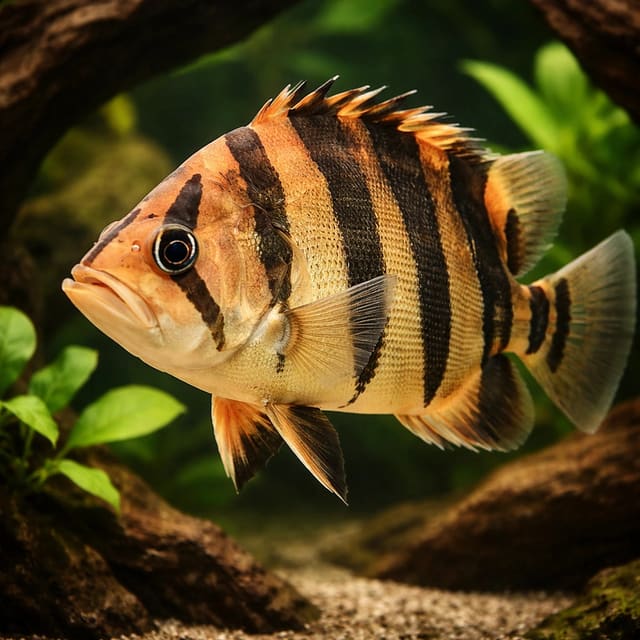
Datnioides polota
£47.99
A rare brackish oddity with split-level vision and real personality. Ideal for experienced keepers seeking a standout species.
Adult size is the maximum length this species reaches at full maturity (scientific sources). The livestock you receive will be younger and smaller — pick a size above for the actual shipping size. Product-photo provenance and any image-specific limitations are stated on the listing.
Anableps anableps
Confirm your email, then we’ll send an availability message for this exact item if it returns within 180 days.
This request is only for this product—no newsletter or other promotions. A mail-provider retry may very rarely duplicate the same availability message. Unconfirmed addresses are removed after 48 hours. See our privacy policy.
A rare brackish oddity with split-level vision and real personality. Ideal for experienced keepers seeking a standout species.
Adult size is the maximum length this species reaches at full maturity (scientific sources). The livestock you receive will be younger and smaller — pick a size above for the actual shipping size. Product-photo provenance and any image-specific limitations are stated on the listing.
Maintain these water conditions for optimal health and vibrant colors
Anableps anableps, commonly known as the Four-eyed Fish or Topminnow, is one of the most unusual live aquarium fish available. Despite the nickname, it does not truly have four eyes; instead, each eye is divided into two functional sections, allowing the fish to see both above and below the waterline at the same time. This remarkable adaptation makes it a genuine conversation piece and a rewarding species for experienced aquarists who enjoy keeping something a little different.
Offered here at 4–6 cm, these juveniles are still developing and will grow into impressive, active fish with a strong surface presence. They are best kept in a carefully managed brackish setup with plenty of swimming space, secure cover, and stable water conditions. Because they are specialised fish, they are not recommended for beginners, but for the right keeper they are fascinating, hardy, and full of character.
At Tropical Fish Co, we supply healthy stock with a live arrival guarantee and fast UK delivery, so your fish arrive in the best possible condition.
| Attribute | Details |
|---|---|
| Scientific name | Anableps anableps |
| Common name | Four-eyed Fish |
| Care level | Expert |
| Temperament | Semi-aggressive |
| Adult size | Up to 30 cm |
| Minimum tank size | 300 litres |
| Temperature | 24–28°C |
| pH | 7.0–8.5 |
| Diet | Omnivore with strong carnivorous tendency |
| Tank region | Top |
Anableps anableps is native to the tropical Atlantic coast of South America, particularly river mouths, estuaries, mangrove channels, and tidal creeks. In the wild, it lives in shallow, slow-moving waters where fresh and salt water mix. These habitats are often influenced by tides, meaning the fish experiences changing salinity, fluctuating water levels, and strong surface activity.
This species is adapted to life at the water’s edge. It spends much of its time cruising just beneath the surface, where it feeds on insects, small crustaceans, worms, and other foods that fall onto or near the water. Its specialised eyesight helps it spot prey both above and below the surface, making it a highly efficient surface hunter.
Understanding this natural history is essential for success in the aquarium. A stable brackish environment, open swimming space, and a secure lid are all important, as these fish are active, powerful jumpers and can be startled by movement above the tank.
For long-term care, Anableps anableps should be housed in a spacious aquarium with a large surface area. A tank of 300 litres or more is recommended for a single specimen or a carefully planned group, with more space needed for multiple adults. The aquarium should be long rather than tall, giving the fish room to cruise and turn comfortably near the surface.
Use a brackish setup with marine salt mixed to a suitable specific gravity for the species and the fish’s age and source. Juveniles are often kept at lighter brackish levels, while adults may require stronger brackish conditions. Because requirements can vary, it is best to maintain stable water chemistry and avoid sudden changes. Good filtration is essential, but flow should not be so strong that it constantly disrupts the surface.
Recommended parameters are:
Decor should be practical rather than crowded. Provide open swimming space, some driftwood or mangrove-style hardscape, and hardy brackish-tolerant plants or artificial planting if desired. Floating cover can help reduce stress, but leave plenty of open surface access for feeding and breathing. A tight-fitting lid is absolutely essential, as these fish can leap.
Regular maintenance is vital. Partial water changes, careful monitoring of salinity, and excellent mechanical filtration will help keep the aquarium stable. As with all brackish species, avoid using freshwater-only tank mates or decor that will deteriorate in saline water.
In nature, the Four-eyed Fish is an opportunistic feeder, taking a wide range of small animal foods from the water surface and nearby shallows. In the aquarium, it should be offered a varied diet with a strong meaty component. Suitable foods include quality floating pellets, marine or brackish carnivore sticks, frozen bloodworm, mysis, chopped prawn, krill, insect larvae, and other appropriately sized frozen or live foods.
Because this species feeds at the surface, floating foods are especially useful. Offer small portions several times a day rather than one large feeding, particularly for younger fish. A varied diet helps maintain condition, colour, and growth. Avoid overfeeding, as excess food can quickly foul a brackish aquarium and affect water quality.
Where possible, include some plant-based matter or spirulina-containing foods as part of a balanced omnivorous regime, but do not rely on vegetable foods alone. This is a fish with clear carnivorous tendencies and will thrive best on protein-rich fare.
Anableps anableps is best kept with other robust brackish species that can tolerate similar water conditions and are not small enough to be viewed as food. Suitable companions may include larger brackish gobies, scats, monos, archerfish, and other similarly sized fish that share compatible salinity and temperature requirements. However, compatibility depends heavily on tank size, individual temperament, and the maturity of the fish.
Choose tank mates carefully. This species can be assertive, especially at feeding time, and may nip at slower or long-finned fish. It is also a surface specialist, so avoid species that occupy the same niche if space is limited. In smaller aquariums, it is usually best kept singly.
Do not house with tiny fish, shrimp, or delicate freshwater species. They are likely to be stressed, outcompeted, or eaten. Avoid very aggressive tank mates as well, as these can damage the fish’s fins and cause chronic stress.
For best results, create a species-focused or carefully planned brackish community with ample room, strong filtration, and plenty of visual barriers only where they do not interfere with surface swimming.
When you buy from Tropical Fish Co, you are choosing a specialist retailer that understands the needs of unusual and high-value aquarium species. We prioritise healthy stock, careful packing, and reliable service, so your fish arrive in excellent condition. Every order is backed by our live arrival guarantee, and we offer fast UK delivery to help reduce transit stress and get your new fish settled quickly.
We also aim to provide clear, practical care information so you can prepare the right environment before your fish arrives. For a species as distinctive as Anableps anableps, that support matters. Whether you are building a dedicated brackish display or adding a true oddball to an established collection, we are here to help you keep your fish successfully.
Choose Tropical Fish Co for quality livestock, dependable delivery, and expert support for specialist aquarium species.
No reviews for this item yet. Bought one? Honest reviews only, good or bad.
What customers say about ordering from us
Easy website plenty of info on fish your buying great to pick a time slot
TRACEY DURRANT · 7 Oct 2026
Got some lovely fish thank you
Kevin Mackie · 7 Oct 2026
Reviews of our shop, collected by Judge.me, an independent third-party review collector. Newest first.