Frecklefin eel (Macrognathus aculeatus)
23–27°C · pH 6.5–7.5
£20.99

A peaceful, burrowing Southeast Asian spiny eel with striking markings and a fascinating nocturnal personality. Moderate care, peaceful. 24-28C, pH 6.0-7.5.
Adult size is the maximum length this species reaches at full maturity (scientific sources). The livestock you receive will be younger and smaller. Product-photo provenance and any image-specific limitations are stated on the listing.
Macrognathus siamensis
Confirm your email, then we’ll send an availability message for this exact item if it returns within 180 days.
This request is only for this product—no newsletter or other promotions. A mail-provider retry may very rarely duplicate the same availability message. Unconfirmed addresses are removed after 48 hours. See our privacy policy.
A peaceful, burrowing Southeast Asian spiny eel with striking markings and a fascinating nocturnal personality. Moderate care, peaceful. 24-28C, pH 6.0-7.5.
Adult size is the maximum length this species reaches at full maturity (scientific sources). The livestock you receive will be younger and smaller. Product-photo provenance and any image-specific limitations are stated on the listing.
Maintain these water conditions for optimal health and vibrant colors
The tropical fish UK aquarist seeking an unusual, characterful species will find Macrognathus siamensis, commonly known as the peacock eel, a peaceful, burrowing Southeast Asian spiny eel with striking markings and a fascinating nocturnal personality. Native to freshwater habitats throughout Southeast Asia, this species displays attractive patterning, elongated body shape, and engaging behaviour that makes it a favourite among enthusiasts of oddball fish. Available for sale UK hobbyists will find the peacock eel a rewarding addition to peaceful community aquariums, though its burrowing habits, escape artistry, and specialized care requirements mean it is best suited to aquarists with some experience. At 10-12cm juveniles are already displaying characteristic behaviour and will grow to 25cm at maturity.
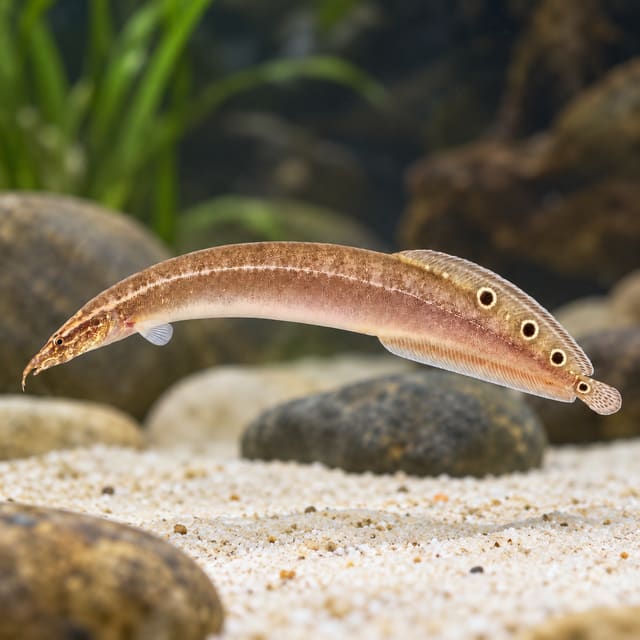
Macrognathus siamensis displays an elongated, eel-like body with beautiful patterning consisting of dark spots or ocelli along the dorsal surface, often arranged in rows that give the species its common name. The body is olive-brown to golden-tan with lighter ventral colouration and subtle iridescent highlights. The dorsal, caudal, and anal fins are continuous and form a single ribbon-like fin along the posterior body. The snout is pointed with a distinctive fleshy proboscis used for probing substrate. At 10-12cm juveniles already show the characteristic patterning, which intensifies as they mature. The overall appearance is streamlined and graceful, adapted for burrowing and navigating tight spaces.
Native to freshwater rivers, streams, floodplains, and marshes throughout Southeast Asia, Macrognathus siamensis inhabits soft, muddy or sandy substrates with abundant submerged vegetation, wood, and leaf litter. These environments feature warm, slightly acidic to neutral water with low to moderate flow and complex habitats providing numerous hiding and burrowing opportunities. In the wild, peacock eels are nocturnal and spend daylight hours buried in substrate or hidden among roots and vegetation, emerging at dusk to hunt small invertebrates, worms, and crustaceans. Recreating these conditions with soft substrate and hiding places supports natural behaviour and reduces stress.
Provide a minimum of 120 litres with ample floor space for burrowing and exploration. Use a soft, fine substrate such as sand to allow natural burrowing behaviour without damaging the delicate skin. Furnish the aquarium with driftwood, smooth rocks, caves, PVC tubes, and live plants such as Java fern and Anubias to create hiding places and visual security. Install a tightly fitting lid with no gaps, as spiny eels are exceptional escape artists and can squeeze through surprisingly small openings. Maintain efficient filtration with gentle to moderate water flow. Perform regular partial water changes to maintain excellent water quality. Subdued lighting or floating plants help replicate natural shaded habitats.
Macrognathus siamensis is a carnivore that requires a varied meaty diet. Offer live or frozen foods such as bloodworms, blackworms, brine shrimp, daphnia, and chopped earthworms. Many individuals can be trained to accept sinking carnivore pellets or shrimp pellets over time, though live and frozen foods are strongly preferred. Feed in the evening or after lights out, as this species is nocturnal and most active at night. Use a feeding pipette or target feed to ensure the eel receives adequate nutrition, as it may be outcompeted by faster tankmates. A varied, protein-rich diet promotes healthy growth and vibrant colouration.
Peacock eels are peaceful, shy, and primarily nocturnal. During daylight hours, they remain buried in substrate with only the head visible or hidden completely among décor. As light levels drop, they emerge to explore and hunt for food, using their sensitive proboscis to probe substrate and crevices. This species is non-aggressive towards tankmates but may accidentally consume very small fish during nocturnal foraging. They are curious and will investigate all areas of the aquarium. Despite their eel-like appearance, they are relatively slow swimmers and rely on stealth rather than speed. Provide plenty of hiding places to help the eel feel secure.
Compatible with peaceful small-to-medium community fish that will not fit in its mouth, including tetras, rasboras, barbs, peaceful loaches, corydoras, and gouramis. Non-aggressive bottom dwellers of similar size may coexist if the aquarium is spacious and well-structured. Calm schooling fish that occupy mid to upper water levels are ideal. Avoid aggressive or fin-nipping fish, very small fish and fry that may be accidentally consumed, large predatory fish, and overly boisterous bottom dwellers that outcompete it for food or territory. Choose tankmates that appreciate similar water conditions and are not overly competitive at feeding time.
Breeding is uncommon in home aquaria and little reliable captive-breeding information is available. Spawning likely requires excellent conditioning with live foods, seasonal environmental cues such as temperature and water chemistry changes, and spacious, well-maintained quarters. There are few documented cases of successful home breeding, and most aquarists keep Macrognathus siamensis for display rather than reproduction. Dedicated enthusiasts with appropriate facilities, extensive experience, and thorough research may achieve success, though this remains rare in the hobby. Most specimens in the trade are wild-caught or commercially farmed.
Provide a soft sandy substrate for burrowing and avoid sharp decor that can damage the delicate, scaleless skin. Ensure a tightly fitted lid with no gaps or openings, as spiny eels are excellent escape artists and can squeeze through surprisingly small spaces. Keep water clean and stable, as eels are sensitive to poor water quality and elevated ammonia or nitrite. Avoid medications containing copper or formalin, which can harm scaleless fish. Target feed in the evening to ensure the eel receives adequate nutrition. This species is best suited to aquarists with moderate experience and the ability to provide specialized care and careful observation.
Tropical Fish Co is a trusted UK supplier of healthy, vibrant spiny eels including Macrognathus siamensis peacock eels. Each fish is carefully selected for bold markings, active behaviour, and robust health. Our livestock is quarantined and health-checked before dispatch, ensuring you receive only the finest specimens. We provide expert care advice, detailed species information, and ongoing support to help you succeed with specialist fish. With fast, secure delivery across the UK and a commitment to sustainable, responsible fishkeeping practices, Tropical Fish Co is your reliable partner for premium tropical fish and aquatic livestock.
No reviews for this item yet. Bought one? Honest reviews only, good or bad.
What customers say about ordering from us
I have a small group of long finned mountain minnows. So was delighted to be able to order ten of this variety to increase the genetics in my tank . The ones I recieved are healthy but it’s to early to give a verdict on wether they are of a long finned type since they are small currently.
Gordon Walker · 23 Sept 2026
100% success travel and "installation". Pleased with quality of purchase. The Siamese fighter a bit "shy" so have not yet seen him at his best yet but looking good. Happy customer. GG
George E Garratt · 21 Sept 2026
Reviews of our shop, collected by Judge.me, an independent third-party review collector. Newest first.