Moderate
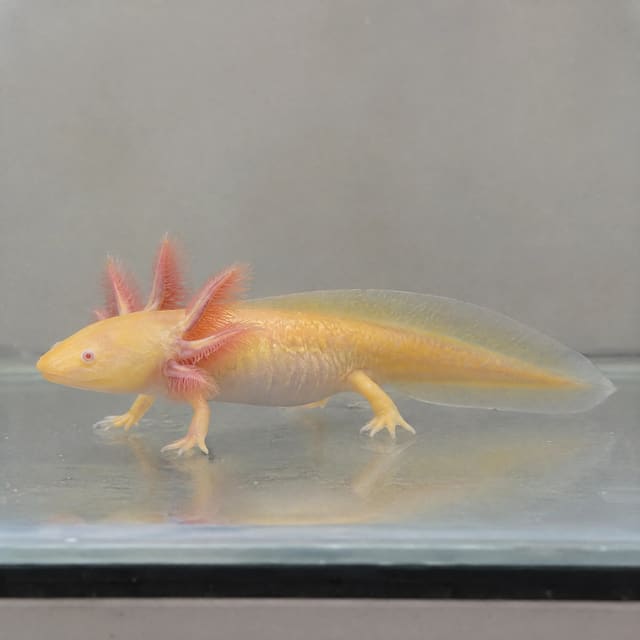
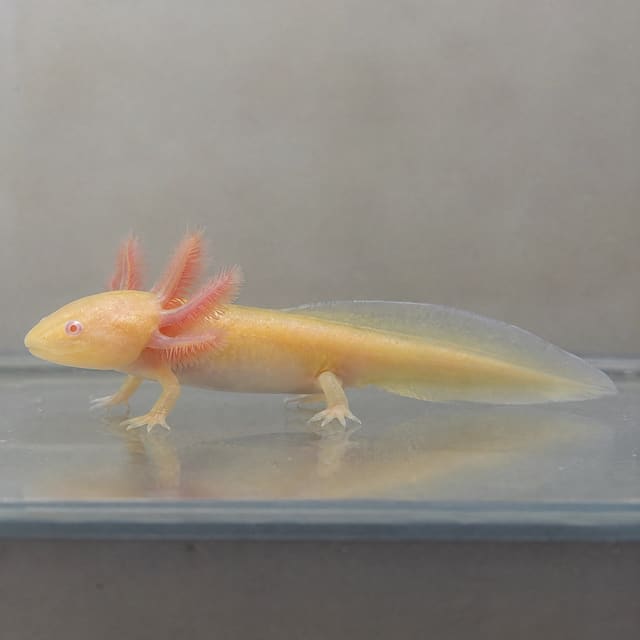
Golden Albino Axolotl (Ambystoma mexicanum)
14–22°C · pH 6.8–7.6 · 150L
£22.99
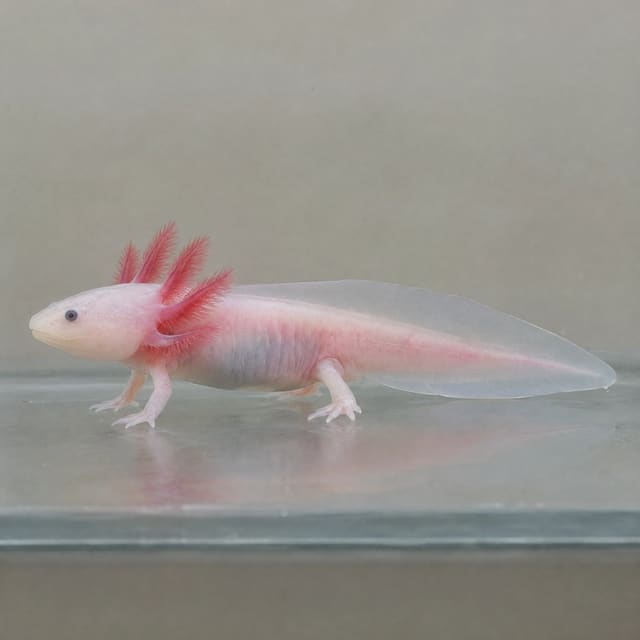
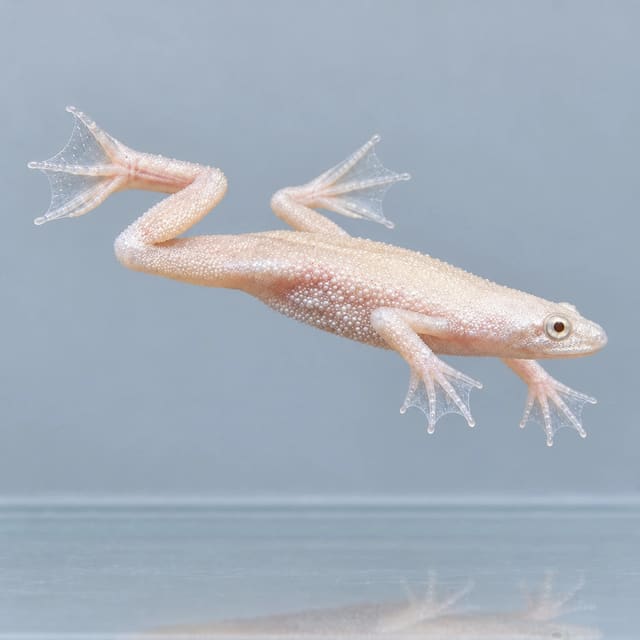
The Pink Leucistic Axolotl is the classic pale form of Ambystoma mexicanum, with pinkish-white skin, pink-red feathery gills and dark eyes. It is a captive-bred cold-water amphibian for a species-only tank of 90 litres or more at about 16–18°C, with no heater. Sold individually at 6–8 cm or 9–10 cm.
Adult size is the maximum length this species reaches at full maturity (scientific sources). The livestock you receive will be younger and smaller — pick a size above for the actual shipping size. Product-photo provenance and any image-specific limitations are stated on the listing.
Ambystoma mexicanum
The Pink Leucistic Axolotl is the classic pale form of Ambystoma mexicanum, with pinkish-white skin, pink-red feathery gills and dark eyes. It is a captive-bred cold-water amphibian for a species-only tank of 90 litres or more at about 16–18°C, with no heater. Sold individually at 6–8 cm or 9–10 cm.
Adult size is the maximum length this species reaches at full maturity (scientific sources). The livestock you receive will be younger and smaller — pick a size above for the actual shipping size. Product-photo provenance and any image-specific limitations are stated on the listing.
Read the full care guidance when planning conditions for your aquarium.
The Pink Leucistic Axolotl is the classic pale form of the axolotl, Ambystoma mexicanum, a salamander in the family Ambystomatidae that keeps its larval shape for life. A leucistic axolotl has pinkish-white skin, three pairs of feathery external gills that look pink to red because blood shows through them, a translucent tail fin and dark eyes. It is a cold-water amphibian that needs cool, clean water and no heater, which makes its care very different from that of the tropical fish and frogs most aquarium keepers know.
Axolotls are sometimes called Mexican walking fish, but they are not fish. They normally never complete the change into a land-living salamander: Practical Fishkeeping explains that they do not produce the thyroxine that would trigger it, and that injecting the hormone can force a change into an animal resembling a tiger salamander. That is not something any keeper should attempt. Instead, axolotls grow, breed and live their whole lives underwater with gills, a tail fin and four short legs.
The leucistic colour comes from the recessive "white" gene. In a 2017 study in Scientific Reports, Woodcock and colleagues traced it to the gene for endothelin 3, which pigment cells need in order to develop and spread through the skin. White axolotls are typically almost free of skin pigment cells, although some adults develop patches of dark pigment cells, which is why freckles can appear on the head and back as a leucistic axolotl grows. A single white axolotl was among the animals a French expedition collected at Xochimilco, Mexico, in 1863, the founders of the laboratory axolotl population. Albino axolotls carry a different gene, tyrosinase, and the same study found that this albino gene entered the laboratory stock from tiger salamander DNA.
| Form | Skin | Eyes |
|---|---|---|
| Leucistic (this listing) | Pinkish white, sometimes with dark freckles on the head and back | Dark |
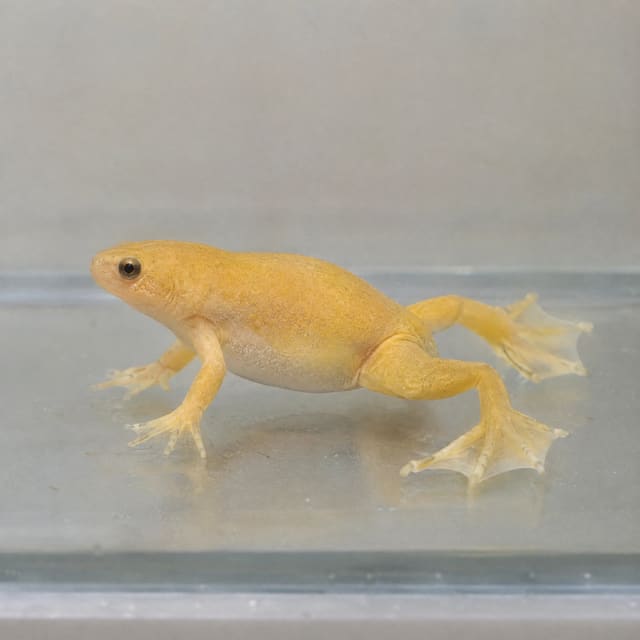
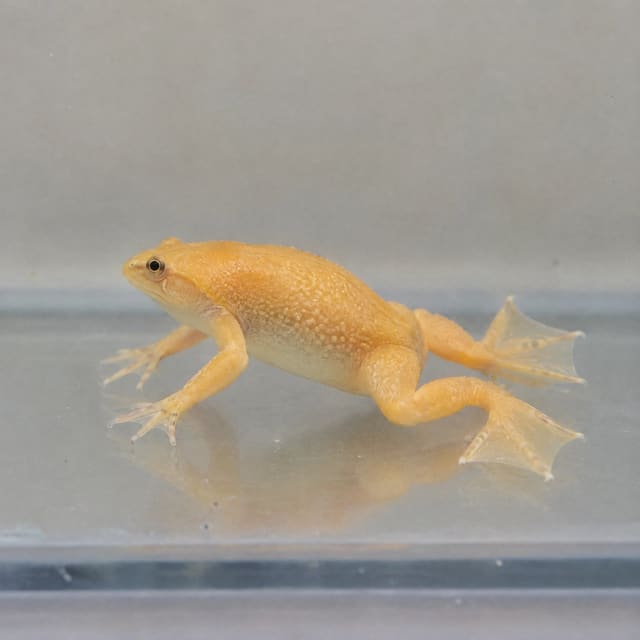
| Golden albino | Golden yellow | Pale, without dark pigment |
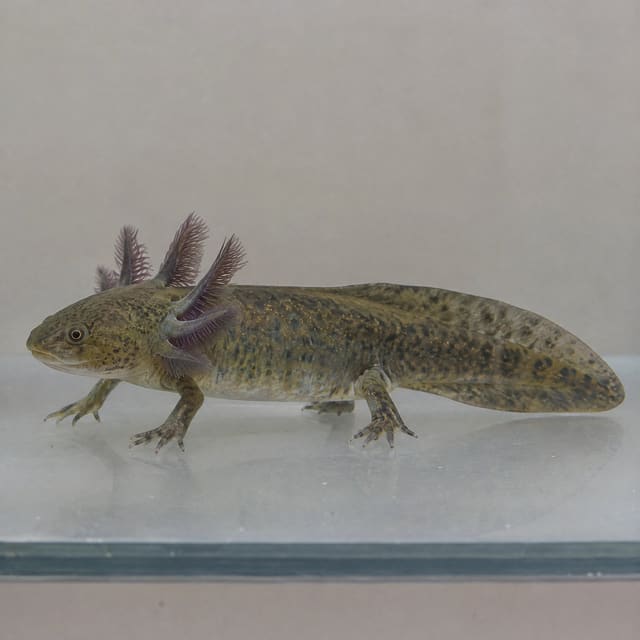
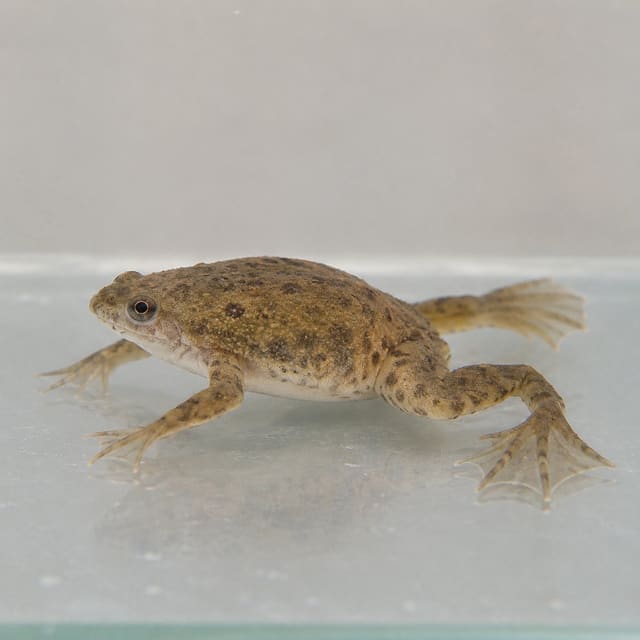
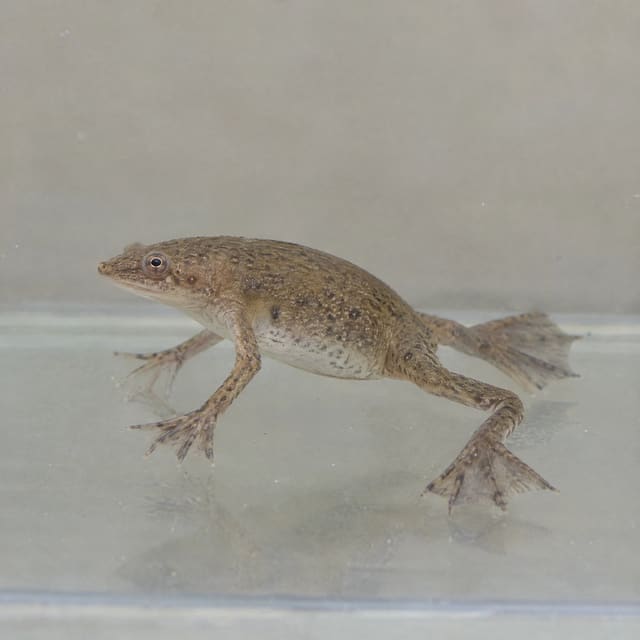
| Wild type | Dark olive, brown or grey with darker speckling | Dark |
Compare our Golden Albino Axolotl and Wild Type Green Axolotl, try the Mixed Colour Axolotl if you are happy with any colour, or see all our axolotls together. All colour forms are the same species with the same care.
The size you select is the size supplied, not the adult size. Practical Fishkeeping says most axolotls top out at around 25 cm, with rare individuals much larger, and OATA gives up to 30 cm. Plan the aquarium for a 25–30 cm adult from the start.
Axolotls do not need company. OATA says they can be kept singly or in groups, and Practical Fishkeeping notes that they are usually kept alone because animals kept together may bite each other's gills and feet. If you want more than one, buy them at the same size, provide extra floor space and a hiding place for each, and keep them well fed: juveniles can be cannibalistic, and research colonies raise young axolotls apart because the largest nip the limbs and tails of smaller siblings. Never put a 6–8 cm juvenile in with a larger axolotl.
Check our delivery information before ordering, and have the cooled, cycled aquarium ready and tested before the axolotl arrives.
Temperature is the most important part of axolotl care. Practical Fishkeeping gives 16–18°C as ideal, and a 2023 research husbandry chapter by Yandulskaya and Monaghan agrees, adding that water held constantly above 18°C raises the risk of body-cavity swelling and that room air should stay below 24°C. OATA's broader group guidance for axolotls is 10–22°C. A healthy axolotl copes with a few warm days above 20°C, but Practical Fishkeeping warns that prolonged heat is stressful and shortens their lives.
No heater is needed. Choose a cool room, keep the tank away from radiators, sunny windows and conservatories, and keep a thermometer in the water so you see a rise before the axolotl suffers from it.
OATA recommends at least 100 litres for a small group of axolotls, and Practical Fishkeeping gives 90 litres as the minimum for a single adult, with a footprint of about 100 × 45 cm. Depth matters less than floor space, because axolotls walk and rest on the bottom. Longer and wider is always better, and a bigger volume also holds its temperature more steadily in summer. Our tank volume calculator turns your tank's dimensions into litres.
Fit a secure lid. OATA advises a cover for all aquarium amphibians to stop escapes, and Practical Fishkeeping suggests a glass lid kept firmly in place.
Axolotls feed by sucking food in with a sudden gulp, and small stones can go in with it. Practical Fishkeeping advises against gravel because swallowed pieces can block the gut, although it notes that how often this kills axolotls is not well recorded. OATA recommends either a bare floor or a base of sand, to protect the delicate skin and gills. Fine, smooth, lime-free sand a few millimetres deep, or no substrate at all, are the safe choices.
| Item | What to use |
|---|---|
| Floor | Bare glass or a thin layer of fine, smooth sand |
| Hides | Smooth ceramic caves or pipes big enough for an adult to turn round in |
| Stones | Large, rounded pebbles too big to swallow |
| Plants | Cold-tolerant plants such as hornwort, or Anubias fixed to décor |
| Lighting | Dim or none; low-heat LEDs if you grow plants |
Avoid anything with sharp edges: axolotl skin and gills damage easily. OATA recommends keeping amphibian tanks out of direct sunlight and away from loud noise and vibration, with relatively dim lighting so the animals are not stressed.
Axolotls like neutral to slightly alkaline, moderately hard water. Practical Fishkeeping says very soft water is unsuitable; in soft-water areas it suggests adding salts such as Holtfreter's solution or a Central American cichlid salt mix to raise the mineral content.
| Value | OATA | Practical Fishkeeping | Research colony (2023) |
|---|---|---|---|
| Temperature | 10–22°C | 16–18°C ideal | 16–18°C ideal |
| pH | 7.0–8.0 | 7.0–8.0 | 7.0–7.5 |
| General hardness | 8–18°dH | 5–20 dGH | Not given |
UK tap water ranges from very soft to very hard, so test yours before you buy. Our water matcher compares your readings with these ranges, and our water chemistry guide explains each value. Always treat tap water with a conditioner that removes chlorine and chloramine, because chloramine does not gas off from water left to stand.
| Reading | Target |
|---|---|
| Ammonia | Zero mg/l |
| Nitrite | Zero mg/l |
| Nitrate | No more than 20 mg/l above your tap water |
OATA warns that axolotls can be stressed by even small amounts of ammonia and nitrite, and that poor water is a common route to disease. Test every week, and immediately if the axolotl's behaviour or gills change.
Axolotls prefer still water. Practical Fishkeeping recommends a filter that can handle the waste of a large, messy carnivore without producing a strong outflow; an internal filter with adjustable flow or a large air-driven sponge filter both work. Mature the filter before the axolotl arrives; our nitrogen cycle guide explains how to build up the bacteria that process waste.
Axolotls are carnivores. Practical Fishkeeping lists earthworms, bloodworm, fish, seafood and good-quality pellets as suitable foods, and OATA adds larger items such as prawns, mussels and cockles for bigger animals, with specialist prepared pellets for vitamins. Young axolotls of the sizes we sell take small, soft foods such as frozen red mosquito larvae (bloodworm) and small sinking pellets such as Tropical Axolotl Sticks. As they grow, add chopped and later whole live earthworms and frozen mussel meat. Practical Fishkeeping sees no compelling reason to feed red meat.
Sources differ on how often to feed. OATA's general advice for aquatic amphibians is no more than once a day, leaving food for about 15 minutes and then removing leftovers. The research colony described by Yandulskaya and Monaghan feeds adults pellets two or three times a week. We suggest small daily meals while the axolotl is growing, as OATA describes, and fewer, larger meals for an adult, provided it keeps a well-rounded body.
Before arrival, check that the tank is cycled, that ammonia and nitrite are zero and that the water is cool and steady. OATA's floating-bag method works for axolotls: switch the light off, float the unopened bag for about 10 minutes, then add small amounts of tank water to the bag over at least 30 minutes, and release the axolotl with as little bag water as possible.
Practical Fishkeeping advises against handling axolotls, because their skin and gills damage easily and they dislike it. If you must move one, guide it gently into a container rather than lifting it out with your hands.
| Checkpoint | What to do |
|---|---|
| Before arrival | Test the water and temperature; check the lid and hides |
| Day of arrival | Lights off, slow acclimatisation, release gently |
| First meal | Next day, a small portion; remove leftovers after 15 minutes |
| Every day | Check temperature, gills, skin and appetite |
| End of week | Full water test and the first 25% water change |
OATA advises keeping axolotls in species-only aquariums. Axolotls will eat any fish small enough to fit in their mouths, and fish too large to be eaten are likely to nip the axolotl's gills. They also need much cooler water than tropical fish and frogs, so there is no sensible compromise temperature.
| Suits | Avoid |
|---|---|
| Other axolotls of the same size, with extra space and hides | Any fish, whatever its size |
| A cool, quiet room and dim lighting | Small animals of any kind that fit in an axolotl’s mouth |
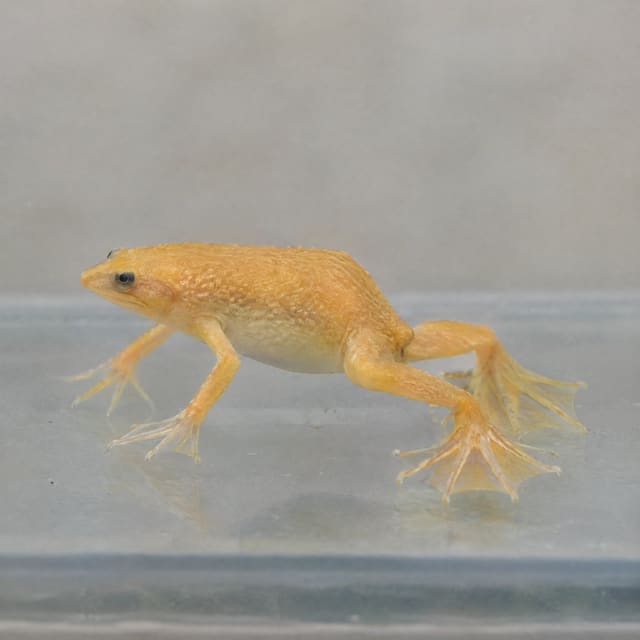
| A bare floor or fine sand | Tropical frogs, which need 22–25°C |
| A species-only group planned for adult size | Axolotls of very different sizes |
Our loaches, oddballs and amphibians collection and aquatic amphibians section group unusual animals with very different needs: browsing them together does not mean they can share a tank.
Yandulskaya and Monaghan list the signs that an axolotl is unwell: floating at the surface, refusing food, shedding skin, a curled tail, paler and smaller gill branches and paler colouring. OATA adds reddening of the skin, white spots, fluffy growths, ulcers and swelling of the body and limbs. Poor water quality and heat are the commonest causes, so test the water first.
| If you see | Do this |
|---|---|
| Floating, refusing food or a curled tail | Check temperature, ammonia and nitrite at once |
| Paler, smaller gills | Check temperature and water quality; review stocking and flow |
| Reddened skin, white spots or fluffy growths | Test the water and contact a vet who treats amphibians |
| Bitten gills or feet | Separate animals of different sizes; injuries usually heal in good water |
OATA advises half doses of aquarium treatments for amphibians unless the manufacturer says otherwise, and recommends a vet who specialises in amphibians for anything that good water does not fix. Practical Fishkeeping notes that gill and foot injuries from fights can heal in good conditions. Wash your hands before and after working in the tank, as OATA advises.
In the wild, axolotls live only in the remaining canals and lakes of Xochimilco and Chalco on the edge of Mexico City. The San Diego Zoo Wildlife Alliance's summary of the 2019 IUCN assessment lists the species as Critically Endangered, with a decreasing population thought to number only 50–1,000 adults, threatened by polluted and drying canals and by introduced carp and tilapia. Pet axolotls come from captive breeding, not from the wild.
The axolotl is listed on CITES Appendix II and in Annex B of the wildlife trade regulations. GOV.UK guidance says no Article 10 certificate is needed to own or trade Annex B specimens in Great Britain, but the seller must be able to show they were obtained lawfully. Keep your order confirmation: if you ever rehome or sell your axolotl, it is your evidence.
The Animal Welfare Act 2006 gives owners in England and Wales a legal duty of care to meet their animal's needs, and section 11 makes it an offence to sell an animal to anyone believed to be under 16, so orders must be placed by an adult. OATA reminds keepers never to release aquarium animals or plants into the wild: it is illegal and can harm native wildlife.
OATA describes the courtship: the male deposits sperm packets (spermatophores) and encourages the female to pick them up, and she then lays fertilised eggs on plants. The parents eat eggs and young, so eggs must be removed. Practical Fishkeeping notes that breeding usually happens in winter and that clutches can exceed 1,000 eggs. The young need baby brine shrimp and must be graded by size, because cannibalism is common. Only pair axolotls if you can house and rehome the young.
No. A leucistic axolotl carries the recessive white gene: its skin is pinkish white but its eyes stay dark. Albino axolotls carry a different gene that removes dark pigment altogether, so they have pale eyes and white or golden skin.
No. Axolotls are cold-water amphibians. Practical Fishkeeping and a 2023 research husbandry guide both give 16–18°C as ideal, and OATA gives 10–22°C. The challenge in the UK is keeping the water cool enough in summer, not warm enough.
Practical Fishkeeping says most top out at about 25 cm and OATA gives up to 30 cm. The 6–8 cm and 9–10 cm sizes are juveniles, so plan the tank for the adult.
Practical Fishkeeping gives 90 litres as the minimum for one adult, with a footprint of about 100 × 45 cm, and OATA recommends at least 100 litres for a small group. Floor space matters more than depth.
No. OATA advises species-only aquariums: axolotls eat any fish that fits in their mouth, and larger fish nip their gills. Most tropical fish also need far warmer water.
They are carnivores. Suitable foods include earthworms, bloodworm, sinking axolotl pellets or sticks, and mussel, cockle or prawn for larger animals. Feed no more than once a day and remove leftovers after about 15 minutes.
Yes, if they are the same size and have extra space and hiding places. Axolotls do not need company, and young ones of different sizes may bite or even eat each other.
Yes. Pet axolotls are captive bred. The species is listed on CITES Appendix II and in Annex B of the wildlife trade rules, which needs no Article 10 certificate. In England and Wales animals may not be sold to anyone under 16.
No reviews for this item yet. Bought one? Honest reviews only, good or bad.
What customers say about ordering from us
Easy website plenty of info on fish your buying great to pick a time slot
TRACEY DURRANT · 7 Oct 2026
Got some lovely fish thank you
Kevin Mackie · 7 Oct 2026
Reviews of our shop, collected by Judge.me, an independent third-party review collector. Newest first.
Moved by UK carriers licensed to handle live animals
Hand-packed with oxygen bags, poly box, heat pack
Email photos the same day; an optional unboxing video helps us review problems faster — claim terms apply
Klarna & PayPal Pay in 3 at checkout