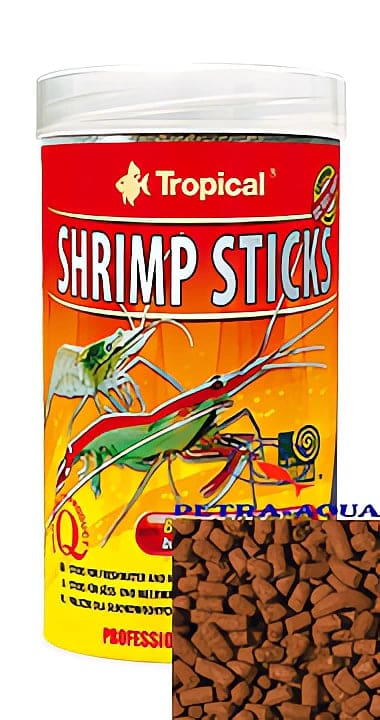
Tropical Shrimp Sticks
£13.99

Tropical Axolotl Sticks are 2 x 7-8.5mm sinking food for axolotls and other animal-eating aquatic amphibians. One 250ml / 135g tub; 46% crude protein.
Tropical Axolotl Sticks are 2 x 7-8.5mm sinking food for axolotls and other animal-eating aquatic amphibians. One 250ml / 135g tub; 46% crude protein.
Tropical Axolotl Sticks are a sinking food for Mexican axolotls and other aquatic amphibians whose diets contain animal material. This listing is for one 250 ml / 135 g tub. The manufacturer specifies sticks measuring 2 mm across and 7–8.5 mm long, so the physical format is clear before you choose it for an individual animal.
The formula contains fish and fish products, molluscs and crustaceans, vegetable ingredients, oils, yeasts and minerals. Tropical's published analysis declares 46% crude protein, 9% crude fat, 2.3% crude fibre and 10% moisture.
This is specialist dry amphibian food, not live food and not a live animal listing. It sinks to the feeding area and can be offered in small observed portions. The full composition, additives, feeding directions and evidence limits are set out below so you can compare the tub accurately rather than relying on keyword-led promises.
One product quantity is one sealed can with a stated volume of 250 ml and a net weight of 135 g. It is not a multipack, a live-food culture or a frozen blister. The quantity selector controls how many individual tubs are added to the basket.
Volume and weight are both shown because dry feeds settle differently inside their packaging. A 250 ml container does not mean 250 g of food. Use the declared 135 g net weight when comparing value with another axolotl food, and compare stick dimensions as well as package size when deciding whether a product suits the animal you keep.
The front image shows the Tropical retail tub. The official manufacturer page identifies this package as item 11614 with barcode 5900469116142. Those identifiers are supplied here only to confirm the exact formula; the SKU is deliberately excluded from the customer-facing title and search metadata.
| Product point | Verified detail | Not assumed |
|---|---|---|
| Sale unit | One 250 ml / 135 g tub | A multipack or 250 g of food |
| Food form | Sinking sticks measuring 2 x 7–8.5 mm | Floating flakes or a soft live-food portion |
| Use | Animal-eating aquatic amphibians named by Tropical | Every amphibian, fish or life stage |
| Analysis | 46% protein, 9% fat, 2.3% fibre, 10% moisture | A guaranteed health outcome |
Tropical describes Axolotl Sticks as high-protein sinking food for Mexican axolotls, Iberian ribbed newts and other aquatic amphibians whose diets contain animal material. The official examples are the Mexican axolotl (Ambystoma mexicanum), tiger salamander (Ambystoma tigrinum) and Iberian ribbed newt (Pleurodeles waltl). The detailed manufacturer description also mentions African clawed frogs.
That intended-use statement is more precise than saying the product is suitable for all newts, frogs or salamanders. Aquatic amphibians differ in life stage, mouth size, feeding response and diet. A named group on a manufacturer page does not remove the need to check the individual animal and the directions on the physical tub.
The Mexican axolotl collection and broader aquatic amphibian collection help identify the relevant animals on this site. They are livestock pages, not evidence that every animal listed there should be fed the same number of sticks.
The sticks are designed to sink rather than remain at the surface. That puts the food in a feeding zone where many axolotls and aquatic newts can locate it. Sinking is a physical product characteristic, not a promise that every animal will accept the food immediately or that no particle will be left behind.
Each stick is approximately 2 mm by 7–8.5 mm. The width and length allow a more informed life-stage decision than generic words such as small or easy to portion. Look at the animal's mouth size and normal feeding behaviour. Do not assume that a food designed for axolotls is automatically a first food for newly hatched larvae.
A feeding dish may make settled sticks easier to observe and recover in some aquariums, but it is optional equipment rather than a requirement printed by the manufacturer. Likewise, tongs can help position food but are not needed for every keeper. The core method is simpler: offer a small amount, watch whether it is eaten and prevent repeated leftovers.
The stick dimensions help you assess suitability before feeding. They do not create a universal number of sticks per animal. Portion size still depends on the animal, the number being fed and the rest of the feeding plan.
The official composition begins with fish and fish products. It also includes products of vegetable origin, molluscs and crustaceans, vegetable protein extracts, cereals, oils and fats, yeasts and mineral feed materials. This is a formulated compound food, not a single-ingredient fishmeal pellet.
Two ingredients receive exact published quantities: red pepper extract at 4,400 mg/kg and Beta-1,3/1,6-glucan at 1,000 mg/kg. Astaxanthin is separately declared as a colour additive at 60 mg. These values are reproduced from Tropical's official product data rather than estimated from the package artwork.
| Composition group | Manufacturer declaration |
|---|---|
| Animal ingredients | Fish and fish products; molluscs and crustaceans |
| Plant ingredients | Products of vegetable origin, including red pepper extract 4,400 mg/kg |
| Protein sources | Vegetable protein extracts alongside the declared animal ingredients |
| Other feed materials | Cereals; oils and fats; mineral feed materials |
| Yeasts | Yeasts, including Beta-1,3/1,6-glucan 1,000 mg/kg |
Keep the complete ingredient list in mind when an animal has a prescribed diet or when a keeper needs to avoid contact with fish, mollusc or crustacean material. The name Axolotl Sticks describes the product's intended use; it does not mean the formula contains only one animal ingredient.
Tropical publishes four analytical values for this formula. They provide a factual basis for comparison with another prepared food. They do not by themselves determine the ideal portion, feeding frequency or outcome for an individual animal.
| Analytical constituent | Declared amount | How to use the figure |
|---|---|---|
| Crude protein | 46.0% | Compare with the complete analysis and intended use of another amphibian food. |
| Crude fat | 9.0% | Consider within the whole feeding plan rather than as a stand-alone quality score. |
| Crude fibre | 2.3% | Use as a declared composition value, not as a digestion guarantee. |
| Moisture | 10.0% | Confirms this is a dry prepared food rather than live or frozen feed. |
The 46% protein figure is relevant to searches for high-protein axolotl pellets, but the page does not turn it into a medical or growth claim. Protein percentage, ingredient sources, stick size, total intake and husbandry all matter. A higher number is not automatically better for every animal or feeding situation.
The official product data declares vitamins A, D3, E and C, plus iron, zinc, manganese, copper and iodine. It also lists astaxanthin and antioxidants. The figures below preserve the manufacturer's units and should be read with the physical label on the delivered tub.
| Additive | Declared amount |
|---|---|
| Vitamin A | 21,000 IU |
| Vitamin D3 | 1,260 IU |
| Vitamin E | 80 mg |
| Vitamin C | 300 mg |
| Iron | 21.6 mg |
| Zinc | 6.0 mg |
| Manganese | 4.5 mg |
| Copper | 1.0 mg |
| Iodine | 0.13 mg |
| Astaxanthin | 60 mg |
| Antioxidants | Declared; individual antioxidant quantities are not shown on the reviewed page |
Tropical says the combination of animal ingredients supplies protein and essential amino acids, that its vitamin and trace-element balance supports growth and development, and that astaxanthin and red pepper extract intensify colour. It also describes beta-glucan as supporting immunity and regeneration. These are manufacturer claims, not guaranteed outcomes from Tropical Fish Co.
Composition and analytical percentages are product facts. Growth, colour, immunity and regeneration statements are attributed to Tropical. Results are not promised, and the food is not presented as a treatment for illness or injury.
Tropical's direction is to feed small portions several times during the day, adjust the portion to the number of animals in the aquarium and ensure the food is eaten within a few minutes. This is the product-specific direction.
Start with a small observed portion. Watch whether each intended animal finds and swallows the sticks normally. If food remains after the active feeding period, remove what you can and reduce the next portion. If several animals share an aquarium, distribute food so one animal does not take the entire serving while another receives none.
The phrase several times during the day comes from the manufacturer, but the exact routine still needs to account for the animal's age, body condition, health and wider diet. Do not combine several generic feeding charts or add extra meals simply because a search result uses the word daily. Where an aquatic-animal veterinarian or experienced specialist has given a feeding plan, follow that individual advice.
| Manufacturer direction | Practical interpretation | Avoid |
|---|---|---|
| Feed small portions | Offer less first and observe before adding more. | Dropping an assumed full ration without watching. |
| Several times during the day | Use the label as the starting point and fit it to the animal's established plan. | Inventing a universal morning/evening schedule. |
| Adjust to the number of animals | Make sure every intended animal receives food. | Using the same count for one animal and a group. |
| Eaten within a few minutes | Check the floor and feeding area after the active response. | Leaving repeated leftovers to soften and disperse. |
Prepared food adds organic material to the aquarium whether it is marketed as clean or convenient. Uneaten sticks can soften, break apart and add waste. The useful advantage of a sinking measured format is that the keeper can see where much of the food lands and can correct the next portion when leftovers appear.
The University of Kentucky Ambystoma Genetic Stock Center uses sinking pelleted food for juvenile and adult axolotls in its laboratory guidance and stresses avoiding excess food that can foul water. That source provides credible general context, but its laboratory pellet sizes, animal sizes and feeding frequencies are not the label for Tropical Axolotl Sticks. This page keeps the two sources separate.
After feeding, check the floor, under hides and around filter intakes. If food repeatedly remains, reduce the portion or change where it is placed. If water becomes cloudy, ammonia or nitrite is detected, or the animal's behaviour changes suddenly, stop adding food and investigate the aquarium rather than trying to stimulate feeding with more products.
Food remaining after the active feeding period means the portion or presentation needs review. It is not evidence that a larger serving, a stronger scent or a second food should be added immediately.
Suitability depends on the animal's size and ability to take a 2 x 7–8.5 mm sinking stick. Larger juveniles may be able to use a prepared pellet or stick, but newly hatched and very small larvae have different feeding requirements. The manufacturer page does not give a minimum animal length or say that the product is a first larval food.
The Ambystoma Genetic Stock Center describes feeding newly hatched larvae live brine shrimp and introducing its own 3 mm laboratory pellets as larvae grow. That is a useful reminder that feeding changes with development, not permission to copy the laboratory threshold directly onto this 2 mm commercial stick.
Before using the product with a juvenile, compare mouth size with the stick, confirm the life-stage diet and watch the first feeding closely. Do not force a stick into an animal's mouth, assume that soaking makes an oversized food safe, or replace an established larval plan merely because the packaging names axolotls.
Search results for axolotl food mix dedicated pellets, earthworms, live foods, frozen foods and generic carnivore feeds. They are not interchangeable. This tub offers a published formula, stable stick dimensions, dry storage and a repeatable portion format. Live and frozen foods have different handling needs and may play different roles in a well-planned diet.
| Format | What it offers | What to check |
|---|---|---|
| Tropical Axolotl Sticks | Specialist sinking 2 x 7–8.5 mm sticks with a published analysis. | Life-stage fit, portion, acceptance and complete physical label. |
| Other prepared axolotl pellets | Potentially different ingredients, dimensions and analytical values. | Compare the exact label rather than the word axolotl alone. |
| Live animal foods | Movement and a distinct feeding response. | Source, species, hygiene, continuity and role in the whole diet. |
| Frozen foods | Different organisms and textures in stored portions. | Cold storage, ingredients, thawing directions and whether it is complementary. |
| Generic fish food | Many forms and formulas designed primarily for fish. | Do not assume amphibian suitability without clear evidence. |
For format comparison, the Tropical Red Mico freeze-dried bloodworms and Frozen Daphnia Fish Food demonstrate two very different stored-food types. They are not automatic substitutes or recommendations for an individual axolotl. Read each product and feeding role independently.
The broader fish food range and Tropical dried food collection are useful for comparing packages and formulas. A product belonging to a site category does not prove it is suitable for aquatic amphibians; the manufacturer's intended use and the animal's needs remain decisive.
This page does not promise that the food prevents disease, fixes poor appetite, produces a particular growth rate or keeps water clean. It does not say that every adult should receive the same number of sticks or that a juvenile can be identified by a single length. It also does not turn the manufacturer's marketing language about colour or immunity into an independent scientific conclusion.
Tank volume, temperature and filtration are important parts of axolotl husbandry, but this product listing does not invent a product-specific tank-volume minimum, pair volume or ideal feeding temperature. A food page should explain the formula and safe use without pretending to replace a complete care guide.
If an animal repeatedly refuses food, loses condition, regurgitates, floats abnormally or shows another sudden change, test the environment and seek species-appropriate advice. Purchasing a different food is not a diagnosis or treatment.
Use the physical tub as the authority for storage, date and batch information. Keep the lid and label legible, close the container after removing a portion and do not mix the contents with another food in an unlabelled tub. The official web page reviewed for this listing does not publish a shelf-life period, so none is invented here.
Use clean dry utensils where needed and keep aquarium water out of the container. If the seal, smell, appearance or label is unusual when the tub arrives, photograph the product and contact support before feeding. Do not rely on a product page to overrule the date or directions printed on the delivered batch.
The formula contains fish, mollusc and crustacean material. People who need to avoid contact with these ingredients should take appropriate precautions. This is animal feed and should be stored separately from human food preparation items.
The protected gallery image shows the front of the Tropical Axolotl Sticks 250 ml / 135 g tub. Visible label wording identifies the sinking type and highlights astaxanthin, red pepper extract and beta-glucan. The label also states that the food is for axolotls and other aquatic amphibians.
The image is a clear 1600 x 1600 product photograph without a supplier watermark. It remains the first and only gallery image.
Front-of-pack callouts do not replace the full official composition or the label on the delivered batch. The page therefore records the complete published data in text and tables, making the information accessible even when a search engine or screen reader does not interpret small package wording.
Current price and stock are supplied beside the basket controls and at checkout. They are not hard-coded into this description because supplier price and inventory can change. Check the live offer before ordering and use the current delivery information for services, destinations, timings and charges.
When the parcel arrives, confirm that the product is Tropical Axolotl Sticks and that the tub states 250 ml / 135 g. Check the container and label before feeding. If the wrong item arrives or the seal, tub or label is damaged, keep the packaging, take photographs and follow the returns and problem-reporting information.
Eligible customers can use WELCOME10 for 10% off a first order under the current promotion terms. Check the special offers page and checkout for eligibility and combinations. The Live Arrival Guarantee is not used as a benefit claim for this non-living dry food.
| Check | Ready to order means |
|---|---|
| Product understood | You want one 250 ml / 135 g tub of sinking 2 x 7–8.5 mm sticks. |
| Animal match | The intended animal is covered by the manufacturer's use and can take the physical stick size. |
| Formula reviewed | The fish, mollusc, crustacean, plant, cereal, yeast, oil and mineral ingredients suit the feeding plan. |
| Analysis compared | The 46% protein, 9% fat, 2.3% fibre and 10% moisture values have been considered as a whole. |
| Portion plan | You can offer small observed portions and prevent repeated leftovers. |
| Physical label | You will retain and follow the delivered tub's date, batch and complete directions. |
If the animal is too small for the sticks, the ingredients do not fit its diet or a specialist has advised a different food, choose another option. If only a batch or label detail is uncertain, use the help and FAQ page or contact support before feeding rather than relying on another retailer's formula.
This listing uses the official Tropical product page for identity, intended animals, physical form, ingredients, additives, analysis, pack size and feeding directions. The University of Kentucky source is used only for general axolotl husbandry context around pellet feeding, life-stage differences and avoiding excess food. It is not used as though it were this product's label.
Reviewed 21 July 2026. The delivered tub remains the authority for batch, date and any physical-label direction not reproduced on the manufacturer page. Current price, inventory, dispatch choices and promotion eligibility remain dynamic and are supplied by the product page and checkout.
No reviews for this item yet. Bought one? Honest reviews only, good or bad.
What customers say about ordering from us
I have a small group of long finned mountain minnows. So was delighted to be able to order ten of this variety to increase the genetics in my tank . The ones I recieved are healthy but it’s to early to give a verdict on wether they are of a long finned type since they are small currently.
Gordon Walker · 23 Sept 2026
100% success travel and "installation". Pleased with quality of purchase. The Siamese fighter a bit "shy" so have not yet seen him at his best yet but looking good. Happy customer. GG
George E Garratt · 21 Sept 2026
Reviews of our shop, collected by Judge.me, an independent third-party review collector. Newest first.