Moderate
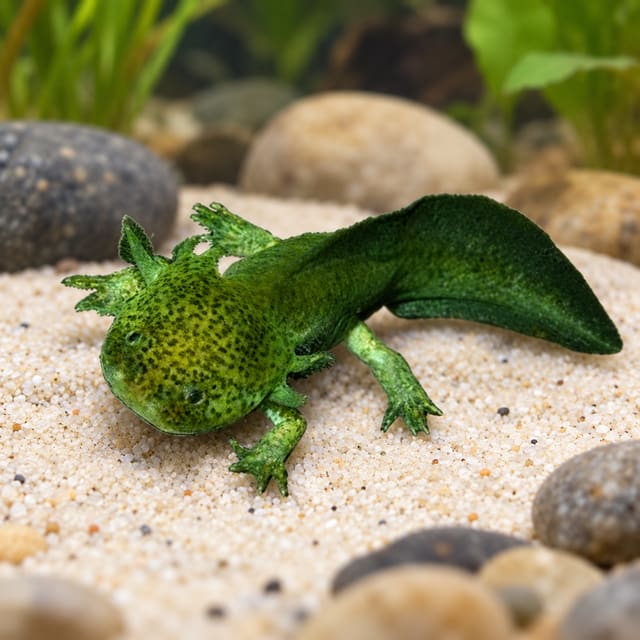
Wild Type Green Axolotl (Ambystoma mexicanum)
10–22°C · pH 7–8 · 100L
£26.99
Gold Axolotl (Ambystoma mexicanum), a fully aquatic salamander for a cool, mature species-only aquarium with gentle flow and safe shelter. One live animal is supplied in the selected 7–9 cm or 9–11 cm size.
Ambystoma mexicanum
Gold Axolotl (Ambystoma mexicanum), a fully aquatic salamander for a cool, mature species-only aquarium with gentle flow and safe shelter. One live animal is supplied in the selected 7–9 cm or 9–11 cm size.
Maintain these water conditions for optimal health and vibrant colors
The gold Axolotl (Ambystoma mexicanum) is a fully aquatic salamander, with external gills, a broad head and a long tail. It is an amphibian with its own requirements for temperature, floor space, feeding and gentle water movement. A dedicated aquarium lets you provide those conditions while protecting the delicate gills from fish that might investigate or nip them.
One purchase supplies one live axolotl in the selected 7–9 cm or 9–11 cm size. The size you select is the size supplied, not the adult size. Both choices are the gold form on this listing. Plan the aquarium for the growing animal, with accessible shelter, safe flooring and feeding arrangements that remain practical as it becomes larger.
Sex is guaranteed only when the selected option explicitly states male or female. This Axolotl listing has no sex-guaranteed option.
An axolotl keeps the external gills and aquatic lifestyle associated with its juvenile form into adulthood. It remains a salamander throughout that life, rather than becoming a fish because it lives underwater. Its native range is in the Valley of Mexico, associated with the lakes of Xochimilco and Chalco. That natural history helps explain why a heated tropical community aquarium is a poor starting point for its care.
The gold name identifies the offered colour form; it does not indicate a separate species or a sex. Choose the aquarium around the needs of Ambystoma mexicanum, then enjoy the individual animal's appearance. Colour and pattern are not a substitute for assessing body condition, appetite and a comfortable environment.
OATA's care sheet describes axolotls growing to around 30 cm and stresses a long, wide aquarium with efficient filtration and gentle flow. Its broad guidance for a small group of axolotls or African clawed frogs specifies at least 100 litres. That grouped figure needs context: the available floor space, number of animals and their adult dimensions all matter, so it should not be read as a universal stocking allowance.
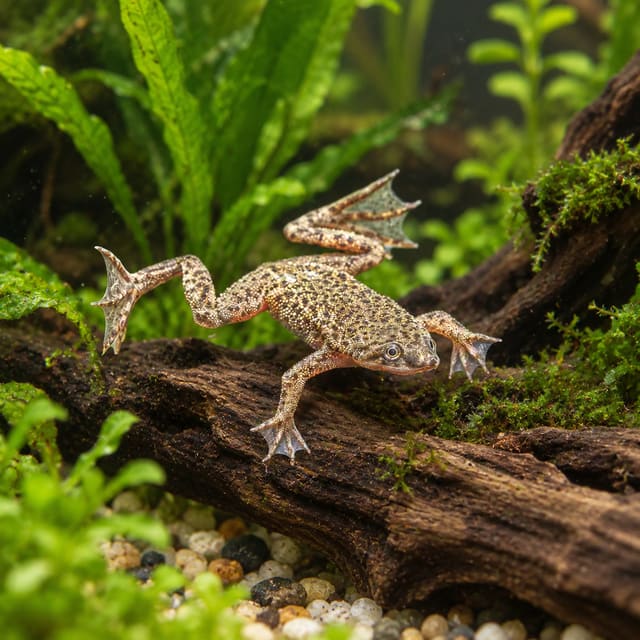
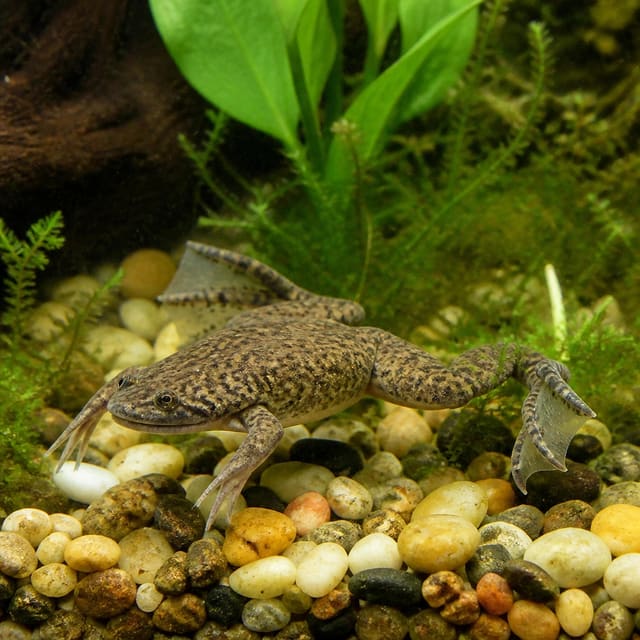
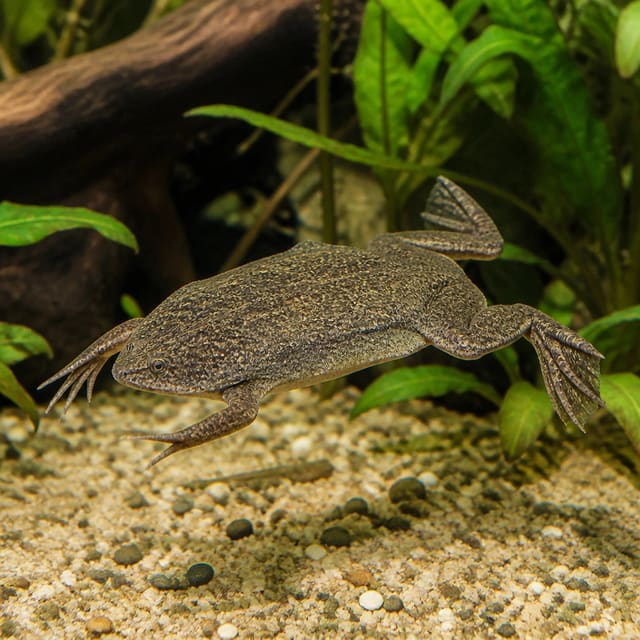
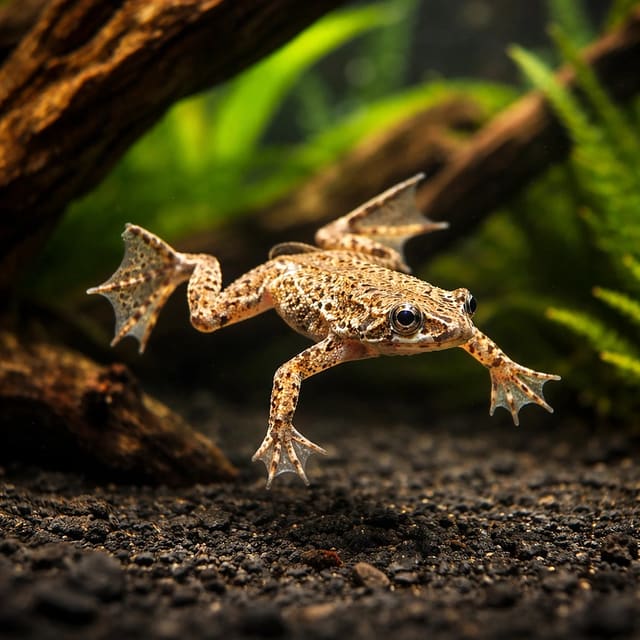
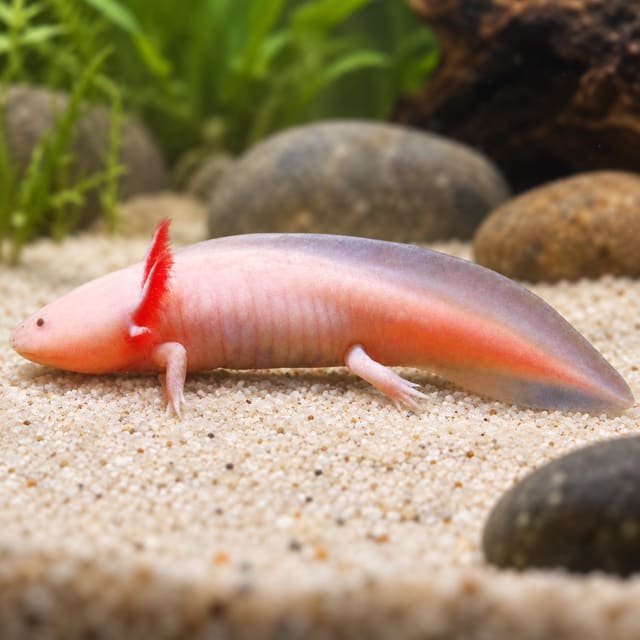
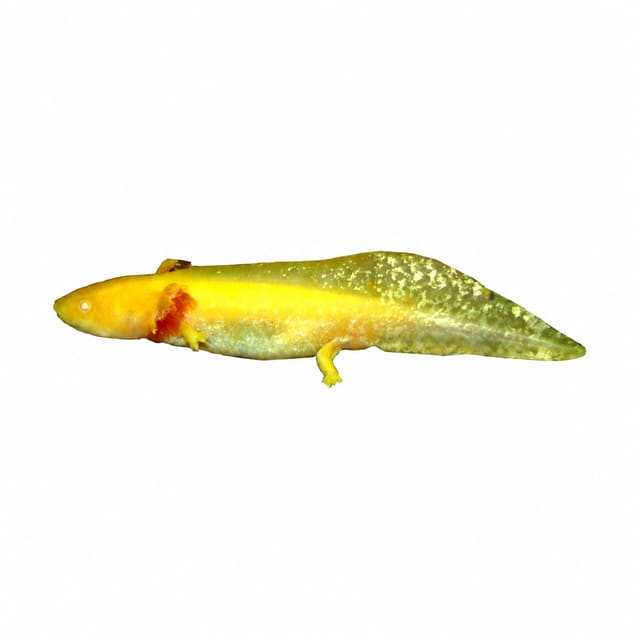
The gallery shows a yellow-gold axolotl in side view, with reddish external gills and a mottled tail, standing on a dark granular substrate. The gallery images are representative of this type of animal rather than photographs of the exact animal supplied, so colours can look slightly different from the live animal. Follow the substrate guidance in the care section when preparing a home; a pictured setting is not an instruction to reproduce it.
Axolotls are interesting to observe during purposeful feeding and quiet movement around their space. A keeper needs to enjoy that style of aquarium and be willing to manage water quality, food remains and temperature carefully. The appeal is the animal itself, rather than a busy mixture of fish added to fill every part of the tank.
For a smaller starting size, compare the separate Gold Axolotl listing, which describes animals supplied at 3–5 cm. That is the same species and colour form at a different supplied size. Choose the individual size that suits your prepared care arrangements, while planning adequate space for growth. Smaller animals still need a mature aquarium, suitable food and careful observation.
Before ordering, check the warmest conditions in the intended room, prepare a mature filtered aquarium and decide how food will be offered and removed. If several axolotls will share the system, their similar size and individual access to food and shelter need attention from the outset. Solitary keeping is also an appropriate choice; a companion is not automatically required.
Choose a long, wide aquarium that allows the axolotl to move around the bottom and use shelter comfortably. The useful layout includes clear routes between feeding places and refuges, with enough room to turn as the animal grows. A tall aquarium can hold plenty of water while providing less usable floor area than a broader design.
OATA gives at least 100 litres for a small group of axolotls or African clawed frogs in its combined care sheet. It also advises making aquariums as long and wide as possible. Keep both parts of that guidance together: volume, footprint and the intended group must all be assessed. The figure is broad grouped guidance rather than a precise allocation per animal.
The same sheet describes axolotls reaching around 30 cm. Treat that as a useful adult planning reference, not a guarantee that every individual stops at exactly that length. Shelters, openings and the available floor should remain usable for a substantially larger animal than the one you initially receive.
Arrange the permanent aquarium before purchase where possible. A small temporary enclosure can create extra transfers and new water-management tasks just as you are learning the animal's routine. If a temporary stage is necessary, decide in advance when and how the move will take place, with a mature receiving system ready rather than a vague plan for an upgrade.
The OATA guidance recommends either a bare base or sand to protect delicate skin and gills. It also warns that any pebbles used as decoration must be large enough to prevent swallowing. Avoid using small loose gravel simply because it appears in a photograph or was supplied with an aquarium kit.
A bare base can make food fragments and waste easier to see and collect. When deciding on sand for a small animal, discuss the substrate and feeding arrangement with the seller so it suits the individual. The important practical test is whether the floor supports safe movement and can be kept clean without repeatedly disrupting the whole aquarium.
Provide cover using suitable pipes, caves or other smooth, stable furnishings. Openings must allow easy entry and exit, and the interior should be accessible for inspection and cleaning. A refuge is less useful if it traps uneaten food where you cannot find it or requires the animal to squeeze through an opening that will soon be too narrow.
Keep decorations stable and look for rough edges before placing them in the tank. External gills and skin can contact nearby surfaces as the animal moves. Leave enough open floor that shelter does not become clutter; aim for an animal that can choose between cover and accessible open space.
Plants can be included, with OATA suggesting attachment to decorations to help prevent uprooting. Plan plant placement around the animal's routes and your ability to maintain the floor. Choose the overall lighting and shelter arrangement for the axolotl's comfort, rather than increasing brightness solely to support a demanding planting scheme.
OATA's combined care sheet gives a broad axolotl temperature range of 10–22°C. The warmer frog range on the same sheet applies to frogs, not to axolotls. Keep the animal's temperature plan separate from a heated tropical fish setup, and arrange a stable cool environment before bringing it home.
A broad range is not an instruction to run continuously at its upper end or to cycle between extremes. Measure the aquarium itself and understand how room conditions affect it. Check the intended position during warmer weather and at different times of day, so the cooling plan is based on actual conditions rather than a comfortable room reading on one occasion.
Keep the aquarium away from direct sunlight and nearby heat sources. OATA also recommends avoiding draughts, loud noise, vibration and sudden movement around aquatic amphibian tanks. A quieter position makes routine observation easier and reduces the need to relocate the setup after the animal has settled.
Use an aquarium thermometer and include its reading in the normal care routine. If the room cannot reliably provide suitable conditions, address temperature control before purchase. Discuss a suitable cooling arrangement for the actual aquarium and location; opening a window occasionally is not a dependable plan for a persistently warm room.
| Water factor | OATA guidance and scope |
|---|---|
| Temperature | 10–22°C, the axolotl range in the combined sheet |
| pH | 7.0–8.0, broad aquatic-amphibian guidance |
| General hardness | 8–18 dGH, broad aquatic-amphibian guidance |
| Ammonia and nitrite | Zero mg per litre |
| Nitrate | No more than 20 mg per litre above the normal tap-water level |
The pH and hardness ranges are shared care-sheet guidance for aquatic frogs and axolotls, rather than a separate gold-form optimum. The nitrate advice is relative to the normal tap-water value: test the supply as well as the aquarium so that this comparison means something. Ammonia and nitrite are checked independently and should both be zero.
Use the water chemistry guide to understand which tests answer which questions. pH, hardness and nitrogen waste are different measurements. An acceptable pH reading says nothing about whether the filter is processing waste, and clear water says nothing about the concentration of dissolved ammonia.
The water matcher helps compare measured conditions with stated guidance. Keep its result alongside the practical assessment of temperature stability, floor space, flow and livestock. A numerical match cannot assess whether a fish will nip the axolotl's gills or whether a shelter opening is safe.
Prepare replacement water consistently, treating tap water with an appropriate conditioner to remove chlorine or chloramine. Compare its temperature and chemistry with the aquarium before a change. Avoid repeated adjustments merely to chase a chosen number inside the range; establish a stable routine that you can reproduce throughout the year.
The aquarium needs an efficient filter that can process the waste produced while maintaining gentle flow. The OATA sheet makes both requirements explicit. Reducing flow so far that filtration becomes ineffective solves the wrong problem; arrange suitable equipment and outlet positioning so the animal has calm usable space while the system continues working.
A biological filter depends on beneficial bacteria that process ammonia and nitrite. Establish it before the animal arrives and use water testing to confirm that the system is ready. Merely filling a tank, running the equipment and waiting for the water to look clean does not demonstrate adequate biological filtration.
The aquarium preparation guide explains maturation principles that also matter in a cool amphibian aquarium. Use that general groundwork while keeping the axolotl's own temperature and gentle-flow requirements. The name of a setup guide is not a reason to copy a tropical heating plan.
Check that water movement leaves refuges usable and does not constantly push the animal around. At the same time, inspect the intake and outlet for debris and reduced performance. A filter with trapped food still needs servicing: mechanical capture moves waste into a place you can remove it, rather than making it disappear.
Keep a maintenance record and review results after adding livestock or increasing food. More animals and larger meals mean more waste for the filter to process. OATA recommends gradual additions because an established bacterial population needs to respond to increased load; a mature tank is not permission to add every planned inhabitant at once.
Axolotls require a carnivorous diet with food sized for the individual. OATA lists suitable meaty items such as prawns, mussels and cockles for larger aquatic frogs and axolotls, supplemented with specialist prepared pellets for balanced nutrition. A newly supplied small animal needs suitably sized portions, rather than simply the foods or quantities used for a grown individual.
Confirm what the axolotl is eating before it arrives and have that food ready. Prepared pellets can be useful, but an animal accustomed to other foods may need time to recognise them. OATA advises offering familiar frozen or live food alongside prepared feeds during that transition. Judge success by observed eating rather than by whether food was placed in the tank.
The care sheet's general feeding routine is once daily, allowing about 15 minutes and then removing uneaten food. Apply that as the sheet's starting guidance while checking the individual animal's size, feeding response and condition with the seller. The aim is a suitable amount actually consumed, not a fixed pile of food that remains on the floor.
Choose a feeding place that is easy to observe and clean. Shelters should still be available, but food hidden deep inside a cave is harder to check. If the animal drops or ignores a piece, remove it instead of assuming it will eventually be eaten. Decaying food adds to the same waste burden that the filter and water changes must handle.
Watch each animal eat when housing more than one. Food disappearing from the aquarium proves only that someone ate it. Individual observation helps you notice an animal being outcompeted or one that has changed its feeding response, and it makes later advice more useful because you can describe the problem accurately.
Keep notes when changing foods, including what was offered, what was accepted and whether body condition changed. Make deliberate adjustments rather than introducing several unfamiliar foods at once. Persistent refusal of familiar food, especially alongside other changes, calls for water checks and advice about the animal rather than repeated larger offerings.
OATA recommends at least a weekly partial water change of 25%, together with regular testing at least weekly. This is broad aquatic-amphibian maintenance guidance; use actual water results and the waste load to assess whether further attention is needed. Removing a set fraction is not a guarantee that conditions are suitable afterwards.
Use a siphon or other appropriate aquarium cleaning tool to remove waste and food fragments from the floor. Work carefully around the animal and its shelters, checking places where material collects. Keep the arrangement simple enough that you can clean the whole occupied area without dismantling it each time.
If the filter needs cleaning, rinse its media gently in water removed from the aquarium rather than under the tap. That preserves more of the beneficial bacterial population. Follow the equipment instructions and check flow after reassembly, making sure servicing has restored performance without creating an unnecessarily strong current.
Observe the skin, gills, movement, feeding response and body condition. Learn the individual's usual behaviour so a change is easier to recognise. New fluffy growths, damaged tissue or persistent appetite changes deserve attention; an axolotl's ability to regenerate tissue is never a reason to leave an injury unassessed.
If something changes, record the temperature and test ammonia, nitrite and other water values. Note recent feeding, cleaning, equipment changes and any contact with another animal. Give that information to the seller or an appropriately experienced vet. A clear account is more useful than trying to identify a condition from colour or a photograph alone.
Aquatic amphibians can be sensitive to aquarium treatments. Seek advice specifically suitable for an axolotl before using a product, and follow its instructions. Avoid applying a generic fish remedy or guessing a reduced dose from an online tip. The appropriate response depends on the cause of the problem and the product involved.
Use a regular day-and-night cycle with relatively dim lighting, as recommended in the amphibian care sheet. If plants need brighter areas, provide dark refuges that the animal can use freely. The point is to offer a choice of comfortable spaces rather than exposing the entire floor to the same bright light.
Fit a secure cover, as OATA recommends for preventing amphibians from escaping, and make routine access straightforward. Leave enough room above and around the tank to maintain it safely. Place frequently used tools nearby so that feeding or water changes can be completed calmly, with less time spent moving around an open aquarium.
Arrange care when you are away before it becomes necessary. Show the substitute keeper the thermometer, test routine, food amount and method for removing leftovers. Leave a clear record of normal behaviour and the contact details for help. Someone who mainly keeps tropical fish needs to understand this aquarium's cooler conditions and the animal's particular needs.
Read the current delivery and Live Arrival Guarantee policy before arranging an order. Tropical Fish Co describes careful oxygen-filled bagging, insulated packing and transport by a licensed live-animal courier. The confirmed delivery day and tracking arrive by email, and someone must be present to receive the parcel.
Open and inspect the parcel on the day it arrives. For a Live Arrival Guarantee claim, make a continuous unboxing video starting with the sealed parcel and showing the animal still in its sealed bag. Contact the store the same day with the order number and video. The recording provides claim evidence; appropriate receiving care remains essential.
Have the aquarium, water tests and safe transfer equipment ready beforehand. Follow the acclimatisation advice on the store's delivery page and keep transport water out of the established aquarium. If the animal's condition or the transport water causes concern, obtain advice before improvising a prolonged procedure.
During the settling period, keep the environment stable and monitor water quality and feeding closely. An animal that is unfamiliar with its new surroundings benefits from usable shelter and a predictable routine. Avoid immediately adding more livestock or repeatedly rearranging the aquarium while you are learning its normal behaviour.
OATA recommends species-only housing for axolotls. Small fish can be eaten, while larger fish may nip the axolotl's external gills. These are risks in opposite directions: making a proposed companion bigger may protect that fish from swallowing but still leave the amphibian exposed to injury.
That makes a general community-fish recommendation inappropriate. The question is not simply whether a fish seems peaceful towards other fish. Gill structures can attract attention, and a combination that looks quiet during one observation may behave differently during feeding or when the keeper is absent.
Keep routine aquarium cleaning as a maintenance task. A bottom-dwelling fish is still another animal with its own diet, temperature and behavioural needs, and it should not be added as a cleaning accessory. The same careful distinction applies when browsing related products: a useful alternative for another setup is not automatically a safe companion.
Axolotls can live singly or with others of similar size when there is adequate space. This is the axolotl advice in OATA's combined sheet; the frog group-number recommendation elsewhere in that sheet should not be transferred to them. A solitary axolotl therefore does not need an automatic companion purchase.
For a group, assess each animal rather than relying only on the total volume. Similar size, access to shelter and individual feeding all matter. The broad 100-litre small-group figure needs to be considered alongside the available footprint and adult dimensions, and the aquarium must allow practical monitoring and maintenance.
Plan what you would do if one animal repeatedly misses meals, develops injuries or cannot use shelter comfortably. A response may require separate suitable accommodation, which itself needs safe water conditions and equipment. Having an empty spare container is different from having a functioning plan that protects the animal's welfare.
Review the arrangement as the animals grow. Individuals that begin at similar sizes may later differ, and a shelter or feeding area that worked initially may become crowded. Observing actual use of space is more informative than treating the original stocking plan as permanently settled.
During feeding, check that food reaches each intended animal. A group can appear calm while one individual consistently takes most of the food. Accurate observation lets you adjust the arrangement before differences in condition become pronounced, while also keeping uneaten food from accumulating in inaccessible places.
Water-parameter overlap remains only part of the decision. Two animals may accept similar pH or hardness but need different temperatures, flow, shelter or protection from bites. For this listing, a dedicated axolotl aquarium offers the clearest way to manage those needs and to recognise changes in the individual animal.
OATA describes axolotls growing to around 30 cm. Use that as an adult planning reference rather than a guaranteed stopping point. Provide a long, wide aquarium with shelter and turning space suitable for a substantially larger animal than the one initially supplied.
OATA's combined care sheet gives at least 100 litres for a small group of axolotls or African clawed frogs, with as much length and width as possible. That is broad grouped guidance, not a universal number of animals per tank. Assess the floor space, adult dimensions and intended group together.
Yes. OATA says axolotls may be kept singly or in groups. Grouped animals should be similarly sized and have adequate space. Plan individual feeding access and suitable shelter, and watch for conflict as they grow.
A new keeper needs a mature filtered aquarium, a reliable cool-temperature plan and a routine for testing and removing food remains. Prepare those arrangements before purchase. This animal's needs differ from a standard heated community-fish setup.
Provide a carnivorous diet appropriate to the animal's size and established feeding response. OATA discusses suitably sized meaty foods and specialist prepared pellets, with familiar food alongside pellets during a transition. Observe eating and remove leftovers rather than leaving food to decay.
OATA gives 10–22°C for axolotls in its combined sheet. Its broader aquatic-amphibian guidance is pH 7.0–8.0 and general hardness of 8–18 dGH. Maintain stable cool conditions, with ammonia and nitrite at zero, rather than treating the upper temperature as a target.
Species-only housing is recommended. Small fish can be eaten, while larger fish can nip the external gills. A fish being too large to swallow does not make it a safe companion.
Tropical Fish Co describes oxygen-filled bags, insulated packing and a licensed live-animal courier. Be present on the confirmed delivery day and inspect the parcel that day. For a Live Arrival Guarantee claim, provide a continuous unboxing video from the sealed parcel to the animal in its sealed bag, and contact the store the same day with your order number.
OATA: axolotls and aquatic frogs covers practical aquatic-amphibian care. Its axolotl temperature and social advice are distinct from its frog recommendations, while several water and maintenance recommendations cover the group.
WoRMS: Ambystoma mexicanum records the accepted species name and family. The axolotl natural-history overview discusses its aquatic adult form and native Mexican lakes. RSPCA aquarium guidance provides background on biological filtration.
No reviews for this item yet. Bought one? Honest reviews only, good or bad.
What customers say about ordering from us
Easy website plenty of info on fish your buying great to pick a time slot
TRACEY DURRANT · 7 Oct 2026
Got some lovely fish thank you
Kevin Mackie · 7 Oct 2026
Reviews of our shop, collected by Judge.me, an independent third-party review collector. Newest first.