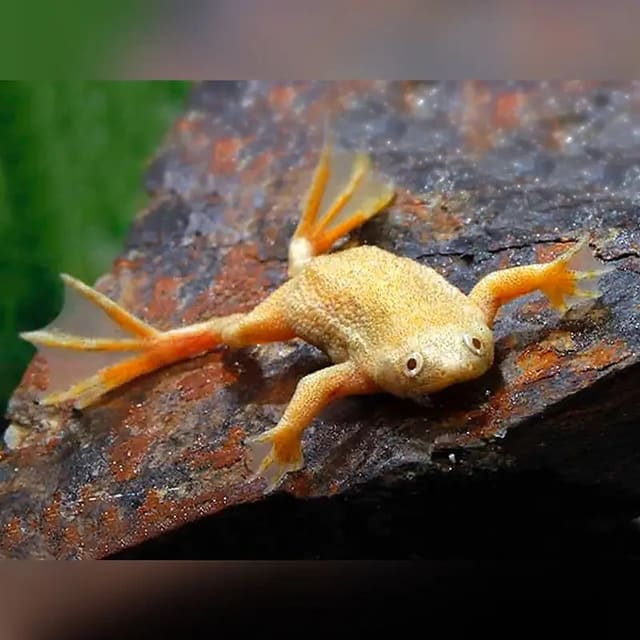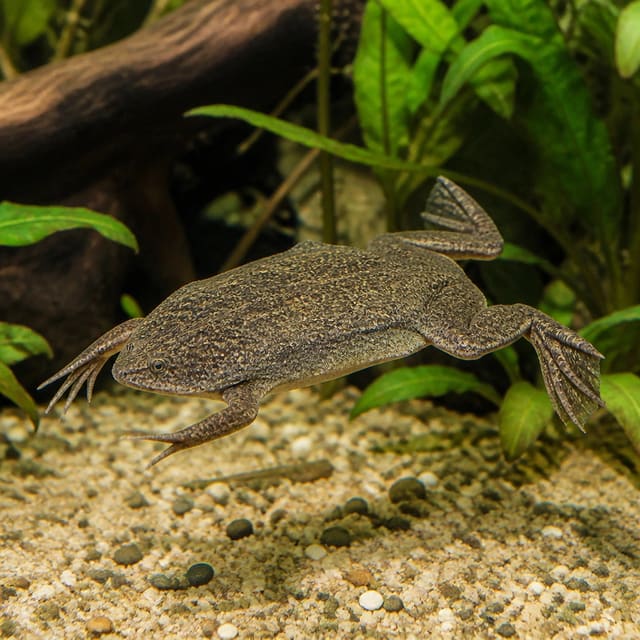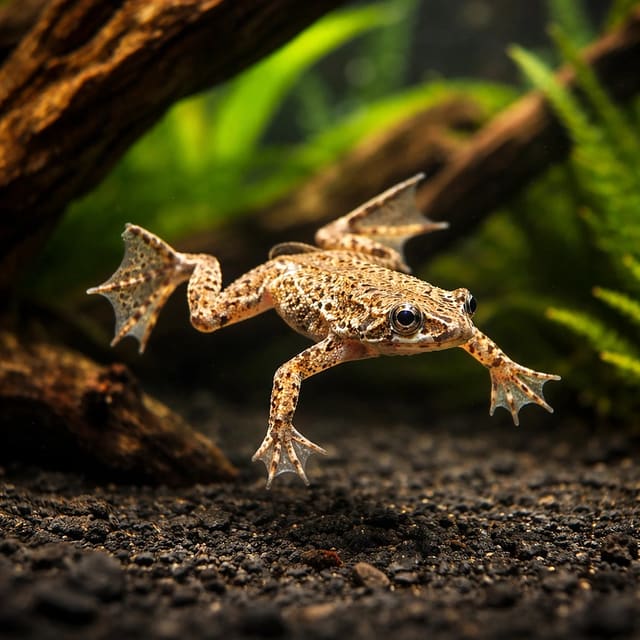
African Dwarf Frog (Hymenochirus sp.)
22–25°C · pH 7–8
£4.99

A specialist cool-water Pleurodeles-type newt sold under an unconfirmed gold trade identity, with three dispatch sizes and species-only care guidance.
Pleurodeles sp.
Save when buying more. Each quantity is one newt; sex is not guaranteed unless the listing explicitly states it.
Confirm your email, then we’ll send an availability message for this exact item if it returns within 180 days.
This request is only for this product—no newsletter or other promotions. A mail-provider retry may very rarely duplicate the same availability message. Unconfirmed addresses are removed after 48 hours. See our privacy policy.
A specialist cool-water Pleurodeles-type newt sold under an unconfirmed gold trade identity, with three dispatch sizes and species-only care guidance.
Maintain these water conditions for optimal health and vibrant colors
Identity first: this live amphibian arrives through the trade as a Gold Pleurodeles Newt, but its source record does not include a diagnostic photograph or a species-level identification. We therefore use the accepted genus spelling Pleurodeles while treating the colour and species as an unconfirmed trade identity. This is more useful than repeating a doubtful scientific name: you can plan a careful setup without being told that an uncertain animal is definitely a particular morph or species.
This is a specialist cool-water newt, not a tropical fish and not a routine community-aquarium addition. Choose it only if you can provide a mature species-focused aquarium, a secure lid, gentle filtration, cool stable water and proper amphibian biosecurity. One selected quantity supplies one unsexed newt from the chosen dispatch size band. The current size options are 5-7 cm, 8-10 cm and 10-15 cm when available.
| Customer name | Gold Pleurodeles Newt |
|---|---|
| Identity status | Pleurodeles genus-level trade identity; exact species and colour morph unconfirmed |
| Animal type | Live freshwater newt / salamandrid amphibian |
| Sale unit | One unsexed live newt per selected quantity |
| Dispatch sizes | 5-7 cm, 8-10 cm and 10-15 cm variants when in stock |
| Care level | Specialist |
| Starting aquarium | 100 litres and at least an 80 cm footprint for one; 100 x 50 cm footprint preferred |
| Temperature | 16-21 C provisional target; aim for 18-20 C and prevent summer overheating |
| pH | 6.8-7.5 provisional; stability matters more than chasing a number |
| Diet | Earthworms, specialist newt pellets and varied suitable invertebrate foods |
| Best housing | Species-only, with low flow, hides and easy access to a shallow resting or haul-out area |
| Fish tank mates | Not recommended |
| Media status | No approved product image is available; no unrelated animal has been used as a substitute |
| Point | Evidence level | What this listing says |
|---|---|---|
| The animal belongs in the Pleurodeles trade group | Supported by the source trade line | We use Pleurodeles at genus level. |
| It is definitely Pleurodeles waltl | Not confirmed | We do not make a species-level claim without a diagnostic image or record. |
| It is a gold, albino or leucistic morph | Trade description only | The word Gold is retained as the commercial colour label, not a genetic diagnosis or exact-shade promise. |
| Spanish or Iberian ribbed newt care is relevant | Useful comparison | It informs a conservative setup because that species is strongly associated with this trade name, but it is not proof of identity. |
| Adult length | Unknown for this exact animal | Plan for a potentially large newt and be ready to upgrade rather than treating dispatch size as adult size. |
| Sex | Not supplied | Animals are sold unsexed; sex selection is not promised. |
The American Museum of Natural History recognises Pleurodeles waltl as the Spanish, Iberian or sharp-ribbed newt. Searchers may therefore encounter this product while researching a Spanish ribbed newt for sale in the UK. That connection is worth explaining, but it would be misleading to turn it into certainty. If a confirmed species or colour morph matters to you, contact us before ordering and wait for an approved current image or identification update.
| Selected variant | What the number means | Planning note |
|---|---|---|
| 5-7 cm | Approximate dispatch size | A smaller newt may need smaller food pieces and extra care around filter intakes. |
| 8-10 cm | Approximate dispatch size | Still allow for growth; this is not an adult-size guarantee. |
| 10-15 cm | Approximate dispatch size | Use a full-size setup from arrival rather than planning a temporary small tank. |
One quantity means one live, unsexed animal in the selected size band. Natural variation means the measurement is approximate and the exact shade, markings and body proportions can differ between individuals. None of the size choices confirms age, sex or final adult length. If you intend to keep more than one, ask for current compatibility and size advice first; do not simply multiply the animal count inside the same minimum aquarium.
The best keeper is comfortable managing a cycled aquarium, testing water, controlling summer temperature and keeping amphibian equipment separate from other tanks. The display should be designed around the newt rather than adding it to an existing fish community. A quiet, shaded aquarium with deliberate movement and feeding response is the appeal here.
This is not a sensible first purchase for an uncycled aquarium, a warm room where water routinely exceeds 21-22 C, an uncovered tank, or a keeper who wants mixed fish. It is also not the right choice when the exact species, adult colour or sex is essential but cannot yet be verified. Waiting for better identification is better than buying on an assumption.
Begin at 100 litres with at least an 80 cm long footprint for one, and prefer a 100 x 50 cm footprint where space allows. Floor area and accessible resting space matter more than a tall decorative water column. This is a conservative retail starting point for an unresolved trade identity, not a claim that every possible Pleurodeles species has the same minimum.
Known P. waltl in a 2025 veterinary study were maintained in aquariums at least 100 x 50 x 50 cm with shade, hides and plants. A separate field study recorded a maximum total length of 252 mm in sampled P. waltl. Those figures do not identify this product, but they show why a 5-7 cm dispatch animal must not be treated as permanently small. Monitor growth and body condition and upgrade before the enclosure becomes restrictive.
Use a close-fitting, escape-resistant lid with every cable and pipe gap secured. Provide smooth caves, shaded retreats, stable hardscape and open routes to the surface. Include an easily reached shallow shelf, floating rest or gently sloped haul-out option. Research on confirmed P. waltl describes both aquatic and terrestrial phases, so an accessible choice is safer than forcing an uncertain animal to remain in deep water without rest.
| Feature | Preferred approach | Avoid |
|---|---|---|
| Substrate | Bare bottom, fine smooth sand, or stones too large to swallow | Sharp gravel and loose pieces that fit in the mouth |
| Filtration | Mature biological filter with protected intake and gentle outlet | Exposed intakes and high-velocity current |
| Cover | Secure lid with sealed gaps and good ventilation | Open tops or loose lids |
| Lighting | Moderate, with shaded retreats and a predictable day-night cycle | Intense heat-producing light without cool refuges |
| Decor | Smooth, stable hides and easy routes to the surface | Sharp edges, unstable rock stacks and narrow traps |
A low-flow sponge filter or baffled outlet is often easier to manage than a powerful aquarium return. The aim is strong biological filtration without making the newt work continuously against current. Protect every intake, especially for the smaller dispatch size, and check that the animal can surface without being pushed away.
Use 16-21 C as a provisional working range and aim for a stable 18-20 C where possible. The 2025 husbandry study of confirmed P. waltl reported 18.2-21.5 C, while other research colonies commonly work near 20 C. This product's species is unresolved, so the range is a cautious planning envelope rather than a verified biological limit.
Do not house this newt in a standard heated tropical community aquarium. Check temperature at the warmest part of the day, not only in the morning. During hot weather, reduce room heat, increase safe ventilation, shade the aquarium, float sealed cold packs externally if your emergency plan calls for it, or use a controlled aquarium cooling system. Avoid sudden drops and never add loose ice directly to the water. If you cannot keep the aquarium cool and stable through a UK heatwave, postpone the purchase.
| Ammonia | 0 mg/L |
|---|---|
| Nitrite | 0 mg/L |
| Nitrate | Keep low and stable through appropriate stocking, feeding and water changes |
| pH | 6.8-7.5 provisional |
| Temperature | 16-21 C provisional; aim for 18-20 C |
| Water preparation | Fully dechlorinated and temperature matched |
| Flow | Gentle, with good oxygenation and no intake hazard |
The aquarium must be biologically mature before the newt arrives. Test ammonia and nitrite rather than assuming that clear water is safe. Carry out regular partial water changes with dechlorinated, temperature-matched water, siphon uneaten food promptly and clean filter media in removed aquarium water so the biological colony is protected.
Do not chase pH with repeated chemical adjustments. Stability within the provisional range is safer than rapid correction. If your tap water sits outside it, use the water matcher as a starting point and ask for species-specific advice before changing hardness or chemistry. Because identity is unresolved, there is no honest basis for publishing a narrow hardness number.
| Food | Role | Practical note |
|---|---|---|
| Earthworms or suitable earthworm pieces | Excellent staple component | Size pieces to the newt and use a clean, pesticide-free source. |
| Complete specialist newt or axolotl pellets | Balanced prepared component | Choose a sinking product sized for the animal and remove leftovers. |
| Chironomid larvae / bloodworm | Variety and feeding response | Useful in rotation rather than the entire long-term diet. |
| Live blackworms | Optional live-food variety | Source carefully, rinse appropriately and prevent uneaten food accumulating. |
| Crickets or other suitable invertebrates | Occasional variety where the animal accepts them | Use correctly sized, well-sourced prey and supervise feeding. |
| Community fish flakes | Not an adequate core diet | Do not assume a fish food is complete for an amphibian. |
Offer portions the animal can swallow comfortably and adjust frequency to size, temperature, body condition and veterinary advice. Juveniles generally require smaller, more frequent food than established adults, but a fixed schedule cannot be guaranteed while age and species remain unknown. Observe the body rather than feeding by habit. A healthy-looking newt should not become visibly thin, grossly distended or surrounded by decaying leftovers.
Feeding tongs can help target food, reduce waste and confirm that each animal has eaten. Do not leave earthworm pieces or pellets to decompose. If appetite drops, first check temperature, ammonia, nitrite, recent disturbance and skin condition; persistent refusal or other abnormal signs need an amphibian-experienced exotic vet.
Plan a species-only aquarium. Fish can nip exposed skin and limbs, outcompete a slow newt, introduce pathogens or be swallowed. Even a fish described as peaceful may investigate a resting amphibian. The newt may also eat small fish, shrimp or larvae, so "peaceful" is not the same as community-safe.
Do not mix it with African dwarf frogs, Surinam toads, axolotls, native newts or amphibians from another source. Different species have different temperature, depth, feeding and disease risks. Our African Dwarf Frog, Gold African Dwarf Frog and Carvalho's Surinam Toad pages are comparison links only, not companion recommendations.
More than one conspecific may be possible after identity, sex, size and behaviour are understood, but group housing is not automatic. Use a larger footprint, duplicate hides and feeding points, match sizes carefully and watch for bites, persistent following, food exclusion or weight loss. Separate animals promptly if one is being stressed.
Newts and salamanders require stricter biosecurity than an ordinary fish purchase. Batrachochytrium salamandrivorans (Bsal) can cause severe disease in salamanders and newts. UK government guidance asks keepers to dispose of wastewater safely, prevent escape or release, and clean and disinfect people and equipment that have contacted amphibians or their habitats.
Ask an amphibian-experienced exotic vet for a quarantine and testing plan appropriate to your collection. Do not use a fixed internet quarantine duration as a substitute for risk assessment, particularly when animals come from different sources.
Handling should be rare. Amphibian skin is delicate, and handling adds stress as well as cross-contamination risk. Move the newt only when necessary, ideally in a clean water-safe container. If direct contact is unavoidable, follow veterinary guidance and use clean, wet, powder-free gloves that are suitable for amphibian work. Never handle after using soap, hand cream, cleaning spray or other residues.
| Check | Reassuring sign | Reason to isolate and seek expert help |
|---|---|---|
| Skin | Intact surface without new sores | Ulcers, peeling, reddening, fungal-looking growth or rapidly changing lesions |
| Body condition | Stable shape and weight trend | Progressive weight loss, swelling or marked asymmetry |
| Movement | Controlled swimming and normal resting | Loss of balance, persistent floating, weakness or inability to surface safely |
| Appetite | Regular feeding response after settling | Persistent refusal with other changes or confirmed water problems |
| Behaviour | Uses hides and explores without panic | Continuous escape attempts, severe lethargy or repeated rubbing |
These signs are not a diagnosis. Test the water, isolate the animal from the rest of the collection using dedicated equipment, and contact an amphibian-experienced vet. Do not add fish medication, salt, copper or other treatment by guesswork: products safe for fish may be unsafe or incorrectly dosed for amphibians.
Eligible livestock orders travel with a licensed live-animal courier and are covered by the current Live Arrival Guarantee terms. The active welcome code WELCOME10 currently gives 10% off where checkout eligibility and current offer terms allow. Stock, dispatch availability and code eligibility are confirmed at checkout; the care decision should come before the discount.
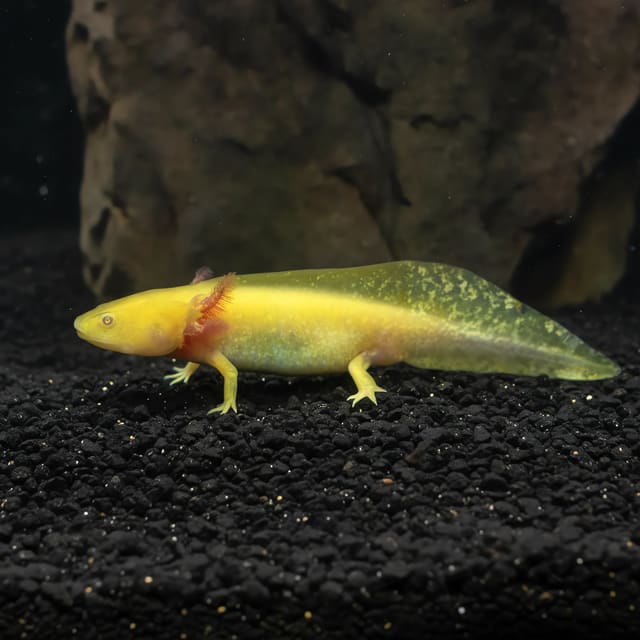
There is currently no approved source image for this listing. We have not borrowed a photograph from another SKU, used a competitor image or generated a visually convincing animal that might be the wrong species or morph. That means the page cannot promise an exact gold shade, eye colour, pattern or body shape.
This is deliberately more honest than a beautiful but unverified gallery. An exact product or same-batch reference should be added only when provenance and identity can be checked. Until then, contact us before ordering if visual appearance is central to your decision.
Pleurodeles waltl is commonly called the Spanish ribbed newt, Iberian ribbed newt or sharp-ribbed newt. Gold, golden, albino and leucistic labels also appear in the amphibian trade. Those phrases explain why this page may appear during research for a Spanish ribbed newt for sale, but they do not prove that this trade animal is P. waltl or a particular colour morph.
If later evidence confirms P. waltl, the listing can be upgraded with a full species profile, confirmed adult range and a diagnostic image. Until that happens, the safer course is genus-level naming, a cool species-only setup and conservative planning for a larger aquatic newt.
Care-data note: published P. waltl evidence is used here as a cautious comparison, not as a hidden species claim. Product identity, current stock and any approved image should be reconfirmed before purchase.
Species-only housing reduces predation, nipping, food competition, incompatible temperature and pathogen-transfer risks.
Always research specific species before adding them to your tank. Consider:
No reviews for this item yet. Bought one? Honest reviews only, good or bad.
What customers say about ordering from us
I have a small group of long finned mountain minnows. So was delighted to be able to order ten of this variety to increase the genetics in my tank . The ones I recieved are healthy but it’s to early to give a verdict on wether they are of a long finned type since they are small currently.
Gordon Walker · 23 Sept 2026
100% success travel and "installation". Pleased with quality of purchase. The Siamese fighter a bit "shy" so have not yet seen him at his best yet but looking good. Happy customer. GG
George E Garratt · 21 Sept 2026
Reviews of our shop, collected by Judge.me, an independent third-party review collector. Newest first.