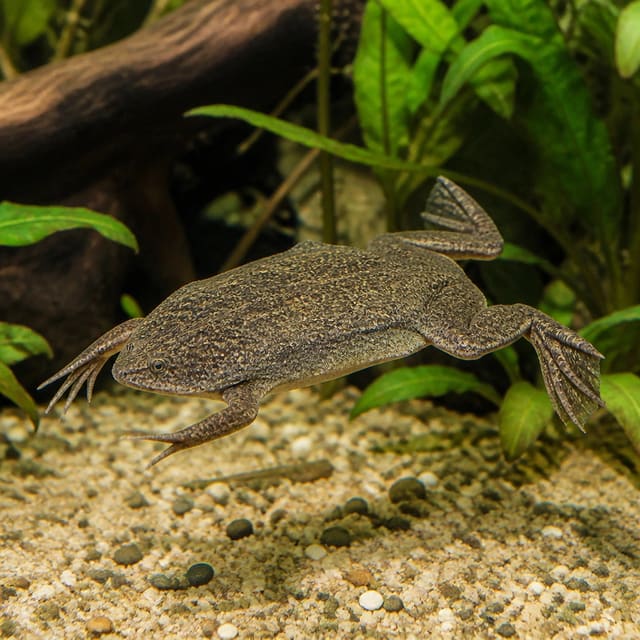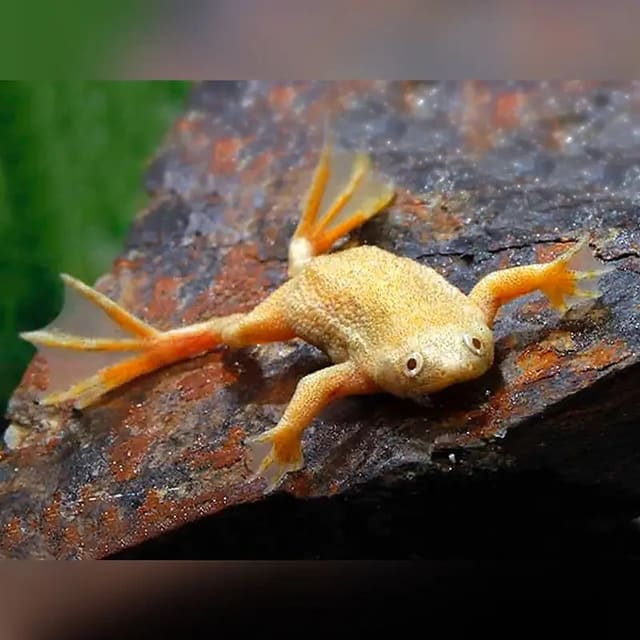
Gold African Dwarf Frog (Hymenochirus sp. 'Gold')
22–25°C · pH 7–8
£5.99
A striking, cool-water Himalayan newt with bold orange markings and a rugged, armored look. Moderate care, peaceful. 10-22C, pH 6.5-7.5.
Adult size is the maximum length this species reaches at full maturity (scientific sources). The livestock you receive will be younger and smaller. Product-photo provenance and any image-specific limitations are stated on the listing.
Tylototriton verrucosus
Confirm your email, then we’ll send an availability message for this exact item if it returns within 180 days.
This request is only for this product—no newsletter or other promotions. A mail-provider retry may very rarely duplicate the same availability message. Unconfirmed addresses are removed after 48 hours. See our privacy policy.
A striking, cool-water Himalayan newt with bold orange markings and a rugged, armored look. Moderate care, peaceful. 10-22C, pH 6.5-7.5.
Adult size is the maximum length this species reaches at full maturity (scientific sources). The livestock you receive will be younger and smaller. Product-photo provenance and any image-specific limitations are stated on the listing.
Maintain these water conditions for optimal health and vibrant colors
For aquarists and amphibian enthusiasts seeking fire newt specimens, Tylototriton verrucosus—commonly known as the Orange newt, Himalayan newt, or Crocodile newt—is a truly captivating species. This striking amphibian, native to the Indian subcontinent and Southeast Asia including the Himalayan region, reaches approximately 18cm at maturity and delivers bold orange markings against a dark, textured body that gives it a rugged, armoured appearance. Unlike tropical fish, this cool-water specialist requires temperatures between 10-22°C, making it ideal for unheated paludariums or cool-water setups. Available for sale UK through specialist amphibian suppliers, Tylototriton verrucosus rewards dedicated keepers with fascinating behaviour, impressive longevity, and striking visual appeal.
Tylototriton verrucosus is immediately recognisable by its bold orange to red-orange markings set against a dark brown or black body. The skin has a distinctly warty, textured appearance—particularly along the head, back, and tail—giving the species its "crocodile newt" common name. Prominent parotoid glands behind the eyes and raised nodules along the vertebral ridge create an armoured, prehistoric look. The tail is laterally compressed and paddle-like, aiding aquatic locomotion. Adults are robust and stocky, reaching up to 18cm in length. This species is a visual showstopper in naturalistic paludarium displays.
This species inhabits cool, high-altitude forests in the Indian subcontinent and Southeast Asia, particularly the Himalayan region. Natural habitat includes mountain streams, pools, marshes, and forested areas with abundant moisture and cool temperatures. During breeding season, adults migrate to shallow, slow-moving waters. Outside breeding season, they are largely terrestrial, sheltering under logs, rocks, and leaf litter in damp forest environments. Understanding this seasonal and semi-aquatic lifestyle is critical for providing appropriate captive conditions.
A minimum 75-litre paludarium is recommended, with both aquatic and terrestrial sections. The aquatic portion should be shallow (5-10cm depth) with smooth substrate, aquatic plants, and gentle filtration. The terrestrial section should feature damp soil, sphagnum moss, leaf litter, driftwood, and hiding places such as cork bark or flat stones. Provide secure cover to maintain high humidity (70-90%) and prevent escape—newts are excellent climbers. Use cool-water filtration and avoid strong currents. Live plants such as Java moss, ferns, and pothos enhance naturalism and water quality. Ensure the setup can be cooled to appropriate temperatures year-round.
Tylototriton verrucosus requires cool temperatures year-round, ideally between 10-22°C, with excellent water quality. Maintain pH from 6.5-7.5 and soft to moderately hard water. Perform regular partial water changes (25% weekly) with dechlorinated water to maintain pristine conditions. Avoid copper-based medications, which are toxic to amphibians. High ammonia, nitrite, or nitrate levels are harmful. Use efficient biological filtration and test water parameters regularly.
This carnivore thrives on a varied diet of live or frozen meaty foods. Offer earthworms, blackworms, bloodworms, small insects (crickets, waxworms), and other appropriately sized invertebrates. Feed 2-3 times per week, adjusting portion size to body condition. Avoid fatty feeder fish and mammalian meats. Dust live food with calcium and vitamin supplements occasionally to ensure balanced nutrition. Remove uneaten food promptly to maintain water quality.
Tylototriton verrucosus is a peaceful, slow-moving amphibian that spends much of its time on land, particularly outside breeding season. During breeding season, adults become more aquatic. The species is largely nocturnal, emerging at dusk and dawn to forage. Newts are solitary and generally tolerant of conspecifics if space is adequate, though males may display mild territorial behaviour during breeding. Handle minimally and only with wet, clean hands—newt skin is delicate and permeable.
Best kept alone or with other cool-water species with similar temperature and husbandry needs, provided no aggression or competition occurs. Avoid fish (which may nip or stress newts), small invertebrates (which may be predated), warm-water amphibians, fast or aggressive tankmates, and species that may nip, outcompete, or stress newts.
Breeding usually requires a seasonal cooling period (8-12 weeks at reduced temperatures), excellent conditioning with live foods, and access to shallow aquatic breeding conditions. After cooling, gradually increase temperature and photoperiod to trigger breeding. Males develop enlarged cloacal glands and display to females. Eggs are laid individually on plants or surfaces and hatch in 2-4 weeks depending on temperature. Larvae are fully aquatic and require infusoria or micro-foods initially, transitioning to larger live foods as they grow. Metamorphosis occurs after several months.
Tropical Fish Co is the UK's trusted supplier of specialist amphibians, including the stunning Tylototriton verrucosus. Every specimen is ethically sourced, carefully quarantined, and health-checked by our expert team. We provide comprehensive care guides, personalised advice on paludarium setup, cooling systems, and diet, and ongoing support for even the most demanding species. With secure, temperature-controlled delivery across the UK, extensive online resources, and a commitment to excellence, Tropical Fish Co makes it easy to keep rare and fascinating amphibians. Choose us for healthy, vibrant livestock and exceptional customer service.
No reviews for this item yet. Bought one? Honest reviews only, good or bad.
What customers say about ordering from us
Easy website plenty of info on fish your buying great to pick a time slot
TRACEY DURRANT · 7 Oct 2026
Got some lovely fish thank you
Kevin Mackie · 7 Oct 2026
Reviews of our shop, collected by Judge.me, an independent third-party review collector. Newest first.