Moderate
10 × Doctor Fish (Garra rufa)
15–20°C · pH 6–8 · 243L
£29.99
The Pingi Algae Eater is sold as Garra pingi, a grazing stream fish from the fast, clear headwaters of southern China and northern Vietnam, now classified as Ageneiogarra imberba. It needs a large, mature aquarium of at least 120 × 45 cm with strong flow, plenty of oxygen, smooth stones to graze and a group of its own kind. Sold individually as one live fish.
Garra pingi
Quantity discounts are pricing offers, not a group-size recommendation. Check the full care guidance and your existing animals before choosing a quantity.
The Pingi Algae Eater is sold as Garra pingi, a grazing stream fish from the fast, clear headwaters of southern China and northern Vietnam, now classified as Ageneiogarra imberba. It needs a large, mature aquarium of at least 120 × 45 cm with strong flow, plenty of oxygen, smooth stones to graze and a group of its own kind. Sold individually as one live fish.
Read the full care guidance when planning conditions for your aquarium.
The Pingi Algae Eater is sold under the name Garra pingi, a grazing fish of the carp family (Cyprinidae) from the fast, clear headwaters of southern China and northern Vietnam. Like other garras it spends the day working over stones and wood for biofilm, the thin living layer of algae and microorganisms that coats every surface in a clean stream. Seriously Fish gives a maximum of 120 mm standard length (SL, measured without the tail fin), while FishBase records fish up to 34.5 cm SL, so plan for a fair-sized fish. The Pingi Algae Eater needs a large, mature aquarium with strong flow, oxygen-rich water, plenty of grazing surfaces and a group of its own kind.
Garra pingi was described by Tchang in 1929, originally as Discognathus pingi. Seriously Fish and FishBase now treat it as the same species as Ageneiogarra imberba (Garman, 1912), which was moved into the genus Ageneiogarra in 2023; other former names include Garra imberba and Garra alticorpora. The trade still uses Garra pingi, so we keep that name in the title for anyone searching for it. Both Ageneiogarra (from Greek) and imberba (from Latin) mean beardless, a reference to the lack of barbels.
Seriously Fish gives the range as the upper Yangtze (Jinshajiang), upper Mekong (Lancangjiang) and upper Red River (Yuanjiang) basins in southern China, plus the upper Red River in Vietnam; records from the Salween come from confusion with the similarly named Garra imberbis. It lives in swiftly flowing headwaters and tributaries rather than lowland channels, where clear, oxygen-saturated water supports a rich biofilm on every surface. FishBase classes it as a subtropical fish and lists it as Data Deficient on the IUCN Red List (assessed 2010), meaning there is not enough information to judge its status.
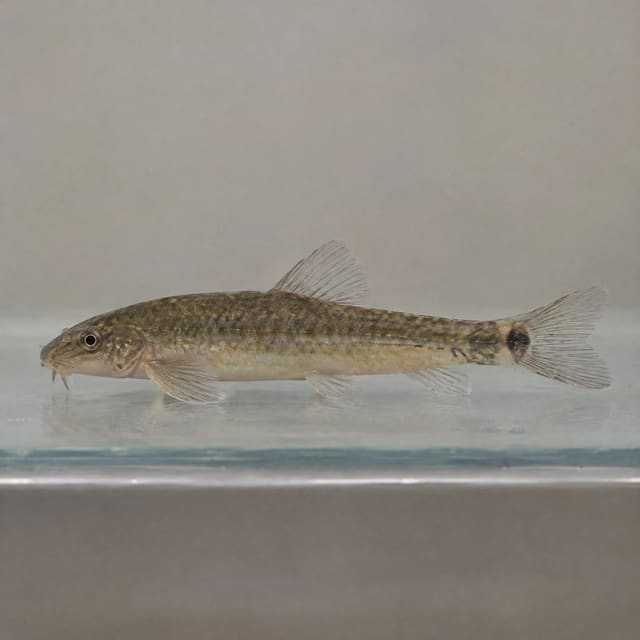
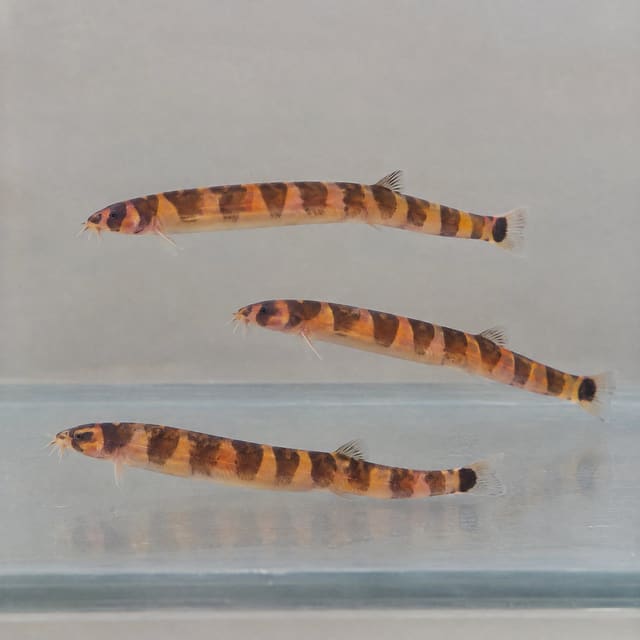
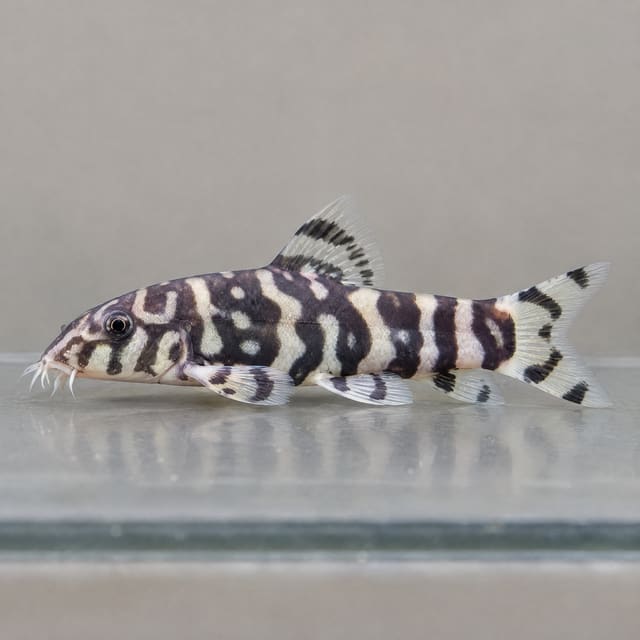
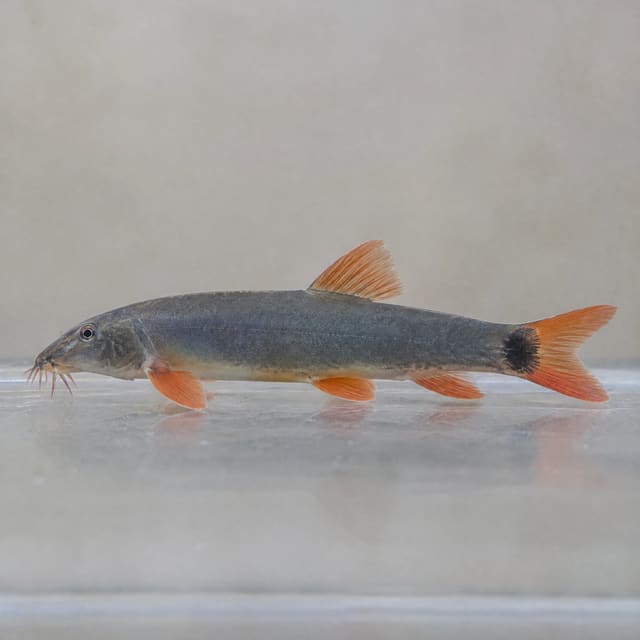
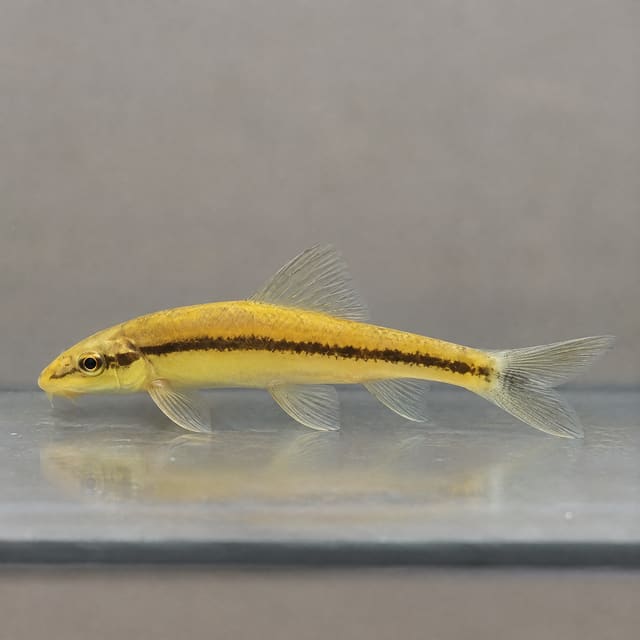
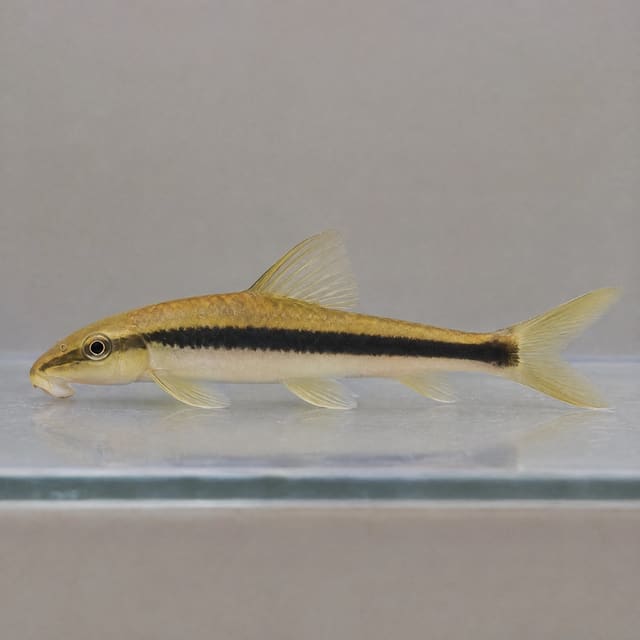
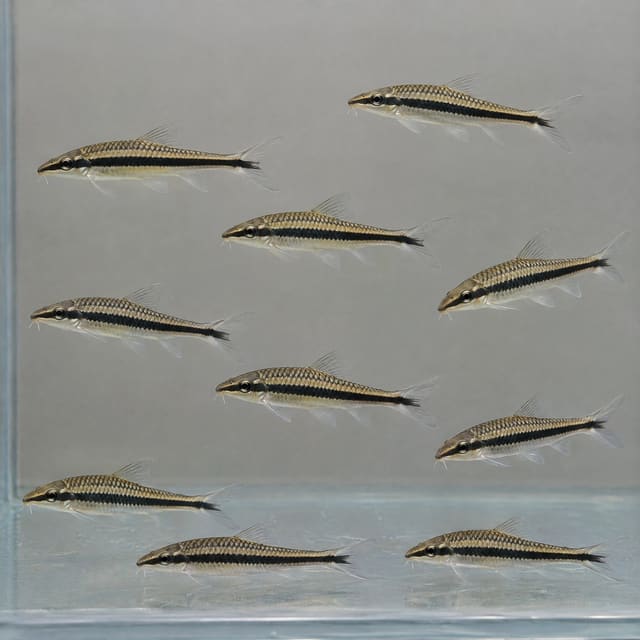
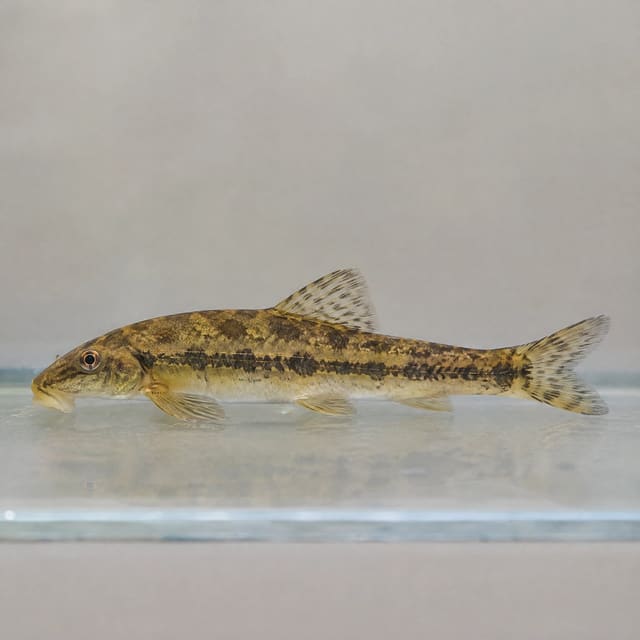
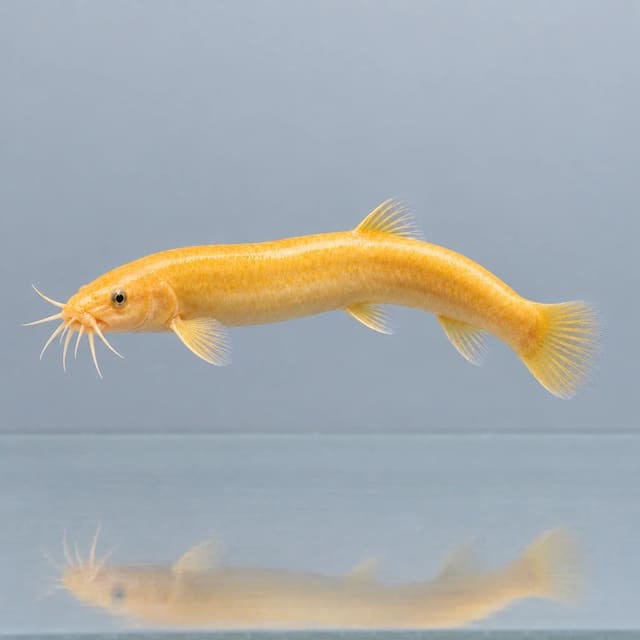
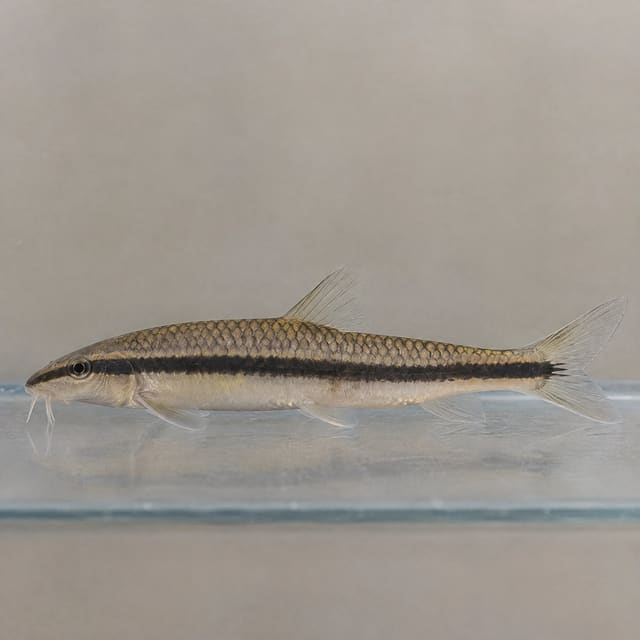
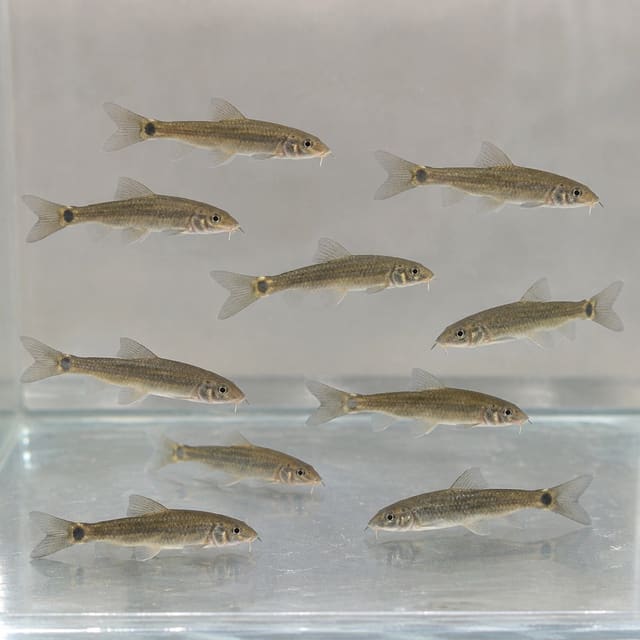
Garras are hard to identify, and this fish is no exception. Seriously Fish and FishBase both describe Ageneiogarra imberba as having no barbels at all, and that is one of the features used to recognise it. Fish sold under the name Garra pingi do not always match that description: the fish in our photographs, for example, shows small barbels at the mouth. That suggests the trade name is used for more than one similar garra, and we cannot promise that every fish is A. imberba in the strict scientific sense.
What does not change is the care. Every candidate is a stream-dwelling, grazing garra of a similar size, and the plan on this page, built from the species profile, comparable garras and OATA's algae-eater guidance, suits them all.
| Feature | Ageneiogarra imberba (Garra pingi) | Other garras (Seriously Fish genus notes) |
|---|---|---|
| Barbels | None | Present in some species; Garra kalpangi, for example, has two pairs |
| Snout | Rounded, with no secondary rostrum and no groove in front of the nostrils | Many have a proboscis or rostral process, a groove in front of the eyes, or a band of tubercles on the snout tip |
| Lateral-line scales | 46–52 | Vary between species |
| Maximum size | 120 mm SL (Seriously Fish); 34.5 cm SL (FishBase) | 45–185 mm SL across the 23 garras Seriously Fish profiles |
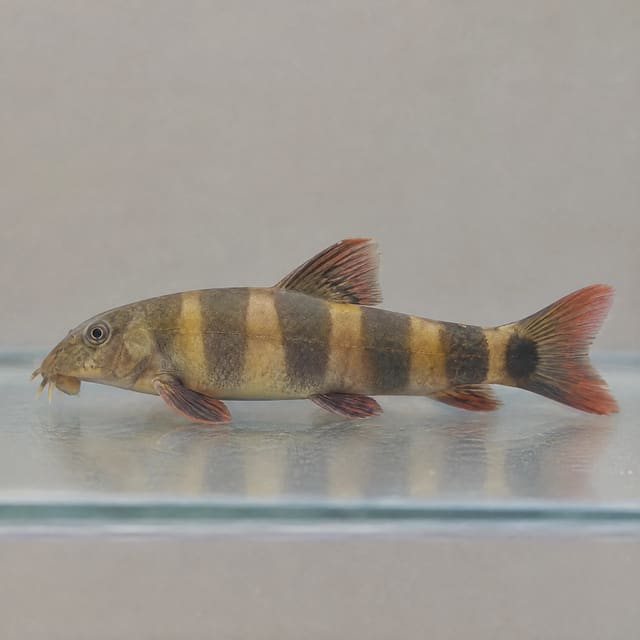
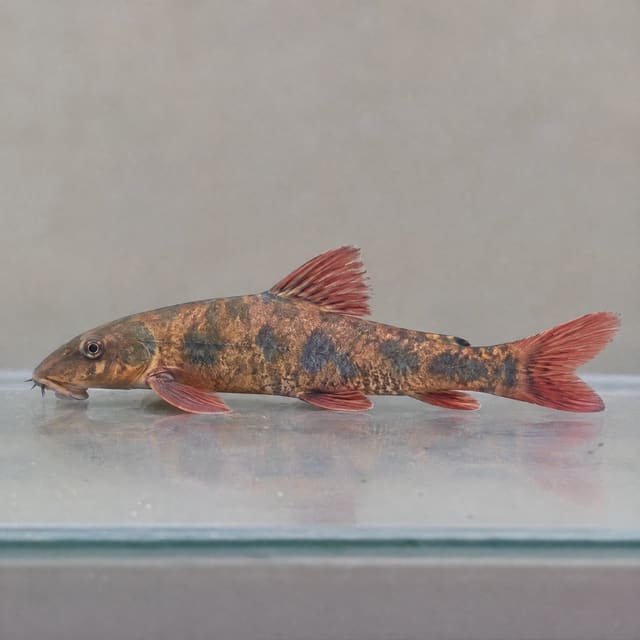
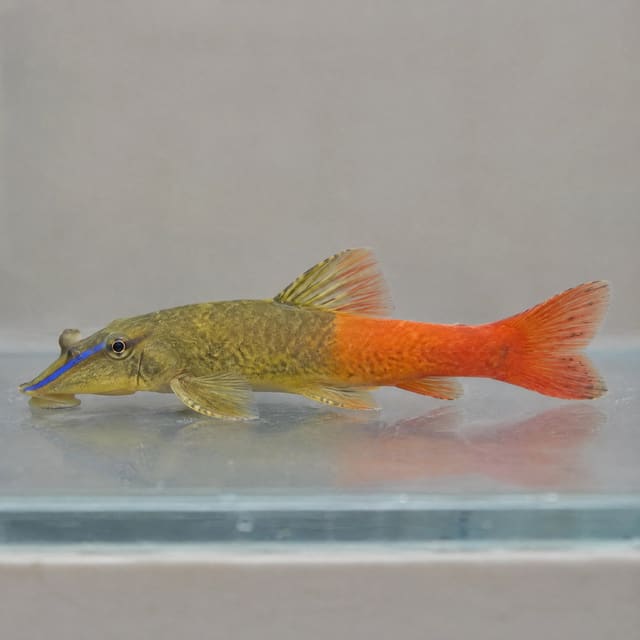
If you already keep garras, compare our Spotted Garra, Redtail Garra and Panda Garra, the Doctor Fish (Garra rufa), the Suckerhead Garra and the Stone Sucker, or browse all our Garra species and the wider loaches and algae eaters section.
Seriously Fish says this species needs to be kept in a group. For comparable garras such as Garra rufa and the Redtail Garra it recommends three or four or more where space allows, notes that a pecking order forms, and warns that a fish kept singly may be more aggressive towards similarly shaped fish. One purchase is one fish, so choose your quantity with the adult group in mind and read our delivery and Live Arrival Guarantee terms before you order.
Seriously Fish lists this species as needing a large tank but gives no figure. For Garra rufa, which reaches the same 120 mm SL, and for Garra bicornuta, it gives a minimum base of 120 × 45 cm, about 243 litres, and we use that as the floor. FishBase's record of 34.5 cm SL is a reason to go larger if you can. OATA advises buying the largest aquarium you reasonably can, because bigger tanks keep temperature and water quality more stable.
Garras can climb glass, so Seriously Fish advises a tight-fitting lid. Our tank volume calculator converts your measurements into litres, and our hillstream loach guide covers the same fast-water principles for other stream fish.
Seriously Fish describes the layout for stream garras: a display like a flowing stream, with water-worn rocks, sand, fine gravel and perhaps a few small boulders, plus driftwood and hardy plants such as Microsorum, Bolbitis or Anubias. The water must be clean and well oxygenated, with a turnover preferably above ten times the tank volume per hour; powerheads or airstones can add flow. Bright lighting encourages the biofilm the fish graze. OATA adds that garras need a soft substrate, well-oxygenated water, and cobbles and wood for cover.
| Area | Purpose |
|---|---|
| Smooth, water-worn stones in the current | Grazing surfaces and resting places (Seriously Fish) |
| Sand and fine gravel between them | A soft substrate (OATA; Seriously Fish) |
| Driftwood and cobbles | Cover and extra grazing surface (OATA) |
| Hardy plants on wood or rock | Microsorum, Bolbitis or Anubias survive the flow (Seriously Fish) |
| Powerhead or airstone | River-like current and high oxygen (Seriously Fish) |
| Tight-fitting lid | Garras can climb glass (Seriously Fish) |
Arrange stones so they break sight lines across the tank. In a group of garras, a fish that can move out of view of a rival settles faster.
No source publishes water values for this species. The table combines OATA's algae-eater guidance, which covers garras, with Seriously Fish's full set of values for the Redtail Garra, a comparable stream garra; Seriously Fish also gives 20–27°C and pH 6.0–8.0 for Garra bicornuta. FishBase classes the Pingi as a subtropical fish and it comes from upland headwaters, so there is no reason to run the tank at the warm end of the range.
| Value | OATA (algae eaters, including garras) | Seriously Fish (Redtail Garra) | Aim for |
|---|---|---|---|
| Temperature | 22–27°C | 20–27°C | 22–27°C, towards the cooler end |
| pH | 6.0–8.0 | 6.0–7.5 | 6.0–7.5 |
| General hardness | 4–12°dH | 1–12 dGH | 4–12°dH |
| Carbonate hardness | 3–10°dKH | Not given | 3–10°dKH |
UK tap water ranges from soft to very hard depending on the region, so test yours, and treat every water change with a conditioner that removes chlorine and chloramine. Our water matcher compares your readings with these ranges, and our water chemistry guide explains pH and hardness.
| Reading | Target |
|---|---|
| Ammonia | Zero mg/l |
| Nitrite | Zero mg/l |
| Nitrate | No more than 20 mg/l above your tap water |
These limits come from OATA's algae-eater guidance. Fish from clean, oxygen-saturated headwaters have little tolerance for waste, so test weekly and after every addition of fish.
Garras come from water that is clean and saturated with oxygen, so the filter and the flow do two jobs: they remove waste and keep oxygen high. Seriously Fish warns not to add stream garras to a biologically immature tank, so let the aquarium mature fully first. Warm water holds less oxygen than cool water, which is another reason not to run this tank warm. Our guide to the aquarium nitrogen cycle explains how a new tank matures.
OATA is clear that algae alone is not enough for algae-eating fish: supplement it with prepared foods such as algae wafers or flakes, plus vegetables such as cucumber, bought organic or washed well to remove pesticide residues. Seriously Fish notes that garras are not exclusive herbivores and suggests meaty foods such as bloodworm, Tubifex, Artemia and chopped prawn, sinking dried foods containing vegetable matter such as Spirulina, and occasional cucumber, melon, blanched spinach or courgette.
From our range, Tropical Green Algae Wafers and Spirulina Granulat make a good daily base, with frozen red mosquito larvae and frozen Artemia a few times a week. Feed once a day. OATA notes that grazing species may need longer than the few minutes it allows other fish, so check after a while and remove anything left. Our algae control guide explains why grazers help with algae but never replace good maintenance.
Choose fish with clear, bright eyes, undamaged fins, intact scales and steady breathing, as OATA advises, and make sure ammonia and nitrite read zero before they arrive. Use OATA's floating-bag method: switch off the lights, float the sealed bag for 10 minutes to match the temperature, add small amounts of tank water over up to 20 minutes, then release the fish, leaving as much bag water behind as possible. Our guide to acclimatising new fish walks through each step.
Add the whole group together, so the fish sort out their pecking order at the same time rather than one newcomer facing settled residents.
| Checkpoint | What to do |
|---|---|
| Before arrival | Test the water; check the flow, the lid and the heater |
| Day of arrival | Lights off, slow acclimatisation, release the group together |
| First feed | Next day, a small meal of algae wafers spread in several places |
| Every day | Watch grazing, breathing, colour and squabbles |
| End of the week | Full water test, then the normal weekly routine |
OATA advises monitoring water quality closely during the first week. Expect some chasing while the pecking order forms; a fish that is constantly harried or never grazes needs attention.
Seriously Fish rates this species as fine with other fish. OATA describes garras as shy, doing best in calm tanks without boisterous or large fish that may eat them. For the Redtail Garra, Seriously Fish suggests a community of stream-dwelling species and notes that once a pecking order forms, tank mates are usually left alone.
Good companions share the need for fast, clean, oxygen-rich water. From our range, consider the Sucker-Belly Loach and the Reticulated Hillstream Loach, and check every pairing in our tank mates tool. Our algae eaters and loaches and oddballs collections show more fish for the same kind of tank.
| Suits | Avoid |
|---|---|
| A group of its own kind or other garras, in a large enough tank | Warm, still community aquariums |
| Hillstream loaches that need the same flow and oxygen | Large or boisterous fish that may eat or harass it (OATA) |
| Small, calm stream fish that share its temperature range | A lone garra with similarly shaped grazers in a small tank (Seriously Fish) |
Expect constant grazing: the fish work over stones, wood and glass for biofilm through the day. Seriously Fish describes disputes among garras as charging, fin flaring and paling, with males extending their rostral process in species that have one; these settle into a pecking order. In the wild, comparable garras live in loose groups.
| Behaviour | What it means | When to act |
|---|---|---|
| Grazing stones and glass all day | Normal feeding | No action needed |
| Short chases and fin flaring | Sorting out the pecking order | Add stones to break sight lines if one fish is constantly harried |
| Paling during a dispute | A normal display | Act if a fish stays pale and stops feeding |
| Climbing the glass near the surface | Normal for garras | Keep the lid closed |
| Hanging at the surface or gasping | Low oxygen or poor water quality | Test the water; increase flow and aeration |
OATA lists the warning signs that something is wrong. Check them at every feed, and when you see one, test the water and look at oxygen and flow first.
| If you see | Do this |
|---|---|
| Hanging at the surface, sitting on the bottom or swimming erratically | Test ammonia, nitrite and temperature; check filter flow and aeration |
| Gills moving faster or slower than usual | Check oxygen, temperature and water quality straight away |
| Colour much darker or paler than normal, or more hiding or aggression | Check the water values, the group and the tank mates |
| White spots, fluffy growths, or lost fins or scales | Test the water and seek fish-health advice before treating |
| Clamped fins, flicking against objects or shimmying | Test the water and watch closely for other signs |
| Weight loss or poor appetite | Review water quality and the feeding routine |
OATA adds a rule for every aquarium fish: never release an unwanted fish or plant into the wild.
No. Seriously Fish and FishBase treat Garra pingi as the same species as Ageneiogarra imberba, which was moved into the genus Ageneiogarra in 2023. The aquarium trade still sells the fish as Garra pingi or the Pingi Algae Eater.
We cannot promise that. The scientific description says the species has no barbels, but fish sold under the trade name, including the fish in our photographs, can show small barbels, which suggests the name covers more than one similar garra. The care is the same for all of them: a large, fast-flowing, oxygen-rich tank with stones to graze and a group.
It grazes the soft film of algae and microorganisms on stones, wood and glass, but OATA is clear that algae alone is not enough food for algae eaters. It needs algae wafers, vegetables and meaty foods as well, and it is not a cure for an algae problem caused by excess light or nutrients.
Seriously Fish gives a maximum of 120 mm standard length (without the tail). FishBase records fish up to 34.5 cm, so plan for a fish of at least 12 cm and allow extra room if you can.
Seriously Fish says the species needs to be kept in a group. For comparable garras it recommends three or four or more where space allows, because a pecking order forms and a single fish may turn on similarly shaped tank mates.
Seriously Fish lists it as needing a large tank. For garras of the same 12 cm size, such as Garra rufa, it gives a minimum base of 120 × 45 cm, about 243 litres, with strong flow, plenty of oxygen and a tight lid.
No values are published for this species. OATA gives 22–27°C, pH 6.0–8.0 and 4–12°dH for algae eaters including garras, and Seriously Fish gives 20–27°C, pH 6.0–7.5 and 1–12 dGH for the Redtail Garra. Aim for 22–27°C towards the cooler end, pH 6.0–7.5 and 4–12°dH, in clean, well-oxygenated water.
Calm fish that need the same fast, clean, oxygen-rich water, such as hillstream loaches, and other garras in a large enough tank. OATA advises avoiding boisterous or large fish that may eat or harass garras, and warm, still community tanks do not suit it.
No reviews for this item yet. Bought one? Honest reviews only, good or bad.
What customers say about ordering from us
Easy website plenty of info on fish your buying great to pick a time slot
TRACEY DURRANT · 7 Oct 2026
Got some lovely fish thank you
Kevin Mackie · 7 Oct 2026
Reviews of our shop, collected by Judge.me, an independent third-party review collector. Newest first.
Moved by UK carriers licensed to handle live animals
Hand-packed with oxygen bags, poly box, heat pack
Email photos the same day; an optional unboxing video helps us review problems faster — claim terms apply
Klarna & PayPal Pay in 3 at checkout