Moderate
Weather Loach / Dojo Loach (Misgurnus anguillicaudatus)
18–23°C · pH 6–8
£8.79
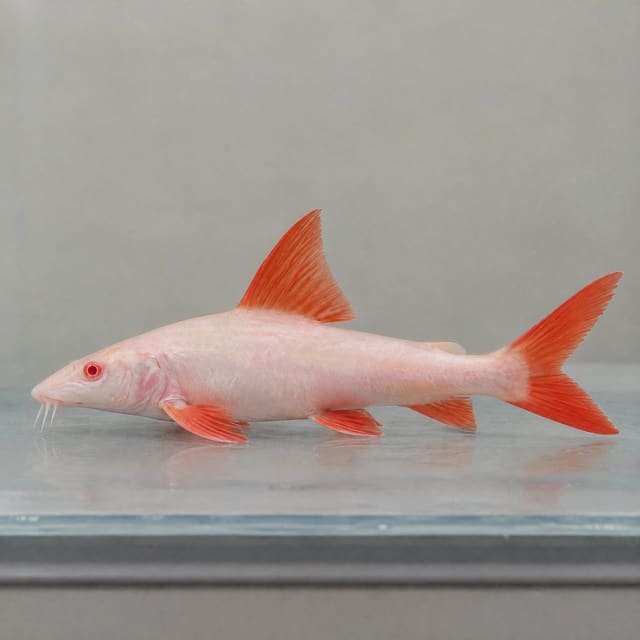
The Gold Weather Loach is a golden ornamental strain of the dojo or oriental weather loach, Misgurnus anguillicaudatus: a long, peaceful, sand-burrowing loach for cool, unheated indoor aquariums at 18–23°C. It grows to 25–28 cm and needs a base of at least 120 × 45 cm, soft sand and a tight lid. Aquarium only: never release it or keep it in a pond. One live fish per purchase.
Misgurnus anguillicaudatus
Quantity discounts are pricing offers, not a group-size recommendation. Check the full care guidance and your existing animals before choosing a quantity.
The Gold Weather Loach is a golden ornamental strain of the dojo or oriental weather loach, Misgurnus anguillicaudatus: a long, peaceful, sand-burrowing loach for cool, unheated indoor aquariums at 18–23°C. It grows to 25–28 cm and needs a base of at least 120 × 45 cm, soft sand and a tight lid. Aquarium only: never release it or keep it in a pond. One live fish per purchase.
Read the full care guidance when planning conditions for your aquarium.
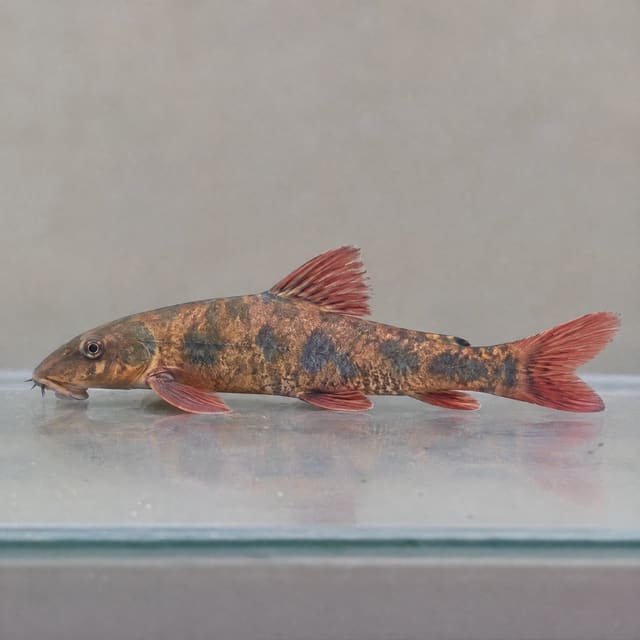
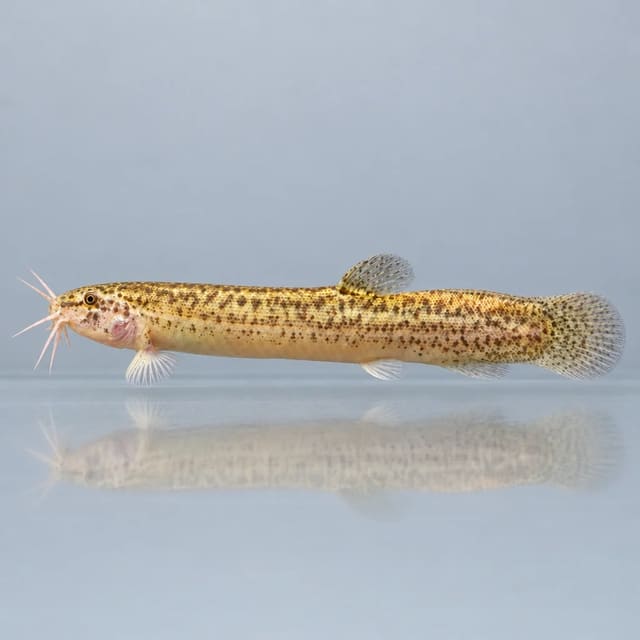
The Gold Weather Loach is a golden ornamental strain of Misgurnus anguillicaudatus, the loach known in Europe as the weather loach, in the United States as the dojo loach and in FishBase as the pond loach. Seriously Fish calls the species the oriental weather loach and notes that xanthic, or golden, strains are available with exactly the same care as the wild, speckled form. It is a long, slim, peaceful bottom-dweller with whisker-like barbels around the mouth, and it spends much of its time digging in soft sand or lying with only its head showing.
The species is native to Siberia, Sakhalin, Korea, Japan and China south to northern Vietnam. It lives in shallow, slow rivers and streams, swamps, oxbows, backwaters and paddy fields, usually heavily vegetated with soft mud or silt. When the water runs short of oxygen it gulps air at the surface and absorbs oxygen through its gut and skin. OATA explains the name: weather loaches become restless when the air pressure drops, as it does before a change in the weather.
| Suits | Not suited to |
|---|---|
| A cool indoor aquarium at 18–23°C | A garden pond or any outdoor container |
| A base of at least 120 × 45 cm with soft sand | Sharp or coarse gravel |
| A group of three or four or more | Tanks with eggs, fry or very small fish |
| Active coldwater fish higher in the water | An open-topped aquarium |
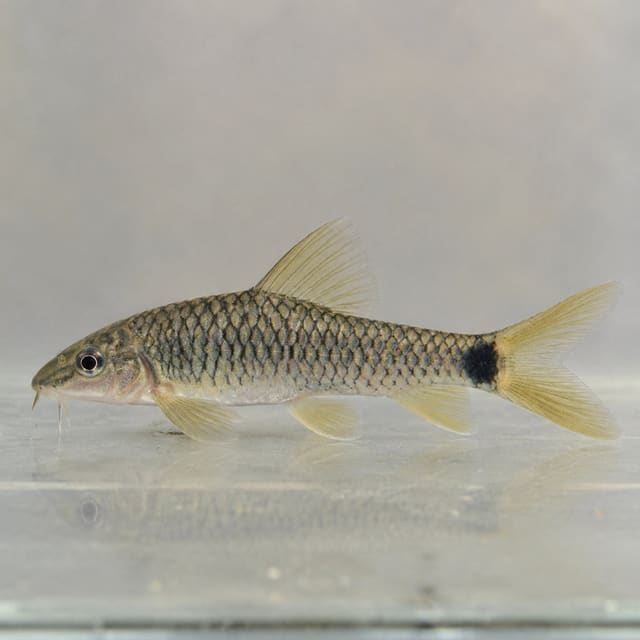
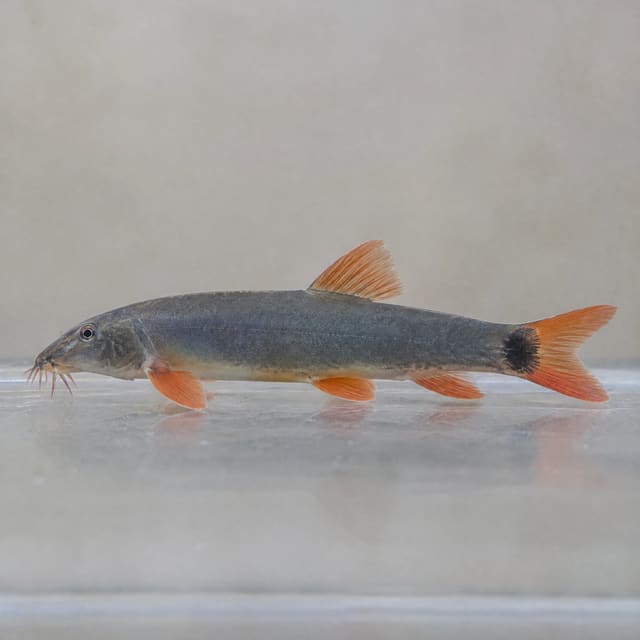
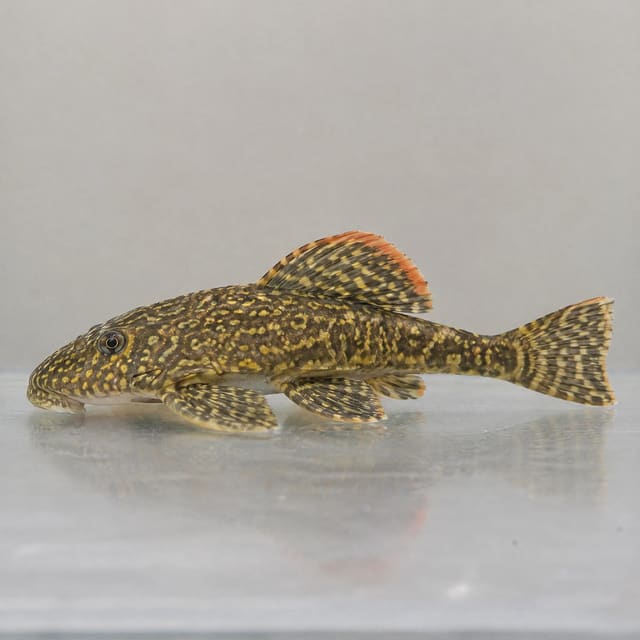
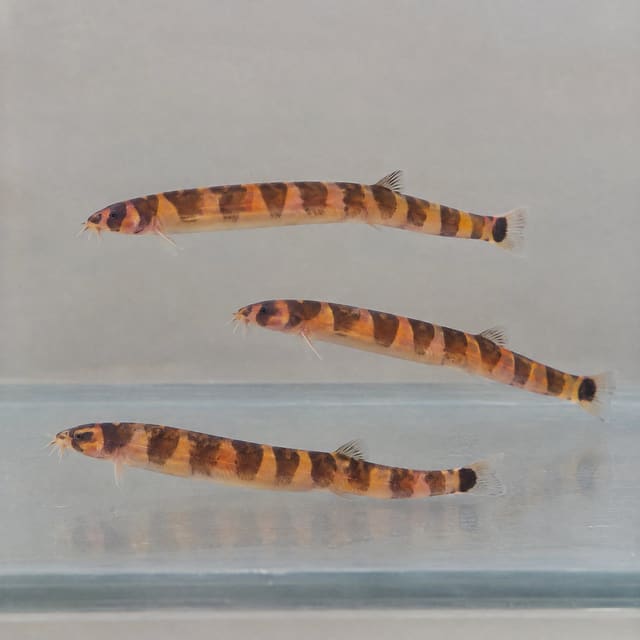
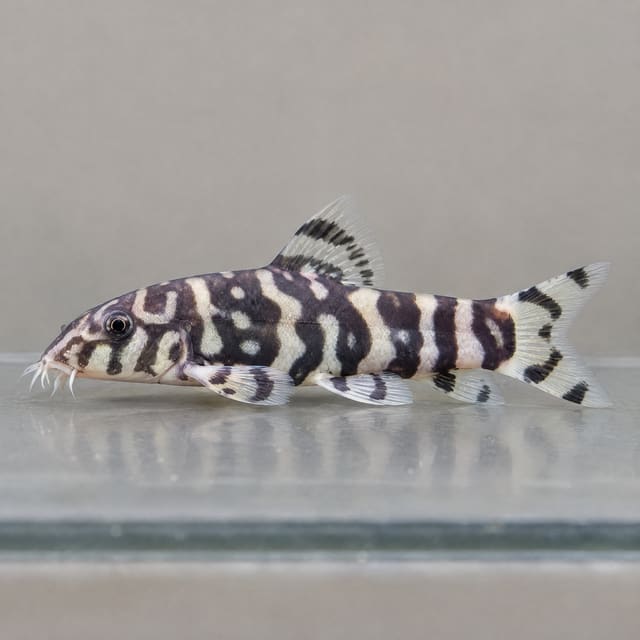
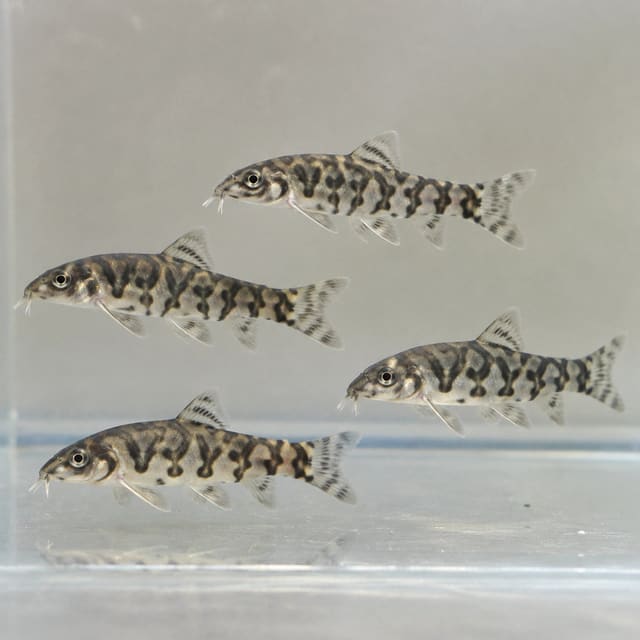
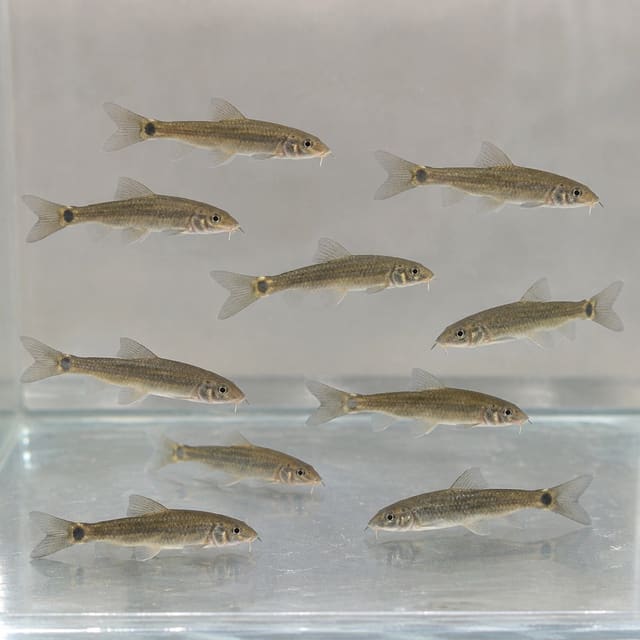
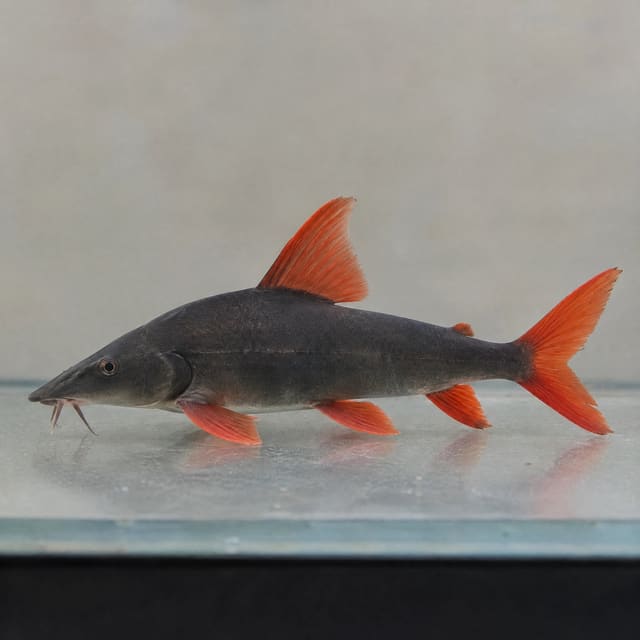
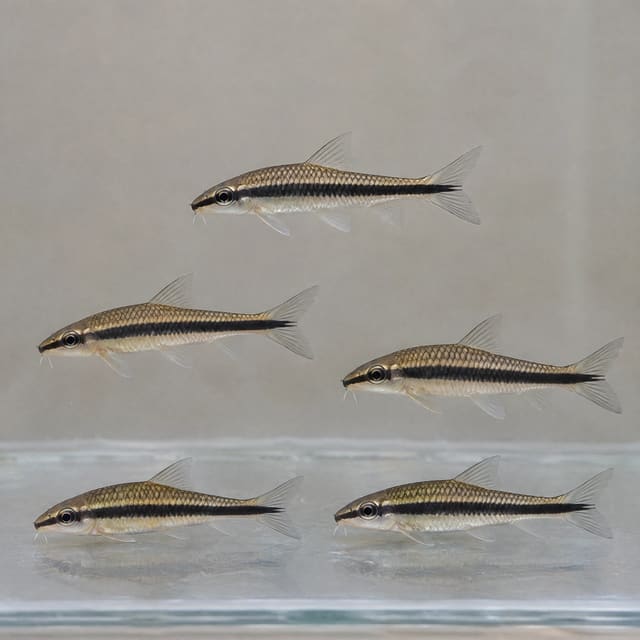
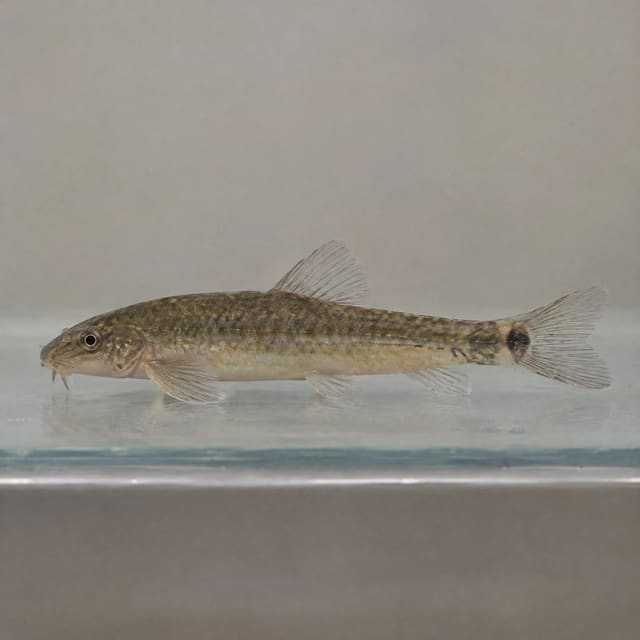
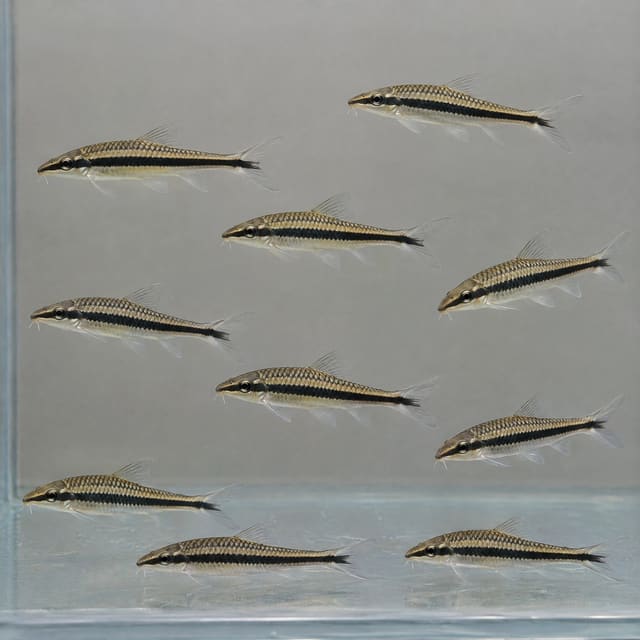
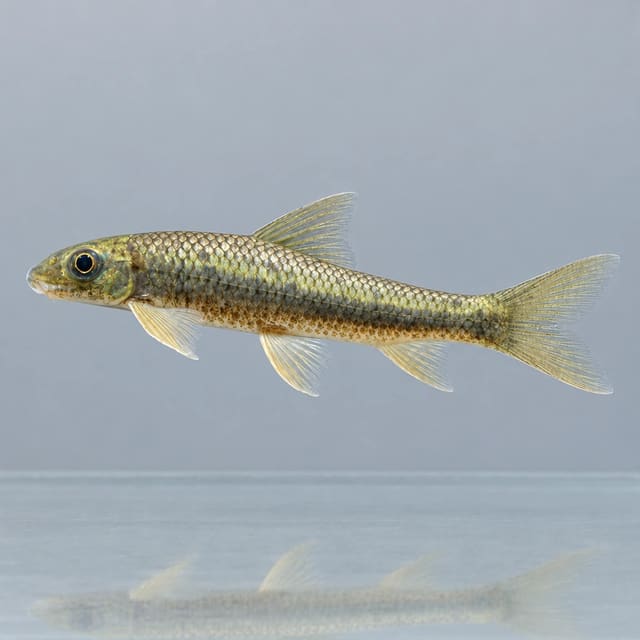
The gallery images are representative, prepared from a reference photograph, and do not show the exact fish supplied; golden strains vary from pale yellow to deep orange.
This is an aquarium fish only. In England and Wales the government's ILFA aquarium ornamentals checklist lists Misgurnus anguillicaudatus among the freshwater fish that may be kept under a general licence in indoor aquaria only, so a garden pond is not allowed. Seriously Fish also says the species should never be kept outdoors.
The reason is its record in the wild. Seriously Fish lists introduced populations in Germany, Spain, Italy, Kazakhstan, Uzbekistan, Turkmenistan, the Philippines, the USA including Hawaii, Canada and Australia, spread mainly through the aquarium trade. It points to the fish's high breeding potential and low vulnerability to predators as conservation concerns, while noting there is no proof yet of harm to native fish. FishBase goes further: at least one country reports adverse ecological effects, and it lists the species as a potential pest.
One purchase quantity supplies one live Gold Weather Loach, medium-large size. Sex is not specified. Seriously Fish notes that females are heavier-bodied and slightly larger, while mature males develop enlarged pectoral fins with a thickened second ray and swellings behind the dorsal fin that are visible from above. OATA adds that sexing is difficult unless the fish are breeding.
OATA describes weather loaches as social fish and recommends a group of at least three or four, as smaller groups can cause stress. Seriously Fish says a single fish can live alone but is more at ease and more active with others of its kind.
Check our current delivery and Live Arrival Guarantee policy before ordering.
Seriously Fish and FishBase give a maximum of 28 cm standard length; OATA says up to 25 cm. OATA also reports lifespans of up to 10 years, so this is a long-term fish. The sources disagree on space: OATA suggests at least 120 litres for a group of three or four, while Seriously Fish gives a minimum base of 120 × 45 cm, about 243 litres. Use the larger figure, because a group of long fish needs floor area to dig and rest.
Weather loaches often bury themselves, so Seriously Fish recommends a soft, sandy or fine gravel substrate, and OATA advises sand or smooth gravel to protect their skin. Place water-worn rocks and driftwood on the glass before adding the sand, so that digging cannot topple them. Lighting can be dim unless you grow plants, and leaf litter makes a natural addition. OATA suggests live plants for cover, or plastic plants and ornaments such as pots and caves, avoiding anything with rough or sharp edges.
Fit a tight lid, because weather loaches jump, and cover the filter intake so that a small fish cannot be drawn in. Seriously Fish also advises against adding them to a biologically immature aquarium.
| Area | Purpose |
|---|---|
| Deep, soft sand | Digging and burying, the loach's main activity |
| Rocks and wood set on the glass | Hiding places that digging cannot undermine |
| Hardy plants or ornaments | Cover and shade |
| Open water above | Room for active tank mates |
This is not a tropical fish. Seriously Fish gives 18–23°C and notes that it tolerates about 5–25°C; FishBase gives 5–25°C. OATA gives 18–24°C and says no heater is needed if the house is centrally heated and the room does not drop below that range. Keep temperature swings small, and keep the tank out of direct sun so that it does not overheat in summer.
| Value | Seriously Fish | OATA | Target |
|---|---|---|---|
| Temperature | 18–23°C (tolerates 5–25°C) | 18–24°C | 18–23°C, kept steady |
| pH | 6.0–8.0 | 6.5–8.0 | 6.5–8.0 |
| General hardness | 1–12 dGH | 4–12 dGH | 4–12 dGH |
Many UK tap waters fall inside this pH and hardness range, but check your water company's figures or use our water matcher before you buy.
| Reading | Target |
|---|---|
| Ammonia | Zero mg/l |
| Nitrite | Zero mg/l |
| Nitrate | No more than 20 mg/l above your tap water |
These limits come from OATA's weather loach care sheet. Our nitrogen cycle guide explains why a new tank must be matured before any fish go in.
OATA treats a filter as essential. Seriously Fish recommends low flow with moderate oxygenation; for a 243 litre aquarium its equipment guide works out a filter rated about 970–1,215 litres per hour, four to five turnovers per hour. Spread the outflow so that the bottom stays calm, and keep some surface movement for oxygen.
In the wild it mainly hunts insect larvae and small crustaceans. OATA describes weather loaches as omnivores that accept most foods: offer a good-quality sinking catfish pellet with small live or frozen foods such as Daphnia, bloodworm and brine shrimp (Artemia). Seriously Fish recommends a varied diet with regular live or frozen foods, not dried food alone.
Confirm a mature filter, zero ammonia and nitrite, and water at 18–23°C before the fish arrives. Use OATA's floating bag method: switch off the lights, float the bag for about 10 minutes, add small amounts of tank water over up to 20 minutes, then release the loach and keep the bag water out of the tank. Our acclimatisation guide walks through it.
| Checkpoint | What to do |
|---|---|
| Before introduction | Test the water and check the lid and intake cover |
| First feeding | Drop a few sinking pellets near the loach's hiding place |
| Every day | Find every loach, even if it is buried |
| After stocking | Retest ammonia and nitrite |
| End of week | Full test and a 25% water change |
A new loach often buries itself for the first days. That is normal; check that it comes out to feed.
Restless swimming when the air pressure falls is normal for this fish. Frequent trips to gulp air are different: the species does this in the wild when the water is short of oxygen, so check aeration and water quality.
| If you see | Do this |
|---|---|
| Restless swimming before a weather change | Normal behaviour; no action needed |
| Repeated gulping at the surface | Increase surface movement and test the water |
| Red or scratched skin | Check for sharp gravel or decor and test the water |
| White spots or fluffy growths | Test the water and seek fish-health advice |
| Not feeding for several days | Check temperature, water readings and competition from tank mates |
Record readings and observations before treating anything, and contact us with them if a problem continues.
Seriously Fish describes Misgurnus as peaceful with each other and with other fish, but they may eat eggs, fry or very small fish. They do best with medium to large, active fish that live higher in the water, and they may disturb slow fancy goldfish, especially at feeding time. OATA says weather loaches do well with most fish in unheated aquariums.
| Suits | Avoid or take care |
|---|---|
| Active, single-tailed goldfish such as comets | Eggs, fry and very small fish |
| Other weather loaches | Slow fancy goldfish at feeding time |
| Medium to large coldwater fish that swim higher up | Tropical fish that need over 23°C |
From our range, consider the Bronzed Comet Goldfish and the Wakin Goldfish; our comet goldfish guide covers their own needs. For another cool-water loach, compare the Stone Loach. Browse more in our loaches and oddball fish, the loaches and algae eaters category, our goldfish and coldwater fish, other coldwater fish and our coldwater fish buying guide, and check any mix with our tank mates tool.
Captive breeding reports are scarce, and Seriously Fish says fish in the trade are probably spawned with hormones. By comparison with its European relative M. fossilis, spawning probably starts at two to three years and about 110 mm standard length; the female leads the male into dense plants, where he wraps around her as the eggs are released. The fry have external gill filaments that disappear after 10–12 days. On Hokkaido in Japan, an all-female population reproduces by sperm-dependent gynogenesis, needing sperm from a related species to start the eggs developing.
Yes. It is a golden ornamental strain of Misgurnus anguillicaudatus, known as the oriental weather loach, the dojo loach and, in FishBase, the pond loach. Seriously Fish says the golden form needs the same care as the wild form.
No. In England and Wales it is on the government list of fish that may be kept under a general licence in indoor aquariums only, and Seriously Fish says it should never be kept outdoors. It has become established in the wild in several countries.
Usually not in a centrally heated home. Seriously Fish gives 18–23°C and OATA 18–24°C, and OATA says no heater is needed if the room does not fall below that range.
Seriously Fish and FishBase give up to 28 cm standard length, while OATA says up to 25 cm. Plan for a long, slim fish of 25–28 cm.
Seriously Fish gives a minimum base of 120 × 45 cm, about 243 litres, and OATA at least 120 litres for a group of three or four. Use the larger footprint for long-term care.
OATA recommends a group of at least three or four. Seriously Fish says one can live alone but is more at ease and active with others of its kind.
Yes, with active goldfish such as comets that swim higher in the water. Seriously Fish warns that it may disturb slow fancy goldfish at feeding time, and it may eat eggs, fry or very small fish.
It becomes restless when the air pressure falls, as it does before a change in the weather. The behaviour is normal and not a sign of illness.
No reviews for this item yet. Bought one? Honest reviews only, good or bad.
What customers say about ordering from us
Easy website plenty of info on fish your buying great to pick a time slot
TRACEY DURRANT · 7 Oct 2026
Got some lovely fish thank you
Kevin Mackie · 7 Oct 2026
Reviews of our shop, collected by Judge.me, an independent third-party review collector. Newest first.
Moved by UK carriers licensed to handle live animals
Hand-packed with oxygen bags, poly box, heat pack
Email photos the same day; an optional unboxing video helps us review problems faster — claim terms apply
Klarna & PayPal Pay in 3 at checkout