Moderate
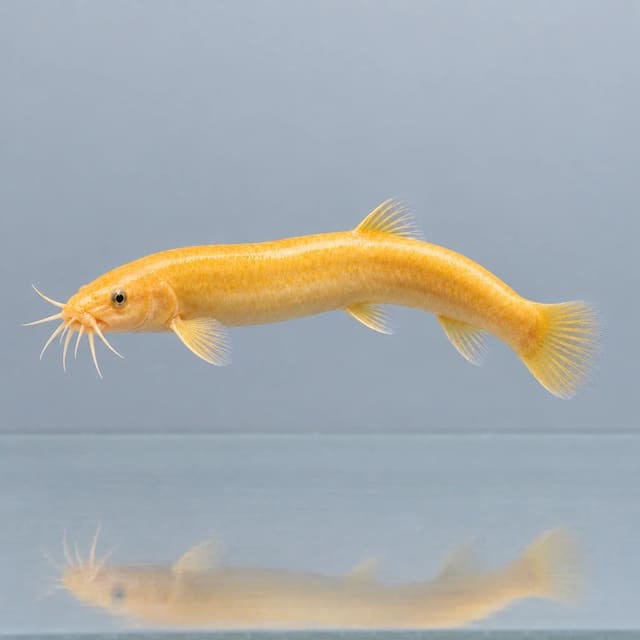
Gold Weather Loach (Misgurnus anguillicaudatus)
18–23°C · pH 6.5–8
£20.89
The Weather Loach, also called the Dojo Loach (Misgurnus anguillicaudatus), is a long, peaceful, sand-digging loach from eastern Asia that grows to about 28 cm. It is a coolwater fish for large indoor aquaria (120 × 45 cm base or more) at 18–23°C, ideally in a group of three. It must never be kept in a pond or released: it is invasive outside its native range. Sold individually.
Misgurnus anguillicaudatus
Quantity discounts are pricing offers, not a group-size recommendation. Check the full care guidance and your existing animals before choosing a quantity.
The Weather Loach, also called the Dojo Loach (Misgurnus anguillicaudatus), is a long, peaceful, sand-digging loach from eastern Asia that grows to about 28 cm. It is a coolwater fish for large indoor aquaria (120 × 45 cm base or more) at 18–23°C, ideally in a group of three. It must never be kept in a pond or released: it is invasive outside its native range. Sold individually.
Read the full care guidance when planning conditions for your aquarium.
The Weather Loach, also sold as the Dojo Loach or Oriental Weather Loach, is Misgurnus anguillicaudatus, a long, slim, bottom-dwelling loach from eastern Asia. It is not a tropical fish. It comes from Siberia, Sakhalin, Korea, Japan and China south to northern Vietnam, where it lives in shallow, slow rivers, swamps, backwaters and paddy fields with soft mud, leaf litter and dense plants. FishBase calls it the pond loach. Its weather-loach name comes from its habit of becoming restless when the air pressure changes before a change in the weather.
Please read this first: this fish is for indoor aquaria only. It must never be put into a garden pond, river, stream or lake, or released anywhere in the wild. Outside its native range it has become an invasive species in parts of Europe, North America and Australia, and in England and Wales the licence that allows it to be kept covers indoor aquaria only. The UK rules are set out in full below.
Seriously Fish gives a maximum of 28 cm standard length and recommends a large aquarium with a base of at least 120 × 45 cm. It is peaceful, hardy and full of character, but it is a big fish for a big tank, not a small "cleaner" for a community aquarium.
| Suits | Not suited to |
|---|---|
| An indoor aquarium with a base of at least 120 × 45 cm | A garden pond, outdoor tub or any outdoor container |
| Cool water, ideally 18–23°C | A tropical aquarium kept at 25°C or warmer |
| Soft sand or fine, smooth gravel to dig in | Sharp or coarse gravel |
| Active fish that swim higher in the water | Fry, very small fish and dwarf shrimp, which it may eat |
| A group of at least three, given the space | A small tank where adults cannot turn or burrow |
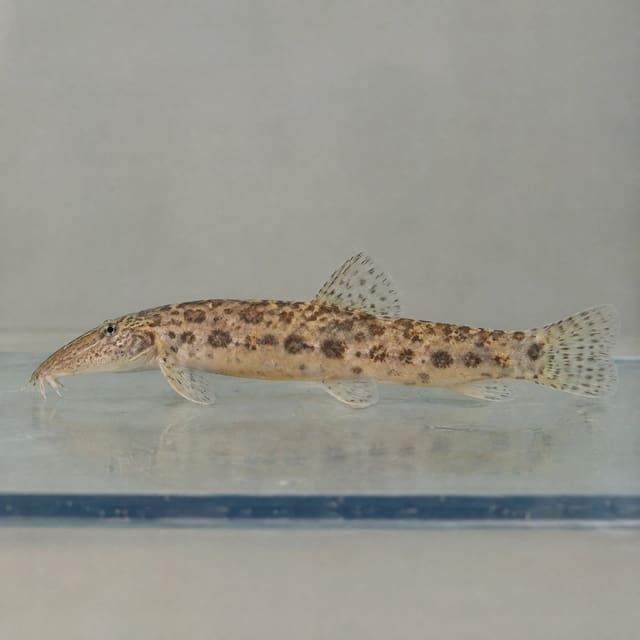
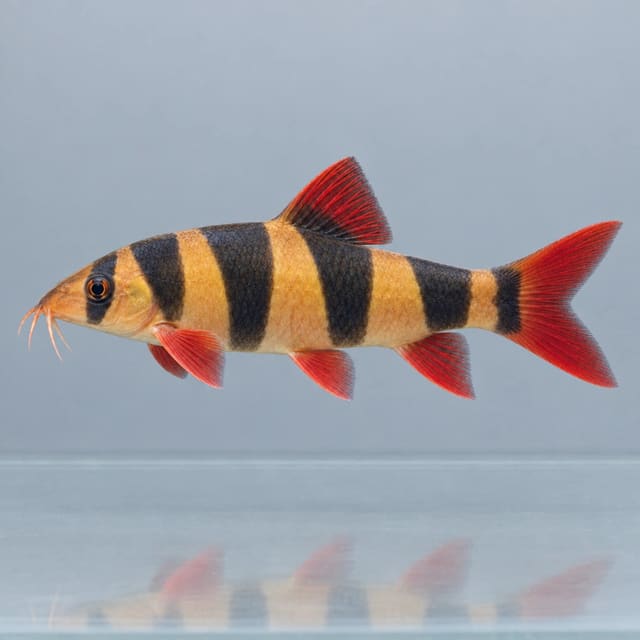
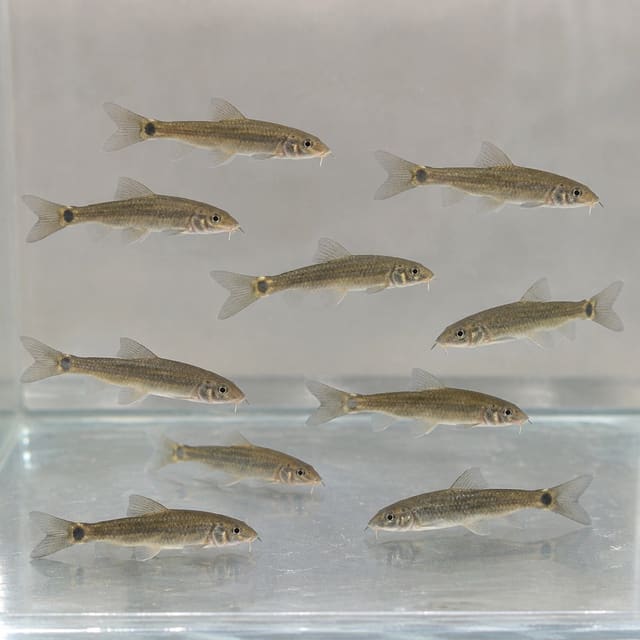
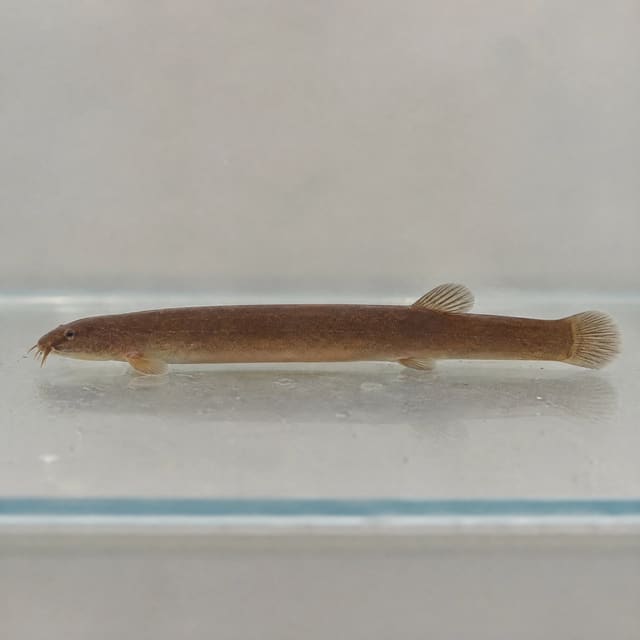
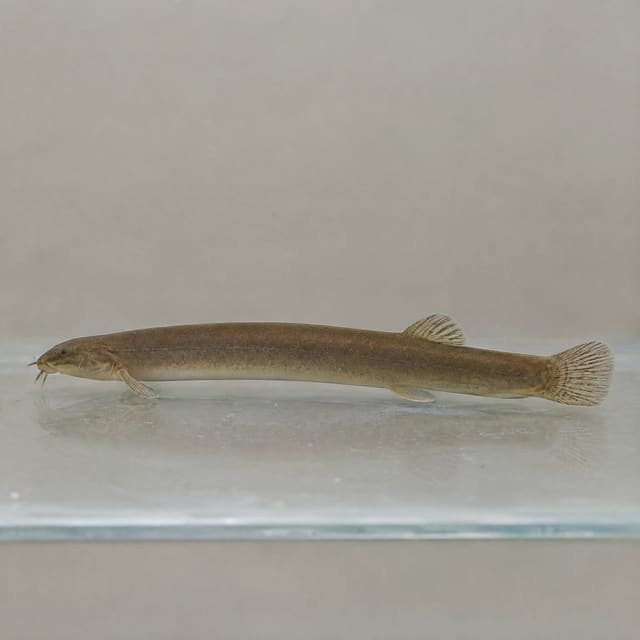
Browse our other loaches and oddball fish and the full loaches and algae eaters category. Our photographs are representative images of this species, not the individual fish supplied.
Seriously Fish describes the weather loach as exceptionally hardy and adaptable, with high reproductive potential. It reports introduced populations in Germany, Spain, Italy, Kazakhstan, Uzbekistan, Turkmenistan, the Philippines, the USA including Hawaii, Canada and Australia. FishBase lists it as a potential pest and notes that at least one country reports harm to the environment after its introduction.
In Australia, the Queensland government lists the Chinese weatherfish (this species) as a restricted noxious fish. It says wild populations exist throughout New South Wales, the Australian Capital Territory and Victoria, that the fish competes with native fish for food and space, can introduce disease and degrade habitats, and that fish reach waterways after being released from aquariums or escaping from ornamental ponds. Seriously Fish is more cautious, saying there is no proof yet of harm to native fish outside its range; the sources disagree on the evidence, but they agree that it spreads.
The same traits that make it easy to keep are the ones that let it survive outside. It tolerates about 5–25°C, can breathe air through its gut and skin when the water is short of oxygen, and buries itself in mud.
| Source | What it says |
|---|---|
| GOV.UK non-native fish rules | Keeping non-native fish in England is licensed; a list sets out the fish that may be kept for ornamental purposes |
| GOV.UK ornamental fish list (13 Oct 2026) | Genus Misgurnus: only M. anguillicaudatus and M. mizolepis, under a general licence that allows keeping in indoor aquaria only (England and Wales). The European weatherfish, M. fossilis, is not on the list |
| OATA unheated aquarium guide | Weather loaches are suitable for unheated aquaria but are not legally permitted outdoors for biosecurity reasons, so must be kept only in indoor aquaria |
| Wildlife and Countryside Act 1981, s.14 | Releasing, or allowing to escape into the wild, an animal not ordinarily resident in Great Britain is an offence; Scotland's version makes it an offence to release any animal outside its native range |
In practice that means four simple rules. Keep it in an indoor aquarium. Never put it, or its eggs or fry, in a garden pond, even for the summer. Never tip a tank containing it into a pond, stream or outside drain. If you can no longer keep it, ask a local aquatic shop or fishkeeping club to rehome it rather than letting it go.
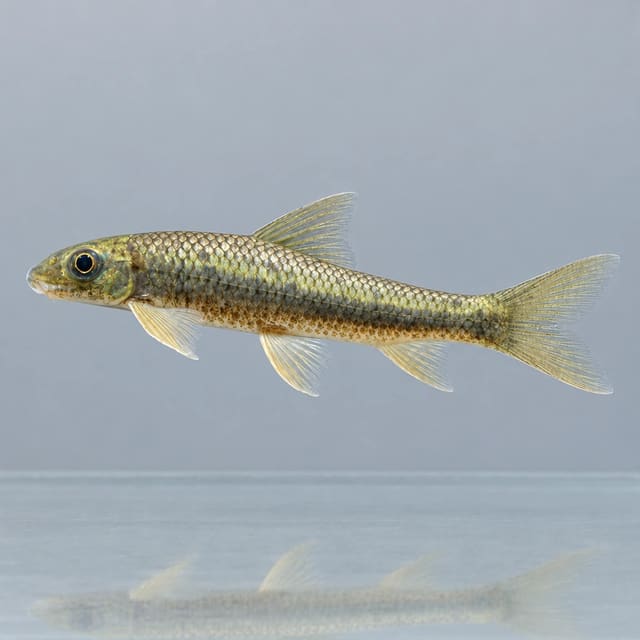
One purchase quantity supplies one live Weather Loach in a medium-large size grade. The grade describes the fish at dispatch, not its adult size, and the sex is not specified. This listing is the natural golden-brown form with small dark speckles along the body and fins and long, sensitive barbels around the mouth.
Seriously Fish notes that xanthic "golden" and leucistic "pink" or "piebald" forms are also traded and need exactly the same care. It also warns that hybrids with the related Paramisgurnus dabryanus are produced in China and may reach the aquarium trade, so a "weather loach" from any source is best treated as needing the same cool, indoor, never-release care.
Young fish cannot be sexed reliably, so plan any group without counting on a particular mix.
Seriously Fish gives a minimum base of 120 × 45 cm, about 243 litres. Seriously Fish and FishBase both record a maximum of 28 cm standard length, OATA says weather loaches can reach up to 25 cm, and FishBase gives 15 cm as a common length. Plan for the larger figure: a fish that may end up around the length of a school ruler needs floor space to turn, dig and rest.
Floor area matters more than height for a bottom-dweller. A long, wide aquarium gives each loach room to burrow and gives tank mates open water above, while a tall, narrow tank wastes volume where the loach will rarely go.
Our aquarium volume calculator turns your tank's dimensions into litres, and our stocking calculator helps you check the adult population before you buy.
Weather loaches spend a lot of time digging, and often bury themselves completely with only the head showing. Seriously Fish recommends soft sand or fine gravel, because coarse material can stress or injure them, and OATA notes that their skin is sensitive, so sharp or rough ornaments are not suitable.
| Area | Purpose |
|---|---|
| Deep layer of soft sand | Lets the loaches burrow and sift for food naturally |
| Water-worn rocks and driftwood | Gives hiding places; put them on the glass before adding sand so digging cannot topple them |
| A few handfuls of leaf litter | Recreates the natural floor and gives extra cover (Seriously Fish suggestion) |
| Open water above | Space for active tank mates that swim higher up |
| Tight-fitting lid and covered intakes | Loaches can jump, and small ones can be drawn into filter intakes |
Seriously Fish suggests fairly dim lighting unless you are growing plants. If you add plants, choose hardy ones and anchor them well or attach them to wood and rock, because a digging loach will uproot anything loosely planted in the sand.
Seriously Fish recommends 18–23°C, pH 6.0–8.0 and 1–12 dGH, and says the fish reportedly tolerates 5–25°C. OATA gives 17–24°C, pH 6.5–8.0 and 4–12°dH. The ranges overlap well: aim for a steady 18–23°C with pH 6.5–8.0 and soft to medium hardness.
In a heated home an indoor aquarium often sits in that range without a heater, but measure it rather than assume. A tank in a warm room in summer can climb above 23°C, and one in an unheated room can fall below 18°C in winter. Our water matcher checks your tap-water readings against the range, and the guide to aquarium water chemistry explains pH and hardness.
| Reading | Action point |
|---|---|
| Temperature | Keep 18–23°C (Seriously Fish); OATA allows 17–24°C |
| pH | Keep within 6.5–8.0 (where both sources agree) |
| General hardness | Soft to medium, about 4–12 dGH |
| Ammonia | Maintain at zero mg/l |
| Nitrite | Maintain at zero mg/l |
| Nitrate | No more than 20 mg/l above your normal tap-water level |
The waste limits come from OATA's unheated aquarium guide. A weather loach can survive poor water in the wild, but surviving is not thriving: in an aquarium, waste builds up in the sand where it lives, so keep those readings at the limits above.
Seriously Fish advises avoiding strong flow but providing some oxygenation, and never adding this fish to a biologically immature aquarium. Use a well-established filter sized for the adult stock, with the outflow spread across the surface rather than blasting across the sand, and cover the intake with a guard or sponge.
Our nitrogen cycle guide explains how a new aquarium matures and why a weather loach should only go into a tank that is already established.
In the wild the weather loach feeds mainly on insect larvae and small crustaceans, and FishBase adds worms and other small aquatic animals. Seriously Fish says it accepts sinking dried foods but should regularly get live or frozen foods such as Daphnia, brine shrimp and bloodworm for a varied diet. OATA describes it as omnivorous and recommends a good-quality sinking catfish pellet.
If busy tank mates eat everything first, split the same daily amount and give part of it shortly after the lights go out, when the loach can feed undisturbed. Keep the total amount the same: uneaten food hidden in sand rots quickly.
Before the loach arrives, confirm that the filter is mature, ammonia and nitrite read zero, the temperature is 18–23°C and the lid closes fully. Float the sealed bag for about 10 minutes with the lights off, add small amounts of aquarium water over up to 20 minutes, then net the fish into the tank and discard the bag water. Expect it to bury itself or hide for the first few days.
| Checkpoint | What to do |
|---|---|
| Before arrival | Test the water; fit the intake guard and check the lid |
| Arrival day | Acclimatise with the lights off; leave it to settle |
| Days 1–3 | Offer a few sinking pellets after lights-out and check they are eaten |
| Every day | Look for the loach, its breathing and its barbels; check nothing has escaped |
| End of week | Retest ammonia and nitrite and carry out normal maintenance |
For more detail, follow our step-by-step guide to acclimatising new fish, and check our delivery and live arrival terms so you can be at home on the day.
A healthy weather loach has intact barbels, smooth skin, clear eyes and a good appetite. Some behaviour that looks odd is normal: burying itself with only the head showing, becoming restless when the air pressure changes, and an occasional dash to the surface to gulp air.
| If you see | Do this |
|---|---|
| Frequent air gulping or fast gill movement | Test ammonia and nitrite, check the temperature and add surface movement |
| Worn, short or red barbels | Check for sharp gravel and dirty sand; switch to soft sand |
| Scrapes or reddened skin | Remove rough décor and test the water |
| White spots or fluffy growths | Test the water and seek fish-health advice |
| Not seen for several days | Check behind décor, inside filters and under the lid edge |
| Thin body despite feeding | Make sure sinking food reaches the bottom before others take it |
Seriously Fish says the weather loach can be kept alone but is more settled and active with others of its kind. OATA describes it as a social species and recommends groups of at least three so they can interact. A group digging and resting together is one of the best things about keeping them, but only plan for it if the floor space allows three adults.
Seriously Fish says reports of captive breeding are scarce and short on detail. In the wild it probably breeds like the European weatherfish: first spawning at two to three years old and about 11 cm, between March and July, with the male coiling around the female in dense plants as she releases eggs. The fry have external gill filaments that disappear after 10–12 days. That high breeding potential is one more reason the fish, its eggs and its fry must never reach a pond or the wild.
Seriously Fish describes the weather loach as peaceful with its own kind and other species, and says it does best with medium to large, active fish that stay higher in the water. It may eat eggs, fry and very small fish, and because it hunts small crustaceans in the wild, dwarf shrimp are at risk too.
| Suits | Avoid |
|---|---|
| Active single-tailed goldfish such as the Bronzed Comet Goldfish and Wakin Goldfish | Slow fancy goldfish, which it can disturb at feeding time |
| Medium-sized, active cool-water fish such as the Rosy Barb | Fry, very small fish and dwarf shrimp |
| Fish happy at 18–23°C in an indoor aquarium | Tropical fish that need 25°C or more |
| Others of its own kind | Aggressive fish that nip its fins and barbels |
Single-tailed goldfish grow large too, so the aquarium must suit their adult size as well. Our comet goldfish guide covers their needs, and you can browse more coldwater companions in our goldfish and coldwater fish range. The Stone Loach is another loach for cool water, but it is a European river fish that needs faster, well-oxygenated flow, so it is not a natural partner for a weather loach set-up.
Yes, indoors. In England and Wales the government list of freshwater fish kept under a general licence includes Misgurnus anguillicaudatus, and that licence allows keeping in indoor aquaria only. It is an offence to release it into the wild anywhere in Great Britain.
No. The general licence covers indoor aquaria only, OATA says it is not legally permitted outdoors, and Seriously Fish says it should never be kept outdoors. It has been introduced and has spread in the wild in parts of Europe, North America and Australia.
Usually not in a heated home. Seriously Fish recommends 18–23°C and OATA 17–24°C. Measure the water: use a heater only if the room drops below that range, and cool the tank if summer heat pushes it higher.
Seriously Fish and FishBase both give a maximum of 28 cm standard length; OATA says up to 25 cm, and FishBase gives 15 cm as a common length. Plan for the larger figure.
Seriously Fish gives a minimum base of 120 × 45 cm, about 243 litres, with soft sand, smooth hiding places and a tight-fitting lid. A group needs more room than that minimum.
OATA recommends at least three. Seriously Fish says one can live alone but is more settled and active with others of its kind. Each purchase quantity supplies one fish.
It suits active coldwater fish such as comet and wakin goldfish. Seriously Fish warns it can disturb slow fancy goldfish at feeding time, and it may eat eggs, fry and very small fish.
Restless activity when air pressure changes gave it the name weather loach. It can also breathe air through its gut and skin, so an occasional gulp is normal; frequent gulping means you should test the water and add aeration.
No reviews for this item yet. Bought one? Honest reviews only, good or bad.
What customers say about ordering from us
Easy website plenty of info on fish your buying great to pick a time slot
TRACEY DURRANT · 7 Oct 2026
Got some lovely fish thank you
Kevin Mackie · 7 Oct 2026
Reviews of our shop, collected by Judge.me, an independent third-party review collector. Newest first.
Moved by UK carriers licensed to handle live animals
Hand-packed with oxygen bags, poly box, heat pack
Email photos the same day; an optional unboxing video helps us review problems faster — claim terms apply
Klarna & PayPal Pay in 3 at checkout