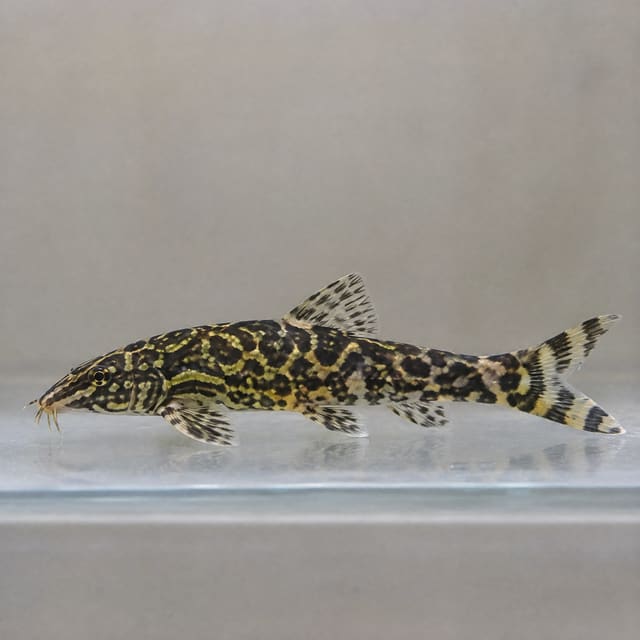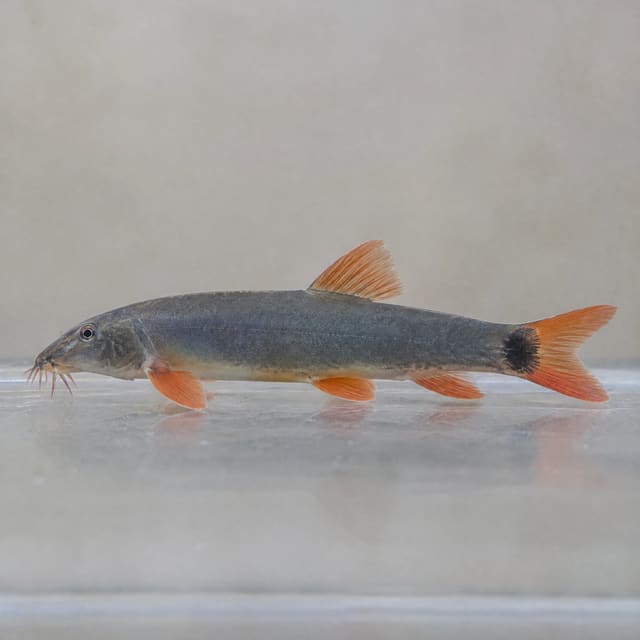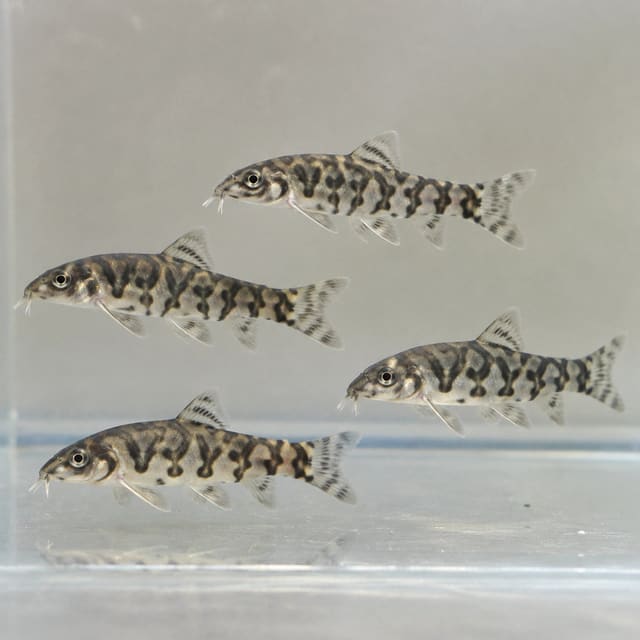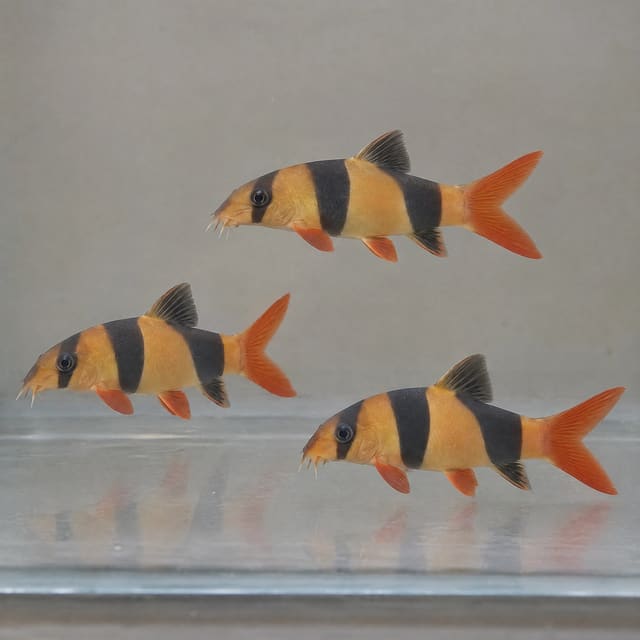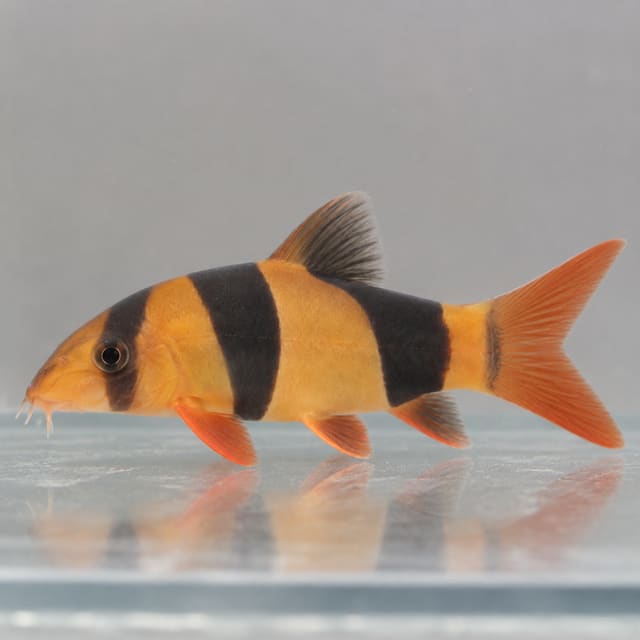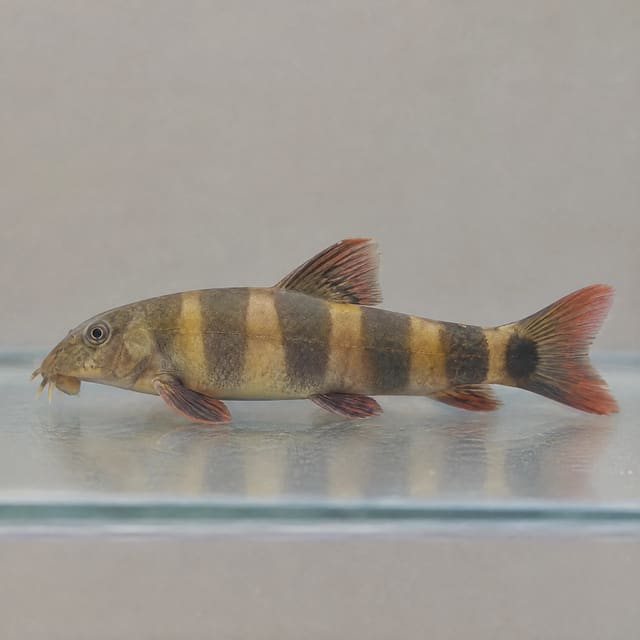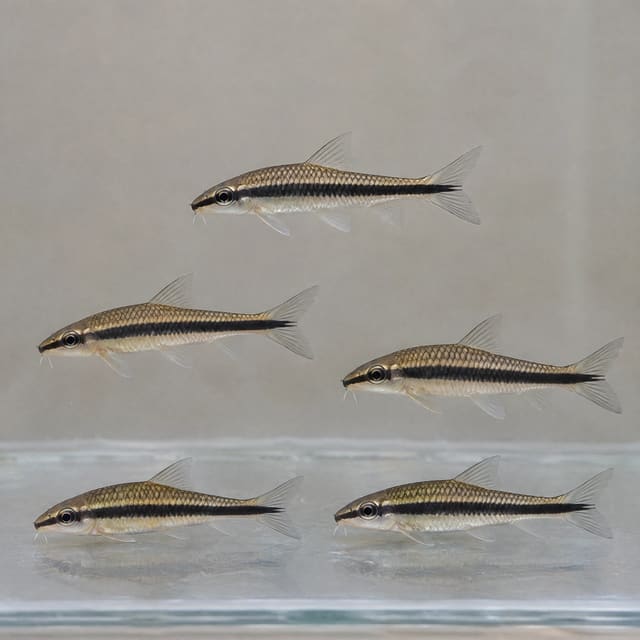
YoYo Loach (Botia lohachata)
24–27°C · pH 6.5–8
£6.29
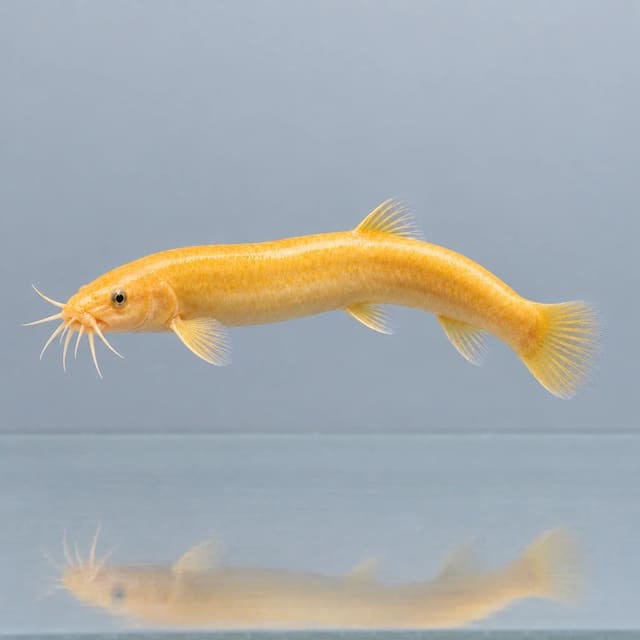
The Burmese Loach (Botia histrionica) is a golden, dark-banded botiid loach from Myanmar that grows to about 13 cm. It is active and sociable, needs a group of five or six or more in an aquarium of at least 120 × 45 cm at 22–28°C, and suits robust tank mates. Sold individually as one live fish.
Botia histrionica
Quantity discounts are pricing offers, not a group-size recommendation. Check the full care guidance and your existing animals before choosing a quantity.
The Burmese Loach (Botia histrionica) is a golden, dark-banded botiid loach from Myanmar that grows to about 13 cm. It is active and sociable, needs a group of five or six or more in an aquarium of at least 120 × 45 cm at 22–28°C, and suits robust tank mates. Sold individually as one live fish.
Read the full care guidance when planning conditions for your aquarium.
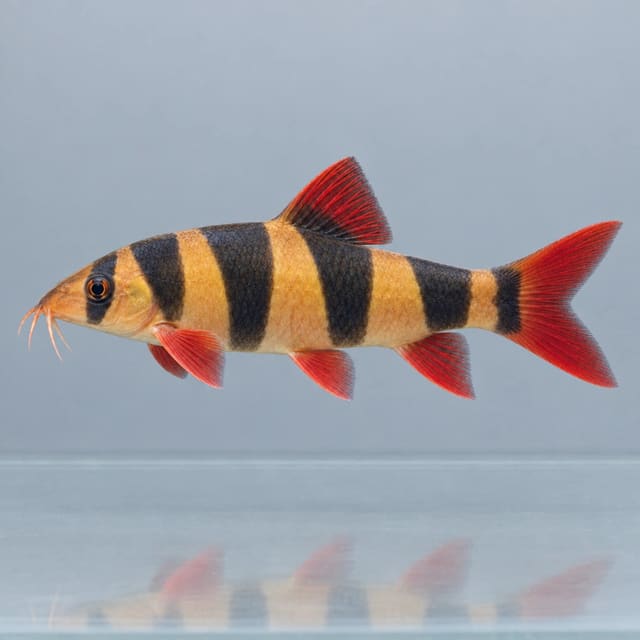
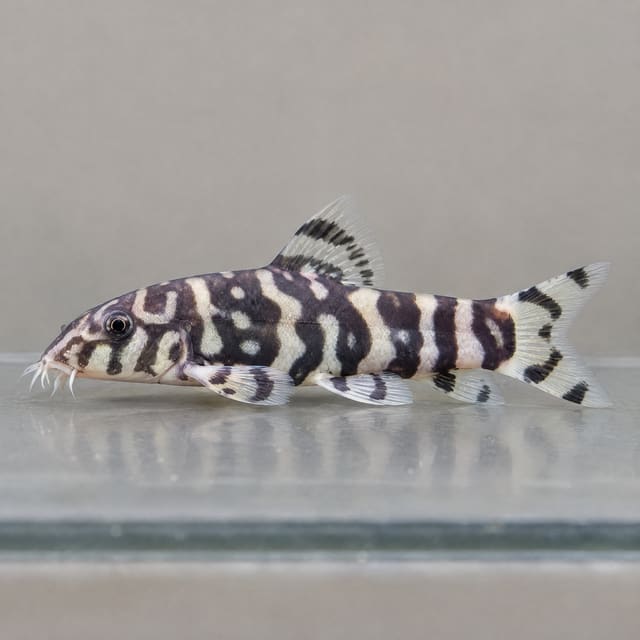
The Burmese Loach (Botia histrionica) is a banded loach from the family Botiidae, native to Myanmar and neighbouring parts of India and China. Seriously Fish lists its trade names as Burmese loach, golden zebra loach, Burmese zebra loach and Asian loach. Young fish are golden to yellowish with five broad, dark bars on each flank. It grows to about 13 cm (Seriously Fish gives 130 mm standard length and FishBase 13 cm total length) and is an active, sociable bottom-dweller that must be kept in a group in a large aquarium.
It is recorded from Manipur in India, the upper Ayeyarwady basin in Yunnan, China, and much of Myanmar, including the Ayeyarwady, Sittaung, Salween and Ataran drainages. FishBase describes its habitat as clear mountain streams. Seriously Fish notes that its wild habitat has not been described in detail, but that it occurs alongside the Kubotai loach in the Ataran River, where images suggest slow-flowing, forest-shaded headwaters with clear, well-oxygenated water, sand and rock, driftwood and leaf litter. FishBase rates the species Least Concern on the IUCN Red List.
| Feature | Burmese loach | Kubotai loach (Botia kubotai) |
|---|---|---|
| Flank bars in young fish | Five solid bars that stay solid longer; the central bar usually has a pale spot at the top, making a "y" shape | Bars split at a young age and/or develop horizontal "peaks" |
| Pelvic fins | Usually one dark stripe | Usually two dark stripes |
| Dorsal fin | Broad dark band at the base in young fish, thin or absent in adults | More black in the fins overall |
Adult patterns vary between river populations: Seriously Fish describes Ayeyarwady fish that usually stay yellowish with solid bars, and paler Salween fish whose bars break into pale-spotted sections. It also notes that hybrids are on the market, including an apparent cross with the clown loach, which is one reason colour can differ between imports. Compare our Kubotai Loach, YoYo Loach and Zebra Loach (Botia striata), or browse all our Botia loaches and the wider loaches and algae eaters section.
Seriously Fish recommends at least five or six Burmese loaches, and preferably ten or more, and warns that fish kept singly or in pairs or trios can become withdrawn or aggressive, or stop feeding. OATA's loach guidance also says to keep at least five, and that more is better. One purchase is one fish, so choose your quantity with the adult group in mind, and read our delivery and Live Arrival Guarantee terms before you order.
Seriously Fish gives a minimum base of 120 × 45 cm, about 243 litres, for this species, and rates it moderately demanding because it needs a well-established tank with stable water. That space is for a group of fish that each reach about 13 cm and spend the day patrolling the floor and lower water. OATA adds that bigger tanks keep temperature and water quality more stable. Our stocking calculator helps you check the full adult population, and our first tropical aquarium guide explains how to set up and mature a tank before fish arrive.
Seriously Fish suggests a filter turnover of about 970–1,215 litres per hour for a tank of this size, which works out at roughly four to five times the volume of a 243-litre tank every hour. Fit a heater with a thermostat and a secure lid.
Recreate a clear, well-oxygenated stream bed. OATA recommends fine gravel or, ideally, sand to protect loaches' sensitive skin and barbels. Add smooth rocks, driftwood and some leaf litter, as Seriously Fish describes for its habitat, and build caves and crevices so every fish has somewhere to retreat during squabbles. Leave open sand at the front where the group can forage and you can count them at feeding time.
| Area | Purpose |
|---|---|
| Open sand | Foraging and digging with the barbels |
| Rock caves and wood tangles | Retreats for each fish and broken sight lines |
| Leaf litter | Natural foraging ground |
| Tough plants on wood or rock | Cover that survives a loach group; soft-leaved plants may be eaten |
| Open water above | Swimming room for active cyprinid tank mates |
Seriously Fish notes that Burmese loaches will eat soft-leaved aquatic plants, so choose tough species fixed to wood or rock rather than soft stem plants rooted in the sand.
Our sources give slightly different ranges, so the table shows both and a range where they overlap. Stable, clean, well-oxygenated water matters more than hitting one exact number.
| Value | Seriously Fish (this species) | OATA (all loaches) | Aim for |
|---|---|---|---|
| Temperature | 22–28°C | 22–27°C | 22–27°C |
| pH | 6.0–7.5 | 6.5–8.0 | 6.5–7.5 |
| General hardness | 2–10 dGH | 4–12°dH | 4–10 dGH |
UK tap water ranges from very soft to very hard, so test yours and treat it with a conditioner that removes chlorine and chloramine. Our water matcher compares your readings with these ranges.
| Reading | Target |
|---|---|
| Ammonia | Zero mg/l |
| Nitrite | Zero mg/l |
| Nitrate | No more than 20 mg/l above your tap water |
These limits come from OATA's loach guidance. A group of 13 cm loaches produces a lot of waste, so test weekly and after every addition of fish.
Unlike shy sand-dwelling loaches, Burmese loaches come from clear, oxygen-rich water, so give the tank strong filtration and good surface movement. Keep the filter mature by cleaning it gently, and add fish gradually so the bacteria can keep up.
Seriously Fish describes the Burmese loach as chiefly carnivorous, feeding in nature on molluscs, insects, worms and other invertebrates, though it will also eat soft-leaved plants. It suggests good dried foods alongside bloodworm, Tubifex, Artemia, fresh fruit and vegetables, and home-made foods bound with gelatine. Our frozen red mosquito larvae and sinking bottom-fish granules make a good base.
Seriously Fish also points out that it is not a dedicated snail-eater, so do not rely on a group to clear a snail infestation. OATA advises feeding loaches once a day and giving only what they finish within a few minutes, so leftovers do not foul the water.
Have the aquarium mature, with ammonia and nitrite at zero and the temperature, pH and hardness within range, before the fish arrive. Use OATA's floating-bag method: lights off, float the bag for about 10 minutes, add small amounts of tank water over at least 30 minutes, and release the fish with as little bag water as possible. Add the whole group at once, so the loaches sort out their order together rather than one newcomer facing an established group.
| Checkpoint | What to do |
|---|---|
| Before arrival | Test water; check the caves, lid and heater |
| Day of arrival | Lights off, slow acclimatisation, release the group together |
| First feed | Next day, a small sinking meal spread in several places |
| Every day | Watch feeding, colour, breathing and squabbles |
| End of week | Full water test, then the normal weekly routine |
Expect some chasing and colour changes in the first days while the group settles. A fish that is constantly harried, cannot reach food or stays pale for days needs attention.
Botiid loaches have a rich set of behaviours that can look alarming if you have not kept them before. Seriously Fish records each of the behaviours below in aquarium Burmese loaches.
| Behaviour | What it means | When to act |
|---|---|---|
| "Greying out" | Colour fades during dominance disputes | If a fish stays pale and stops feeding, check water and group size |
| "Shadowing" | One fish swims closely alongside another | Normal social behaviour |
| Clicking sounds | Audible clicks from the group | Normal |
| The "loachy dance" | Energetic swimming up and down | Normal, unless it comes with rapid breathing or other signs of stress |
Seriously Fish also notes that Burmese loaches have sharp, movable spines under each eye, which they raise when stressed. These spines can tangle in nets and injure careless hands, so move the fish in a container where you can.
Seriously Fish describes the Burmese loach as not especially aggressive, but advises keeping it away from much smaller fish and from slow, long-finned fish such as bettas, guppies and many cichlids, whose fins may be nipped. Good companions are peaceful open-water cyprinids, other botiid loaches, some cobitid and nemacheilid loaches, Epalzeorhynchos, Crossocheilus, Garra and many catfish. From our range, the Siamese Algae Eater and the Rainbow Shark fit that list.
| Suits | Avoid |
|---|---|
| Peaceful, active open-water cyprinids of a similar size | Much smaller fish |
| Other botiid loaches, given enough space | Slow, long-finned fish such as bettas and guppies |
| Crossocheilus, Epalzeorhynchos and Garra | Many cichlids with long or trailing fins |
| Many robust catfish | Delicate, shy species that cannot compete for food |
Seriously Fish lists the Clown Loach as a companion only for very large tanks, because it grows far bigger. Our tank mates tool helps you check a mix, and our loaches and oddballs and bottom-dwelling fish collections show more floor-level species.
OATA notes that loaches have a spine just under each eye and advises double-bagging them for transport so the spines cannot puncture the bag. It also notes that loaches have reduced or absent scales and may not tolerate some medications, so read labels carefully and test the water before treating.
| If you see | Do this |
|---|---|
| Hanging at the surface or rapid breathing | Test ammonia, nitrite and temperature; check filter flow and aeration |
| A fish that stays pale and hides | Check group size, caves and feeding access |
| White spots, fluffy growths or lost scales | Test the water and seek fish-health advice |
| Weight loss or poor appetite | Spread food more widely and review water quality |
These warning signs come from OATA's loach guidance. Record your water readings, the signs you see and any recent changes before deciding what to do.
Seriously Fish says mature females are fuller-bodied with a rounded snout, while males have an elongated snout and noticeably fleshier lips. The species is not known to have been bred in the hobby; some commercial stock is produced using hormones.
Seriously Fish gives a maximum of 130 mm standard length and FishBase 13 cm total length, so plan for an active loach of about 13 cm.
At least five or six, and preferably ten or more. Seriously Fish warns that single fish, pairs and trios can become withdrawn or aggressive, or stop feeding.
Seriously Fish gives a minimum base of 120 × 45 cm, about 243 litres, for a group. It is not a fish for a small community tank.
They may eat some, because molluscs are part of their natural diet, but Seriously Fish says they are not dedicated snail-eaters and should not be relied on to clear a snail infestation.
Not especially. They squabble among themselves to sort out rank, and they may nip the fins of slow, long-finned fish such as bettas and guppies, so choose robust, active tank mates.
Seriously Fish lists other botiid loaches as suitable companions, but clown loaches only in very large tanks, because they grow far bigger. OATA gives over 6 ft as the tank length for a fully grown clown loach.
Seriously Fish gives 22–28°C, pH 6.0–7.5 and 2–10 dGH. OATA’s general loach range is 22–27°C, pH 6.5–8.0 and 4–12°dH. Clean, well-oxygenated water matters more than an exact figure.
Young Burmese loaches have five solid dark bars that stay solid longer, the central bar usually with a pale spot at the top, and usually one dark stripe on the pelvic fins. Kubotai loaches split their bars early and usually have two pelvic stripes.
No reviews for this item yet. Bought one? Honest reviews only, good or bad.
What customers say about ordering from us
Easy website plenty of info on fish your buying great to pick a time slot
TRACEY DURRANT · 7 Oct 2026
Got some lovely fish thank you
Kevin Mackie · 7 Oct 2026
Reviews of our shop, collected by Judge.me, an independent third-party review collector. Newest first.
Moved by UK carriers licensed to handle live animals
Hand-packed with oxygen bags, poly box, heat pack
Email photos the same day; an optional unboxing video helps us review problems faster — claim terms apply
Klarna & PayPal Pay in 3 at checkout