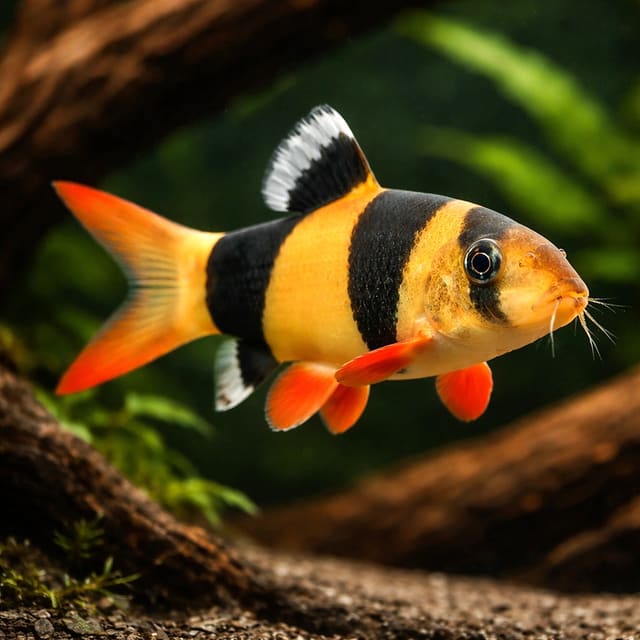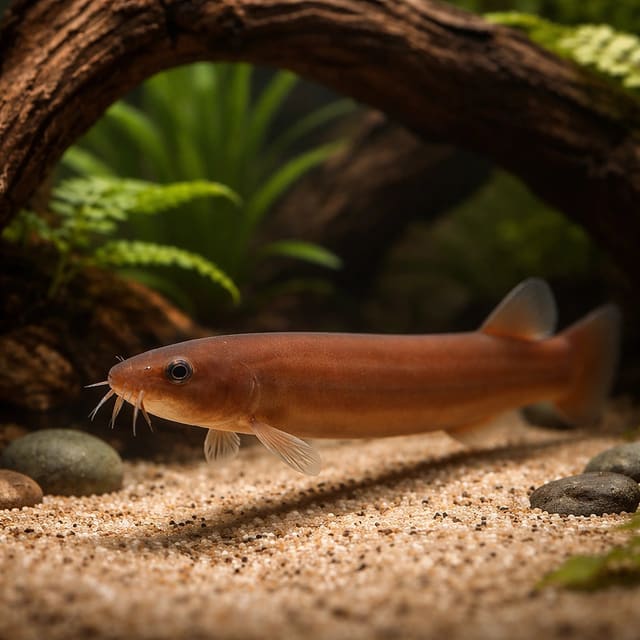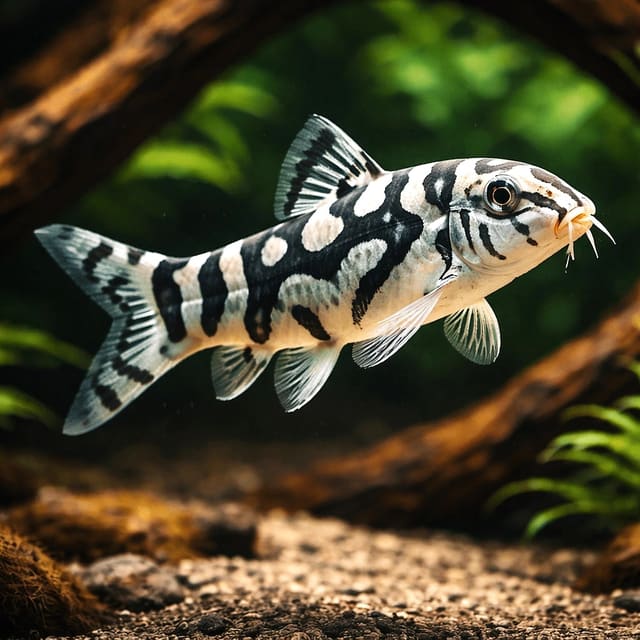
YoYo Loach (Botia lohachata)
24–27°C · pH 6.5–8
£5.99

A striking, peaceful striped loach that brings constant activity to the bottom of a well-planted community aquarium. Moderate care, peaceful. 22-26C, pH 6.0-7.5.
Adult size is the maximum length this species reaches at full maturity (scientific sources). The livestock you receive will be younger and smaller — pick a size above for the actual shipping size. Product-photo provenance and any image-specific limitations are stated on the listing.
Botia striata
Shoaling fish: kept in a group they feel safer, stay calmer and show their best colour.
Confirm your email, then we’ll send an availability message for this exact item if it returns within 180 days.
This request is only for this product—no newsletter or other promotions. A mail-provider retry may very rarely duplicate the same availability message. Unconfirmed addresses are removed after 48 hours. See our privacy policy.
A striking, peaceful striped loach that brings constant activity to the bottom of a well-planted community aquarium. Moderate care, peaceful. 22-26C, pH 6.0-7.5.
Adult size is the maximum length this species reaches at full maturity (scientific sources). The livestock you receive will be younger and smaller — pick a size above for the actual shipping size. Product-photo provenance and any image-specific limitations are stated on the listing.
Maintain these water conditions for optimal health and vibrant colors
The Zebra Loach (Botia striata) is a striking, peaceful striped loach that brings constant activity to the bottom of a well-planted community aquarium. Endemic to small river and stream systems in the Western Ghats of southwestern India, this beautiful loach is prized by aquarists worldwide for its dazzling appearance and engaging behavior. Reaching approximately 10cm in adulthood, the Zebra Loach is a source of food and income to the Katkari people in its native range and has become increasingly popular in the aquarium hobby. With its moderate care requirements and peaceful temperament, this species is suitable for aquarists who can provide soft substrate, excellent water quality, and appropriate shoaling companions. Available to buy zebra loach online uk from Tropical Fish Co, this captivating loach rewards dedicated keepers with fascinating social behavior and stunning striped patterns.
Adult Zebra Loaches reach approximately 10cm in length, displaying an elongated, streamlined body adorned with bold horizontal black and cream stripes that give the species its common name. The distinctive zebra-like patterning extends from head to tail, creating a visually striking appearance that stands out against planted aquarium backgrounds. The species has a ventral mouth adapted for bottom-feeding, prominent barbels for sensing food in the substrate, and an alert, expressive face. The stripes remain distinct throughout the fish's life, though coloration intensity can vary with diet, water quality, and stress levels.
This species is endemic to small river and stream systems in the Western Ghats of southwestern India, where it inhabits rocky substrates with moderate to fast current. In the wild, Zebra Loaches shelter among rocks, pebbles, and submerged roots, emerging to forage on small invertebrates, insect larvae, and organic matter. The water in these habitats is typically oxygen-rich, cool to moderately warm (22-26°C), soft to moderately hard, and slightly acidic to neutral (pH 6.0-7.5). The species' natural habitat is characterized by excellent water quality and stable parameters, conditions that must be replicated in captivity.
A minimum tank size of 100 litres is required for a small group of Zebra Loaches, providing adequate space for their active bottom-dwelling behavior. Use a soft substrate such as sand or fine rounded gravel to prevent injury to the species' delicate barbels, which they use constantly to search for food. Provide ample hiding places using smooth rocks, driftwood, caves, and PVC tubes—Zebra Loaches are social but appreciate individual retreats. Ensure smooth décor without sharp edges, as loaches like to squeeze into tight spaces and can injure themselves on rough surfaces. Moderate to strong water flow replicates the species' riverine habitat and ensures excellent oxygenation throughout the tank.
This species requires soft, slightly acidic to neutral water with excellent quality and high oxygen levels. Target pH between 6.0 and 7.5, with temperatures stable between 22-26°C. Water hardness should be low to moderate (4-12 dGH). Invest in powerful filtration that creates moderate current, and perform weekly water changes of 30-40% to maintain pristine conditions. Test parameters regularly using liquid test kits, ensuring ammonia and nitrite remain at zero. The species is particularly sensitive to poor water quality and elevated nitrates, so maintain excellent filtration and avoid overstocking. Zebra Loaches are scaleless, making them vulnerable to medications containing copper or formalin—always use half-dose treatments if medication is necessary.
Botia striata is an omnivore that feeds on small invertebrates, insect larvae, and organic matter in the wild. In captivity, offer a varied diet of high-quality sinking carnivore/omnivore pellets as a staple, supplemented regularly with frozen and live foods such as bloodworms, brine shrimp, daphnia, and small insect larvae. Occasional vegetable matter such as blanched courgette or algae wafers provides dietary variety. Feed in the evening after lights dim, as loaches are more active during low-light periods. Ensure food reaches the substrate where loaches feed, and monitor closely to ensure all individuals receive adequate nutrition in community setups where faster fish may dominate feeding.
This species displays peaceful, highly social behavior and should always be kept in groups of at least 5-6 individuals (more is better). Zebra Loaches form complex social hierarchies and engage in fascinating interactive behaviors, including synchronized swimming, playing, and resting together in piles. The species is most active during dawn, dusk, and night, though they become bolder and more diurnal in well-established aquariums with appropriate shoaling numbers. Loaches are alert, curious, and constantly explore the aquarium, using their barbels to search for food particles in every crevice. A lone Zebra Loach will become stressed, timid, and may refuse to feed.
Compatible tank mates include peaceful community fish of similar size such as small to medium rasboras, danios, tetras, livebearers, and peaceful bottom-dwellers like small corydoras. Choose active but non-aggressive species that share similar water parameter requirements. Avoid housing with large aggressive cichlids, fin-nippers, very small fry, overly territorial bottom-dwellers, or large predatory fish. The Zebra Loach's peaceful nature and moderate size make it an excellent addition to well-planned community aquariums with robust filtration and ample space.
Captive breeding of Zebra Loaches is uncommon in home aquariums and usually requires large, well-conditioned groups, excellent water quality, and seasonal changes in temperature and flow to trigger spawning. Spawning is typically not observed in standard community setups. Aquarists interested in breeding should research specialist loach breeding techniques and be prepared to provide separate breeding facilities with carefully controlled environmental conditions. Most Zebra Loaches available in the trade are wild-caught or commercially bred in specialist facilities.
At Tropical Fish Co, we specialize in peaceful community fish, including beautiful loaches like the Zebra Loach. Our fish are carefully sourced, quarantined, and conditioned to ensure they arrive in excellent health, ready to thrive in your planted community aquarium. We provide expert guidance on shoal size, substrate selection, and water chemistry to help you succeed with these captivating and social loaches. With reliable UK delivery and a commitment to quality, we're your trusted source for freshwater fish uk and specialist algae eater fish for sale.
No reviews for this item yet. Bought one? Honest reviews only, good or bad.
What customers say about ordering from us
I have a small group of long finned mountain minnows. So was delighted to be able to order ten of this variety to increase the genetics in my tank . The ones I recieved are healthy but it’s to early to give a verdict on wether they are of a long finned type since they are small currently.
Gordon Walker · 23 Sept 2026
100% success travel and "installation". Pleased with quality of purchase. The Siamese fighter a bit "shy" so have not yet seen him at his best yet but looking good. Happy customer. GG
George E Garratt · 21 Sept 2026
Reviews of our shop, collected by Judge.me, an independent third-party review collector. Newest first.