Advanced
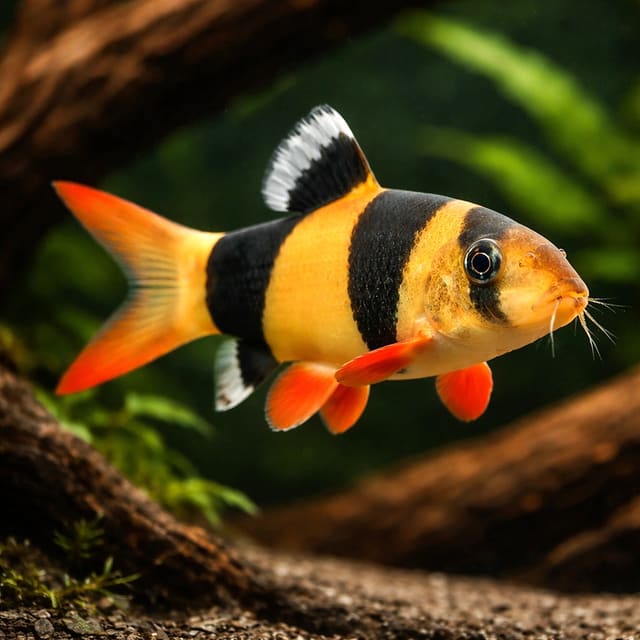
Clown Loach (Chromobotia macracanthus)
24–30°C · pH 5–7 · 648L
From £10.99Some sizes on sale

A striking, social bottom-dwelling loach with bold banding and lively personality, ideal for spacious community aquariums. Moderate care, peaceful. 24-29C, pH 6.5-7.5.
Adult size is the maximum length this species reaches at full maturity (scientific sources). The livestock you receive will be younger and smaller — pick a size above for the actual shipping size. Product-photo provenance and any image-specific limitations are stated on the listing.
Botia hymenophysa
Shoaling fish: kept in a group they feel safer, stay calmer and show their best colour.
Confirm your email, then we’ll send an availability message for this exact item if it returns within 180 days.
This request is only for this product—no newsletter or other promotions. A mail-provider retry may very rarely duplicate the same availability message. Unconfirmed addresses are removed after 48 hours. See our privacy policy.
A striking, social bottom-dwelling loach with bold banding and lively personality, ideal for spacious community aquariums. Moderate care, peaceful. 24-29C, pH 6.5-7.5.
Adult size is the maximum length this species reaches at full maturity (scientific sources). The livestock you receive will be younger and smaller — pick a size above for the actual shipping size. Product-photo provenance and any image-specific limitations are stated on the listing.
Maintain these water conditions for optimal health and vibrant colors
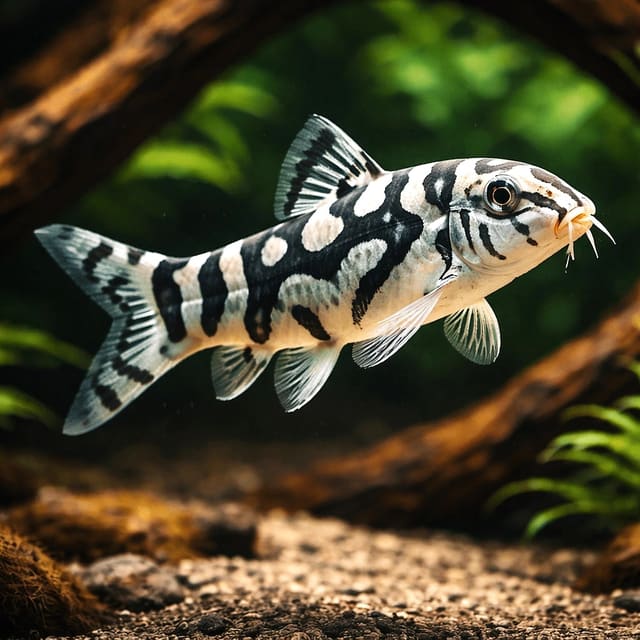
The Zebra Loach (Botia hymenophysa) is one of the most striking tropical aquarium fish for sale UK, known for its bold banding and lively social personality. Native to the river systems of Southeast Asia, this bottom-dwelling loach brings constant activity and fascinating behaviour to spacious community aquariums. With their distinctive zebra-striped pattern and playful demeanour, these loaches quickly become the stars of any well-maintained tropical setup.
The Zebra Loach displays a beautiful pattern of bold vertical black or dark brown bands against a silvery-cream base colour. These bands typically extend across the entire body, creating the distinctive zebra-like appearance that gives the species its common name. The body is elongated and slightly compressed, with a pointed snout and four pairs of prominent barbels around the mouth that help the fish forage for food in substrate crevices. The fins are generally transparent to slightly yellowish, often showing some banding that complements the body pattern. Juveniles display particularly vivid banding, while adults may develop more muted or irregular patterns as they mature. Sexual dimorphism is subtle, though females are typically fuller-bodied when mature.
In the wild, Botia hymenophysa inhabits flowing rivers and streams throughout Southeast Asia, especially in the Malay Peninsula, Sumatra, and Borneo. These loaches are typically found in areas with moderate to swift current, rocky or gravel substrates, and plenty of submerged roots, driftwood, and leaf litter that provide shelter and foraging opportunities. During the wet season they may move into flooded forest areas and tributaries, while in the dry season they congregate in deeper pools and main river channels. The natural waters are usually soft to moderately hard with neutral to slightly acidic pH, well-oxygenated, and relatively clear with seasonal fluctuations in water level and temperature.
A mature aquarium of at least 350 litres is essential to accommodate the eventual size and social needs of a proper group. The substrate should be soft sand or very fine smooth gravel to protect the delicate barbels and undersides as these loaches constantly forage along the bottom. Provide abundant hiding places using smooth rocks, driftwood, caves, and robust plants to create territories and reduce stress. Ensure all decorations are stable and smooth-edged, as Zebra Loaches are active and will explore every crevice. Moderate to strong water movement is appreciated, and excellent filtration is mandatory given their preference for clean, oxygen-rich water. Lighting should be subdued or diffused with plenty of shaded areas, as bright light can make them nervous. A secure tight-fitting lid is important as loaches may jump when startled or during water changes.
Maintain a tropical temperature between 24-29°C, with 26-27°C being ideal for long-term health. The pH should be kept in the range of 6.5-7.5, with neutral (7.0) being optimal. Water hardness can range from soft to moderately hard (5-15°dGH), though they adapt well to a variety of conditions provided changes are gradual. Regular large water changes (30-50% weekly) are essential to maintain pristine conditions and keep nitrate levels low. Ensure excellent oxygenation through surface agitation and consider supplementing with an air stone during warmer months. Stability is more important than exact parameters, so avoid sudden swings in temperature or chemistry. The use of Indian almond leaves or driftwood to release beneficial tannins can help replicate natural conditions and support overall health.
Zebra Loaches are omnivorous with a preference for meaty foods. Offer a varied diet of sinking carnivore or omnivore pellets as a staple, supplemented regularly with frozen or live foods such as bloodworms, brine shrimp, daphnia, and insect larvae. They will also accept occasional vegetable matter including blanched courgette, cucumber, and spirulina-based algae wafers. Feed after lights dim or during the evening, as they are most active at dusk and dawn. Ensure food reaches the bottom where they forage, and observe feeding to confirm all individuals are getting their share. Variety is key to maintaining vibrant coloration and strong immune health. Overfeeding should be avoided, as these loaches are enthusiastic eaters and can become overweight in captivity.
Zebra Loaches are social and peaceful toward other species but can be boisterous and territorial among themselves, especially if kept in insufficient numbers. They are most active during twilight hours but will venture out during the day once acclimated. These loaches are constantly on the move, foraging through substrate, exploring caves, and occasionally resting in tight groups. They produce audible clicking sounds when excited or feeding. Best kept with other peaceful medium-to-large community fish such as barbs, rainbowfish, gouramis, and larger tetras. Avoid housing with very small fish that may be eaten, highly aggressive species, or fin-nippers. They are generally safe with adult shrimp but may prey on juveniles.
Ideal companions include other peaceful medium-to-large community fish such as barbs (Rosy, Gold, Cherry), rainbowfish, peaceful gouramis, larger tetras like Congo tetras, and robust rasboras. Other loach species of similar temperament can work well in very large aquaria. Bottom-dwelling companions should be chosen carefully to avoid competition and territorial disputes. Avoid very small fish that may be eaten, aggressive cichlids, fin-nipping species, highly territorial bottom dwellers, and very small invertebrates including shrimp and snails.
Captive breeding is uncommon and not reliably achieved in home aquaria. In nature, loaches are seasonal spawners that likely require large groups, excellent water quality, and environmental cues such as cooler water changes simulating monsoon conditions. There are few documented accounts of successful breeding in the hobby. If breeding is attempted, provide a very large, heavily planted aquarium with excellent water quality, slightly cooler temperatures during conditioning, and a varied high-protein diet. Spawning, if it occurs, may involve eggs being scattered among plants or substrate. Fry are extremely small and require microscopic foods. Most specimens available in the trade are wild-caught or commercially bred in Southeast Asia.
At Tropical Fish Co, we pride ourselves on offering healthy, quarantined livestock from trusted suppliers, with every fish carefully inspected before dispatch. Our Zebra Loaches are acclimatised to UK water conditions and come with a live arrival guarantee. We provide expert advice on care and setup, ensuring you have all the information needed for long-term success. With secure tracked UK delivery across the UK and a commitment to exceptional customer service, Tropical Fish Co is your trusted partner for premium aquatic livestock. Whether you're setting up your first community aquarium or expanding an established collection, our knowledgeable team is here to support you every step of the way.
No reviews for this item yet. Bought one? Honest reviews only, good or bad.
What customers say about ordering from us
I have a small group of long finned mountain minnows. So was delighted to be able to order ten of this variety to increase the genetics in my tank . The ones I recieved are healthy but it’s to early to give a verdict on wether they are of a long finned type since they are small currently.
Gordon Walker · 23 Sept 2026
100% success travel and "installation". Pleased with quality of purchase. The Siamese fighter a bit "shy" so have not yet seen him at his best yet but looking good. Happy customer. GG
George E Garratt · 21 Sept 2026
Reviews of our shop, collected by Judge.me, an independent third-party review collector. Newest first.