African Dwarf Frog (Hymenochirus sp.)
22–25°C · pH 7–8
£4.99

A small fully aquatic West African clawed frog for a secure species-focused aquarium with gentle filtration, surface access and targeted meaty foods.
Adult size is the maximum length this species reaches at full maturity (scientific sources). The livestock you receive will be younger and smaller — pick a size above for the actual shipping size. Product-photo provenance and any image-specific limitations are stated on the listing.
Xenopus tropicalis
Confirm your email, then we’ll send an availability message for this exact item if it returns within 180 days.
This request is only for this product—no newsletter or other promotions. A mail-provider retry may very rarely duplicate the same availability message. Unconfirmed addresses are removed after 48 hours. See our privacy policy.
A small fully aquatic West African clawed frog for a secure species-focused aquarium with gentle filtration, surface access and targeted meaty foods.
Adult size is the maximum length this species reaches at full maturity (scientific sources). The livestock you receive will be younger and smaller — pick a size above for the actual shipping size. Product-photo provenance and any image-specific limitations are stated on the listing.
Maintain these water conditions for optimal health and vibrant colors
Western Clawed Frog is Xenopus tropicalis, the Tropical or Western Clawed Frog historically seen in supplier and scientific material as Silurana tropicalis. It is a fully aquatic amphibian from West Africa, not a community aquarium fish, so the setup should be planned around frog behaviour, air breathing, secure lids and careful feeding.
This SKU is best for keepers who want a small, active, aquatic frog in a species-focused aquarium. It stays much smaller than the common African Clawed Frog, but it is still a predator with a wide mouth, sensitive skin and a strong need for stable, clean water. Treat it as a specialist live amphibian rather than a decorative add-on for a busy mixed aquarium.
| Best for | Species-focused aquatic amphibian aquariums with calm water and a secure lid |
|---|---|
| Current name | Xenopus tropicalis, with Silurana tropicalis retained as a synonym / source-name bridge |
| Adult planning size | About 4-6 cm; females are usually larger than males |
| Main care risk | Escape gaps, strong flow, poor water quality, and tankmates that nip, compete or get eaten |
The clean customer-facing identity for this listing is Western Clawed Frog (Xenopus tropicalis). The supplier name bridge matters because older labels and research references may still use Silurana tropicalis, but current catalogue copy should not lead with the older name or describe the animal as a fish.
USGS records Western Clawed Frog as a small primarily aquatic frog, while Amphibian Species of the World places it in Xenopus tropicalis and records Silurana tropicalis as the original combination. That makes the page clearer for customers and better aligned for search: use the accepted name for the product title, then explain the synonym naturally inside the content.
| Common names | Western Clawed Frog, Tropical Clawed Frog |
|---|---|
| Accepted scientific name | Xenopus tropicalis |
| Synonym / older trade wording | Silurana tropicalis |
| Family | Pipidae, the tongueless aquatic frogs |
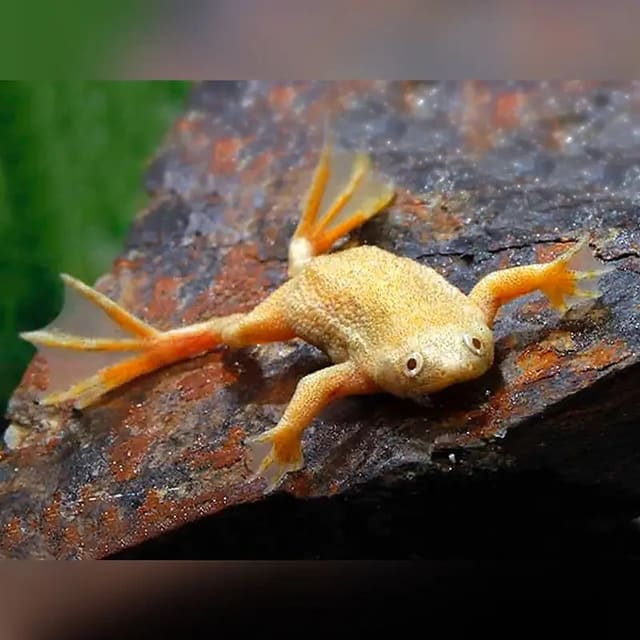
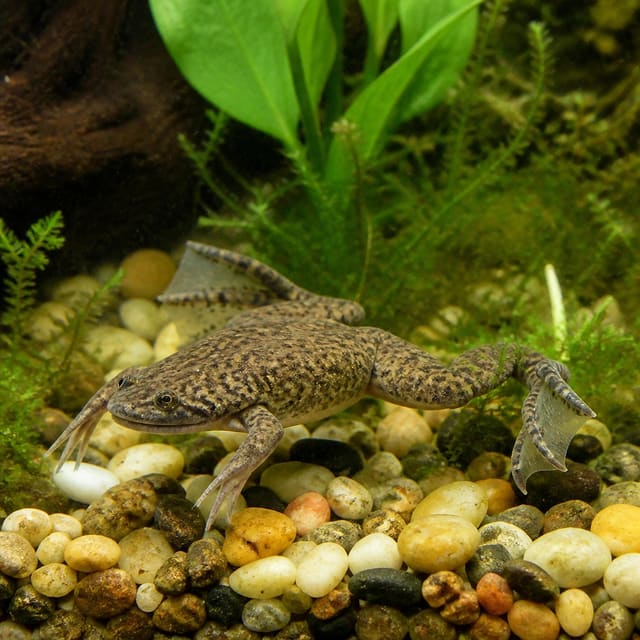
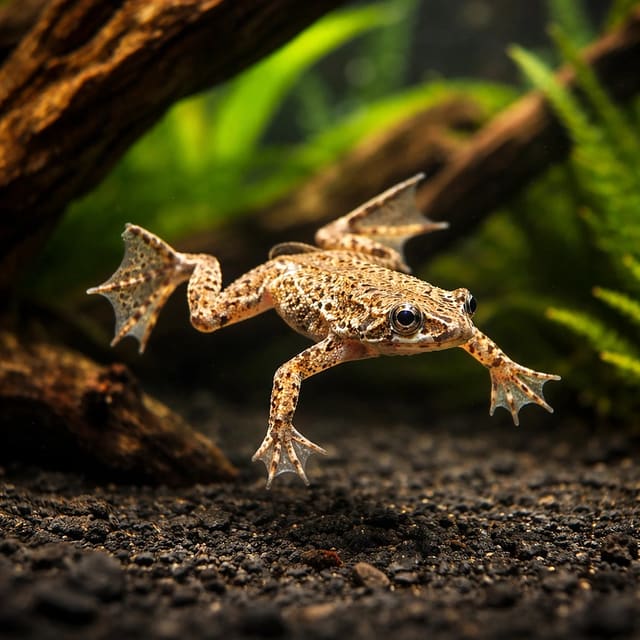
The existing four aquarium-scene images should stay on the product because they show posture, planted cover, scale and viewing angles. The missing source-style image is useful as a fifth media item because it gives shoppers a more direct visual anchor for the exact SKU line.
Western Clawed Frogs are associated with West African rainforest and savanna-edge wetlands, including slow or still water such as pools, puddles, marshes, small streams and temporary ponds. USGS notes that adults and tadpoles prefer slow-moving or stagnant waters, and adults may shelter under rocks, roots or riverbank holes during drier periods.
That habitat explains the aquarium layout. These frogs do not need land, but they do need easy access to the surface to breathe. They also benefit from cover, shaded resting places and water movement gentle enough that they can rest and feed without being pushed around the tank.
Use a mature, fully covered freshwater aquarium with calm circulation, soft edges and simple access to the surface. A 60 litre aquarium is a sensible starting point for a small group only if filtration is stable and feeding is controlled; larger aquariums are easier to keep clean. Avoid tall, turbulent tanks where the frogs must fight current every time they breathe.
| Minimum planning volume | About 57-60 litres for a small species-focused setup; larger is easier to manage |
|---|---|
| Lid | Essential, with cable holes, filter gaps and corners closed |
| Flow | Gentle filtration with no harsh current across resting areas |
| Cover | Smooth hides, wood, plants, leaf-litter style shade and open surface access |
Keep the water dechlorinated, stable and clean. Laboratory husbandry references for Xenopus tropicalis commonly use warm tropical water around 25 C, while Xenopus Express gives 23-28 C for this species. For a home aquarium, a steady 24-26 C is a practical target, with careful acclimation and no sudden swings.
Frogs absorb chemicals through their skin, so avoid medication, aerosols, soap residue, plant fertiliser overdoses and untreated tap water. Any maintenance bucket, net or siphon used for this aquarium should be clean and free from detergents.
| Temperature | 24-26 C daily target; 23-28 C acceptable if stable |
|---|---|
| pH | About 6.5-7.8, stability more important than chasing a number |
| Hardness | Soft to moderately hard freshwater, kept consistent |
| Water quality | Zero ammonia and nitrite, low nitrate, regular small water changes |
Xenopus tropicalis is a carnivorous aquatic frog. Offer small meaty foods such as bloodworm, daphnia, brine shrimp, chopped earthworm, blackworm and suitable sinking frog or carnivore pellets. Feed small portions and remove leftovers because uneaten food quickly spoils frog water.
Target feeding is useful. Frogs may miss food in a busy aquarium, and faster animals can take food before they find it. Feed with lights dimmed, watch each frog eat, and keep the diet varied rather than relying on one frozen food forever.
Species-only is the safest recommendation. Western Clawed Frogs can be peaceful toward each other when space and feeding are managed, but they are still predators and may swallow very small animals. They can also be nipped, outcompeted or stressed by unsuitable tankmates.
| Best choice | A species-focused group of similar-sized Xenopus tropicalis |
|---|---|
| Avoid | Shrimp, snails, fry, tiny amphibians and very small fish that may be swallowed |
| Also avoid | Fin nippers, boisterous feeders, rough bottom dwellers and anything likely to damage frog skin |
| Feeding note | Use target feeding so each frog gets food without competition |
Expect a bottom-and-surface routine: resting under cover, pushing through plants, rising to breathe, and becoming more active when food is added or the room is quieter. The eyes sit high on the head, the body is streamlined, and the fully webbed feet help the frog move through still water.
Because this is an aquatic air-breathing animal, a simple layout is often better than a crowded display. Leave open paths to the surface, use smooth decor, and avoid any intake or overflow that could trap a limb.
Handle as little as possible. If you must move the frog, use wet hands, powder-free wet gloves or a soft container, and avoid soaps, lotions or dry surfaces. Prepare the aquarium before delivery day so the frog can be acclimated calmly and released into clean, covered water.
Livestock orders are packed for animal transport and sent with a licensed live-animal courier. Eligible livestock orders are covered by our Live Arrival Guarantee, but the best outcome still starts with a mature aquarium, stable temperature and a quiet receiving area.
| Before ordering | Mature covered aquarium, dechlorinated water, gentle filter, thermometer and hiding places ready |
|---|---|
| On arrival | Dim the lights, acclimate slowly, release near cover and confirm easy access to the surface |
| First week | Feed small targeted meals, remove leftovers and test water quality |
| Long term | Keep the lid secure, maintain stable warm water and avoid mixing with unsuitable animals |
Choose Western Clawed Frog if you want a small, unusual aquatic amphibian and are happy to build the aquarium around the frog. It is especially appealing for keepers who like planted, calm, species-focused displays and who can pay attention to feeding and water quality.
Choose a different animal if you want a general mixed display, a fish-safe cleaner, or something that can be added casually to an existing aquarium. This frog deserves its own plan, and it will reward that planning with more natural behaviour and a much cleaner customer experience.
No reviews for this item yet. Bought one? Honest reviews only, good or bad.
What customers say about ordering from us
I have a small group of long finned mountain minnows. So was delighted to be able to order ten of this variety to increase the genetics in my tank . The ones I recieved are healthy but it’s to early to give a verdict on wether they are of a long finned type since they are small currently.
Gordon Walker · 23 Sept 2026
100% success travel and "installation". Pleased with quality of purchase. The Siamese fighter a bit "shy" so have not yet seen him at his best yet but looking good. Happy customer. GG
George E Garratt · 21 Sept 2026
Reviews of our shop, collected by Judge.me, an independent third-party review collector. Newest first.