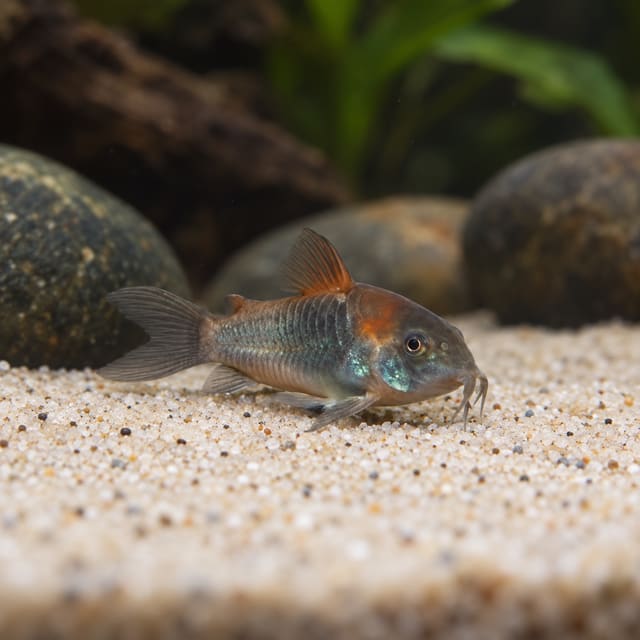
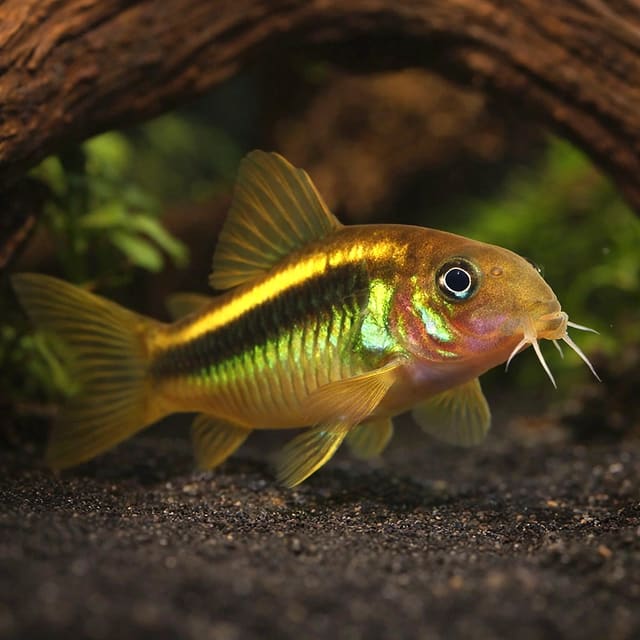
Albino Bronze Cory (Osteogaster aenea)
22–27°C · pH 6–8 · 72L
£2.99

Peaceful shoaling Tailspot Corydoras for soft-sand planted community aquariums. Best kept in a group, with clean substrate, gentle tank mates and stable 22-26C water.
Adult size is the maximum length this species reaches at full maturity (scientific sources). The livestock you receive will be younger and smaller — pick a size above for the actual shipping size. Product-photo provenance and any image-specific limitations are stated on the listing.
Corydoras caudimaculatus
Shoaling fish: kept in a group they feel safer, stay calmer and show their best colour.
Confirm your email, then we’ll send an availability message for this exact item if it returns within 180 days.
This request is only for this product—no newsletter or other promotions. A mail-provider retry may very rarely duplicate the same availability message. Unconfirmed addresses are removed after 48 hours. See our privacy policy.
Peaceful shoaling Tailspot Corydoras for soft-sand planted community aquariums. Best kept in a group, with clean substrate, gentle tank mates and stable 22-26C water.
Adult size is the maximum length this species reaches at full maturity (scientific sources). The livestock you receive will be younger and smaller — pick a size above for the actual shipping size. Product-photo provenance and any image-specific limitations are stated on the listing.
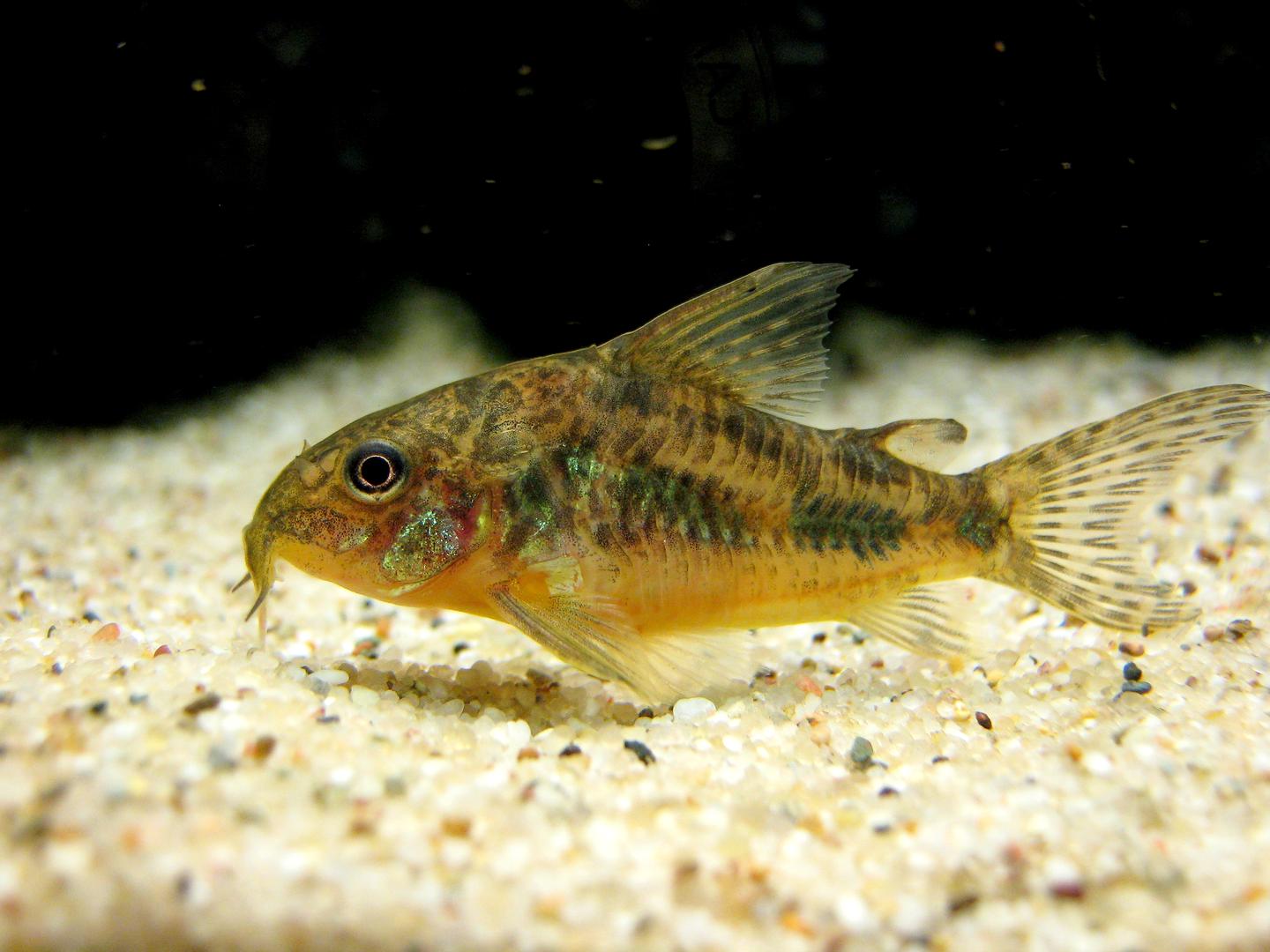
Identify the exact cory catfish before choosing care. Our starting policy for many common medium species is six compatible conspecifics, a mature 60 x 30 cm aquarium of about 60 litres, smooth fine sand and measured species-appropriate water.
Maintain these water conditions for optimal health and vibrant colors
The Tailspot Corydoras is a small, peaceful armoured catfish best known for the dark mark at the base of the tail. The aquarium trade has long used the name Corydoras caudimaculatus, while current references may place the fish as Hoplisoma caudimaculatum.
This is a bottom-dwelling community fish for aquariums with soft sand, clean water and calm tank mates. A single specimen will usually look shy and unsettled; a group gives much more natural foraging, resting and social behaviour. The useful details from the old page have been kept and expanded: Guapore River origin, small adult size, peaceful temperament, sand substrate, group care, feeding, breeding triggers, delivery support and acclimation.
| Common name | Tailspot Corydoras, Tailspot Cory |
|---|---|
| Trade scientific name | Corydoras caudimaculatus |
| Current reference name | Hoplisoma caudimaculatum |
| Adult size | Usually 4-5 cm; some trade references describe larger mature fish |
| Temperament | Peaceful, social and non-territorial |
| Best kept | In a group of at least 5-6 where aquarium size allows |
| Tank level | Bottom level, with occasional surface air gulps |
Tailspot Corydoras has a compact, armoured Corydoras-type body with a pale beige to silver base colour and a clear dark mark on the caudal peduncle and tail base. That tail spot is the feature most customers use to recognise the fish. The fins are usually clear to lightly marked, and healthy fish should show smooth barbels, clean fin edges, alert eyes and a rounded but not swollen body profile.
The look is subtle rather than bright. It works especially well over pale sand, leaf litter, driftwood and low planting, where the fish can be seen foraging naturally at the front of the aquarium. Because similar Corydoras and Hoplisoma species can be confused in the trade, the listing now uses careful identification language instead of repeating one keyword phrase unnaturally.
Reference sources place this fish in South America, particularly the Guapore River basin in Brazil. In nature, related Corydoras-type catfish use the bottom layer of streams, tributaries and marginal areas where sand, fine sediment, leaves, roots and plant cover create feeding and shelter. The aquarium should copy the useful parts of that environment: a soft bottom, shaded cover, mature filtration and stable water.
FishBase gives a broad water range of pH 6.0-8.0, hardness 2-25 dH and 22-26C. That does not mean the fish wants constant changes across the whole range. Stability is the priority. Avoid sudden swings, keep nitrate under control, and make water changes with temperature-matched water whenever possible.
| Minimum aquarium | 60 litres for a small species group; larger if mixed with active community fish |
|---|---|
| Substrate | Soft sand is strongly recommended to protect barbels and support natural feeding |
| Temperature | 22-26C |
| pH | 6.0-8.0, with stable mature water preferred |
| Hardness | 2-25 dH; soft to moderate water is easiest for most community layouts |
| Decor | Open sand, driftwood, smooth stones, live plants, leaf litter and shaded resting places |
| Flow | Gentle to moderate flow with good oxygenation and no dirty dead spots |
Do not use sharp gravel. Damaged barbels are one of the common preventable problems with Corydoras-type catfish, especially when waste collects between coarse stones. A clean sand foreground gives the group room to sift, while plants and wood give nervous fish somewhere to pause.
Tailspot Corydoras is omnivorous and should receive a varied sinking diet. Use quality Corydoras wafers, small sinking granules or soft pellets as the staple, then rotate frozen or live foods such as bloodworm, daphnia, brine shrimp and tubifex-type foods where suitable. They will also graze on biofilm and fine food particles, but they should not be expected to survive on leftovers.
Feed after lights dim if midwater fish are very fast, and check that food reaches the bottom. Small portions once or twice a day are better than heavy feeding that disappears into plants or decor. A well-fed group should remain active, rounded and keen to forage without leaving uneaten food behind.
This is a peaceful, social, daytime-active catfish. In a proper group it will forage across the sand, rest with companions and make short trips upward to gulp air. That surface-gulping behaviour is normal for Corydoras-type fish, but repeated frantic surface activity can also point to poor oxygenation or water quality, so it should be read in context.
Tailspot Corydoras does not usually bother tank mates, plants or decor. It is best viewed as a gentle bottom-layer species, not a clean-up tool. Good care means giving the group its own suitable food and enough floor space, rather than asking it to fix uneaten food from other fish.
| Good companions | Small peaceful tetras, rasboras, pencilfish, small livebearers, peaceful dwarf cichlids with care, snails and suitable shrimp |
|---|---|
| Other bottom fish | Can work with other peaceful bottom dwellers if the aquarium has enough floor space and food access |
| Avoid | Large predators, aggressive cichlids, persistent fin nippers and boisterous fish that dominate feeding |
| Group note | Keep several Tailspot Corydoras together where possible rather than mixing one of many Corydoras types |
Because this fish is small and discreet, avoid keeping it with species that rush every sinking food item or patrol the substrate aggressively. Calm community fish in the upper and middle layers make the best companions.
Breeding is possible with a mature, well-conditioned group. Offer varied frozen and live foods, keep the group in excellent condition, then use slightly cooler water changes to mimic seasonal triggers. Eggs may be placed on glass, plants or decor. Adults can eat eggs, so breeders often move eggs or adults after spawning.
FishBase notes the Corydoras-style reproductive behaviour where the female carries eggs in a pouch formed by the pelvic fins before placing them. That is a useful detail for aquarists who want to understand the species, and it is more valuable than repeating commercial keywords through the page.
Livestock orders are packed carefully for a licensed live-animal courier service where available and are covered by our Live Arrival Guarantee. First-time customers can use WELCOME10 for 10% off eligible first orders.
When the fish arrive, float the sealed bag for temperature matching, then acclimate gradually with small additions of aquarium water over 30-45 minutes. Keep the lights low for the first few hours, avoid feeding immediately, and let the group settle onto soft substrate before judging colour or activity.
Tailspot Corydoras is a good choice for aquarists who want a peaceful, active bottom-layer fish with natural social behaviour. The keys are simple but important: keep a group, use soft sand, provide shaded cover, feed sinking foods deliberately, choose calm tank mates and maintain stable clean water. Done well, the group becomes a constant gentle presence at the front and lower levels of the aquarium.
No reviews for this item yet. Bought one? Honest reviews only, good or bad.
What customers say about ordering from us
I have a small group of long finned mountain minnows. So was delighted to be able to order ten of this variety to increase the genetics in my tank . The ones I recieved are healthy but it’s to early to give a verdict on wether they are of a long finned type since they are small currently.
Gordon Walker · 23 Sept 2026
100% success travel and "installation". Pleased with quality of purchase. The Siamese fighter a bit "shy" so have not yet seen him at his best yet but looking good. Happy customer. GG
George E Garratt · 21 Sept 2026
Reviews of our shop, collected by Judge.me, an independent third-party review collector. Newest first.