Moderate
Marble Angelfish (Pterophyllum scalare)
24–27°C · pH 6.5–8 · 200L
£3.99

One Full Orange Koi Angelfish in the juvenile size chosen from six size bands spanning 3–6 cm. This domestic Pterophyllum scalare colour form needs a mature, tall aquarium, stable warm water and a plan for adult cichlid social behaviour; sex and pair formation are not guaranteed.
One Full Orange Koi Angelfish in the juvenile size chosen from six size bands spanning 3–6 cm. This domestic Pterophyllum scalare colour form needs a mature, tall aquarium, stable warm water and a plan for adult cichlid social behaviour; sex and pair formation are not guaranteed.
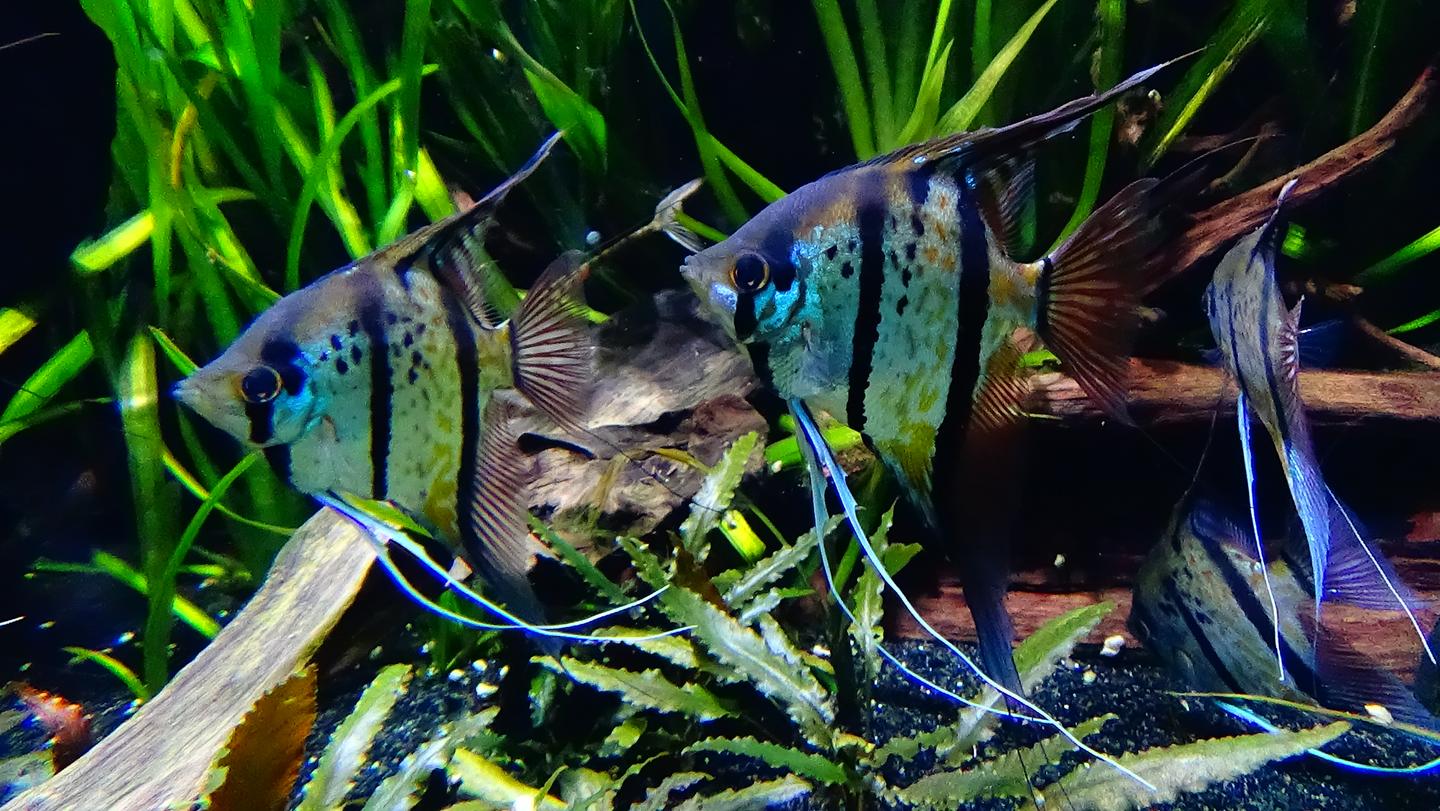
Freshwater angelfish are tall South American cichlids, not small community fish. OATA gives 120 litres as an industry floor for a compatible pair and says the aquarium must be sufficiently tall. We prefer planning around roughly 200 litres, a 100 × 40 cm footprint and about 50 cm height for an adult pair, with more space and an exit plan for a group.
Maintain these water conditions for optimal health and vibrant colors
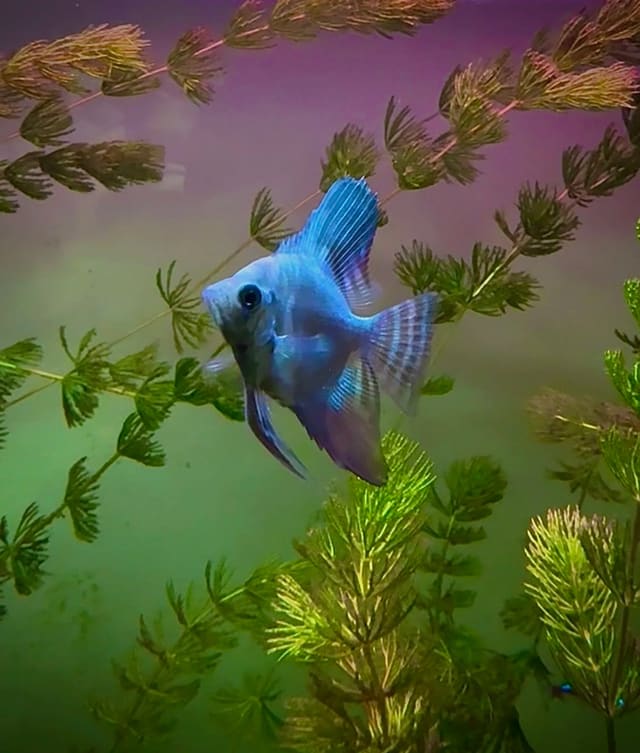
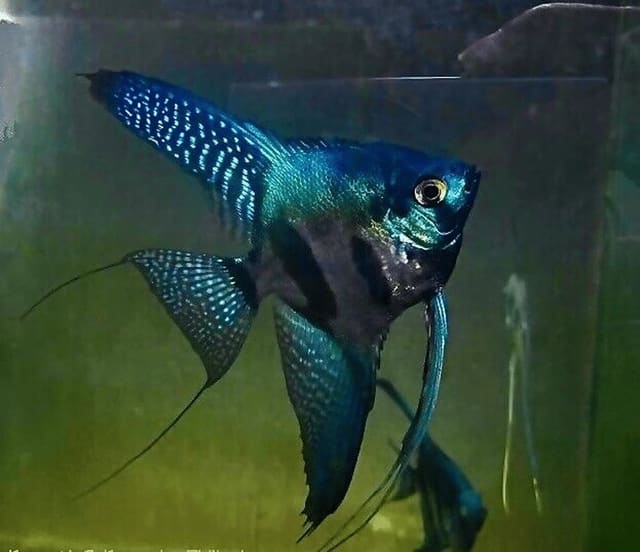
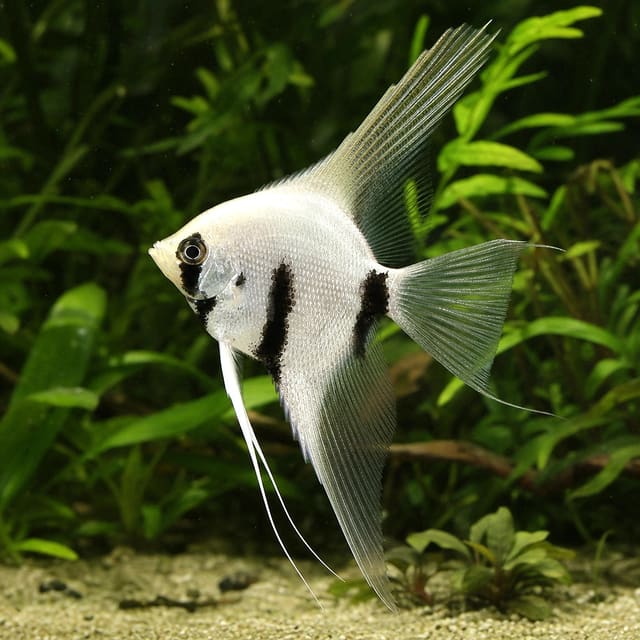
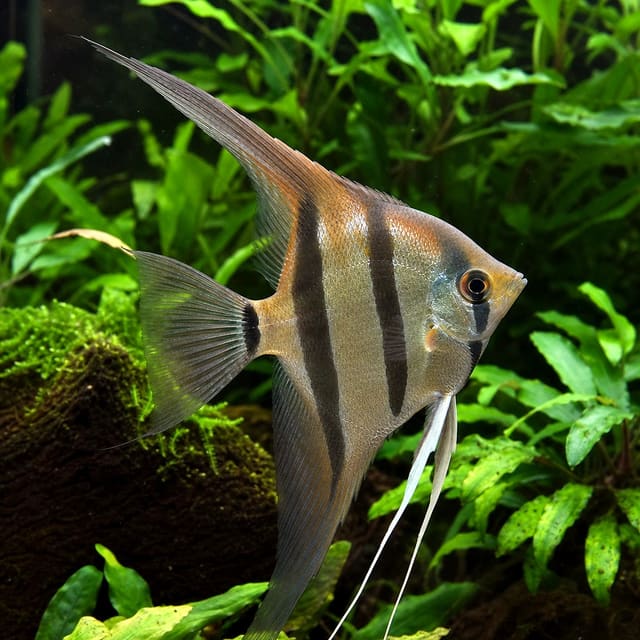
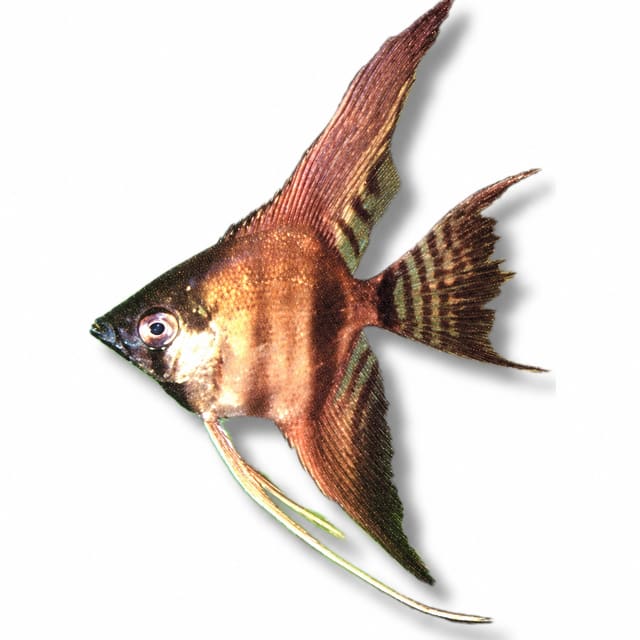
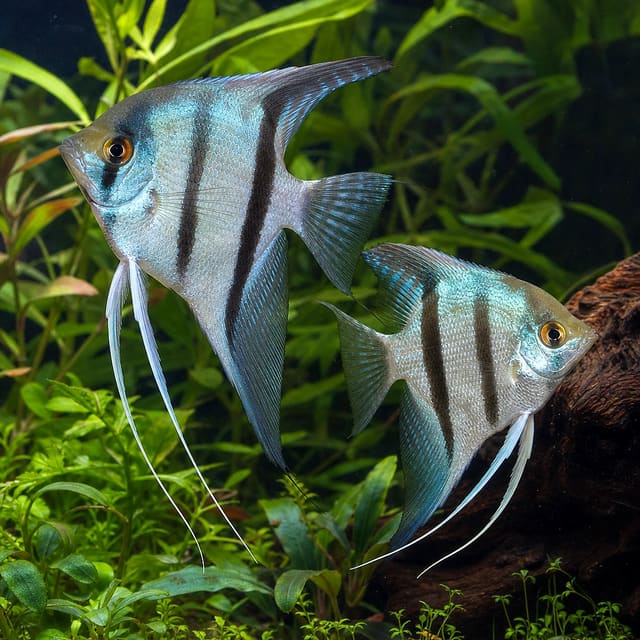
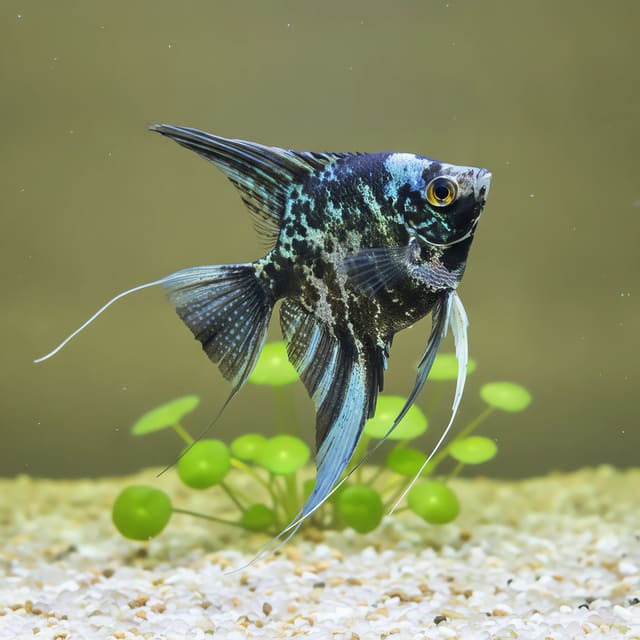
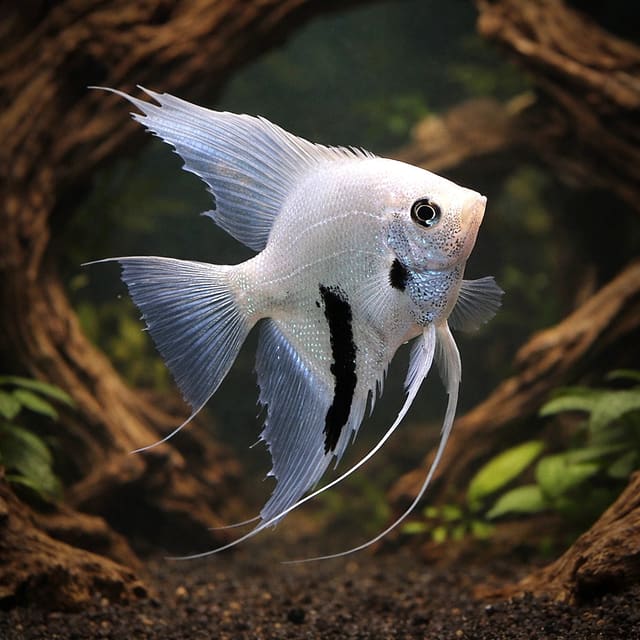
Full Orange Koi Angelfish are domestic Pterophyllum scalare selected for warm orange colour, sometimes with black koi-style markings. They keep the unmistakable angelfish outline: a laterally compressed body, tall dorsal and anal fins, and long ventral filaments. The colour form is the visual attraction, but the practical buying decision is about adult height, social change and water quality rather than the small juvenile that arrives.
One purchase supplies one live fish in the size chosen. The recurring juvenile size bands span 3–6 cm across six choices: 3–3.5, 3.5–4, 4–4.5, 4.5–5, 5–5.5 and 5.5–6 cm. Check the live selector for the choices available when ordering. The size you select is the size supplied, not the adult size. These are approximate trade measurements for living fish, so a small natural variation is normal.
Sex is guaranteed only when the selected option explicitly states male or female. This Full Orange Koi Angelfish listing has no sex-guaranteed option. Juvenile angelfish are difficult to sex reliably, and appearance in a photograph cannot turn an unsexed offer into a sexed one. One fish is not a pair, while two fish chosen separately are not promised to form a compatible or breeding pair. Exact orange coverage, black markings, fin length and mature colour also vary among individuals.
| Best match | A mature, tall aquarium with steady warm water, visual cover and enough room to respond if adults become territorial. |
|---|---|
| Long-term planning point | Roughly 200 litres, a 100 × 40 cm footprint and about 50 cm usable height for an adult pair; groups and communities need more. |
| Routine house target | 24–27°C, pH 6.5–8.0 and about 5–12 dGH, with zero detectable ammonia and nitrite. |
| Feeding style | A complete cichlid pellet, granule or suitable flake, supported by measured frozen or freeze-dried variety. |
| Main compatibility caution | Small fish may be swallowed, long fins attract persistent nippers, and a formed pair can defend territory. |
| Care assessment | Intermediate: manageable with preparation, but adult height and changing cichlid behaviour rule out a casual nano-tank purchase. |
Full Orange Koi is a trade colour-form name, not a separate species. Fish sold under this label can be mostly orange or carry areas of orange, black and pale colour. Age, lighting, background, diet, health and stress may change how a fish looks from one day to the next. Choose the form because you enjoy natural variation rather than expecting a fixed printed pattern.
Gallery images have been digitally enhanced to improve image quality. Natural colour, pattern, size and maturity can vary between live animals.
The gallery shows one or two visible angelfish in different planted scenes. The two-fish view describes what is visible in that frame; it does not change the one-fish sale unit or prove a bonded pair. None of the photographs establishes the sex, final pattern or mature size of the animal supplied.
This fish suits a keeper who is ready to plan upward as well as outward, watch every individual feed and keep a separation option if a social group changes. It is a poor fit for a newly filled aquarium, a shallow display, a fin-nipping community or a tank built around prey-sized fish. If this is your first livestock aquarium, prepare the filter and water tests with the first tropical tank guide before selecting fish.
Keep the welfare decision separate from colour preference. You can browse the current angelfish collection to compare forms, but every candidate still needs the same adult-space, water and compatibility assessment.
The supplier identity anchor and the current scientific name agree on Pterophyllum scalare, a South American cichlid. The Full Orange Koi wording describes a domestic strain within that species. It does not imply a separate wild species, a particular breeder line or a guaranteed collection locality.
Angelfish size is unusually easy to muddle because length and height are different dimensions, and because sources use different measurement conventions. FishBase currently displays a 10.5 cm total-length field maximum for male or unsexed fish and also retains a 15 cm total-length value from an aquarium reference. Total length, abbreviated TL, measures from the snout to the end of the tail.
The Seriously Fish species profile gives 150 mm standard length, or 15 cm SL. Standard length stops at the base of the tail, so it cannot be treated as interchangeable with the same number in total length. The store's angelfish guide also explains that extended dorsal and anal fins can make an adult roughly 20–25 cm tall. Those scoped records are more useful than a single unqualified “maximum size” box: plan around a substantial, very tall adult without converting SL and TL as though they were the same measurement.
For the underlying records, see the FishBase species account and the Seriously Fish husbandry profile. The complete freshwater angelfish care guide develops the height and social plan in more depth.
Seriously Fish gives a 100 × 40 cm base and roughly 200 litres as the smallest arrangement it would consider, with a tank about 50 cm tall. Tropical Fish Co uses the same dimensions as a conservative planning point for an adult pair. OATA's broad American-cichlid sheet gives 120 litres as a general floor for a compatible pair of smaller species and separately stresses that angelfish need sufficient height. A nominal volume is therefore only the first check.
Useful height must remain after substrate, braces and any gap above the waterline are considered. The fish also needs horizontal turning space and room to move away from another angelfish. A group, an established community or a layout with bulky wood needs more volume and territory than the pair-planning point. Oversizing early is easier than moving tall adults after conflict appears.
Set tall plants, upright wood or smooth vertical structures around the sides and rear, leaving open mid-water space. These features echo the densely vegetated and flooded habitats described for wild P. scalare and create breaks in sight lines. Keep long fins away from sharp rock, rough plastic edges and exposed intakes. Stable decor matters because a startled fish can move quickly despite its usually deliberate swimming style.
Young angelfish are social, but their relationships can change as they mature. FishBase's aquarium note refers to groups of five or more, while the specialist profile describes small groups and the formation of pairs. OATA advises a pair or group at minimum and warns that a fish kept alone may become stressed. None of those statements makes one fixed head count safe in every aquarium.
A juvenile group can give fish social choice and allow a compatible pair to form, yet it demands substantially more space than a pair and a genuine exit plan. Watch for one animal being driven away from food, hiding continuously, holding clamped fins or receiving repeated bites. A formed pair may defend a broad leaf, upright surface or corner. Move the excluded fish to another mature, suitable aquarium or use a responsible rehoming route before injury becomes the trigger.
Two unsexed juveniles are a gamble, not a shortcut to a pair. Sex differences can be subtle and breeding papillae are generally useful only around spawning. Forehead shape, fin angle, colour and ordinary territorial behaviour do not provide a dependable guarantee for the fish offered here.
Stock gradually enough that the filter and keeper can respond to change. Count the adult space needed by every fish, not the visual gaps between small juveniles on purchase day. A spare mature setup is part of the social plan when raising a group: it provides somewhere suitable for an excluded fish without forcing an emergency move into unsuitable water. A divider may help briefly in some aquariums, but it is not a substitute for adequate volume, filtration and separate usable territory.
For routine care, aim for 24–27°C, pH 6.5–8.0 and about 5–12 dGH. This is Tropical Fish Co's house target for domestic freshwater angelfish, chosen from the practical overlap between FishBase's species record and OATA's broader American-cichlid guidance. Match the water in which the fish has been held, make elective changes gradually and value stability over chasing one “perfect” decimal.
FishBase lists the wider species environmental record as 24–30°C, pH 6.0–8.0 and 5–13 dGH. Seriously Fish gives 24–30°C, pH 6.0–7.4 and 0–15 dGH for aquarium care. Those broader records explain the species' range; they are not an invitation to swing between the endpoints. Use the routine target above for day-to-day decisions unless a measured, specialist plan for particular stock says otherwise.
Test the source water before trying to alter it. GH, KH and pH interact, so a fixed mixture of tap and reverse-osmosis water copied from somebody else's aquarium can behave very differently in yours. The water chemistry guide explains what each result means, while the water parameter matcher helps compare your measured values with the stated range.
Use a fully matured biological filter with gentle to moderate circulation and reliable surface movement. Angelfish should not spend the day fighting a concentrated jet, but calm swimming does not mean stagnant water. Direct the return so that waste reaches the filter while quieter zones remain available around plants and wood.
Ammonia and nitrite must remain at zero. The RSPCA explains that a working biological filter converts toxic ammonia first to nitrite and then to the safer nitrate. A calendar cannot prove that process is established, so test before adding fish and whenever appetite, colour, balance, breathing or activity changes. The RSPCA aquarium guidance gives the general welfare basis for filtration and water testing.
OATA's American-cichlid guidance suggests a partial water change of about 25% each week as a practical starting routine. Actual frequency should respond to nitrate, feeding, stocking and filter performance. Condition replacement tap water where chlorine or chloramine is present and match its temperature closely. Rinse filter media gently in removed aquarium water, never under the tap, and clean only enough media at one time to preserve the biological population.
Healthy fish normally show steady swimming, regular breathing, open fins, clear eyes, a consistent body profile and reliable feeding. Gasping, flashing, white spots, wounds, unusual balance, clamped fins or sudden appetite loss require immediate water tests and qualified fish-health advice. These signs do not diagnose a disease by themselves, so avoid copying a medication or temperature recipe without identifying the problem.
Keep a simple maintenance record for temperature and test results, especially while the fish settles in. A single reading can miss a trend, whereas repeated values show whether nitrate is rising, pH is drifting or the heater is failing. Record appetite and visible injuries at the same time. This turns a vague impression that the fish is “off” into useful information for an aquatic specialist or fish vet.
Quarantine is most useful when it is a complete, mature system rather than an empty emergency tub. Separate equipment limits cross-contamination, while matched water, heat, cover and filtration reduce the extra stress of observation. If no suitable quarantine tank exists, prepare one before the fish is ordered instead of improvising after arrival.
Pterophyllum scalare is an omnivore whose wild diet includes small crustaceans and other aquatic invertebrates. Use a nutritionally complete cichlid pellet, granule or suitable flake as the staple. Add suitable frozen or freeze-dried foods such as Artemia, daphnia or bloodworm for variety rather than making one rich treat the entire diet.
Offer measured portions the fish finish promptly and remove leftovers. Observe each individual, because a confident fish can intercept most food while a quieter animal gradually loses condition. The feeding study listed in the references shows that feed type can affect growth and reproduction, but it does not create one universal household schedule. Body profile, waste, water tests and access to food are the useful feedback.
Rotate suitable foods for nutritional variety while keeping a complete staple at the centre of the diet. Frozen food should be thawed and portioned hygienically; uneaten fragments hidden behind wood still add to the filter's load. A juvenile's appetite can be strong during growth, yet the water tests and body profile should decide whether total feeding is appropriate.
A compatible pair commonly cleans a broad leaf, slate, wood or aquarium glass before laying adhesive eggs. Both adults may guard eggs and free-swimming young, and that attention can redirect previously calm behaviour towards tank mates. Provide vertical surfaces because they suit natural spawning behaviour, not because their presence guarantees a brood.
Pair choice matters and the store's guide notes research consistent with serial monogamy rather than an absolute “mates for life” claim. Eggs may be eaten, parents may fail to raise young and community pressure can interrupt care. A dedicated mature breeding aquarium is a safer route than relying on a crowded display, but breeding is outside the promise of this unsexed sale.
Before the fish travels, confirm the aquarium is cycled, heated, covered and tall enough for the adult plan. Test ammonia, nitrite, nitrate, temperature and the relevant water values. Arrange decor so a small juvenile has refuge without being trapped by established tank mates. Follow the current acclimation instructions when the parcel arrives and keep the transfer calm.
During the first days, watch from a distance as well as at feeding time. Normal caution in a new aquarium is different from constant hiding caused by chasing, unsuitable flow or inaccessible food. Check the fish after lights come on, during feeding and after the room becomes quiet; those separate moments often reveal whether it can use the whole layout safely.
Angelfish are often described as community fish, yet that label needs conditions. They are cichlids, adults can defend a partner or spawning surface, and their mouths are large enough to take very small fish. Compatibility depends on adult size, temperature, fin behaviour, feeding speed and the amount of usable territory.
| Adult size | Choose fish too large to be swallowed. A companion that looks safe as a juvenile may become prey before either species reaches full size. |
|---|---|
| Fin behaviour | Avoid persistent nippers that target long dorsal, anal or ventral fins. Occasional curiosity is different from repeated pursuit and damage. |
| Water overlap | Use companions that thrive within the same stable warm-water target; “peaceful” behaviour cannot compensate for unsuitable chemistry. |
| Feeding access | Make sure fast or boisterous feeders do not leave the angelfish or another subordinate animal without food. |
| Territory | Leave enough open water and visual barriers for fish to withdraw if an adult pair begins guarding part of the aquarium. |
OATA describes calmer angelfish as possible members of a robust community with larger shoaling fish. In practice, suitable companions are peaceful, warm-water fish of an adult size that cannot be eaten and that do not persistently nip fins. Their own group requirements and floor, mid-water or surface space still count. Introduce only when the aquarium has the capacity and the resident fish show no pattern of harassment.
Other angelfish require particular care. Juveniles may associate together, but adults form hierarchies and pairs. Adding a lone newcomer to established adults can focus aggression on the new fish. A larger tank, rearranged visual barriers and a spare mature setup give you choices; none guarantees harmony.
A peaceful aquarium can become tense when a pair forms. Freshwater angelfish lay adhesive eggs on a vertical surface such as a broad leaf, slate or aquarium glass, and both parents may guard the site and young. Pair choice matters, and research supports pair changes rather than a promise of lifelong bonding. Breeding behaviour is therefore a reason to watch territory, not proof that two separately bought fish belong together.
Look at outcomes rather than labels: every fish should feed, use normal posture, maintain open fins and have somewhere to retreat. Persistent chasing, exclusion, wounds or weight loss means the arrangement needs action. Increase space or barriers only when that genuinely resolves the pressure; otherwise separate or rehome the fish safely.
Plan introductions around the smallest and quietest resident, not only around the new angelfish. A young koi angelfish may initially be the vulnerable fish in a community of larger adults. Feed in more than one place where necessary, keep sight lines broken and inspect long fins daily so repeated contact is noticed before damage becomes severe.
Reassess companions as body size and behaviour change. A fish that was too large for a juvenile angelfish to swallow can still become vulnerable later, while a calm juvenile cichlid can become territorial at maturity. Keep notes on feeding access and repeated chasing rather than judging the aquarium only during one quiet daytime glance. Observation around meals and at the beginning and end of the lighting period often reveals pressure that is easy to miss during a brief inspection.
Compatibility also includes maintenance access. Dense plants and wood can provide cover, but the keeper must still reach waste pockets, see every fish and catch an injured animal without dismantling the aquarium. A beautiful layout that hides chronic exclusion is not a successful community.
Size sources use different measurements. FishBase shows a 10.5 cm TL field maximum and retains a 15 cm TL aquarium-reference value, while Seriously Fish gives 15 cm SL. SL excludes the tail and TL includes it; extended fins can make an adult roughly 20–25 cm tall.
Tropical Fish Co recommends planning around 200 litres, a 100 × 40 cm footprint and about 50 cm usable height for an adult pair. A group or community needs more room, visual barriers and a practical separation plan.
Use a genuine compatible pair or a deliberately planned juvenile group in a much larger aquarium. FishBase refers to groups of five or more, but no single number removes the need to watch feeding, hierarchy and territory. Two random juveniles are not a guaranteed pair.
It suits a prepared keeper rather than a first-day aquarium. The tank must be fully cycled, tall enough for adult fins and large enough for changing cichlid behaviour. An intermediate care label reflects those planning demands, not fragile biology.
Use a complete cichlid pellet, granule or suitable flake as the staple, with measured frozen or freeze-dried invertebrate foods for variety. Watch each fish eat and remove excess so a dominant individual does not take everything.
Tropical Fish Co's routine guidance for this angelfish is 24–27°C, pH 6.5–8.0 and about 5–12 dGH. Match the holding water, make elective changes gradually and keep ammonia and nitrite at zero with mature filtration.
They are cichlids and can become territorial, especially when a pair forms, although they are often calm outside breeding. Their long fins make them more vulnerable to persistent nippers than likely to be the nipper in a well-chosen community.
Consider peaceful, warm-water fish that are too large to swallow, do not nip fins and do not dominate feeding. Avoid prey-sized fish and shrimp, persistent nippers and highly aggressive cichlids. Reassess the whole aquarium if a pair starts guarding territory.
Tropical Fish Co hand-packs live fish in oxygen with an insulated box and a heat pack when conditions call for it, then uses a licensed live-animal courier. For a Live Arrival Guarantee claim, record one continuous video from the sealed parcel to the fish still in its bag and contact the store the same day.
Full delivery conditions and the claim steps are kept on the delivery and Live Arrival Guarantee page.
The care figures above keep measurement and source scope visible so that a juvenile dispatch size is never mistaken for an adult maximum.
The offer itself remains simple: one unsexed juvenile fish in the chosen size band, with colour and mature pattern allowed to vary naturally.
Independently collected by Judge.me from customers who bought this item. All reviews are shown.
I’ve four fish of a koi type. Which I hope will develop stronger colour as they mature
Healthy and doing well