Moderate
Pterophyllum Scalare Bulgarian seal points
24–27°C · pH 6.5–7.4 · 200L
£12.99

Mixed Medium Angelfish is a domestic mixed selection of Pterophyllum scalare, sold as one animal per purchase in dispatch sizes from 1 cm to XXL (>7 cm). Plan around 200 litres, a 100 × 40 cm footprint and about 50 cm usable height for an adult pair, with 24–27°C water. Keep a compatible pair or a carefully planned group, and screen companions for adult size, fin-nipping and territorial behaviour.
Adult size is the maximum length this species reaches at full maturity (scientific sources). The livestock you receive will be younger and smaller — pick a size above for the actual shipping size. Product-photo provenance and any image-specific limitations are stated on the listing.
Pterophyllum scalare
Save when buying multiple fish. Each quantity is one fish; sex and pair formation are not guaranteed unless the selected variant explicitly states them.
Minimum of 2 per order.
Mixed Medium Angelfish is a domestic mixed selection of Pterophyllum scalare, sold as one animal per purchase in dispatch sizes from 1 cm to XXL (>7 cm). Plan around 200 litres, a 100 × 40 cm footprint and about 50 cm usable height for an adult pair, with 24–27°C water. Keep a compatible pair or a carefully planned group, and screen companions for adult size, fin-nipping and territorial behaviour.
Adult size is the maximum length this species reaches at full maturity (scientific sources). The livestock you receive will be younger and smaller — pick a size above for the actual shipping size. Product-photo provenance and any image-specific limitations are stated on the listing.
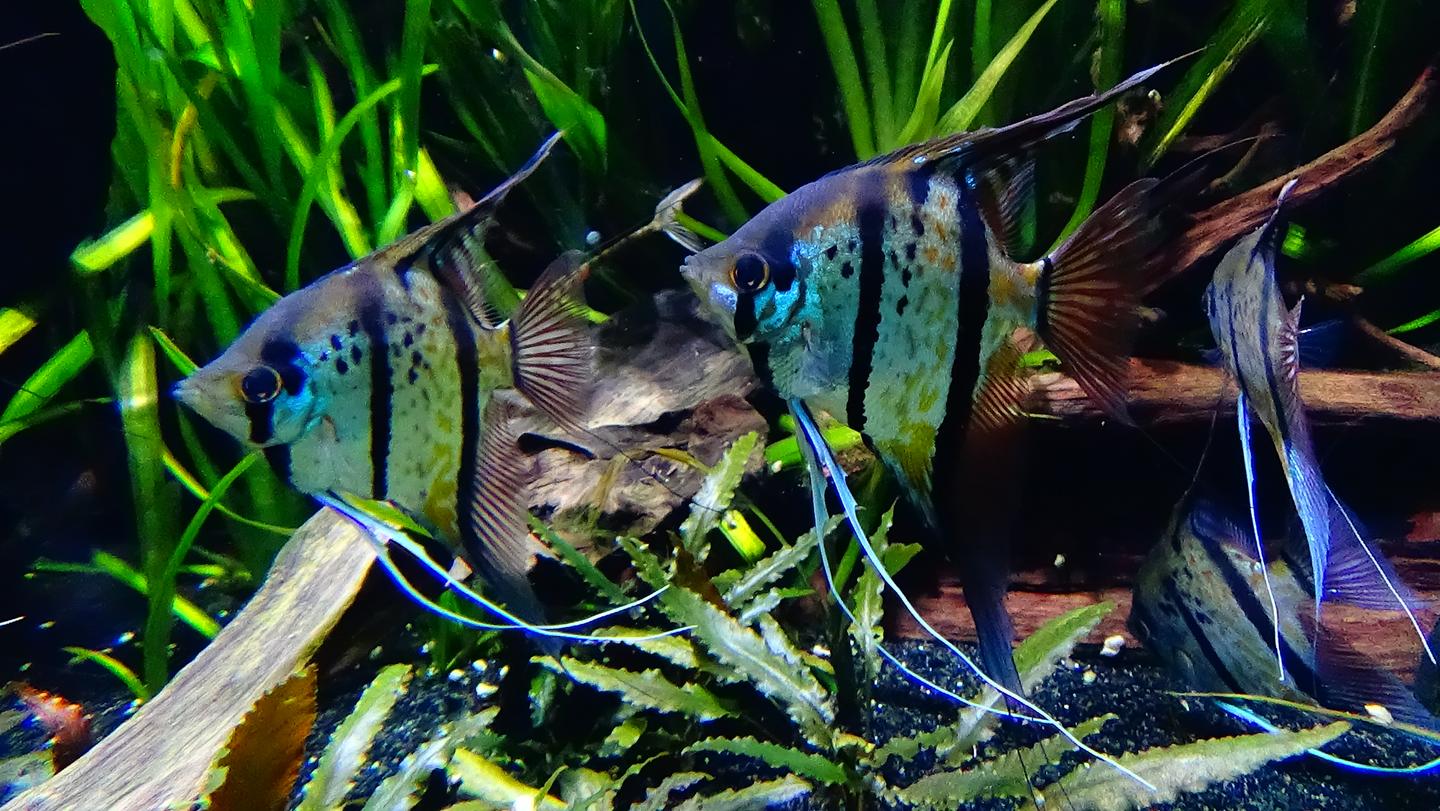
Freshwater angelfish are tall South American cichlids, not small community fish. OATA gives 120 litres as an industry floor for a compatible pair and says the aquarium must be sufficiently tall. We prefer planning around roughly 200 litres, a 100 × 40 cm footprint and about 50 cm height for an adult pair, with more space and an exit plan for a group.
Maintain these water conditions for optimal health and vibrant colors
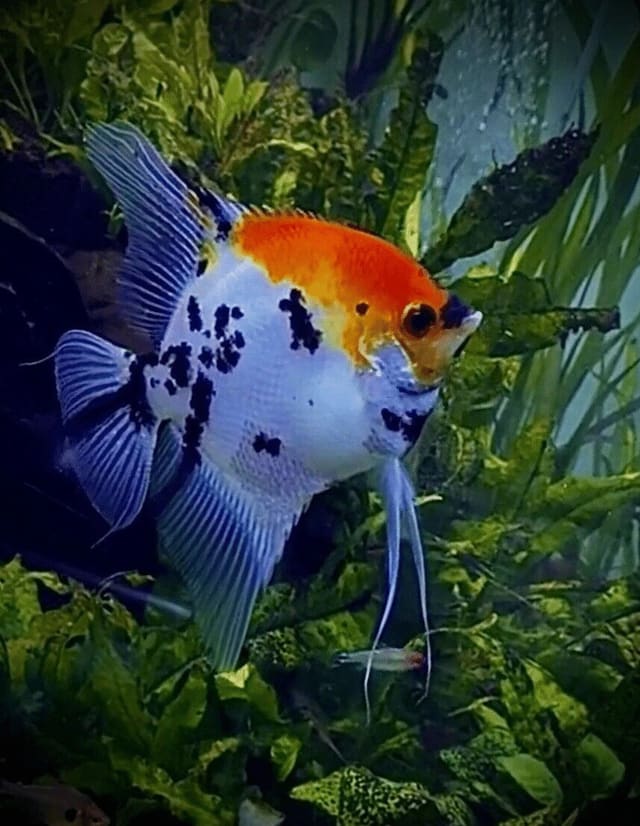
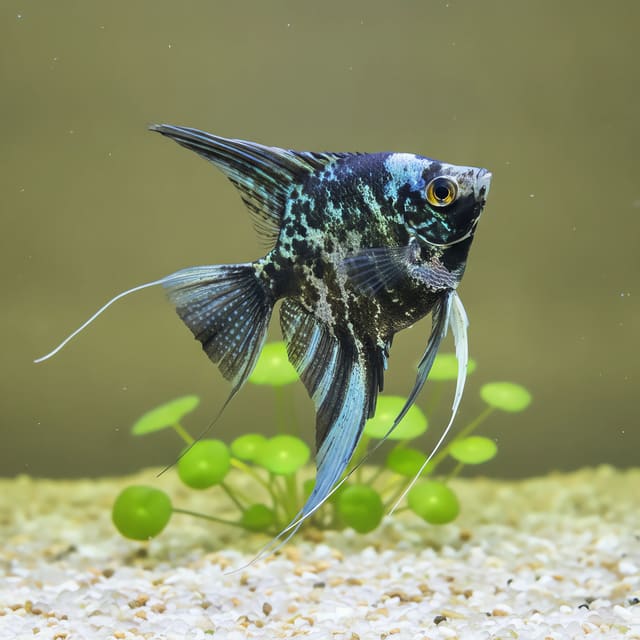
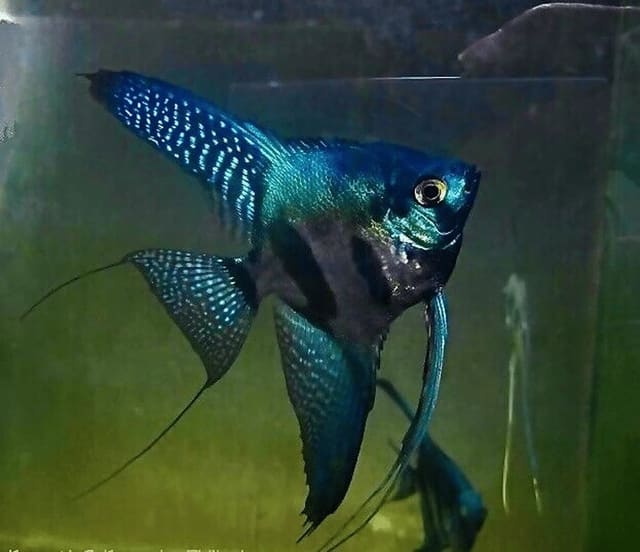
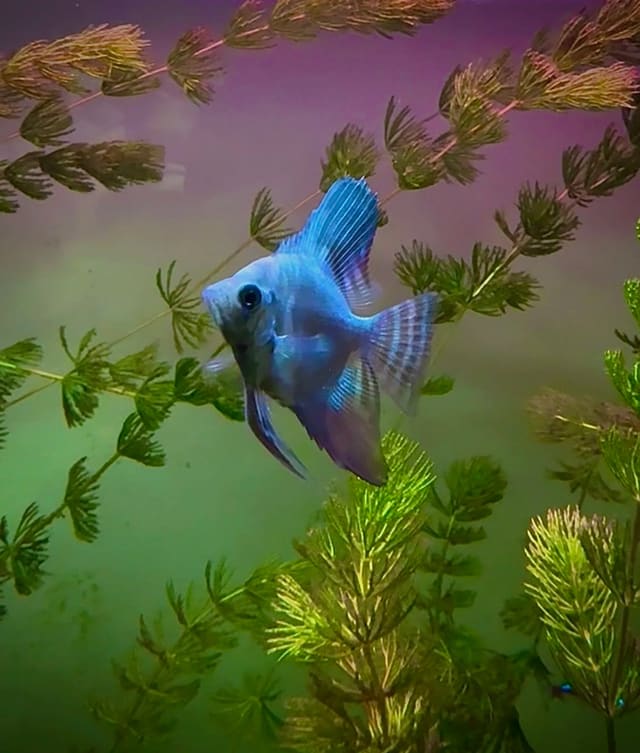
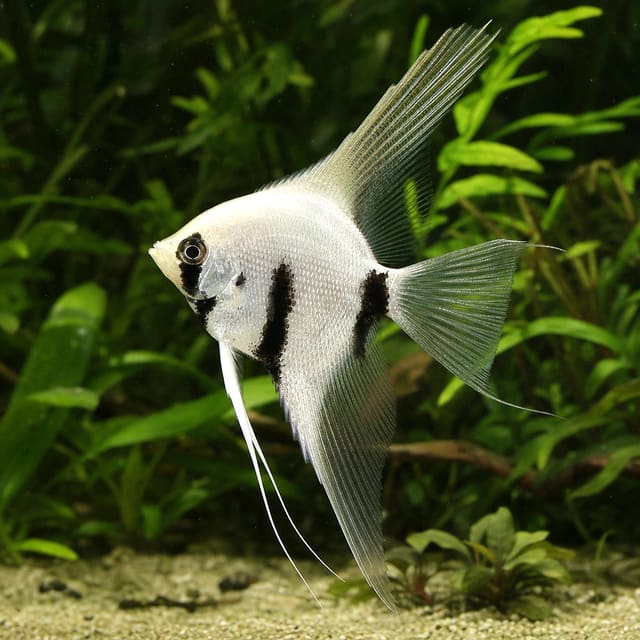
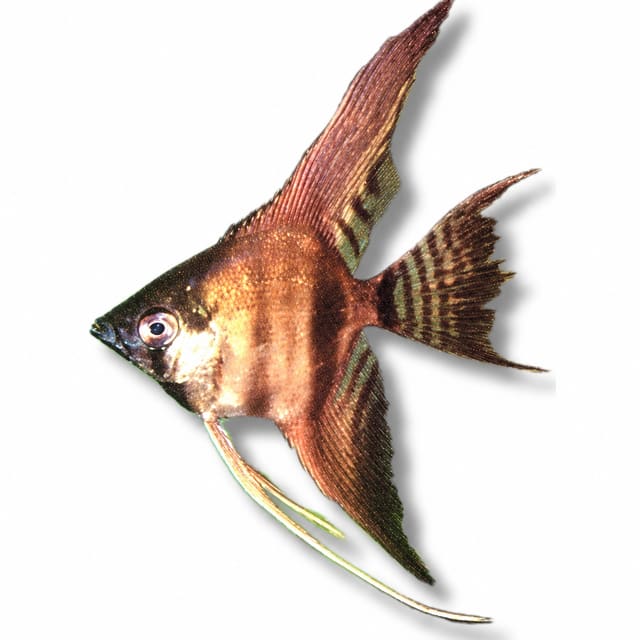
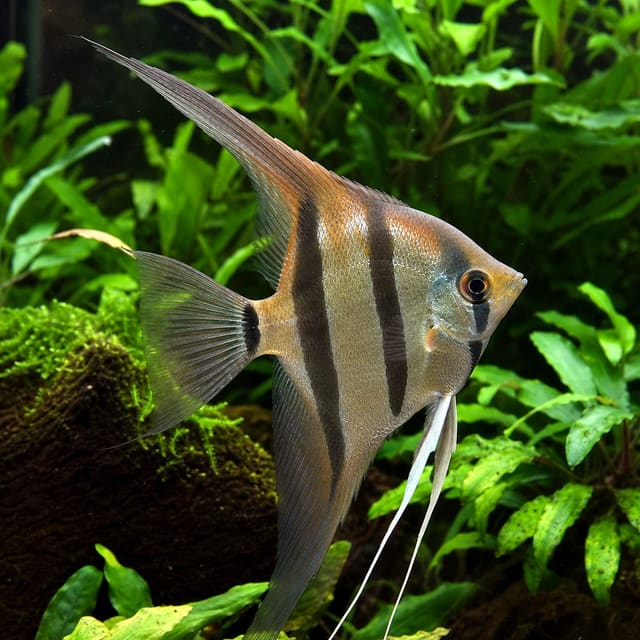
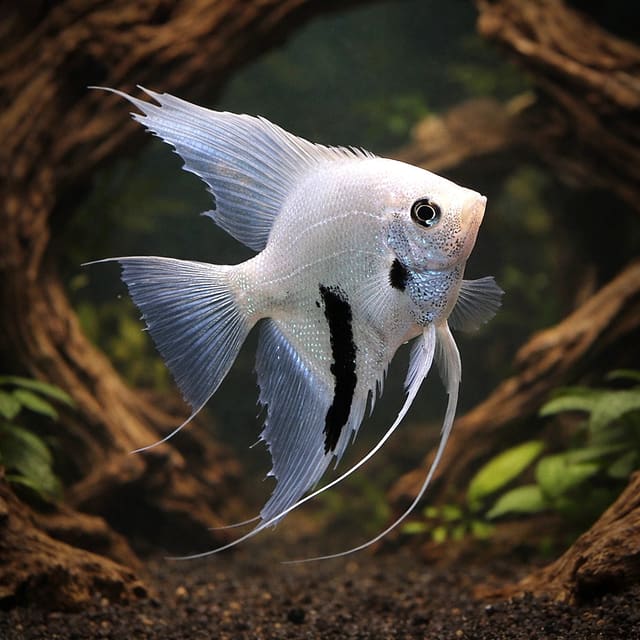
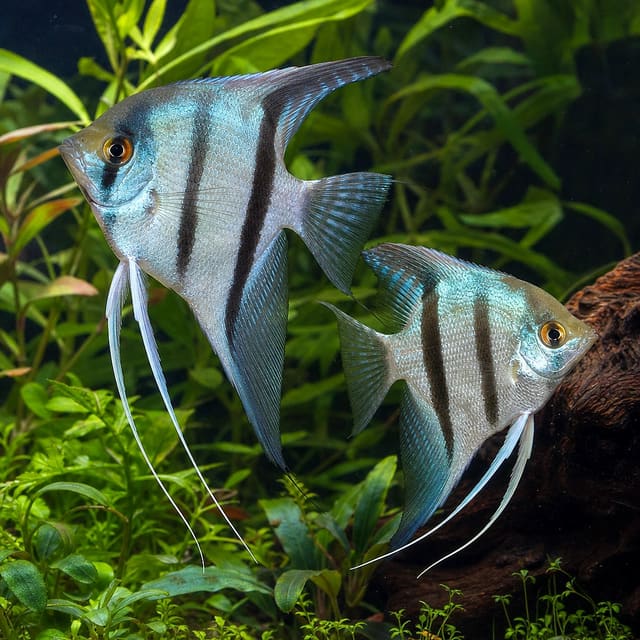
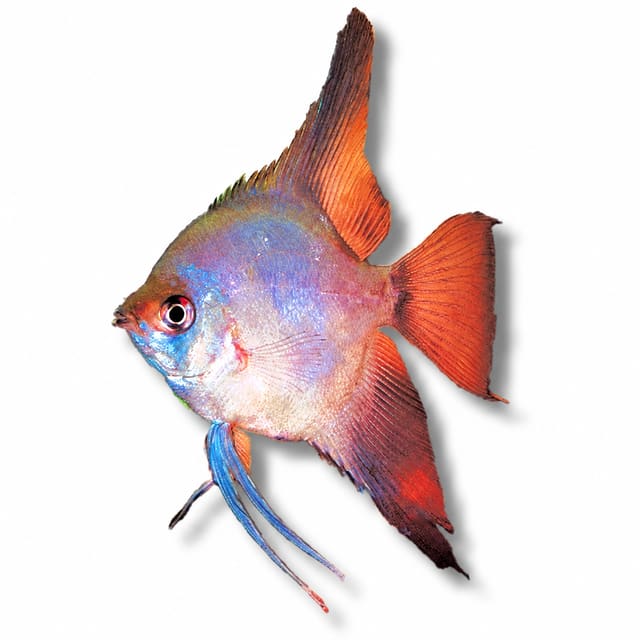
Mixed Medium Angelfish is a domestic mixed selection of Pterophyllum scalare, the freshwater angelfish. It belongs to the cichlid family Cichlidae and develops the deep, laterally compressed body and extended dorsal, anal and ventral fins associated with angelfish. Domestic selections can include different colours and markings, so choose this fish for its characteristic form and behaviour rather than expecting one fixed pattern.
Eschmeyer’s Catalog of Fishes recognises Pterophyllum scalare as the accepted name. FishBase places it in freshwater habitats across parts of the Amazon basin and records wild adults around dense aquatic and river-edge vegetation in flooded ground or swamps. Those habitats make tall plants, roots and wood useful layout inspiration, while this offer remains a domestic mixed aquarium selection rather than a claim about the origin of an individual fish.
One purchase quantity supplies one animal of the selected option. Use the live selector to choose between the labels 1 cm, 1,5 - 2 cm, 2.5-3 cm, 3 - 3,5 cm, 4 - 5 cm, 5 - 5,5 cm and XXL (>7 cm). The size you select is the size supplied, not the adult size. These labels describe dispatch size only and should not be read as a life-stage or sex description.
Sex is guaranteed only when the selected option explicitly states male or female. This Mixed Medium Angelfish listing has no sex-guaranteed option.
The gallery images are representative, based on reference photographs of this species, so colours can look slightly different from the live animal.
| Suits | Not suited to |
|---|---|
| A prepared keeper with a tall, mature aquarium and a compatible pair or carefully managed group plan | A shallow aquarium sized only around the dispatch fish |
| A setup with stable warm water, vertical cover and room to separate fish if conflict develops | A plan based on keeping one angelfish alone by default or assuming two random fish form a compatible pair |
We rate this as an intermediate choice because adult height, social behaviour and companion selection need more planning than a small, placid community fish. After checking those needs, you can browse the current angelfish collection for other forms.
A small dispatch fish can grow into a tall adult that needs turning room above, below and around its body. FishBase records a maximum of 15 cm total length, while its current field maximum is 10.5 cm total length. Seriously Fish uses 15 cm standard length and recommends a base of 100 × 40 cm with about 50 cm height. Our practical plan is therefore around 15 cm total length and often 20–25 cm overall height when the extended fins are included, allowing for individual and domestic-form variation.
For an adult pair, plan around 200 litres, a footprint of about 100 × 40 cm and roughly 50 cm of usable height. OATA’s American-cichlid sheet is group guidance; it gives at least 120 litres for a pair of smaller American cichlids and separately says adult angelfish need sufficient height. That lower figure is a floor for assessing a compatible pair, not a promise that every aquarium labelled 120 litres has suitable dimensions.
| Decision | Planning point |
|---|---|
| Adult pair | Around 200 litres, 100 × 40 cm footprint and about 50 cm usable height |
| Juvenile group | More room than the pair plan, visual barriers and a route to separate fish |
| Community | Add space for every adult inhabitant, feeding access and territories |
| Short aquarium | Change the aquarium plan before the fish reaches full fin height |
Volume alone cannot describe usable space. A tall but narrow aquarium may limit turning and territory, while a broad but shallow tank can restrict the fins. Measure the internal water dimensions after allowing for substrate, bracing and the normal waterline.
Our complete freshwater angelfish care guide explains the adult-size and social decisions in greater depth. Make the adult plan before choosing a dispatch size, even when the selected fish looks small in its transport bag.
Use the aquarium’s height to create structure without filling every route with decor. Tall leafy plants, upright wood and other vertical features can divide sight lines, provide retreat choices and echo the densely vegetated environments occupied by wild freshwater angelfish. Keep an open central or front area where an adult can turn without dragging its fins through leaves or against hard objects.
Seriously Fish recommends tall leafy planting and a gentle flow for this species. Gentle does not mean stagnant: circulation still needs to carry waste towards the filter and maintain gas exchange. Watch how the fins move. A fish forced to lean into the current or remain behind decor may need the outlet redirected, whereas debris settling everywhere can indicate inadequate circulation.
Fine aquarium gravel or sand gives a practical base. Leave enough clearance beneath wood and around rocks to siphon trapped waste. Plants can be live or artificial if they are secure and have smooth surfaces; the important decisions are cover, access and safety rather than one compulsory plant species.
View the aquarium from the front and both ends. If every vertical feature forms one continuous wall, open another route. If one dominant fish can see the entire aquarium from a single position, add a broken sight line. If the tallest fins would enter a lid fitting, heater guard or intake area, move or protect that equipment before the fish grows into the space.
Fit a secure lid while leaving safe access for feeding and maintenance. Check gaps around cables and pipework, and cover hazardous intakes so long fins cannot be pulled against them.
Use 24–27°C, pH 6.5–7.4 and about 5–12 dGH as the routine aquarium range. This is the overlap of FishBase’s 24–30°C, pH 6.0–8.0 and 5–13 dGH range, Seriously Fish’s 24–30°C, pH 6.0–7.4 and 0–15 dGH range, and OATA’s American-cichlid guidance of 22–27°C, pH 6.5–8.0 and 4–12 dGH. Treat these values as a stable operating window rather than chasing one exact reading.
| Measurement | Routine target |
|---|---|
| Temperature | 24–27°C |
| pH | 6.5–7.4 |
| General hardness | 5–12 dGH |
| Ammonia | Zero detectable |
| Nitrite | Zero detectable |
| Nitrate | Keep within 20 mg/l above the normal tap-water level |
Measure the aquarium before making changes. A heater dial is a setting, not a water reading, so confirm temperature with a thermometer. Test pH and hardness before altering tap water or mixing it with reverse-osmosis water. The water chemistry guide explains how GH, KH and pH interact, and the water matcher helps compare measured aquarium water with the stated range.
Avoid fixed recipes such as an automatic tap-water and reverse-osmosis ratio. Local water and remineralisation methods differ, so the same recipe can produce different GH, KH and pH. Stability comes from testing, recording and repeating a suitable preparation method.
A working biological filter is essential because fish release ammonia, which is toxic. Beneficial bacteria convert ammonia to nitrite and then nitrate, but the first two compounds must remain at zero detectable levels. The RSPCA’s aquarium guidance explains why a well-established, maintained filter is central to fish welfare.
Do not judge filter maturity by the number of weeks it has been running. Use water tests to show that the system can process waste. If this is your first setup, follow the steps for preparing and maturing a tropical aquarium before arranging livestock.
Seriously Fish gives a turnover of four to five times the aquarium volume per hour for an approximately 200-litre setup, corresponding to a nominal 800–1000 litres per hour. Treat the rating as a starting point because media, pipework and maintenance affect actual flow. Spread the return so the aquarium is filtered without creating a narrow, punishing jet.
| Routine | Action |
|---|---|
| Every day | Check temperature, fish behaviour and that water is moving through the filter |
| At least weekly | Test ammonia and nitrite, inspect nitrate and complete a partial water change |
| Starting change | Use about 25%, then adjust according to measured conditions and stocking |
| Filter check | Inspect intakes, outlets and media for restricted flow |
| Media cleaning | Rinse lightly in removed aquarium water; do not run it under the tap |
Treat replacement tap water with a suitable conditioner before it enters the aquarium. Match temperature closely enough to avoid a sudden swing. Siphon waste from accessible substrate areas and beneath decor rather than relying on clear-looking water as a cleanliness test.
Increase stocking slowly. Every additional fish and every increase in feeding adds waste that the bacterial population must process. If ammonia or nitrite appears after an addition, reduce further stocking pressure, test frequently and act immediately to restore safe water.
Angelfish are social, but social does not mean every combination will remain peaceful. OATA advises keeping angelfish as a pair or group at minimum and warns that a single fish may become stressed. FishBase describes aquarium groups of five or more and pairs for breeding, while Seriously Fish notes that they may squabble with their own kind. Combine those points into a practical plan: use a compatible adult pair or a purposefully managed group with enough space and a separation route.
Two randomly selected animals are not automatically compatible or bonded. They may coexist while young and become territorial as they mature or enter breeding condition. Do not use dispatch size, colour, forehead shape or fin angle to assign sex. Sexing is difficult, and the genital papilla is generally useful only when spawning activity makes it visible.
| Social plan | What it requires |
|---|---|
| Compatible pair | Adult-pair dimensions, divided sight lines and monitoring for territorial defence |
| Juvenile group | Substantially more room, equal feeding access and a plan for pairs forming |
| Adult group | Large territories, several retreats and the ability to separate excluded fish |
| Single fish | Use only as a considered welfare response, not the default convenience choice |
Watch the group at feeding time and again when food is absent. Brief displays or short chases can occur, but persistent exclusion is different. A fish that remains pinned behind equipment, misses repeated meals, develops damaged fins or cannot cross the aquarium needs intervention.
Keep a second mature, suitably sized aquarium ready or identify a realistic rehoming route before conflict begins. A divider can be useful only when each side retains adequate swimming room, filtration, heat and access to food. Moving the aggressor or the excluded fish can change the hierarchy, so continue observing after any rearrangement.
Breeding can intensify territorial behaviour. A pair may defend a broad leaf, slate, glass panel or another vertical surface used for eggs. In a community aquarium, that defended area reduces the usable space for every other fish, which is why a group or breeding plan needs more than the nominal adult-pair volume.
Freshwater angelfish are omnivorous. Seriously Fish notes that wild fish feed mainly on zoobenthos such as small crustaceans and other aquatic invertebrates, while aquarium fish accept pellets or flakes and take live or frozen foods. Use that biology to provide variety without allowing one rich item to replace a nutritionally complete staple.
A controlled feeding study in freshwater angelfish found that feed composition affected growth and reproductive performance. It supports taking dietary quality and variety seriously, but the household routine still needs to be adjusted to fish size, body condition and water quality.
Spread food across more than one point when a group contains a dominant feeder. Watch each fish take and swallow an appropriate item. If one animal repeatedly approaches but fails to eat, check food size, competition, breathing and water quality rather than adding an uncontrolled second meal.
| If you see | Do this |
|---|---|
| Food left after a few minutes | Remove the excess and reduce the next portion |
| One fish monopolising food | Use separated feeding points and confirm subordinate access |
| Falling body condition | Test water, observe swallowing and seek a diagnosis before adding remedies |
| Uneaten food collecting below | Siphon it out before it breaks down into waste |
Bloodworm, brine shrimp and daphnia are useful variety, not complete diets by themselves. Avoid using fasting, peas, vitamins or medicated food as automatic responses to abnormal swimming or appetite. A sudden feeding change is a health sign that should trigger water tests and closer assessment.
Prepare the aquarium before the delivery window: confirm zero detectable ammonia and nitrite, stable temperature, secure decor, gentle circulation and a clear release area. Someone must be present to receive live fish, so follow the date and window shown during checkout and in the tracking message.
These steps follow our delivery and Live Arrival Guarantee policy, which also carries the current claim requirements and delivery terms.
| Checkpoint | What to assess |
|---|---|
| First hour | Balance, breathing, fin use and ability to move away from the release point |
| First day | Whether established fish chase, corner or block access to cover |
| First feeds | Interest in food and whether the new fish can reach it |
| First week | Water tests, fin condition, body profile, hiding and use of the aquarium |
Some initial caution or hiding can occur after transport, but do not assume every change is normal settling. Gasping, loss of balance, clamped fins, wounds or repeated exclusion require immediate water testing and a prompt response. Check temperature, ammonia and nitrite first because poor water can affect several fish at once.
Add further livestock only after the aquarium remains stable and the existing social pattern is clear. Increasing numbers and feeding quickly can outpace the biological filter. A quiet first week gives you a better view of appetite, aggression and water quality before another variable is introduced.
A settled angelfish should show steady swimming, regular breathing, clear eyes, open fins, intact scales, a consistent body profile and reliable feeding. Learn the normal posture, colour and activity of each fish so a change is noticed early. One sign rarely identifies a disease by itself.
The RSPCA’s fish health guidance supports checking visible condition and water quality promptly. OATA highlights changes in swimming, colour, temperament, breathing, appearance, body condition and feeding as reasons to investigate.
| Observation | Immediate priority |
|---|---|
| Hanging at the surface or rapid gill movement | Check water quality, temperature, circulation and gas exchange |
| Sitting low or losing balance | Test the water and reduce avoidable disturbance |
| Clamped or torn fins | Check aggression, sharp decor and water conditions |
| White spots, fluffy growths or wounds | Document the signs and obtain a diagnosis before treatment |
| Sudden refusal of food | Check water and observe swallowing, breathing and social access |
Do not use a universal heat, salt or medication recipe. The correct response depends on the problem, the aquarium inhabitants and the lawful product directions. Isolate an affected fish only when the separate setup is mature, heated, filtered and suitable; an uncycled container can create a second emergency.
If the fish leaves the aquarium, return it to suitable water immediately using wet hands or a wet, soft net, minimise air exposure and monitor breathing, balance and visible injury. Then close the escape route around the lid, cables or pipework. Abnormal recovery needs fish-veterinary attention.
Freshwater angelfish can live in a robust community, but compatibility depends on adult behaviour and dimensions rather than a simple list of names. Seriously Fish describes the species as generally peaceful while warning that it may squabble with its own kind and eat small fish such as tetras. OATA recommends calmer American cichlids such as angelfish only with appropriately robust, larger shoaling fish that share suitable conditions.
| Check | Reason |
|---|---|
| Adult body size | A fish small enough to swallow may become prey even if both animals are juveniles now |
| Fin behaviour | Persistent fin-nippers can damage long dorsal, anal and ventral fins |
| Temperament | Highly aggressive or territorial fish may prevent resting and feeding |
| Water overlap | Both species must fit the same temperature, pH and hardness plan |
| Feeding speed | Fast competitors can leave slower or subordinate fish underfed |
Avoid very small fish that may be swallowed, persistent fin-nippers and highly aggressive competitors. Treat territorial cichlids, much faster feeders and fish occupying the same preferred space with caution. A calm, robust, appropriately sized shoaling species may be considered when its adult requirements overlap, but individual behaviour still needs observation.
Do not assume that using a different level of the aquarium creates automatic compatibility. A bottom-oriented fish still needs floor space and may encounter angelfish during feeding or breeding. Likewise, a shoal in open water can enter a pair’s defended territory even when it normally swims elsewhere.
Compare the adult dimensions and social needs of every inhabitant, then allow room for decor and territories. Check whether all fish can feed without crowding and whether retreating animals have more than one route. If the aquarium already operates close to its space or filtration limit, adding a theoretically compatible species can still create poor welfare.
For a stocking and compatibility assessment, provide the aquarium’s internal dimensions, measured water values, filtration, decor and the exact species and numbers already present. Those details allow a useful decision instead of a universal promise.
Angelfish remain cichlids, and a previously calm aquarium can change when fish mature, pair or prepare to spawn. Short displays can be part of social negotiation, but continuous pursuit, blocked feeding and forced hiding show that the arrangement is failing. Intervene before torn fins, weight loss or chronic stress develops.
Rearranging wood or tall plants can interrupt an established line of sight, but decor cannot compensate for inadequate dimensions. A temporary divider is useful only when both sections preserve filtration, heat, movement and feeding access. If dividing the aquarium leaves either side too small, move a fish to another mature setup or use the planned rehoming route.
| Before adding a companion | After introduction |
|---|---|
| Compare adult size and water needs | Watch access to food and cover |
| Identify likely territories | Check fins and body condition daily |
| Prepare a separation option | Test water after stocking increases |
| Confirm the filter can take more waste | Act on persistent exclusion rather than waiting |
Adding several fish at once raises both social and biological pressure. The inhabitants must establish relationships while the filter adapts to more waste and feeding. Introduce slowly, then pause long enough to understand the new pattern before making another change.
There is honest uncertainty in every community because individual temperament, pair formation and territory can alter the result. Use the screening rules to reduce predictable risks, maintain the exit plan and judge success by sustained feeding, intact fins, normal movement and access to space.
It is the freshwater angelfish, a deep-bodied South American cichlid; this offer is a domestic mixed aquarium selection.
One purchase quantity supplies one animal of the selected size option.
Use the live selector for 1 cm, 1,5 - 2 cm, 2.5-3 cm, 3 - 3,5 cm, 4 - 5 cm, 5 - 5,5 cm or XXL (>7 cm); each is a dispatch size.
Plan an adult pair around 200 litres, a 100 × 40 cm footprint and about 50 cm usable height, with more room for a group or community.
Keep a compatible pair or a carefully managed group; a singleton may become stressed, and two randomly selected fish are not automatically compatible.
Maintain the FishBase, Seriously Fish and OATA overlap of 24–27°C, pH 6.5–7.4 and about 5–12 dGH, with zero detectable ammonia and nitrite.
Feed a complete cichlid pellet, granule or suitable flake once daily, adding suitable frozen or freeze-dried variety in portions eaten within a few minutes.
Start filming before opening the sealed parcel, continue through opening until the fish is visible inside the sealed bag, then float the bag for 20–30 minutes before releasing the fish.
Consider calm, robust, appropriately sized fish with overlapping water needs; avoid very small prey-sized fish, persistent fin-nippers and highly aggressive competitors.
No reviews for this item yet. Bought one? Honest reviews only, good or bad.
What customers say about ordering from us
I have a small group of long finned mountain minnows. So was delighted to be able to order ten of this variety to increase the genetics in my tank . The ones I recieved are healthy but it’s to early to give a verdict on wether they are of a long finned type since they are small currently.
Gordon Walker · 23 Sept 2026
100% success travel and "installation". Pleased with quality of purchase. The Siamese fighter a bit "shy" so have not yet seen him at his best yet but looking good. Happy customer. GG
George E Garratt · 21 Sept 2026
Reviews of our shop, collected by Judge.me, an independent third-party review collector. Newest first.