TropicalFish Co

South American Cichlids · Buying Guide

Angelfish Types UK: Koi, Platinum, Marble & The Strains We Stock

Compare the freshwater angelfish types - koi, platinum, marble, veil, zebra and altum - by pattern, rarity and price. See every strain we have in stock.

Priya RameshBy Priya RameshUpdated 30 May 202611 min read
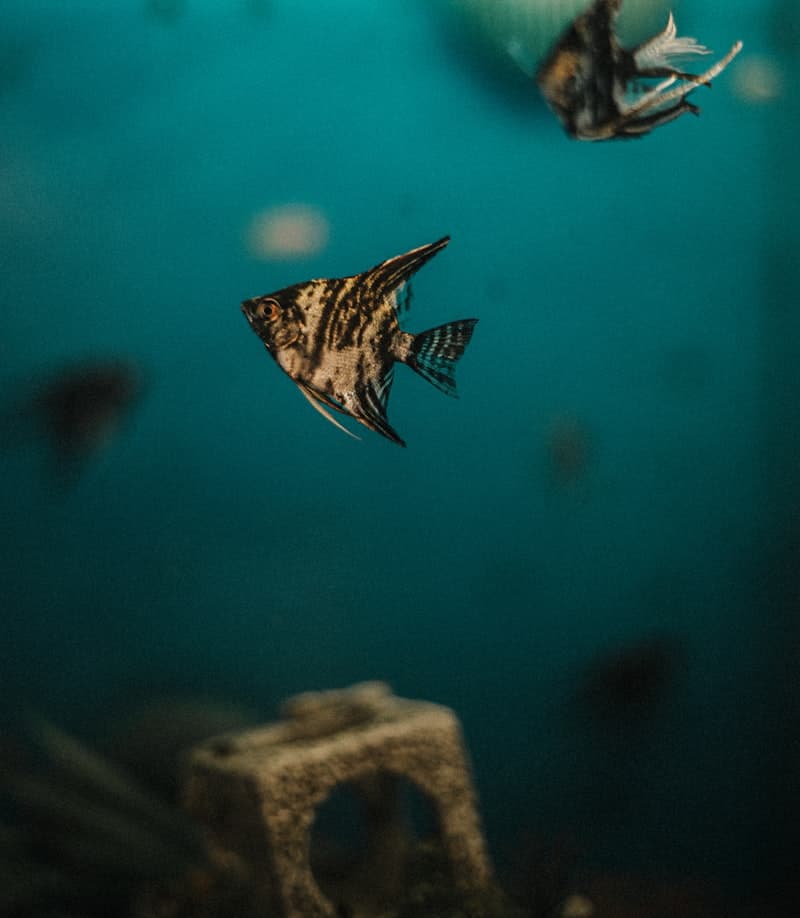
Several freshwater angelfish (Pterophyllum scalare) of different colour strains in a tall planted aquarium
Editorial illustration · Tropical Fish Co· Own
Live arrival guarantee
Every fish
UK tracked delivery
Licensed live courier
Expert-packed
By UK aquarists
5.0 Google rating
Google Business Profile
Established 2019
UK family-run

Which angelfish type should I actually buy?

You've decided you want an angelfish, and now you're staring at a wall of names - koi, platinum, marble, zebra, veil, altum, silver - with very different prices and no clear idea what separates them. Most guides either list twenty "types" as if they're twenty different fish, or skip the question entirely and sell you whatever's in the tank. Both leave you guessing.

I'm Priya Ramesh, and cichlids are my corner of Tropical Fish Co. I've kept South American cichlids for over a decade, and angelfish are the species I field the most "which one?" questions about. Here's the honest answer the trade rarely spells out: almost every angelfish "type" is the same species - Pterophyllum scalare - selectively bred into a colour strain [1][5]. A koi and a platinum are no more different, biologically, than a ginger cat and a tabby. The care is identical. What changes is the pattern, the rarity, and the price.

This page is the conversation I'd have across the counter when someone asks "which angelfish type should I buy?" - what each strain looks like, why the rare ones cost more, the one genuine exception (the wild altum), and exactly which strains we have in stock right now. It's a companion to our full angelfish care guide; that page covers keeping them, this one helps you choose.

Fun facts - the stuff most UK angelfish guides skip

Angelfish are written about endlessly, but the genetics and history get glossed over. Here are the facts that actually help you choose:

  • There are three angelfish species, but you'll almost only ever buy one. The genus Pterophyllum has three members - P. scalare (the common aquarium fish and the base of every colour strain), P. altum (the tall wild one) and P. leopoldi (the rarest) [5]. Roughly all the "types" in the trade - koi, platinum, marble, veil, zebra, gold - are scalare [1].
  • The wild altum is genuinely taller, not just a colour. FishBase records Pterophyllum altum reaching about 18 cm in length and up to 20 cm in body height - noticeably bigger and deeper-bodied than scalare [2]. It's also a soft-water specialist from the Orinoco and Negro drainages, which is why it's an advanced fish, not a beginner strain.
  • Angelfish form a pecking order - which is why "how many" matters. A peer-reviewed study found that social rank strongly shaped angelfish behaviour, with subordinate fish less willing to feed and less active than dominant ones [3]. Keep three or four adults and two will pair off and bully the rest - hence the "5-6 juveniles or a single pair" rule for every strain.
  • Strains interbreed freely, which is how "mix" batches happen. Because the colour forms are all one species, a koi will happily spawn with a marble, and the fry follow angelfish colour genetics rather than coming out as one parent or the other [5]. Our "L Mix" and "XL Mix" angelfish are exactly this - a spread of patterns from mixed parentage.
  • South-east England's hard tap water suits scalare but not altum. Most of the water across the south-east is classified as hard [6]. Common scalare strains tolerate that happily - but the wild altum needs soft, acidic water, so UK altum keepers usually run RO (reverse-osmosis) water. It's the clearest practical reason the altum is a different commitment from a koi.

The angelfish types we stock - compared

Here's the part that should make the decision easy. Every strain below (except the altum) is Pterophyllum scalare [1], so care, adult size, temperament and diet are identical - I've left those out of the table because they don't vary. What varies is the pattern, the rarity, and the price:

Strain (as we stock it)Pattern / colourRarity & price tierNotes
Silver / standard scalareWild-type silver body, dark vertical barsCommon · £The hardy baseline - best first angelfish
L / XL Mix scalareAssorted patterns from mixed parentageCommon · £-££Grab-bag of strains; colour develops with age
Platinum (scal. platinum)Solid silvery-white, faint blue-green sheenMid · ££Shows water quality fast - keep it clean
Platinum whiteClean white, minimal markingsMid · ££Same care as any scalare; striking in planted tanks
Platinum pandaWhite body with bold black "panda" markingsMid · ££A patterned platinum line
Koi (koi full orange)White body, black blotches, orange crownMid · ££The "koi carp" look; orange intensifies with age
Red capPale body with a red/orange head capMid-high · ££Cap colour deepens as the fish matures
Bulgarian seal pointPale body, darker "points" (face, fins)Higher · ££A European line; recessive genetics raise the price
Rio ItayaPatterned line named for the Peruvian riverHigher · ££Sold as a distinctive scalare strain
ManacapuruRed-shouldered, named for the Brazilian regionHighest scalare · £££Prized for red colouration; our priciest scalare
Altum (P. altum, wild form)Taller body, brown-silver wild barsSpecialist · variesDifferent species - soft acidic water, advanced only

If you're new to angelfish, choose from the top of the table - a silver, a mix, or a platinum. The strains lower down cost more because they're harder to breed true, not because they need a different tank. The altum is the only row that genuinely changes what you have to provide.

Buy juveniles and let the colour develop

Most of our angelfish are sold as juveniles, and several strains - koi, red cap, manacapuru - deepen in colour as they mature. Buying young lets you watch that happen, and young fish settle far better than a stressed adult moved between tanks. Just have the 150 L+ tank cycled and ready before they arrive, whatever strain you pick.

Here are the strains we have in stock right now - every one a Pterophyllum angelfish, listed by type so you can pick on looks:

Do the types differ in care? (Mostly, no)

This is the question that catches people out, so let me be blunt: for the scalare strains, the care is the same [1][5]. A koi, a platinum, a marble and a plain silver all want:

  • Temperature 24-28 °C, with around 26 °C a good target [1].
  • pH 6.0-7.5 and hardness 3-15 dGH [1].
  • A tall tank - 150 L minimum for a group, 200 L+ for an adult pair, with 45 cm or more of height.
  • An omnivore diet - quality flake or pellet, plus frozen bloodworm and brine shrimp for variety.

The strain you choose changes none of that. The only differences worth knowing are at the margins: heavily line-bred fancy strains (some pure blacks, certain koi lines) can be a touch more delicate, and platinums show water-quality problems faster because blemishes stand out on a clean white body. None of that is a different care routine - it's the same routine done well.

The altum is the real exception

The wild altum (Pterophyllum altum) is a genuinely different commitment - a separate species that's taller (to ~20 cm body height), comes from soft, acidic blackwater, and does not tolerate hard UK tap water [2][6]. Altum keepers typically run RO water, a taller tank and a quieter community. If you're choosing your first angelfish, the altum is the one strain in our list to come back to later, not start with.

How many of each strain should I keep?

The stocking rule is the same for every strain, and it's driven by behaviour, not colour. Angelfish form dominance hierarchies [3], so:

  • Group of 5-6 juveniles in a 150 L+ tank - they shoal loosely while young, then a pair forms.
  • A single bonded pair as adults in 200 L+ - the calmest long-term setup.
  • Not 3-4 adults - two pair off and harass the rest. This is the most common angelfish stocking mistake, and it happens regardless of whether they're koi, platinum or silver.

If you want a mixed-strain display, buy a group of young fish (a "mix" batch is ideal), enjoy the variety while they grow, and have a plan for the surplus once a pair claims its territory.

Tank mates - the same for every angelfish type

The strain makes no difference to compatibility: a platinum and a koi are equally peaceful with the right tank mates and equally likely to eat a neon tetra [4]. Choose companions for the adult angelfish - calm, medium-sized, and either too big to eat or not nippy:

  • Corydoras care guide - peaceful bottom-dwellers that occupy a different layer of the tank and leave angelfish alone. A classic, reliable companion [5].
  • Angelfish care guide - the full husbandry picture for keeping any strain well, including community planning.
  • Cichlid care guide - the broader foundation for housing semi-aggressive cichlids: territory, filtration and aggression management.

Good in-tank companions we stock include corydoras, bristlenose plecos and larger tetras - fish chosen specifically so they're safe with an adult angelfish:

CompanionWhy it works with angelfish
Corydoras (panda, sterbai, peppered)Peaceful, bottom-dwelling, too busy in the substrate to bother angels
Bristlenose pleco (Ancistrus)Armoured algae-eater that ignores angelfish and stays out of the way
Congo & rummy-nose tetraLarger, calm shoalers - too big to be eaten, not fin-nippers
Lemon tetraA peaceful, medium tetra that holds its own in a planted angel tank
The neon tetra mistake

The most common angelfish tank-mate error is pairing them with neon tetras because both are "community fish". An adult angelfish of any strain will eat a 3 cm neon - it's not aggression, it's lunch [4]. If you want tetras with angelfish, choose larger ones: Congo, rummy-nose or lemon tetras all work where neons don't.

A second look - a mixed batch

A mix-strain angelfish (Pterophyllum scalare) showing patterned colouration in a planted aquarium

One of our L Mix angelfish (Pterophyllum scalare mix) - mixed parentage means every fish in a batch is patterned slightly differently. Buy a mix and you'll watch the colours develop and diverge as they grow. Credit: Tropical Fish Co.

A mixed batch is the easiest way to enjoy several "types" at once, and it answers the interbreeding question in real time: because all the scalare strains are one species, mixed parents throw a spread of patterns rather than one fixed colour [5]. It's also the most economical route into a group - and since you should be keeping 5-6 juveniles anyway, a mix gives you variety without paying the premium for a single rare strain.

A note on UK water before we go further: common scalare strains cope happily with the hard, alkaline tap water across much of the south-east, where supplies are classified as hard [6]. You don't need to soften your water for koi, platinum, marble or silver angels. The altum is the only one that demands soft water - which is, again, why it's a separate commitment from the rest of the list [2].

A closer look at the strains worth knowing

The table above is the quick version. If you want to choose with a bit more confidence, here's the extra detail on the strains people ask about most - all Pterophyllum scalare, all the same care:

  • Silver / standard scalare - the wild-type pattern: a silvery body with four dark vertical bars that the fish can darken or fade with mood. It's the genetic baseline every other strain is built on, the hardiest, and the cheapest. If this is your first angelfish, this is the strain I'd point you at. Our young scalare start around £4.
  • Platinum forms (platinum, platinum white, platinum panda) - solid silvery-white fish, sometimes with a faint blue-green sheen on the fins, and in the panda's case bold black markings over the white. They're stunning in a planted tank, but a clean white body shows any blemish or stress mark instantly - so they reward good water rather than needing different water. Mid-tier on price (around £10-£15 with us).
  • Koi (koi full orange) - named for the resemblance to koi carp: a white body marbled with black, topped by an orange crown that deepens as the fish matures. The orange intensity varies fish to fish, so it's worth picking in person or buying a couple to grow on.
  • Red cap - a pale body with a concentrated red-orange cap over the head. Like the koi's crown, the colour develops with age, so a juvenile's cap will deepen over its first months.
  • Bulgarian seal point & Rio Itaya - European and Peruvian-named lines respectively, both prized for distinctive patterning. The recessive genetics behind a stable seal-point line are why it sits higher on price.
  • Manacapuru - named for the Manacapuru region of Brazil and prized for its red-shouldered colouration. It's our priciest scalare (around £22) - and, to be absolutely clear, it still keeps in exactly the same tank as a £4 silver. You're paying for the line, not the husbandry.
  • Altum (Pterophyllum altum) - the genuine outlier. A separate species, taller and deeper-bodied (to ~20 cm height), from soft blackwater rivers [2]. Beautiful, but advanced - and the only "type" on our list that changes what you have to provide.

Buying angelfish offline - read the tank, not the strain name

You'll see angelfish in plenty of UK aquatic shops, often a row of juveniles labelled by colour. The "type" on the label is the least useful thing to judge - a stressed, freshly-imported platinum is a far worse buy than a healthy silver, however fancy it sounds. Judge the fish and the tank instead. A welfare-marker checklist that works for any retailer, anywhere, for any strain:

  • The fish is upright, alert and finning calmly - not hanging head-down in a corner, clamped, or breathing hard at the surface. A settled angelfish patrols slowly and turns to face movement.
  • Fins are intact and held open - clamped, torn or cloudy-edged fins on a long-finned fish signal stress or fin rot. Veil strains especially should have clean, flowing fins.
  • The body is full behind the head, eyes clear - a sunken belly or a pinched look behind the gills means a fish that's been off its food, often a recent import that hasn't settled.
  • They're kept in a group of several, not alone - a lone angelfish in a bare tank is usually a destocked leftover. Healthy stock is held in small groups while they grow.
  • Staff can name the species and the tank size it needs. Ask "how big does this get and what tank does it need?" If the answer is "it's a community fish, it'll be fine in your 60 litre", that's the cue to leave - that advice is how stunted angelfish happen.

The strain you want should be the last filter, not the first. Find a healthy, well-kept fish, then check it's the pattern you came for. A good silver from a clean tank beats a poorly-kept koi every time.

Community - where UK angelfish keepers talk strains

Angelfish strains have a dedicated following, and the UK has good places to learn from people who breed and judge them rather than just sell them:

  • The British Cichlid Association runs meets and auctions where experienced keepers sell home-bred fish and talk strains, lines and genetics. Club auctions are often where the rarer, well-documented breeding lines change hands - and the advice comes free.
  • The Federation of British Aquatic Societies links local aquarist clubs across the UK, many of which hold open shows where angelfish are judged by strain standards. It's the best way to see what a top-quality example of each strain actually looks like.
  • The fishkeeping.co.uk forum has an active cichlid section - a genuinely useful UK community for sanity-checking a stocking plan or asking which strain suits your water before you buy.
  • Reddit's r/Aquariums and dedicated angelfish-keeping groups are good for quick second opinions and seeing real long-term tanks (and the genetics behind the patterns).

A common thread across all of them: the people who keep angelfish best treat the strains as one fish in many coats. Choose the coat, keep the fish properly, and you'll fit right in.

When your angelfish arrive - acclimation for tall, fine-finned fish

Angelfish travel well when packed properly, but their long fins and tall bodies need a calm transition - and that's true of every strain, with veil-tail forms the most delicate of all. Our live-animal courier delivers in an insulated, oxygenated bag; your job is a gentle handover. The angelfish-specific protocol:

  1. Receive in a quiet, dimly lit room. Don't open the box on a bright worktop - check the bag temperature first.
  2. Float the sealed bag for 20 minutes to equalise temperature.
  3. Drip-acclimate for 30-45 minutes at 2-3 drops per second. Angelfish are sensitive to sudden pH and temperature shifts, so don't rush the drip [7].
  4. Net the fish into the tank - never pour the bag water in. Support a long-finned fish gently; torn fins heal but it's an avoidable stress.
  5. Lights off for a few hours and no food for 24 hours. A new angelfish will often hang vertically in a corner for a day - that's normal settling, not illness.

Have the tank cycled and stable before they arrive, and introduce a group together rather than one at a time so no single fish establishes territory first. The strain you chose makes no difference here - a koi, a platinum and a silver all acclimate the same way.

Ready for more?

Now you know the types are mostly one fish, the choice is the fun part - pick the pattern you love and build the tank around the species, not the colour.

Every claim above is sourced - see the References block below. If you're torn between strains, or you've fallen for an altum and aren't sure your water suits it, ask us first. We'd rather match you to the right fish than sell you the rarest one.

Related categories

Visual route into the rest of our UK live-fish range.

Frequently asked questions

Silver (the wild-type colour) and marble are the most forgiving strains - they're the most genetically stable, widely bred for aquarium conditions, and the cheapest to replace if you make an early mistake [5]. Our L Mix and standard scalare are essentially these robust lines. Avoid starting with veil-tail forms (long fins tear easily in transit and tank life) or the wild altum (soft-water specialist, advanced only). Pick a silver, marble or mixed scalare first, then move to fancier strains once your tank is mature.

Sources & further reading

Every claim in this article is backed by a source below. We group them by type so you can judge the weight of each one at a glance.

Peer-reviewed study (1)

  1. [3]
    Gómez-Laplaza, L. M. and E. Morgan (2003). The influence of social rank in the angelfish, Pterophyllum scalare, on locomotor and feeding activities in a novel environment. Laboratory Animals, 37(2). View source

    Peer-reviewed evidence that angelfish form dominance hierarchies - context for stocking in groups.

Scientific database (2)

  1. [1]
    Froese, R. and D. Pauly (Eds.) (2024). Pterophyllum scalare (Schultze, 1823) - Freshwater angelfish. FishBase. View source

    Source for max size, pH 6.0-8.0, temperature 24-30 °C and Amazon distribution.

  2. [2]
    Froese, R. and D. Pauly (Eds.) (2024). Pterophyllum altum (Pellegrin, 1903) - Altum angelfish. FishBase. View source

    Source for altum max length ~18 cm TL / ~20 cm body height and Orinoco-Negro range.

Hobbyist reference (2)

  1. [4]
    (2024). Pterophyllum scalare - Seriously Fish. Seriously Fish. View source

    Husbandry cross-check; recommends a tall planted tank and notes scalare may eat very small fish.

  2. [5]
    Dean (master breeder) (2023). Care Guide for Freshwater Angelfish - The Feisty Angel of the Aquarium. Aquarium Co-Op. View source

    Lists the common strains (silver, veil, koi, zebra, marble, albino, leopard, platinum) and the three species P. scalare, P. altum, P. leopoldi.

Expert video (1)

  1. [7]
    (2022). Freshwater Angelfish - Complete Care Guide & Species Profile (video). YouTube. View source

    Visual walkthrough of angelfish strains, tank setup and behaviour.

Government / regulatory (1)

  1. [6]
    (2024). Water hardness - is my water hard or soft?. Thames Water. View source

    UK tap-water hardness classification (mg/l CaCO3) - context for keeping scalare strains in hard south-east water and why altum needs RO.

Spotted something that needs a fix?

Fishkeeping moves fast and we want every guide spot-on. If you think something here is wrong, out of date, or could be clearer, tell us — our team reads every message and updates the page.

Suggest an edit