Moderate
Mixed Medium Angelfish (Pterophyllum scalare)
24–27°C · pH 6.5–7.4 · 200L
£3.99
Pterophyllum Scalare Bulgarian seal points is a freshwater angelfish colour form of Pterophyllum scalare, a South American cichlid from the Amazon basin that reaches 15 cm. It suits prepared keepers planning a compatible pair or managed group at 24–27°C, pH 6.5–7.4 and 5–12 dGH. Sold individually in sizes from 1.5–2 cm to 6–7 cm.
Adult size is the maximum length this species reaches at full maturity (scientific sources). The livestock you receive will be younger and smaller — pick a size above for the actual shipping size. Product-photo provenance and any image-specific limitations are stated on the listing.
Save when buying multiple fish. Each quantity is one fish; sex and pair formation are not guaranteed unless the selected variant explicitly states them.
Pterophyllum Scalare Bulgarian seal points is a freshwater angelfish colour form of Pterophyllum scalare, a South American cichlid from the Amazon basin that reaches 15 cm. It suits prepared keepers planning a compatible pair or managed group at 24–27°C, pH 6.5–7.4 and 5–12 dGH. Sold individually in sizes from 1.5–2 cm to 6–7 cm.
Adult size is the maximum length this species reaches at full maturity (scientific sources). The livestock you receive will be younger and smaller — pick a size above for the actual shipping size. Product-photo provenance and any image-specific limitations are stated on the listing.
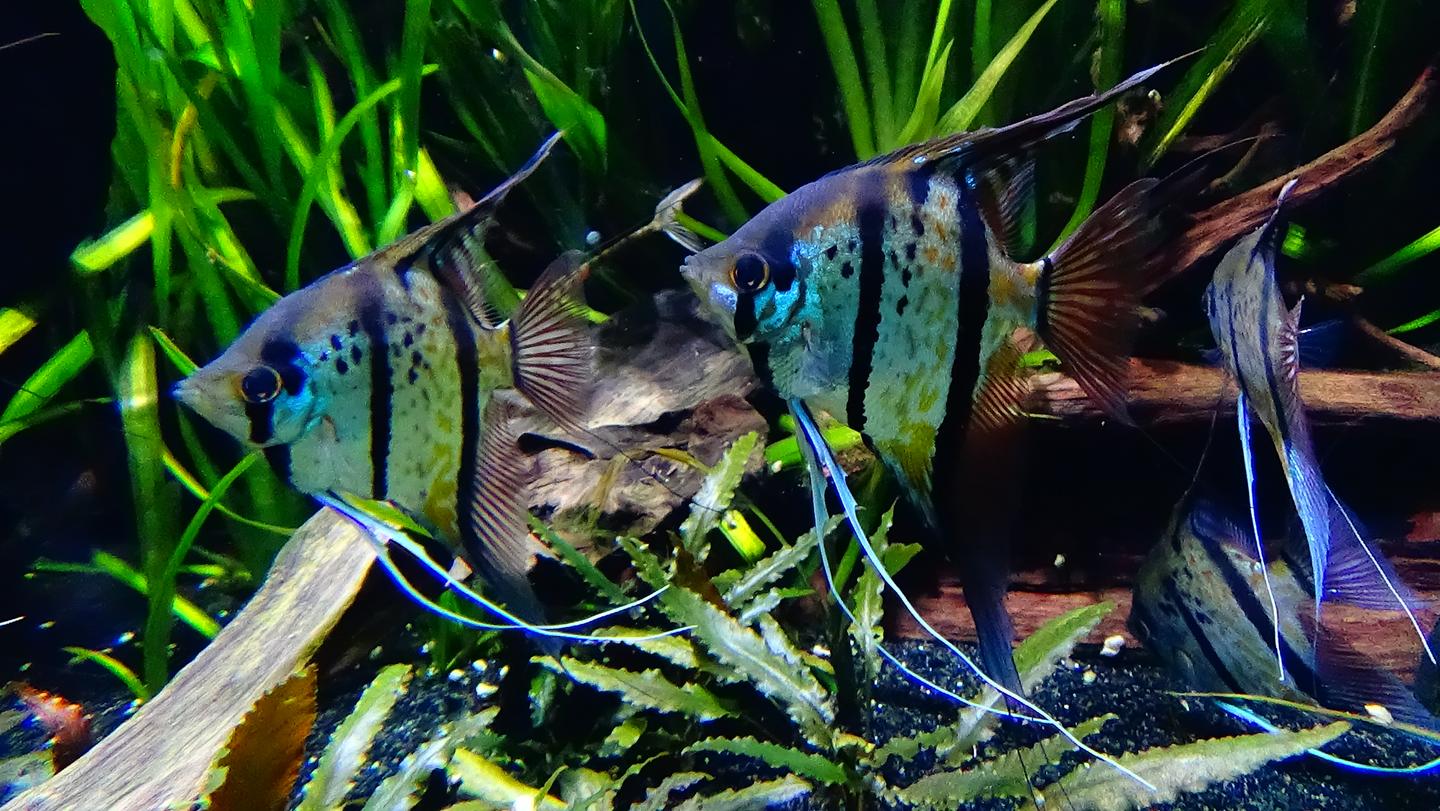
Freshwater angelfish are tall South American cichlids, not small community fish. OATA gives 120 litres as an industry floor for a compatible pair and says the aquarium must be sufficiently tall. We prefer planning around roughly 200 litres, a 100 × 40 cm footprint and about 50 cm height for an adult pair, with more space and an exit plan for a group.
Maintain these water conditions for optimal health and vibrant colors
Pterophyllum Scalare Bulgarian seal points is a colour-form trade label for the freshwater angelfish Pterophyllum scalare, a member of the cichlid family Cichlidae. Its tall dorsal and anal fins, laterally compressed body and long pelvic filaments create the familiar angelfish outline. The Bulgarian seal points label distinguishes the appearance of this fish without changing the adult space, water-quality or social needs of the species.
FishBase identifies Pterophyllum scalare as a South American freshwater cichlid and records wild adults in densely vegetated swamps and flooded ground where the water may be clear or silty. Use tall plants, roots or wood as layout inspiration while retaining open turning space. These natural-history details describe the wild species rather than the origin of an individual aquarium fish.
Eschmeyer’s Catalog of Fishes recognises Pterophyllum scalare as the accepted name. The Bulgarian seal points wording identifies the colour form attached to this offer; the scientific identity remains Pterophyllum scalare.
This is an intermediate-care choice for a keeper prepared to provide a mature, cycled aquarium, measure water quality and respond to changing cichlid behaviour. It is not a small community fish simply because the selected dispatch size is small. Adult height, pair formation and territorial behaviour should all be planned before the fish arrives.
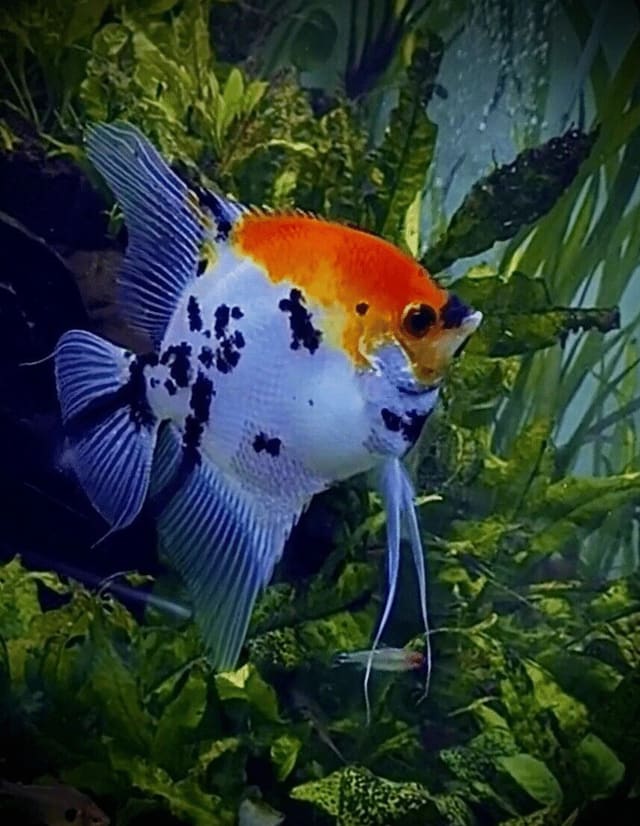
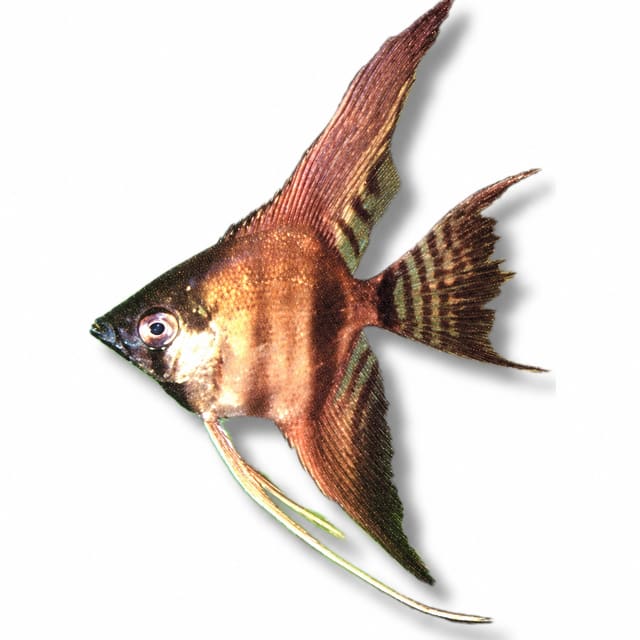
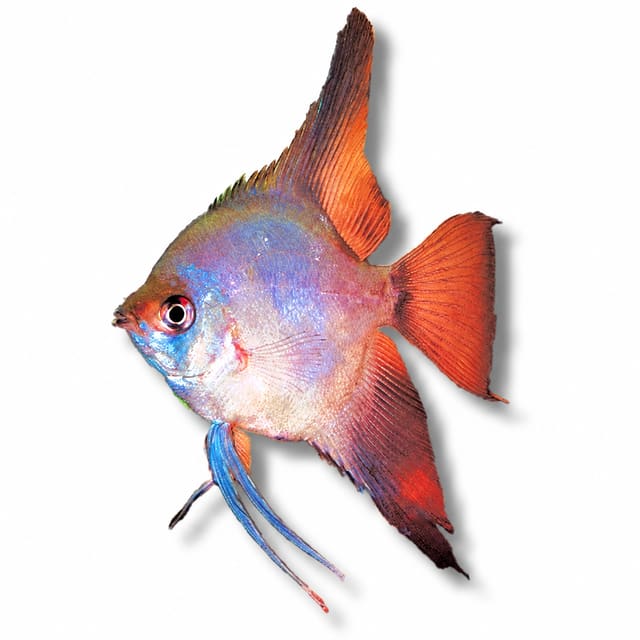
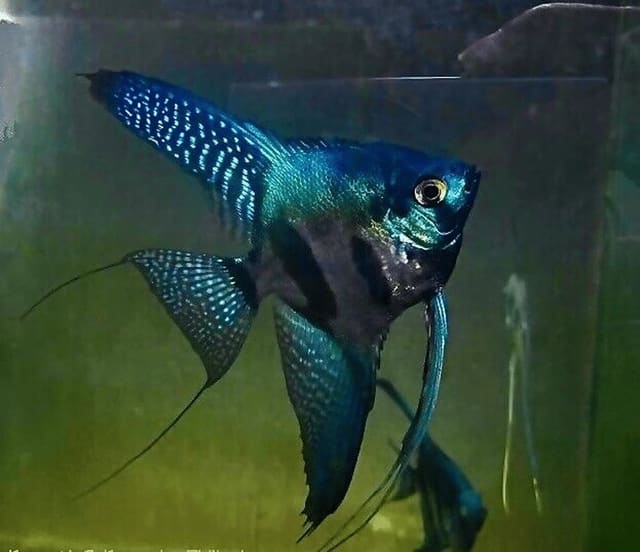
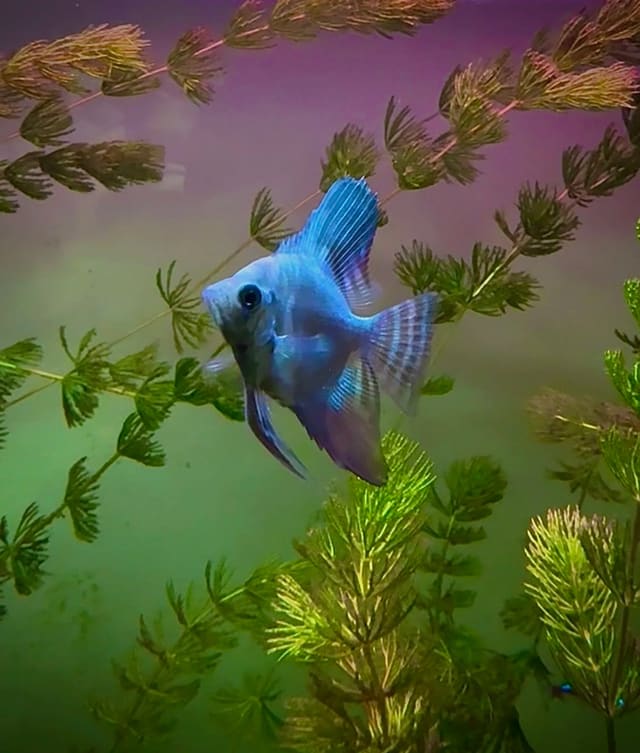
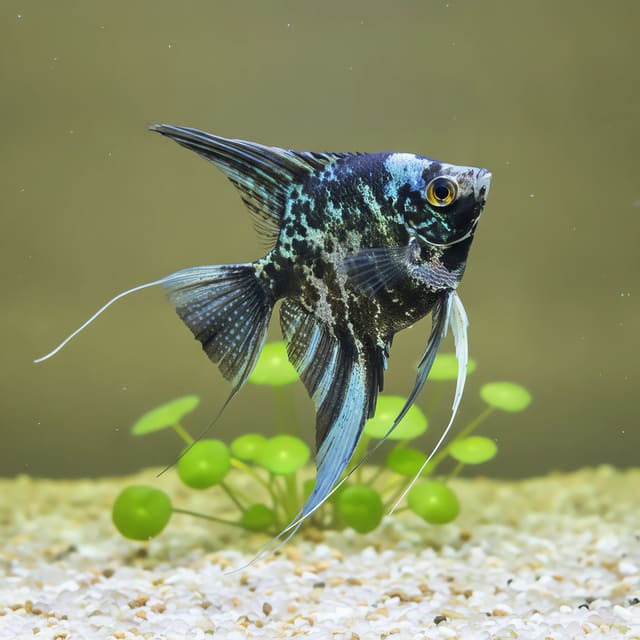
The gallery images are representative of this type of animal rather than photographs of the exact animal supplied, so colours can look slightly different from the live animal.
One purchase quantity supplies one animal in the size option selected. Use the live size selector for the choices that can be ordered rather than relying on static wording elsewhere on the page.
The selector uses these dispatch-size labels:
The size you select is the size supplied, not the adult size. A smaller dispatch grade needs the same adult aquarium plan as a larger grade. Use the label to prepare for the fish arriving now, then use the mature dimensions in the next section to judge whether the aquarium remains suitable as it grows.
Sex is guaranteed only when the selected option explicitly states male or female. This Pterophyllum Scalare Bulgarian seal points listing has no sex-guaranteed option.
If you are comparing appearances before deciding, browse the angelfish collection. Compare colour forms separately from welfare needs: a different pattern does not remove the need for adult height, filtration, compatible social planning and a response plan for aggression.
The decisive planning figure is not the dispatch length. FishBase includes a maximum of 15 cm total length, while its current field maximum is 10.5 cm total length. Angelfish measurements can refer to body length, total length or fin-tip height, so our complete freshwater angelfish care guide recommends planning around roughly 15 cm total length and about 20–25 cm total height when the extended fins are included.
For an adult pair, use roughly 200 litres with about a 100 × 40 cm footprint and 50 cm of usable height. Seriously Fish describes a 100 × 40 × 50 cm aquarium, approximately 200 litres, as the smallest arrangement to consider. The height must be genuinely usable after allowing for substrate, decor and the space beneath the lid, while the footprint must let both fish turn and establish distance from one another.
| Adult planning point | Working figure |
|---|---|
| Length | Plan around 15 cm total length |
| Fin-tip height | Often about 20–25 cm |
| Adult pair aquarium | Roughly 200 litres |
| Footprint | About 100 × 40 cm |
| Usable height | About 50 cm |
| Routine temperature | 24–27°C |
| Routine pH | 6.5–7.4 |
| Routine hardness | 5–12 dGH |
A pair means two fish that prove compatible, not two individuals placed together at random. A deliberately planned group needs more room than the adult-pair arrangement, visual barriers and a practical way to separate or rehome fish if one is persistently excluded. OATA advises keeping angelfish as a pair or group at minimum because a singleton may become stressed, while FishBase gives groups of five or more as aquarium guidance. Treat those numbers as the start of a social plan rather than a guarantee that every group will remain peaceful.
A reasonable match is therefore a tall, fully cycled aquarium with room beyond the fish’s immediate juvenile proportions. Rework the plan before purchase if the aquarium is shallow, if 200 litres is being treated as space for an unrestricted community, or if there is nowhere suitable to move a fish when pair formation changes the hierarchy.
| Suits | Not suited to |
|---|---|
| A mature, fully cycled aquarium | A new aquarium without zero ammonia and nitrite readings |
| A compatible pair or deliberately managed group | Default isolation or two random fish assumed to be a pair |
| A tall aquarium planned around adult fins and turning room | A shallow aquarium sized around a juvenile fish |
| Calm, robust companions with overlapping water needs | Prey-sized fish, persistent fin-nippers or highly aggressive competitors |
Use 24–27°C, pH 6.5–7.4 and 5–12 dGH as the routine aquarium range. FishBase records 24–30°C, pH 6.0–8.0 and 5–13 dGH for the species, while Seriously Fish gives 24–30°C, pH 6.0–7.4 and 0–15 dGH. OATA’s American-cichlid guidance gives 22–27°C, pH 6.5–8.0 and 4–12 dGH for the group. The routine figures here stay within the species ranges and use OATA’s narrower upper temperature and hardness limits.
Stability matters more than chasing a single point within those ranges. Measure the aquarium before making a change, check the water in which the fish has been held, and make elective adjustments gradually. A heater dial is only a setting; confirm the actual temperature with a thermometer. Test pH, GH and KH before changing the balance of tap and reverse-osmosis water rather than copying a fixed mixing ratio.
A calendar alone cannot show that a filter is cycled. Ammonia and nitrite tests demonstrate whether the biological filter is processing waste at the time of testing. If either becomes detectable after fish are added, treat the result as urgent rather than waiting for cloudy water or obvious illness.
Use our water chemistry guide to understand GH, KH, pH, ammonia, nitrite and nitrate before altering the source water. Once you have measured results, the water matcher can help compare the aquarium with the routine range. Keep the actual readings and the direction of any change written down; this makes gradual drift easier to identify.
Start with the adult body plan: roughly 200 litres, a footprint near 100 × 40 cm and about 50 cm of usable height for a pair. Keep clear vertical space for the dorsal and anal fins and sufficient horizontal room for both fish to turn. A nominally tall aquarium can still be cramped if deep substrate, dense hardscape or equipment occupies much of its internal height.
Arrange tall leafy plants, wood or secure vertical decor to create cover and interrupt long sight lines. Leave open water between structures so a fish can move without dragging extended fins across sharp surfaces. Visual barriers give a subordinate fish somewhere to leave the direct view of a more assertive individual, but they do not make an undersized aquarium safe.
RSPCA aquarium guidance explains that a working biological filter supports bacteria that convert toxic ammonia to nitrite and then to the safer nitrate. Every angelfish aquarium therefore needs a properly established and maintained filter.
Seriously Fish suggests a turnover of four to five times the aquarium volume each hour. For a 200-litre example, that means looking around 800–1,000 litres per hour. Position the return so it supports oxygen exchange and circulation without making the fish fight a harsh current continually. Gentle flow does not mean stagnant water; watch whether the fish can hold position and use the full aquarium without being pushed into one sheltered corner.
If this is your first setup, follow the steps to prepare and mature a tropical aquarium before choosing an arrival date. Add livestock slowly so the filter’s bacterial population can adjust to additional waste rather than receiving a sudden increase in feeding and bioload.
Freshwater angelfish are social cichlids, but social does not mean conflict-free. OATA advises a pair or group at minimum and warns that a fish kept alone may become stressed. FishBase gives groups of five or more as aquarium guidance, while Seriously Fish describes small-group keeping and notes that individuals may squabble with their own kind.
Choose between two practical plans. A compatible adult pair can use the roughly 200-litre, 100 × 40 × 50 cm arrangement described above. A group needs substantially more room, additional visual barriers and an exit plan because pair formation can concentrate aggression on fish excluded from the pair’s territory.
| Social plan | Decision to make |
|---|---|
| Compatible pair | Confirm both fish share space without persistent chasing or exclusion. |
| Two random fish | Do not assume they form a pair merely because they were introduced together. |
| Juvenile group | Allow for growth, changing rank and possible pair formation. |
| Adult group | Provide more space, broken sight lines and a ready separation route. |
| Single fish | Do not make isolation the default convenience plan. |
Brief displays or occasional disputes can occur between cichlids. Act when one fish is repeatedly pinned behind decor, prevented from feeding, chased whenever it enters open water or developing damaged fins. Those patterns show that the aquarium’s social arrangement is failing even if the water readings remain within range.
During feeding, check each individual rather than judging the group by whether food disappears. A dominant fish can consume a full portion while a subordinate animal loses condition. Place measured food where each fish can reach it, then confirm that every fish swallows some.
Pair formation and spawning can intensify territorial defence around a vertical surface such as a broad leaf, slate-like surface or aquarium glass. The compatible arrangement that worked before this change may need more visual separation or a second mature aquarium. Prepare that route before conflict begins; waiting until a fish is wounded turns a foreseeable social decision into an emergency.
Freshwater angelfish are omnivorous. Seriously Fish describes wild fish feeding mainly on zoobenthos, including small crustaceans and other aquatic invertebrates, and advises that aquarium fish accept pellets or flakes alongside live or frozen foods. Use that biology to provide variety without turning one rich treat into the whole diet.
Choose a nutritionally complete cichlid pellet, granule or suitable flake in a size the fish can swallow. Add appropriate frozen or freeze-dried foods as measured variety. Bloodworm, brine shrimp or daphnia can form part of that variety, but none should replace a complete staple by itself.
OATA’s group feeding routine is to offer only what the fish consume within a few minutes, once a day. Start with a controlled portion, observe every individual eating and remove uneaten food. If food repeatedly reaches the substrate untouched, reduce the next portion rather than relying on the filter to process it.
A controlled angelfish feeding study supports the importance of feed composition, but it does not create one fixed household menu. The useful home routine is a complete staple, suitable variety, measured portions and direct observation of each fish.
Begin with a weekly checkpoint rather than waiting for visible deterioration. OATA strongly recommends a partial water change of about 25% at least once a week and water testing at least weekly. Treat that as a starting routine, then use measured results, stocking, feeding and filter performance to judge whether more frequent attention is needed.
If filter media needs cleaning, rinse it lightly in aquarium water removed during the water change. Do not run it under the tap because chlorine or chloramine may damage the bacteria responsible for processing fish waste.
During the first week after introduction, confirm daily that the fish can hold position, breathe regularly, extend its fins, access cover and take food. Compare behaviour at quiet times and feeding times. A newly introduced fish may use cover, but persistent isolation combined with rapid breathing, clamped fins or refusal to eat needs a water-quality check rather than an assumption that it is merely settling.
Review the trend in nitrate, filter flow, body condition and social access across the first month. If nitrate rises faster each week, food remains uneaten or maintenance reveals increasing waste, reduce excess feeding and reassess stocking and filtration. If one individual repeatedly loses access to open water or food, change the social arrangement rather than expecting hierarchy alone to solve it.
Never use cloudiness as the only trigger for maintenance. Clear water can still contain ammonia or nitrite, while a measured log reveals whether the aquarium is stable between water changes.
Prepare before the parcel arrives: the aquarium must already be cycled, heated and within the routine range, and someone must be present to receive live fish. Follow the current delivery and Live Arrival Guarantee policy for the full arrival and claim requirements.
Film every delivery continuously from the sealed parcel as it is opened until the fish is shown inside the sealed bag. Include the video and order number if a Live Arrival Guarantee claim is needed.
After release, judge the introduction through specific observations. Steady swimming, regular breathing and gradual exploration are useful signs. Gasping, unusual balance, uncontrolled rolling, persistent surface hanging or immediate severe aggression calls for prompt testing and intervention.
Record the aquarium temperature and, where relevant, pH at introduction. If a health concern develops later, those measurements create a clearer timeline than memory alone. Do not make a rapid elective chemistry change in response to ordinary shyness; first distinguish a social problem from detectable ammonia, nitrite or a major parameter mismatch.
A settled angelfish should normally show steady swimming, regular breathing, clear eyes, open fins, an intact body surface, consistent body condition and a reliable feeding response. Learn the individual’s normal appearance and behaviour so a change is noticed early.
RSPCA fish-health guidance supports a water-quality-first response. Warning signs include hanging at the surface, sitting unusually on the bottom, erratic swimming, rapid or slow gill movement, a marked colour change, increased hiding, white spots, fluffy growths, wounds, fin or scale loss, weight change and reduced interest in food.
White spots, abnormal faeces, head marks or unusual swimming are signs rather than diagnoses. Do not apply a universal temperature increase, fasting routine or medicine recipe from appearance alone. In the UK, use only a lawful product labelled for the fish and system, following its instructions or veterinary direction.
If you are concerned by persistent breathing, balance, appetite or skin changes, contact us with the timeline and test results or consult a fish vet. Prompt measurements make it easier to separate a water-quality emergency from injury, social stress or a condition requiring diagnosis.
If the fish jumps out, return it to suitable aquarium water immediately using wet hands or a wet, soft net, minimise handling and watch breathing and balance. Check the lid and openings before leaving the aquarium unattended.
Angelfish can live in some robust community aquariums, but they remain cichlids and individual outcomes vary. Seriously Fish describes them as generally peaceful while warning that they may squabble with their own kind and may eat small fish such as tetras. OATA advises mixing calmer American cichlids only with appropriately robust, larger shoaling species under compatible conditions.
Avoid very small fish that may be swallowed, persistent fin-nippers that can damage extended fins, and highly aggressive competitors likely to contest the same territory. Shrimp, fry and other very small animals remain at predation risk. These are risk categories rather than a universal blacklist based only on a common name.
| Compatibility check | Why it matters |
|---|---|
| Adult body size | A companion small enough to swallow may become prey even if both fish begin as juveniles. |
| Fin behaviour | Repeated nipping can damage the long dorsal, anal and pelvic fins. |
| Temperament | Territorial fish may compete for the same cover or spawning surface. |
| Water overlap | Both species must remain well within their temperature, pH and hardness ranges. |
| Feeding speed | Fast feeders can leave an angelfish or subordinate companion underfed. |
| Space used | Different swimming levels help only when each species still has adequate territory and floor space. |
Suitable candidates are calm, robust and appropriately sized at adulthood, with overlapping water needs and a compatible feeding pace. A species using another level of the aquarium is not automatically safe; adult dimensions, floor space and individual behaviour still decide the result.
Before mixing fish, compare the exact species rather than relying on a shop category such as community fish, tetra, pleco or cichlid. If you want a stocking and compatibility assessment, contact us with the aquarium dimensions, measured water, filter, existing inhabitants and adult sizes. The honest result may be conditional because pair formation and individual temperament can change later.
Compatibility is an ongoing observation, not a decision completed at release. An arrangement may appear calm while fish are young and change as individuals grow, establish rank or begin defending a spawning surface. Keep a separation or rehoming route ready whenever an angelfish is housed with its own kind or in a mixed community.
Watch feeding access, fin condition, breathing, hiding and use of open water. Occasional displays differ from persistent exclusion. Intervene when one fish is repeatedly cornered, cannot feed, develops damaged fins or must remain hidden to avoid attack.
Adding more fish is not a reliable cure for aggression. It increases waste and may distribute attacks without removing the underlying shortage of space or visual separation. Likewise, rearranging decor can alter territorial boundaries, but it cannot compensate for inadequate dimensions.
Breeding behaviour may cause a previously tolerant pair to defend a leaf, piece of decor or section of glass. Reassess every other inhabitant’s escape routes and feeding access when that happens. A community fish that meets the water range can still be a poor match if it repeatedly enters the defended area or competes for food.
Use the same decision rule for new and established combinations: retain the arrangement only while every fish can eat, move through useful space and rest without persistent harassment. Individual uncertainty remains, so never describe a pairing as guaranteed or permanently safe.
It is a freshwater angelfish colour form identified scientifically as Pterophyllum scalare, a South American cichlid that needs a tall, mature aquarium.
One purchase quantity supplies one animal in the size chosen on the live selector; sex is not guaranteed by any of these size options.
The selector uses 1.5-2 cm, 2.5-3 cm, 3 - 3,5 cm, 4-5 cm, 5-5.5 cm, 5.5-6 cm and 6 - 7 cm dispatch labels; check the live selector before ordering.
Plan an adult pair around roughly 200 litres, a 100 × 40 cm footprint and about 50 cm of usable height, with open turning room and vertical cover.
Use a compatible pair or a deliberately planned group rather than default isolation; FishBase gives groups of five or more, while a group needs more space, visual barriers and an exit plan.
Use a stable routine of 24–27°C, pH 6.5–7.4 and 5–12 dGH, with zero mg per litre ammonia and zero mg per litre nitrite.
Feed a complete cichlid pellet, granule or suitable flake as the staple, add appropriate frozen or freeze-dried variety, and offer only what is eaten within a few minutes once daily.
Start filming every delivery while the parcel is still sealed, continue as it is opened and show the fish still inside the sealed bag; then float the bag for 20–30 minutes before releasing the fish without pouring bag water into the aquarium.
Choose calm, robust companions of an appropriate adult size with overlapping water needs and compatible feeding speed; avoid prey-sized fish, persistent fin-nippers and highly aggressive competitors.
Independently collected by Judge.me from customers who bought this item. All reviews are shown.
Healthy and doing well