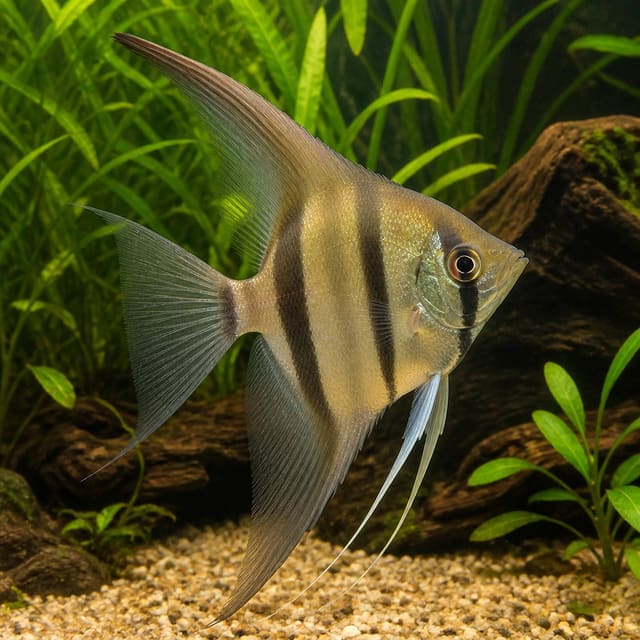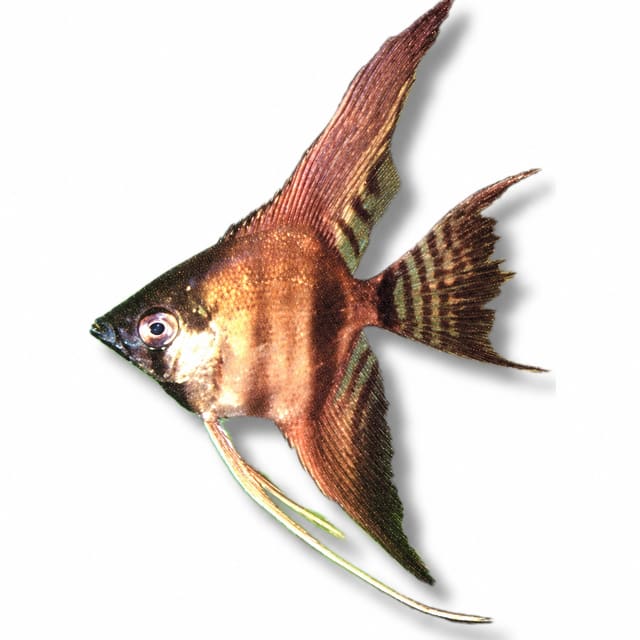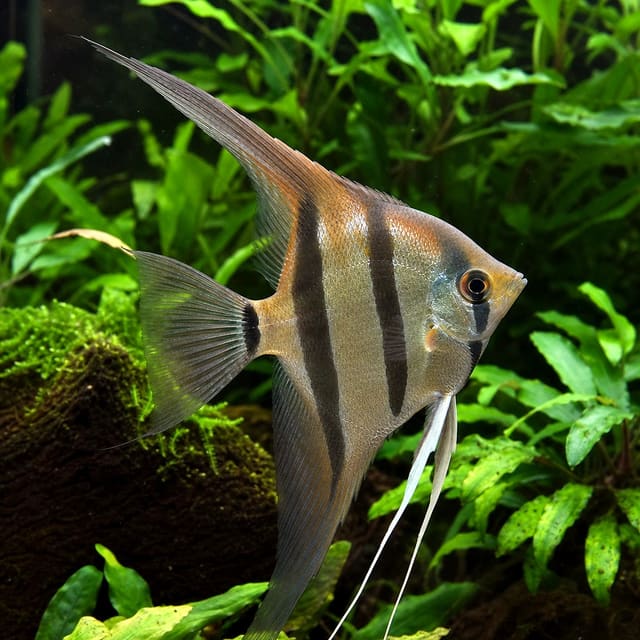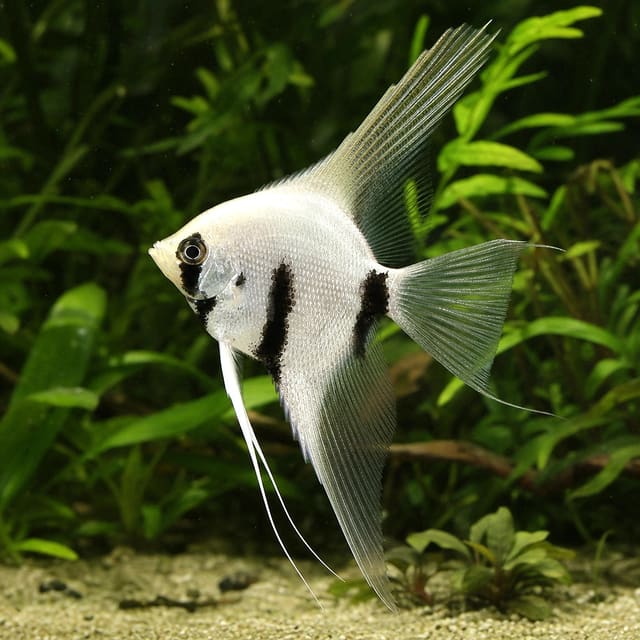
Peruvian Altum Angelfish (Pterophyllum cf. scalare)
22–27°C · pH 6.5–8
£15.99
Pterophyllum altum Dantume wild form (Pterophyllum altum) is a South American cichlid from the Amazon and Orinoco basins that reaches 18 cm. It suits experienced keepers who can maintain the FishBase and Seriously Fish overlap of 28–31°C, pH 4.8–6.2 and 1–5 dGH; keep a group or at least a pair, as OATA advises for angelfish. Sold individually in sizes from 2–3 cm to XXL (>7.5 cm).
Adult size is the maximum length this species reaches at full maturity (scientific sources). The livestock you receive will be younger and smaller — pick a size above for the actual shipping size. Product-photo provenance and any image-specific limitations are stated on the listing.
Pterophyllum altum
Save when buying multiple fish. Each quantity is one fish; sex and pair formation are not guaranteed unless the selected variant explicitly states them.
Pterophyllum altum Dantume wild form (Pterophyllum altum) is a South American cichlid from the Amazon and Orinoco basins that reaches 18 cm. It suits experienced keepers who can maintain the FishBase and Seriously Fish overlap of 28–31°C, pH 4.8–6.2 and 1–5 dGH; keep a group or at least a pair, as OATA advises for angelfish. Sold individually in sizes from 2–3 cm to XXL (>7.5 cm).
Adult size is the maximum length this species reaches at full maturity (scientific sources). The livestock you receive will be younger and smaller — pick a size above for the actual shipping size. Product-photo provenance and any image-specific limitations are stated on the listing.
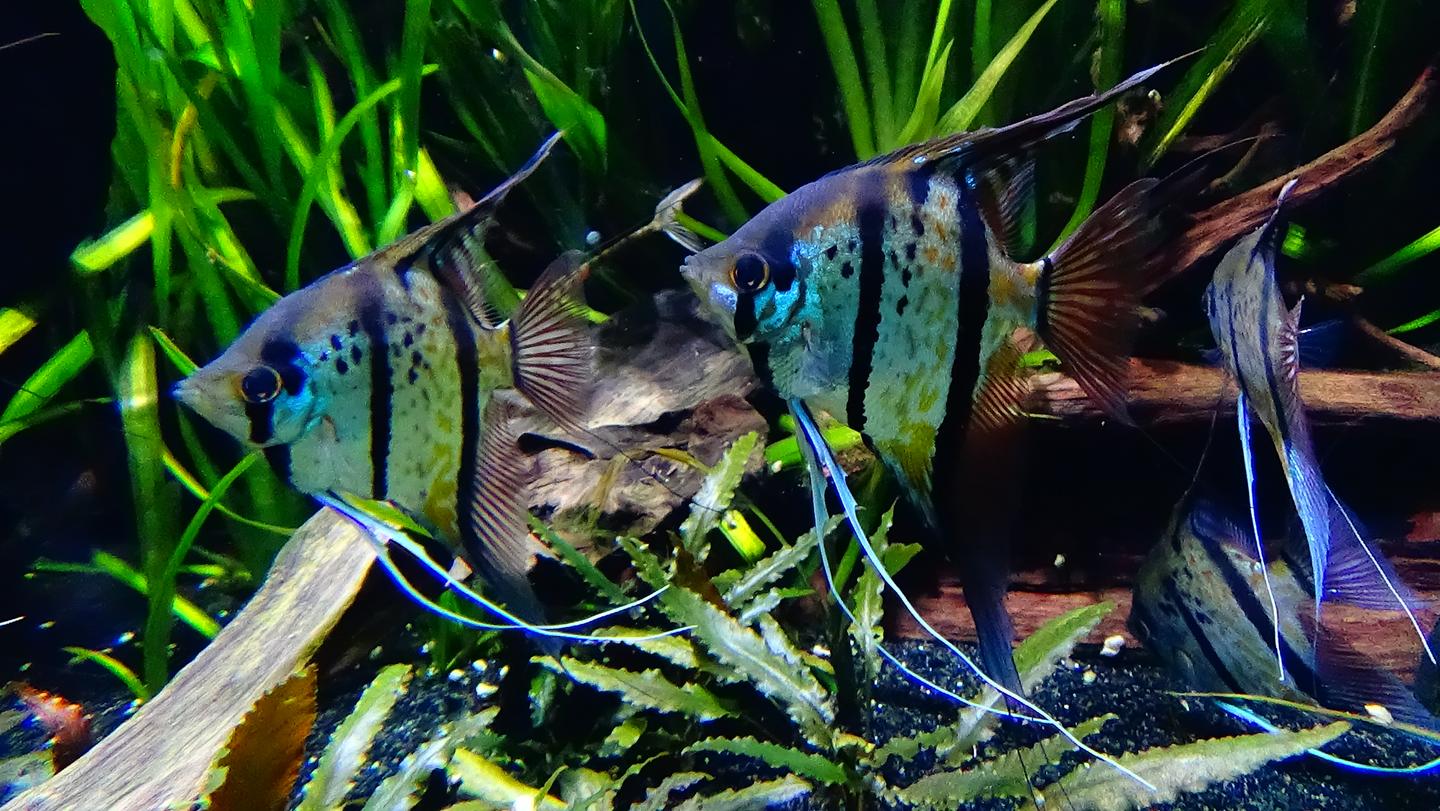
Freshwater angelfish are tall South American cichlids, not small community fish. OATA gives 120 litres as an industry floor for a compatible pair and says the aquarium must be sufficiently tall. We prefer planning around roughly 200 litres, a 100 × 40 cm footprint and about 50 cm height for an adult pair, with more space and an exit plan for a group.
Maintain these water conditions for optimal health and vibrant colors
The Altum Angelfish (Pterophyllum altum) is a freshwater cichlid from South America’s Amazon and Orinoco river basins. FishBase records a maximum length of 18 cm. This tall angelfish suits an experienced keeper who can maintain warm, very soft, acidic water, provide a tall and generously sized aquarium, establish an appropriate social group and manage a potentially reluctant feeder.
The decisive care target is the FishBase and Seriously Fish overlap of 28–31°C, pH 4.8–6.2 and 1–5 dGH. These values leave little room for a casual match with ordinary community conditions. Test the aquarium and its replacement water before deciding, then consider whether those values can remain stable through routine maintenance. Stability matters because Altums are very weak against nitrate build-up and extremely prone to stress-related disease.
| Suits | Not suited to |
|---|---|
| Experienced keepers able to maintain very soft, acidic water | Hard, alkaline community aquaria |
| A tall aquarium planned around an 18 cm adult | Small or shallow aquaria |
| A group or at least a pair, following OATA angelfish guidance | Routine solitary keeping |
| Peaceful larger fish with matching water needs | Fish small enough to fit into an Altum’s mouth |
| Keepers prepared to establish feeding with live food | A setup that depends on immediate acceptance of dried food |
Plan for at least 300 litres as a group-level starting point for a cichlid over 15 cm, and choose an aquarium sufficiently tall for a fully grown angelfish. OATA also advises allowing 40 litres per adult angelfish when calculating stocking. The 300-litre starting point and the per-fish allowance serve different purposes: use the larger result rather than treating 40 litres as a complete aquarium requirement.
This is an angelfish for a deliberate setup rather than a compromise between mismatched conditions. Water chemistry, adult height, social needs, feeding response and mouth size all need to work together. If one of those requirements conflicts with the existing aquarium, resolve it before adding the fish rather than expecting acclimatisation to remove the conflict.
One purchase supplies one live fish in the size you select. The labels are 2–3 cm, 3–4 cm, 4–5 cm, 5–5.5 cm, XL (6–7 cm) and XXL (>7.5 cm). The size you select is the size supplied, not the adult size. Plan every choice around the same recorded adult length of 18 cm and the tall body shape of a fully grown angelfish.
A smaller dispatch size does not reduce the long-term space, water or social requirements. It changes the size of the fish at dispatch and may affect how you coordinate its introduction with existing livestock. Compare the selected fish with the current size of every potential tank mate, remembering that both animals may continue growing. Do not use a temporary size relationship as the basis for permanent compatibility.
Sex is guaranteed only when the selected option explicitly states male or female. This Pterophyllum altum Dantume wild form listing has no sex-guaranteed option.
Sexing this species is difficult: males develop a smaller version of the cichlid nuchal hump, usually only around breeding time. Appearance in the gallery therefore should not be used to choose or predict the sex of the fish supplied.
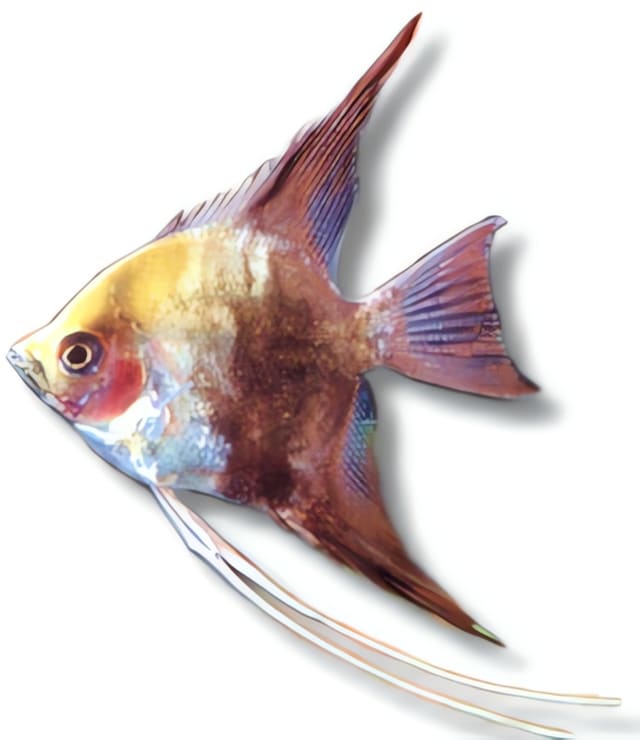
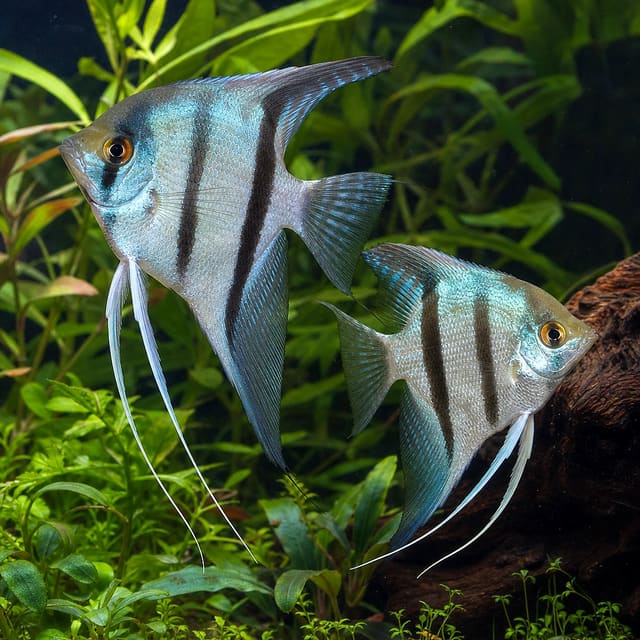
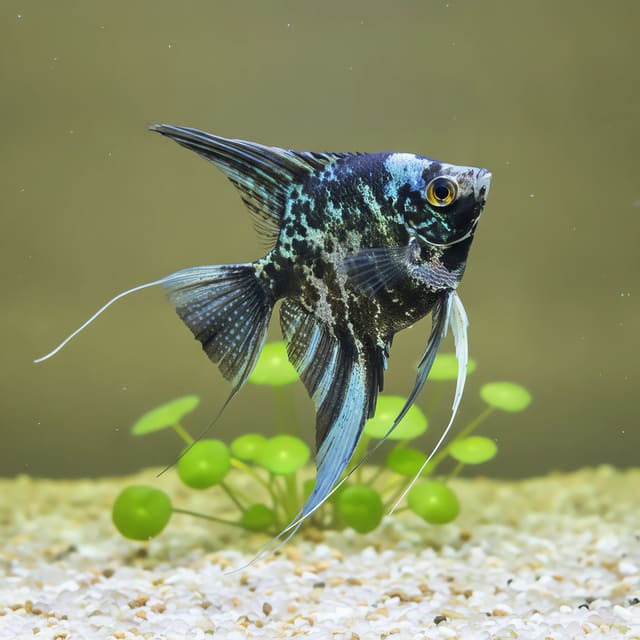
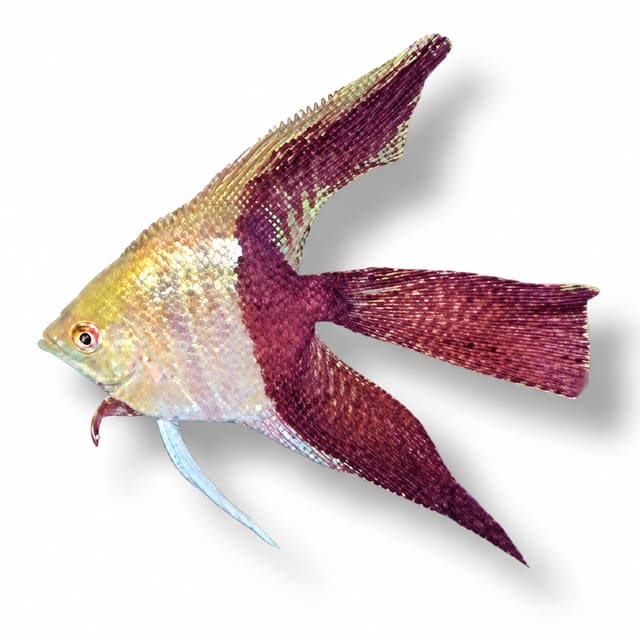
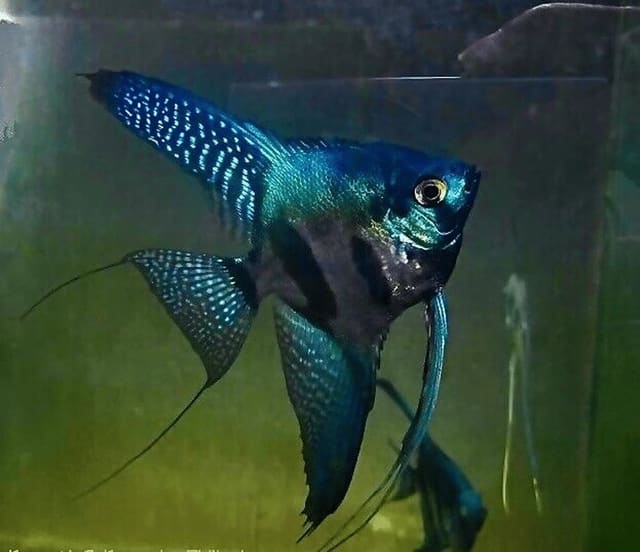
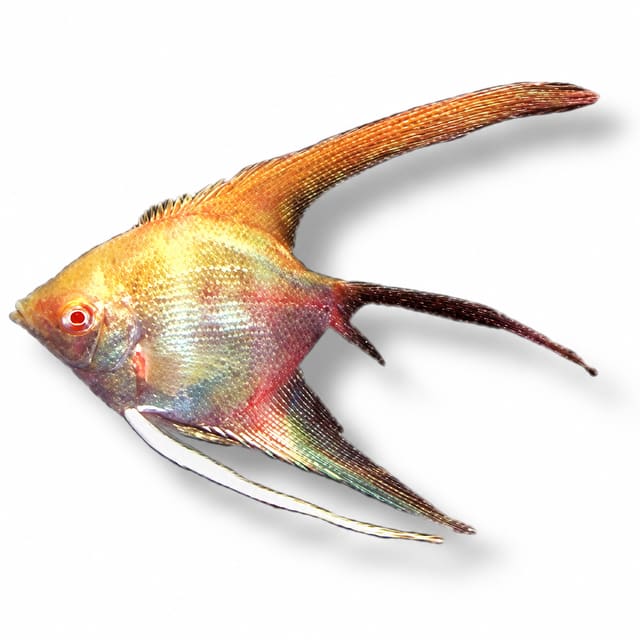
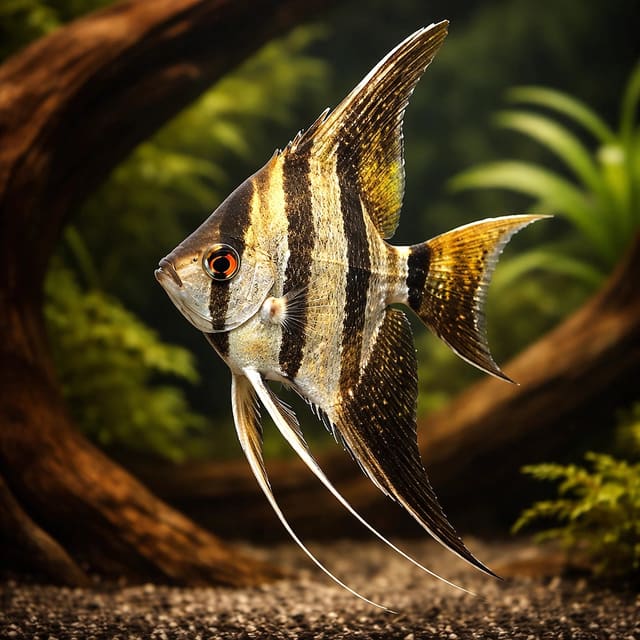
The gallery images are representative of this type of animal rather than photographs of the exact animal supplied, so colours can look slightly different from the live animal.
Use the selector only to choose the dispatch size. Before making that choice, confirm that the aquarium can hold the FishBase and Seriously Fish overlap of 28–31°C, pH 4.8–6.2 and 1–5 dGH, that its height and overall capacity suit an adult Altum, and that the social plan follows OATA’s recommendation for a group or at least a pair. The setup also needs established biological filtration and tank mates too large to swallow.
For comparisons with other angelfish types, browse the angelfish collection. Compare adult dimensions, water chemistry and feeding demands rather than choosing solely by the fish’s dispatch size or visible pattern.
Keep this Altum at 28–31°C, pH 4.8–6.2 and 1–5 dGH. The temperature is the overlap between FishBase’s recorded environment of 27–31°C and Seriously Fish aquarium guidance of 28–32°C. Both give pH 4.8–6.2; the hardness target of 1–5 dGH sits within FishBase’s 1–5 dH and Seriously Fish’s 0–5 dGH.
OATA’s broad American-cichlid guidance gives 22–27°C, pH 6.5–8.0 and 4–12 dGH for the group. Those figures do not describe the warm, acidic, very soft conditions required here. For this fish, use the species target rather than splitting the difference between incompatible ranges.
Test temperature, pH and general hardness in the established aquarium and in the replacement water used for changes. Our water chemistry guide explains what each value represents, while the water matcher helps compare measured values with the target range. A single matching reading is only a starting point; repeat measurements reveal whether routine changes hold the aquarium steady.
Do not pursue an exact midpoint by making repeated abrupt adjustments. Every reading anywhere within 28–31°C, pH 4.8–6.2 and 1–5 dGH fits the stated target. Choose a stable point that the aquarium and replacement-water routine can reproduce, then investigate movement towards a boundary before it becomes an excursion beyond the range.
Plan a tall aquarium of at least 300 litres as the starting point for this 18 cm cichlid. OATA recommends at least 300 litres for larger or more aggressive American cichlids over 15 cm, says fully grown angelfish need sufficient aquarium height, and advises a stocking allowance of 40 litres per adult angelfish. These are group planning figures rather than a species-specific aquarium measurement.
Use both calculations. Multiply the intended adult group by 40 litres, compare that result with 300 litres and follow the larger figure. A pair produces an 80-litre stocking allowance, but the 300-litre starting point remains the controlling figure because this species exceeds OATA’s 15 cm threshold. If a large group produces a result above 300 litres, the per-adult allowance becomes the controlling figure.
Volume alone cannot compensate for inadequate height. FishBase notes that the species may reach about 20 cm in height, so arrange wood, plants and equipment around that height. Keep the central routes free from hard obstructions that would force the fish through narrow gaps, while still providing the planted and wooded cover described for the species.
Seriously Fish recommends a densely planted, well-covered aquarium with floating plants and broad-leaved plants to dim the light. Use roots and pieces of aquarium wood as overhanging branches to recreate its river habitat. Use sand or fine gravel because Altums may dig, and keep water flow low throughout the aquarium, because Altums favour very slow-flowing rivers.
Arrange wood securely and leave enough turning room for the adult body and fins. Broad leaves and overhead cover should create sheltered areas without forming traps. American cichlids may dig up or eat live plants. Check newly disturbed plants and wood before they become unstable.
Introduce this Altum only after the aquarium has a working biological filter and tests show zero ammonia and zero nitrite. The RSPCA explains that biological filtration supports bacteria that convert toxic ammonia first into toxic nitrite and then into safer nitrate. A filter running for a period of time is not enough on its own; the water tests need to show that waste is being processed.
OATA’s American-cichlid guidance also sets ammonia and nitrite at zero and advises that nitrate should not exceed 20 mg per litre above the normal level in the tap water. Altums require particular care here because they are very weak against nitrate build-up and extremely prone to stress-related disease.
Follow our guide to preparing and maturing a first aquarium before livestock is introduced. Add fish gradually because the beneficial bacterial population has to respond whenever livestock numbers and feeding increase. OATA warns that adding too many fish too quickly can cause new tank syndrome, in which the filter bacteria cannot process the resulting waste.
A larger aquarium generally gives more stability, but it still needs an appropriately functioning filter. Check the planned social group, existing livestock and expected feeding together. The relevant question is not simply whether the aquarium holds enough water; it is whether filtration can maintain zero ammonia and zero nitrite after the biological load changes.
Record results before and after maintenance until the routine becomes predictable. A log makes gradual movement easier to detect than relying on memory and shows whether replacement water is changing pH, hardness or temperature away from the Altum’s narrow target.
Use suitable live food regularly while establishing this Altum’s feeding response. Altums can be troublesome to feed, and wild-caught Altums may refuse food even when live items are offered. Once a fish is settled and taking live food reliably, mix frozen food with the accepted live food at feeding time and shift the balance gradually as the frozen food begins to be eaten.
Treat food acceptance as something to observe, not assume. A fish that ignores one presentation has not necessarily eaten enough from another. Watch each individual take food, especially in a group where faster fish may reach the meal first. Remove uneaten material before it breaks down and adds to the waste handled by the filter.
As a group, American cichlids will often prefer meaty foods. OATA’s portion guidance is useful here: feed once a day and offer only what the fish can consume within a few minutes. Apply that portion rule while following the live-to-frozen transition above.
Offer a quality dried product only alongside food the fish already takes, and do not make immediate acceptance of flakes or pellets the plan on which the fish depends. Tank-bred Altums may well accept any food, including flake, but plan to provide live food regularly and use accepted live food when introducing frozen food.
Overfeeding does not solve reluctant feeding. OATA warns that excess food and faeces break down and release toxic waste. The useful measure is food actually consumed within a few minutes, not the amount placed into the aquarium.
Plan for an adult size of 18 cm total length. That is the maximum recorded length. Use that maximum as the size for every permanent decision.
Use 18 cm as the adult length for every aquarium, stocking and companion decision. Aquarium height is therefore a separate decision from litre capacity.
An aquarium can have substantial volume yet still be poorly proportioned for a tall fish. Consider the depth of substrate, wood extending down from above, plant growth and equipment when judging the usable vertical space. Keep routes through the aquarium clear of rough or tightly packed objects.
Review the layout as the fish grows. Move or secure objects before they constrict established routes, and trim plants when dense growth removes too much usable space. Preserve sheltered areas and broad-leaved cover while keeping practical passages through the aquascape.
Arrange for someone to receive the parcel because live fish must not be left unattended. Start filming before the parcel is opened, showing the parcel still sealed and the outer box visible, then record the opening in one continuous take and show the fish still inside the bag. Open and inspect the parcel the same day it arrives. Float the bag for 20–30 minutes before releasing the fish, and never pour the bag water into the aquarium.
Those steps come from our delivery and Live Arrival Guarantee policy. The fish is hand-bagged in pure oxygen, placed in an insulated box and supplied with a heat pack when weather conditions call for one. Transport is handled through a tracked courier licensed to carry live animals.
Before the parcel arrives, use the FishBase and Seriously Fish overlap for temperature, pH and hardness, and follow OATA’s water-quality guidance for ammonia and nitrite.
Preparation prevents the fish remaining in the transport bag while water, equipment or stocking questions are resolved. The arrival procedure is for temperature acclimatisation and release; it does not make unsuitable aquarium chemistry, social conditions or tank mates safe.
After release, watch for changes in swimming, colour, breathing, temperament, appearance, body condition and feeding. Establish a simple baseline: where the fish normally rests, how it swims, how quickly its gill covers move, whether its fins and scales remain intact, and whether it takes food. Compare later observations with that baseline rather than judging one behaviour in isolation.
Check the same features regularly and record the water values alongside them. A darkening or paling fish, unusual hiding, surface hanging, bottom sitting, erratic swimming, altered breathing or reduced appetite calls for prompt investigation. Begin with water testing because temperature, pH, hardness, ammonia, nitrite and nitrate can all be checked directly.
Respond to a change in behaviour or appearance by testing the water and comparing the result with the fish’s normal conditions. Keep water within the FishBase and Seriously Fish overlap of 28–31°C, pH 4.8–6.2 and 1–5 dGH; ammonia and nitrite must remain at zero. Check nitrate against the tap-water baseline and keep the rise within OATA’s limit of 20 mg per litre.
| Change observed | Immediate action |
|---|---|
| Hanging at the surface, sitting on the bottom or erratic swimming | Test the water and check filter operation |
| Faster or slower gill-cover movement | Compare breathing with the established baseline and test the water |
| Darker or paler colour, or increased hiding | Review recent water, stocking and maintenance changes |
| White spots, fluffy growths, damaged fins or missing scales | Record the appearance clearly and test the water |
| Reduced food intake or loss of condition | Confirm individual feeding access and check water quality |
Do not respond to every symptom by adding an unspecified treatment. The same visible change can accompany different problems, while an unsuitable treatment can add another stressor. Record when the change began, the measured water values, recent maintenance, new livestock and feeding response, so later observations can be compared with the start of the change.
If testing identifies a water-quality problem, preserve the beneficial bacteria while correcting it. Use conditioned replacement water and rinse filter media only in removed aquarium water. Check for blockages rather than replacing established media automatically. Continue testing until ammonia and nitrite are zero and the readings remain stable.
Seriously Fish highlights stress-related disease and nitrate sensitivity in Altums. Consistent water chemistry, controlled feeding, gradual stocking and a functioning filter therefore form the preventive routine. Observation works best when normal behaviour has already been recorded, because a change can then be recognised before it becomes severe.
Avoid fish small enough to fit into an Altum’s mouth. Seriously Fish specifically names Neon Tetras, Guppies and Pygmy Rasboras among the fish an Altum treats as prey. A calm appearance or a peaceful community label does not remove that mouth-size risk.
Peaceful larger fish are the appropriate starting category, provided they also match the FishBase and Seriously Fish overlap of 28–31°C, pH 4.8–6.2 and 1–5 dGH. Altums can be kept happily with Discus because the two have similar water requirements. OATA also says calmer American cichlids such as angelfish can be mixed in a robust community with larger shoaling fish.
| Question | Decision |
|---|---|
| Can the animal fit into the Altum’s mouth now or when sizes change? | Avoid the pairing if it can |
| Can it live throughout the FishBase and Seriously Fish overlap of 28–31°C, pH 4.8–6.2 and 1–5 dGH? | Reject a pairing with conflicting water needs |
| Is it a peaceful larger fish? | Continue the assessment |
| Can every fish reach appropriate food? | Plan separate feeding access where needed |
| Does the aquarium remain large and tall enough for all adults? | Recalculate space before adding livestock |
Assess invertebrates individually by adult size, ability to fit into the fish’s mouth, water requirements and access to food; do not assume that an invertebrate is safe simply because it occupies another part of the aquarium. The same screening rule applies to fish not named above.
Compare adult sizes rather than relying on how animals look on the day of introduction. A companion that is too large to swallow at first can still become vulnerable if the Altum grows faster, while a larger companion may create a different competition or space problem. Review the relationship whenever growth changes the balance.
For a stocking and compatibility assessment, contact us with the aquarium volume and height, measured water values, the number and adult size of each resident, and the proposed Altum group. Those details permit a more useful assessment than common names alone.
Keep Altum Angelfish in a group or as a pair at minimum. OATA describes angelfish as social and warns that individuals kept alone may become stressed. This is angelfish group guidance, so use it as the social starting point while applying the stricter species water, feeding and space requirements elsewhere in the plan.
Decide the intended adult group before choosing the aquarium. Every additional fish changes the space calculation, biological load and feeding competition. Use the 300-litre planning floor, apply OATA’s 40-litres-per-adult allowance and then choose the larger result. The aquarium must also remain sufficiently tall for each adult fish.
Do not compensate for an undersized aquarium by reducing cover or creating strong flow. This species still needs planted shelter, roots, a soft substrate and low water flow throughout the aquarium. Social space and habitat structure have to fit together.
OATA advises increasing fish numbers gradually so the established bacterial population can respond to the additional waste and feeding. A social plan may call for more than one angelfish, but the biological filter must still remain capable of holding ammonia and nitrite at zero after each change.
Observe individuals rather than treating the group as one unit. Check that each fish swims normally, maintains body condition and takes food. If one individual repeatedly misses meals, change feeding access and investigate the reason instead of increasing every portion and allowing uneaten food to accumulate.
It reaches a maximum recorded 18 cm total length. Plan a tall aquarium as well as sufficient volume because an Altum may reach about 20 cm in height.
OATA’s American-cichlid guidance supports at least 300 litres for a fish over 15 cm, a sufficiently tall aquarium for angelfish and a stocking allowance of 40 litres per adult.
Keep a group or at least a pair, as OATA advises for angelfish; an angelfish kept alone may become stressed. Plan capacity and feeding access for every adult.
It is better suited to experienced keepers. Seriously Fish describes Altums as challenging because they require very warm, acidic, soft water and can be difficult to feed.
Establish it with suitable live food, then mix frozen food with accepted live food to encourage a transition. OATA’s group guidance says to feed once daily and only what is eaten within a few minutes.
Keep it at 28–31°C, pH 4.8–6.2 and 1–5 dGH. These are the overlapping limits of FishBase’s recorded environment and Seriously Fish aquarium guidance.
Judge it primarily by mouth size: an Altum treats any fish small enough to fit into its mouth as prey. Use peaceful larger companions and screen their water, space and feeding requirements individually.
Seriously Fish supports peaceful larger fish and names Discus when water requirements match. Avoid Neon Tetras, Guppies, Pygmy Rasboras and other fish small enough to fit into its mouth.
It is hand-bagged in pure oxygen, placed in an insulated box with a heat pack when weather calls for one, and carried by a tracked licensed live-animal courier. Be home to receive it, start filming while the parcel is still sealed, record the opening and fish in the bag, then float the bag for 20–30 minutes before release.
No reviews for this item yet. Bought one? Honest reviews only, good or bad.
What customers say about ordering from us
Easy website plenty of info on fish your buying great to pick a time slot
TRACEY DURRANT · 7 Oct 2026
Got some lovely fish thank you
Kevin Mackie · 7 Oct 2026
Reviews of our shop, collected by Judge.me, an independent third-party review collector. Newest first.