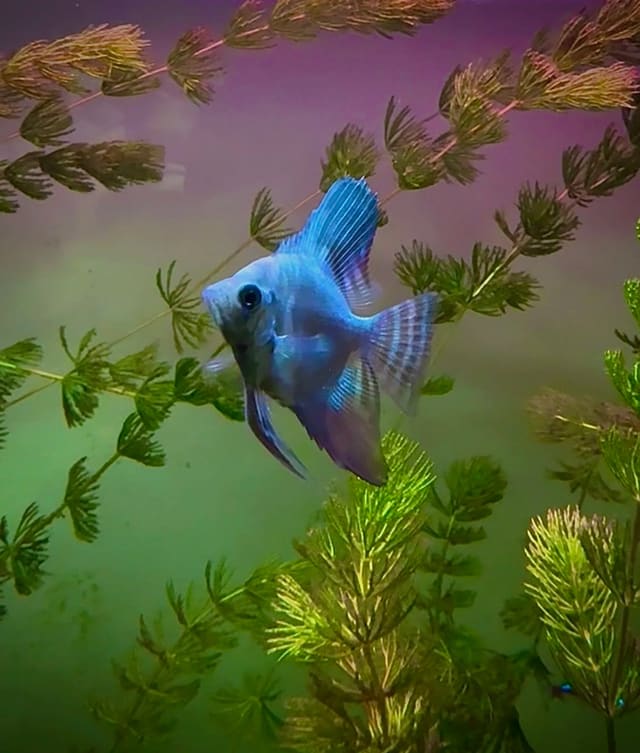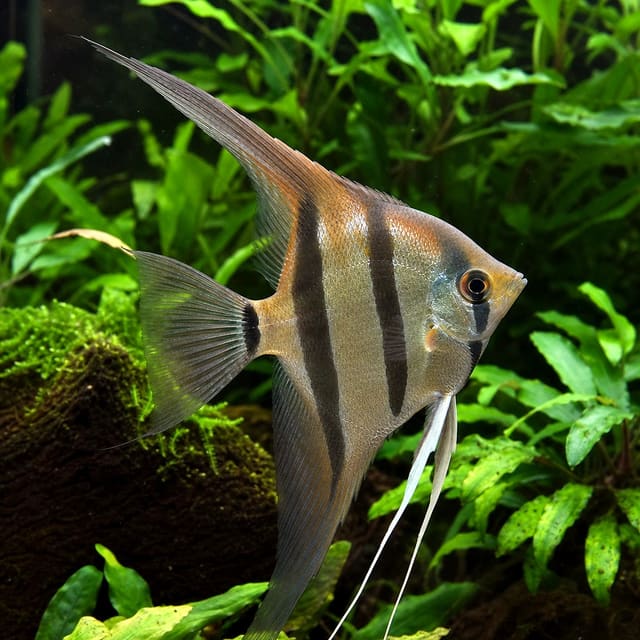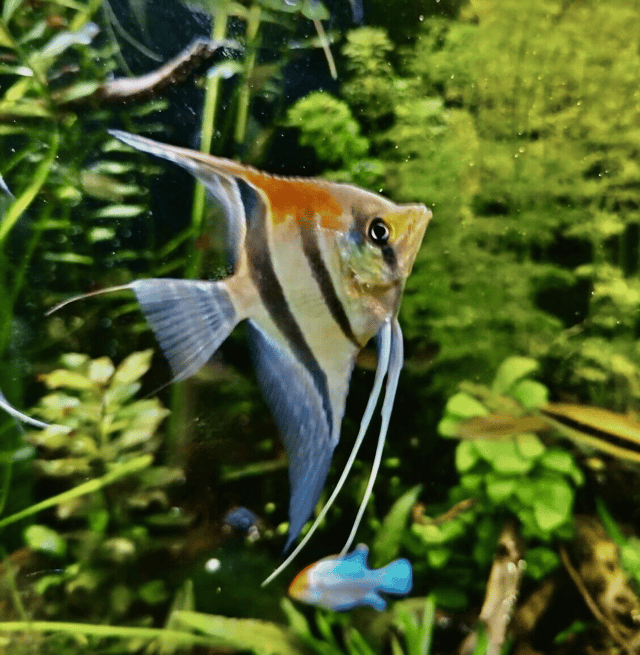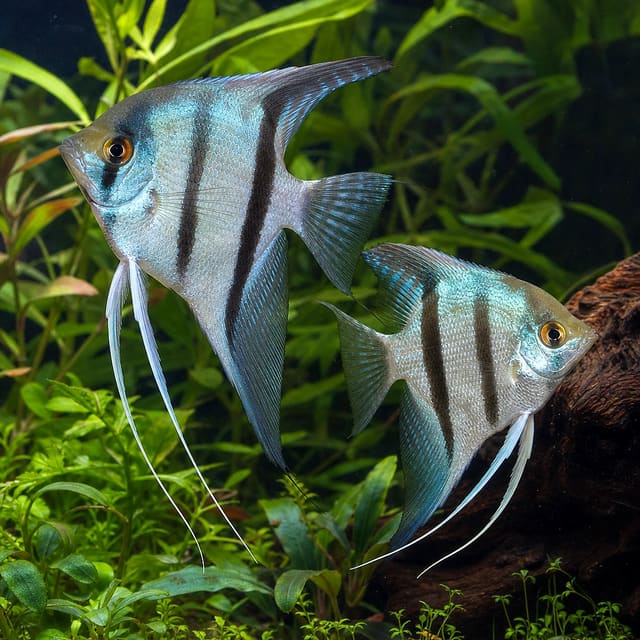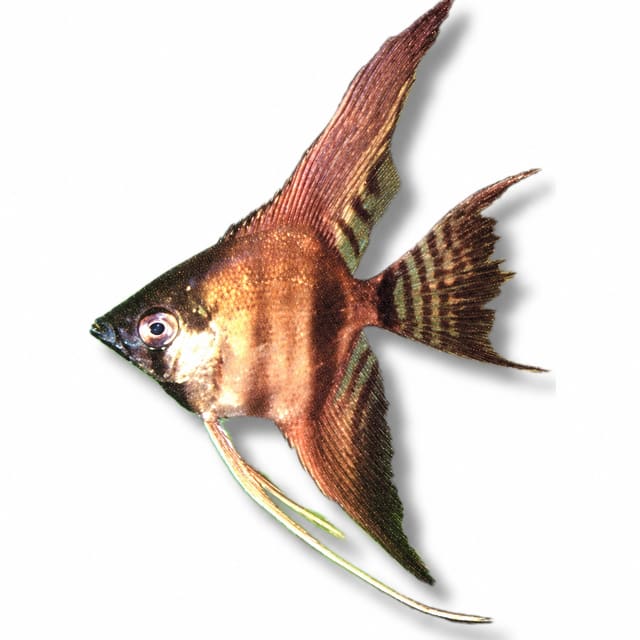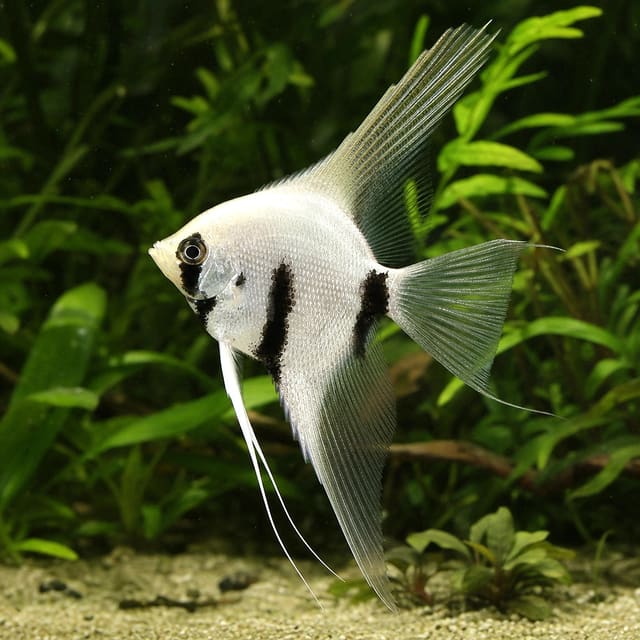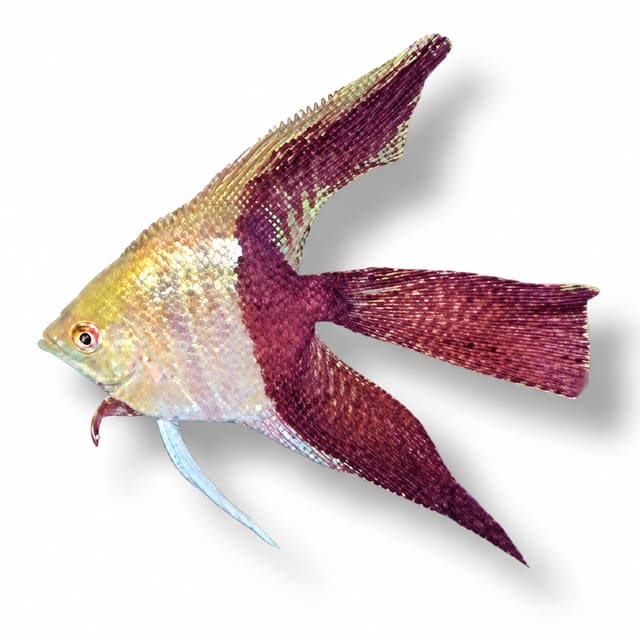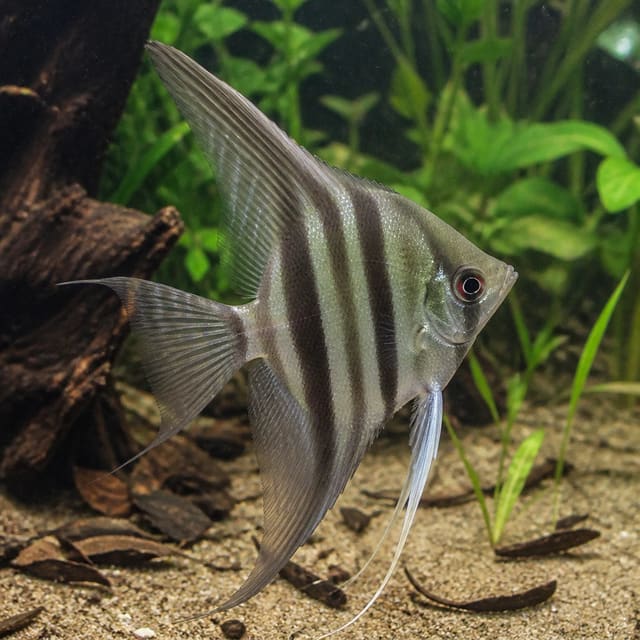
Pterophyllum altum Dantume wild form
28–31°C · pH 4.8–6.2
£10.99

Peruvian Altum Angelfish is a genus-level Pterophyllum cf. scalare trade form sold as one animal in the size selected. Keep it in a tall, filtered aquarium at 22–27°C and plan for a pair or group with carefully screened companions.
Save when buying multiple fish. Each quantity is one fish; sex and pair formation are not guaranteed unless the selected variant explicitly states them.
Peruvian Altum Angelfish is a genus-level Pterophyllum cf. scalare trade form sold as one animal in the size selected. Keep it in a tall, filtered aquarium at 22–27°C and plan for a pair or group with carefully screened companions.
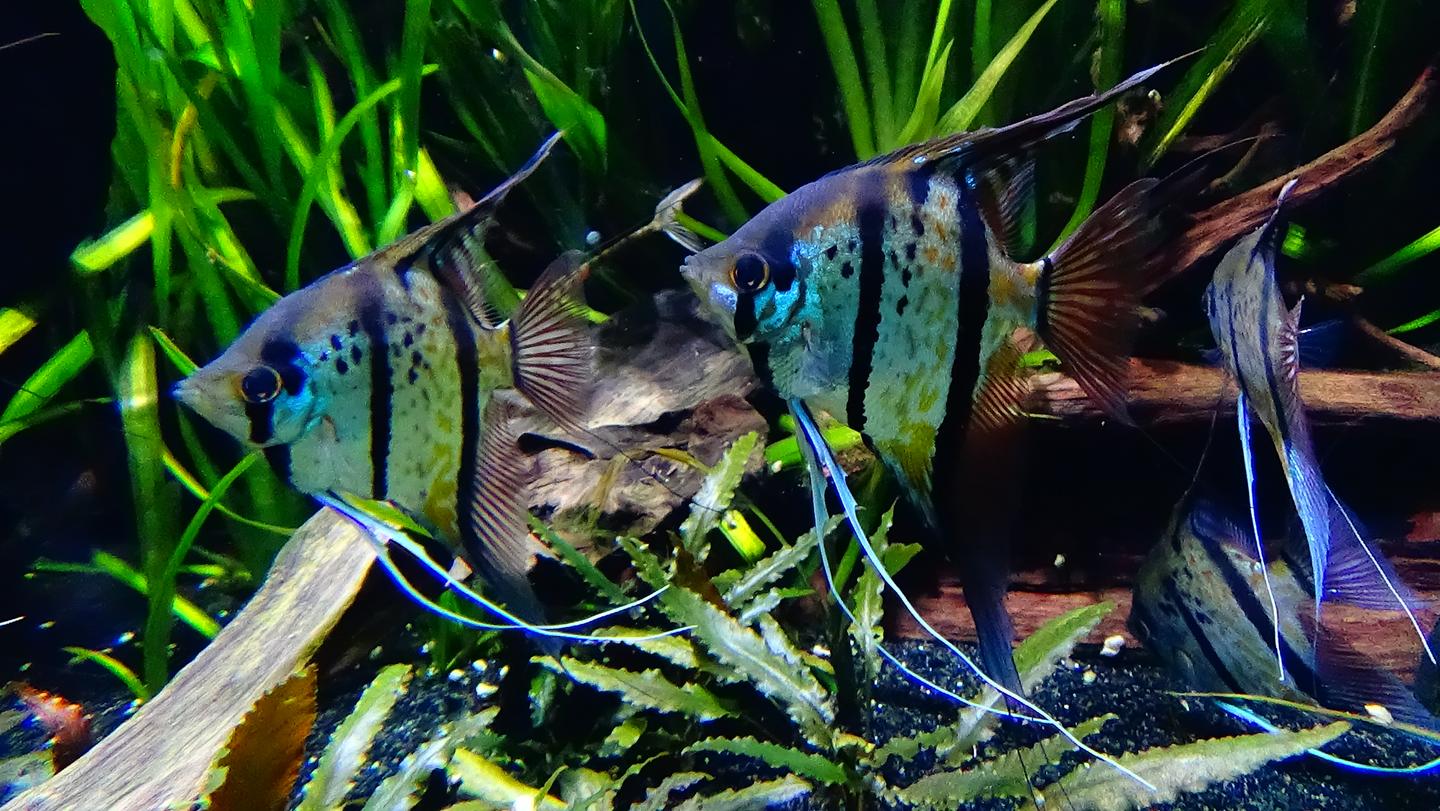
Freshwater angelfish are tall South American cichlids, not small community fish. OATA gives 120 litres as an industry floor for a compatible pair and says the aquarium must be sufficiently tall. We prefer planning around roughly 200 litres, a 100 × 40 cm footprint and about 50 cm height for an adult pair, with more space and an exit plan for a group.
Maintain these water conditions for optimal health and vibrant colors
Peruvian Altum Angelfish is the trade name for this tall-bodied freshwater cichlid. Its scientific label is Pterophyllum cf. scalare, placing it within the angelfish genus rather than identifying it as one named species. WoRMS places Pterophyllum in the family Cichlidae. The exact species has not been identified, so the care advice here follows the genus Pterophyllum and its care group.
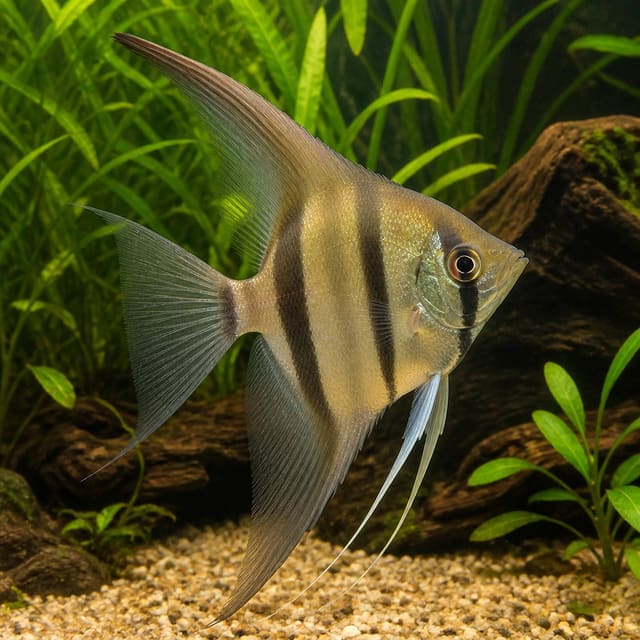
A genus-level account of Pterophyllum describes freshwater angelfish from tropical South America. Their bodies are greatly compressed from side to side, with rounded flanks and elongated triangular dorsal and anal fins. This distinctive shape lets wild fish conceal themselves among roots and plants, often beside vertical surfaces. Natural transverse stripes add camouflage.
Those proportions shape the aquarium decision. Choose a tank with substantial vertical room, keep routes through the décor clear for the extended fins and assess space using the fully grown fish rather than the dispatch measurement. A shallow aquarium may have ample litres yet still be a poor fit for a tall angelfish. Height, usable swimming room, filtration and social space all matter.
OATA’s American-cichlid sheet gives 22–27°C, pH 6.5–8.0 and general hardness of 4–12°dH as broad group guidance rather than a species-specific optimum. It also advises keeping angelfish as a pair at minimum or in a group, allowing 40 litres per adult fish when planning stocking and choosing an aquarium tall enough for mature angelfish. Treat the allowance as one part of the plan, not as a reason to squeeze a pair into the smallest mathematical volume.
This fish suits a keeper prepared to test the water every week, maintain a mature biological filter and manage the changing relationships of a social cichlid. Its elegant shape is matched by practical needs: vertical space, stable conditions, measured stocking and companions chosen for behaviour rather than appearance alone.
One purchase quantity supplies one animal of the selected option. The size labels used for this offer are 1,5 - 2 cm, 3 - 3,5 cm, 4-5 cm, 5-5.5 cm and XL (6-7 cm). Use the live size selector to see which choice can be ordered and to confirm the dispatch grade before checkout.
The size you select is the size supplied, not the adult size. A larger dispatch grade reduces neither the need for a fully planned aquarium nor the social needs described here. Base the permanent setup on a fully grown, tall-bodied angelfish and the total number of adult fish you intend to keep. For example, a planned pair uses two 40-litre adult stocking allowances, but the tank must still provide appropriate height, stable water and enough room for both fish to move apart. Select a larger aquarium whenever the footprint, height, other occupants or décor make the calculated space restrictive.
Plan the complete social unit before choosing the first fish. OATA advises that angelfish should be kept in a group or as a pair at minimum because a fish kept alone may become stressed. If the aquarium cannot support at least a pair through maturity, choose a different setup rather than treating a small dispatch fish as a permanent solitary occupant. Add livestock gradually so the filter’s bacterial population can respond to each increase in waste and feeding.
Sex is guaranteed only when the selected option explicitly states male or female. This Peruvian Altum Angelfish listing has no sex-guaranteed option.
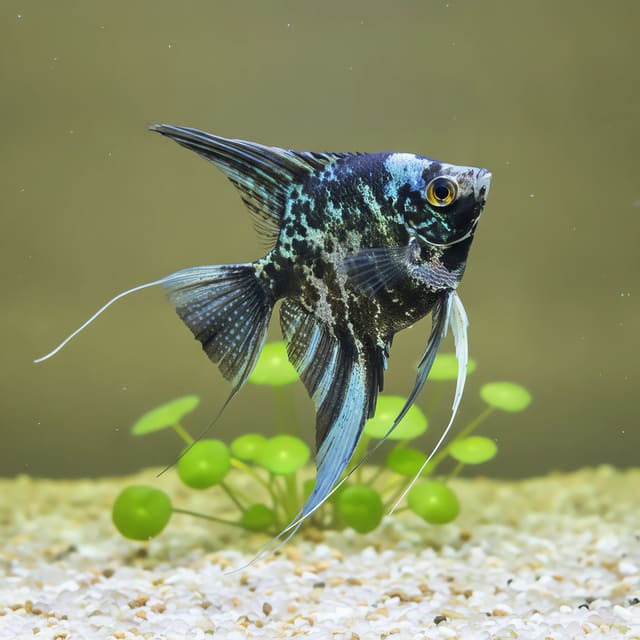
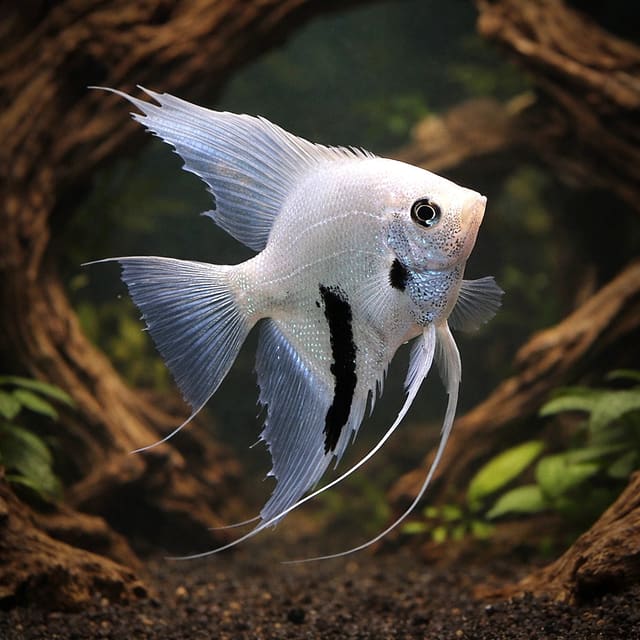
Some gallery images have been digitally enhanced to improve image quality. They show the listed type of animal rather than guaranteeing the exact markings of the individual supplied, so natural colour and pattern can vary.
Colour, apparent size and visible body shape in the gallery should not be used to infer sex or life stage. Use the selector only for dispatch size, then make the aquarium decision from adult stocking needs, tank height and compatibility. You can also browse the angelfish collection when comparing other angelfish identities and forms.
| Suits | Not suited to |
|---|---|
| Stable aquarium water maintained at 22–27°C and pH 6.5–8 | Water outside 22–27°C and pH 6.5–8 |
| Larger shoaling fish in a robust community aquarium, subject to individual assessment | Small fish that may be treated as prey |
Start with the intended number of adult angelfish. Keep a pair at minimum or plan a group, then allow 40 litres for every adult fish as a stocking allowance. Four adults therefore account for 160 litres before other fish, décor or practical limits are considered. This worked figure is not a universal minimum tank size: the aquarium must also be sufficiently tall for mature angelfish, and added occupants increase the space and filtration demand.
Décor and existing livestock reduce the usable capacity. A nominal 160-litre aquarium containing four planned adults, several other fish and dense hardscape should not be treated as though every litre remains free. Increase the aquarium size or reduce the stocking plan when the group cannot spread out, when feeding areas overlap completely or when one fish controls the only sheltered position.
Prepare the aquarium before the fish arrives. A new tank needs a functioning biological filter and a mature bacterial population capable of processing waste. Our first tropical aquarium guide explains how to prepare and mature the system before livestock is introduced. Do not use a small dispatch measurement as a reason to postpone the permanent setup: moving a growing social cichlid later adds another environmental change and may disrupt an established group.
A larger aquarium usually gives more stable temperature and water quality. It also gives the keeper more options when relationships change. Choose enough height, water volume and usable internal space at the outset, then leave capacity for the fish rather than filling every visual gap with décor or additional livestock.
Maintain a temperature of 22–27°C, pH of 6.5–8.0 and general hardness of 4–12°dH. Carbonate hardness guidance is 3–10°dKH. Choose a stable point inside each range that matches the aquarium and its compatible occupants rather than repeatedly moving the water from one end of a range to the other.
| Measurement | Working target |
|---|---|
| Temperature | 22–27°C |
| pH | 6.5–8.0 |
| General hardness | 4–12°dH |
| Carbonate hardness | 3–10°dKH |
| Ammonia | 0 mg/l |
| Nitrite | 0 mg/l |
| Nitrate | Up to 20 mg/l above the normal tap-water level |
Measure the aquarium rather than guessing from the tap-water area or a previous tank. Record temperature, pH, hardness, ammonia, nitrite and nitrate so a change can be recognised early. Our water chemistry guide explains what each measurement means, while the water matcher helps compare measured values with this working range.
Test replacement water as well as tank water when a reading changes unexpectedly. Tap-water chemistry can differ from an aquarium after biological activity, décor and accumulated waste have affected it. Treat all replacement tap water with conditioner before it enters the aquarium so chlorine or chloramine does not harm the fish or biological filter.
A working filter is essential. The RSPCA’s aquarium welfare guidance explains that fish release toxic ammonia and that a biological filter supports bacteria which convert ammonia to nitrite and then to the safer nitrate. The conversion only protects the fish when the filter is established, maintained and able to cope with the aquarium’s total waste.
Increase stocking slowly. Every additional fish and every increase in feeding adds waste, while the bacterial population needs time to grow. Adding a planned group and several companions at once can overwhelm a filter that appeared stable under a lighter load. Test ammonia and nitrite after stocking changes and keep both at 0 mg/l.
Filter capacity must reflect the complete aquarium, not one small dispatch fish. A pair or group of growing cichlids, their food and any companions all contribute to the load. Watch the measured results: detectable ammonia or nitrite, rapidly rising nitrate or accumulating debris means the system needs attention. Correct the cause rather than masking it with extra food restriction or repeated livestock movement.
Keep enough open access around the filter to inspect it without dismantling the aquascape. Position roots, plants and other cover so they cannot block the intake. If flow falls, first check for obstruction and maintenance needs. The goal is continuous biological processing and clean, oxygenated aquarium water, not a particular visual current.
Power interruptions or prolonged filter stoppages can affect the bacterial population. Once operation resumes, test ammonia and nitrite and observe the fish closely. Delay new additions until the readings remain at 0 mg/l and the system is steady again.
Use fine aquarium gravel or sand. American cichlids may dig or sift the substrate while feeding or breeding, so a suitable fine substrate makes routine cleaning easier and reduces the need for coarse, restrictive ground cover. Siphon exposed areas during water changes to remove solid waste before it breaks down.
Roots, plants and vertical surfaces reflect the structure used by wild Pterophyllum for concealment. Arrange these features as cover rather than as a dense obstacle course. Long dorsal, anal and pelvic fins need clear passages. Turn rough edges away from regular swimming routes and leave open water between vertical groups of décor.
Live plants may be dug up or eaten by American cichlids. Secure planting carefully and watch how the fish interact with it. Plastic plants can provide cover where repeated digging prevents live plants from remaining anchored. Whichever type you use, check that leaves, stems and attachments do not create narrow traps for elongated fins.
Observe the layout from the fish’s level. A tank can look open from above while roots and leaves create a single narrow corridor below. Rearrange the décor if fish repeatedly brush their fins, if waste collects in inaccessible pockets or if one sheltered site becomes the only usable resting area.
Do not sacrifice swimming height to a deep stack of décor. The body is tall and laterally compressed, so clear vertical water is part of the usable aquarium. Keep equipment secure and leave enough room above the substrate for the fish to carry its fins naturally.
Feed once daily and offer only what the fish can consume within a few minutes. American cichlids are generally omnivorous but often prefer meaty foods. Use specialised cichlid pellets or granules as an appropriate staple and supplement them with frozen or freeze-dried foods. Daphnia, brine shrimp and bloodworm are among the items OATA recommends for smaller American cichlids.
Wild Pterophyllum are ambush predators that take small fish and macroinvertebrates. That natural feeding biology explains the interest in animal-based foods, but aquarium portions still need strict control. A large meal is not a reason to feed again: excess food and faeces break down and release toxic waste into the water.
Match the physical size of the food to the dispatch grade. The fish must be able to take each item cleanly; break or choose smaller pieces where needed. As the fish grows, reassess the food size and the total amount by observing consumption and body condition rather than automatically increasing every meal.
Use feeding as a daily health check. A sudden reduction in interest, food being taken and spat out repeatedly, one fish being excluded or a change in body condition calls for closer observation and immediate water testing. Do not compensate for poor appetite by leaving food in the aquarium.
Review the portion when nitrate begins climbing faster, debris accumulates between weekly maintenance sessions or uneaten food reaches the substrate. Reduce the amount to what is consumed promptly, remove waste and confirm that ammonia and nitrite remain at 0 mg/l. Controlled feeding protects the filter as well as the fish.
At least once every week, change 25% of the aquarium water. Use a siphon to remove solid waste from the substrate, especially around wood, plant bases and feeding areas. Treat the replacement water with tap-water conditioner before adding it so chlorine or chloramine cannot harm the fish or the filter bacteria.
Test the water at least weekly. Ammonia and nitrite must remain at 0 mg/l, while nitrate should stay no more than 20 mg/l above the normal tap-water level. Record the readings alongside the water-change date. A written pattern makes gradual deterioration easier to recognise than memory alone.
Increase attention after adding fish, changing feeding or cleaning the filter. These events can change the load on the biological system. Test again rather than waiting for the next routine date if behaviour changes or the aquarium looks different.
Watch for hanging at the surface, sitting on the bottom, erratic swimming, faster or slower gill movement, unusual hiding, marked colour change, white spots, fluffy growths, damaged fins, missing scales, bumps, ulceration, weight change or reduced feeding. If a change appears, test the water first and correct any water-quality problem. Contact us for further guidance when the signs continue or the cause is unclear.
Consistency is more useful than occasional large interventions. Weekly 25% changes, controlled feeding and filter care reduce waste without repeatedly disrupting the aquarium. Alter the routine when measured results show that the present schedule is not holding the target values.
Prepare the aquarium before the delivery window. Confirm that someone can receive the parcel, that the filter and heater are operating and that ammonia and nitrite are both 0 mg/l. Check temperature and the other working values before opening the box so the fish is not waiting while equipment or water problems are addressed.
Avoid adding several unrelated fish at the same time, as each addition increases waste and requires the filter’s bacterial population to respond.
Read the current delivery and Live Arrival Guarantee policy before the delivery date. It sets out the delivery window, reception requirements, acclimatisation steps and claim process. Arrange for someone to be home for the window shown at checkout because live fish must not be left unattended.
During the first day, focus on measurable conditions and clear behaviour. Test water promptly if the fish hangs at the surface, sits on the bottom, swims erratically or breathes at an unusual rate. Confirm that equipment is operating and that ammonia and nitrite remain at 0 mg/l. Keep food controlled rather than adding extra meals to encourage activity.
Continue daily observation through the first week. Check whether each fish can use cover, reach food and move without being displaced constantly. At the first weekly maintenance session, record the complete water test, change 25% and inspect the filter flow. This creates a baseline for judging later changes.
The first month should establish whether the aquarium, filter and social plan work together. Do not judge success from a single calm hour after introduction. Use repeated observations of feeding, breathing, swimming, water quality and access to cover.
| Checkpoint | Decision |
|---|---|
| First day | Confirm steady swimming and breathing; test water if behaviour changes. |
| First week | Check that every fish reaches food and can use more than one area. |
| Weekly test | Keep ammonia and nitrite at 0 mg/l and nitrate within its stated limit. |
| First month | Review space, group relationships, filter load and maintenance results. |
If one fish remains hidden more than usual, misses food or is repeatedly displaced, first check water quality and then examine the layout and group interactions. Add or reposition cover only when the change preserves clear swimming routes. Do not crowd the tank with extra décor to solve a problem caused by insufficient overall space.
If ammonia or nitrite appears after stocking, stop adding livestock. Check filter operation, remove waste and restore safe conditions while continuing regular tests. If nitrate rises rapidly despite the weekly 25% water change, review feeding quantity, total stocking and maintenance access.
Growth also changes the space calculation. The dispatch grade describes the fish at supply, while the permanent plan must fit mature, tall-bodied angelfish. Reassess usable height and swimming room before décor, equipment or new companions occupy remaining capacity.
At the end of the month, compare the latest water results with the first-week baseline. Stable readings, prompt feeding, normal breathing and shared use of the aquarium indicate that the routine is functioning. Any persistent change in appetite, colour, condition or swimming deserves a fresh water test and a direct review of filtration, stocking and compatibility.
Do not use a universal tank-mate list. OATA describes angelfish as one of the calmer American cichlids that can live in a robust community aquarium with larger shoaling fish, but individual compatibility still depends on size, behaviour, water requirements, space and the number of fish already present.
Small fish need particular caution because wild Pterophyllum prey on small fish and macroinvertebrates. Do not assume that peaceful behaviour removes the predator-and-prey size issue. Compare mature size as well as dispatch size, and remember that a small angelfish may become a very different physical presence as it grows.
Aggressive American cichlids also need caution. The group ranges widely in temperament, and OATA notes that the more aggressive species may need to live alone or with equally aggressive cichlids. That arrangement is not the same as the robust community suggested for calmer angelfish.
Contact us with the aquarium dimensions, measured water values, current species, adult numbers and the proposed companion for a stocking and compatibility assessment. Those details permit a meaningful decision; a common name alone does not describe the space, group structure or behaviour already present.
Keep angelfish as a pair at minimum or in a group. A solitary angelfish may become stressed, while a social plan needs enough water volume, height and separated cover for every fish. Do not add a lone fish merely to fill an empty-looking area if the aquarium cannot support the resulting adult group.
Pterophyllum species form monogamous pairs and show developed brood care. Eggs may be laid on submerged wood, a flattened leaf or aquarium filter pipework. These behaviours mean a previously shared feature may become important to a pair, so watch access to vertical surfaces and the space around them.
Do not diagnose sex from colour, size, finnage or gallery appearance. Some American cichlids show visible sex differences, while others may show none unless breeding. Build the aquarium around the number of fish selected rather than an assumed future pairing.
Introduce additional livestock slowly. The compatibility plan may look sound while the filter is still unable to process the sudden increase in waste. Additions should preserve ammonia and nitrite at 0 mg/l, maintain the nitrate limit and leave enough usable space for existing fish.
Compatibility remains an ongoing management decision. A combination that feeds and shares space calmly should still be checked during weekly maintenance and after any change to stocking or décor. Use measured water values and repeated behaviour, not a single first impression, to decide whether the community continues to work.
It is an angelfish trade form labelled Pterophyllum cf. scalare; its identity is treated at the genus level within Pterophyllum.
One purchase quantity supplies one animal of the selected size option.
The selector uses 1,5 - 2 cm, 3 - 3,5 cm, 4-5 cm, 5-5.5 cm and XL (6-7 cm); these are dispatch sizes rather than adult sizes.
Use a mature, filtered and sufficiently tall aquarium with fine sand or gravel, clear swimming routes and roots or plants providing separated cover.
Keep angelfish as a pair at minimum or in a group, allowing 40 litres per adult fish as a stocking allowance alongside adequate height and total community space.
OATA’s group guidance is 22–27°C, pH 6.5–8.0 and 4–12°dH, with ammonia and nitrite at 0 mg/l.
Feed suitable cichlid pellets or granules with frozen or freeze-dried foods once daily, offering only what is eaten within a few minutes.
Start filming before opening the sealed parcel, continue through opening until the fish is shown inside the sealed bag, then float the bag for 20–30 minutes before releasing the fish without pouring transport water into the aquarium.
Screen larger shoaling community fish for matching water, adult space and calm behaviour; small fish and aggressive cichlids need particular caution.
Independently collected by Judge.me from customers who bought this item. All reviews are shown.
As shown