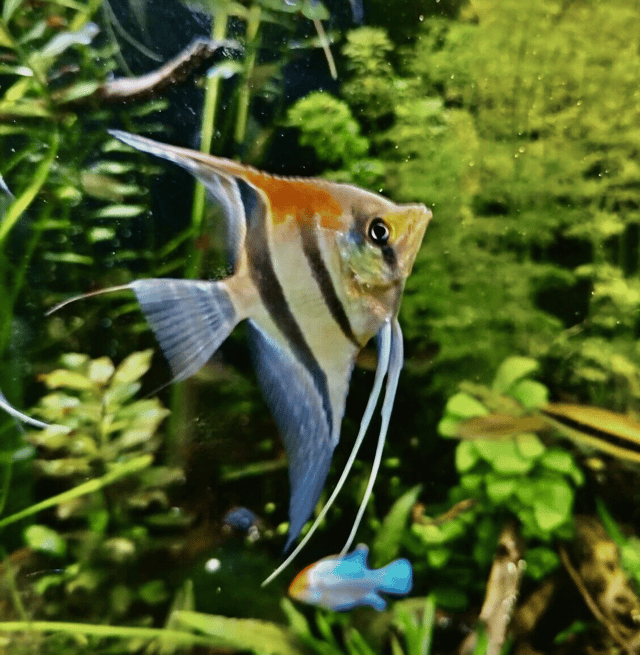
Moderate
Pterophyllum scalare manacapuru
24–27°C · pH 6.5–7.4 · 200L
£47.99
Photo coming soon
The size, price and care details on this page are for this listing.
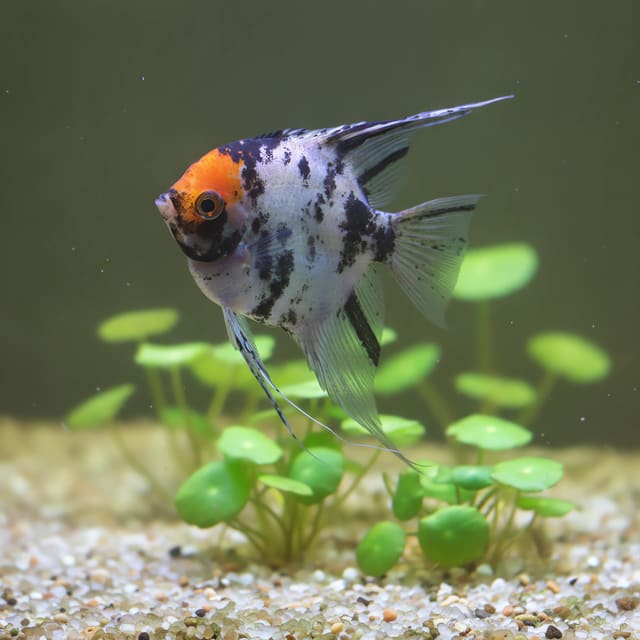
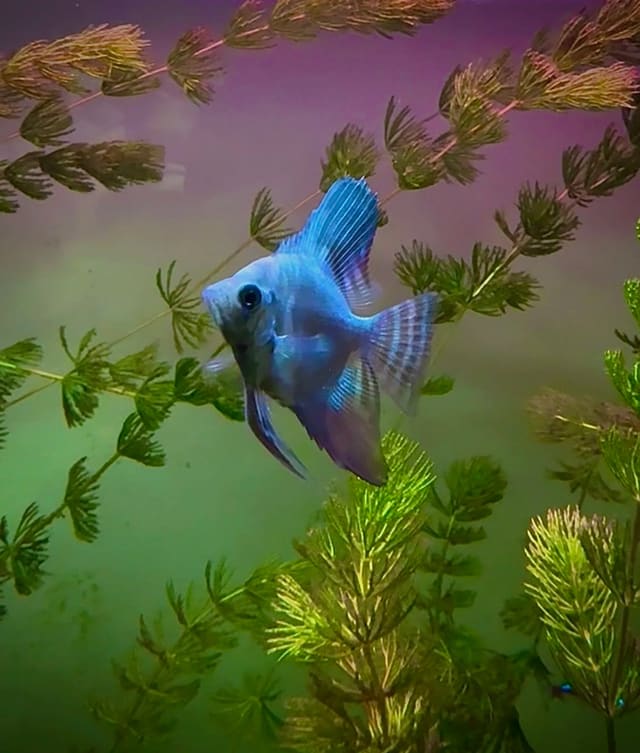
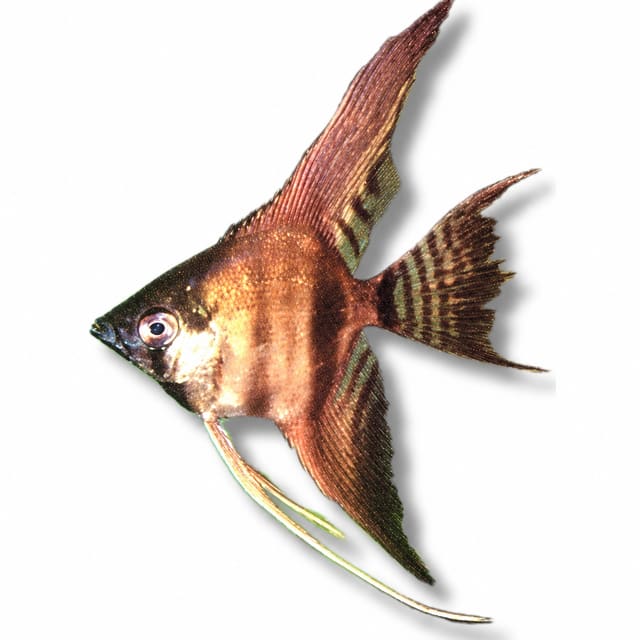
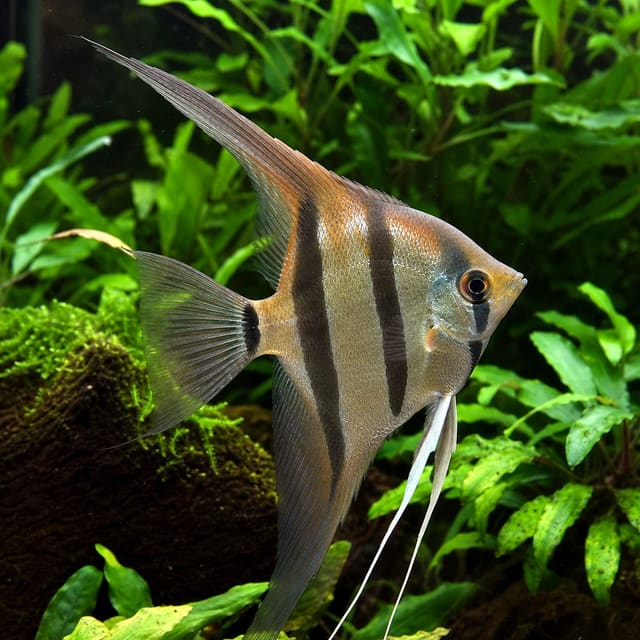
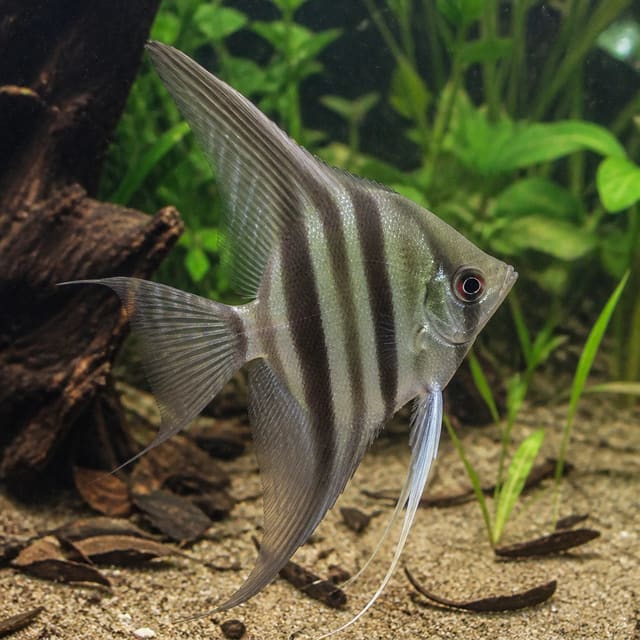
Pterophyllum scalare bulgaria green (Pterophyllum scalare) is a South American cichlid from the Amazon basin that reaches 15 cm. It suits prepared keepers planning a compatible pair or group in a tall aquarium, with routine water at 24–27°C and pH 6.5–7.4, the overlap of FishBase, Seriously Fish and OATA guidance. Sold individually as one live fish.
Adult size is the maximum length this species reaches at full maturity (scientific sources). The livestock you receive will be younger and smaller. Product-photo provenance and any image-specific limitations are stated on the listing.
Pterophyllum scalare
Save when buying multiple fish. Each quantity is one fish; sex and pair formation are not guaranteed unless the selected variant explicitly states them.
Pterophyllum scalare bulgaria green (Pterophyllum scalare) is a South American cichlid from the Amazon basin that reaches 15 cm. It suits prepared keepers planning a compatible pair or group in a tall aquarium, with routine water at 24–27°C and pH 6.5–7.4, the overlap of FishBase, Seriously Fish and OATA guidance. Sold individually as one live fish.
Adult size is the maximum length this species reaches at full maturity (scientific sources). The livestock you receive will be younger and smaller. Product-photo provenance and any image-specific limitations are stated on the listing.
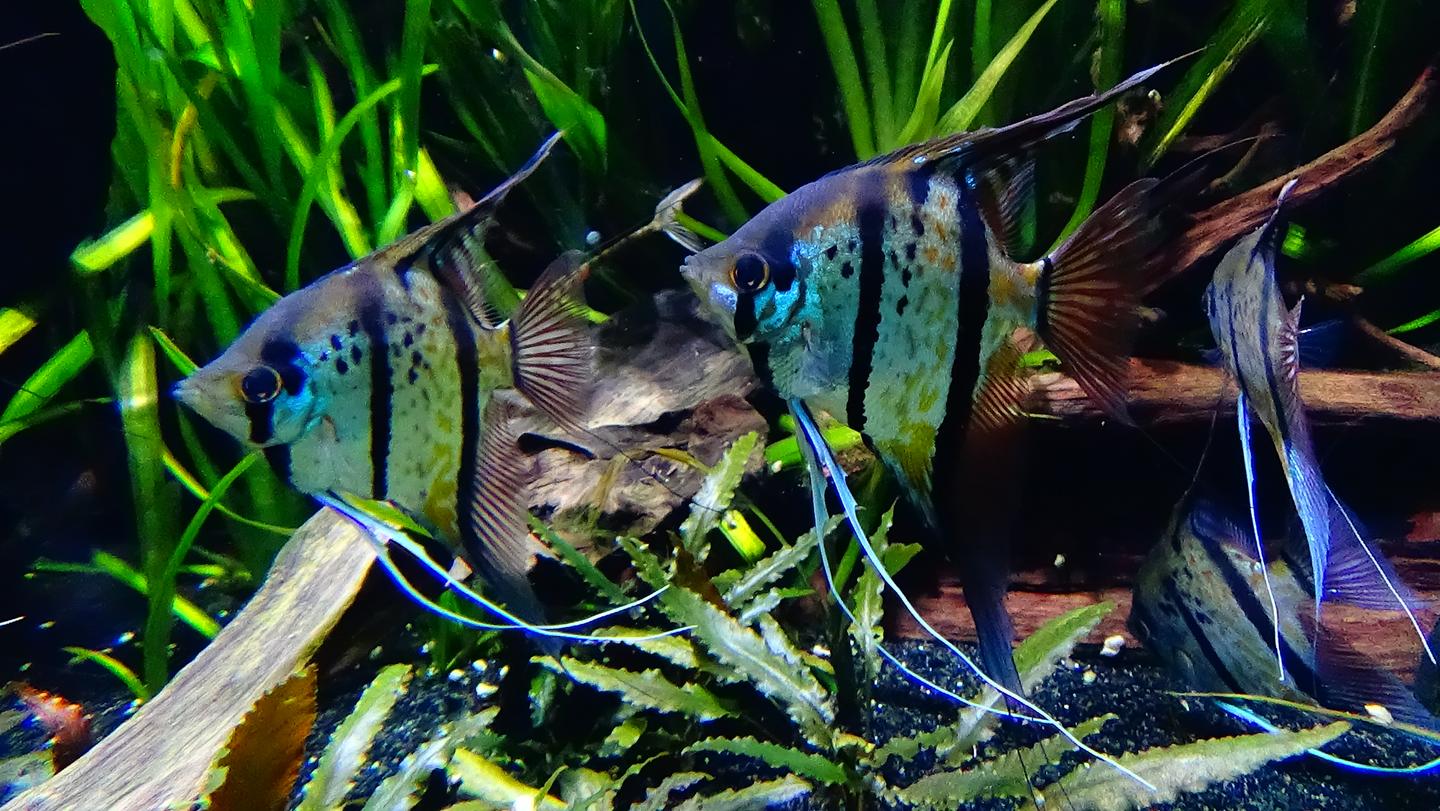
Freshwater angelfish are tall South American cichlids, not small community fish. OATA gives 120 litres as an industry floor for a compatible pair and says the aquarium must be sufficiently tall. We prefer planning around roughly 200 litres, a 100 × 40 cm footprint and about 50 cm height for an adult pair, with more space and an exit plan for a group.
Maintain these water conditions for optimal health and vibrant colors
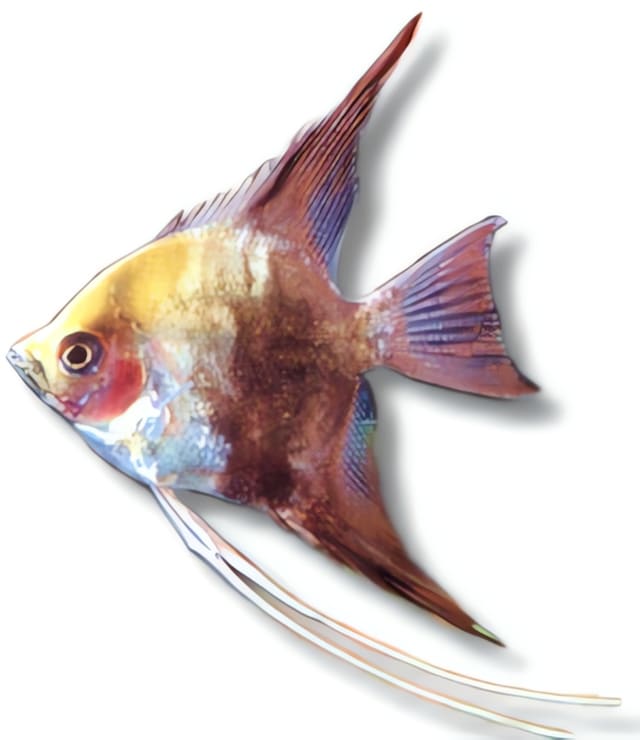
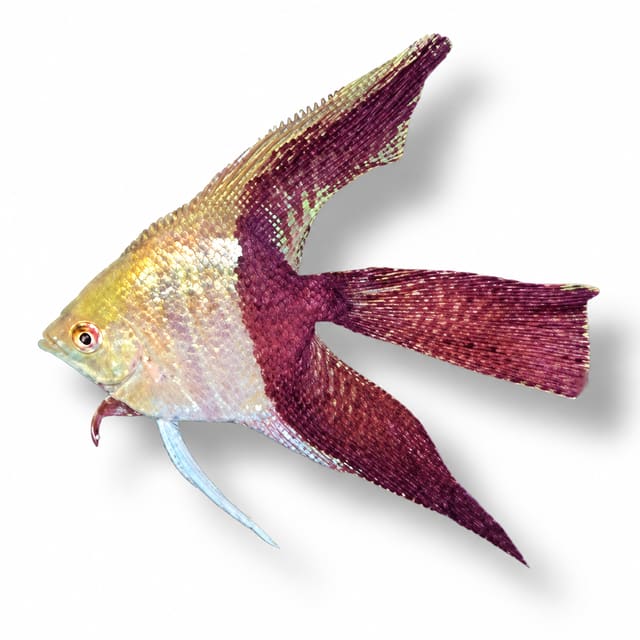
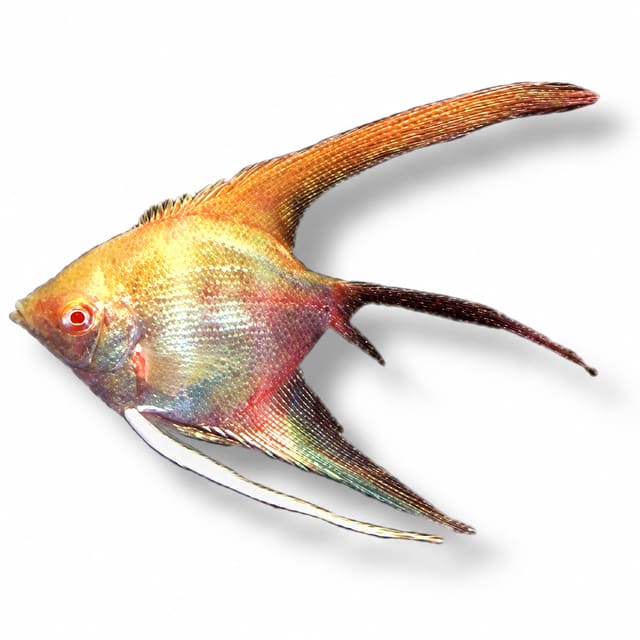
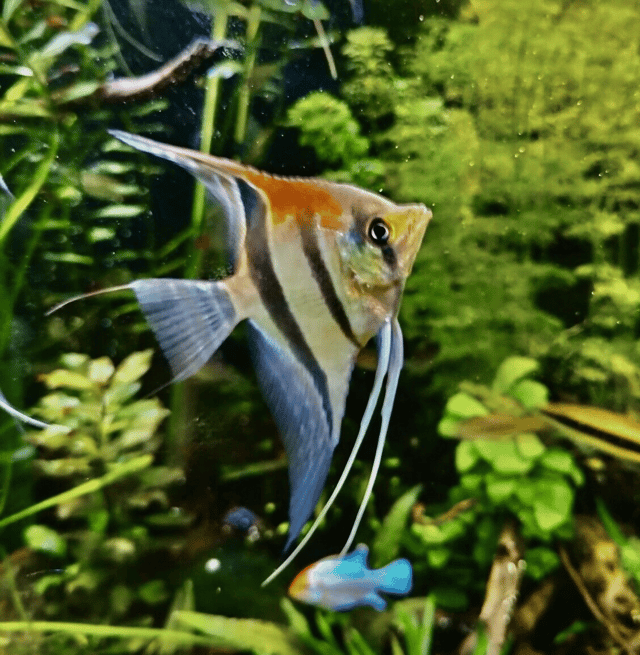
The Bulgaria green angelfish (Pterophyllum scalare) is a freshwater cichlid from South America’s Amazon basin. Its documented native distribution includes Brazil, Colombia, French Guiana, Guyana and Peru. Plan for an adult length of 15 cm and an extended-fin height of about 20–25 cm. This tall-bodied fish suits an intermediate keeper prepared to provide a mature, spacious aquarium, manage social behaviour and respond if a pair becomes territorial.
FishBase places P. scalare in the cichlid family Cichlidae and records adults around dense aquatic and riverside vegetation in swamps and flooded ground. The water may be clear or silty, and the fish lives in the benthopelagic part of the habitat. FishBase lists the species as Least Concern. These natural-history details support an aquarium with height, cover and open turning space rather than a short, bare layout.
“Bulgaria green” is the trade label attached to this Pterophyllum scalare offer. Base every welfare decision on the needs of freshwater angelfish: a tall cichlid with long dorsal, anal and ventral fins, an omnivorous diet and the potential for territorial behaviour. Colour wording does not change its adult space, water, food or social requirements.
Eschmeyer’s Catalog of Fishes accepts Pterophyllum scalare as the scientific identity. It is distinct from other Pterophyllum species, so plan care around P. scalare rather than treating every angelfish name as interchangeable.
Start with the adult aquarium, not the fish’s size on arrival. Our complete freshwater angelfish care guide recommends planning an adult pair around roughly 200 litres, a 100 × 40 cm footprint and about 50 cm of usable height. A group or community needs more room, visual barriers and a practical way to separate or rehome fish if persistent aggression develops.
Keep routine water at 24–27°C, pH 6.5–7.4 and 5–12 dGH. This is the overlap of FishBase and Seriously Fish species ranges with OATA’s American-cichlid group guidance. OATA also advises zero ammonia, zero nitrite and nitrate no more than 20 mg/l above the normal level in the tap water. Stable, measured conditions matter more than repeatedly adjusting the aquarium towards a single number.
| Suits | Not suited to |
|---|---|
| An intermediate keeper with a mature, filtered aquarium | An uncycled aquarium or one chosen only by elapsed setup time |
| A tall aquarium planned around adult dimensions | A shallow tank sized around a smaller fish |
| A compatible pair or deliberately managed group | Keeping one fish alone as the default plan |
| Robust companions with overlapping water needs | Very small prey-sized fish, fin-nippers or highly aggressive competitors |
| Gentle flow, vertical cover and open turning room | A harsh current or sharp, crowded decor around extended fins |
Each purchase supplies one live Bulgaria green angelfish. Plan its permanent home using the adult dimensions above; the size of a fish at dispatch is not its adult size. Sex is guaranteed only when the selected option explicitly states male or female. This Pterophyllum scalare bulgaria green listing has no sex-guaranteed option.
Use the identity and adult-care requirements to compare this fish with other entries in the angelfish collection. Appearance can guide your choice, but aquarium height, social planning, water compatibility and adult behaviour decide whether an angelfish belongs in the proposed setup.
Use 15 cm as the adult-length planning figure and allow about 20–25 cm of total height where the dorsal and anal fins are extended. Seriously Fish gives 15 cm standard length and recommends that 100 × 40 × 50 cm should be the smallest aquarium dimensions considered, equating to roughly 200 litres. FishBase also carries a 15 cm maximum while reporting a 10.5 cm field maximum; use the larger 15 cm figure for the permanent aquarium.
Height cannot replace floor area. An adult must be able to turn, move away from another fish and use cover without dragging its fins across decor. The 100 × 40 cm footprint gives an adult pair more useful horizontal room than a narrow display tank with the same nominal volume. Aim for about 50 cm of usable internal height after allowing for substrate, decor and the operating water level.
For an adult pair, plan around roughly 200 litres rather than treating the smallest nominal volume as a universal answer. OATA gives at least 120 litres for a pair of smaller American cichlids and separately says that an adult angelfish aquarium must be sufficiently tall. Our preferred 200-litre plan adds height and footprint suited to this species.
| Proposed setup | Decision |
|---|---|
| Roughly 200 litres, 100 × 40 cm base and 50 cm usable height | A sound planning point for a compatible adult pair |
| 120 litres with limited height or a narrow footprint | Change the dimensions rather than relying on volume alone |
| A group or community at the pair-sized planning point | Increase space and prepare an exit plan before adding fish |
| A short tank chosen because the fish is initially smaller | Plan the adult aquarium from the start |
A group requires substantially more room because fish need separate feeding access, visual barriers and places to retreat. Other inhabitants also consume territory and filtration capacity. Litres are therefore one part of the plan: dimensions, adult numbers, decor, filtration and behaviour must all work together.
Maintain 24–27°C, pH 6.5–7.4 and 5–12 dGH for routine care. These values overlap FishBase and Seriously Fish species ranges with OATA’s American-cichlid group guidance. They create a practical operating range without pushing temperature, pH or hardness outside any of those named ranges.
Set the aquarium near the conditions in which the fish has been held, then avoid abrupt changes. Check temperature with a thermometer rather than relying only on a heater dial. Measure pH and hardness before altering source water; a recipe copied from another aquarium can produce a different result when its tap water, carbonate hardness and preparation method differ.
| Measurement | Action |
|---|---|
| Temperature | Keep 24–27°C and investigate unexpected movement before adjusting equipment |
| pH | Keep 6.5–7.4 and favour stability within the range |
| General hardness | Keep 5–12 dGH and measure source water before changing it |
| Ammonia | Maintain zero mg/l; any detectable reading needs immediate action |
| Nitrite | Maintain zero mg/l; any detectable reading needs immediate action |
| Nitrate | Keep it no more than 20 mg/l above the normal tap-water level |
If GH, KH and pH are unfamiliar, read our water chemistry guide before changing the water supply. Record the aquarium result and source-water result separately. This makes it easier to distinguish a tank trend from a change at the tap.
Use the water matcher to compare measured aquarium values with the stated care range, then make gradual elective adjustments. Detectable ammonia or nitrite is different: treat either as an urgent water-quality problem rather than waiting for a slow correction.
Add this angelfish only to a mature aquarium where tests show zero ammonia and zero nitrite. A calendar date cannot demonstrate that the biological filter can process fish waste. If this is your first setup, follow our guide to preparing and maturing a tropical aquarium before livestock arrives.
The RSPCA’s aquarium guidance explains why a working biological filter is essential: fish release toxic ammonia, beneficial bacteria convert it to nitrite, and another bacterial stage converts nitrite to the safer nitrate. The filter must remain running and maintained so this biological process continues.
Seriously Fish gives a turnover of four to five times the aquarium volume each hour as a worked guide. In a 200-litre setup, that means looking for a filter rated 800–1,000 litres per hour. Choose equipment that can maintain water quality and oxygen exchange without forcing this tall-bodied fish to struggle continuously against harsh flow.
| Check | Required response |
|---|---|
| Ammonia or nitrite is detectable | Treat the result as urgent and correct water quality before routine stocking continues |
| Flow drops suddenly | Check the intake, pipework and media for blockages |
| The fish constantly fights the current | Redirect or diffuse the flow while preserving filtration and surface movement |
| Waste collects behind decor | Adjust circulation and remove waste during maintenance |
| Filter media needs cleaning | Rinse it lightly in removed aquarium water; do not run it under the tap |
Increase stocking slowly. Every additional fish and every increase in feeding raises the waste load, while the beneficial bacterial population takes time to respond. Test after a change rather than assuming a previously mature filter can immediately handle any added load.
Keep the filter accessible for inspection and protect hazardous intakes where extended fins could be drawn against them. Gentle flow means controlled circulation, not stagnant water. Surface movement, biological filtration and unobstructed flow paths remain important even when the fish prefers calmer swimming areas.
Use tall plants, wood or other secure vertical structure to reflect the densely vegetated habitats occupied by wild P. scalare. Leave open water between those structures so an adult can turn and move through the aquarium without catching its long fins. Seriously Fish recommends a well-planted layout with tall leafy plants and gentle flow.
Visual barriers can help fish leave each other’s line of sight, but decor cannot make an undersized aquarium suitable or guarantee that incompatible individuals will settle. Watch how each fish uses the structure. One animal occupying the whole tank while another remains pinned behind cover signals exclusion, not successful territory design.
Angelfish spawn on vertical surfaces such as slate, broad-leaved plants or even the aquarium glass. A pair can defend that area, so do not place every feeding point and retreat beside one likely spawning surface. Spread useful features through the aquarium and preserve more than one route between them.
| If you see | Do this |
|---|---|
| Fins brushing hard decor | Move or replace the obstruction and restore clear turning room |
| One fish guarding the only sheltered area | Add separated cover and reassess stocking space |
| Continuous effort against filter output | Diffuse or redirect flow without reducing essential filtration |
| Waste trapped in a dead spot | Improve circulation and include the area in siphon maintenance |
OATA’s American-cichlid group guidance says the tank should have fine aquarium gravel or sand, because many species will dig or sift the substrate when feeding or breeding. Secure plants and decor so that digging cannot dislodge them. The finished layout should combine cover, open water, stable structures and access for cleaning.
Feed a nutritionally complete cichlid pellet, granule or suitable flake as the staple, choosing a size the fish can swallow. Add appropriate frozen or freeze-dried foods for variety. Seriously Fish describes P. scalare as omnivorous and records wild fish feeding predominantly on zoobenthos, including small crustaceans and other aquatic invertebrates.
OATA’s American-cichlid guidance gives the practical schedule: feed once a day and offer only what the fish can eat within a few minutes. Watch every individual rather than judging the group by the quickest feeder. Remove uneaten food before it breaks down and adds to the aquarium’s waste load.
| Food role | Use |
|---|---|
| Complete cichlid pellet or granule | Regular staple in a suitable mouth size |
| Suitable complete flake | An alternative staple when every fish can take it readily |
| Frozen or freeze-dried invertebrate foods | Measured variety alongside the complete staple |
| Bloodworm, brine shrimp or daphnia | Supplementary foods, not the whole diet |
| Uneaten food | Remove it rather than allowing it to decay |
A controlled angelfish feeding study shows that feed composition affects growth and reproductive performance. Use that finding as a reason to provide balanced nutrition and variety, not as a fixed household recipe.
A sudden reduction in appetite is a health or environment warning sign. Test water and examine breathing, swimming, fin position and social pressure before changing foods repeatedly. Do not treat an attractive supplementary food as a substitute for diagnosing the reason a fish has stopped eating.
At least once every week, make a partial water change of 25% as the starting routine given by OATA. Test the aquarium at least weekly and adjust the routine using measured waste levels, stocking, feeding and filter performance. Treat replacement water with a tap-water conditioner that removes chlorine or chloramine before adding it.
Healthy angelfish should show steady swimming, regular breathing, clear eyes, open fins, an intact body surface and consistent feeding. The RSPCA’s fish-health guidance supports using visible changes and water testing as the first warning system.
| If you see | First response |
|---|---|
| Gasping or a changed breathing rate | Test water immediately and check filtration and surface movement |
| Clamped fins, wounds or missing scales | Check aggression, decor and water quality |
| White spots or fluffy growths | Record the signs, test water and seek a diagnosis |
| Erratic swimming or unusual balance | Check temperature and waste readings without delay |
| Sudden hiding or appetite loss | Assess water, social pressure and visible injury |
When a health change persists, photograph the signs, record when they began and contact a fish vet or specialist aquatic retailer. Use only a lawful product labelled for the species and aquarium system, following its instructions or veterinary direction. Avoid copying fixed temperature or medicine recipes for a symptom that can have several causes.
Prepare the mature aquarium before the parcel arrives: confirm 24–27°C, zero ammonia and zero nitrite, and check that pH and hardness are reasonably close to the planned conditions. Complete these aquarium checks early enough to correct a problem before the fish is released.
The full Tropical Fish Co delivery and Live Arrival Guarantee policy explains the packing, reception and claim requirements. Fish are hand-bagged in oxygen and placed in an insulated box, with a heat pack when weather calls for it. A licensed live-animal courier carries the parcel, and someone must be present to receive it.
For a claim, contact us on the day the fish arrives with the order number and continuous unboxing video. The recording must begin with the sealed parcel, show it being opened and show the fish inside the sealed bag. Film every delivery from the sealed parcel onward so the required sequence has been captured before anything is moved.
After release, assess breathing, balance, swimming and visible injury. OATA advises increasing aquarium stocking slowly because filter bacteria must respond as waste and feeding increase. Continue checking ammonia and nitrite after introduction, and act urgently if either becomes detectable.
A fish that hides initially still needs quiet access to space and, when feeding begins, access to food. Persistent gasping, loss of balance, wounds or inability to swim normally requires immediate water tests and fish-health advice.
Keep a compatible pair or a deliberately planned group. OATA advises a pair or group at minimum for angelfish and warns that a singleton may become stressed. Seriously Fish describes the species as generally peaceful but notes that individuals may squabble with their own kind, while our care guidance classifies the practical temperament as semi-aggressive.
A compatible pair is not simply any two angelfish placed together. Pair formation and breeding can intensify territorial behaviour, and fish that shared space while smaller may behave differently as they mature. A group needs substantially more space than the adult-pair planning point, along with visual barriers, separate feeding access and a workable route to separate or rehome an excluded fish.
| Observation | Decision |
|---|---|
| Brief display with both fish returning to normal activity | Continue close observation and check fin condition and feeding access |
| One fish repeatedly drives another into a corner | Intervene before injury or prolonged food exclusion develops |
| A fish remains hidden and misses meals | Treat this as a failed access plan, not acceptable settling |
| A pair defends a vertical surface | Expect breeding territory and protect the other inhabitants |
| Damaged fins or wounds appear | Separate safely and reassess space, barriers and social grouping |
Plan the response before adding a group. A second mature aquarium or a realistic rehoming route is more useful than waiting until an injured fish has nowhere to go. Dividers and temporary containers do not replace a suitable filtered setup for longer separation.
Feed in more than one accessible position when social pressure affects food access. Confirm that every fish swallows food and can leave a defended area. More fish does not automatically distribute aggression safely, and more decor does not compensate for insufficient room.
Choose companions by adult size, water requirements, temperament, fin behaviour, feeding speed and territory. OATA permits calmer American cichlids such as angelfish in a robust community with larger shoaling fish, but every proposed combination still needs this full screening process.
Avoid very small fish that may be swallowed, including small tetras. Avoid persistent fin-nippers because they can damage the angelfish’s extended fins, and avoid highly aggressive competitors that can create chronic territorial pressure. Avoid very small shrimp and fry, which may be eaten. Avoid much faster-feeding species, because they can leave angelfish or subordinate group members underfed and create chronic stress.
| Compatibility check | What to decide |
|---|---|
| Adult body size | Exclude fish and invertebrates small enough to be treated as prey |
| Fin behaviour | Exclude persistent fin-nippers around extended fins |
| Temperament | Exclude highly aggressive competitors and allow for angelfish territories |
| Water overlap | Use companions that share 24–27°C, pH 6.5–7.4 and 5–12 dGH |
| Feeding speed | Confirm every animal can obtain suitable food |
| Territory and space | Provide adult turning room, retreats and a separation plan |
Larger shoaling fish can be considered when they are robust, do not nip fins and share the water range. Avoid small tetras, very small shrimp and fry, because they may be eaten. Other angelfish need a social plan because their generally peaceful behaviour can change during pair formation or breeding.
Do not approve a combination because the animals occupy different levels of the aquarium. Floor space, feeding routes and water still overlap, and a territorial fish can use more than one level. Likewise, a peaceful label cannot overcome an unsuitable temperature, prey-size difference or feeding imbalance.
For a stocking assessment, contact us with the aquarium dimensions, usable height, measured water values, filtration, adult species and number of each proposed inhabitant. Keep a separation or rehoming plan for any combination involving territorial cichlids. Individual behaviour creates honest uncertainty even after the measurable requirements have been screened.
This angelfish reaches 15 cm in length as an adult, and its extended fins can make it about 20–25 cm tall. Plan around the 15 cm adult figure and the fish’s full height, not its size when supplied.
Plan roughly 200 litres, a 100 × 40 cm footprint and about 50 cm of usable height for a compatible adult pair. A group or community needs more room, visual barriers and a separation or rehoming plan.
Keep a compatible pair or a deliberately managed group. OATA advises a pair or group at minimum and warns that a singleton may become stressed; group size must be matched to substantially greater space and an exit plan for aggression.
It has an intermediate store care rating and suits a prepared keeper who can provide a mature, tall aquarium, test water, manage a compatible pair or group and intervene if territorial aggression develops.
Feed a complete cichlid pellet, granule or suitable flake as the staple, with appropriate frozen or freeze-dried variety. OATA’s American-cichlid guidance says to feed once a day and only as much as the fish eat within a few minutes.
Keep it at 24–27°C, pH 6.5–7.4 and 5–12 dGH. These routine values are the overlap of FishBase and Seriously Fish species ranges with OATA’s American-cichlid group guidance.
This angelfish is generally peaceful but may squabble with its own kind, especially around pair formation and breeding. Screen for territorial aggression, and avoid persistent fin-nippers because its extended fins can be damaged.
Consider robust, larger shoaling fish only when adult size, water, temperament, fin behaviour, feeding speed and territory all fit. Avoid very small fish such as small tetras, very small shrimp and fry, persistent fin-nippers, highly aggressive competitors and much faster-feeding species.
Receive the parcel in person and film continuously from the sealed parcel before it is opened, then float the bag for 20–30 minutes before release and keep the video with your order number for any Live Arrival Guarantee claim. Tropical Fish Co hand-bags fish in oxygen inside an insulated box, with a heat pack when the weather calls for it, and a licensed live-animal courier carries the parcel.
No reviews for this item yet. Bought one? Honest reviews only, good or bad.
What customers say about ordering from us
Easy website plenty of info on fish your buying great to pick a time slot
TRACEY DURRANT · 7 Oct 2026
Got some lovely fish thank you
Kevin Mackie · 7 Oct 2026
Reviews of our shop, collected by Judge.me, an independent third-party review collector. Newest first.