Moderate
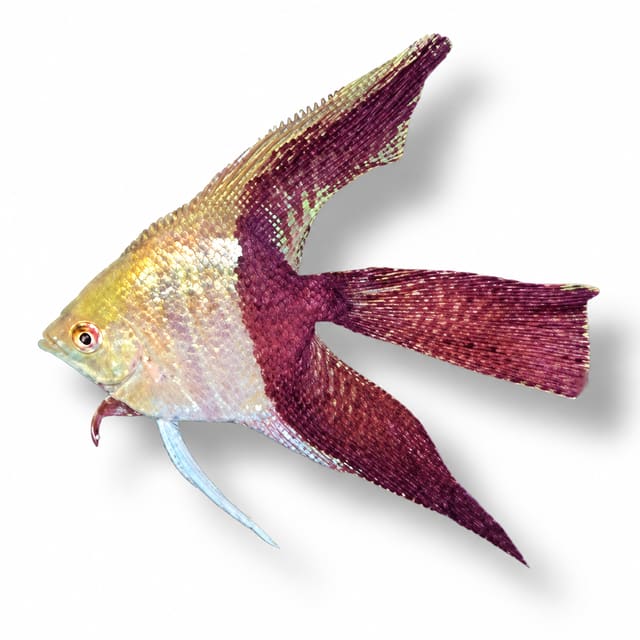
Bi-color Angelfish, l.f. (Pterophyllum scalare bicolor l.f.)
24–27°C · pH 6.5–7.4 · 200L
£19.99
Albino Diamond Angelfish (Pterophyllum scalare) is a tall-bodied South American cichlid for a mature, spacious aquarium. This offer supplies one live fish, normally around 3–3.5 cm at dispatch, without a sex guarantee. Plan for an adult around 15 cm long with much greater fin-tip height, stable 24–27 °C water, a compatible pair or carefully managed group, and companions too large to be swallowed and not prone to fin-nipping.
Adult size is the maximum length this species reaches at full maturity (scientific sources). The livestock you receive will be younger and smaller. Product-photo provenance and any image-specific limitations are stated on the listing.
Pterophyllum scalare
Save when buying multiple fish. Each quantity is one fish; sex and pair formation are not guaranteed unless the selected variant explicitly states them.
Albino Diamond Angelfish (Pterophyllum scalare) is a tall-bodied South American cichlid for a mature, spacious aquarium. This offer supplies one live fish, normally around 3–3.5 cm at dispatch, without a sex guarantee. Plan for an adult around 15 cm long with much greater fin-tip height, stable 24–27 °C water, a compatible pair or carefully managed group, and companions too large to be swallowed and not prone to fin-nipping.
Adult size is the maximum length this species reaches at full maturity (scientific sources). The livestock you receive will be younger and smaller. Product-photo provenance and any image-specific limitations are stated on the listing.
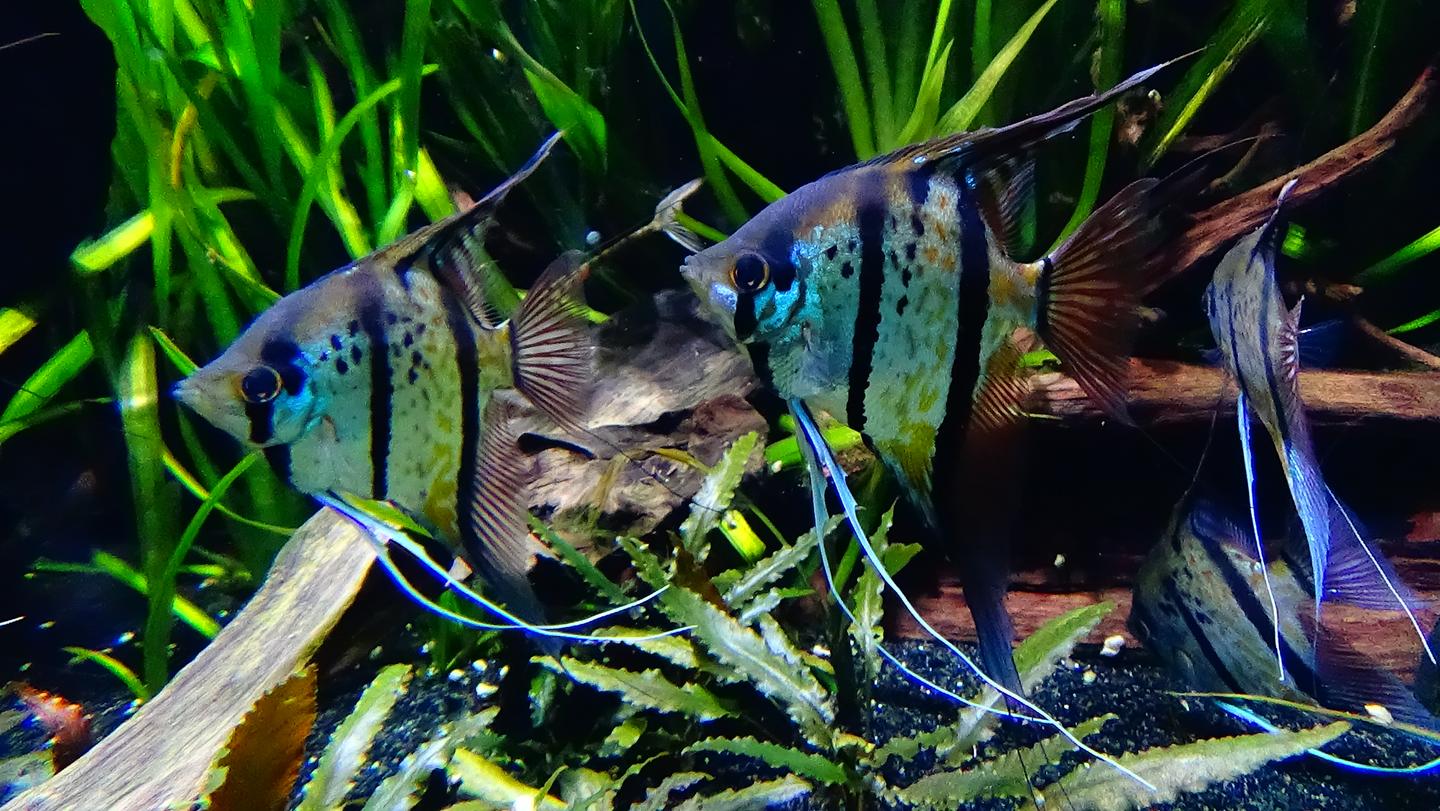
Freshwater angelfish are tall South American cichlids, not small community fish. OATA gives 120 litres as an industry floor for a compatible pair and says the aquarium must be sufficiently tall. We prefer planning around roughly 200 litres, a 100 × 40 cm footprint and about 50 cm height for an adult pair, with more space and an exit plan for a group.
Maintain these water conditions for optimal health and vibrant colors
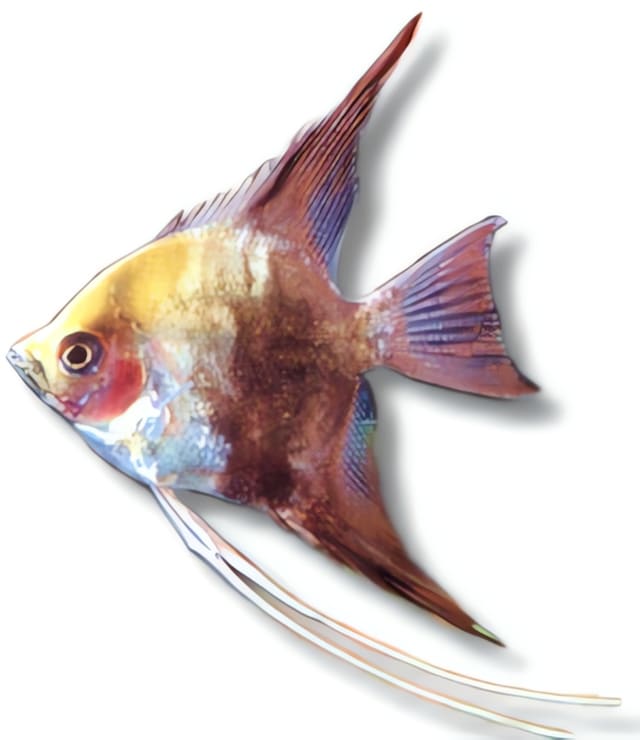
The Albino Diamond Angelfish is a domestic colour form of Pterophyllum scalare, the freshwater angelfish. Its pale gold-to-cream body, warm orange tones and red eye make it visually distinctive, but its space, water and social needs remain those of a tall South American cichlid. One purchase supplies one live fish. This grade is about 3–3.5 cm when supplied; that is a dispatch size, not an adult limit.
Adult planning matters from the beginning. A freshwater angelfish may reach around 15 cm in length and can stand roughly 20–25 cm tall once its extended dorsal and anal fins are included. A short aquarium can therefore be unsuitable even when it holds enough litres on paper. Tropical Fish Co’s conservative plan for an adult pair is roughly 200 litres, about a 100 × 40 cm footprint and around 50 cm of usable height. A group or community needs more room, visual structure and a practical way to separate fish if relationships deteriorate.
| Suits | Reconsider if |
|---|---|
| A mature, fully cycled aquarium with a tall water column | The aquarium was chosen for the small dispatch fish rather than adult height |
| A keeper comfortable testing water and watching social behaviour | You need a guaranteed peaceful centrepiece with no territorial phases |
| A compatible pair or a deliberately planned group with spare capacity | You intend to keep two random fish and assume they will form a pair |
| Calm, appropriately sized companions with overlapping water needs | The proposed community includes prey-sized fish or persistent fin-nippers |
Sex is guaranteed only when the selected option explicitly states male or female. This Pterophyllum scalare albino diamond listing has no sex-guaranteed option.
Gallery images have been digitally enhanced to improve image quality. Natural colour, pattern, size and maturity can vary between live animals.
Colour is the visible difference, not a separate care system. Pale pigment does not make this fish a dwarf, remove cichlid territorial behaviour or create a special water range. Build the aquarium around the accepted species, then enjoy the domestic form within that sound plan. The FishBase species record places P. scalare in Cichlidae and documents its Amazon-basin distribution; the species husbandry profile adds practical adult dimensions, water and social guidance.
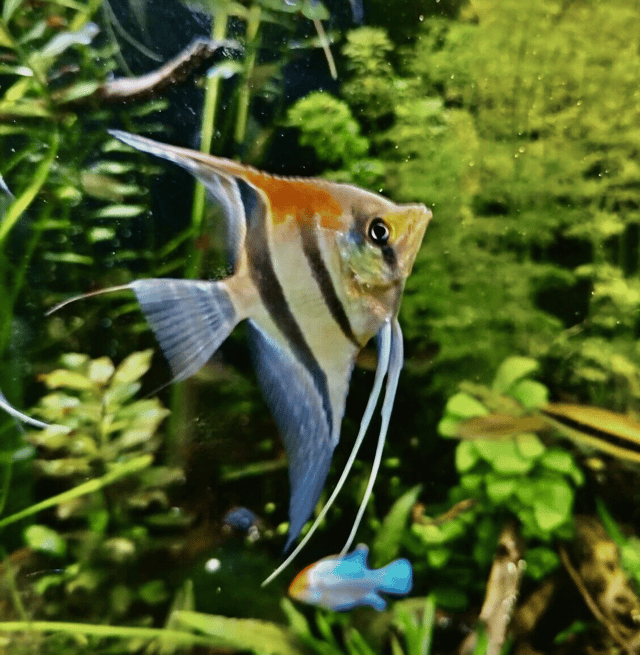
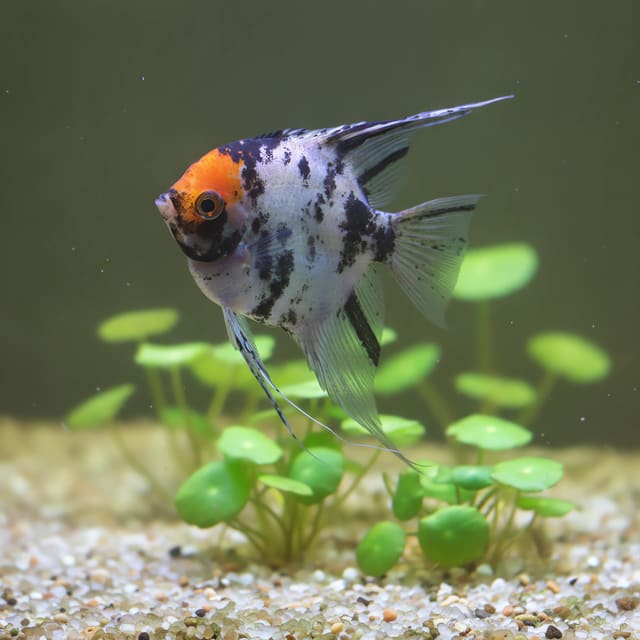
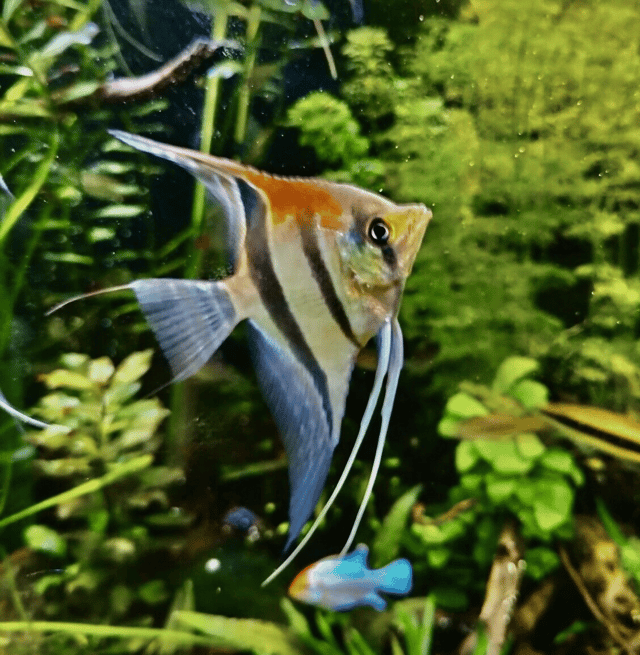
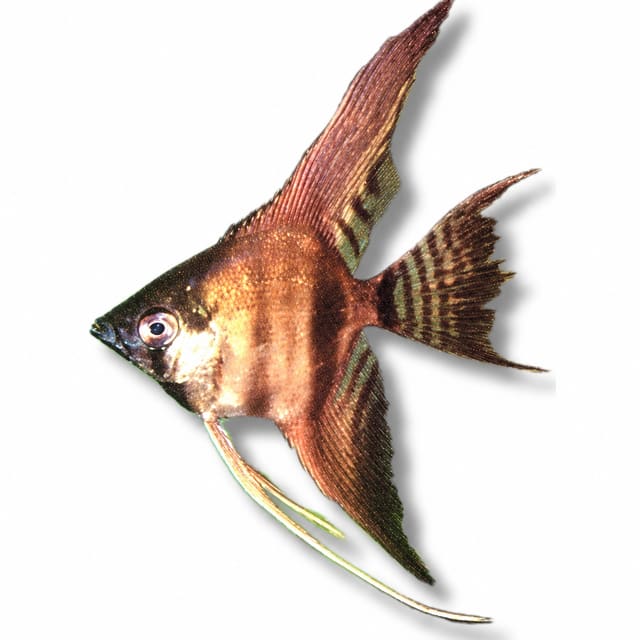
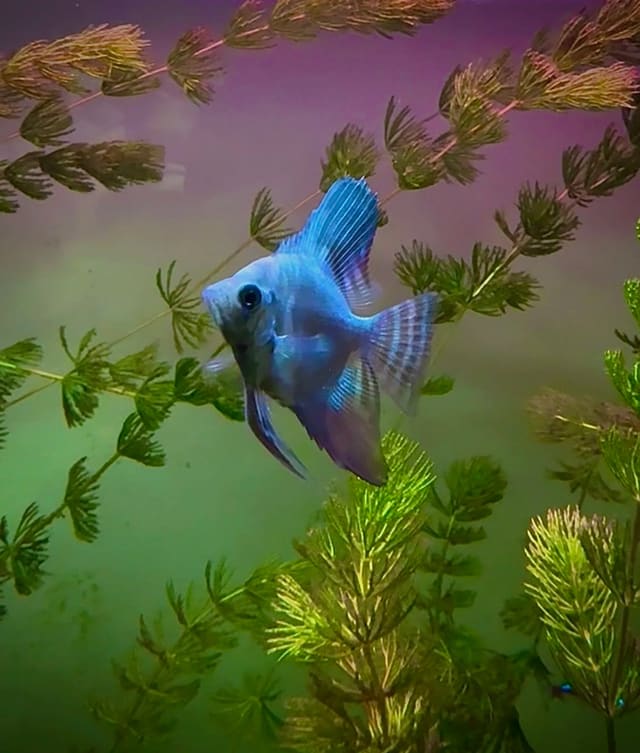
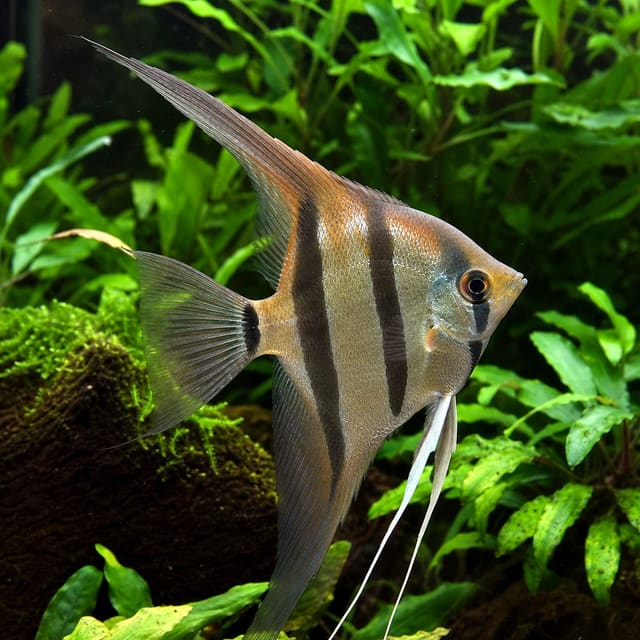
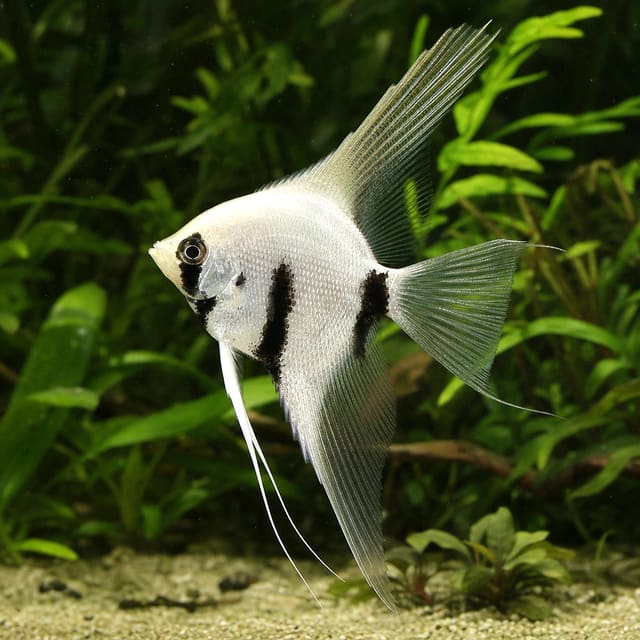
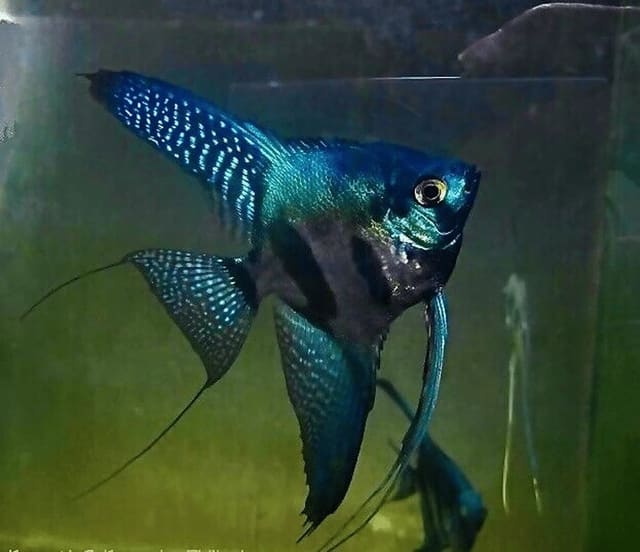
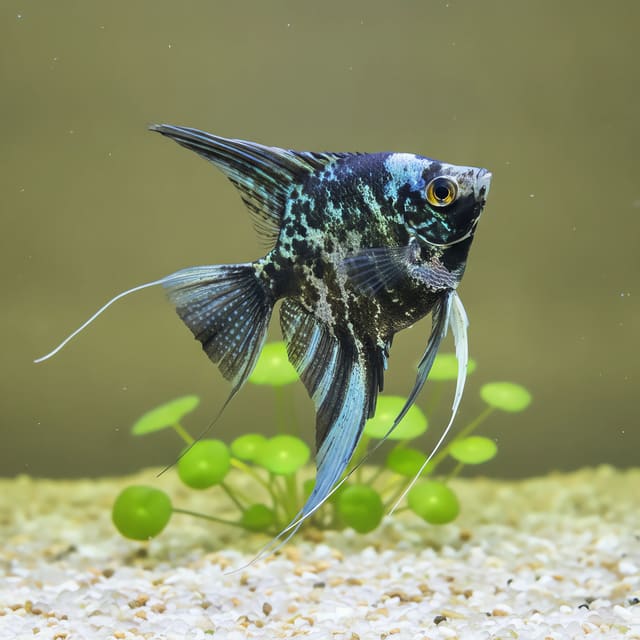
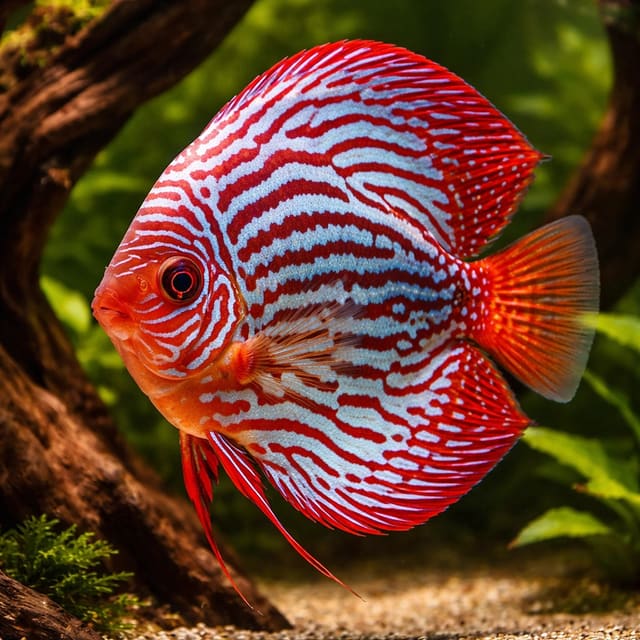
The photograph helps show the high-backed angelfish outline and warm pale colour, but it cannot promise an exact shade, fin extension, sex or maturity. Assess the live animal’s health by steady swimming, regular breathing, open fins, clear eyes and a consistent body profile. Natural variation is expected, and colour can look different under aquarium lighting, backgrounds and stress.
Choose this fish when you can provide stable routine water around 24–27 °C, pH 6.5–8.0 and roughly 5–12 dGH, alongside a mature biological filter and enough height for long fins. Treat these figures as a practical aquarium target, not a reason to chase numbers abruptly. Match the fish’s holding water where possible, make changes gradually and keep ammonia and nitrite at zero.
Angelfish are social, yet their relationships are not simple. A compatible pair can work; a juvenile group may allow pair formation; adults can also become territorial, especially around spawning. Space, broken lines of view, several feeding positions and a separation plan are more useful than assuming one fixed group number makes every aquarium safe. For deeper species guidance, read the freshwater angelfish care guide. If the welfare plan fits and you want to compare other forms, browse the angelfish collection without treating colour as a shortcut to temperament or hardiness.
If those answers are sound, the albino diamond form can be a striking focal fish. Its pale colour makes subtle changes easy to notice, while the tall body rewards an aquarium designed vertically as well as horizontally. The best purchase decision joins that appearance to a mature filter, measured water and enough space for normal cichlid behaviour.
The most common planning mistake is to size the aquarium around the juvenile that arrives. The 3–3.5 cm supplier grade is useful for understanding the fish you receive, but it says nothing about the finished body and fins. Species references describe about 15 cm adult length, while long dorsal and anal fins can take the total height towards 20–25 cm. Give the fish a tall, broad swimming area where it can turn without brushing wood, rock or the substrate.
A nominal volume is only one part of that plan. Tropical Fish Co prefers roughly 200 litres, a footprint near 100 × 40 cm and around 50 cm usable height for a compatible adult pair. This is a conservative store policy based on species-focused husbandry and the UK trade-body floor; it is not a promise that every tank sold as 200 litres has the same useful dimensions. A narrow column, deep substrate, bulky internal filter or hardscape reaching into the turning area can reduce usable room.
For a group, add space for several territories and feeding positions rather than applying a simple litres-per-fish calculation. Juveniles may appear harmonious and then form pairs as they mature. A dominant fish can control the centre while another is pushed behind a filter or into a corner. If one fish cannot feed, holds its fins closed or is chased whenever it leaves cover, the layout and social plan need action. Keep a mature spare aquarium, divider-ready alternative or realistic rehoming route before conflict becomes urgent.
A working biological filter converts toxic ammonia into nitrite and then nitrate. The aquarium is ready when testing, rather than the number of days elapsed, shows that the filter can process the expected waste. Before adding an angelfish, confirm zero detectable ammonia and nitrite, a stable temperature and a nitrate level controlled by the maintenance routine. If this is a first setup, use the first tropical aquarium guide to plan maturation before livestock is introduced.
Choose a filter that gives reliable biological capacity and oxygen exchange without turning the whole aquarium into a fast current. Angelfish appreciate calmer areas, yet calm water must remain clean and oxygenated. Aim the return so the surface moves, create shelter away from the strongest flow and cover an intake that could catch long ventral or anal fins. Check the filter after plant trimming or maintenance because leaves and debris can reduce flow.
Never judge filtration by clear water alone. Ammonia and nitrite are invisible, and a visually clean aquarium can still be unsafe. Test after adding fish, after an unexpected feeding increase, whenever breathing or behaviour changes, and following any disruption to the filter. If ammonia or nitrite is detected, treat that as an urgent water-quality problem and obtain competent advice rather than trying to correct pH at the same time.
Tropical Fish Co recommends 24–27 °C, pH 6.5–8.0 and about 5–12 dGH for routine care of domestic angelfish. Keep conditions stable, measure source water and make elective changes gradually rather than moving a settled fish between extremes. Recheck temperature and pH after maintenance and during seasonal weather changes so gradual drift is caught early.
| Measure | Practical target |
|---|---|
| Temperature | 24–27 °C for routine care |
| pH | 6.5–8.0, kept stable |
| General hardness | About 5–12 dGH |
| Ammonia | Zero detectable |
| Nitrite | Zero detectable |
Measure the tap or prepared water before changing chemistry. GH describes dissolved calcium and magnesium; KH helps resist sudden pH change; pH is the acidity or alkalinity at the time of testing. A copied mixture of reverse-osmosis and tap water cannot account for local water, remineralising products or the existing aquarium. The water chemistry guide explains the measurements, and the water parameter matcher can help compare measured conditions with the stated range.
Use a thermometer as well as the heater dial. Position the heater where water circulation distributes warmth and protect it from direct contact with the fish. During hot weather, watch the actual aquarium temperature and surface movement. Warm water holds less oxygen, so a fish breathing rapidly needs immediate checks of temperature, oxygenation, ammonia and nitrite rather than an automatic increase in heat.
Combine open turning room with vertical structure. Tall plants, upright wood and carefully positioned decor can give a fish choices and interrupt repeated chasing. Leave clear routes between features; an angelfish should not have to fold its fins through a narrow gap. Smooth surfaces are safer around extended fins than sharp stone or stiff artificial foliage. Secure heavy decor so digging or maintenance cannot make it shift.
Dense planting can create shelter, but avoid filling every level. Broad leaves and upright surfaces are natural points of interest and may later become spawning sites. Keep enough access to siphon waste, observe every fish and retrieve uneaten food. A dark rear background can make the pale fish easy to see without relying on intense lighting. Provide a regular day-and-night cycle suitable for the plants and companions.
A lid is sensible. It reduces the risk of a startled fish leaving the aquarium and slows rapid temperature change. Ensure gaps around pipes and cables are small enough for the animals present while maintaining ventilation and safe equipment use. If a fish does leave the aquarium, return it promptly with wet hands or a wet soft net, minimise handling, check breathing and balance, and seek specialist help if recovery is abnormal.
OATA’s broad American-cichlid sheet suggests regular testing and a partial water change of about 25% at least once every week as a starting routine. Actual frequency depends on stocking, feeding, plant growth, nitrate trend and filter performance. Treat that percentage as a sensible starting point, then use results and observation to refine the routine. Dechlorinate new tap water and bring it close to the aquarium temperature before it enters.
Remove waste from accessible substrate without dismantling every territory at once. Inspect the filter for blocked intakes and reduced output. When filter media needs cleaning, do not run it under the tap. Rinse it lightly in removed aquarium water because chlorine or chloramine can damage the useful bacterial population. Preserve the stable biological function while removing enough debris to restore flow.
Keep a simple log of temperature, ammonia, nitrite, nitrate, pH when relevant, water-change date and unusual behaviour. A trend is often more informative than one isolated reading. If nitrate rises faster than usual, look at feeding, hidden waste, plant decay and filter flow before merely increasing the water-change volume. If pH shifts, compare KH and the source water before adding a chemical buffer.
Freshwater angelfish are omnivorous with a strong interest in animal foods. Use a nutritionally complete cichlid pellet, granule or suitable flake as the staple, chosen in a size the fish can swallow. Add appropriate frozen or freeze-dried foods such as brine shrimp, daphnia or bloodworm for variety. A controlled feeding study shows that feed type affects growth and reproductive performance, but it does not establish one universal menu for every home aquarium.
Offer modest portions and watch each fish eat. In a group, a confident animal may take food at the surface while a subordinate fish waits behind cover. Spread food across more than one area and vary sinking speed when necessary. Remove obvious leftovers before they decay. A rounded, steadily maintained body profile is more useful than feeding until the fish loses interest.
Bloodworm or another attractive food is a supplement rather than the whole diet. Variety does not mean adding many foods in one sitting. Rotate suitable foods across the week, keep the staple nutritionally complete and adjust quantity to temperature, growth, condition and the number of fish. A sudden loss of appetite, difficulty swallowing or spitting food repeatedly warrants water tests and closer health observation.
Confirm that the aquarium has spare biological and physical capacity before adding any animal. Test water, feed resident fish normally and observe existing territories. Rearranging a small amount of decor can reduce ownership of one spot, but preserve enough stable cover that shy fish are not suddenly exposed. Add the newcomer when you can monitor the aquarium for several hours.
Provide more than one route through the middle water and several places where a fish can leave another’s view. Offer food in separate areas during the first days. Brief displays can occur, but continuous pursuit, bitten fins, blocked feeding or rapid breathing require intervention. Do not wait for severe injury to prove the match has failed.
Keep a safe separation method ready. Moving the aggressor can sometimes help, while moving the victim may be necessary for recovery; the right choice depends on the aquarium and fish. Any temporary tank must already be heated, filtered and large enough. A net box or small uncycled container is not a long-term social solution.
Prepare the aquarium, tests and equipment before the parcel arrives. Be present on the confirmed day. Before opening anything, start one continuous unboxing video showing the sealed parcel, the opening and the fish still in the sealed bag. This preserves the evidence required if a Live Arrival Guarantee claim is necessary. Inspect the fish and contact Tropical Fish Co on the same day with the order number if anything is wrong.
The current packing, attendance and claim details are kept on the delivery and Live Arrival Guarantee page. Use that page for the exact policy rather than relying on an old saved instruction.
A settled angelfish should show controlled swimming, regular breathing, open fins, clear eyes, a consistent body profile and reliable feeding. Pale colour immediately after travel can reflect stress, while persistent darkening, clamped fins, surface breathing, isolation, wounds, white spots or an abrupt appetite change require attention. These signs tell you to investigate; they do not name one disease by themselves.
Begin with measured conditions: ammonia, nitrite, nitrate, temperature and pH where relevant. Compare them with the aquarium’s normal results and with the water the fish came from. Correct an ammonia or nitrite emergency promptly with suitable water-quality action and qualified advice. Avoid stacking several treatments or large chemistry changes onto a fish already under stress.
Photograph visible signs, record when they began and note which fish are affected. A separate setup is helpful only when it is mature, heated, filtered and appropriate; moving a fish into an unstable container can compound the problem. Contact an experienced aquatic retailer or fish vet for diagnosis. Use only a lawful product labelled for the species and system, following its instructions or veterinary direction.
Angelfish may clean a broad leaf, slate or other vertical surface before laying adhesive eggs. Both parents can guard eggs and young, although results vary. Pair formation can increase territorial behaviour dramatically, so breeding activity in a community aquarium needs more space and a way to protect other fish. A dedicated mature setup is more controllable than hoping the rest of the community keeps its distance.
Juvenile sex is difficult to determine reliably from body shape, forehead profile, fin angle or colour. A breeding papilla can provide information during active spawning, but behaviour and appearance outside that context are not dependable guarantees. This listing therefore supplies the trade form without a promised male or female. Choose the fish for its care fit rather than attempting to infer sex from the gallery.
Travel, a new aquarium and unfamiliar companions can all change behaviour temporarily. On the first day, concentrate on breathing, balance, fin position and whether the fish can occupy open water without being chased. Keep feeding modest and remove leftovers. A fish that hides briefly may simply be settling, while a fish that gasps, rolls, cannot hold position or is attacked continuously needs prompt action.
During the next two days, confirm that the fish accepts an appropriate food and can reach it. Spread small amounts across more than one feeding point if other fish rush the surface. Recheck ammonia and nitrite because additional livestock increases the work required from the biological filter. The RSPCA aquarium guidance explains why a properly established and maintained filter is fundamental even when the water looks clear.
| Observe | Useful question |
|---|---|
| Breathing | Is it regular at rest, without prolonged surface gasping? |
| Swimming | Can the fish turn, hold position and move without listing? |
| Fins and skin | Are fins open and intact, with no new spots, growths or wounds? |
| Feeding | Does the fish take a suitable food and keep a steady body profile? |
| Social access | Can it leave cover, feed and rest without relentless pursuit? |
Compare the fish at a similar time and under similar lighting. The pale albino diamond colour can appear warmer or cooler against different backgrounds, and stress may alter how strongly colour is displayed. Colour alone is therefore a poor diagnosis. A pattern of rapid breathing, clamped fins, reduced appetite and isolation is much more important than one photograph looking paler than expected.
The RSPCA fish-health guidance recommends watching changes in swimming, breathing, appearance, condition and feeding. Record when a change begins, which fish are affected and the water-test results. This gives an aquatic retailer or fish vet useful context and reduces the temptation to select a treatment from one vague sign.
The broad OATA American-cichlid care sheet supports regular testing, measured feeding and consistent maintenance. Use those habits while keeping the species-specific aquarium target in view. If nitrate rises faster after the new fish arrives, look at total feeding, trapped waste and filter flow. If pH or hardness changes, compare the source water and recent maintenance before adding a corrective chemical.
Food variety should add nutrition without adding uncontrolled waste. A controlled angelfish feeding study shows that feed composition affects growth and reproductive performance, but a home keeper still needs to judge portion size from the aquarium. Keep a complete staple at the centre of the diet, use suitable frozen or freeze-dried foods for variety, and ensure the least confident fish gets access.
Do not wait for serious injury before responding to continual pursuit. Repeatedly torn fins, one fish pinned behind equipment, missed meals or a territory that blocks half the aquarium show that the present arrangement is failing. Add or reposition safe vertical structure only if it preserves swimming room, spread feeding locations and use the prepared separation plan when pressure continues.
Review the adult plan as the fish grows. A layout that works at dispatch size can become cramped long before the body reaches its final length, especially as dorsal and anal fins extend. Remove sharp or obstructive decor, preserve a tall turning corridor and reassess companions by their adult behaviour. Good long-term care is a series of measured adjustments, not a one-time tank-size decision.
Freshwater angelfish are often calm enough for a carefully chosen community, yet they remain cichlids. Individuals can defend food, a preferred vertical surface or a breeding territory. Colour form does not remove that behaviour: an Albino Diamond Angelfish needs the same social planning as another domestic Pterophyllum scalare. Build the community around adult size and behaviour rather than the gentle appearance of a juvenile.
A compatible pair is a relationship, not simply two fish placed together. Juveniles raised in a group may choose partners as they mature, while unrelated adults can reject each other. In a group, watch which fish occupy the best feeding and resting sites. Repeated chasing, a fish confined to one corner, damaged fins or unequal body condition mean the arrangement needs more than patience.
| Check | Why it matters |
|---|---|
| Adult body size | Very small fish, fry and shrimp may be treated as prey even when the angelfish was raised peacefully. |
| Fin behaviour | Persistent nippers can damage the extended fins and keep the angelfish under chronic stress. |
| Territory | Another territorial cichlid may compete for the same middle-water and vertical surfaces. |
| Water overlap | A calm animal is still unsuitable when its temperature or chemistry needs conflict. |
| Feeding access | Fast, boisterous feeders can leave an angelfish or subordinate group member underfed. |
Appropriately sized, calmer shoaling fish are the kind of companions OATA identifies for a robust community with angelfish. That is a starting category rather than a universal safe list. Check the exact species, adult length, group requirement, swimming level and temperature. Observe the actual fish after introduction because individual behaviour can overturn a paper match.
Bottom-oriented fish are sometimes considered because they use a different level, but floor space, water needs and temperament still matter. A pleco or catfish is not automatically neutral: adult size, nocturnal activity and competition around food must be considered. Introduce only after checking the exact species rather than relying on a broad group name.
OATA advises a pair or group at minimum and notes that a singleton may become stressed. FishBase records group keeping, while specialist guidance describes small groups and the likelihood of disputes. These points support social housing, but they do not turn five or six into a guarantee. Available space, fish age, sex, pair formation and individual temperament all affect the result.
For a keeper starting with juveniles, a planned group of five or more can give pair formation a better chance, provided the aquarium is much larger than the pair minimum and there is an exit plan for surplus or incompatible adults. A keeper with a known compatible pair can focus on adequate territory and community impact. In either case, regular observation of feeding, fin condition and resting position is essential.
Plan for around 15 cm in adult length and roughly 20–25 cm total height when the extended fins are included. Adult length and fin-tip height describe different dimensions, so choose a tall aquarium with generous turning room and allow for individual domestic-strain variation.
Tropical Fish Co prefers roughly 200 litres, about a 100 × 40 cm footprint and around 50 cm of usable height for a compatible adult pair. A group or mixed community needs more space. Tank shape, hardscape and territory matter alongside litres.
A compatible pair can work, while a deliberately planned juvenile group of five or more may allow pair formation. Two random fish are not automatically a pair, and an adult group needs substantially more room plus a separation or rehoming plan.
It suits a prepared keeper who can maintain a mature, tall aquarium, test water and respond to cichlid social behaviour. It is less suitable as a first fish in a newly filled tank or for someone who needs guaranteed community peace.
Use a nutritionally complete cichlid pellet, granule or suitable flake as the staple, with appropriate frozen or freeze-dried foods for variety. Feed modest portions, make sure subordinate fish eat and remove obvious leftovers.
For routine care, aim for 24–27 °C and pH 6.5–8.0, with roughly 5–12 dGH. Match the fish’s holding water where possible and make elective changes gradually rather than moving between the edges of wider published ranges.
It is a cichlid and can become territorial, especially when a pair forms or breeds. Angelfish are more often at risk from persistent fin-nippers than known as routine fin-nippers themselves, but every community needs observation and a separation plan.
Appropriately sized, calmer shoaling fish with overlapping water needs can be considered. Avoid prey-sized fish, shrimp or fry where predation is unacceptable, persistent fin-nippers and highly aggressive territorial competitors. Check each exact species rather than relying on a generic community label.
Tropical Fish Co hand-packs live fish in oxygenated bags inside an insulated box and uses a licensed live-animal courier. Be present on the confirmed day. Before opening the parcel, start one continuous unboxing video showing the sealed parcel, the opening and the fish still in the sealed bag; contact the team the same day with your order number if anything is wrong.
The identity, size and husbandry guidance above draws on the following public resources. Aquarium targets are kept distinct from wider environmental records, and the retailer’s 200-litre adult-pair plan is presented as a conservative care policy.
No reviews for this item yet. Bought one? Honest reviews only, good or bad.
What customers say about ordering from us
Easy website plenty of info on fish your buying great to pick a time slot
TRACEY DURRANT · 7 Oct 2026
Got some lovely fish thank you
Kevin Mackie · 7 Oct 2026
Reviews of our shop, collected by Judge.me, an independent third-party review collector. Newest first.