Moderate
California Angelfish (Pterophyllum scalare)
24–27°C · pH 6.5–8
£9.89
Photo coming soon
The size, price and care details on this page are for this listing.
L Mix Angelfish (Pterophyllum scalare) is an intermediate-care South American cichlid supplied as one unsexed fish in the supplier's 5.5–6 cm L grade. Plan for a tall, mature aquarium, social management and calm companions that cannot be swallowed.
Adult size is the maximum length this species reaches at full maturity (scientific sources). The livestock you receive will be younger and smaller. Product-photo provenance and any image-specific limitations are stated on the listing.
Pterophyllum scalare
Save when buying multiple fish. Each quantity is one fish; sex and pair formation are not guaranteed unless the selected variant explicitly states them.
L Mix Angelfish (Pterophyllum scalare) is an intermediate-care South American cichlid supplied as one unsexed fish in the supplier's 5.5–6 cm L grade. Plan for a tall, mature aquarium, social management and calm companions that cannot be swallowed.
Adult size is the maximum length this species reaches at full maturity (scientific sources). The livestock you receive will be younger and smaller. Product-photo provenance and any image-specific limitations are stated on the listing.
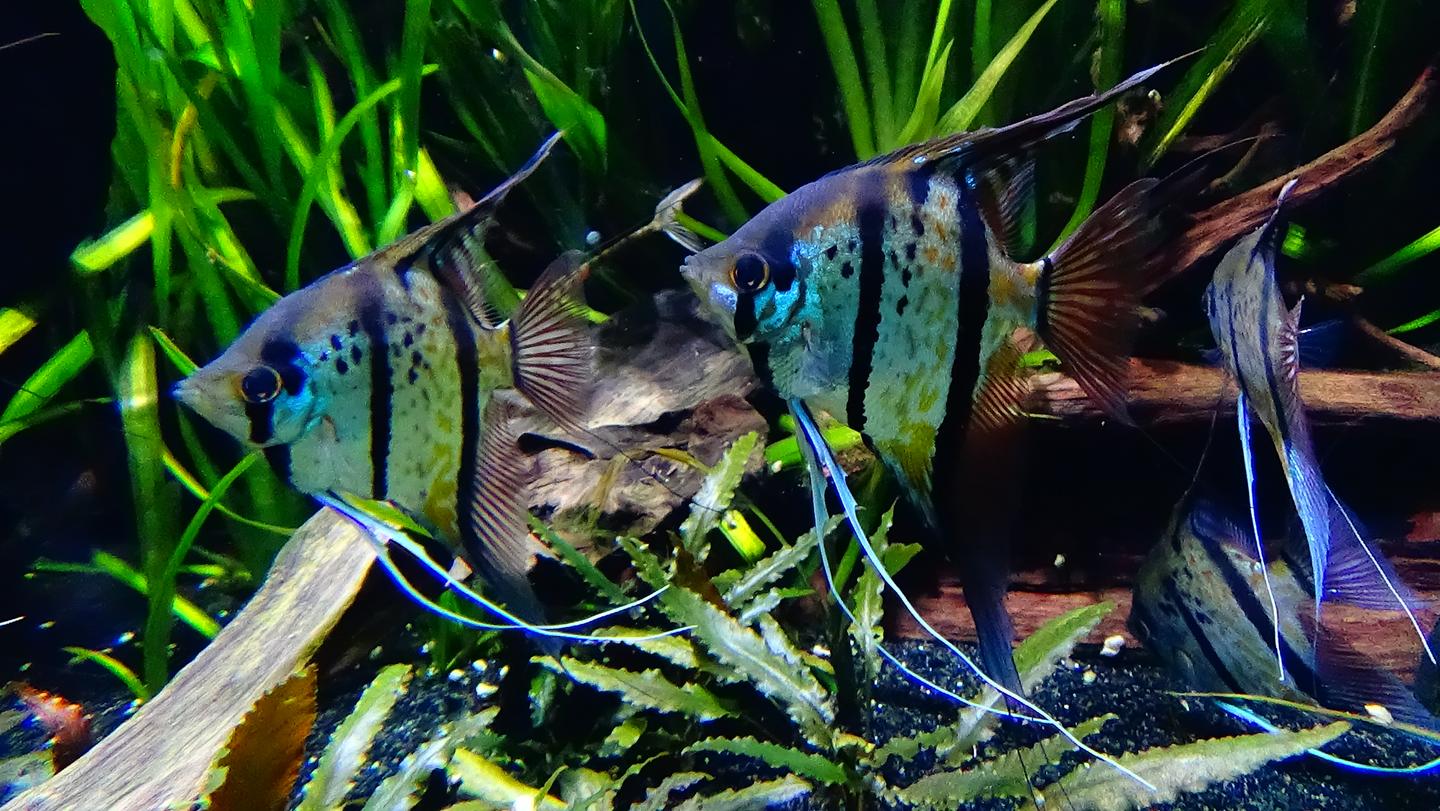
Freshwater angelfish are tall South American cichlids, not small community fish. OATA gives 120 litres as an industry floor for a compatible pair and says the aquarium must be sufficiently tall. We prefer planning around roughly 200 litres, a 100 × 40 cm footprint and about 50 cm height for an adult pair, with more space and an exit plan for a group.
Maintain these water conditions for optimal health and vibrant colors
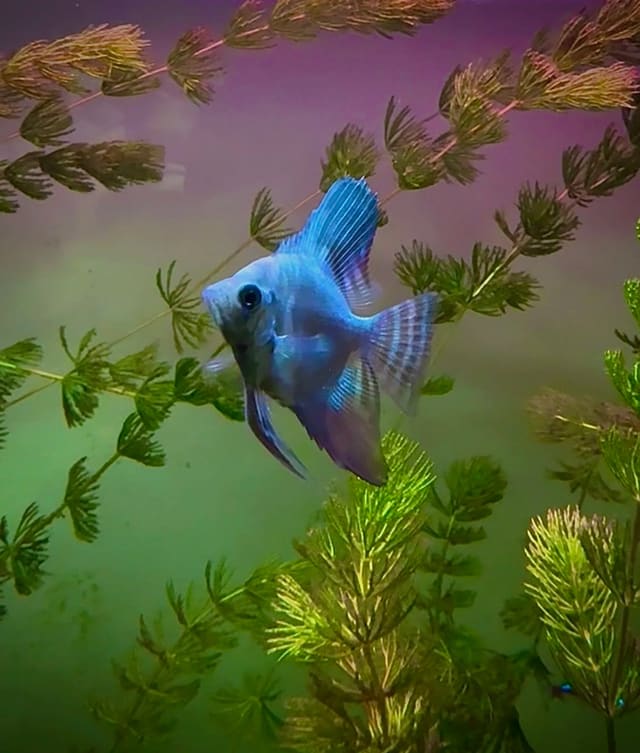
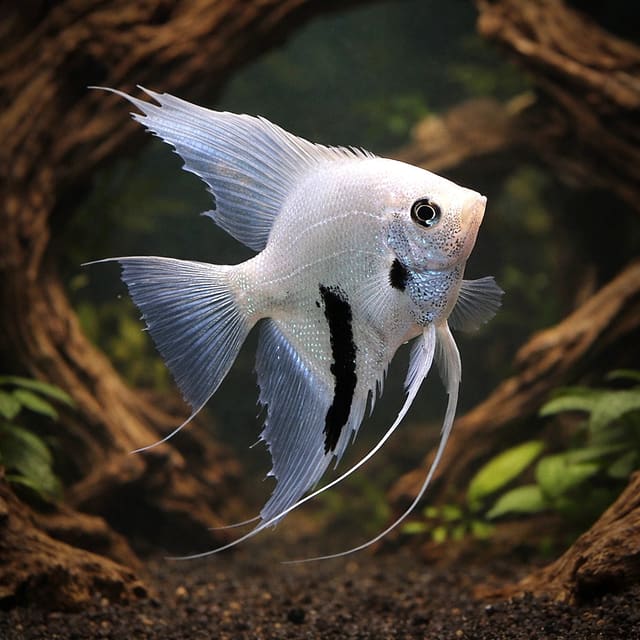
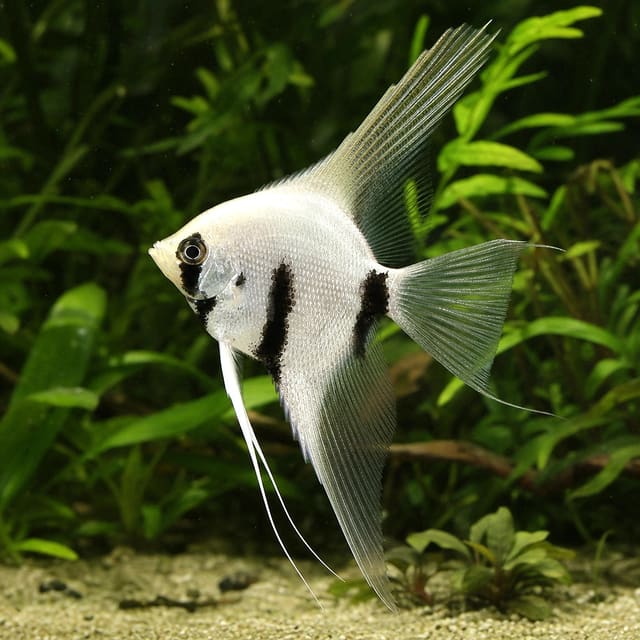
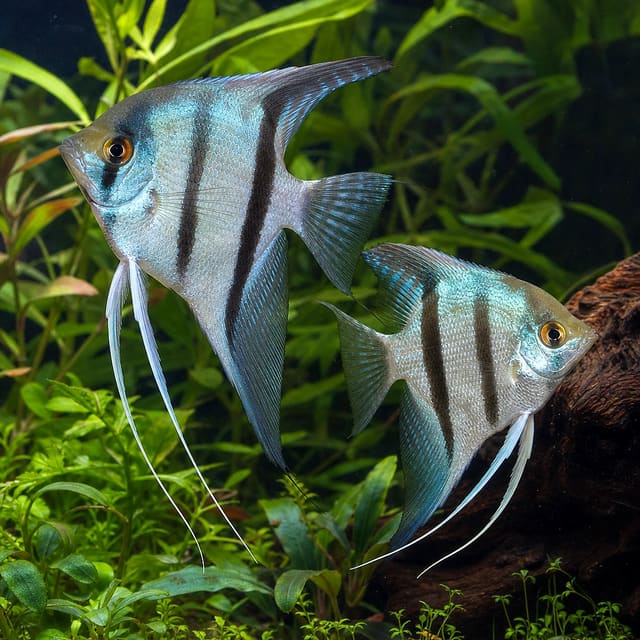
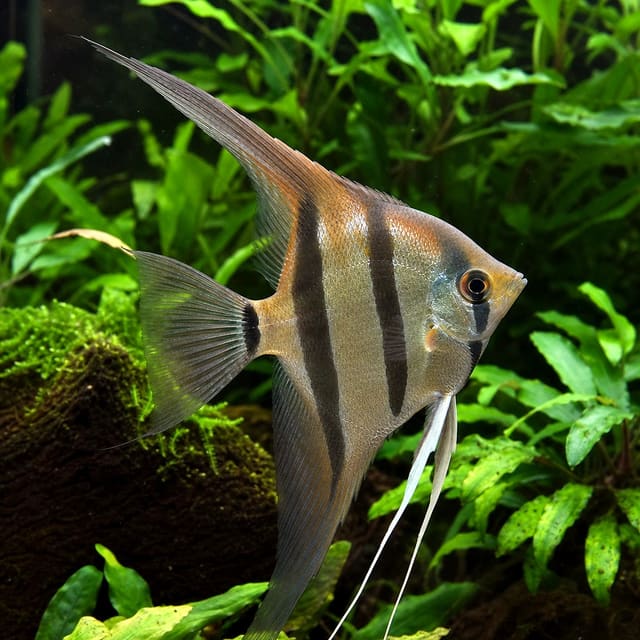
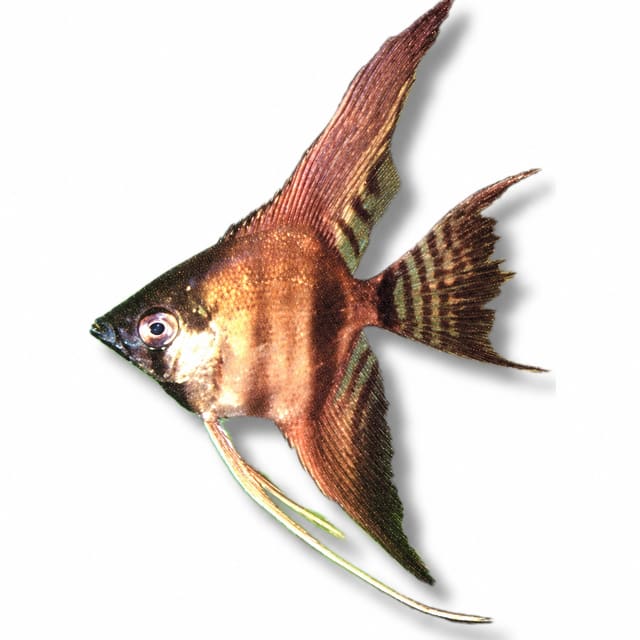
L Mix Angelfish are freshwater angelfish of the species Pterophyllum scalare. The word “mix” describes the assortment offered under this trade listing; it does not create a separate species. The appeal is the classic angelfish outline: a laterally compressed, high-backed body, long dorsal and anal fins and trailing pelvic filaments. That shape makes the fish visually imposing without making it a fast, boisterous swimmer.
One purchase supplies one live fish in the documented L grade of 5.5–6 cm. That is a dispatch grade rather than an adult measurement. Allow for substantial growth and, just as importantly, for the height of the extended fins when judging an aquarium.
| Suits | A keeper with a mature, tall aquarium who is comfortable managing cichlid behaviour and checking water regularly |
|---|---|
| Sold unit | One unsexed L-grade angelfish, 5.5–6 cm at dispatch |
| Adult planning | FishBase records 15 cm total length; Seriously Fish gives 150 mm standard length |
| Social plan | A compatible pair or a managed group with room, cover and a separation plan |
| Routine store range | 24–27°C, pH 6.5–8.0 and 5–12 dGH |
| Care assessment | Intermediate |
The care assessment reflects the whole job rather than a claim that the fish is fragile. Angelfish accept familiar aquarium foods and can settle well in a suitable community, but the adult footprint, tall body, social tension and risk to tiny companions demand more judgement than a simple beginner fish.
The dispatch figure and adult records answer different questions. The 5.5–6 cm grade tells you the approximate size sent under this listing. FishBase reports a 15 cm maximum in total length, measured to the end of the tail. Seriously Fish gives 150 mm standard length, which excludes the tail. Those labels must stay attached because changing one convention into an unqualified maximum would make the fish seem more precisely measured than the records support.
For aquarium planning, length alone is not enough. An adult angelfish carries much of its visual and physical presence vertically. A low aquarium can have a respectable volume while still leaving poor clearance above and below the fins. The reviewed freshwater angelfish care guide therefore plans around roughly 200 litres, a 100 × 40 cm footprint and about 50 cm of usable height for an adult pair. A group or community needs more room and a practical response if two fish form a pair and begin defending an area.
Sex is guaranteed only when the selected option explicitly states male or female. This L Mix Angelfish listing has no sex-guaranteed option. Do not plan a breeding pair from one or two randomly selected fish, and do not infer sex from colour or the shape shown in a gallery image.
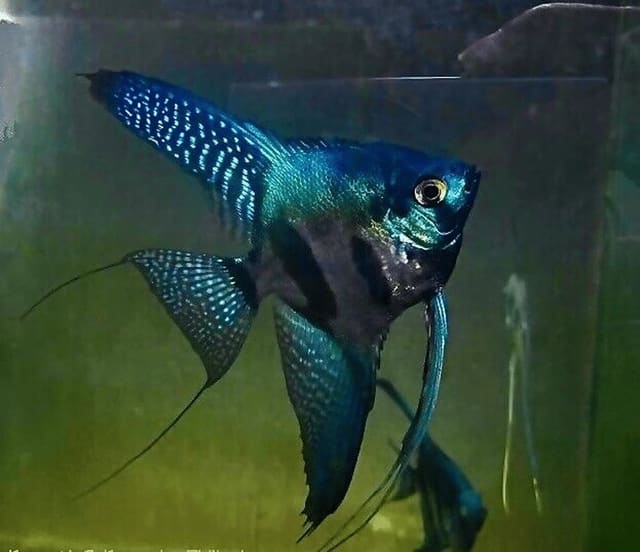
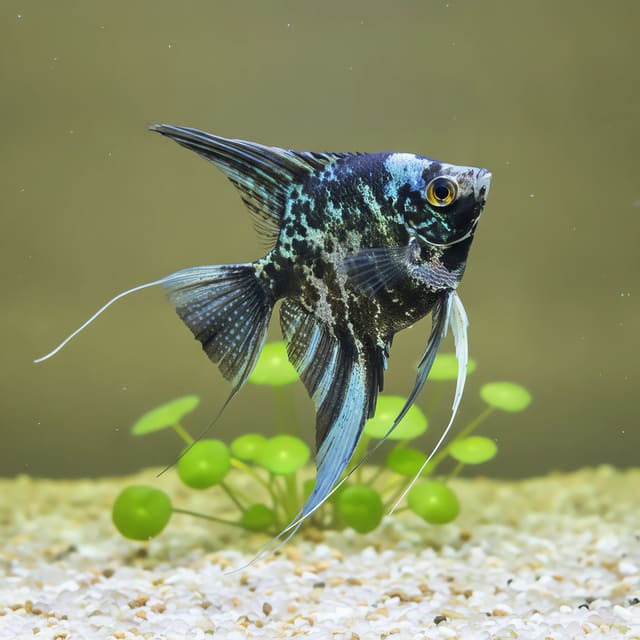
Gallery images have been digitally enhanced to improve image quality. Natural colour, pattern, size and maturity can vary between live animals. The listing is for the mixed angelfish form, so individual pattern and shade can vary; the practical constant is the species-level care and the dispatch grade.
Start with the aquarium's dimensions, not its litre label. Seriously Fish describes 100 × 40 × 50 cm, about 200 litres, as the smallest aquarium it would consider for this species. The store's reviewed guide uses the same approximate adult-pair plan and treats OATA's 120-litre figure as a broad industry floor for a compatible pair of smaller American cichlids, not as a universal angelfish promise.
A tall tank lets the dorsal, anal and pelvic fins extend without the fish constantly working around the substrate or surface. The 100 cm length provides a useful route for retreat, while the 40 cm front-to-back dimension creates turning space and room to separate planting from open swimming water. If the aquarium is intended for a group, enlarge the footprint and create several visual zones rather than simply adding more fish to the same floor area.
The species profile describes densely vegetated swamps and flooded ground in the wild and recommends a well-planted aquarium with gentle flow. That does not mean reproducing a wild floodplain literally. It means translating shelter, shaded margins and calmer water into a maintainable aquarium. Healthy plants can contribute cover, but they never replace filtration, testing or water changes.
If this is a new setup, follow the first tropical aquarium guide before livestock is added. The biological filter must be established and able to process waste; a tank that merely looks clear is not necessarily mature.
The store's routine planning range is 24–27°C, pH 6.5–8.0 and 5–12 dGH. It is a deliberate overlap of FishBase's environmental record, the species-level Seriously Fish profile and broad OATA guidance. It should be used as a stable aquarium target, not as permission to move a fish abruptly from one end of a range to the other.
Test the water you actually have. The water chemistry guide explains why pH, hardness, ammonia, nitrite and nitrate describe different parts of the system. If you already keep compatible fish, compare their needs with the planned angelfish range before changing anything. The water parameter matcher is useful for that comparison, but measured results still need interpretation in the context of the whole aquarium.
| Temperature | 24–27°C for routine store planning |
|---|---|
| pH | 6.5–8.0 within the store's reviewed overlap |
| General hardness | 5–12 dGH within the same scoped overlap |
| Ammonia | Zero mg/l |
| Nitrite | Zero mg/l |
| Nitrate | Control through stocking, feeding, plant growth where present and regular maintenance |
A filter is essential because fish release ammonia, which is toxic. The RSPCA explains that a working biological filter supports bacteria that convert ammonia to nitrite and then nitrate. Choose filtration for the real stocked volume and waste load, not simply the empty-tank label on a box. Maintain good gas exchange while avoiding a jet that forces these high-bodied fish to fight the current.
Consistency is especially important during water changes. Treat replacement tap water for chlorine or chloramine, bring it reasonably close to the aquarium temperature and avoid large, unnecessary swings in chemistry. OATA strongly recommends a 25% partial water change at least once each week for American cichlids, with regular testing. The actual routine may need adjustment to the aquarium's nitrate trend, stocking and feeding, but a measured schedule is better than waiting for water to look dirty.
Freshwater angelfish are omnivorous. FishBase describes wild adults taking small crustaceans, aquatic insects and other benthic invertebrates, while Seriously Fish notes that aquarium fish accept pellet or flake foods and relish live or frozen items. A useful home routine is therefore a complete, appropriately sized dried food as the staple, supported by suitable frozen or freeze-dried variety.
Choose food that can be taken comfortably by the supplied fish and watch it eat. Long-finned, deliberate fish can lose meals to frantic surface feeders even when enough food enters the tank. Spread small portions across more than one point if companions crowd the first feeding area. Remove uneaten food rather than allowing it to break down, because excess food becomes a water-quality problem before it becomes nutrition.
The controlled angelfish feeding study cited by the store guide supports the value of considering feed type, but it does not create a universal household schedule. Aquarium temperature, fish size, the energy density of the food and the number of competitors all alter what an appropriate portion looks like. Regular observation provides more useful feedback than a rigid number of pinches.
A healthy fish should approach food predictably and maintain a full but not swollen profile. A sudden loss of appetite, abnormal posture or rapid breathing calls for a water test and close observation before more food is offered. Correcting an ammonia, nitrite or temperature problem matters more than trying a succession of treats.
Angelfish are social cichlids, and their needs change as they mature. OATA says they should be kept as a pair or group at minimum and warns that a singleton may become stressed. Seriously Fish describes them as generally peaceful but notes that they can squabble with their own kind. The store guide brings those points together: a genuine compatible pair is different from two fish placed together at random, while a juvenile group can produce pairs and changing territorial pressure.
If you choose a group, provide enough footprint for adults, multiple sheltered areas and a realistic way to separate or rehome fish. More individuals can distribute attention in a spacious, well-planned aquarium, but numbers never compensate for crowding. Watch whether one fish is excluded from food, held in a corner or repeatedly chased away from cover. Those are management signals, not simply “personality”.
Sex cannot be reliably promised from this offer, and the cited profile says sexual differences are difficult to see outside spawning. Behaviour can suggest what is happening, but it does not turn an unsexed sale into a guaranteed pair. Keep the welfare plan independent of breeding hopes.
Rearranging some movable decor before introducing compatible fish can reduce the advantage of an established territory, but avoid destabilising the entire aquarium. Preserve mature filtration, keep major hiding structures secure and monitor all fish during the settling period.
Once the aquarium is settled, a short daily look often catches trouble sooner than a dramatic intervention. Note breathing rate, posture, fin position, colour, feeding response and whether the fish is using its normal part of the tank. RSPCA and OATA guidance both emphasise changes in swimming, breathing, colour, body condition and appetite as reasons to check the environment promptly.
| Observation | First checks |
|---|---|
| Hanging near the surface or rapid gill movement | Temperature, oxygenation, ammonia, nitrite and filter flow |
| Persistent hiding or darkening | Bullying, bright exposure, recent changes and water chemistry |
| Clamped or damaged fins | Companion behaviour, sharp decor and water quality |
| Reduced appetite | Waste values, temperature, social access to food and other visible signs |
| One fish kept apart | Pair formation, territorial defence and available retreat space |
Test before treating. Poor water quality and social stress can resemble disease, and adding an inappropriate remedy can make diagnosis harder. If water and environment are in order but abnormal signs persist, seek advice from an aquatic retailer or fish-experienced veterinary professional with clear photographs, test results and a timeline.
Keep maintenance predictable. Rinse filter media lightly in removed aquarium water rather than running it under the tap, because chlorine or chloramine can damage the beneficial bacteria. Avoid replacing all biological media at once. After any filter work, confirm normal flow and continue checking ammonia and nitrite.
Record test results and major changes. A simple dated note makes it easier to connect a problem with a new fish, altered feeding, a blocked filter or a missed water change. It also prevents gradual drift from being mistaken for a sudden illness.
A good equipment list begins with the adult aquarium plan. Buy the tank, filter, heater and test kit for roughly 200 litres and the final community load, not for a 5.5–6 cm newcomer. A filter that is adequate while the fish is small can become marginal as body mass, feeding and companion numbers increase.
Use a reliable heater arrangement appropriate to the water volume and normal room temperature, place it where circulation distributes heat, and verify it with an independent thermometer. The important result is a steady 24–27°C routine, not a heater dial that has never been checked. Position the filter outlet to maintain gas exchange without making the angelfish hold its tall body in a constant current.
Decor and equipment should be easy to inspect. Long fins can be damaged by sharp edges, cramped gaps and uncovered intake points. Run a hand over hardscape before filling the aquarium, secure heaters and intakes, and leave enough access to remove debris. Tall planting is useful around the margins, but it should not conceal a dead area where food and waste collect.
Plan for power and equipment failure as well as normal operation. Know how quickly the aquarium cools, keep basic aeration available and avoid cleaning every filter component at the same time. A mature biological system depends on continuity. The RSPCA's filtration guidance is a reminder that beneficial bacteria, not clear-looking water alone, protect fish from toxic ammonia and nitrite.
Finally, leave room for the keeper to work. An aquarium that is impressive but difficult to test, siphon or reach encourages delayed maintenance. The best adult plan is one that can be cared for consistently every week.
Angelfish can live in a well-chosen community, but “community fish” is not a promise of universal compatibility. They are still cichlids. Adults can defend space, especially around pair formation, and Seriously Fish warns that they may eat small fish such as tetras. The safest companions are calm, robust animals that share the same stable water range, are too large to be treated as prey and do not continually nip or crowd the angelfish's extended fins.
Use the angelfish collection to compare genuine angelfish forms, but do not assume two listings are automatic tank mates. The number and sex of existing angelfish, available footprint and territorial layout matter as much as the name on another product page.
Make the decision at adult size. A tiny juvenile companion may look safe beside a 5.5–6 cm dispatch-grade angelfish but become prey later, while a fast-growing cichlid may become the aggressor. Revisit the plan as the aquarium develops.
Before this fish arrives, confirm that the filter is mature, ammonia and nitrite are zero, the temperature is stable and suitable retreat space is ready. Introduce livestock gradually so the biological filter can adapt to the increased waste load. Avoid making major changes to decor, filter media and water chemistry on the same day unless an urgent welfare problem requires it.
For delivery, follow the current delivery and Live Arrival Guarantee policy. Someone must be present to receive live fish. If you may need to use the guarantee, begin one continuous unboxing video while the parcel is still sealed, show the outer box, opening and fish still inside the sealed bag, and contact the store the same day with the order number. The video is claim evidence, not a biological care step.
After the claim evidence is secured, follow the current policy's acclimation direction: float the sealed bag for 20–30 minutes before release and never pour bag water into the aquarium. Keep the process calm and have the destination tank ready rather than trying to correct temperature or chemistry after the parcel is open.
Delivery evidence protects the commercial claim; mature filtration, compatible water and calm social management protect the fish after release. Keeping those purposes separate makes both easier to follow.
FishBase records 15 cm total length, while Seriously Fish gives 150 mm standard length, which excludes the tail. Use those labelled records for adult planning and also allow vertical room for the tall body and extended fins.
Seriously Fish describes a 100 × 40 × 50 cm aquarium, about 200 litres, as the smallest it would consider. Tropical Fish Co uses roughly 200 litres as the adult-pair plan, with more space for a group or community.
Plan for a genuine compatible pair or a managed group rather than an isolated fish. A group needs more floor space, visual barriers and a separation or rehoming plan if a pair becomes territorial.
It is an intermediate store assessment. Feeding is straightforward, but adult height, mature filtration, social behaviour and the risk to tiny companions require preparation and regular observation.
Use a complete cichlid or tropical pellet, granule or flake as the staple, with suitable frozen or freeze-dried variety. Offer portions the fish can take without leaving waste to break down.
The store's reviewed overlap of species sources and broad OATA group guidance is 24–27°C, pH 6.5–8.0 and 5–12 dGH, rather than a universal species optimum. Keep the chosen values stable and match replacement water carefully.
It is generally peaceful for a cichlid but can squabble with its own kind and become territorial around pair formation. The practical concern is managing cichlid behaviour while protecting its long fins from unsuitable companions.
Choose calm, robust fish that share the water range, are too large to swallow and do not nip or crowd long fins. Avoid tiny fish, small shrimp and aggressive cichlids, and assess every combination at adult size.
Fish are hand-bagged in oxygen, packed in an insulated box with a heat pack when needed and sent by a licensed live-animal courier on the confirmed delivery date. Be present, start a continuous unboxing video while the parcel is sealed, inspect it the same day and contact the store promptly with the order number if a Live Arrival Guarantee claim is needed.
Adult-length figures keep their stated measurement convention: TL includes the tail and SL excludes it. Store planning values are husbandry guidance rather than a claim that every aquarium or social group behaves identically.
No reviews for this item yet. Bought one? Honest reviews only, good or bad.
What customers say about ordering from us
Easy website plenty of info on fish your buying great to pick a time slot
TRACEY DURRANT · 7 Oct 2026
Got some lovely fish thank you
Kevin Mackie · 7 Oct 2026
Reviews of our shop, collected by Judge.me, an independent third-party review collector. Newest first.