Moderate
Dalmatian Angelfish (Pterophyllum scalare)
24–27°C · pH 6.5–8 · 200L
£3.99
Rio Itaya Angelfish (Pterophyllum scalare) is a tall South American cichlid for a mature, planted aquarium. One purchase supplies one unsexed fish in the chosen 2–6 cm dispatch size; adults need warm stable water, generous height and companions that neither nip fins nor fit in their mouth.
Adult size is the maximum length this species reaches at full maturity (scientific sources). The livestock you receive will be younger and smaller — pick a size above for the actual shipping size. Product-photo provenance and any image-specific limitations are stated on the listing.
Pterophyllum scalare
Save when buying multiple fish. Each quantity is one fish; sex and pair formation are not guaranteed unless the selected variant explicitly states them.
Rio Itaya Angelfish (Pterophyllum scalare) is a tall South American cichlid for a mature, planted aquarium. One purchase supplies one unsexed fish in the chosen 2–6 cm dispatch size; adults need warm stable water, generous height and companions that neither nip fins nor fit in their mouth.
Adult size is the maximum length this species reaches at full maturity (scientific sources). The livestock you receive will be younger and smaller — pick a size above for the actual shipping size. Product-photo provenance and any image-specific limitations are stated on the listing.
Freshwater angelfish are tall South American cichlids, not small community fish. OATA gives 120 litres as an industry floor for a compatible pair and says the aquarium must be sufficiently tall. We prefer planning around roughly 200 litres, a 100 × 40 cm footprint and about 50 cm height for an adult pair, with more space and an exit plan for a group.
Maintain these water conditions for optimal health and vibrant colors
Rio Itaya Angelfish (Pterophyllum scalare) combines the unmistakable height and slow, deliberate movement of a freshwater angelfish with a comparatively natural silver-and-barred appearance. The name Rio Itaya is used in the aquarium trade for this form; it is not a promise that the individual sent was collected from that river. What matters for the keeper is the verified species identity, the live size chosen at purchase and an adult plan built around a tall South American cichlid.
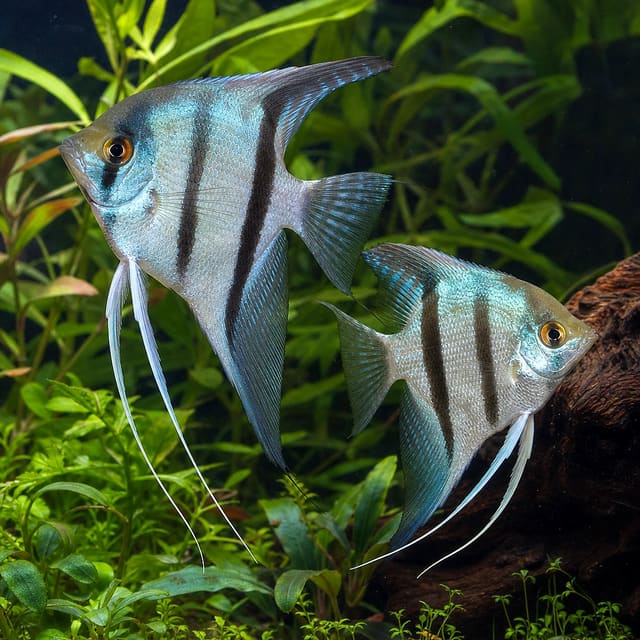
This fish is a better match for a thoughtfully planned display than for a small mixed community. Its body is laterally compressed, while the dorsal, anal and pelvic fins extend the animal well beyond its nose-to-tail measurement. That elegant shape is also the reason aquarium height, uncluttered turning room and gentle companions matter. An adult cannot use a shallow or tightly packed layout as comfortably as a compact fish of the same length.
| Suits | A prepared keeper with a mature, warm aquarium, useful vertical space and a plan for a compatible pair or social group |
|---|---|
| Less suitable for | A newly filled tank, a fin-nipping community, a strong-current layout or a collection of tiny fish and shrimp |
| Adult planning | Records include 15 cm standard length, with the tail excluded, and a separate 15 cm total-length aquarium record; allow substantially greater overall height for the extended fins |
| Temperament | Usually measured in movement, but still a cichlid that can defend space when a pair forms or breeding begins |
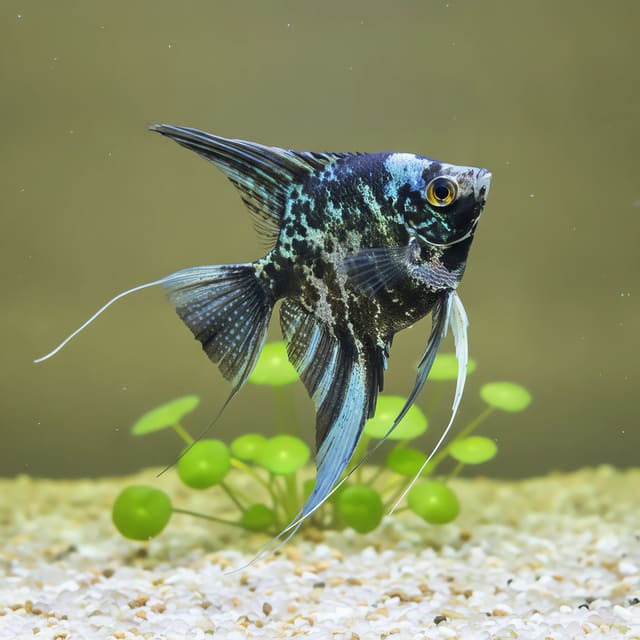
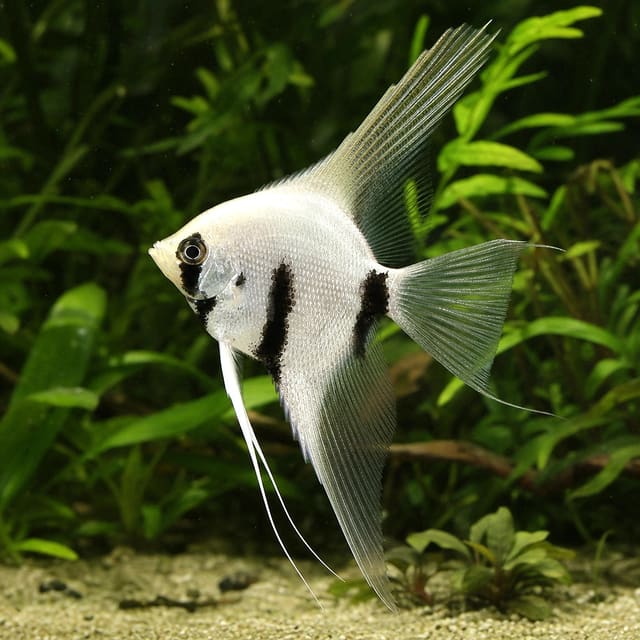
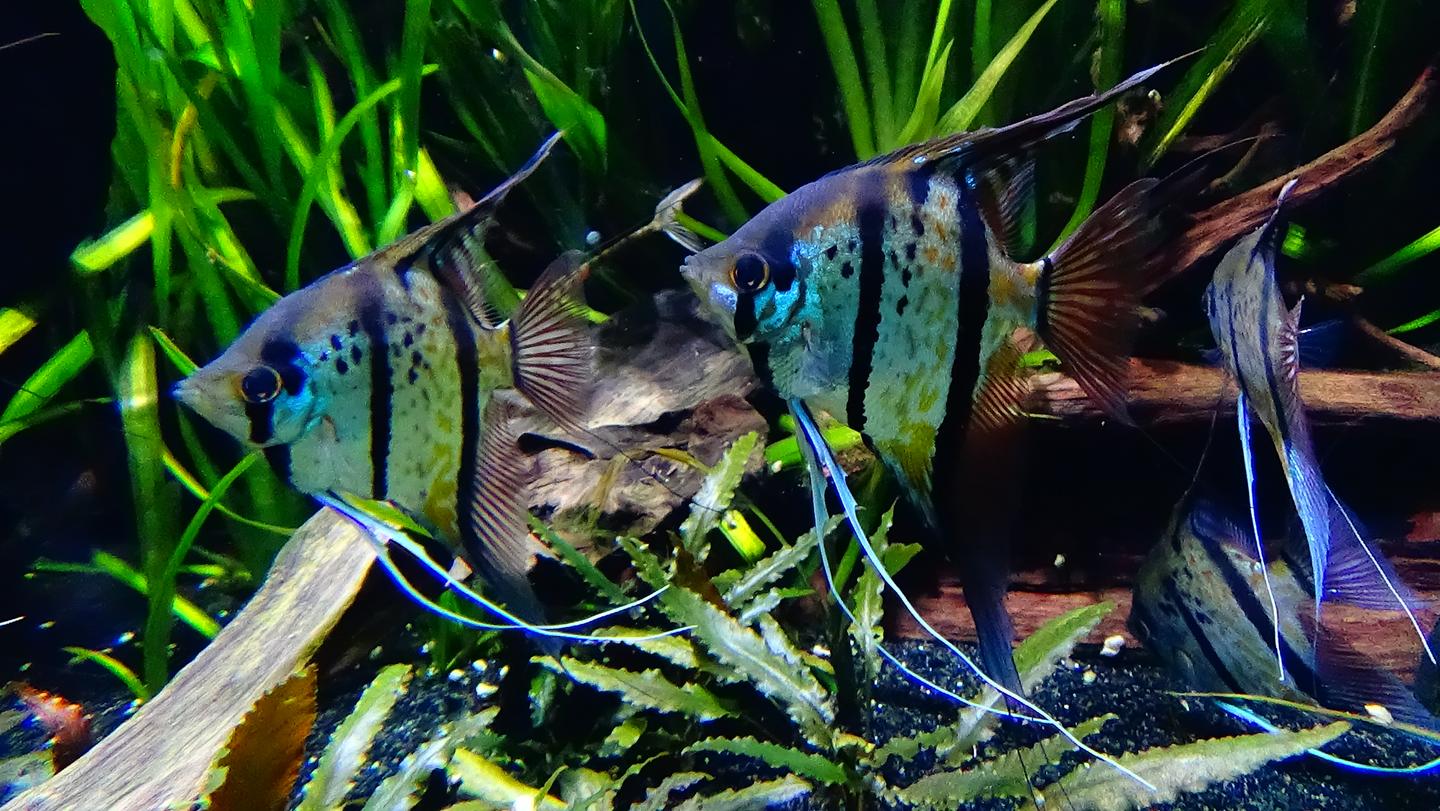
The attraction is not simply colour. Dark vertical bars, a deep body and long fins create a strong silhouette against wood and broad-leaved planting. Shade, open mid-water and calm surroundings let that outline remain visible without forcing the fish into a bare tank. Natural variation in bronze tone, barring and fin extension is part of keeping live angelfish rather than a defect.
One quantity supplies one Rio Itaya Angelfish in the dispatch size chosen on the product page. The available grades span 2–3 cm, 3–4 cm, 4–5 cm and 5–6 cm. The size you select is the size supplied, not the adult size. A smaller juvenile needs the same serious adult plan as a larger juvenile; choosing a bigger grade shortens the grow-on stage but does not reduce the eventual need for height, swimming room and social management.
Sex is guaranteed only when the selected option explicitly states male or female. This Rio Itaya Angelfish listing has no sex-guaranteed option. Juvenile angelfish are difficult to sex reliably, and even adult external appearance is an uncertain basis for a promise. A keeper hoping eventually to maintain a compatible pair should plan around behaviour and space rather than ordering two fish and assuming they will bond. A formed pair is a social outcome, not a retail pack size.
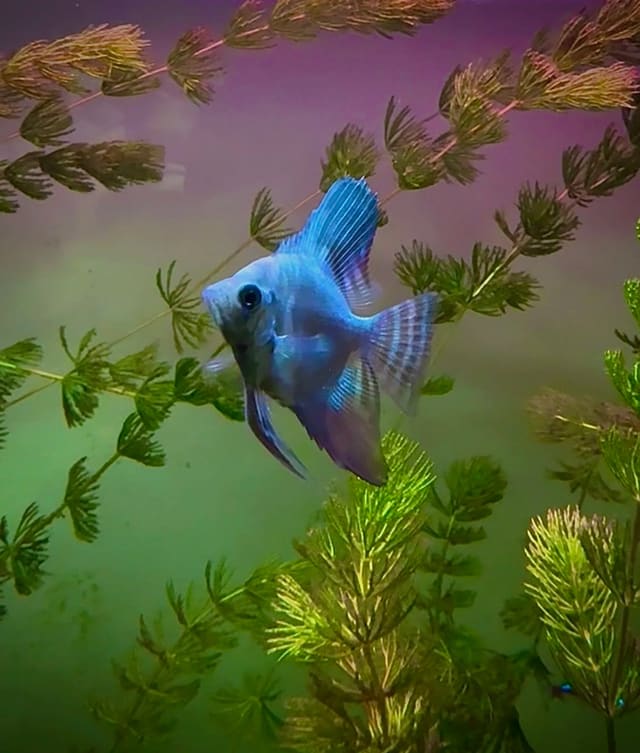
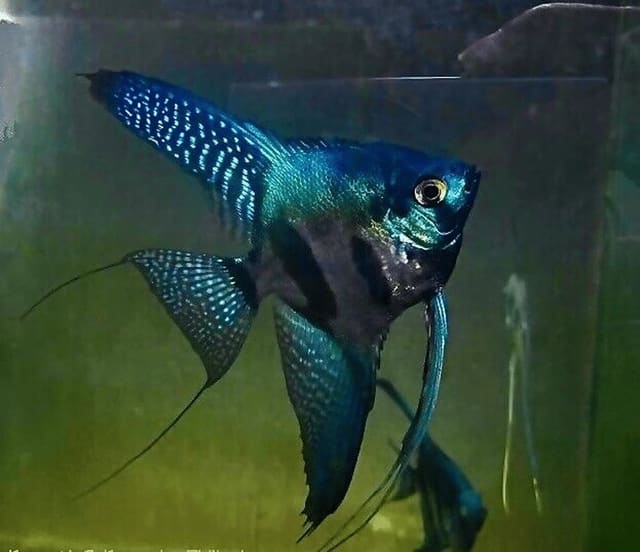
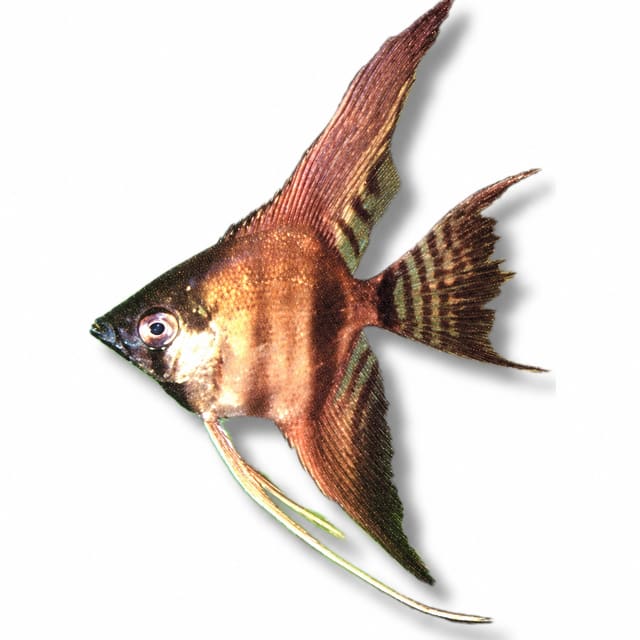
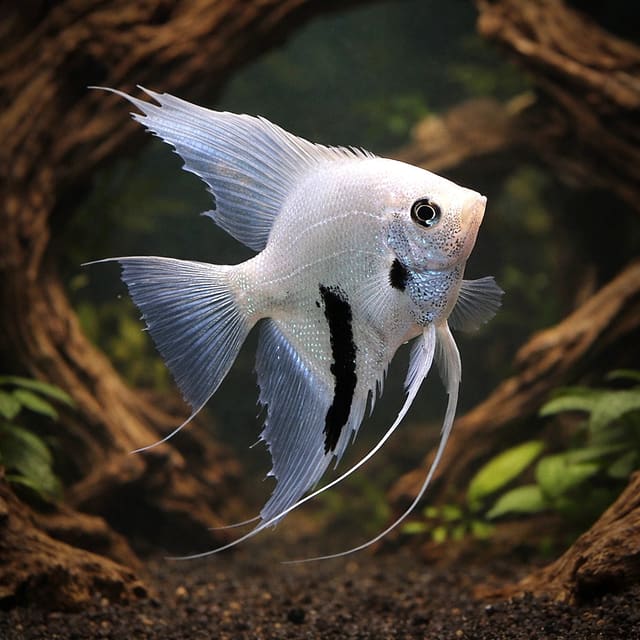
The gallery shows one barred angelfish in a planted aquarium. It is useful for seeing the tall body, vertical bars and extended fins, but colour intensity and maturity vary between animals. Gallery images have been digitally enhanced to improve image quality. Natural colour, pattern, size and maturity can vary between live animals.
If you are still comparing forms, the angelfish collection places this natural-looking form alongside other angelfish without implying that different colour forms need different species care.
Pterophyllum scalare is an accepted cichlid species from the Amazon basin. Eschmeyer’s Catalog of Fishes records the accepted name and a South American distribution that includes Brazil, Colombia, French Guiana, Guyana and Peru. FishBase describes adults in vegetated swamps or flooded ground with clear or silty water. That habitat association explains why cover and subdued areas are useful, while it does not turn a captive fish into a Rio Itaya river specimen.
Length records need careful reading because the fish is both deep-bodied and long-finned. Seriously Fish records 150 mm standard length, equal to 15 cm with the tail excluded. FishBase currently presents a field maximum of 10.5 cm total length and separately carries a 15 cm total-length aquarium record. Standard length and total length are different measurements, so these numbers should retain their scope rather than being treated as one ranked maximum. Overall top-to-bottom height can reach roughly 20–25 cm once extended fins are considered, making aquarium height important whichever length record is consulted.
Rio Itaya distinguishes the offered form from domestic colour strains such as koi, black or platinum angelfish. It points towards the natural barred look associated with the trade name. Collection locality, generation, breeder line and exact specimen history remain separate matters. This distinction lets a buyer appreciate the form without attaching an origin claim to the offer.
The species identity gives a reliable care framework: warm tropical water, a deep tank, an omnivorous diet with substantial animal material and social behaviour that can change sharply when pairing occurs. The form name adds appearance and trade context, not a separate set of water values.
Around 200 litres with a footprint near 100 × 40 cm and about 50 cm of usable height is a sensible planning point for a compatible adult pair. The Seriously Fish species profile gives approximately 200 litres and a 100 × 40 × 50 cm aquarium as the smallest it would consider. OATA’s broader American-cichlid sheet gives 120 litres as an industry floor for a pair of smaller species and says angelfish need sufficient height. Those figures describe different levels of caution; the roomier species plan is the more useful long-term target.
A group needs more room than a pair because every fish requires access to food, a calm resting area and somewhere to move when another animal becomes assertive. Adding a litre allowance mechanically is not enough: length, width, sight breaks and the arrangement of cover determine whether weaker fish can leave a confrontation. A long, deep aquarium with height is more flexible than a tall narrow column with the same volume.
Live planting can work well. Amazon swords and other tall-leaved plants create vertical structure that echoes the species’ vegetated habitat. Leave open space among the plants rather than filling every gap. OATA notes that some American cichlids may dig or disturb planting, so secure roots and treat plastic planting or smooth wood as acceptable cover when live plants do not thrive.
The aquarium must be fully cycled before livestock is added. A heater and filter running for a few days do not create the bacterial population needed to process waste. The first tropical tank guide explains the preparation sequence; use test results, not water clarity, to decide whether the biological filter is ready.
For a concise species plan covering adult space, group decisions and routine maintenance, read the freshwater angelfish care guide. The guidance is most useful before purchase, when tank size and companion choices can still be changed easily.
The Seriously Fish species-level aquarium range is 24–30°C, pH 6.0–7.4 and 0–15 dGH. FishBase separately gives 24–30°C, pH 6.0–8.0 and 5–13 dH as environmental values. The aquarium range is the clearer main care target here. Match the water in which the new fish has been held and favour consistency over abrupt attempts to reach a textbook midpoint.
| Temperature | 24–30°C in the species aquarium profile |
|---|---|
| pH | 6.0–7.4 in the species aquarium profile; stable acclimation matters more than a rapid correction |
| General hardness | 0–15 dGH in the species aquarium profile |
| Ammonia and nitrite | Zero on a suitable aquarium test |
| Nitrate | Control accumulation through stocking, feeding, filtration and regular partial water changes |
Use the aquarium water parameters guide to understand what each test means. If you already know your measured temperature, pH and hardness, the water matcher helps compare them with the stated ranges. A test result is a starting point for planning, not a reason to swing chemistry within a single day.
A working biological filter is essential. Fish release ammonia, beneficial bacteria convert it first to nitrite and then to safer nitrate, and each stage depends on established media and oxygenated flow. Angelfish tend to prefer gentler water movement, so spread the outlet across the surface or use a spray bar rather than directing a hard jet through their resting space. Gentle current still needs enough circulation to prevent waste collecting unnoticed and to keep oxygen reaching the filter.
Check temperature and water chemistry every week and after any change in stocking or feeding. OATA strongly recommends a 25% partial water change at least once every week for American cichlids. The frequency belongs to the recommendation: it means a routine 25% change carried out at least weekly, not an instruction to make arbitrarily larger changes. Treat replacement tap water with conditioner and bring it close to aquarium temperature.
If filter media needs cleaning, rinse it lightly in removed aquarium water rather than under the tap. Chlorine or chloramine can damage the bacteria that make the filter effective. Retain mature biological media while clearing mechanical debris so the filter keeps processing waste.
Watch trends rather than isolated numbers. Rising nitrate, repeated uneaten food, a slowing filter or a fish breathing harder than usual tells you to inspect the whole system. Stable water comes from proportionate stocking, measured feeding, dependable equipment and consistent maintenance working together.
Freshwater angelfish are omnivores, while wild diet records emphasise small crustaceans and other aquatic invertebrates. In the aquarium, use a nutritionally complete cichlid granule, pellet or quality flake as the dependable base. Add suitable frozen or freeze-dried foods such as brine shrimp, daphnia or bloodworm for variety. A controlled study of Pterophyllum scalare found that feed type affected growth and reproduction, which supports dietary variety but does not create one universal household menu.
OATA’s American-cichlid guidance recommends only the amount the fish can finish within a few minutes, once a day. Keep that as a measured starting routine for settled animals, then judge body condition and the needs of a growing juvenile rather than feeding by enthusiasm. The deep body can hide gradual condition loss, so look at the line behind the head, the fullness of the belly after feeding and whether every fish gets a fair chance to eat.
Very small juveniles have smaller stomachs and may need a carefully divided ration during grow-on, but increased frequency also increases the demand on filtration and maintenance. Any change should be gradual and based on visible condition and water tests. Heavy feeding cannot compensate for intimidation, disease or unsuitable water.
Long fins and a laterally compressed body make angelfish deliberate feeders compared with frantic barbs or some rainbowfish. In a community, confirm that quicker companions leave enough food. Sinking a small portion towards the angelfish’s chosen level can help, provided bottom fish receive their own appropriate food and leftovers do not accumulate.
A healthy angelfish should hold itself upright, breathe steadily, open its fins and show interest in its surroundings and food. Individual colour can darken or pale with lighting, background, stress and social context, so colour alone is a poor diagnosis. Look for change from that fish’s normal pattern together with appetite, breathing, posture and interaction.
| Observation | First practical check |
|---|---|
| Rapid gill movement or surface hanging | Test temperature, ammonia and nitrite; inspect circulation and surface movement |
| Clamped or damaged fins | Check water quality and watch for nipping, chasing or sharp decor |
| Persistent hiding at feeding time | Observe social pressure and whether the fish can reach food without being displaced |
| Loss of balance or erratic swimming | Test the aquarium promptly and seek suitable professional help |
| White spots, fluffy growths, sores or scale loss | Document the signs, isolate only with a prepared plan and obtain treatment advice appropriate to the diagnosis |
Water quality comes first because ammonia and nitrite are toxic and environmental stress can make other problems harder to manage. The RSPCA’s fish health guidance recommends watching for altered swimming, appetite, breathing and appearance. Avoid choosing a medicine from one visual sign. Different conditions can look similar, and the safe product and dose depend on the diagnosis, species, aquarium volume and other livestock.
Quarantine is most useful when it is a genuinely mature, heated and filtered system with separate equipment. A bare container assembled on arrival can create its own ammonia and temperature problems. Decide the purpose in advance: observation, protection of an established collection and a controlled response if signs appear.
Angelfish may choose vertical leaves, slate, glass or equipment as spawning surfaces. A pair can become much more territorial at this time. Egg guarding, chasing and a claimed corner are breeding behaviour, but they do not prove that the aquarium can safely carry the pressure. Add sight breaks, monitor all fish and separate individuals if one can no longer feed or rest normally.
Have the aquarium heated, filtered and tested before dispatch. Someone must be present to receive live fish; a parcel of livestock cannot be left unattended. Tropical Fish Co hand-packs fish in oxygenated bags inside insulated packaging and uses a licensed live-animal courier. The current delivery and Live Arrival Guarantee policy gives the full conditions and should be read before ordering.
During the first week, watch breathing, balance, fin posture, appetite and social reception. Test water after adding the fish because biological demand has increased. A new arrival that repeatedly hides from an established pair or cannot reach food needs an early husbandry response rather than extra food scattered into the tank.
Angelfish are social, but their social needs cannot be reduced to putting any two fish together. OATA advises keeping angelfish as a pair or group at minimum and notes that a singleton may become stressed. Seriously Fish describes them as generally peaceful cichlids that can squabble with their own kind and recommends small groups. FishBase carries aquarium guidance for groups of five or more, with pairs used in smaller breeding setups. These approaches share one important point: provide social company alongside enough room to manage cichlid behaviour.
A genuine compatible pair is different from two fish of convenient size. When young fish are grown together, pair formation may emerge over time, but the remaining fish then need enough space and a safe plan if the pair begins defending a site. In a group, look for repeated exclusion rather than counting only dramatic fights. One fish that always eats last, stays in a corner or shows damaged fins is already telling you the social plan needs adjustment.
| Situation | What to plan |
|---|---|
| Compatible adult pair | A tall aquarium around the 200-litre species plan, calm companions and room around any defended spawning site |
| Juvenile group | More swimming space, several feeding points, visual breaks and a future plan for pair formation |
| Established community | Check every inhabitant’s adult size, temperature, feeding speed and fin behaviour before adding an angelfish |
| Breeding attempt | A mature dedicated setup is safer than expecting a crowded community to absorb territorial defence |
Sex cannot be selected from this listing, and head shape, fin angle or bold behaviour are not dependable juvenile sex tests. During active breeding, genital papillae may help an experienced observer, but that is not a reason to promise the sex of a fish sold at a juvenile dispatch size.
A well-planned angelfish community uses peaceful fish that tolerate the same warm water, are too large to swallow and do not target long fins. OATA names larger shoaling fish as possible companions for calmer American cichlids. Seriously Fish warns that adult angelfish may eat small fish such as tetras. Combine those points by assessing the adult body depth of each companion rather than assuming every tetra is equally safe.
No species is a universal tank mate. The same combination can change as fish mature, a pair forms or the layout is rearranged. Observe the aquarium at feeding time and during quiet periods. A community that looks peaceful only when food is present may still contain chronic chasing elsewhere.
Do not use the two related angelfish products shown elsewhere on the page as a compatibility recommendation. They are alternative forms for a buyer choosing an angelfish, not additional fish that must be housed together. Mixing multiple adults increases the importance of group space and an exit plan.
Seriously Fish records 15 cm standard length, which excludes the tail. FishBase separately shows a 10.5 cm total-length field maximum and a 15 cm total-length aquarium record. Keep those measurement scopes distinct and allow generous vertical room for the extended dorsal, anal and pelvic fins.
Around 200 litres with a footprint near 100 × 40 cm and about 50 cm of usable height is a sensible species plan for a compatible adult pair. A group or busy community needs more space, more separate resting areas and a response plan for territorial behaviour.
Use a genuinely compatible pair or a suitably spacious social group. A random pair of fish is not automatically bonded. Juvenile groups can allow natural pair formation, but the keeper must be ready to protect or move other fish if a pair begins defending territory.
It suits a prepared keeper rather than a first-day aquarium. The key tasks are cycling a sufficiently large and tall tank, testing water, choosing adult-safe companions and responding early to social pressure. A beginner who completes those steps can succeed; an impulsive small-tank purchase is a poor fit.
Use a nutritionally complete cichlid granule, pellet or quality flake as the base, with suitable frozen or freeze-dried foods such as brine shrimp, daphnia or bloodworm for variety. Offer measured portions and make sure each fish can reach food without being displaced.
The species aquarium profile gives 24–30°C and pH 6.0–7.4, with 0–15 dGH. Match the fish’s holding water gradually and keep those conditions stable rather than making abrupt adjustments.
They are generally measured cichlids rather than habitual fin-nippers, but they can squabble and a formed pair may defend a spawning site strongly. Give other fish room to retreat and act if one animal is repeatedly chased, excluded from food or left with damaged fins.
Consider larger peaceful shoaling fish and calm bottom dwellers that share the warm-water range and feeding pace. Avoid persistent fin-nippers, very small fish that may be swallowed and aggressive cichlids. Check adult size and behaviour rather than relying on the size seen in a shop.
Fish are hand-packed in oxygenated bags inside insulated packaging and carried by a licensed live-animal courier. Someone must receive the parcel. For a Live Arrival Guarantee claim, contact Tropical Fish Co the same day with clear photos or an optional video. If filming, record one continuous unboxing video from the sealed parcel through opening to the fish in the sealed bag. Video is optional and clear photos are accepted; never delay necessary animal care to record evidence.
The scientific name and distribution are supported by Eschmeyer’s Catalog of Fishes. FishBase provides species classification, environment, distribution, length records and biological notes. The Seriously Fish profile supplies the species-level aquarium dimensions, water range, diet and behavioural guidance.
The OATA American cichlid sheet provides UK group guidance for water quality, maintenance, social care and feeding. The RSPCA aquarium environment guidance explains biological filtration, while its fish health guidance covers visible warning signs. A peer-reviewed feeding study in freshwater angelfish informs the limited diet discussion. Store-specific aquarium planning comes from Tropical Fish Co’s angelfish guide, and parcel conditions come from the current delivery policy.
No reviews for this item yet. Bought one? Honest reviews only, good or bad.
What customers say about ordering from us
Easy website plenty of info on fish your buying great to pick a time slot
TRACEY DURRANT · 7 Oct 2026
Got some lovely fish thank you
Kevin Mackie · 7 Oct 2026
Reviews of our shop, collected by Judge.me, an independent third-party review collector. Newest first.