Moderate
Smoke Angelfish (Pterophyllum scalare)
24–27°C · pH 6.5–7.4 · 200L
£7.99

Buy Map Blue Angelfish, a striking moderate-care angelfish for planted aquariums. Order live tropical fish online with UK delivery today.
Adult size is the maximum length this species reaches at full maturity (scientific sources). The livestock you receive will be younger and smaller. Product-photo provenance and any image-specific limitations are stated on the listing.
Pterophyllum scalare
Save when buying multiple fish. Each quantity is one fish; sex and pair formation are not guaranteed unless the selected variant explicitly states them.
Buy Map Blue Angelfish, a striking moderate-care angelfish for planted aquariums. Order live tropical fish online with UK delivery today.
Adult size is the maximum length this species reaches at full maturity (scientific sources). The livestock you receive will be younger and smaller. Product-photo provenance and any image-specific limitations are stated on the listing.
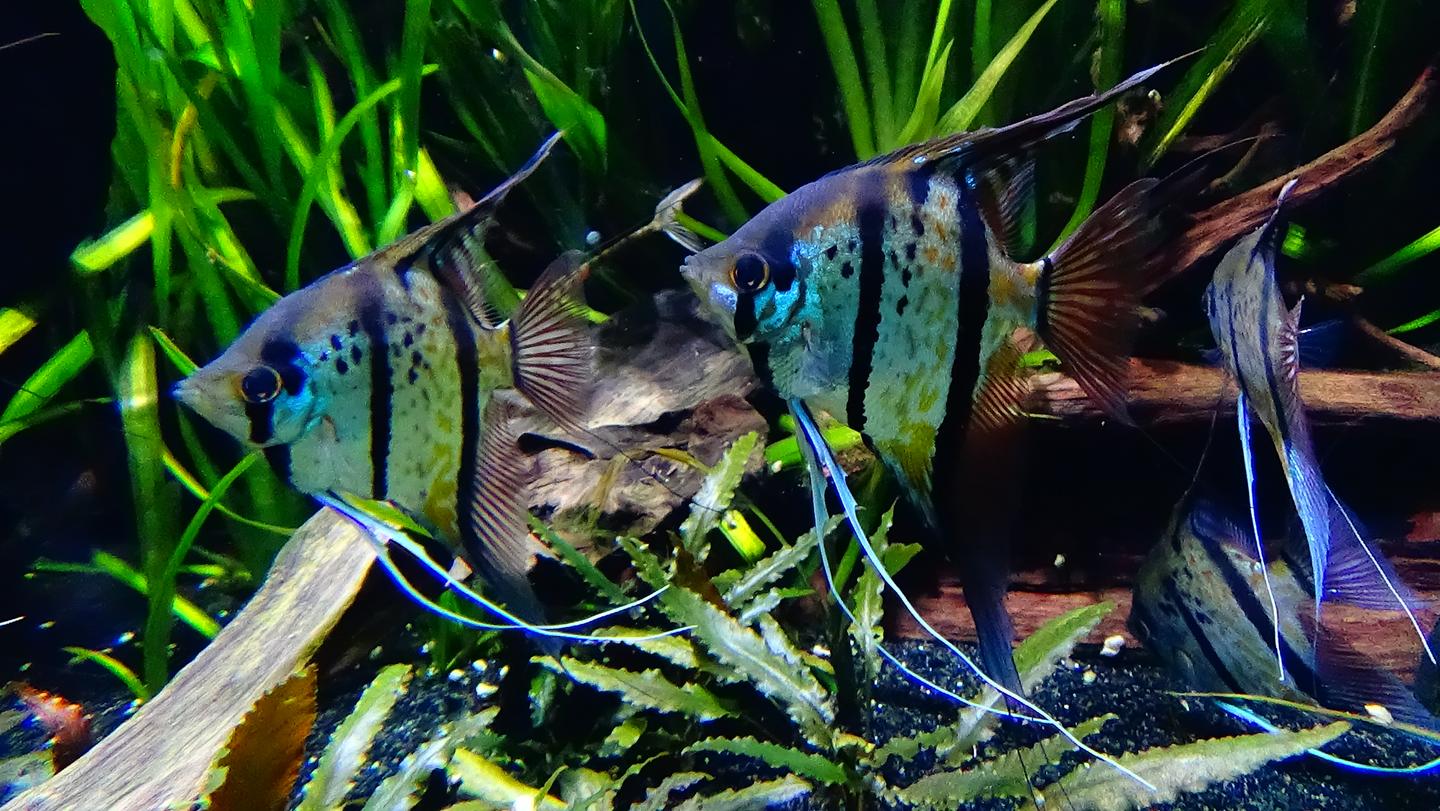
Freshwater angelfish are tall South American cichlids, not small community fish. OATA gives 120 litres as an industry floor for a compatible pair and says the aquarium must be sufficiently tall. We prefer planning around roughly 200 litres, a 100 × 40 cm footprint and about 50 cm height for an adult pair, with more space and an exit plan for a group.
Maintain these water conditions for optimal health and vibrant colors
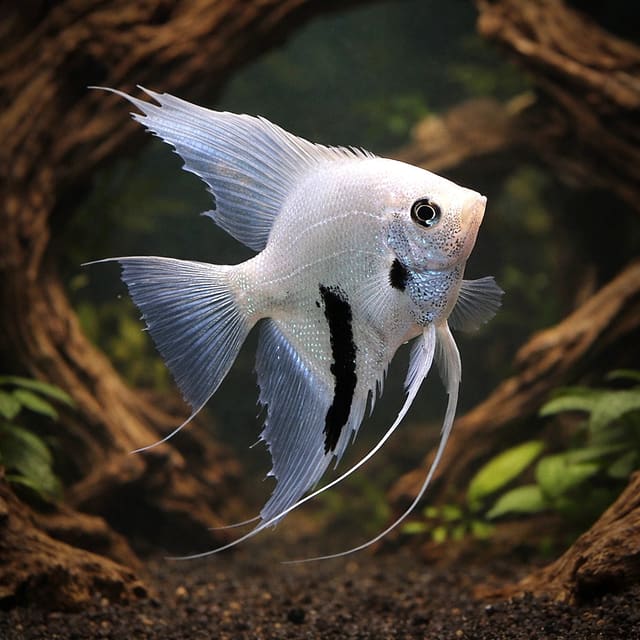
The Map Blue Angelfish, Pterophyllum scalare, is a South American cichlid with a tall, sail-like profile and a blue map pattern. Adults typically reach around 15 cm in body length, with a much greater span when the fins are extended, so plan for a tall aquarium. It has a moderate care level, a lifespan of up to 10 years and a semi-aggressive temperament that becomes more territorial during breeding. The blue marbling, long fins and refined body shape make it a distinctive centrepiece for a carefully planned display tank.
The Map Blue Angel is a selectively bred colour form of the classic angelfish, suited to a carefully planned planted freshwater display. First described in the 1800s and now established across the aquarium trade, Pterophyllum scalare is well established among aquarists who want graceful movement, intelligent behaviour, and a fish that matures into a proper showpiece. It sits alongside other popular forms such as koi, marble, platinum, and altum-type angelfish, but the Map Blue stands out for its cool-toned patterning and refined look.
Pterophyllum scalare originates from the Amazon Basin in South America, especially slow-moving waters in Peru, Colombia, Brazil, and surrounding river systems. In the wild, these fish live in flooded forests, swamps, and densely planted margins where roots, branches, and leaf litter create shelter. That is why the aquarium layout should always include vertical space, gentle current, and calm planting rather than open, bare water. Their natural environment is warm, soft, and slightly acidic, which is why water conditions matter so much for long-term health.
Wild angelfish feed on small crustaceans, insect larvae, worms, and tiny fish fry, so they are opportunistic predators as well as peaceful display fish. In captivity, that translates into a varied diet with frozen and live foods playing a major role in colour, condition, and breeding readiness. The species is not considered endangered in the aquarium trade, but responsible sourcing still matters. Its natural behaviour is especially rewarding in a planted aquascape.
For aquarists who enjoy a more authentic setup, the best results come from mimicking the species’ native habitat: warm water, subdued lighting, driftwood, broad-leaf plants, and very little aggressive tank traffic. The Map Blue brings cool-toned colour and presence to a display aquarium. It suits keepers who want a fish with presence, but not the extreme demands of more delicate wild-type species.
Mimicking the natural Amazon habitat improves colour, reduces stress, and encourages confident feeding. Use dark substrate, driftwood, floating cover, and soft filtration to help your Map Blue Angelfish settle faster and display natural behaviour.
The minimum recommended volume for a single pair is 150 litres, but a taller 180-litre or 200-litre aquarium is far better for long-term success. The reason is simple: tank size is about height as much as litres. These fish need vertical swimming room so their fins do not become damaged and so their body shape can develop properly. For a group in a community aquarium, aim for 250 litres or more with at least 50 cm of height.
Because they are cichlids, the bioload is moderate, and they appreciate stable water quality more than flashy decor. A tall aquarium is ideal, while low, shallow tanks should be avoided. It is easy to underestimate the importance of tank height, but it is one of the biggest factors in angelfish welfare.
Keep the water at 24-28°C, with 26°C being a very good everyday target. Temperature should stay stable, because sudden swings can trigger stress, appetite loss, or fin clamping. Aim for a pH between 6.0 and 7.5, with 6.5-7.0 ideal for most home aquariums. The species tolerates hardness from around 3-15 dGH, but softer water usually supports better spawning behaviour and cleaner fin development.
Consistency is the priority. Stable conditions matter more than chasing exact numbers. If you live in a hard-water area, use RO blending or a suitable conditioner to bring hardness down gradually. Check the needs of every species sharing the aquarium before adjusting the water.
Angelfish prefer clean water with gentle movement rather than strong current. A canister filter or large sponge filter works well, provided the output is softened so the fish can glide without fighting the flow. For flow, think “slow river edge,” not “rapids.” Excessive current can stress the fish, distort fin posture, and make feeding less efficient. Good oxygenation is still important, so aim for surface agitation without blasting the fish around the tank.
Filtration should be sized for at least 5-7 times tank volume per hour, then adjusted down with spray bars or baffles. Pair the tank with a reliable heater, a mature external canister filter, and a dark aquarium substrate to create contrast and reduce stress.
Fine sand or smooth gravel is ideal, especially if you want a natural look. The species does not dig heavily, but it does appreciate open swimming lanes with planted cover. A planted setup works beautifully with Amazon swords, Vallisneria, Cryptocoryne, and floating plants that soften light. Broad leaves are especially useful because angelfish often rest near vertical surfaces and may later spawn on them.
Driftwood, root tangles, and tall plants help recreate the species’ natural environment and make the fish feel secure. Choose plants and hardscape that support a calm, layered layout. A planted tank also helps when keeping community species with angelfish, because it breaks line of sight and reduces territorial disputes.
Moderate lighting is best. Too much light can make them shy, while too little can dull their colour. A 6-8 hour photoperiod is a good starting point, especially if you are using live plants. The Map Blue pattern often looks richer against darker backgrounds and natural planting. If you want a more dramatic presentation, use a black background and a shaded planting zone to make the blue markings stand out.
Always cycle the tank for 4-6 weeks before adding angelfish. Mature filtration, stable bacteria, and low ammonia are essential if you want your Map Blue Angelfish to settle quickly and thrive in a new aquarium.
Feeding starts with one simple rule: variety builds health. This species is an omnivore, so it needs a mix of quality flakes, slow-sinking pellets, frozen foods, and occasional live foods. In the wild, angelfish eat small invertebrates, larvae, and tiny prey items, so a diet built only around dry food is not ideal. For the best colour and body condition, use a balanced diet with protein-rich foods and quality marine-free or freshwater-based ingredients.
Staple foods should include angelfish pellets, high-quality tropical flakes, and small granules designed for midwater feeders. Supplement these with frozen bloodworms, brine shrimp, daphnia, and chopped earthworm. When conditioning fish for spawning, many keepers use live foods such as white worms or blackworms to support a healthy breeding pair.
For feeding frequency, offer small portions 2 times daily and remove anything uneaten after a few minutes. Overfeeding is one of the most common mistakes in aquariums because it quickly pushes up waste and reduces water quality. Choose foods suited to the fish's size and feeding habits.
| Time | Food | Amount |
|---|---|---|
| Morning | Angelfish pellets or tropical flakes | Small pinch, eaten within 2 minutes |
| Evening | Frozen bloodworms, brine shrimp, or daphnia | Small portion, no leftovers |
Good treats include live daphnia, chopped krill, and occasional insect larvae. Blue and gold angelfish both benefit from the same varied feeding approach, while the Map Blue often shows better contrast and sheen when condition is excellent. Avoid feeding mammal meat, oily human foods, or anything with copper-based additives. If you keep a mixed setup, remember that angelfish often share the same feeding zone with other community species, so portion control matters.
Overfeeding causes ammonia spikes, cloudy water, and bloating. Feed only what your fish can finish quickly, and skip a meal once or twice a week if the fish are adults and already in good condition.
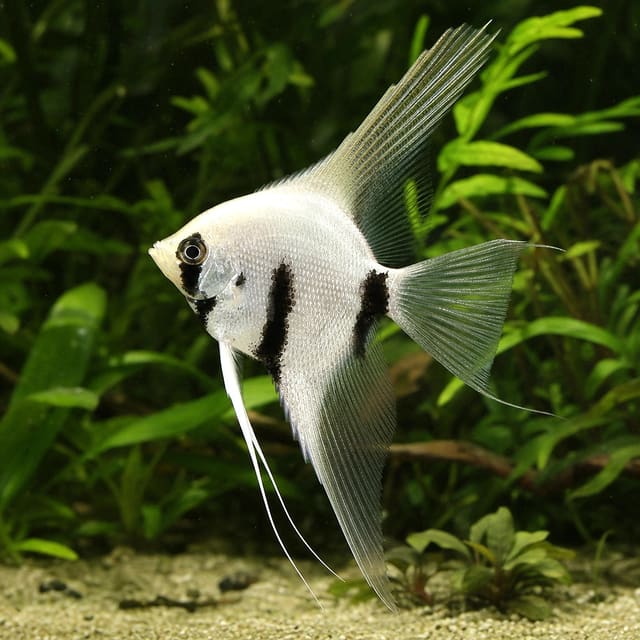
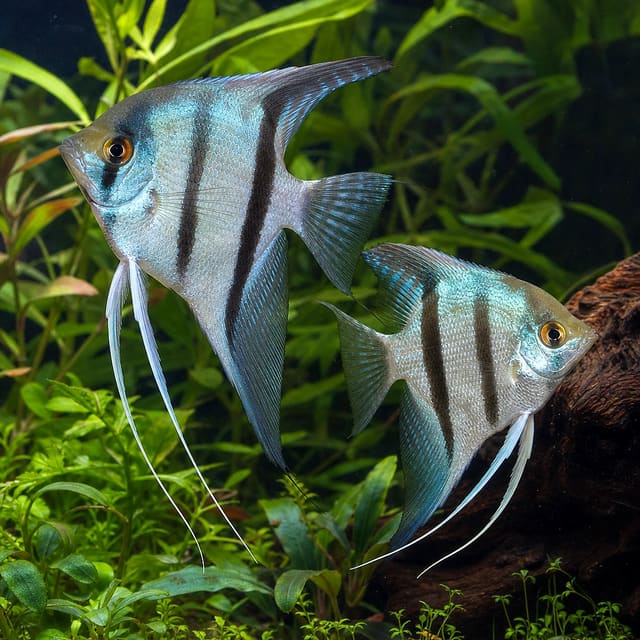
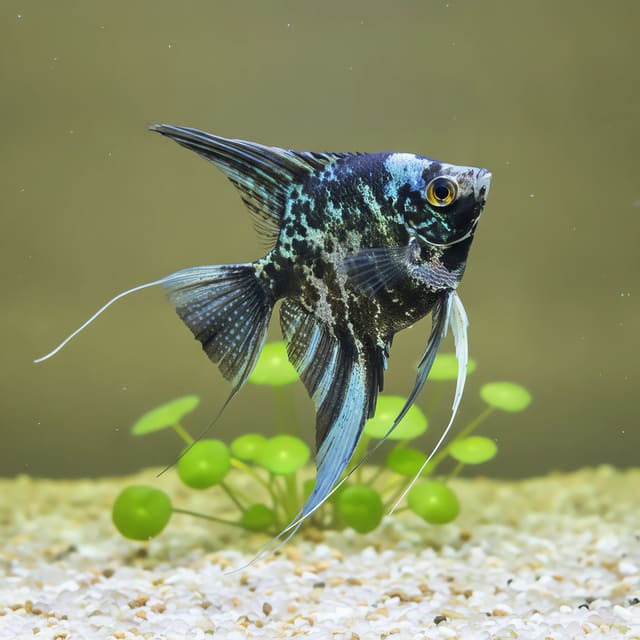
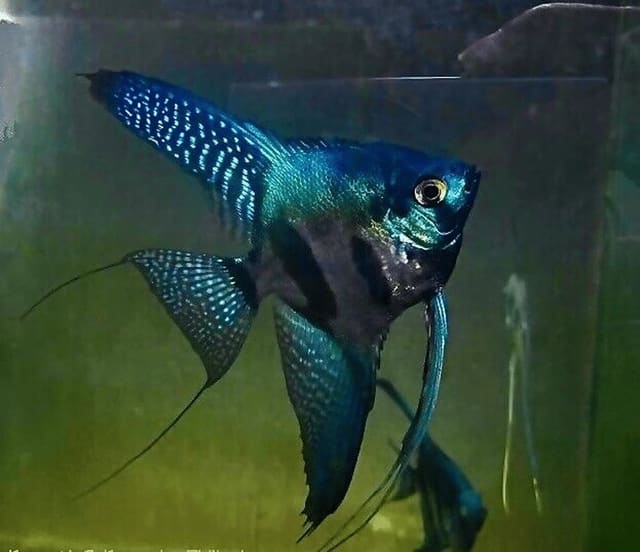
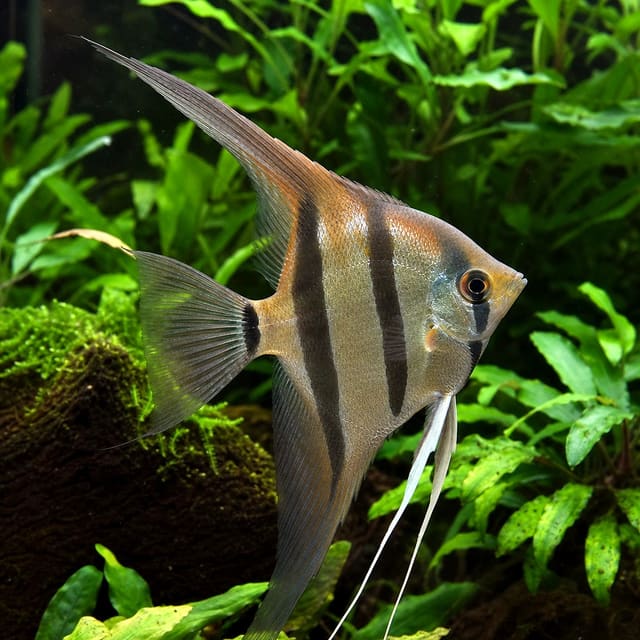
The Map Blue Angelfish has the classic angelfish silhouette: a laterally compressed, disc-like body with long dorsal and anal fins that create a tall, elegant profile. Adults usually reach around 15 cm in body length, but the full height can be much greater once fins are extended. The blue map pattern is the star of the show, with layered markings that can range from soft silver-blue to deeper steel-blue depending on lighting, stress level, and diet. The effect is a cool-toned, patterned display fish.
Sexing juveniles is difficult, but mature males may develop a slightly more angular forehead and thicker breeding tube, while females tend to appear rounder around the abdomen. Like other angelfish forms, body shape and fin length can vary between lines. Compared with marble or platinum forms, the Map Blue usually offers a more defined, cooler-toned pattern rather than a solid metallic finish or heavy marbling. It also differs from the brighter contrast seen in pink angelfish varieties.
To enhance colour, keep the tank clean, feed a varied diet and use a dark background or substrate. Allow the fish time to settle into its planted aquarium before judging its colour and confidence.
The Map Blue Angelfish is generally peaceful with suitably sized tank mates, but it is still a cichlid, so compatibility depends on tank size, layout, and individual temperament. In a calm, mature aquarium, it can work well with midwater fish that won’t nip fins or outcompete it for food. The best tank mates are medium-sized, non-aggressive species that prefer similar water conditions and do not fit in the angelfish’s mouth.
Ideal companions include larger tetras, Corydoras, rainbowfish, peaceful gouramis, and robust livebearers in the right conditions. Focus on fish that occupy different layers of the aquarium and have calm behaviour. Avoid tiny fish, such as fry-sized species, because angelfish may see them as prey. Fin-nippers like tiger barbs are also a poor match. Build the stocking plan around adult sizes and temperament.
| Species | Compatible? | Notes |
|---|---|---|
| Pterophyllum scalare | ✅ Yes | Same species; keep as a pair or group in a tall tank |
| Gold Giant Gourami | ❌ Not a routine companion | A much larger fish that can eat smaller tank mates; plan its housing separately |
| Very small tetras | ❌ Avoid | May be eaten once the angelfish grows |
For a balanced community, many keepers pair angelfish with Corydoras, Rainbowfish, and larger tetras. Some hobbyists also keep them with select gouramis, but always watch for surface territory issues. Map Blue and koi angelfish can be compared on appearance; both can work in similar communities, though koi types may show stronger pattern contrast. Keep in mind that the species becomes more territorial when breeding, so even normally peaceful fish may need extra space during spawning.
Invertebrates are a mixed story. Adult shrimp may be ignored in a heavily planted tank, but small shrimp can become food. Snails are usually safe, though very small snails may be picked at. If you want a more delicate invertebrate display, consider separate housing. Allow enough space for the angelfish's adult size and territorial behaviour.
Quarantine new fish for 2-4 weeks in a separate tank before adding them to your angelfish display. This reduces the risk of parasites, fin damage, and stress-related disease in established community aquariums.
Breeding a bonded pair is achievable for intermediate aquarists. The key is a stable, tall tank with clean water, good conditioning, and a bonded pair. A 75-100 litre breeding aquarium can work for one pair, but larger is better if you want easier water maintenance. The species is moderately difficult to breed because the eggs are vulnerable to fungus, and the parents can become stressed if disturbed.
Condition the pair with frozen bloodworms, brine shrimp, and quality pellets for 2-3 weeks. Spawning usually happens on vertical surfaces such as broad leaves, slate, or filter tubes. Once the female lays eggs and the male fertilises them, both parents may fan and guard the clutch. Incubation typically takes 2-3 days, and free-swimming fry appear after another few days. At that stage, feed infusoria, liquid fry food, or newly hatched baby brine shrimp several times daily.
One of the most common challenges when breeding angelfish is first-time parents eating the eggs. This often improves with age and reduced disturbance. Another issue is poor water quality, which is why a mature filter and careful feeding are essential. When choosing fish for breeding, choose healthy fish with straight fins, clear eyes, and strong appetite. Age and condition also matter because older, well-conditioned adults often produce stronger spawns.
Place a removable slate or breeding cone in the tank so the pair can spawn on a surface that can be moved if needed. This makes egg protection easier and helps keep fungus under control when raising a valuable Map Blue line.
Comparing angelfish varieties helps you choose the right fish for your aquarium size, aquascape style, and experience level. If you are deciding between the Map Blue and other forms, think about pattern, body shape, and how much contrast you want under aquarium lighting. The Map Blue is especially appealing if you want a cool-toned display fish with a refined look rather than a bright solid colour.
| Feature | Map Blue Angelfish | Altum Angelfish |
|---|---|---|
| Max Size | About 15 cm body length | Larger and taller overall |
| Care Level | Moderate | Advanced |
| Temperature | 24-28°C | 26-30°C |
| Price | Varies by line and size | Usually higher |
| Best For | Planted community tanks and display aquariums | Experienced keepers wanting a more demanding species |
Compared with Pterophyllum altum, the Map Blue is easier to keep and more forgiving of typical UK aquarium conditions. Compared with gold angelfish, the Map Blue usually offers subtler elegance and a more natural-looking pattern. When comparing the cost of different varieties, remember that the real value is in long-term health, shape, and compatibility rather than simply the initial cost. The Map Blue balances a distinctive appearance with manageable care in the right aquarium.
Healthy angelfish are alert, eat readily, and hold their fins open rather than clamped. Their eyes should be clear, the body should be upright, and the blue pattern should look clean rather than faded. In a well-maintained aquarium, this species is generally hardy, but it can still suffer from common cichlid health problems such as ich, fin rot, internal parasites, and stress-related appetite loss. Poor water quality is the biggest trigger, followed by overcrowding and unsuitable tank mates.
Prevention starts with stable water, regular partial changes, and a varied diet. If fish are flashing, isolating, or breathing heavily, check ammonia, nitrite, and temperature immediately. Quarantine any new fish for 2-4 weeks before adding them to the main aquarium, especially if you are building a valuable angelfish collection or introducing new stock. If treatment is needed, use species-appropriate medication and avoid unnecessary dosing. Good husbandry is usually more effective than chasing symptoms after they appear.
NEVER use copper-based medications with invertebrates - lethal to shrimp! If your aquarium contains snails or shrimp, treat fish in a separate hospital tank whenever possible.
Map Blue Angelfish are calm, graceful swimmers that spend much of their time in the middle of the tank. They are not fast, darting fish; instead, they move with deliberate, almost hovering motions that make them ideal for display aquariums. Their behaviour includes occasional fin flaring, gentle investigation of plants, and patient waiting during feeding time. In a quiet aquarium, they often become surprisingly interactive and will learn to recognise the aquarist.
They are social in the sense that they do well in pairs or groups of six or more when young, but adults often form strong pair bonds. This is why many keepers prefer to buy a small group and allow natural pairing to occur. If you are keeping them in a community, give them enough space and line-of-sight breaks so they do not become overly territorial. A well-planned tank helps bring out the best in this species and supports natural confidence.
Before ordering Map Blue Angelfish, check that your aquarium provides the height, water stability and space described in this guide. Juveniles can be difficult to sex, and choosing fish for a future breeding project does not establish a bonded pair.
Live fish travel in oxygen-filled bags in insulated packaging, with heat packs when conditions call for them, via a tracked courier licensed to carry live animals. Read the delivery and live-arrival information before ordering and arrange for someone to receive the parcel. Have the aquarium ready, then watch feeding, breathing and behaviour as the fish settles in.
Compare other colour forms such as Marble Angelfish and Platinum White Angelfish when choosing the appearance of your display. These are comparisons, so check adult space and territory before combining fish. Altum angelfish need more specialised care; giant gouramis need separate large-fish planning, while small guppies may be vulnerable to predation. Polypterus endlicherii is better suited to a separate large-species aquarium. For feeding, use a quality angelfish pellet and frozen bloodworms to keep condition strong.
The Map Blue Angelfish offers a balance of pattern, personality and manageable care for aquarists who can provide a tall, stable aquarium. Plan around its adult needs before choosing it as a centrepiece.
No reviews for this item yet. Bought one? Honest reviews only, good or bad.
What customers say about ordering from us
I have a small group of long finned mountain minnows. So was delighted to be able to order ten of this variety to increase the genetics in my tank . The ones I recieved are healthy but it’s to early to give a verdict on wether they are of a long finned type since they are small currently.
Gordon Walker · 23 Sept 2026
100% success travel and "installation". Pleased with quality of purchase. The Siamese fighter a bit "shy" so have not yet seen him at his best yet but looking good. Happy customer. GG
George E Garratt · 21 Sept 2026
Reviews of our shop, collected by Judge.me, an independent third-party review collector. Newest first.