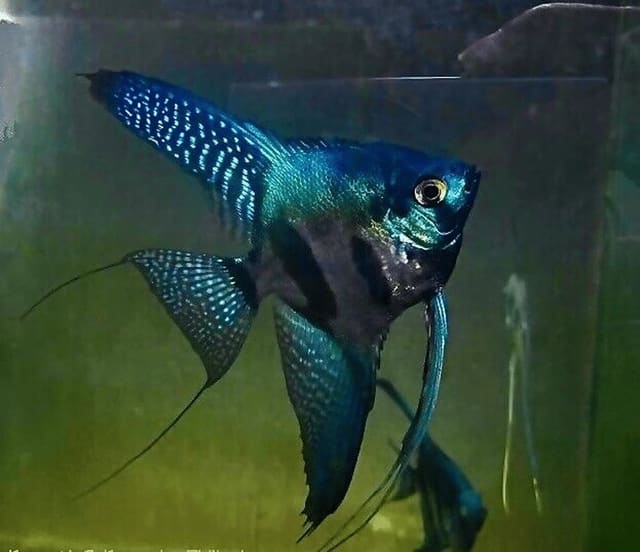
Moderate
Mixed Medium Angelfish (Pterophyllum scalare)
24–27°C · pH 6.5–7.4 · 200L
£3.99

Buy Santa Izabel Angelfish, a stunning moderate-care angelfish for display aquariums. Order live tropical fish online with UK delivery today.
Adult size is the maximum length this species reaches at full maturity (scientific sources). The livestock you receive will be younger and smaller — pick a size above for the actual shipping size. Product-photo provenance and any image-specific limitations are stated on the listing.
Pterophyllum scalare
Save when buying multiple fish. Each quantity is one fish; sex and pair formation are not guaranteed unless the selected variant explicitly states them.
Confirm your email, then we’ll send an availability message for this exact item if it returns within 180 days.
This request is only for this product—no newsletter or other promotions. A mail-provider retry may very rarely duplicate the same availability message. Unconfirmed addresses are removed after 48 hours. See our privacy policy.
Buy Santa Izabel Angelfish, a stunning moderate-care angelfish for display aquariums. Order live tropical fish online with UK delivery today.
Adult size is the maximum length this species reaches at full maturity (scientific sources). The livestock you receive will be younger and smaller — pick a size above for the actual shipping size. Product-photo provenance and any image-specific limitations are stated on the listing.
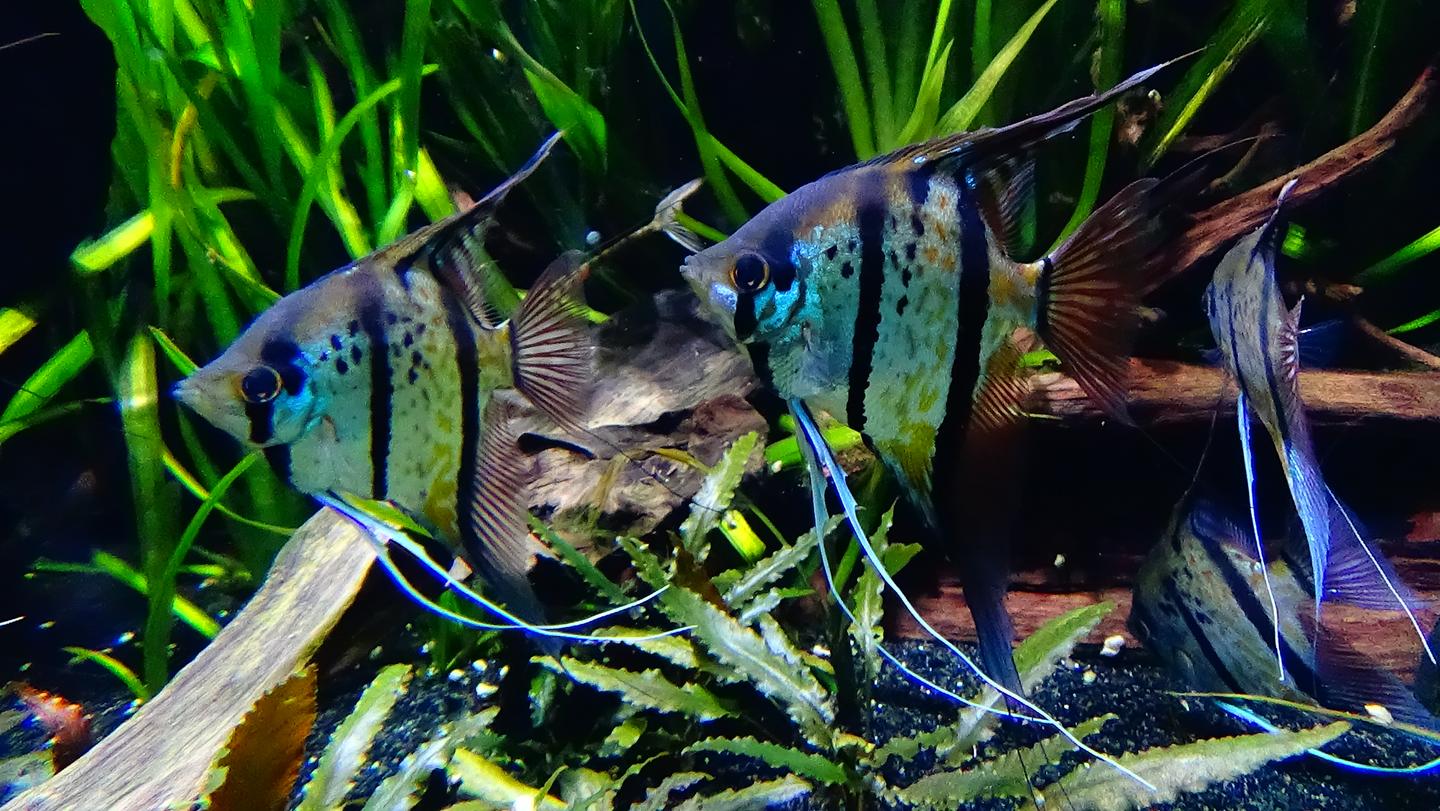
Freshwater angelfish are tall South American cichlids, not small community fish. OATA gives 120 litres as an industry floor for a compatible pair and says the aquarium must be sufficiently tall. We prefer planning around roughly 200 litres, a 100 × 40 cm footprint and about 50 cm height for an adult pair, with more space and an exit plan for a group.
Maintain these water conditions for optimal health and vibrant colors
The Santa Izabel Angelfish is one of the most striking wild-style angelfish available in the tropical fish UK hobby. This elegant form of Pterophyllum scalare combines the classic tall angelfish silhouette with softer wild barring, subtle spotting, and a refined Rio Negro look that stands out in a mature display aquarium. For aquarists searching for a rare rio negro angelfish for aquarium UK collections, this fish offers a more natural alternative to heavily line-bred domestic strains. Adult fish can reach around 15cm in body length with much greater overall height once the dorsal and anal fins are fully extended, and with good care they may live for up to 10 years. Temperament is best described as semi-aggressive: peaceful in the right group, but territorial at feeding time or during spawning.
If you have been wondering why aquarium fish are so popular in home interiors, the answer becomes obvious when you see this species in person. The Santa Izabel form brings movement, shape, and natural Amazon character to a tall planted aquarium. See our detailed photos showing the vertical finnage, wild patterning, and subtle tropical fish colors that become richer under warm lighting and dark décor. This is a superb choice for aquarists wanting a wild type angelfish UK specimen with real presence, whether you are planning a species-led aquascape, a santa izabel angelfish for planted tank layout, or a carefully chosen community. For fishkeepers looking to buy santa izabel angelfish UK stock from an established online fish shop, this is a characterful, long-lived centrepiece fish that rewards proper setup with graceful behaviour and impressive growth.
Pterophyllum scalare is the best-known freshwater angelfish in the aquarium trade, and the Santa Izabel form is prized by keepers who prefer natural-looking fish over exaggerated domestic strains. Within the cichlid family, angelfish are unusual for their tall, laterally compressed shape and calm gliding behaviour. In the hobby, they sit between beginner-friendly domestic angels and more demanding species such as Pterophyllum altum, making them especially appealing to aquarists ready for a more authentic wild-type display.
To understand this fish properly, it helps to ask where do angelfish originate from. Santa Izabel Angelfish are associated with the Amazon Basin and especially blackwater-influenced environments linked to the Rio Negro region of northern South America. The name is often used in the trade for a wild-style form connected with Santa Isabel do Rio Negro in Brazil, and that geographic link is one reason these fish are so sought after by keepers wanting a Wild-Type Santa Izabel Angel rather than a mass-bred domestic angelfish.
The broader pterophyllum scalare habitat includes slow-moving floodplains, submerged roots, marginal vegetation, and seasonally inundated forest. In these waters, fish move among stems, branches, and leaf litter, using their tall body shape to slip through vertical cover. This is why a well-designed santa izabel angelfish tank setup should focus on height, line-of-sight breaks, and calm water rather than open, bare layouts. The natural environment is usually soft to moderately soft, slightly acidic to neutral, and warm throughout the year. These conditions explain the usual angelfish water requirements recommended in the aquarium.
For aquarists looking to buy wild type angelfish UK stock, the appeal is not only rarity but behaviour. A stunning wild angelfish variety UK hobbyists appreciate will often show more nuanced colour shifts, more alert feeding responses, and more natural pair bonding than heavily selected strains. The debate around wild type angelfish vs captive bred fish usually comes down to goals: captive-bred angels can be more forgiving, while a wild type angelfish for experienced keepers offers a more authentic Amazon display. The Santa Izabel form sits in a sweet spot, giving the keeper a natural look without the extreme demands sometimes associated with true altums.
In the wild, pterophyllum scalare santa izabel habitat conditions would include insect larvae, tiny crustaceans, small fish, and other drifting prey. That mixed feeding ecology is why these angelfish adapt well to varied prepared and frozen foods in captivity. If you are building a blackwater-themed display, this fish also pairs visually with natural wood, tannin-stained water, and companion species chosen from the broader Pterophyllum scalare style community.
Mimicking the natural habitat improves confidence, colour, and long-term health. In my experience, Santa Izabel angels settle fastest in tall aquariums with dimmer zones, wood, broad-leaved plants, and gentle current rather than bright, exposed tanks.
A proper santa izabel angelfish care guide always starts with tank dimensions, not just litres. Because this species is tall-bodied, height matters as much as volume. The minimum recommended aquarium is 150 litres, but the best results come in tanks at least 45cm tall and ideally 90cm long. If you are asking what size tank do angelfish need, think in terms of swimming height and territory. For a pair, 150 litres can work. For a group, 200 litres or more is much safer. If you are wondering what size tank for 3 angelfish, the honest answer is that three often creates social imbalance; a bonded pair or a group of five-plus juveniles is usually better.
Many keepers search for pterophyllum scalare tank size or pterophyllum scalare santa izabel tank size because angelfish are often sold small. Juveniles fit into modest tanks, but adults need space to turn, display, and avoid constant conflict. An 80cm tropical fish tank can be used temporarily for growing juveniles, but it is not ideal long term for adult Santa Izabels. A larger footprint and extra height reduce stress and improve body shape. If you are setting up a display tank, combine a tall aquarium with a reliable heater and stable filtration.
The ideal santa izabel angelfish water parameters are stable rather than extreme. A practical santa izabel angelfish temperature range is 24-30°C, with 26-28°C being a strong everyday target for display fish. This matches the usual pterophyllum scalare temperature recommendations and sits comfortably within the broader tropical fish temperature range used for Amazon community species. If you are asking about tropical fish aquarium temperature, tropical fish tank temperature, or simply tropical fish temperature, remember that angelfish are not cool-water fish. This also answers the common question why do tropical fish need a heater: they rely on stable warmth for digestion, immunity, and metabolism. In most UK homes, do tropical fish need a heater? Yes, especially angelfish. They are not among the species listed when people ask what tropical fish don't need a heater.
Filtration should provide excellent biological capacity without blasting the fish around the tank. A mature external canister or large internal filter is ideal. Position the outlet so flow is dispersed along the back glass or through plants. Angelfish dislike constant turbulence around their long fins. Pair your setup with a dependable aquarium heater and strong maintenance habits. Even an aquarium fish 1 hour journey home after purchase is less stressful if the destination tank is already fully cycled and thermally stable.
For substrate, use dark sand or smooth fine gravel. Darker bases make the fish feel secure and help the bars and body sheen stand out. Add vertical décor such as branchwood, Amazon swords, Vallisneria, or broad-leaved plants that can double as spawning sites. Santa Izabels are an excellent choice as a santa izabel angelfish for planted tank centrepiece, though you should avoid very delicate species that may be uprooted during breeding disputes. Lighting should be moderate, around 7-9 hours daily. A 90cm tropical fish tank light with adjustable intensity is ideal because wild-style angels often colour up better when given shaded areas rather than bright, uniform illumination.
If you are planning a blackwater-inspired setup, include tannin sources and open vertical lanes between décor. This helps meet core angelfish requirements while keeping the display natural. It also reduces one of the main reasons why aquarium fish die in home tanks: chronic stress from poor layout, unstable temperature, and rushed cycling. When people ask when aquarium fish die, the answer is often during the first few weeks after introduction, especially if ammonia or nitrite is present. A mature filter and slow acclimation matter far more than chasing exact numbers.
Always cycle the tank for 4-6 weeks before adding angelfish. In practical fishroom terms, stable zero ammonia and zero nitrite are more important than chasing an exact pH number.
The best santa izabel angelfish diet is varied, protein-rich, and portion-controlled. In nature, what does pterophyllum scalare eat? Mostly insect larvae, tiny crustaceans, worms, and opportunistic small prey. That means the ideal pterophyllum scalare diet in captivity should combine a quality staple pellet or flake with regular frozen and occasional live foods. A strong santa izabel angelfish feeding guide uses variety to support colour, finnage, growth, and breeding condition.
For staple foods, choose a high-quality angelfish or cichlid pellet sized to the fish’s mouth, or a soft flake that sinks slowly. This is also where many beginners ask what do small tropical fish eat. While Santa Izabels are not tiny community fish, the principle is similar: select food that can be consumed completely within a minute or two. Good staples should contain fish meal, krill, insect protein, or shrimp rather than mostly cereal fillers. If you use tropical fish flakes or tropical fish food flakes, make sure they are fresh and not your only food source.
Supplemental foods should include frozen bloodworm, brine shrimp, mysis, daphnia, and chopped krill. Aquarists often ask can tropical fish eat bloodworms; for angelfish, yes, bloodworms are a useful part of a varied menu, though not the only food. You may also wonder can tropical fish eat betta food. In an emergency, a few pellets are not harmful, but betta food should not replace a balanced angelfish diet. Similarly, can tropical fish eat cucumber? Angelfish may peck at it, but they are not heavy vegetable grazers. This species is not the answer to what tropical fish eat plants, though soft new growth may occasionally be nipped in underfed tanks.
Questions like can tropical fish eat goldfish flakes, can tropical fish eat goldfish food, or will tropical fish eat goldfish flakes come up often. They can physically eat them, but goldfish foods are formulated for cooler-water fish and are not ideal as a long-term staple for warm-water cichlids. The same goes for can goldfish have tropical fish food: occasional crossover is possible, but proper species-specific feeding is better. And for clarity, what tropical fish can you eat is not a useful aquarium question here—these are ornamental fish and should be fed as display animals, not considered food.
| Time | Food | Amount |
|---|---|---|
| Morning | Quality angelfish pellet or flake | Only what is eaten in 60-90 seconds |
| Evening | Frozen bloodworm, brine shrimp, or mysis | Small pinch or 1-2 cubes for a group, depending on stock |
If you are wondering when to feed tropical fish, twice daily works well for adults, while juveniles benefit from 3 smaller meals. A useful rule is to watch body shape and feeding response. How do you know when tropical fish are hungry? Angelfish become alert, face the front glass, and actively search the water column, but do not mistake begging for true hunger. Overfeeding is one of the fastest ways to compromise water quality. It also contributes to the common fear that do tropical fish eat each other. Healthy adult angels may prey on very tiny fish fry, but in a correct setup they are not indiscriminate fish-eaters.
Overfeeding causes ammonia spikes, obesity, and cloudy water. Feed small portions, remove leftovers, and vary the diet instead of relying on one rich food every day.
The Santa Izabel Angelfish has the classic triangular angelfish profile, but the beauty is in the detail. Adult pterophyllum scalare santa izabel size is typically around 15cm in body length, with a much greater total height once the fins are extended. The body is laterally compressed, allowing the fish to move through plant stems and root tangles with surprising precision. Long dorsal and anal fins create the familiar sail-like outline that makes angelfish such iconic display fish.
Colour is more natural than flashy domestic strains. Expect silver, bronze, olive, and soft chocolate tones with vertical bars that may darken or fade depending on mood, lighting, and social rank. This subtle contrast is exactly why many aquarists prefer wild forms when asking why tropical fish are colorful; not all beauty is neon bright. The finest specimens show delicate sheen and pattern transitions that become more obvious over time. Our photos show the natural barring and body depth rather than exaggerated selective-bred traits, making this a strong option for keepers who appreciate authentic tropical fish colors.
Sexing angelfish is difficult until they are mature and in breeding condition. Females usually develop a broader, blunter ovipositor before spawning, while males may appear slightly more angular in the head, though this is not always reliable. If you want a display group, buy juveniles and let pairs form naturally. If you want a santa izabel angelfish pair for breeding, choose from mature fish only when the sex is clear.
People comparing this fish with domestic strains often search terms like blue angelfish for sale uk, red devil angelfish for sale uk, or rare angelfish for sale uk. Those colour morphs can be beautiful, but the Santa Izabel is different: it is valued for wild pattern, body shape, and understated elegance. It will not look like a cartoon fish from tropical fish coloring pages, and that is exactly the point. For a natural Amazon display, few angels look more convincing.
Compatibility depends on size, temperament, and feeding behaviour. Santa Izabel Angelfish are not hyper-aggressive cichlids, but they are still cichlids. They can be peaceful in a structured tank, yet territorial when mature. This is why people often ask what tropical fish are aggressive or which tropical fish can live together. Angelfish sit in the middle: not ideal with tiny fish, not suitable with boisterous fin-nippers, but excellent with calm, medium-sized companions.
The best pterophyllum scalare tank mates are species that share similar water conditions and do not harass long fins. Good options include larger tetras, peaceful Corydoras, some gouramis, and bristlenose plecs. If you are planning pterophyllum scalare santa izabel tank mates, think in layers: bottom dwellers for the substrate, calm midwater shoalers, and one clear centrepiece group. This creates a balanced tropical fish compatibility chart in practice, not just on paper.
Suitable companions from our range include Pterophyllum scalare for comparison in a species-focused angelfish setup, and for larger display systems some keepers also explore fish like Gold Giant Gourami, though only in very spacious aquariums and with careful temperament assessment. Small livebearers such as Albino Sky Blue Guppy, Red Black Guppy, or El Silverado Endler Guppy are visually attractive but risky because adult angelfish may view fry and very small adults as food. That directly answers questions like what small tropical fish can live together and what tropical fish that can live together: not every peaceful fish is suitable just because the water matches.
Goldfish are not appropriate companions. If you have asked can tropical fish and goldfish live together, what tropical fish can live with goldfish, or which tropical fish can live with goldfish, the answer for Santa Izabel Angelfish is no. Goldfish prefer cooler water, produce heavy waste, and have very different feeding and behavioural needs. The same logic answers what tropical fish can live with bettas: some tropical species can, but angelfish and bettas are not a reliable pairing because both can be territorial and fin-focused.
With invertebrates, adult shrimp are sometimes tolerated in heavily planted tanks, but small shrimp and shrimplets are likely to be eaten. Snails are usually safe, though these fish are not the answer to what small aquarium fish eat snails, what small tropical fish will eat snails, what tropical fish eat snails, or what tropical fish eat snails in a tank. Santa Izabels are opportunists, not specialist snail hunters. If you are building a community, choose tank mates based on adult size and temperament rather than internet lists alone.
| Species | Compatible? | Notes |
|---|---|---|
| Pterophyllum scalare | ✅ Yes | Works in a species-led angelfish aquarium if size and temperament are matched. |
| Gold Giant Gourami | ⚠️ Caution | Only for very large aquariums; size difference and personality must be considered. |
| Albino Sky Blue Guppy | ❌ Avoid | Too small and delicate for mature angelfish; fry may be eaten. |
For stocking examples, a 150-180 litre tank can hold a bonded pair with a group of Corydoras and a few robust midwater fish. A 240 litre aquarium is better for a group of five juvenile angels grown on together, with bottom dwellers added once hierarchy settles. This is the practical answer to what tropical fish can live together and which tropical fish can live together: choose species that share temperature, size, and temperament, not just colour.
Always quarantine new arrivals for 2-4 weeks before adding them to an angelfish display. A separate tropical fish quarantine tank protects established fish from parasites and gives shy newcomers time to start feeding properly.
Santa izabel angelfish breeding is very achievable for aquarists with stable water and a compatible pair. This is a moderate-difficulty breeder, not a beginner egg-layer but not especially difficult once a bonded pair forms. If you are researching pterophyllum scalare breeding, the key is to let the fish choose their partner. Forced pairs often fight or eat eggs repeatedly.
A dedicated breeding tank of 100-150 litres works well for a mature pair. Keep the water warm, around 27-29°C, soft to moderately soft, and very clean. Broad leaves, vertical slate, filter pipes, or even the aquarium glass can be used as spawning sites. This is why angelfish are often included when people ask what tropical fish lay eggs on the glass. Before spawning, the pair will clean a surface obsessively, darken in colour, and drive other fish away.
If you are wondering when do tropical fish spawn, angelfish usually spawn after good feeding, warm stable water, and a secure territory. The female lays rows of adhesive eggs while the male follows to fertilise them. Eggs typically hatch in 48-72 hours depending on temperature, and wrigglers become free-swimming after several more days. During this period, parents may guard the clutch carefully or may eat the eggs if stressed. This is normal and often improves with experience.
Fry should be fed newly hatched brine shrimp, microworms, or fine powdered fry food several times daily. Frequent small water changes are essential for steady growth. A true santa izabel angelfish pair for breeding should be conditioned with frozen foods and quality pellets for at least two weeks before spawning attempts.
Some keyword searches around breeding come from gaming rather than fishkeeping, such as tropical fish breeding minecraft, tropical fish minecraft breeding, are tropical fish breedable in minecraft, can tropical fish breed in minecraft, do tropical fish breed in minecraft, when do tropical fish spawn minecraft, or can tropical fish be bred in minecraft. In real aquariums, breeding depends on water quality, diet, pair compatibility, and low stress—not game mechanics. Likewise, questions like do tropical fish despawn, does tropical fish despawn, do tropical fish respawn, why do tropical fish despawn, why do tropical fish despawn in minecraft, do tropical fish despawn in minecraft, do tropical fish spawn in lukewarm ocean, and do tropical fish spawn in lush caves are unrelated to live angelfish care. Real fish decline because of stress, poor water, or disease, not because they despawn.
If a proven pair keeps eating eggs, move the spawning surface to a separate hatching tank with identical water, gentle aeration, and methylene blue only when necessary. This often saves early clutches while the pair matures.
Choosing between angelfish types depends on your goals. If you want a natural-looking Amazon centrepiece with manageable care, Santa Izabel Angelfish are an excellent middle ground. They offer more wild character than standard domestic strains, but they are usually less demanding than true altums. This matters if you are comparing altum angelfish for sale uk listings with more accessible P. scalare forms.
| Feature | Santa Izabel Angelfish | Pterophyllum altum |
|---|---|---|
| Max Size | 15cm body length, tall fins | Larger and taller overall |
| Care Level | Moderate | Advanced |
| Temperature | 24-30°C | 26-30°C |
| Price | £65 | Varies |
| Best For | Wild-style display aquariums | Specialist blackwater setups |
| Feature | Santa Izabel Angelfish | Pterophyllum scalare |
|---|---|---|
| Pattern | Wild-style bars and natural tones | Often domestic or standard pattern |
| Care Level | Moderate | Moderate |
| Tank Style | Best in natural planted or wood-based layouts | Very adaptable |
| Availability | Less common | Common |
| Best For | Keepers wanting rarity and authenticity | General angelfish keepers |
Choose Santa Izabel if you want a stunning wild angelfish variety UK aquarists do not see in every shop. Choose standard Pterophyllum scalare if you want a more familiar entry point. Choose Pterophyllum altum only if you can provide very stable, specialist conditions. For many fishkeepers, Santa Izabel is the sweet spot between rarity, beauty, and realistic care.
It is also a better choice than impulse-buy oddballs sometimes seen beside searches like apistogramma for sale uk or giant species such as Piaractus Brachypomus - Red-Bellied Pacu - and Red-Bellied Pacu - Piaractus Brachypomus, which quickly outgrow typical community aquariums. If your goal is a refined centrepiece rather than a monster fish, Santa Izabel is much easier to accommodate.
Healthy Santa Izabel Angelfish should have clear eyes, erect fins, strong feeding response, and smooth breathing. The body should look full but not bloated, and the bars should remain crisp without excessive clamping or dark stress shading. If a fish hides constantly, gasps, or refuses food, investigate water quality first. Many cases blamed on disease are really setup problems.
Common tropical fish diseases affecting angelfish include whitespot, fin damage from aggression, bacterial infections, internal parasites, and hole-in-the-head linked to chronic stress or poor diet. New keepers often search tropical fish diseases pictures online, but photos alone can be misleading. Similar symptoms can come from very different causes. For example, red patches may suggest injury, ammonia burn, or infection. A true tropical fish ulcer treatment plan depends on diagnosis, not guesswork.
The best prevention is stable water, varied food, and low stress. This species is not among which tropical fish are easiest to keep, but it is also not fragile when cared for properly. Compared with tiny nano fish, angelfish are reasonably resilient, though not usually listed among which tropical fish are hardy or which tropical fish are the hardiest. If you are asking which tropical fish suit an intermediate keeper, Santa Izabel is a good answer provided the tank is tall, warm, and mature.
Quarantine all new fish in a separate tropical fish quarantine tank for 2-4 weeks. Observe feeding, faeces, respiration, and skin condition. This is especially important when buying wild-style or rarer fish. During quarantine, keep décor simple, use a sponge filter, and match the main tank temperature closely. If problems appear, treat early and maintain excellent oxygenation.
Never medicate blindly. Copper-based treatments can be dangerous in mixed systems, especially where shrimp or sensitive invertebrates are present. Diagnose first, then treat with the correct medication and extra water changes.
Santa Izabel Angelfish are intelligent, observant fish with a calm but watchful presence. Most of the day they cruise the middle layers, inspect leaves and wood, and monitor tankmates. Juveniles are usually more social, while adults become more territorial as pairs form. This is one reason they are often preferred over frantic schooling fish in display tanks.
If you are asking what small aquarium fish lives the longest, angelfish are not small, but they do reward long-term care with a substantial lifespan. Their behaviour changes with maturity: young fish school loosely, adults establish rank, and breeding pairs defend chosen areas. In a well-structured aquarium, this behaviour is fascinating rather than problematic.
They also interact strongly with the keeper. Many learn feeding times and will gather at the front glass in anticipation. That is useful when judging appetite and health. If a normally bold fish becomes withdrawn, it is often an early warning sign. This behaviour-focused approach is one of the most reliable ways to spot trouble before visible disease appears.
To encourage natural behaviour, keep them in a calm environment with vertical cover, consistent lighting, and stable companions. A rushed, overcrowded tank leads to chasing and stress. A mature planted layout brings out the best in this species.
Santa Izabel Angelfish are not just another line-bred angel pulled from a generic farm list. They appeal to keepers searching for a more authentic Amazon look, and that means selection matters. We focus on fish with clean finnage, balanced body shape, alert feeding response, and the natural patterning expected from this form. For aquarists searching exotic fish for sale, tropical fish uk for sale, or the best place to buy tropical fish online uk, species-specific handling makes a real difference.
Before dispatch, fish are observed, feeding checked, and condition assessed so that shy or unsettled individuals are not rushed out. That matters with angelfish because transport stress can suppress appetite if fish are sent too soon after import or internal movement. We also provide acclimation guidance tailored to warm, soft-to-neutral community setups, helping customers who want to buy live fish online uk with confidence. If you have been searching tropical fish for sale near me but want access to rarer stock, this is a practical way to source specialist fish without compromising care standards.
Fish are packed for transit in insulated boxes, with heat packs in winter when conditions require them, and sent by tracked delivery. This is especially important for taller-bodied fish like angelfish, which need careful bagging and stable temperature during transport. Customers looking for tropical fish delivered to your door, santa izabel angelfish for sale online UK, rare santa izabel angelfish for sale UK, rio negro angelfish for sale UK, santa isabel angelfish for sale UK, or pterophyllum scalare santa izabel buy online uk usually want reassurance that the fish will arrive in proper condition rather than simply being listed online.
We also know people compare many sources, from local searches like tropical fish for sale ipswich or tropical fish for sale blackpool to completely unrelated terms such as tropical fish stores richmond va, 888 tropical fish, 8888 tropical fish, and 8888 tropical fish reviews. What matters more than the search term is how the fish are prepared, packed, and supported after sale. If you are looking to buy tropical fish online uk free delivery, always weigh price against fish quality, quarantine standards, and aftercare advice. Order your Santa Izabel Angelfish today with confidence if you want a distinctive, wild-style angelfish that rewards proper care with outstanding display value.
If you are building a themed angelfish display, compare this fish with Pterophyllum altum for a taller, more specialist blackwater species, or browse Pterophyllum scalare if you want a more familiar angelfish baseline. For larger warm-water communities, Gold Giant Gourami can suit very spacious setups. If you are researching unsuitable companions to avoid, smaller fish such as El Silverado Endler Guppy, Albino Sky Blue Guppy, and Red Black Guppy are useful comparisons because they show why adult size matters with angelfish. For aquarists exploring very different stocking paths, Piaractus Brachypomus - Red-Bellied Pacu - is a reminder of how quickly some tropical species outgrow standard home aquariums.
No reviews for this item yet. Bought one? Honest reviews only, good or bad.
What customers say about ordering from us
I have a small group of long finned mountain minnows. So was delighted to be able to order ten of this variety to increase the genetics in my tank . The ones I recieved are healthy but it’s to early to give a verdict on wether they are of a long finned type since they are small currently.
Gordon Walker · 23 Sept 2026
100% success travel and "installation". Pleased with quality of purchase. The Siamese fighter a bit "shy" so have not yet seen him at his best yet but looking good. Happy customer. GG
George E Garratt · 21 Sept 2026
Reviews of our shop, collected by Judge.me, an independent third-party review collector. Newest first.