Moderate
Full Orange Koi Angelfish (Pterophyllum scalare)
24–27°C · pH 6.5–8 · 200L
£12.99

One live, unsexed juvenile Rio Japura Albino Angelfish at approximately 3-3.5 cm. A pale, red-eyed Pterophyllum scalare for a mature, tall 120L+ aquarium with carefully chosen tank mates.
Pterophyllum scalare
Save when buying multiple fish. Each quantity is one fish; sex and pair formation are not guaranteed unless the selected variant explicitly states them.
Confirm your email, then we’ll send an availability message for this exact item if it returns within 180 days.
This request is only for this product—no newsletter or other promotions. A mail-provider retry may very rarely duplicate the same availability message. Unconfirmed addresses are removed after 48 hours. See our privacy policy.
One live, unsexed juvenile Rio Japura Albino Angelfish at approximately 3-3.5 cm. A pale, red-eyed Pterophyllum scalare for a mature, tall 120L+ aquarium with carefully chosen tank mates.
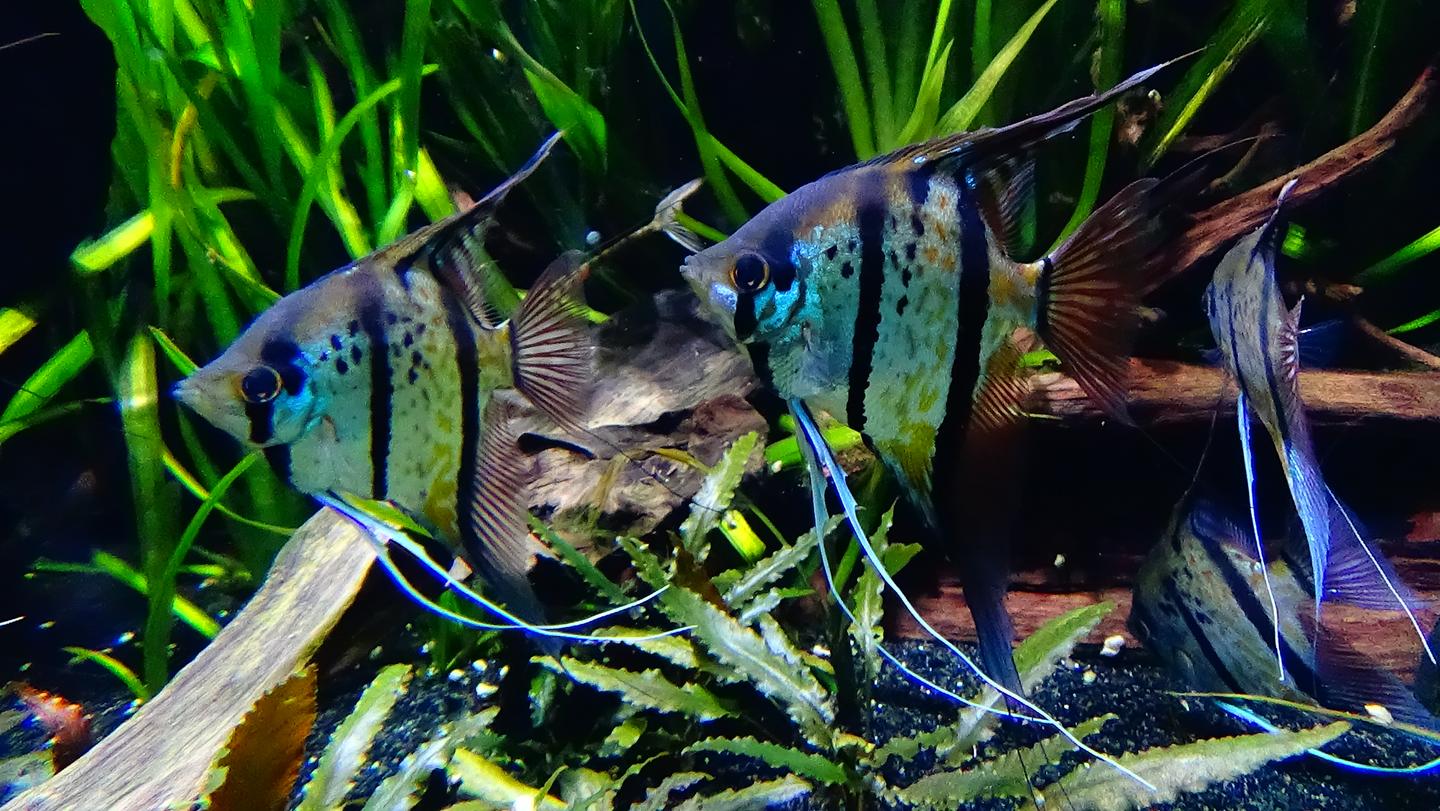
Freshwater angelfish are tall South American cichlids, not small community fish. OATA gives 120 litres as an industry floor for a compatible pair and says the aquarium must be sufficiently tall. We prefer planning around roughly 200 litres, a 100 × 40 cm footprint and about 50 cm height for an adult pair, with more space and an exit plan for a group.
Maintain these water conditions for optimal health and vibrant colors
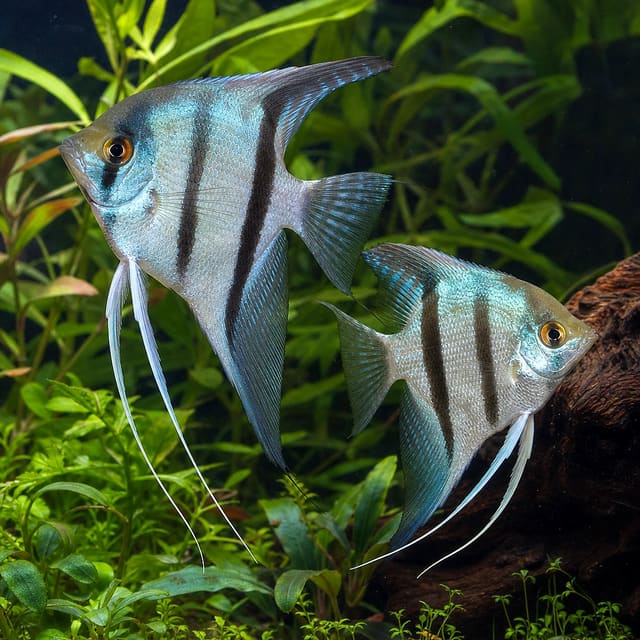
Rio Japura Albino Angelfish (Pterophyllum scalare) is a pale, red-eyed freshwater angelfish with the high, triangular profile for which the species is known. The Rio Japura name is used in the aquarium trade for this distinctive line; "Albino" describes the light body and reduced dark pigment. It remains Pterophyllum scalare, rather than a separate species or a longer scientific name.
This listing is for one live juvenile fish at the supplied listing size of approximately 3-3.5 cm. The available source data does not define whether that measurement is body length, standard length or total length, so treat it as a guide rather than an exact fin-to-fin measurement. The fish is sold unsexed. Colour, pattern, fin length and body shape continue developing as a juvenile grows, and the individual dispatched will naturally vary from the representative gallery images.
| What you receive | One live, unsexed juvenile fish |
|---|---|
| Scientific name | Pterophyllum scalare |
| Trade name | Rio Japura Albino Angelfish |
| Supplied listing size | Approximately 3-3.5 cm; measurement convention is not specified |
| Adult planning size | Up to about 15 cm total length, with considerably greater fin-to-fin height possible |
| Minimum aquarium | At least 100 cm long and preferably 45 cm or more in water depth; around 120 litres or larger is a practical baseline |
| Temperature | 24-30 C published species range; 25-28 C is a practical stable target |
| pH | 6.0-8.0; stability matters more than chasing a precise number |
| Hardness | 5-13 dGH published species range |
| Temperament | Usually composed, but still a cichlid and potentially territorial when mature or paired |
| Diet | Omnivorous; varied quality prepared, frozen and suitable live foods |
| Care level | Moderate |
Rio Japura is a trade-line name associated with angelfish linked in the hobby to the Japura river region of the Amazon basin. The spelling "Jappura" also appears in European stock lists. That background is useful for recognising the commercial line, but it is not proof that every fish sold under the name is wild caught or carries documented locality provenance. No wild-caught, F1 or collection-code claim is supplied for this individual, so this page does not make one.
The dependable identity is an albino form of Pterophyllum scalare. Expect a creamy white to pale pearlescent body, pink to red eyes, a laterally compressed shape and long dorsal, anal and ventral fins. The high-bodied silhouette can become much more pronounced with maturity. Juveniles often look less dramatic than adults, and normal variation means no two fish will have precisely the same colour intensity or finnage.
A 3-3.5 cm juvenile can look suitable for a small aquarium, but freshwater angelfish do not remain small. FishBase reports a maximum of about 15 cm in total length and recommends an aquarium at least 100 cm long. Their extended fins also make water depth especially important. A practical long-term starting point is a mature aquarium around 120 litres or larger, at least 100 cm across and preferably 45 cm or more in water depth. A group, a territorial pair or a mixed community needs more room.
Do not use the juvenile delivery size to calculate permanent stocking. Plan around the adult fish, the number of other cichlids, sight lines and the open water left after decor. A larger footprint provides room to retreat if social dynamics change; extra height protects the dorsal and anal fins and allows the characteristic shape to develop without crowding.
One angelfish can be kept as a centrepiece in a compatible community. If you intend to keep a group, use a substantially larger aquarium and expect juveniles to establish a hierarchy. A pair may form as fish mature, at which point it can defend a spawning site. There is no reliable visual sex guarantee for a juvenile of this size.
Pterophyllum scalare is an Amazon-basin cichlid. Published species data spans 24-30 C, pH 6.0-8.0 and 5-13 dGH. For an established domestic angelfish, 25-28 C in stable, clean water is a sensible everyday target. Avoid rapid changes in temperature, pH or mineral content. Ammonia and nitrite should remain at zero, while nitrate is controlled through stocking, plant growth, maintenance and regular partial water changes.
Use efficient biological filtration with moderate rather than punishing flow. A tall planted layout with wood, broad leaves and vertical structure reflects the dense vegetation associated with the species while still leaving open lanes for swimming. Position hard decor so long fins cannot be trapped or torn. Shaded areas are useful for a pale albino fish, but normal aquarium lighting is suitable when the fish can choose between bright and sheltered zones.
A secure lid is sensible. Keep heater guards and filter intakes appropriate for a small juvenile, and make sure food reaches it if larger residents dominate the surface. Before ordering, compare the full setup with our freshwater angelfish care guide, not only the fish's current size.
The best angelfish tank mates are calm, non-nipping fish that share warm-water requirements and are too large to be viewed as prey. Medium-sized peaceful tetras, appropriately kept Corydoras, calm rainbowfish and selected peaceful catfish can work in a roomy aquarium. Compatibility is never guaranteed by a species list alone: tank dimensions, group size, age, feeding competition and individual temperament all matter.
| Often worth considering | Use caution | Avoid |
|---|---|---|
| Peaceful medium tetras | Other angelfish without enough territory | Tiger barbs and persistent fin nippers |
| Corydoras suited to the same temperature | Very fast feeders that may outcompete juveniles | Tiny fish that may fit an adult angelfish's mouth |
| Peaceful medium catfish | Ornamental shrimp, especially juveniles | Aggressive or predatory cichlids |
| Calm rainbowfish in a larger tank | Breeding pairs in a general community | Any fish repeatedly damaging long fins |
Watch behaviour rather than assuming that a peaceful juvenile will always remain passive. Repeated chasing, clamped fins, torn fins, hiding at the surface or one fish being excluded from food are reasons to intervene. Browse the wider angelfish collection to compare strains and sizes before planning a group.
Offer a varied omnivore diet built around a quality tropical or cichlid flake, soft granule or small pellet sized for the fish's mouth. Rotate suitable frozen foods such as brine shrimp, daphnia, mysis and bloodworm, and use responsibly sourced live foods where appropriate. A varied diet supports growth and condition more reliably than relying on one rich food.
Young fish usually do well with small portions two or three times a day, provided all food is eaten promptly and water quality remains excellent. Adults can be fed less frequently. Angelfish quickly learn a feeding routine and may become assertive, so observe that quieter tank mates also eat. Remove uneaten food and do not use heavy feeding as a shortcut to fast growth.
Freshwater angelfish are intelligent, observant cichlids that learn where and when food appears. Juveniles may associate loosely, but mature fish form hierarchies and compatible pairs. A bonded pair may clean a broad leaf, slate or another vertical surface and lay eggs in rows. Both parents can guard the eggs and territory, which is interesting natural behaviour but can make a previously calm community tense.
This product is one unsexed juvenile, not a breeding pair. Sex, future pairing, fertility and breeding success are not guaranteed. Anyone building a group should provide substantial space, visual barriers and a plan to separate a fish if courtship or dominance becomes relentless.
| Line | Typical visual emphasis | Planning note |
|---|---|---|
| Rio Japura Albino | Pale body, red eyes and a potentially tall profile | This listing; one unsexed juvenile |
| Full Orange Koi Angelfish | Warm orange koi-type colour | Compare the individual listing size and stock |
| Rio Nanay Angelfish | Natural-style barring and locality-line appearance | Do not assume identical provenance or water needs |
| Platinum White Angelfish | Bright pale body without the same albino eye appearance | Useful visual comparison for a light-coloured display fish |
These are all angelfish, but colour name alone should not decide compatibility. Compare supplied size, adult space, social plan and the needs of fish already in the aquarium.
Our UK livestock delivery and Live Arrival Guarantee explains eligible destinations, dispatch conditions and what to do if there is a problem on arrival. New customers can use WELCOME10 for 10% off a first order, subject to the current offer terms.
No. The scientific identity is Pterophyllum scalare. Rio Japura Albino is the commercial line or form name, not an extra part of the scientific name.
One product quantity includes one live juvenile angelfish. It is not a pair or a group.
It is sold unsexed. Sex cannot be guaranteed from a juvenile of this size, and future pairing is not guaranteed.
The supplied listing size is approximately 3-3.5 cm. Because the source does not specify body, standard or total length, allow natural measurement and individual variation.
Plan for up to about 15 cm total length and considerably more height when the extended fins are included. Use a tall aquarium at least 100 cm long rather than planning around the juvenile size.
There is a predation risk once an angelfish matures because very small, slender fish can fit in its mouth. Choose larger peaceful companions and assess the actual size difference.
No. The images represent the named form. Live fish vary in colour, pattern, fin development, body shape and supplied size, especially while juvenile.
It is better described as moderate care. A prepared keeper with a mature tall aquarium can succeed, but adult size, water stability, feeding and cichlid behaviour require more planning than a small peaceful shoaling fish.
The species identity, water range, habitat, adult length and reproduction notes were checked against established fisheries and institutional sources. The Rio Japura material is used only to explain the trade line; it is not treated as proof of this fish's collection history.
No reviews for this item yet. Bought one? Honest reviews only, good or bad.
What customers say about ordering from us
I have a small group of long finned mountain minnows. So was delighted to be able to order ten of this variety to increase the genetics in my tank . The ones I recieved are healthy but it’s to early to give a verdict on wether they are of a long finned type since they are small currently.
Gordon Walker · 23 Sept 2026
100% success travel and "installation". Pleased with quality of purchase. The Siamese fighter a bit "shy" so have not yet seen him at his best yet but looking good. Happy customer. GG
George E Garratt · 21 Sept 2026
Reviews of our shop, collected by Judge.me, an independent third-party review collector. Newest first.