Moderate
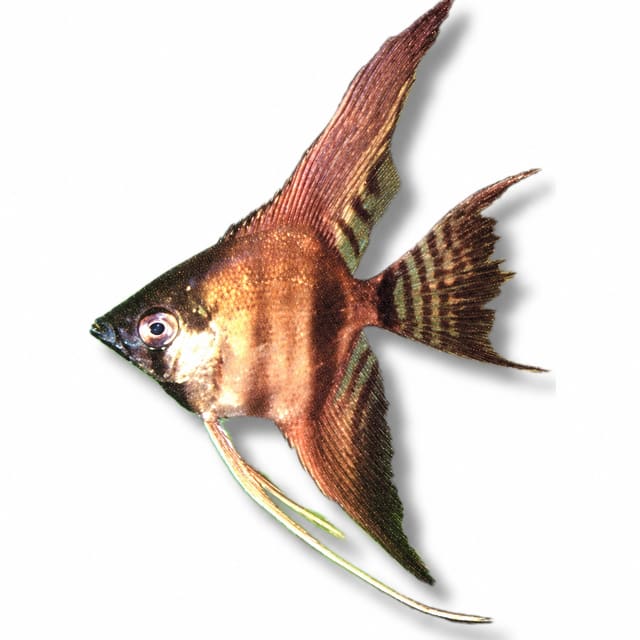
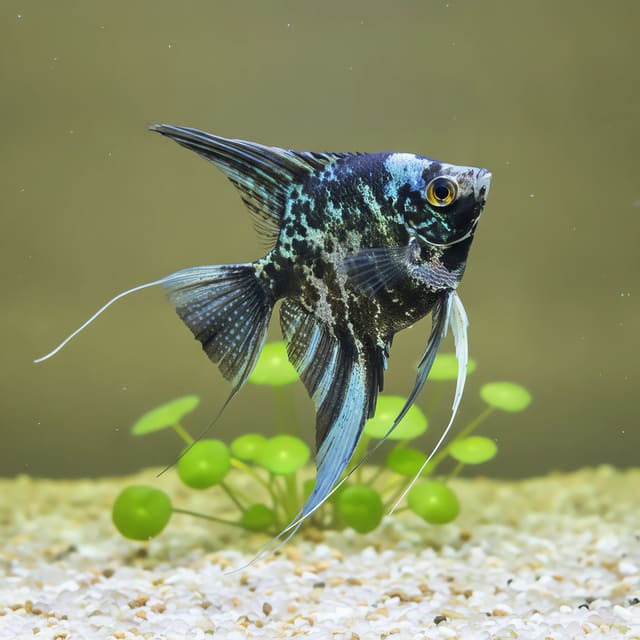
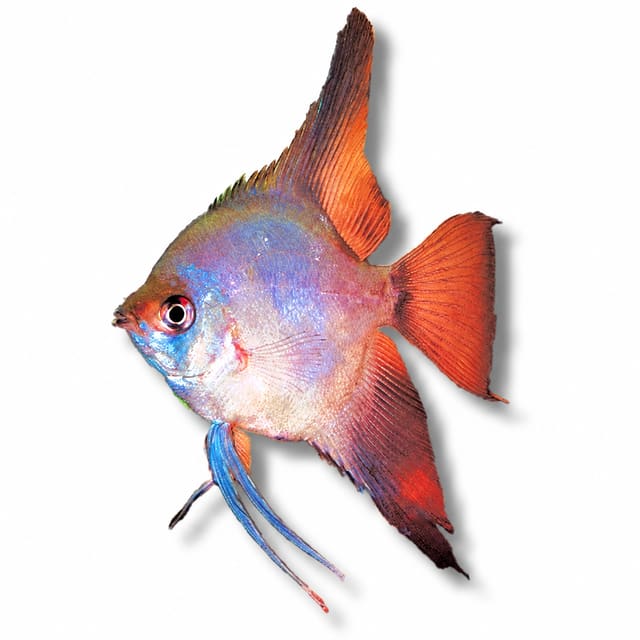
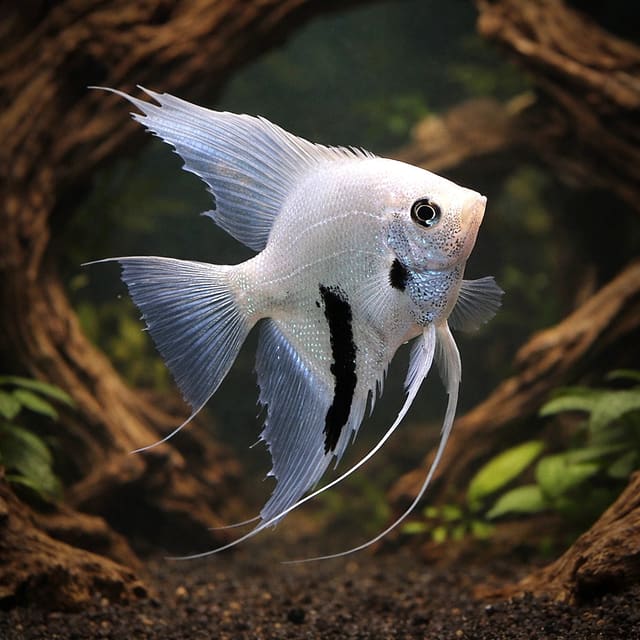
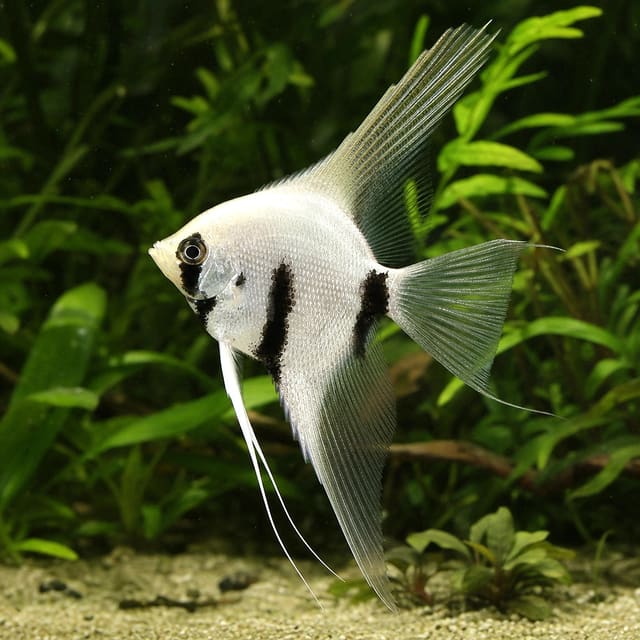
Marble Angelfish (Pterophyllum scalare)
24–27°C · pH 6.5–8 · 200L
£3.99

Jaguar Angelfish are patterned Pterophyllum scalare for tall, mature freshwater aquariums. One purchase supplies one fish in the chosen 3-3.5 cm or 4-4.5 cm size; sex is not guaranteed. Plan around adult height, social behaviour and calm, suitably sized companions.
Adult size is the maximum length this species reaches at full maturity (scientific sources). The livestock you receive will be younger and smaller — pick a size above for the actual shipping size. Product-photo provenance and any image-specific limitations are stated on the listing.
Pterophyllum scalare
Save when buying multiple fish. Each quantity is one fish; sex and pair formation are not guaranteed unless the selected variant explicitly states them.
Jaguar Angelfish are patterned Pterophyllum scalare for tall, mature freshwater aquariums. One purchase supplies one fish in the chosen 3-3.5 cm or 4-4.5 cm size; sex is not guaranteed. Plan around adult height, social behaviour and calm, suitably sized companions.
Adult size is the maximum length this species reaches at full maturity (scientific sources). The livestock you receive will be younger and smaller — pick a size above for the actual shipping size. Product-photo provenance and any image-specific limitations are stated on the listing.
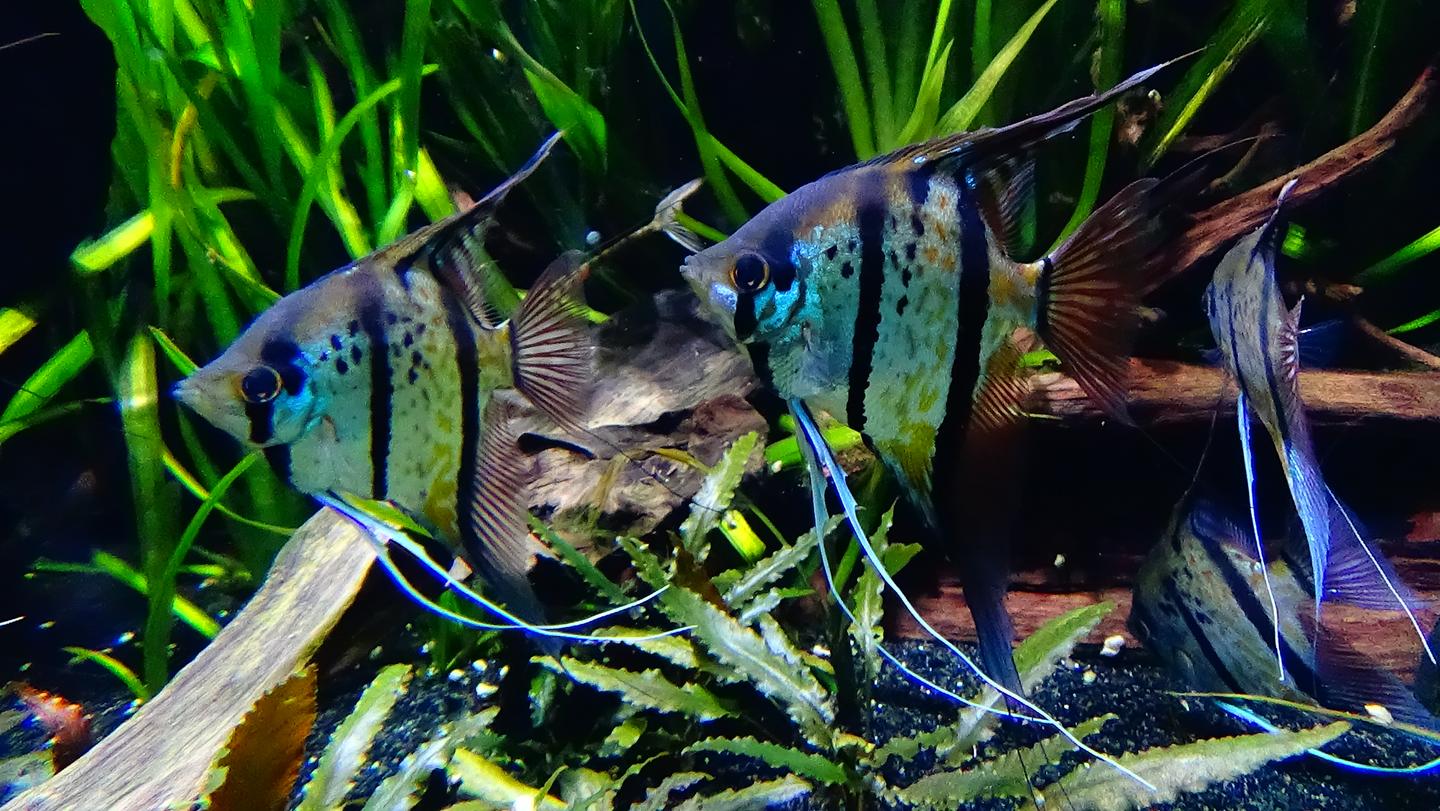
Freshwater angelfish are tall South American cichlids, not small community fish. OATA gives 120 litres as an industry floor for a compatible pair and says the aquarium must be sufficiently tall. We prefer planning around roughly 200 litres, a 100 × 40 cm footprint and about 50 cm height for an adult pair, with more space and an exit plan for a group.
Maintain these water conditions for optimal health and vibrant colors
The Jaguar Angelfish is a patterned domestic form of Pterophyllum scalare, the freshwater angelfish. Its trade name refers to the broken dark markings across the silver body; the accepted scientific name remains Pterophyllum scalare. It is a South American cichlid with a laterally compressed body, extended dorsal and anal fins and long ventral filaments. That unmistakable height is the first husbandry fact to plan around.
One purchase supplies one live fish in the selected size. This product has two genuine size choices, 3-3.5 cm and 4-4.5 cm. The size you select is the size supplied, not the adult size. Availability belongs to the live selector, so the permanent care copy does not claim that every choice is always in stock. Neither size changes the species’ adult requirements.
Sex is guaranteed only when the selected option explicitly states male or female. This Jaguar Angelfish listing has no sex-guaranteed option. Juvenile head shape, fin angle, colour or behaviour cannot be used as a promise of sex. The small breeding papilla may provide context during active spawning, but it is not a dependable retail guarantee outside that moment.
FishBase currently carries a 10.5 cm total-length field maximum and an older 15 cm total-length aquarium figure. Tropical Fish Co’s reviewed care guide therefore recommends planning around roughly 15 cm total length and about 20-25 cm total height including the extended fins. Those measurements are not interchangeable: a fish may be much taller from fin tip to fin tip than it is long from snout to tail.
Gallery images have been digitally enhanced to improve image quality. Natural colour, pattern, size and maturity can vary between live animals.
A juvenile angelfish can look comfortable in a small display, but the adult needs height, turning room and enough territory to avoid constant confrontation. Tropical Fish Co prefers planning around roughly 200 litres, a 100 x 40 cm footprint and about 50 cm of usable height for a compatible adult pair. This conservative house plan aligns with the Seriously Fish species profile. OATA gives 120 litres as a broad UK industry floor for a compatible pair of smaller American cichlids and separately states that an adult angelfish aquarium must be sufficiently tall.
Use 24-27 °C, pH 6.5-8.0 and around 5-12 dGH as the store’s routine target. These values deliberately overlap FishBase and OATA guidance. Measure the source water, acclimatise gradually and favour stability over chasing a fashionable number. A mature biological filter, zero detectable ammonia and nitrite, regular testing and reliable oxygen exchange are non-negotiable.
Use vertical plants or wood to break sight lines while leaving broad open lanes where an adult can turn without dragging its fins. Gentle flow is preferable to a harsh jet, but gentle does not mean stagnant. Cover filter intakes, avoid sharp décor and secure any structure that could shift if the substrate is disturbed.
Jaguar Angelfish suit a keeper ready to plan beyond the juvenile stage. They are manageable with good preparation, but their height, social behaviour, predatory mouth and cichlid territoriality make them more demanding than a generic small community fish. Tropical Fish Co assesses the care level as intermediate.
A reasonable match is a tall, cycled aquarium with calm companions of suitable adult size, measured water, a complete diet and a plan for pair formation or group conflict. Reconsider if the tank is shallow, newly set up, crowded with fin-nippers, stocked with prey-sized fish or missing a realistic separation route.
Read the complete freshwater angelfish care guide before choosing livestock. The angelfish collection shows current products and sizes; specific alternative products remain in the related field and are not automatic tank-mate suggestions.
Volume is only one part of angelfish housing. A tall narrow tank may provide height but poor turning room; a long shallow tank may provide litres without protecting extended fins. The store’s adult-pair planning point is roughly 200 litres with a 100 x 40 cm footprint and about 50 cm of usable height. Seriously Fish describes the same 100 x 40 x 50 cm dimensions as the smallest aquarium it would consider for the species.
OATA’s 120-litre recommendation is a broad floor for a compatible pair of smaller American cichlids. It should not be read as proof that every 120-litre shape suits every angelfish pair. Account for actual dimensions, other inhabitants, filtration, décor and behaviour. A group or community needs more space than an adult pair and an exit plan if aggression escalates.
Build for the adult from the start. Juveniles grow, hierarchy changes and pairs may claim a vertical spawning surface. Large-leaved plants, tall stems and wood create visual barriers and resting choices. Keep open water through the centre or front so the fish can turn cleanly. Sharp stones, exposed wire and narrow gaps can damage long fins or trap a startled fish.
If this is your first aquarium, complete the first tropical tank setup before ordering. Adding fish slowly gives the established filter time to respond to the increased waste load.
Tropical Fish Co’s routine target is 24-27 °C, pH 6.5-8.0 and about 5-12 dGH. It was selected from the overlap between FishBase and OATA guidance so it gives a practical, conservative household range. FishBase lists 24-30 °C, pH 6.0-8.0 and 5-13 dGH. OATA’s explicitly group-level American-cichlid range is 22-27 °C, pH 6.5-8.0 and 4-12 dGH. The store target is the recommendation to use here, rather than alternating between the outer limits of every source.
Stability is more valuable than repeatedly dosing toward a single decimal. Measure GH, KH and pH before changing the water source. Avoid copying a fixed tap-and-RO recipe, because tap water and remineralisation differ between homes. Match the conditions in which the fish is currently held, acclimatise gradually and make elective changes slowly.
The water chemistry guide explains the relationship between pH, GH and KH. You can also compare your measured aquarium values with the stated range using the water parameter matcher. Neither tool replaces direct tests or the need to respond to ammonia and nitrite as urgent problems.
Use a separate thermometer rather than trusting only the heater dial. Keep oxygen exchange and filtration reliable without forcing the fish to brace against a strong current all day. If a heater, filter or power supply fails, test and observe the system before making several corrections at once.
OATA’s general sheet covers American cichlids as a broad group. It calls for zero ammonia and nitrite, nitrate no more than 20 mg/l above the normal tap-water level, 4-12 dGH and 3-10 dKH. These group values support sensible maintenance, while the store’s narrower overlap target above remains the routine plan for Jaguar Angelfish.
The RSPCA explains that a working biological filter supports bacteria that convert toxic ammonia and nitrite into nitrate. Keep the filter running continuously, check for blocked intakes and preserve mature biological media. If media needs rinsing, use removed aquarium water rather than tap water, which can damage the bacterial population.
OATA suggests a partial water change of around 25% each week as a broad starting routine for American cichlids. Adjust the schedule using tests, stocking, feeding, plant growth and filter performance. Treat replacement water for chlorine or chloramine and match temperature closely. Siphon visible waste without stripping the aquarium of every established surface or cleaning all media at the same time.
Healthy fish normally show steady swimming, regular breathing, clear eyes, open fins, a consistent body profile and reliable feeding. Watch each individual, because a subordinate fish may be excluded long before the whole aquarium looks troubled. Clamped or damaged fins, gasping, flashing, white spots, wounds, unusual balance, isolation, darker or paler colour, or a sudden appetite change are warning signs, not a diagnosis.
When something changes, test ammonia, nitrite, nitrate, temperature and, where relevant, pH. Treat detectable ammonia or nitrite as urgent. Photograph visible signs, record the timeline and contact a specialist aquatic retailer or fish vet. Do not copy a universal medicine or heat recipe from an unrelated case; the correct response depends on the actual problem, the fish, the water and a lawful product labelled for the system.
Keep a short maintenance log if behaviour or water varies. Recording test results, feeding and changes to the aquarium makes patterns easier to see and gives a retailer or fish vet more useful context.
Pterophyllum scalare is omnivorous. Seriously Fish says aquarium fish accept pellet or flake food and relish live or frozen foods. OATA recommends specialised cichlid pellets or granules supplemented with suitable frozen or freeze-dried items. Tropical Fish Co’s care plan is a nutritionally complete cichlid pellet, granule or suitable flake as the staple, with appropriate variety rather than one treat used as the entire diet.
Offer pieces the fish can swallow and portions consumed within a few minutes. Watch every fish eat. A dominant angelfish may take the obvious food while a subordinate animal hangs back, and fast surface feeders can leave slower fish underfed. Distribute food where necessary, then remove excess before it decomposes and burdens the filter.
Bloodworm, brine shrimp and similar foods can add variety, but none should automatically become the whole menu. A controlled feeding study in freshwater angelfish supports the fact that feed composition affects growth and reproduction; it does not establish one universal home schedule. Use it as support for nutritional variety, not a licence to overfeed.
Body profile, steady growth and consistent feeding response are more useful than chasing rapid size. A swollen abdomen, loss of condition, abnormal balance or sudden refusal to eat needs observation and water tests, not an improvised fast, peas, vitamins or medicated food presented as a diagnosis.
Angelfish are social cichlids, but there is no single number that works in every aquarium. OATA advises a pair or group at minimum and warns that an isolated angelfish may become stressed. Seriously Fish recommends small groups while noting that fish can squabble with their own kind. Tropical Fish Co therefore recommends a genuine compatible pair or a deliberately managed group with substantially more space and an exit plan.
Two random juveniles are not automatically a pair. A juvenile group can allow natural pair formation, but adults develop hierarchies and pair bonds that change the use of space. More fish is not automatically safer. Observe feeding access, chasing, fin condition, hiding and whether one individual is confined to a corner. Persistent exclusion is a welfare problem.
Use tall plants, wood and other visual barriers to interrupt direct pursuit. Place feeding in more than one area if needed. If a pair forms and defends a vertical surface, the remaining fish may lose access to a large part of the aquarium. A spare mature tank or a credible rehoming route must exist before the conflict reaches that point.
The offer does not guarantee sex. Avoid treating forehead shape, fin angle, size or aggression as a juvenile sex test. During active spawning the breeding papilla can provide context, but that observation cannot be turned into a permanent guarantee for an unsexed retail fish.
Freshwater angelfish clean and lay adhesive eggs on a vertical surface such as a broad leaf, slate or aquarium glass. Both parents may guard eggs and young. Pair choice matters, and behaviour research summarised in the store guide supports serial monogamy under captive conditions rather than the romantic claim that every pair mates for life.
Territorial defence often intensifies around spawning. A dedicated mature setup gives adults and fry a safer plan than relying on a crowded community. Clutch size, hatch timing and parental success vary; none is a customer promise. Do not use preventive methylene blue, antibiotics or other fixed recipes without a diagnosed need and lawful instructions.
Breeding is not required for good welfare. The same vertical structure, stable water and space are useful in a non-breeding display. If eggs appear unexpectedly, decide whether the community can safely accommodate the adults’ defence. Move fish only into a mature, suitable system; a rushed uncycled container can create a worse problem than the behaviour it was meant to solve.
Before the delivery date, confirm that the aquarium is cycled, temperature is stable, ammonia and nitrite are zero and established inhabitants are healthy. Make sure the new fish can reach cover without being trapped by a territorial resident.
Use the current store delivery procedure. Tropical Fish Co’s policy advises floating the sealed bag for 20-30 minutes before release and acclimatising slowly. Avoid pouring transport water into the aquarium. Once the fish is released, observe breathing, balance, fin position and the response of existing fish. Give it time to settle before expecting normal confidence.
The Live Arrival Guarantee protects the delivery event; it is not a biological care requirement. Someone must be present to receive live fish. If anything has gone wrong, contact the store on the day of arrival with the order number and one continuous unboxing video that starts with the sealed parcel, shows it being opened and shows the fish still inside the sealed bag. Review the current delivery and Live Arrival Guarantee policy before the parcel arrives.
Jaguar Angelfish can live in a robust community, but no companion is guaranteed safe. OATA says calmer American cichlids such as angelfish can be mixed with appropriately robust, larger shoaling species under compatible conditions. Seriously Fish calls the species generally peaceful while warning that it may squabble with its own kind and eat small fish.
Judge every proposed companion on adult body size, fin behaviour, temperament, territory, water overlap and feeding speed. Juvenile appearance is misleading. A fish small enough to swallow may become prey later; a fast feeder may leave an angelfish thin without ever attacking it; a persistent fin-nipper can damage extended dorsal, anal and ventral fins.
| Question | Why it matters |
|---|---|
| Will the adult fit in an angelfish mouth? | Very small fish, shrimp and fry may be treated as prey. |
| Does it nip fins? | Long fins and ventral filaments are vulnerable to repeated damage. |
| Will territories overlap? | Breeding pairs and other cichlids may claim the same vertical structure. |
| Do water needs overlap? | Temperament cannot compensate for unsuitable temperature or chemistry. |
| Can both fish feed? | Very fast or aggressive feeders may cause chronic underfeeding. |
Corydoras and bristlenose plecos are often considered because they use different aquarium levels, but that is not a guarantee. Species, adult size, floor space and water still need to be checked. Likewise, a larger tetra or rasbora is only a possible companion when it is calm, suitably sized and not a fin-nipper.
Introduce changes carefully and observe more than the first hour. Feeding access, chasing and territory can shift over days as fish settle. Rearranging visual barriers can sometimes interrupt an established line of pursuit, but persistent aggression requires separation rather than endless décor changes.
The dark Jaguar pattern is not a temperament forecast. This domestic colour form should be assessed with the same adult behaviour and welfare checks as other Pterophyllum scalare forms.
Before adding Jaguar Angelfish to an existing aquarium, write down the adult size and temperature range of every resident. Identify likely fin-nippers, very small prey and territorial competitors. Look at the physical tank: a nominally peaceful group can still fail when every fish must use the same narrow feeding lane or shelter.
Check that the angelfish can turn freely, withdraw behind cover and reach food. Confirm the filter can support the extra waste. Decide what you will do if a pair forms, if one fish is excluded or if prey risk changes as the angelfish grows. A community plan is complete only when it includes the adult stage and a response to conflict.
Plan around roughly 15 cm total length and about 20-25 cm total height including extended fins. FishBase also carries a current 10.5 cm TL field maximum, so the listing labels the different records rather than pretending they are one measurement. The selected 3-3.5 cm or 4-4.5 cm size is the juvenile dispatch size.
Tropical Fish Co prefers roughly 200 litres, a 100 x 40 cm footprint and about 50 cm usable height for a compatible adult pair. OATA gives 120 litres as a broad industry floor for a pair of smaller American cichlids. A group or community needs more room and a separation plan.
Plan for a genuine compatible pair or a deliberately managed group. Two random fish are not automatically paired, and an isolated fish should not be the default. A group needs substantially more space, visual barriers, feeding checks and a safe separation or rehoming route.
It suits a prepared keeper rather than a rushed first setup. Tropical Fish Co rates the care level intermediate because the fish needs a tall mature aquarium, stable measured water, appropriate companions and a plan for adult social conflict. The feeding routine itself is straightforward.
Use a nutritionally complete cichlid pellet, granule or suitable flake as the staple, with suitable frozen or freeze-dried variety. Feed measured portions, confirm every fish gets access and remove excess. Bloodworm or another treat should not become the complete diet.
Use Tropical Fish Co’s routine target of 24-27 °C, pH 6.5-8.0 and about 5-12 dGH. Match the fish’s existing water, acclimatise gradually and avoid sudden elective changes. Always test GH and KH before altering the source water.
It is often calm for a cichlid, but it can squabble with its own kind and defend a pair or spawning site. Its long fins make it vulnerable to persistent fin-nippers. Watch chasing, feeding access and fin condition, and separate fish when exclusion or injury continues.
Possible companions are calm, appropriately robust larger shoaling fish and other medium-sized species with overlapping water needs. Avoid prey-sized fish, small shrimp and fry, persistent fin-nippers, highly aggressive cichlids and much faster feeders. Check adult size, territory and feeding behaviour for every species.
Tropical Fish Co hand-packs live fish in oxygen with an insulated box and a heat pack when conditions call for it, then uses a licensed live-animal courier. Be present, inspect the parcel the same day and record one continuous video from the sealed parcel to the fish still inside the sealed bag if there is a problem.
OATA and RSPCA material is labelled as group or general welfare guidance rather than a species-specific optimum. This page gives no guarantee of sex, lifespan, a pair bond, universal tank-mate safety, a fixed disease treatment or a breeding result.
No reviews for this item yet. Bought one? Honest reviews only, good or bad.
What customers say about ordering from us
I have a small group of long finned mountain minnows. So was delighted to be able to order ten of this variety to increase the genetics in my tank . The ones I recieved are healthy but it’s to early to give a verdict on wether they are of a long finned type since they are small currently.
Gordon Walker · 23 Sept 2026
100% success travel and "installation". Pleased with quality of purchase. The Siamese fighter a bit "shy" so have not yet seen him at his best yet but looking good. Happy customer. GG
George E Garratt · 21 Sept 2026
Reviews of our shop, collected by Judge.me, an independent third-party review collector. Newest first.