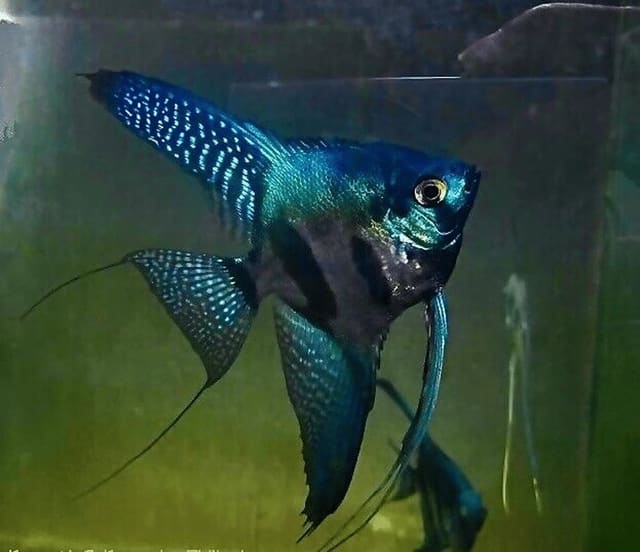
Moderate
Pterophyllum scalare Pinoy green ghost
24–27°C · pH 6.5–8 · 200L
£13.99
Photo coming soon
The size, price and care details on this page are for this listing.
Gold Angelfish (Pterophyllum scalare) are tall South American cichlids in a domestic gold form. Sold individually in nine size choices, they need a mature, spacious aquarium and a compatible pair or carefully planned group.
Pterophyllum scalare
Save when buying multiple fish. Each quantity is one fish; sex and pair formation are not guaranteed unless the selected variant explicitly states them.
Minimum of 2 per order.
Gold Angelfish (Pterophyllum scalare) are tall South American cichlids in a domestic gold form. Sold individually in nine size choices, they need a mature, spacious aquarium and a compatible pair or carefully planned group.
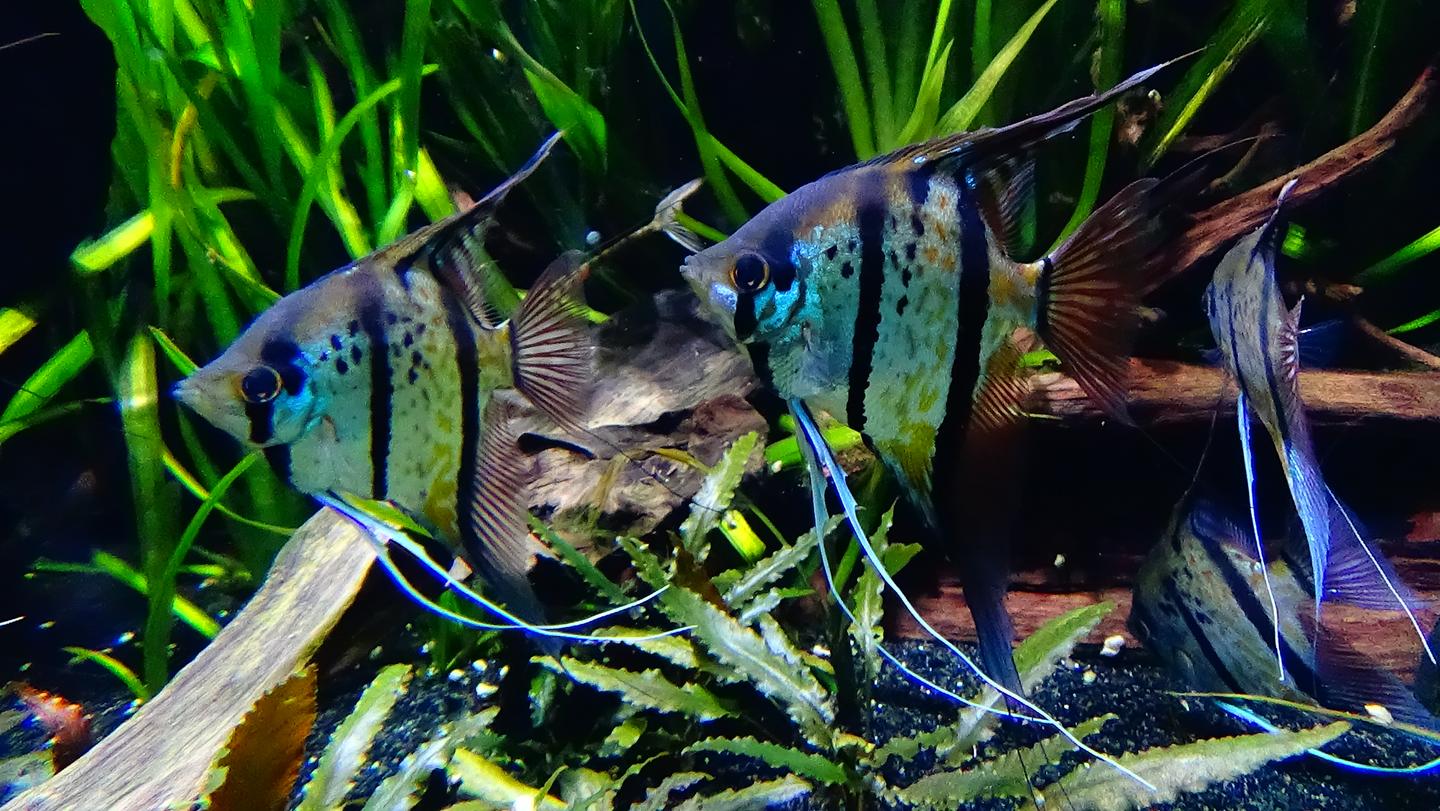
Freshwater angelfish are tall South American cichlids, not small community fish. OATA gives 120 litres as an industry floor for a compatible pair and says the aquarium must be sufficiently tall. We prefer planning around roughly 200 litres, a 100 × 40 cm footprint and about 50 cm height for an adult pair, with more space and an exit plan for a group.
Maintain these water conditions for optimal health and vibrant colors
Gold Angelfish (Pterophyllum scalare) bring the familiar tall angelfish outline to a warm gold colour form. Gold describes the domestic form; the species belongs to the South American cichlid family Cichlidae. Its long dorsal, anal and ventral fins give it a presence that a small shop-size fish can only hint at. Choose it with the adult aquarium in mind, including the height needed for those fins and the space required by its social behaviour.
This is a fish for a prepared keeper who enjoys watching the relationships within an aquarium. Angelfish may move gracefully and appear calm, yet they are cichlids with changing boundaries and feeding priorities. Pair formation can alter how they use the tank. A good plan includes mature filtration, stable measured water, suitable companions and somewhere appropriate to separate fish if persistent conflict develops.
Our routine angelfish guidance is 24–27°C, pH 6.5–8.0 and about 5–12 dGH, with a compatible pair or a deliberately planned group. For an adult pair, Tropical Fish Co prefers roughly 200 litres, a footprint around 100 × 40 cm and about 50 cm usable height. A group or community requires more space and more attention to territory. Assess these planning recommendations against the actual dimensions and the fish's behaviour.
One purchase quantity supplies one live Gold Angelfish of the selected size. This listing offers nine size choices: 1 cm, 1.5–2 cm, 2.5–3 cm, 3–3.5 cm, 4–5 cm, 5–5.5 cm, L (5.5–6 cm), XL (6–7 cm) and XXL (over 7.5 cm). Use the live size selector when ordering. The size you select is the size supplied, not the adult size.
Sex is guaranteed only when the selected option explicitly states male or female. This Gold Angelfish listing has no sex-guaranteed option. Two purchases supply two individuals; their relationship needs observation. Plan your aquarium around observed compatibility and an appropriate social arrangement, rather than assuming that matching colour and size are enough to make two individuals settle together.
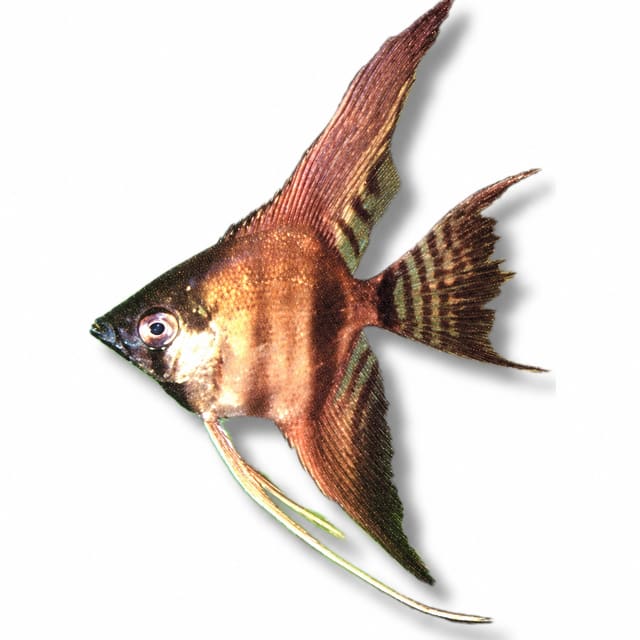
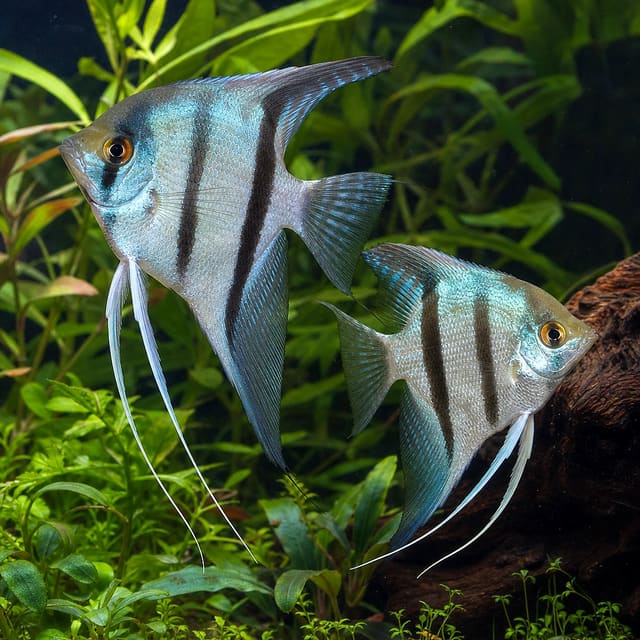
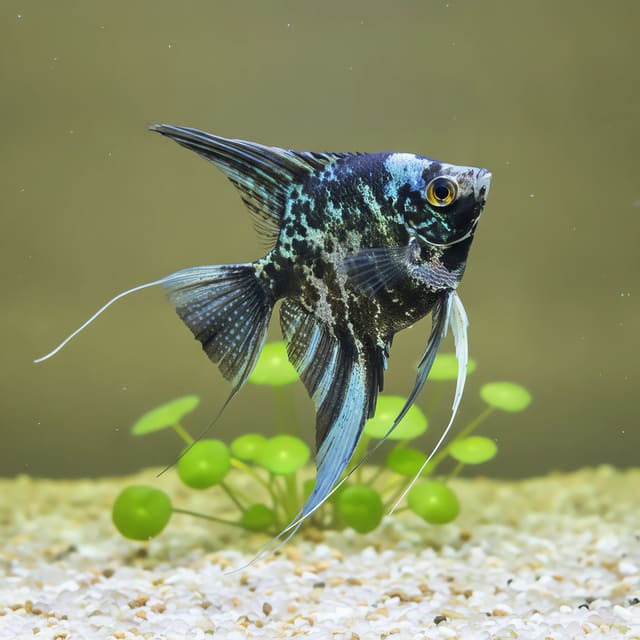
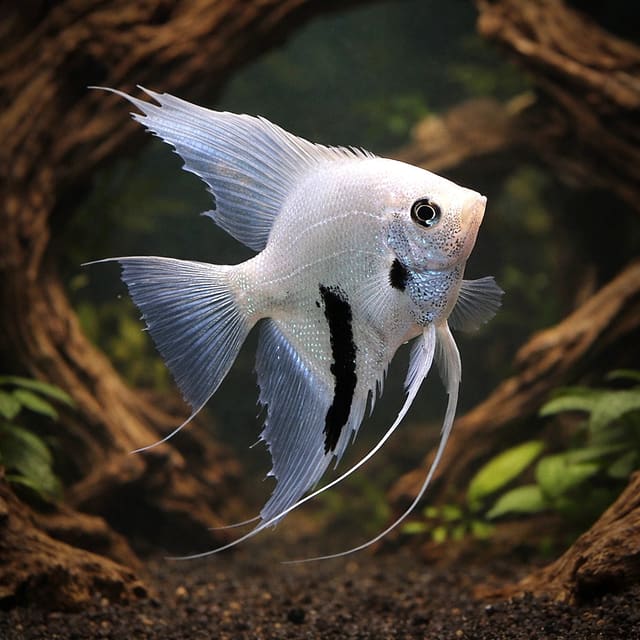
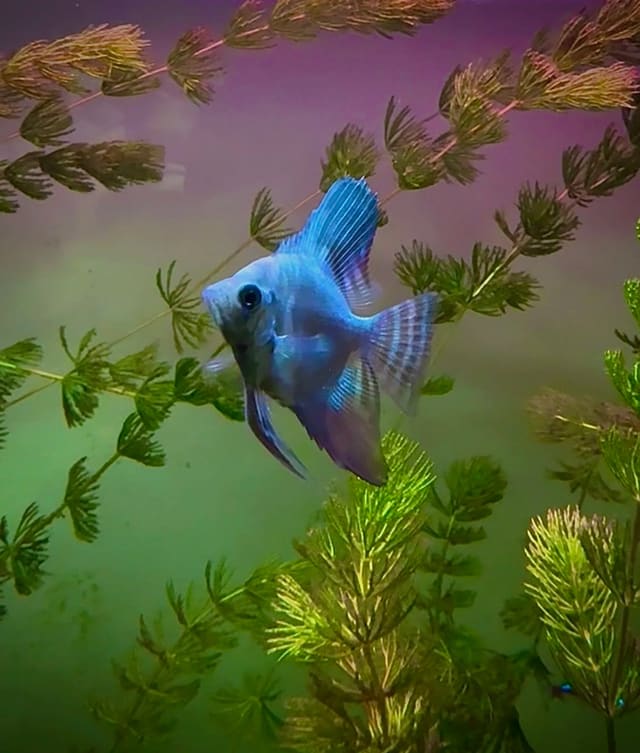
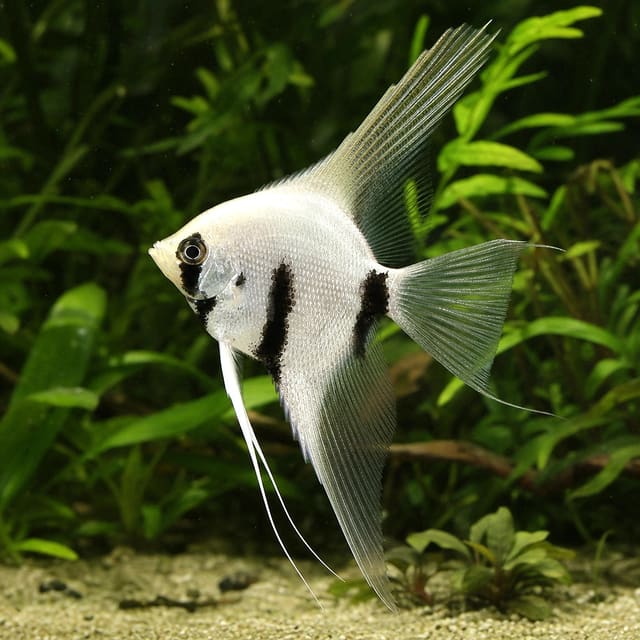
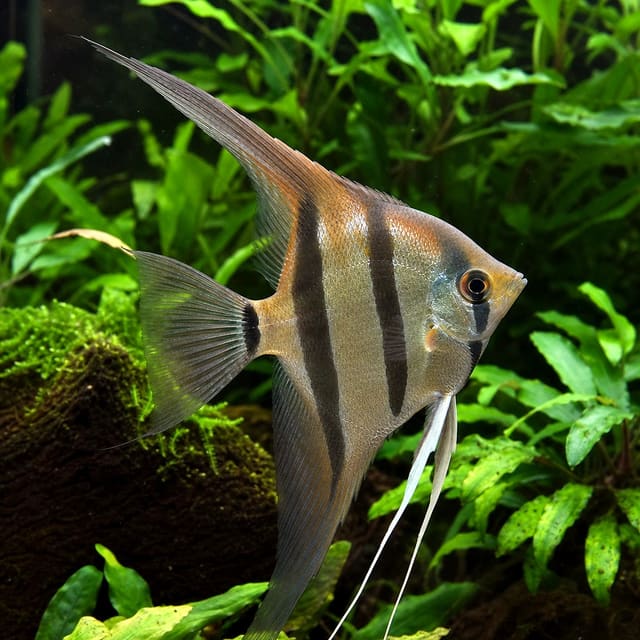
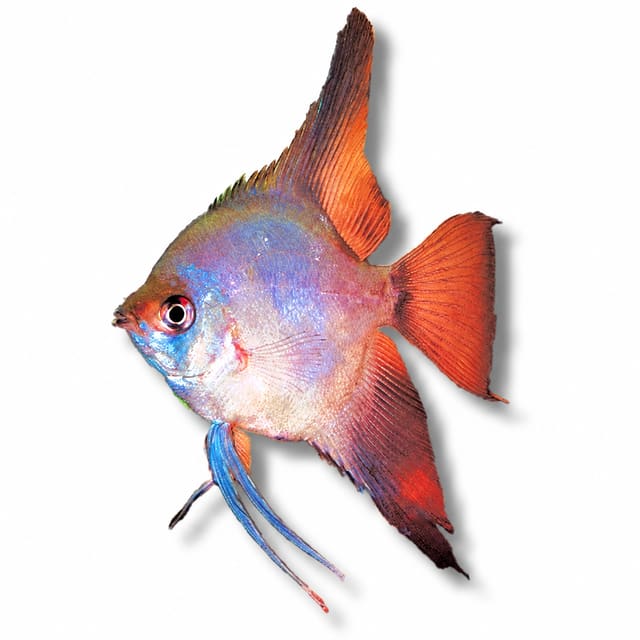
The gallery images are representative of this type of animal rather than photographs of the exact animal supplied, so colours can look slightly different from the live animal. The views show the tall profile and extended fins, including a scene with two fish. Let those images help you appreciate the form while judging the purchase by the stated animal, size choice and suitability of your enclosure.
| A promising starting point | What to check before purchase |
|---|---|
| A mature, tall aquarium with useful open space | Adult fin clearance, turning room and access to cover. |
| A compatible pair or a planned group | Feeding access and a practical response to persistent chasing. |
| A calm community with larger companions | Adult size, fin behaviour, territory and water requirements. |
If you are comparing forms, the separate Angel Fish Small listing offers another angelfish option to consider. Compare the exact offer and adult-care plan on its page; a comparison is not a recommendation to add another fish to an already occupied territory. The wider angelfish collection helps you explore the range once the aquarium decisions are settled.
Colour is a preference, not a shortcut to easier husbandry. Choose Gold Angelfish because you enjoy this form and can provide the space and care it requires. Reliable everyday maintenance, a complete diet and attention to each fish's behaviour make a much stronger foundation than an ambitious display assembled around the smallest size available.
Before choosing a size, consider the feeding skills and observation time your setup allows. A very small fish needs food it can manage and companions that will allow it access. A larger fish still needs a careful introduction into any existing social arrangement. Have your aquarium dimensions, current occupants and recent water readings ready when asking for advice; those details help turn a broad interest in angelfish into a workable plan for your own aquarium.
It is also useful to decide who will maintain the aquarium during holidays or busy periods. Show that person how to check equipment, watch each fish at feeding time and recognise persistent chasing. The arrangements around the tank contribute to its long-term success.
Plan for an angelfish that is much taller than its body length suggests. Our species guide uses around 15 cm total length and often 20–25 cm overall height including the extended fins as practical adult planning figures. Individuals and domestic forms vary. The height matters because a fish should be able to move and turn without its fins continually meeting the substrate, décor or surface.
The published measurements are not all the same kind of record. FishBase's current maximum-length field reports 10.5 cm total length for male or unsexed fish, while older text on the same profile cites 15 cm total length. Seriously Fish reports 150 mm standard length, which excludes the tail. It would be misleading to treat all three as equivalent measurements of one universal maximum. Our freshwater angelfish care guide explains the distinction and the reason for leaving generous adult room.
Tropical Fish Co's preferred adult-pair plan is roughly 200 litres, with about a 100 × 40 cm footprint and 50 cm usable height. A tank measuring 100 × 40 × 50 cm is 200 litres before allowing for the difference between external and internal dimensions, substrate, décor and the space above the water. Check the usable enclosure rather than assuming the advertised volume tells the whole story.
OATA gives 120 litres as a general industry floor for a compatible pair of smaller American cichlids and specifically calls for sufficient height for angelfish. Apply that broad floor with particular care to height, layout and the individuals involved. Our more generous planning point leaves a better starting margin, while still requiring a sensible layout and an assessment of the actual pair.
A group has different demands. More fish create more possible relationships and more opportunities for a subordinate individual to lose access to food or space. Do not divide the tank volume by a convenient number and assume the social problem is solved. Extra footprint, visual barriers and an appropriate separation or rehoming plan matter alongside water volume.
Arrange tall plants or wood so that they break long sight lines while preserving open water for turning. A tank can be physically large yet offer little useful room if every route is narrowed by décor. Look at the arrangement from the side as well as the front. The fins need clearance throughout normal movement, including near the places where the fish feed and rest.
A juvenile aquarium should have a realistic route to the adult setup. Work out where that setup will go and how it will be maintained before the fish outgrow their first arrangement. Buying a small animal can be an enjoyable way to watch it develop, provided its future accommodation is already part of the decision. Growth should not arrive as a surprise that forces a rushed move.
Use the following as Tropical Fish Co's routine guidance for domestic freshwater angelfish. It deliberately draws on the overlapping parts of broader references. Confirm the water in which the fish are being held and make an appropriate transition into a stable, mature aquarium.
| Care factor | Routine guidance |
|---|---|
| Temperature | 24–27°C. |
| pH | 6.5–8.0. |
| General hardness | About 5–12 dGH. |
| Ammonia | Zero detectable. |
| Nitrite | Zero detectable. |
| Nitrate | OATA's general guidance is no more than 20 mg/l above the normal tap-water level. |
These routine targets have a different purpose from the broader ranges in reference works. FishBase's species profile lists 24–30°C, pH 6.0–8.0 and 5–13 dH. OATA's American-cichlid sheet gives group guidance of 22–27°C, pH 6.5–8.0 and 4–12°dH. There is no benefit in repeatedly moving a settled aquarium between the endpoints of these ranges simply because several sources list different figures.
Test source water and aquarium water before deciding whether any adjustment is necessary. pH, general hardness and carbonate hardness describe different things. A bottle that changes one reading does not necessarily make the whole water profile appropriate. Our water chemistry guide explains the distinctions and helps make conversations about your water more precise.
Keep a thermometer in the aquarium and check it rather than relying entirely on the heater dial. Place the tank away from strong direct sunlight and avoid a position where room conditions repeatedly push the water temperature around. When you prepare replacement water, consider the conditions the fish will actually experience after it enters the tank.
The water matcher can help organise a broad comparison, but use the qualified routine guidance here when planning this fish. A numerical overlap does not assess aggression, adult space, feeding competition or the quality of an aquarium's filtration. Water is one part of suitability, not the entire decision.
A biological filter supports bacteria that process toxic ammonia into nitrite and then nitrate. Its ability to do that work matters more than the number of weeks the tank has been standing. Confirm that the aquarium is mature with appropriate tests before adding fish. The first aquarium preparation guide provides a useful introduction to establishing that system.
Increase stocking carefully and monitor after additions. More animals and more food mean more waste for the filter to process. A tank can look clear while ammonia or nitrite is causing harm, so visual appearance should never replace testing. If either is detected, obtain prompt competent advice and address the water-quality problem; routine advice about gradual elective chemistry changes is not a reason to leave toxic waste unaddressed.
A brief log helps you connect readings with changes. Record a new food, a filter clean, a water change or an addition to the aquarium alongside the results. This is especially helpful if you need advice later, because it provides a timeline instead of a collection of isolated numbers. Keeping the routine consistent also makes unexpected changes easier to spot.
Wild Pterophyllum scalare are recorded among dense vegetation in swamps and flooded ground, in water that may be clear or silty. That offers useful inspiration for a planted aquarium with vertical structure. It does not mean you need one particular plant species or a particular colour of water. Focus on the functions of the layout: cover, open movement and a way for fish to move out of each other's direct view.
Tall leafy plants and smooth wood can create that structure. Leave enough open space for adult turning and keep the feeding area accessible. Check the edges of ornaments and wood where extended fins might pass. Secure décor so normal aquarium activity cannot shift it into a dangerous position, and allow room around equipment so you can inspect and maintain it.
A visual barrier is useful when a fish can move behind it and continue into usable space. A tiny dead-end gap is a poor refuge if another fish can guard the only exit. Look for several routes through the layout, with enough room that the fish can move comfortably. This is particularly valuable when a pair begins defending one part of the aquarium.
Observe how the fish actually use the space after introduction. If one fish remains pressed into a corner or hides continuously while the others feed, the arrangement needs attention. Judge a planted refuge by whether the subordinate fish can use it effectively. Consider behaviour alongside the physical layout and use your separation plan when persistent exclusion cannot be resolved safely.
Choose filtration that maintains water quality and oxygen exchange without forcing angelfish to fight a harsh current continuously. Direct the outlet with the finished layout in mind. A quiet-looking corner can still receive substantial flow if the return hits the glass and circulates back through it. Watch the fish at rest as well as during feeding when judging the result.
Protect hazardous intakes and maintain a secure cover. Keep the filter running correctly and inspect it for blockages. Easy access is worth planning from the beginning: a beautifully concealed filter that is difficult to reach can turn a simple check into a job that gets postponed. The same applies to a heater hidden behind an immovable ornament or a thermometer that cannot be read.
Leave yourself a practical route for siphoning waste and trimming plants without repeatedly uprooting the entire display. A manageable arrangement encourages consistent care. After moving any décor, reassess the available space and the fish's response; changing the layout can change the territory boundaries as well as the appearance. Adult needs remain the reference point even when the fish are still small.
Feed a nutritionally complete cichlid granule, pellet or suitable flake as the staple, in a particle size the fish can swallow comfortably. Add appropriate frozen or freeze-dried foods for variety. Gold colour does not create a separate feeding requirement. The important decisions are nutritional completeness, suitable portion size and whether each fish actually receives its share.
Foods such as bloodworm or brine shrimp can be attractive additions, but an appealing treat should not become the entire diet. Check nutritional completeness as well as the fish's willingness to take a food. Ask about the food used before purchase so that the transition to your routine is considered, especially when you are buying very small juveniles.
Approach feeding as an opportunity to inspect the fish. Check that each one comes forward, takes food and swallows it. An assertive fish can monopolise the easiest feeding position while a quieter individual repeatedly misses the meal. That imbalance may be hard to notice if you simply put food in and leave the aquarium immediately.
Distribute food in a way that provides access without spreading excess throughout the tank. If one fish cannot reach a meal because it is being chased, adding more and more food is unlikely to solve the underlying conflict. Reassess the social arrangement, the layout and the feeding positions. Good feeding practice includes dealing with exclusion, not only selecting a brand of food.
OATA's general American-cichlid advice is to offer only what can be eaten within a few minutes, once daily. Use it as a routine starting point and obtain more specific feeding advice for the size and condition of your fish. A juvenile feeding plan may require closer attention than an adult routine, but should still be based on the animals' needs rather than appetite alone.
Remove uneaten food and check body profile over time. Food that falls out of sight is still part of the aquarium's waste load. If a new food creates more debris, review the amount and watch where it settles. Adjusting the routine deliberately is easier than trying to interpret poor water quality after several different foods and portion sizes have been introduced at once.
Prepare clear instructions when someone else will feed the fish. Show the normal portion and what successful feeding looks like, including any individual that needs particular attention. Explain where leftovers tend to collect and what change in appetite should prompt a message. This makes temporary care more reliable than leaving a container of food with the instruction to feed “a little”.
A sudden appetite change should lead to observation and water tests, not an improvised remedy. Look at breathing, balance, fins and whether another fish is blocking access. Document the timing and seek suitable advice if the change persists or accompanies other warning signs. Food variety is valuable routine care, but it is not a diagnosis for an unwell fish.
Plan a compatible pair or a deliberately managed group. OATA identifies angelfish as social fish and warns that a singleton may become stressed. A compatible pair is a behavioural relationship, not simply two animals with similar size or colour. A juvenile group can allow relationships to develop, but it also requires enough space and a realistic plan for adults that no longer coexist comfortably.
Gold Angelfish can defend territory, particularly around pair formation or spawning. An aquarium that worked when the fish were small can change as they mature. Watch for repeated chasing, damaged fins, a fish held in a corner or an individual prevented from eating. Persistent exclusion is a welfare issue that needs a response rather than something to accept indefinitely as normal hierarchy.
Decide in advance how you would separate fish if the arrangement breaks down. Suitable accommodation needs appropriate water, filtration, temperature and space; an empty spare container is not automatically ready for a stressed fish. A realistic rehoming route can also be part of the plan, provided it is arranged responsibly and does not depend on finding a solution at the last minute.
Extra décor may help interrupt sight lines, but it cannot guarantee peace between incompatible animals. Use layout changes thoughtfully and watch their effect. If chasing simply moves to another part of the tank or the victim loses all useful space, the problem remains. Feeding access, normal movement and fin condition are more useful measures than whether the aquarium looks well furnished.
Some angelfish can live in a robust community with larger shoaling fish, provided conditions and behaviour fit. Evaluate each proposed companion at adult size. Very small fish may be swallowed, fin-nippers can damage long fins, and aggressive or much faster-feeding animals can create chronic stress. A fish described as peaceful can still be unsuitable because of its size, water needs or feeding behaviour.
Check five things together: adult body size, fin behaviour, territorial needs, water overlap and feeding speed. A match on one does not cancel a conflict on another. Consider the space already used by the angelfish and by the existing inhabitants, rather than treating every new species as an independent addition to an empty tank.
The store's guide discusses Corydoras and bristlenose plecos as animals sometimes considered because they use different levels. Neither name is a universal recommendation. The particular species, adult size, floor space and water requirements still need checking. Very small tetras, shrimp and fry remain at risk of predation, even if juvenile angelfish initially ignore them.
Observe the community at meals and at quieter times. Fish may behave differently when defending a favoured place or when food appears. Reassess whenever a pair forms, fish grow or the layout changes. A successful community is one in which the animals continue to feed and use suitable space, rather than a combination that merely survived its first week together.
Angelfish may clean a surface such as a broad leaf or vertical object and lay adhesive eggs there; both parents may guard eggs and young. This can increase territorial defence. If you want to pursue breeding, plan suitable separate accommodation and species-specific advice. Do not assume a community aquarium will provide a safe setting simply because a pair begins spawning.
Do not rely on forehead shape, fin angles or apparent boldness to assign sex to juveniles. The presence of a breeding relationship needs observation, and a pair's behaviour can change. Enjoy natural behaviour when it occurs while keeping the welfare of every fish in the aquarium at the centre of the response.
Use a regular routine that you can sustain. OATA recommends at least weekly testing and approximately 25% weekly water changes as a general starting point. Test results, feeding, stocking and filter performance determine whether that routine needs adjustment. Clear water and an apparently active fish do not remove the need to check the system.
Prepare replacement water with suitable conditioner to remove chlorine or chloramine, and make sure it is appropriate for the aquarium before adding it. Siphon visible waste and inspect places where food collects. Keep track of the fish while you work, and leave secure décor in place unless there is a practical reason to move it. Afterwards, check the cover and confirm that the equipment is running correctly.
When filter media needs cleaning, rinse it lightly in aquarium water removed during maintenance rather than under the tap. This helps preserve the bacterial population. Follow the filter's instructions and check for blocked inlets or outlets. The RSPCA's aquarium environment guidance explains why well-maintained filtration is essential for processing fish waste.
Have the aquarium ready and arrange for someone to receive the delivery. The team emails tracking and the confirmed delivery date; check those details rather than assuming a particular journey from the day you order. Read the current delivery and Live Arrival Guarantee policy for the applicable arrangements and conditions.
For any Live Arrival Guarantee claim, a continuous unboxing video is required, starting with the sealed parcel and showing the fish still inside its sealed bag. This is evidence for the claim. Open and inspect the parcel the same day, and contact the team that day with your order number if there is a problem. Prepare to record before opening so the evidence is available if needed.
Keep the surroundings calm and the aquarium lights low during introduction. Follow the supplied acclimation instructions, including temperature adjustment, and avoid pouring transport water into the aquarium. The store policy describes floating the bag for 20–30 minutes before release. If the fish's condition or a difference in water parameters creates uncertainty, ask the team for guidance rather than improvising a longer procedure.
Observe breathing, swimming, posture, fin condition and appetite. Check that every fish can use the aquarium and reach food, particularly when newcomers meet established animals. Measure water quality after the addition. A calm introduction can still change as fish explore the layout and relationships become more apparent.
Healthy, settled fish generally show steady swimming, regular breathing, clear eyes, open fins and consistent feeding. Clamped fins, gasping, wounds, white spots, unusual balance or a sudden appetite change deserve prompt attention. These are warning signs, not a diagnosis of a particular disease. Use the RSPCA fish health guidance alongside qualified advice when assessing a concern.
Test water immediately when something changes and record the actual values. Photograph visible signs where possible without disturbing the fish, note when they began and contact a specialist aquatic retailer or fish vet. Separate an affected fish only into suitable, mature accommodation where the move will not create a worse problem. Use treatment only on an appropriate diagnosis and suitable instructions, rather than copying a fixed temperature or medication recipe.
A simple timeline can make that conversation much more productive. Include recent additions, foods, maintenance and behaviour changes, along with the readings. It helps distinguish a social problem from a water problem and ensures that important details are not lost while you are worried about a fish. Continue monitoring the other inhabitants as well as the most visibly affected individual.
Plan around 15 cm total length and often 20–25 cm overall height including extended fins, following the store's adult planning guidance. Published records differ in measurement and scope, so these are practical planning figures rather than a fixed maximum for every fish.
Tropical Fish Co prefers roughly 200 litres, a 100 × 40 cm footprint and about 50 cm usable height for a compatible adult pair. A group or community needs more space and a response plan for aggression. Nominal volume alone does not establish suitability.
Plan a compatible pair or a deliberately managed group. Two randomly selected fish are not automatically a pair. A group needs sufficient adult space, visual barriers, feeding checks and suitable separation or rehoming arrangements if conflict develops.
The store rates their care as intermediate. A prepared keeper can manage them with mature filtration, reliable water tests, enough adult space and sensible social planning. They are a poor choice for an uncycled or shallow starter aquarium.
Use a suitable complete cichlid granule, pellet or flake as the staple, with measured frozen or freeze-dried variety. Check that every fish eats and remove leftovers. A favourite treat such as bloodworm should not become the entire diet.
The store's routine guidance is 24–27°C, pH 6.5–8.0 and about 5–12 dGH. Match the established holding water appropriately, prioritise stability and confirm zero detectable ammonia and nitrite before introduction.
They can be territorial, especially when pairs form or spawn. Watch for persistent chasing, damaged fins, hiding and exclusion from food. A calm-looking fish still needs an appropriate social arrangement and a practical response if conflict develops.
Larger, suitably peaceful shoaling fish may be considered when water, adult size, territory and feeding needs overlap. Avoid very small prey-sized fish, fin-nippers and aggressive competitors. No named companion is universally safe.
The team hand-packs livestock in oxygenated bags with insulation and heat packs when needed, using a licensed live-animal courier. Be present on the confirmed delivery day and inspect the parcel that day. A Live Arrival Guarantee claim requires continuous sealed-parcel unboxing video and same-day contact with your order number.
OATA's American-cichlid sheet provides general aquarium guidance, including its social and maintenance advice. The Seriously Fish angelfish profile adds species-focused aquarium guidance. Read their dimensions and measurement terms carefully when comparing them with the store's routine plan.
No reviews for this item yet. Bought one? Honest reviews only, good or bad.
What customers say about ordering from us
Easy website plenty of info on fish your buying great to pick a time slot
TRACEY DURRANT · 7 Oct 2026
Got some lovely fish thank you
Kevin Mackie · 7 Oct 2026
Reviews of our shop, collected by Judge.me, an independent third-party review collector. Newest first.