Moderate
Pterophyllum scalare pinoy
24–27°C · pH 6.5–8 · 200L
£26.99

California Angelfish (Pterophyllum scalare) is a domestic freshwater angelfish strain for mature, tall aquariums, compatible pairs or planned groups and calm companions. One live fish per purchase, with size choices.
Pterophyllum scalare
Save when buying multiple fish. Each quantity is one fish; sex and pair formation are not guaranteed unless the selected variant explicitly states them.
Minimum of 2 per order.
California Angelfish (Pterophyllum scalare) is a domestic freshwater angelfish strain for mature, tall aquariums, compatible pairs or planned groups and calm companions. One live fish per purchase, with size choices.
Freshwater angelfish are tall South American cichlids, not small community fish. OATA gives 120 litres as an industry floor for a compatible pair and says the aquarium must be sufficiently tall. We prefer planning around roughly 200 litres, a 100 × 40 cm footprint and about 50 cm height for an adult pair, with more space and an exit plan for a group.
Maintain these water conditions for optimal health and vibrant colors
California Angelfish (Pterophyllum scalare) is a domestic colour strain of the familiar freshwater angelfish. Its tall silhouette makes an immediate impression, but the important decision starts with the adult aquarium: these fish need height, room to turn, stable water and a social plan that can cope with changing relationships. A small juvenile can look comfortable in a space that will not suit it when its body and fins have developed.
One purchase supplies one live fish in your chosen size. The size choices are 1 cm, 1.5–2 cm, 2.5–3 cm, 3–3.5 cm, 4–5 cm, 5–5.5 cm, L (5.5–6 cm), XL (6–7 cm) and XXL (over 7.5 cm). Use the live size selector when ordering. The size you select is the size supplied, not the adult size.
Sex is guaranteed only when the selected option explicitly states male or female. This California Angelfish listing has no sex-guaranteed option. Buying two fish does not establish a compatible pair; arrange the purchase around the social needs of the fish and the aquarium you can provide.
Plan for roughly 15 cm total length and around 20–25 cm height including extended fins, following Tropical Fish Co's angelfish care guidance. Those dimensions describe different directions: the distance from nose to tail is not the distance between the upper and lower fin tips. Individual fish and domestic forms vary, so allow clear turning and swimming space instead of filling the whole aquarium with closely packed ornaments.
For an adult compatible pair, our planning recommendation is roughly 200 litres, about a 100 × 40 cm footprint and around 50 cm usable height. A group or community needs more space and a way to separate or rehome fish if territorial behaviour becomes a problem. The dimensions are a practical planning recommendation, not a promise that any aquarium with the same volume will suit every pair.
The name California identifies the domestic form offered here; it does not mean this freshwater species comes from California in the wild. Pterophyllum scalare is a South American cichlid, with a native distribution including parts of the Amazon system and other drainages in Brazil, Peru, Colombia, Guyana and French Guiana. The species occurs in densely vegetated flooded habitats with clear or silty water.
That natural history helps explain the appeal of vertical plants and wood in an aquarium. They provide useful structure around the tall body while allowing an attractive planted display. A domestic colour name does not replace the species' care needs, and it does not establish a particular temperament, breeding result or greater hardiness.
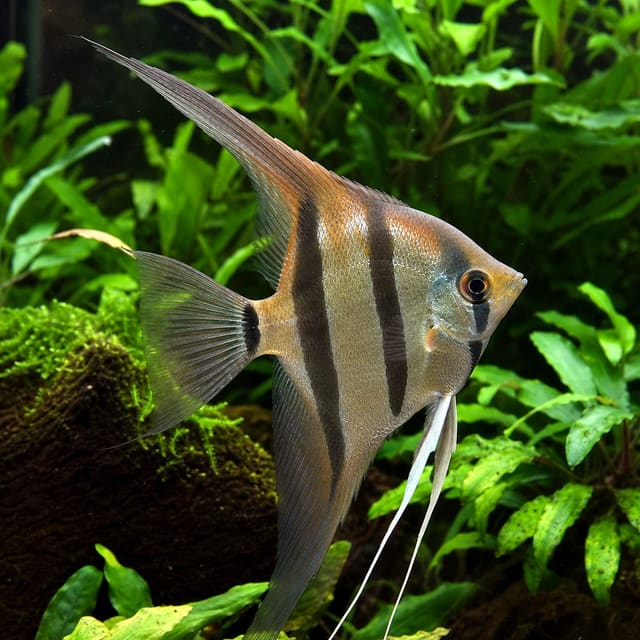
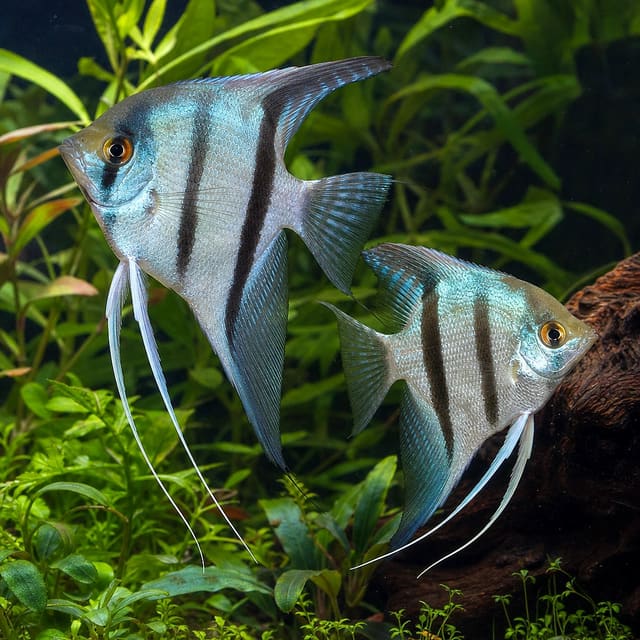
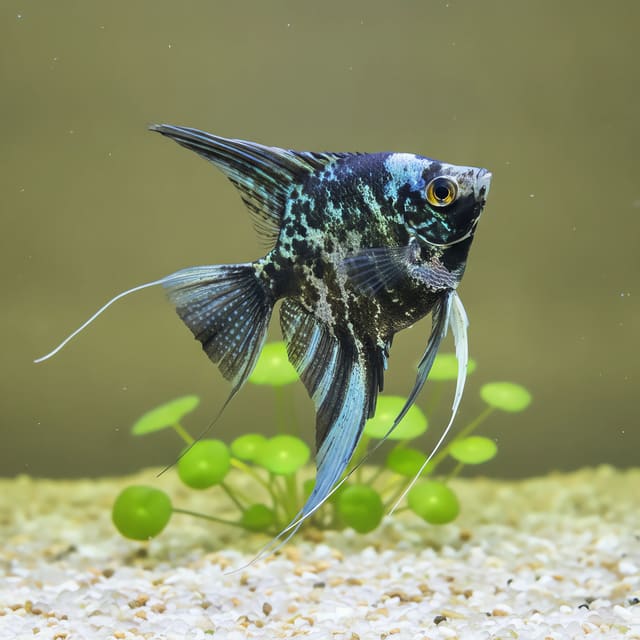
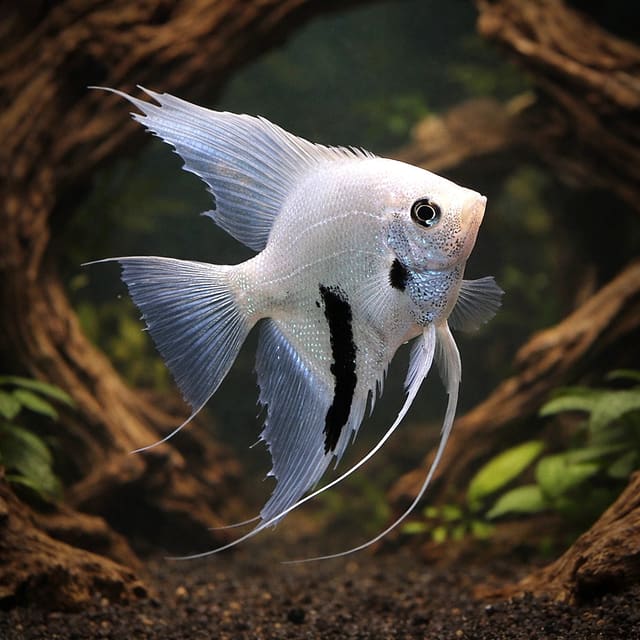
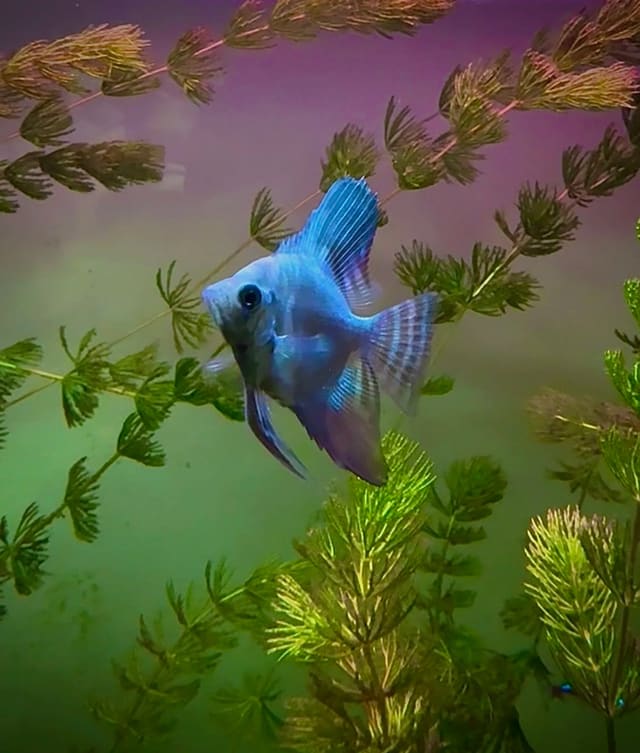
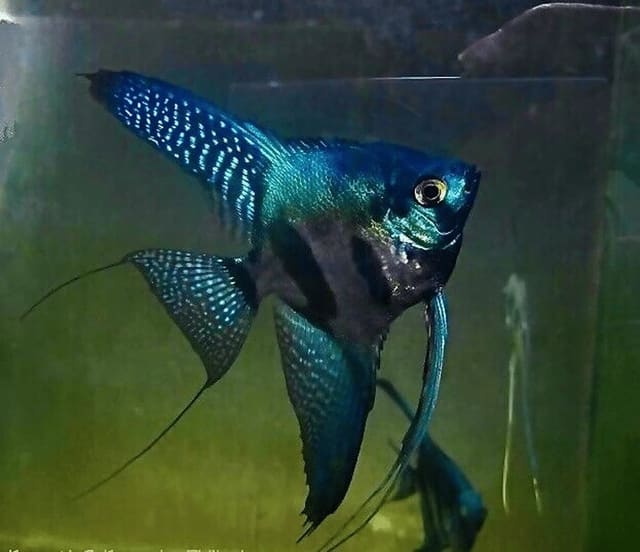
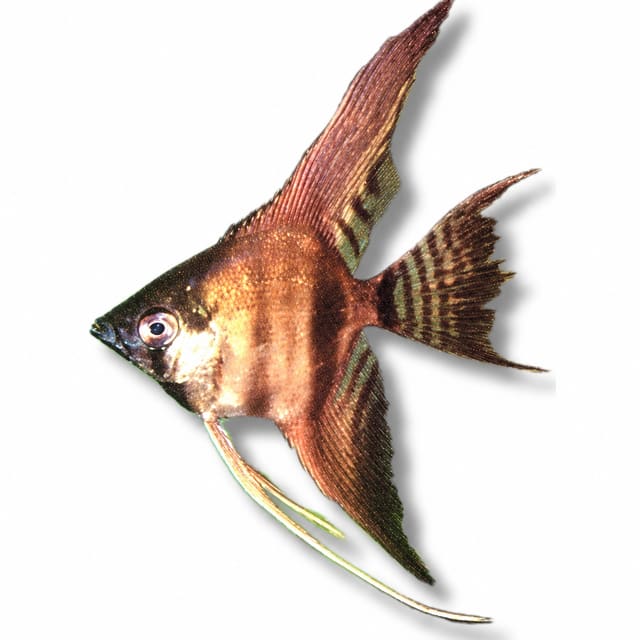
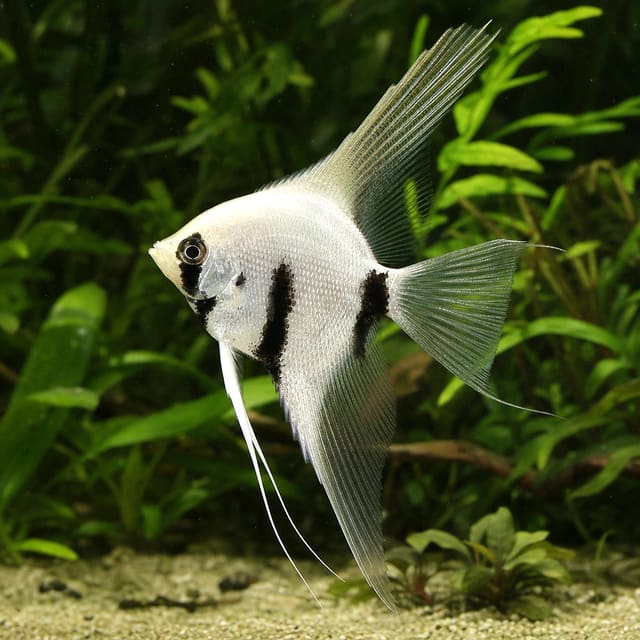
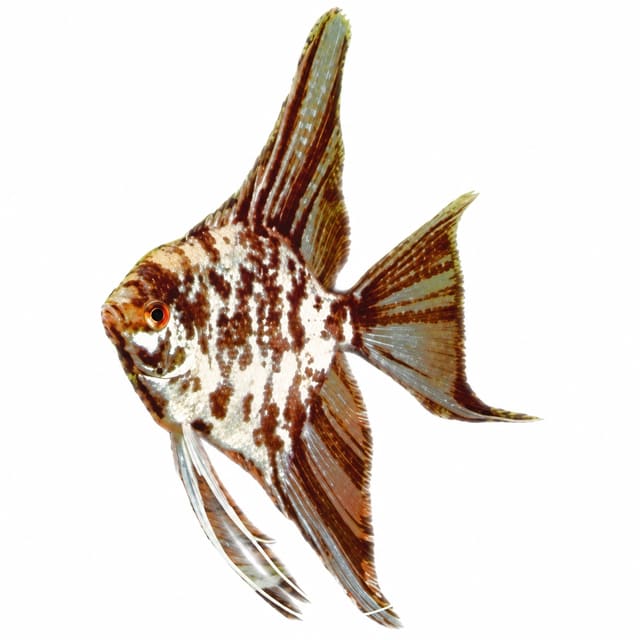
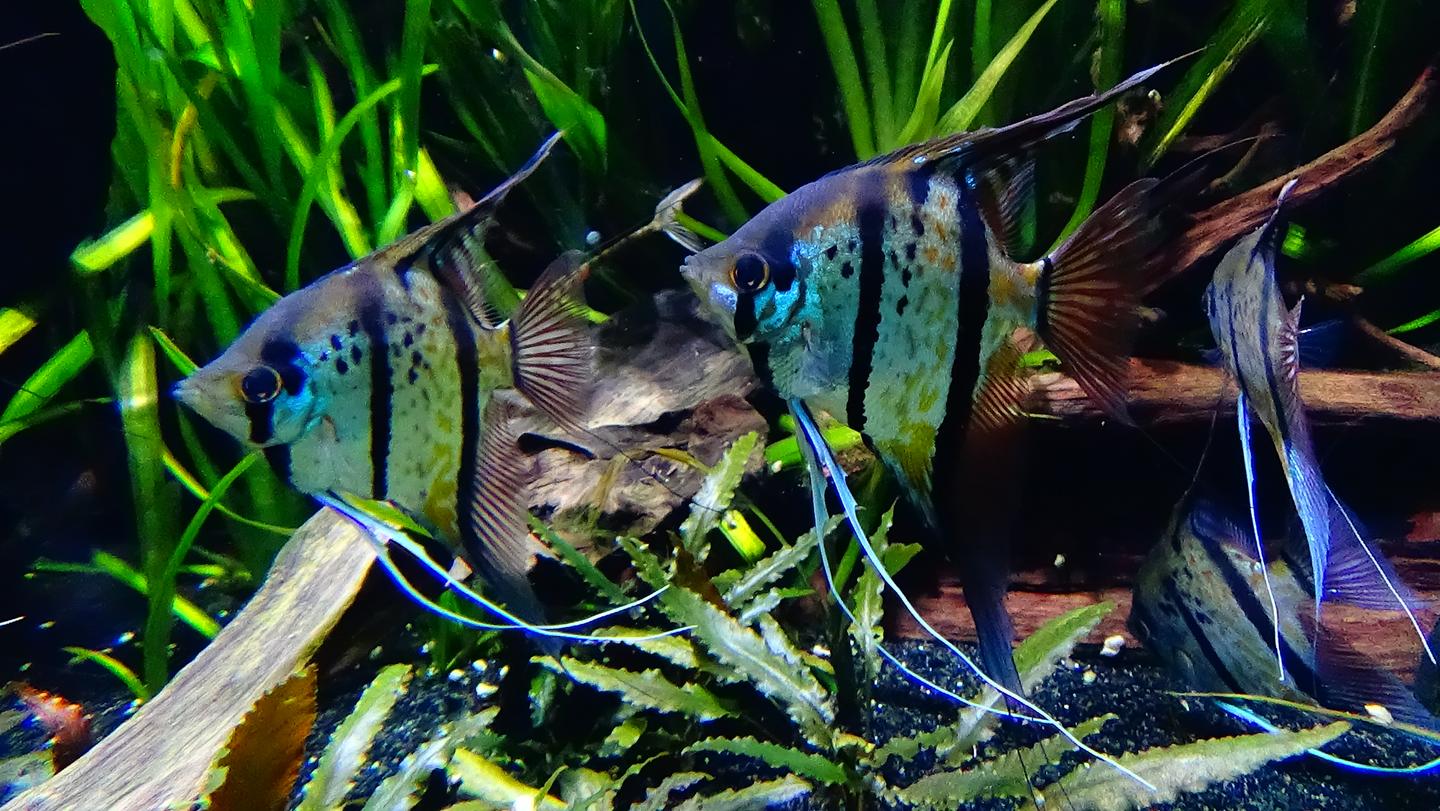
The gallery shows a silver-grey fish with dark speckling, long dark fins and a planted background. Use the view to appreciate the tall profile and the space those fins occupy. The gallery images are representative of this type of animal rather than photographs of the exact animal supplied, so colours can look slightly different from the live animal.
This fish suits someone who enjoys a deliberate centrepiece aquarium and is prepared to watch social behaviour as the fish mature. Feeding access, pair formation and territorial boundaries deserve attention alongside the water tests. A quiet-looking aquarium can still contain a subordinate fish that is repeatedly driven away from food or cover.
| A promising starting point | What to prepare |
|---|---|
| Mature tall aquarium | Useful height, footprint, open turning space and established filtration. |
| Compatible pair or planned group | Observation, separate visual areas and a realistic response to aggression. |
| Calm, suitably sized company | Matching water needs and protection from fin-nipping or predation. |
Browse the angelfish collection if you are deciding between domestic forms. The Angel Fish Small listing offers another angelfish choice to compare with California; compare the supplied size and adult housing plan, rather than assuming a smaller purchase stays small. Both decisions need to begin with the aquarium you can maintain for grown fish. The comparison is for choosing your purchase, not a recommendation to combine unfamiliar fish.
Angelfish measurements need their labels. FishBase's current maximum-length field is 10.5 cm total length for a male/unsexed record, while its descriptive text also retains a 15 cm total-length figure. Seriously Fish lists 150 mm standard length. Standard length excludes the tail, whereas total length includes it, so the two measures should not be treated as interchangeable. Converting 150 mm to centimetres gives 15 cm standard length, not 15 cm total length.
For practical housing, Tropical Fish Co recommends allowing around 15 cm total length and often 20–25 cm overall height with the fins extended, with individual variation. The distinction matters most when selecting the aquarium and arranging plants or wood. The animal needs space above and below its body, as well as a clear route in which to turn without squeezing between objects.
Do not judge future space solely by a juvenile swimming through the display. Stand back and examine the usable water after substrate, ornaments and equipment are included. Leave open areas beside the vertical planting. A tall aquarium is useful only when that height is available to the fish, and height must accompany enough horizontal room for adult movement.
Our freshwater angelfish care guide recommends roughly 200 litres, a 100 × 40 cm footprint and around 50 cm usable height as the adult-pair planning point. Seriously Fish likewise says a tank measuring 100 × 40 × 50 cm should be the smallest considered. The arithmetic gives 200 litres before allowing for glass, substrate and displacement, so a nominal capacity is not the same as measured water volume.
OATA's broader American-cichlid advice gives 120 litres as a floor for a pair of smaller species and specifically notes that angelfish require enough height. Its angelfish stocking guidance also uses 40 litres per adult. Treat those figures as broad starting guidance, not a calculator that guarantees compatible behaviour. A group needs more space than the adult-pair plan and an arrangement that prevents one fish controlling every route.
Choose the social arrangement while planning the tank, not afterwards. A compatible pair is different from two random fish, and a juvenile group can develop into adults with competing territories. Think through what you would do if a pair forms and begins excluding the others. Additional room, a suitable second aquarium or a realistic rehoming route needs to be available before that situation becomes urgent.
Tropical Fish Co rates freshwater angelfish as intermediate. The practical challenge is combining normal aquarium skills with adult housing and behaviour management. If this is your first aquarium, learn to mature the filter, test the water and recognise feeding and aggression problems before selecting the fish. Preparation matters more than the label itself.
A working biological filter supports bacteria that process ammonia into nitrite and then nitrate. Ammonia and nitrite are harmful, so test for both before introducing fish and as the aquarium's load changes. Water that looks clear is not proof of biological readiness. Nor does waiting a fixed number of weeks demonstrate that a new filter can handle the planned stocking.
The first tropical tank guide helps you organise that preparation. Include the heater, thermometer, test kits and maintenance equipment in the setup from the start. It is easier to establish a dependable routine before fish arrive than to assemble equipment while responding to a water-quality problem.
Add livestock gradually and watch the response of the system. A mature filter still has to cope with any increase in fish waste and feeding. Test following additions, observe breathing and appetite, and avoid making several unrelated changes at once. Clear records make it easier to recognise whether a problem followed a new fish, altered feeding or interrupted filtration.
Tropical Fish Co's routine angelfish target is 24–27°C, pH 6.5–8.0 and general hardness around 5–12 dGH. This is the store's maintenance guidance, chosen from the overlap between FishBase and OATA information. Match the fish's established holding conditions and agree a suitable stable target for your aquarium before changing source water.
| Measurement | Routine planning guidance |
|---|---|
| Temperature | 24–27°C, Tropical Fish Co routine target |
| pH | 6.5–8.0, Tropical Fish Co routine target |
| General hardness | 5–12 dGH, Tropical Fish Co routine target |
| Ammonia and nitrite | Zero detectable |
| Nitrate | OATA advises no more than 20 mg/l above the source tap-water level. |
Other references use broader ranges. Seriously Fish gives 24–30°C, pH 6.0–7.4 and hardness 0–15 dGH, while FishBase lists 24–30°C, pH 6.0–8.0 and 5–13 dGH. These figures explain why different care pages may not show identical numbers; they are not an instruction to push the aquarium to an extreme or keep adjusting water until every published range has been explored.
Use the water chemistry guide to understand GH, KH and pH before attempting changes. Test both the aquarium and replacement water. A repeatable routine is more useful than a fixed mixture of tap and purified water copied from someone whose source water may be quite different from yours.
The water matcher can help you compare readings with guidance. Keep the routine target and its context in mind when using it, and confirm any proposed change with appropriate advice. A set of matching numbers does not assess the maturity of the filter or whether adult fish have enough social space.
Use vertical plants or wood to form separate visual areas, with open water in which an adult can move comfortably. Tall leafy planting is suggested by Seriously Fish and fits the species' shape well. Arrange it so the fish can pass around it, rather than building a dense barrier across the whole aquarium.
Check decorations for sharp edges and narrow gaps around the extended fins. Secure objects so that activity around the substrate does not destabilise them. Keep the aquarium accessible for maintenance, with room to remove waste around planting and to inspect equipment without dismantling the display. Practical access is part of a good layout.
Gentle flow is suitable, but the water still needs filtration and oxygen exchange. Position the outlet so the fish has calmer areas without leaving poorly circulated spaces. Watch how the fish swims: it should have room to move normally rather than being forced to hold position against a strong stream throughout the tank.
A secure lid and protected hazardous intakes are useful precautions. Keep temperature easy to check with a thermometer and inspect equipment routinely. Plants can grow into equipment or alter available routes over time, so review the layout as part of normal maintenance instead of assuming it remains equivalent to the day it was planted.
Use an appropriately sized complete cichlid pellet, granule or suitable flake as the staple. Add suitable frozen or freeze-dried foods for variety. Daphnia, brine shrimp and bloodworm are examples included in the care guidance. An attractive food is useful only as part of an appropriate diet; enthusiasm for one item does not make it nutritionally complete.
Observe every fish eating. In a group, dominant individuals may approach first while another hangs back. Distribute food so that each can feed without repeated pursuit, and watch what happens after the first rush. The whole aquarium appearing active at mealtime can hide the fact that one fish has had very little.
OATA's broad American-cichlid guidance suggests a daily portion consumed within a few minutes. Adjust the actual amount to the fish, food and advice you receive, removing excess rather than leaving it among the plants. Angelfish can take substantial amounts in one sitting, so continuing to feed simply because they keep approaching can make waste management difficult.
Watch body condition and feeding consistency across time. A fish that starts missing meals needs an assessment of water, behaviour and health, not simply a larger portion. Note whether it tries to feed and is chased, seems unable to take food or shows no interest. Those are different observations and will help an aquatic specialist advise you.
Keep richer foods as measured variety and avoid changing the whole diet in response to one unusual swim or missed meal. The published feeding study linked in the care guide shows that feed composition matters under its study conditions, but does not provide a universal household feeding schedule. A reliable complete staple and careful observation remain the useful daily priorities.
OATA recommends regular testing and around 25% weekly water changes as a starting routine. Use actual readings and the aquarium's waste load to judge whether it is sufficient. A lightly stocked planted aquarium and a growing group with heavier feeding may require different practical maintenance, even when their tanks have similar nominal capacities.
Condition replacement water appropriately to remove chlorine or chloramine, and keep temperature and chemistry suitable for the established aquarium. Prepare what you need before starting. A consistent process makes routine care easier to repeat and reduces the temptation to improvise a water mixture or temperature adjustment partway through.
Remove debris from accessible areas of the substrate and check places where food collects. When filter media needs cleaning, rinse it lightly in removed aquarium water rather than under the tap, as OATA advises. Preserve the bacteria doing the waste processing, and confirm that the filter and heater are working again when maintenance is complete.
Keep a short record of water tests and relevant observations. It helps reveal a rising nitrate trend, an appetite change after an addition or repeated chasing around a particular area. The record does not need to be elaborate: dates, readings, feeding and anything visibly different are enough to make later advice more specific.
Check the delivery and Live Arrival Guarantee policy before the confirmed date. Tropical Fish Co hand-bags fish with oxygen, uses insulated packaging and adds heat support when weather conditions require it. A licensed live-animal courier carries the parcel, with the confirmed Thursday or Friday delivery date and tracking sent by email.
Arrange for someone to receive the parcel and inspect it on the day of arrival. For a Live Arrival Guarantee claim, you need a continuous unboxing video beginning with the sealed parcel and showing its opening and the fish still inside the sealed bag. Contact the store that day with the video and your order number if there is a problem. Preparing to record before opening preserves the arrival evidence.
Follow the supplied acclimatisation guidance and minimise unnecessary disturbance. The store advises floating the bag for 20–30 minutes as part of gradual acclimatisation. Do not pour transport water into the aquarium. Have the receiving tank ready beforehand so you can focus on the fish and observe its condition after release.
A separate observation aquarium must itself be mature, suitable and adequately equipped. Moving a fish into an unfiltered container is not a substitute for a considered quarantine plan. Ask for guidance if the water in the receiving aquarium differs materially from the fish's holding conditions or if the fish appears abnormal on arrival.
Watch for steady swimming, regular breathing, clear eyes, open fins and consistent feeding. Learn how the individual normally uses the aquarium so that a sudden change is easier to notice. Angelfish may approach familiar feeding activity, but approach behaviour alone is not proof that a fish is healthy or a reason to keep giving food.
Clamped fins, gasping, unusual balance, wounds, spots, persistent isolation or an appetite change should prompt immediate water tests and appropriate advice. Record temperature, ammonia, nitrite and other relevant values, take clear photographs if useful and explain the timeline. These signs can have different causes, so avoid diagnosing from appearance alone.
Use a suitable mature isolation setup only where it will help rather than introduce additional stress. Seek a specialist aquatic retailer or fish vet for diagnosis and treatment advice. Have the aquarium details available, including other inhabitants, recent additions and any products used, so the response can account for the whole system.
Angelfish should have a deliberately planned pair or group arrangement. OATA warns that a singleton may become stressed. FishBase mentions groups of five or more, while Seriously Fish discusses small groups and starting with juveniles where pair formation is intended. The workable number depends on the aquarium, adult territories and the relationships between the actual fish.
For an adult-pair plan, compatibility between the two fish matters as much as their number. Observe whether both can feed, rest and move without persistent pursuit. A fish that remains excluded from most of the aquarium is not doing well simply because it has not suffered an obvious wound. Have a separation plan and act on repeated exclusion.
A group may develop social relationships very different from those seen when the fish were small. Pair formation can change the use of space sharply. Vertical planting and wood can help divide sight lines, but additional objects cannot create unlimited territory. Reassess the whole stocking if a pair begins controlling the majority of the aquarium.
Calm, appropriately sized shoaling fish may be considered in a suitably spacious community. Very small fish can become prey, including small tetras that seemed safe with juvenile angels. Assess the mature size relationship rather than relying on the absence of predation during the early months.
Avoid fin-nipping fish and highly aggressive companions. Extended fins are vulnerable to repeated attention, and persistent chasing can prevent normal feeding and resting. Fast feeding is another form of competition to watch: a fish does not need to bite an angelfish to leave it underfed at every meal.
| Companion type | Practical assessment |
|---|---|
| Calm larger shoaling fish | Consider adult size, appropriate group space, water overlap and feeding speed. |
| Very small fish, shrimp or fry | Predation risk; do not assume safety because young angels ignore them. |
| Fin-nippers or highly aggressive fish | Avoid to protect fins and normal access to space. |
| Other angelfish | Plan the group, adult territories and a response to pair formation. |
| Bottom-dwelling fish | Different swimming levels do not remove water, space or territorial conflicts. |
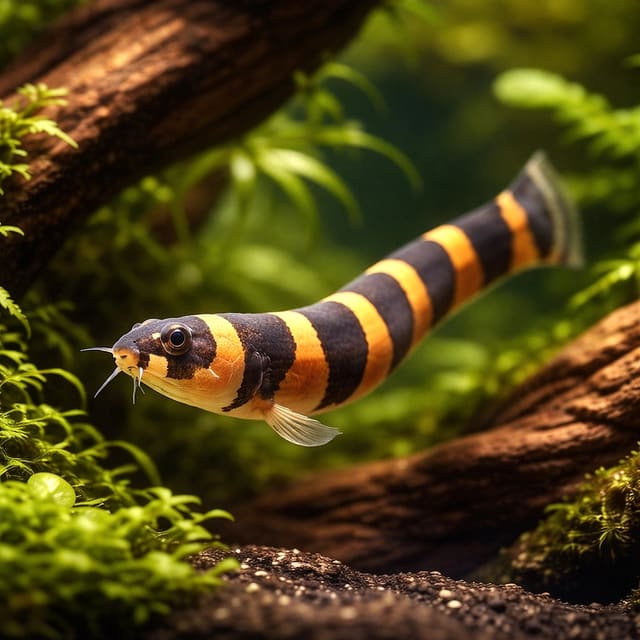
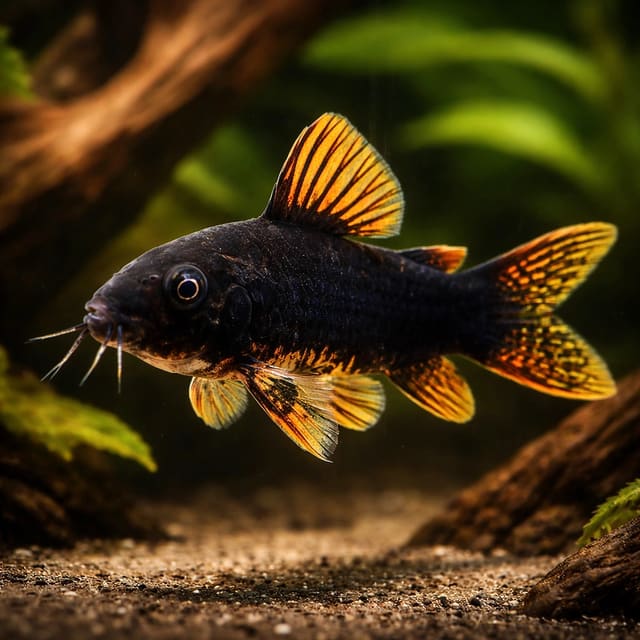
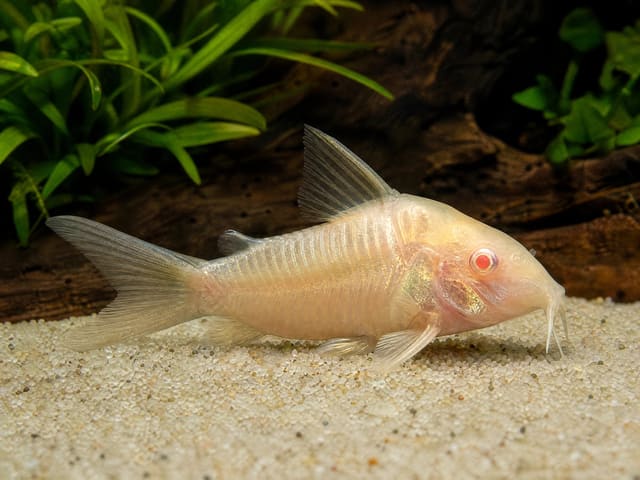
Corydoras and bristlenose plecos are sometimes considered because they use different parts of the aquarium. The store care guide treats them as conditional possibilities, not guaranteed matches. Check the particular species, adult size, water requirements and floor space, and consider what happens when a cichlid defends a spawning area that another fish keeps entering.
Do not use a colour strain as a compatibility rating. A California Angelfish still needs an assessment of its actual behaviour, surroundings and companions. Claims that one domestic colour is automatically calmer or safer around small animals are not a sound basis for choosing the community.
A compatible pair may clean and lay eggs on a vertical surface such as a broad leaf, slate or aquarium glass. Both parents can guard eggs and young, and defence of that area can intensify. This is a reason to plan space and observation in advance, whether or not you intend to raise fry.
Breeding success is not guaranteed by purchasing a certain number of fish. Pair choice and conditions matter, and two adults sold separately should not be assumed bonded. The presence of eggs also does not guarantee that they will be fertile or that the parents will raise the young successfully.
If breeding becomes your goal, arrange a dedicated mature setup and obtain specific advice for the pair and any fry. Avoid repeatedly disturbing the spawning surface to inspect it. Watch the parents and neighbouring fish from outside the tank, while maintaining normal water-quality checks and ensuring every animal retains access to food.
Allow room in the aquarium plan for future decisions. As fins develop and adults establish territories, a layout or community may need to change. Regularly watching feeding, fin condition and use of space helps you notice that need before a minor problem becomes prolonged stress.
Have a realistic plan for absence as well. Show anyone caring for the aquarium how much to feed, where to look for each fish and which equipment to check. Leave contact information and describe warning signs such as repeated pursuit or unusual breathing. A familiar routine is much easier for another person to maintain than a set of vague instructions to feed the fish.
Plan for around 15 cm total length and often 20–25 cm height including extended fins, with individual variation. FishBase also lists a 10.5 cm total-length male/unsexed record, while Seriously Fish reports 15 cm standard length, excluding the tail. These differently scoped measurements should not be treated as identical.
Tropical Fish Co recommends planning around 200 litres, a 100 × 40 cm footprint and about 50 cm usable height for a compatible adult pair. A group or community needs more space and a response plan for aggression. Shape and usable room matter alongside volume.
Plan a compatible pair or a group with sufficient adult space. OATA warns that isolated angelfish may become stressed. FishBase mentions five or more for groups, but no number guarantees harmony; two randomly chosen fish are not automatically a compatible pair.
Tropical Fish Co rates freshwater angelfish as intermediate. A prepared keeper needs a mature tall aquarium, regular water tests, suitable companions and a plan for territorial behaviour. Learn the aquarium basics before adding the fish.
Offer appropriately sized complete flakes, cichlid pellets or granules, with suitable frozen or freeze-dried variety such as daphnia, brine shrimp or bloodworm. Watch every fish feeding and remove excess. Treat foods should supplement a complete staple.
Tropical Fish Co's routine maintenance target is 24–27°C, pH 6.5–8.0 and general hardness 5–12 dGH. Confirm the fish's established holding conditions and keep the aquarium stable. Test ammonia and nitrite as well as temperature and chemistry.
They can squabble and defend territory, especially as pairs form or breed. Avoid fin-nipping companions that can damage their extended fins, and monitor whether every inhabitant can feed and rest without repeated pursuit.
Calm larger shoaling fish may be considered with matching water and adequate space. Very small fish may be swallowed, and shrimp or fry are at risk. Avoid fin-nippers and highly aggressive fish; assess bottom dwellers and other angels individually.
Tropical Fish Co uses oxygen-filled bags, insulated packaging and weather-dependent heat support with a licensed live-animal courier. Be present on the confirmed date and inspect the parcel the same day. Guarantee claims require same-day contact, your order number and continuous video from the sealed parcel through opening to the fish in its sealed bag.
FishBase: Pterophyllum scalare provides species records and distribution. Seriously Fish's angelfish profile covers aquarium dimensions, food and behaviour. OATA's American-cichlid care sheet explains broader routine care and social considerations. The RSPCA aquarium environment advice explains biological filtration and the need to prepare the aquarium.
No reviews for this item yet. Bought one? Honest reviews only, good or bad.
What customers say about ordering from us
I have a small group of long finned mountain minnows. So was delighted to be able to order ten of this variety to increase the genetics in my tank . The ones I recieved are healthy but it’s to early to give a verdict on wether they are of a long finned type since they are small currently.
Gordon Walker · 23 Sept 2026
100% success travel and "installation". Pleased with quality of purchase. The Siamese fighter a bit "shy" so have not yet seen him at his best yet but looking good. Happy customer. GG
George E Garratt · 21 Sept 2026
Reviews of our shop, collected by Judge.me, an independent third-party review collector. Newest first.