
Moderate
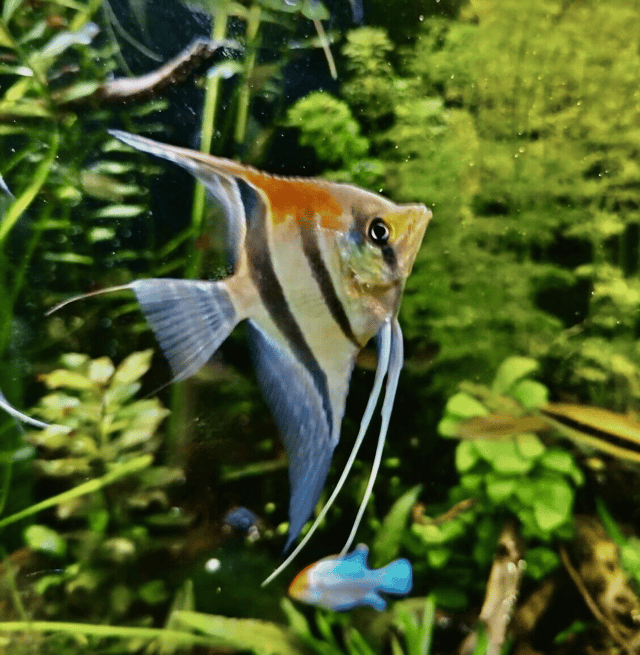
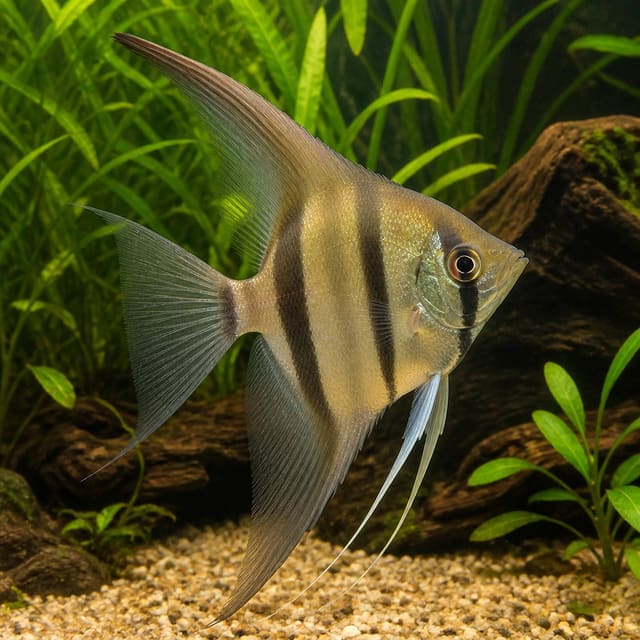
Manacapuru Angelfish (Pterophyllum scalare manacapuru)
24–27°C · pH 6.5–7.4 · 200L
£21.99

The Manacapuru Red Back Angelfish (Pterophyllum scalare) is a freshwater cichlid from the Amazon basin that reaches 15 cm. It suits an intermediate keeper with a tall, mature aquarium; keep a compatible pair or deliberately planned group within the 24–27°C, pH 6.5–7.4 and 5–12 dGH overlap of FishBase, Seriously Fish and OATA guidance. Sold individually in 3-3.5 cm, 4-6 cm and XL (6-7 cm) dispatch sizes.
Adult size is the maximum length this species reaches at full maturity (scientific sources). The livestock you receive will be younger and smaller — pick a size variant above for the actual shipping size. Product-photo provenance and any image-specific limitations are stated on the listing.
Pterophyllum scalare
Save when buying multiple fish. Each quantity is one fish; sex and pair formation are not guaranteed unless the selected variant explicitly states them.
The Manacapuru Red Back Angelfish (Pterophyllum scalare) is a freshwater cichlid from the Amazon basin that reaches 15 cm. It suits an intermediate keeper with a tall, mature aquarium; keep a compatible pair or deliberately planned group within the 24–27°C, pH 6.5–7.4 and 5–12 dGH overlap of FishBase, Seriously Fish and OATA guidance. Sold individually in 3-3.5 cm, 4-6 cm and XL (6-7 cm) dispatch sizes.
Adult size is the maximum length this species reaches at full maturity (scientific sources). The livestock you receive will be younger and smaller — pick a size variant above for the actual shipping size. Product-photo provenance and any image-specific limitations are stated on the listing.
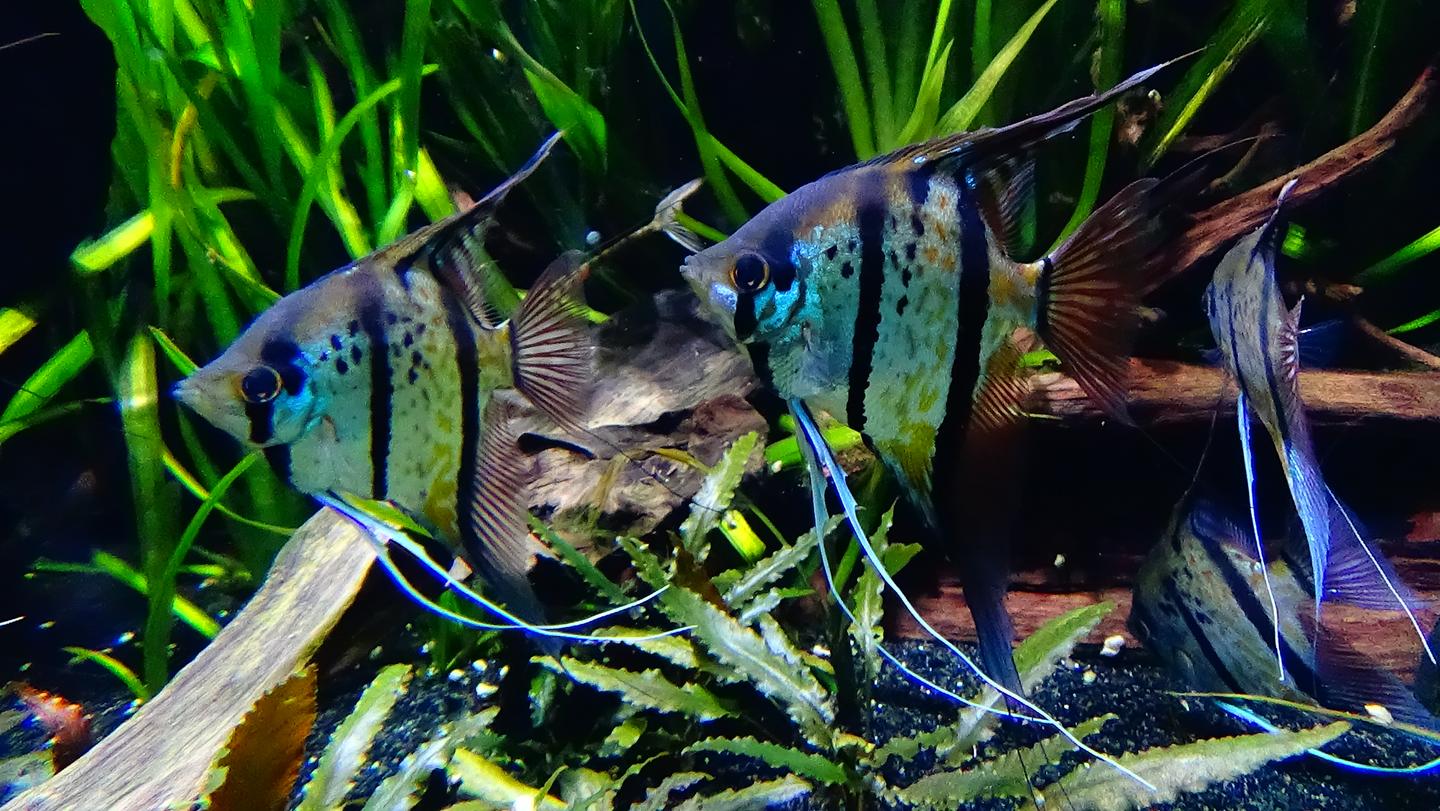
Freshwater angelfish are tall South American cichlids, not small community fish. OATA gives 120 litres as an industry floor for a compatible pair and says the aquarium must be sufficiently tall. We prefer planning around roughly 200 litres, a 100 × 40 cm footprint and about 50 cm height for an adult pair, with more space and an exit plan for a group.
Maintain these water conditions for optimal health and vibrant colors
The Manacapuru Red Back Angelfish, Pterophyllum scalare, is a freshwater angelfish in the cichlid family Cichlidae. Its documented native distribution covers the Amazon basin in Brazil, Colombia and Peru, with populations also recorded from French Guiana and Guyana. FishBase describes the species as inhabiting densely vegetated swamps and flooded ground where the water may be clear or silty. Eschmeyer’s Catalog of Fishes retains Pterophyllum scalare as the accepted name.
This fish suits an intermediate keeper prepared to provide a mature, tall aquarium, measure water quality and manage changing cichlid behaviour. Plan around the 15 cm adult length FishBase records and an extended-fin height that can reach roughly 20–25 cm. Measure the aquarium's usable height against those extended fins as well as the body length. Plan the aquarium and companions for that 15 cm adult rather than the size supplied.
Keep routine conditions at 24–27°C, pH 6.5–7.4 and 5–12 dGH. These figures are the overlap of FishBase, Seriously Fish and OATA’s group guidance for American cichlids. Stability matters alongside the numbers: establish the aquarium biologically, measure its conditions and avoid abrupt elective changes.
Adult height, social behaviour and territory are the decisive planning points. Our complete freshwater angelfish care guide recommends roughly 200 litres, a footprint around 100 × 40 cm and about 50 cm of usable height for an adult pair. A community or group requires more room, broken sight lines and a practical separation or rehoming plan if conflict develops.
One purchase supplies one Manacapuru Red Back Angelfish in the size selected. Use the live size selector to choose 3-3.5 cm, 4-6 cm or XL (6-7 cm). The size you select is the size supplied, not the adult size. Each fish therefore needs the same long-term plan based on a 15 cm adult length, tall finnage and cichlid social behaviour.
Red Beck is a trade name, not a separate species. This fish is Pterophyllum scalare and needs the same care as any freshwater angelfish. Do not infer maturity from a dispatch measurement. A smaller fish still needs an aquarium and social plan capable of supporting its adult dimensions.
Sex is guaranteed only when the selected option explicitly states male or female. This Manacapuru Red Back Angelfish listing has no sex-guaranteed option.
| Suits | Not suited to |
|---|---|
| A mature, filtered freshwater aquarium | An aquarium with detectable ammonia or nitrite |
| Roughly 200 litres with a 100 × 40 cm footprint and about 50 cm usable height for an adult pair | A shallow aquarium chosen only around the dispatch size |
| A compatible pair or a deliberately planned group | Default solitary keeping or two fish assumed to be compatible |
| Measured conditions within 24–27°C, pH 6.5–7.4 and 5–12 dGH | A system subject to abrupt temperature or chemistry changes |
| Robust companions screened for adult size, temperament and feeding | Very small fish, fin-nippers or highly aggressive competitors |
Choose this fish when the aquarium can accommodate its adult height, turning room and territorial behaviour. The intermediate care assessment reflects the need to combine stable water, suitable dimensions, measured feeding and a response plan for aggression rather than relying on the fish’s calm appearance at one moment.
Use an aquarium of roughly 200 litres with a base around 100 × 40 cm and a height around 50 cm as the smallest adult planning point. Seriously Fish gives those species-focused dimensions, while Tropical Fish Co uses them as the preferred plan for an adult pair. The footprint provides turning and territorial space; the height accommodates the dorsal and anal fins without treating litres alone as the complete answer.
OATA gives at least 120 litres for a pair of smaller American cichlids and separately says an angelfish aquarium must be sufficiently tall. Treat that figure as an industry floor for a compatible pair, not a reason to reduce the preferred 200-litre plan. Two randomly chosen fish are not automatically a compatible pair, and nominal volume cannot prevent conflict when the footprint, layout or social combination is poor.
A group needs substantially more space than the pair plan. FishBase gives aquarium keeping in groups of at least five, Seriously Fish says the species is best kept in small groups, and OATA says angelfish should be kept in a group or as a pair at minimum because a singleton may become stressed. Plan a group's space around adult territory, sight lines and feeding access, not litres alone. Allow for adult territory, monitor access to food and keep another suitable housing route ready before adding a group.
Do not use a smaller aquarium as a temporary welfare plan merely because the selected fish is small. Build around the final adult dimensions from the start.
Create vertical structure with tall leafy plants, wood or roots, while retaining open mid-water lanes where an adult can turn without dragging its fins. FishBase records adults in densely vegetated swamps and flooded ground, and Seriously Fish recommends a well-planted aquarium with tall leafy plants and gentle flow. Use that habitat information as layout inspiration while keeping every structure stable and practical to maintain.
Sight-line breaks become especially important when a pair forms or one fish starts controlling a feeding or resting area. Structure should provide more than decoration: each side of a barrier needs usable space rather than a narrow dead end where a subordinate fish can be trapped. Watch where every fish rests, feeds and retreats instead of assuming a planted aquarium automatically offers enough refuge.
Provide gentle circulation without allowing the water to become stagnant. Seriously Fish notes a preference for gentle flow, but the filter must still process waste and support oxygen exchange. Aim outlets so the whole aquarium circulates while leaving calmer areas where the fish is not continually pushing against a strong current.
Check the layout from an adult fish’s perspective. A route that appears wide around a small dispatch fish may be restrictive once the body and fins develop. If a fish repeatedly clips decor, struggles to turn, remains pinned behind a barrier or cannot leave an aggressor’s territory, move the obstruction or revise the social arrangement rather than waiting for fin damage.
Maintain 24–27°C, pH 6.5–7.4 and 5–12 dGH. This is the shared overlap of FishBase’s species range, Seriously Fish’s aquarium range and OATA’s American-cichlid guidance. Use a thermometer and liquid or suitably precise tests to establish the aquarium’s real conditions instead of relying only on a heater dial or assumptions about tap water.
| Measurement | Routine instruction |
|---|---|
| Temperature | Keep 24–27°C and avoid abrupt changes |
| pH | Keep 6.5–7.4 and compare readings over time |
| General hardness | Keep 5–12 dGH |
| Ammonia | Maintain zero mg/l |
| Nitrite | Maintain zero mg/l |
| Nitrate | OATA advises no more than 20 mg/l above the normal tap-water level |
Test ammonia and nitrite before introducing the fish. Both must read zero. If either becomes detectable after introduction, treat the result as urgent: stop adding livestock and check filtration and feeding at once. Do not wait for cloudy water or visible illness, because toxic nitrogen waste can be present before the aquarium looks dirty.
When pH, GH or KH needs adjustment, first measure both the aquarium and replacement water. The water chemistry guide explains what each measurement means, and the water matcher can compare measured aquarium values with the stated range. Make elective changes gradually and keep a written record so an apparent improvement in one number does not hide instability elsewhere.
Check temperature at different times and after maintenance. Match replacement water closely enough to prevent a sudden shift, and condition tap water before it enters the aquarium. A stable reading within the range is more useful than repeatedly moving conditions in pursuit of one exact number.
Use a fully established biological filter and confirm zero ammonia and zero nitrite before adding this fish. The RSPCA explains that filter bacteria convert toxic ammonia into nitrite and then the safer end product nitrate. A filter running for a particular number of days is not enough; water tests show whether it is processing waste.
If this is your first aquarium, follow the steps in the first tropical aquarium guide and complete maturation before livestock arrives. Increase stocking slowly because every additional fish and feed increases the load placed on the bacterial population. A sudden increase can overwhelm a filter that previously maintained acceptable readings.
OATA strongly recommends a 25% partial water change at least once every week. Heavy stocking, heavy feeding or rising nitrate calls for more maintenance, and a visually clear aquarium still needs testing. Siphon settled waste from accessible substrate without dismantling the entire habitat at every change.
Watch filter performance after cleaning. A large drop in flow, unusual noise or rapidly rising ammonia requires immediate investigation. Preserve biological media by rinsing it lightly in removed aquarium water, and keep circulation strong enough for waste processing and oxygen exchange without creating a harsh current across the whole aquarium.
Use a nutritionally complete cichlid pellet, granule or suitable flake as the staple, choosing a size the fish can swallow easily. Seriously Fish describes Pterophyllum scalare as omnivorous and records wild fish feeding predominantly on zoobenthos such as small crustaceans and other aquatic invertebrates. Add suitable frozen or freeze-dried foods for variety rather than making one treat the whole diet.
Feed once a day and offer only what the fish can finish within a few minutes. This schedule and portion rule come from OATA’s American-cichlid guidance. Watch each animal eat, because the total amount disappearing does not show whether a subordinate fish received enough. Spread food across more than one accessible point when one individual controls the first feeding area.
Suitable variety can include daphnia, brine shrimp and bloodworm, which OATA names for smaller American cichlids. These foods complement a complete staple; they do not replace balanced daily nutrition. A controlled angelfish feeding study also shows that feed composition affects growth and reproductive performance, reinforcing the value of choosing a complete diet rather than relying on one attractive food.
Overfeeding adds uneaten material and faeces, increasing the burden on the filter and degrading water quality. Judge the routine by food access, body profile, waste levels and test results. Do not turn appetite alone into a diagnosis, but treat a clear reduction in feeding as a reason to inspect the fish and water promptly.
Prepare the mature aquarium before the parcel reaches you: temperature must be stable, ammonia and nitrite must be zero, and the final social arrangement must already have suitable space. Keep arrival handling separate from chemistry correction; do not begin an elective pH or hardness change while a transported fish is waiting to enter the aquarium. Be at the delivery address to receive the parcel in person, because live fish cannot be left unattended.
The fish is hand-bagged in pure oxygen and placed in an insulated poly box, with a heat pack when the weather calls for it. A licensed live-animal courier carries the parcel. Keep the unboxing video and order number; the delivery and Live Arrival Guarantee policy explains the same-day claim route and its conditions.
After release, assess breathing, balance and swimming without drawing conclusions from colour alone. Persistent gasping, loss of balance, wounds or an inability to swim normally requires immediate water testing and a fish-veterinary assessment. Check temperature, ammonia and nitrite first because those measurements can reveal an urgent environmental problem.
Introduce additional fish slowly over time rather than adding a large community at the same moment. OATA warns that rapid stocking can exceed the filter bacteria’s ability to process increased waste. Once the angelfish is feeding, observe whether every resident can reach food and retreat from territorial interactions.
Look for steady swimming, regular breathing, clear eyes, open undamaged fins, intact scales, a consistent body profile and reliable feeding. Changes in several of these signs give a stronger warning than one brief movement. RSPCA fish-health guidance puts water-quality checks first when visible health signs change.
| If you see | Do this first |
|---|---|
| Gasping or altered gill movement | Test ammonia, nitrite and temperature immediately |
| Clamped or damaged fins | Check water, decor and aggression |
| White spots, fluffy growths or wounds | Record the appearance and seek a qualified diagnosis |
| Erratic swimming or unusual balance | Test water and reduce immediate physical hazards |
| Sudden refusal to feed | Check water, social exclusion and other visible signs |
| Persistent hiding or exclusion | Review territory and prepare safe separation |
When a problem appears, test ammonia, nitrite, nitrate, temperature and relevant pH first. Treat detectable ammonia or nitrite as urgent. Compare the readings with the aquarium’s established pattern and correct the environmental cause without making abrupt elective changes to temperature, pH or hardness.
Isolate a fish only in a mature, appropriately heated and filtered setup where separation will not create a second water-quality problem. Photograph visible signs, note when they began and seek a specialist aquatic retailer or fish vet for diagnosis. Use only lawful products labelled for the fish and system, following the product instructions or veterinary direction.
If the fish leaves the aquarium, return it to suitable water immediately using wet hands or a wet, soft net. Minimise handling, then monitor breathing, balance and visible injury. Check the lid and close the route of escape. Abnormal recovery needs fish-veterinary assessment rather than an improvised medication or temperature recipe.
Keep a compatible pair or a deliberately planned group rather than defaulting to an isolated fish. OATA says angelfish are social and that a singleton may become stressed. FishBase gives groups of at least five for aquarium keeping, while Seriously Fish recommends small groups because individuals may squabble with their own kind. For an adult pair, use the roughly 200-litre, 100 × 40 × 50 cm plan; a group needs substantially more space.
A pair means two compatible fish, not simply two fish placed together. Sex is difficult to determine reliably outside spawning, and the offer does not guarantee it. Begin with enough territory and visual separation to respond if the combination changes. Pair formation or breeding can intensify defence of a vertical surface and the surrounding area.
Rearranging decor may interrupt a defended sight line, but it cannot make an incompatible combination safe in inadequate space. Keep a mature separation aquarium or realistic rehoming route ready when planning a group. A divider or spare container without established filtration is not an adequate long-term response.
Breeding behaviour changes compatibility calculations. Seriously Fish records spawning on vertical surfaces and parental guarding of eggs and fry. If a pair begins defending a leaf, slate, glass panel or other site, reassess the available territory immediately. A dedicated mature setup gives a breeding pair and other residents clearer boundaries than a crowded community aquarium.
Choose only companions whose adult size, water range, temperament, feeding speed and territorial needs fit the aquarium. OATA says calmer American cichlids such as angelfish can be mixed in a robust community aquarium with larger shoaling species, but assess each proposed combination individually. Seriously Fish warns that angelfish may eat small fish such as tetras.
| Screening question | Decision |
|---|---|
| Could the adult companion be swallowed? | Avoid the combination if the fish remains prey-sized |
| Does it nip extended fins? | Avoid persistent fin-nipping species |
| Is it highly aggressive? | Avoid a combination likely to create chronic conflict |
| Do water requirements overlap 24–27°C, pH 6.5–7.4 and 5–12 dGH? | Proceed only when all residents can share stable conditions |
| Can every fish reach food? | Reject combinations where faster feeders exclude others |
| Is there enough adult territory? | Allow more than the pair plan for a community or group |
Avoid very small fish that may be swallowed, fin-nippers that can damage extended fins, highly aggressive competitors and much faster-feeding species that can leave this fish underfed. These risks remain even when the aquarium looks calm while every fish is young. Judge prey risk and territory using adult dimensions, not the size at introduction.
Larger shoaling fish may be considered when their water requirements, temperament and feeding behaviour overlap, but that category is not a universal tank-mate guarantee. Individual behaviour, pair formation and the aquarium layout can change the result. Monitor feeding access, hiding, chasing, breathing and fin condition after every introduction.
Put every other proposed companion through the same screening questions before adding it. If persistent chasing, injury, prey behaviour or food exclusion appears, separate the animals into suitable mature systems. Do not wait for repeated wounds to establish that the combination has failed.
It grows to 15 cm long and may stand roughly 20–25 cm tall with extended fins, so choose the aquarium's height for the adult fish, not the size supplied.
Plan around 200 litres with a footprint near 100 × 40 cm and about 50 cm usable height for an adult pair; a group or community needs more room.
Keep a compatible pair or deliberately planned group. FishBase gives groups of at least five, while OATA says angelfish should be kept in a group or as a pair at minimum and warns that a singleton may become stressed.
It has an intermediate store care rating and suits a prepared keeper with a mature, tall aquarium, reliable water tests and a plan for territorial behaviour.
Feed a complete cichlid pellet, granule or suitable flake once daily, adding suitable frozen or freeze-dried foods and limiting each portion to what it finishes within a few minutes.
Keep this fish within the 24–27°C, pH 6.5–7.4 and 5–12 dGH overlap of FishBase, Seriously Fish and OATA guidance, with zero ammonia and nitrite.
It is a semi-aggressive cichlid that may squabble and become territorial when pairing or breeding. Treat persistent chasing, exclusion or fin damage as a reason to separate fish.
Appropriately robust, larger shoaling fish may work when adult size, water needs, temperament and feeding overlap. Avoid very small fish, fin-nippers, highly aggressive competitors and much faster-feeding species.
It is bagged in pure oxygen, packed in an insulated poly box with a heat pack when weather calls for it, and carried by a licensed live-animal courier. Receive it in person, film the sealed parcel before opening, inspect it the same day and float the bag for 20–30 minutes before release.
Max adult size is the length this species reaches at full maturity (from scientific sources). The livestock you receive will be younger and smaller — pick a size variant on the buy box for the actual shipping size. Product-photo provenance and any image-specific limitations are stated on the listing.
Always research specific species before adding them to your tank. Consider:
No reviews for this item yet. Bought one? Honest reviews only, good or bad.
What customers say about ordering from us
I have a small group of long finned mountain minnows. So was delighted to be able to order ten of this variety to increase the genetics in my tank . The ones I recieved are healthy but it’s to early to give a verdict on wether they are of a long finned type since they are small currently.
Gordon Walker · 23 Sept 2026
100% success travel and "installation". Pleased with quality of purchase. The Siamese fighter a bit "shy" so have not yet seen him at his best yet but looking good. Happy customer. GG
George E Garratt · 21 Sept 2026
Reviews of our shop, collected by Judge.me, an independent third-party review collector. Newest first.
24–27°C · pH 6.5–7.4 · 200L

24–27°C · pH 6.5–8 · 200L

24–27°C · pH 6.5–7.4 · 200L
24–27°C · pH 6.5–8 · 200L
24–27°C · pH 6.5–8 · 200L
24–27°C · pH 6.5–7.4 · 200L
24–27°C · pH 6.5–7.4 · 200L
24–27°C · pH 6.5–8 · 200L
24–27°C · pH 6.5–7.4 · 200L

24–27°C · pH 6.5–7.4 · 200L
24–27°C · pH 6.5–8 · 200L

24–27°C · pH 6.5–8 · 200L

24–27°C · pH 6.5–8

24–27°C · pH 6.5–7.4 · 200L
24–27°C · pH 6.5–8 · 200L

24–27°C · pH 6.5–8 · 200L

22–28°C · pH 7–8 · 41L

21–25°C · pH 5–7

24–27°C · pH 6.5–6.5
24–29°C

22–27°C · pH 6–8 · 72L

23–27°C · pH 5.5–7 · 60L

22–27°C · pH 6–8

22–26°C · pH 6–7.8 · 75L