Moderate
Pterophyllum scalare manacapuru
24–27°C · pH 6.5–7.4 · 200L
£47.99
The Koi diamond angelfish (Pterophyllum scalare) is a South American cichlid from the Amazon basin that reaches 15 cm. It suits intermediate keepers planning a compatible pair or carefully managed group, with routine 24–27°C and pH 6.5–7.4 as the FishBase, Seriously Fish and OATA overlap. Sold individually in sizes from 4–5 cm to 5–5.5 cm.
Adult size is the maximum length this species reaches at full maturity (scientific sources). The livestock you receive will be younger and smaller — pick a size above for the actual shipping size. Product-photo provenance and any image-specific limitations are stated on the listing.
Pterophyllum scalare
The Koi diamond angelfish (Pterophyllum scalare) is a South American cichlid from the Amazon basin that reaches 15 cm. It suits intermediate keepers planning a compatible pair or carefully managed group, with routine 24–27°C and pH 6.5–7.4 as the FishBase, Seriously Fish and OATA overlap. Sold individually in sizes from 4–5 cm to 5–5.5 cm.
Adult size is the maximum length this species reaches at full maturity (scientific sources). The livestock you receive will be younger and smaller — pick a size above for the actual shipping size. Product-photo provenance and any image-specific limitations are stated on the listing.
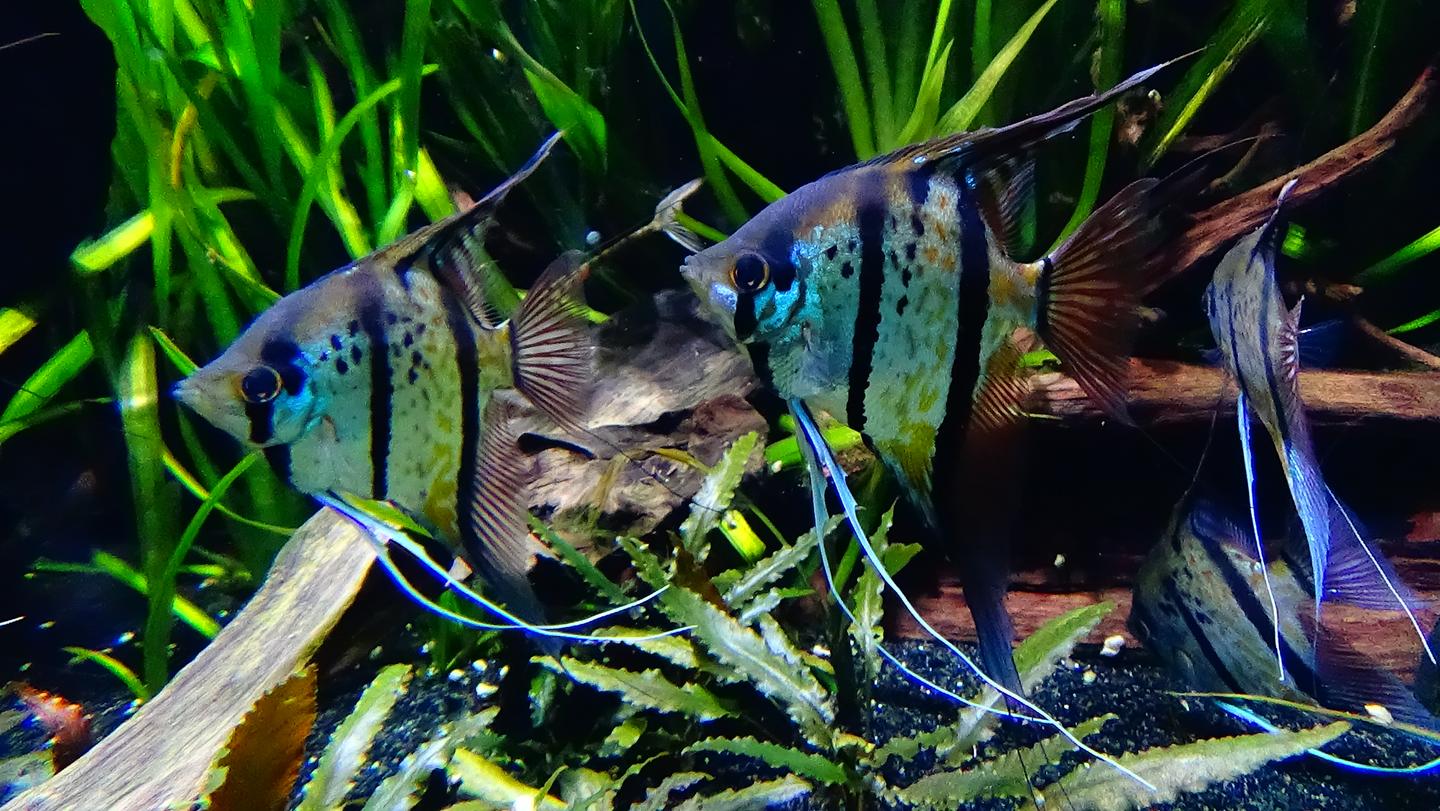
Freshwater angelfish are tall South American cichlids, not small community fish. OATA gives 120 litres as an industry floor for a compatible pair and says the aquarium must be sufficiently tall. We prefer planning around roughly 200 litres, a 100 × 40 cm footprint and about 50 cm height for an adult pair, with more space and an exit plan for a group.
Maintain these water conditions for optimal health and vibrant colors
The Koi diamond angelfish (Pterophyllum scalare) is a freshwater cichlid from the Amazon basin of South America. The species occurs in Brazil, Colombia, French Guiana, Guyana and Peru, and reaches 15 cm. Its tall body and extended fins can produce an adult height of about 20–25 cm, so it suits an intermediate keeper with a mature, cycled and sufficiently tall aquarium rather than a small community setup.
FishBase places Pterophyllum scalare in the cichlid family Cichlidae and describes adults living among dense aquatic and riverbank vegetation in swamps and flooded ground. Water in those habitats may be clear or silty. This makes tall plants, roots and other vertical structures useful layout inspiration while leaving open water for swimming and turning.
The accepted scientific identity remains Pterophyllum scalare, as recorded by Eschmeyer’s Catalog of Fishes. Koi is one of the domestic colour forms associated with the species. Colour does not change the need to plan for an adult cichlid with long fins, social behaviour and the capacity to become territorial.
| Suits | Not suited to |
|---|---|
| A tall aquarium planned around roughly 200 litres for an adult pair | A shallow aquarium chosen only for the fish’s dispatch size |
| A compatible pair or a deliberately managed group with more room | Keeping one fish alone or assuming two random fish form a pair |
| A mature biological filter with zero ammonia and nitrite | An uncycled aquarium or one assessed only by its age |
| Measured, stable water within the routine range | Abrupt changes to temperature, pH or hardness |
| Robust companions screened for adult behaviour and feeding | Very small fish, fin-nippers or highly aggressive competitors |
Choose this fish when you can provide adult height, horizontal turning space and a response plan for aggression. Its graceful outline does not make it a passive ornament: it remains a cichlid whose social relationships can change as fish mature, pair and defend space.
One purchase supplies one Koi diamond angelfish in the selected size. The live size selector lists 4–5 cm and 5–5.5 cm. Choose the grade on the size selector when ordering, and make the aquarium decision using the adult plan rather than treating either grade as a permanent size.
The size you select is the size supplied, not the adult size. Both choices are juvenile dispatch measurements beside an adult planning length of 15 cm and an extended-fin height that can reach about 20–25 cm. A smaller fish does not make a smaller aquarium suitable for the adult.
Sex is guaranteed only when the selected option explicitly states male or female. This Koi diamond angelfish listing has no sex-guaranteed option. Angelfish can be difficult to sex, and two selected fish should not be treated as a compatible or bonded pair merely because they are placed together.
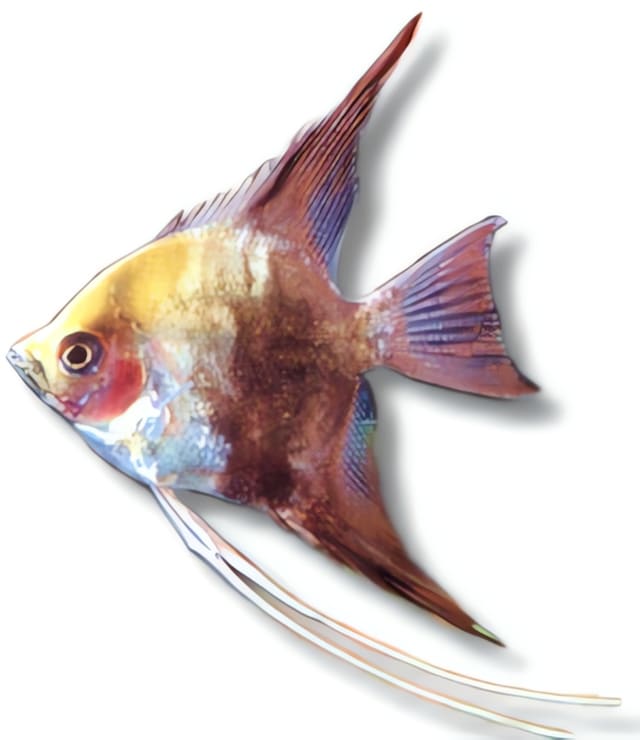
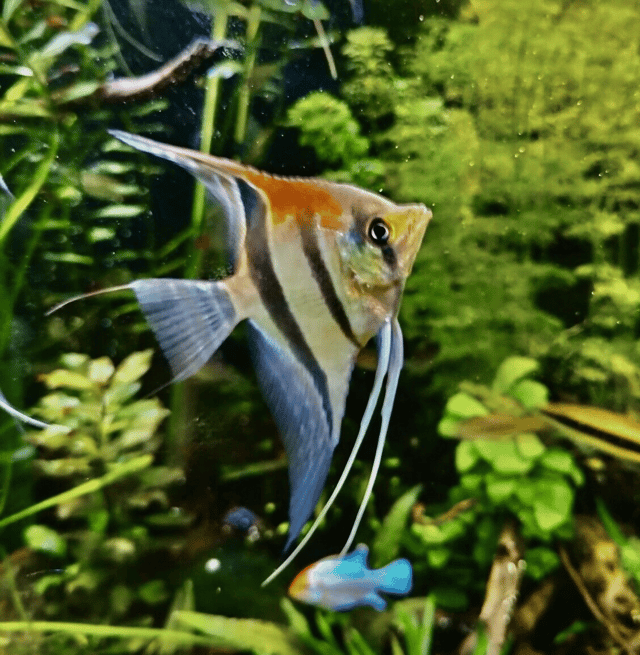
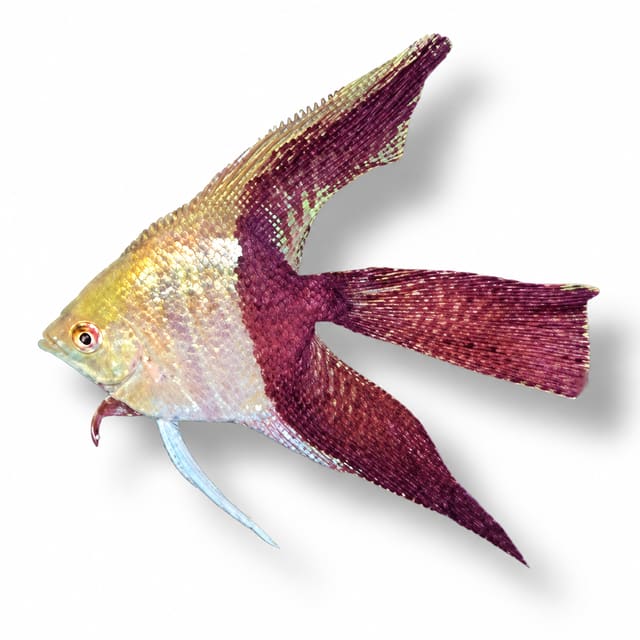
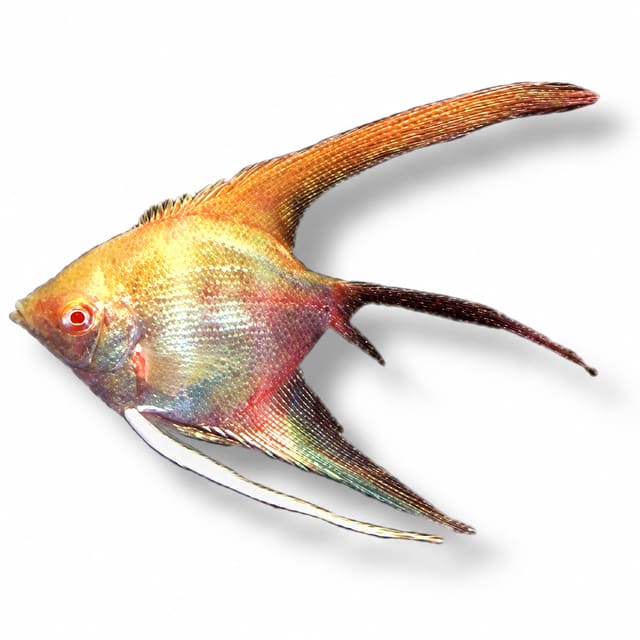
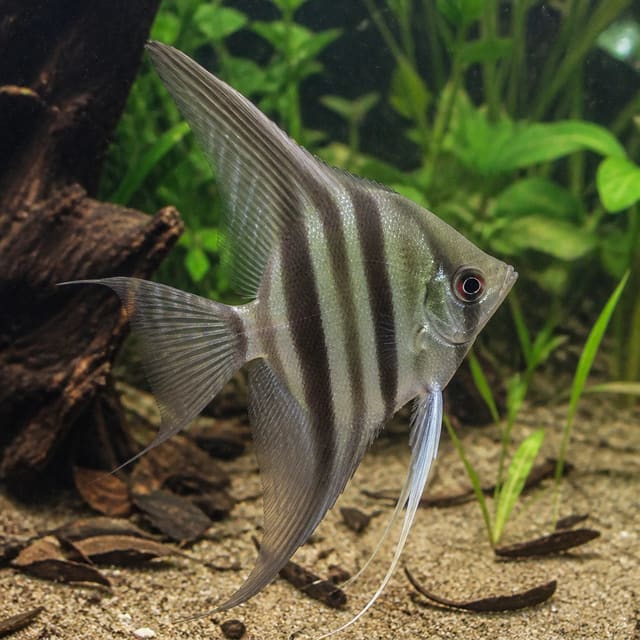
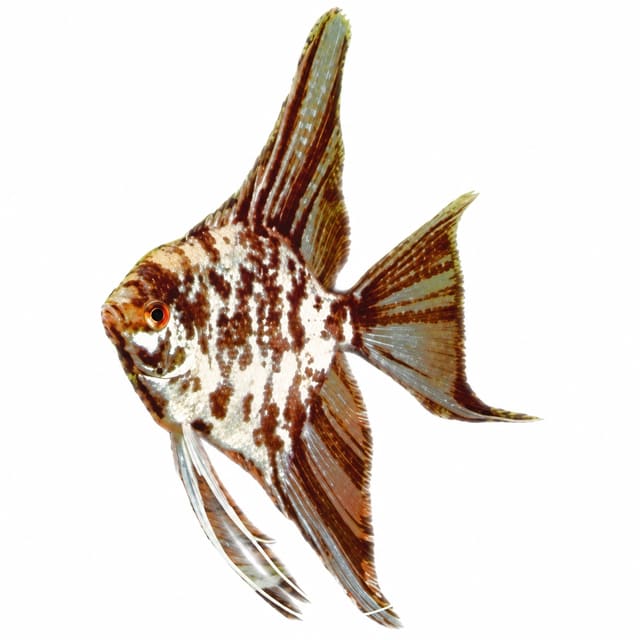
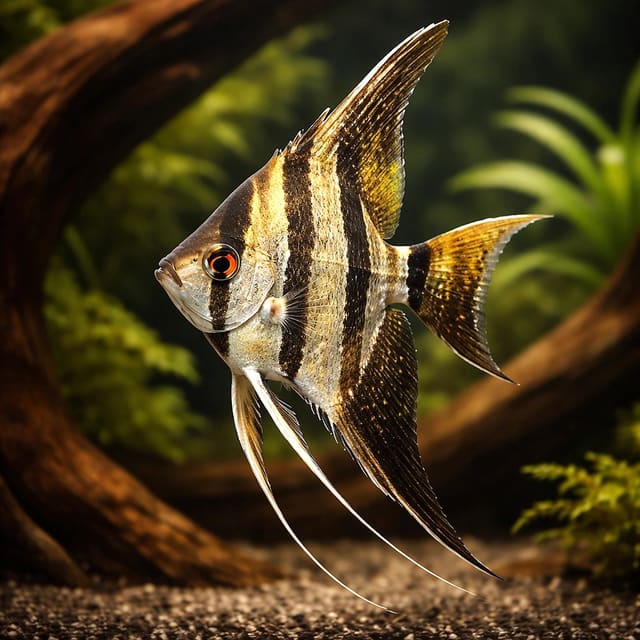
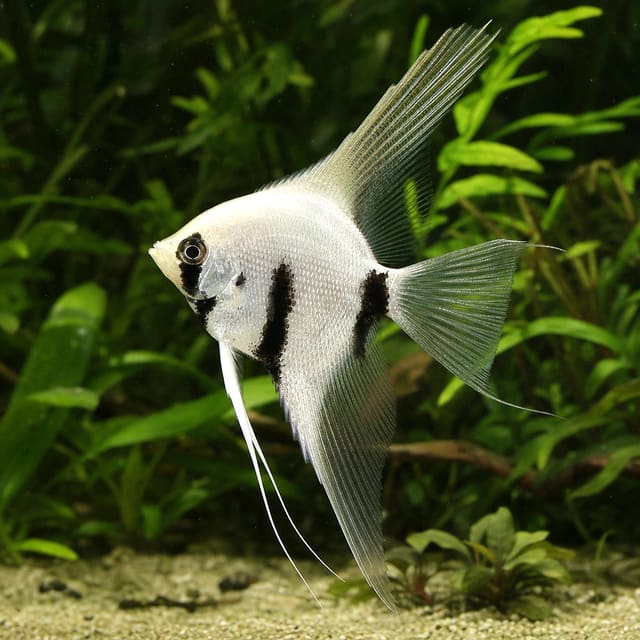
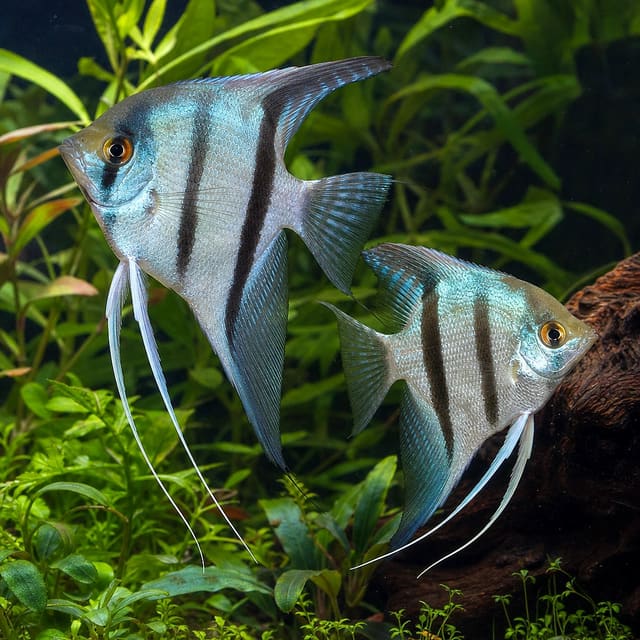
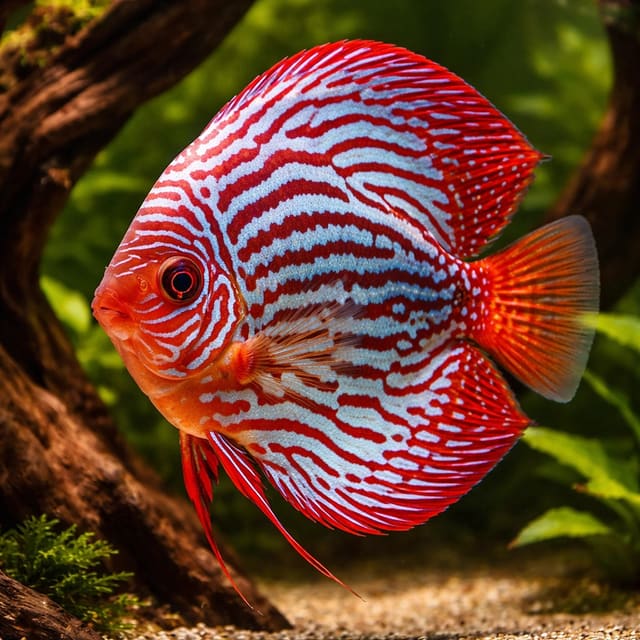
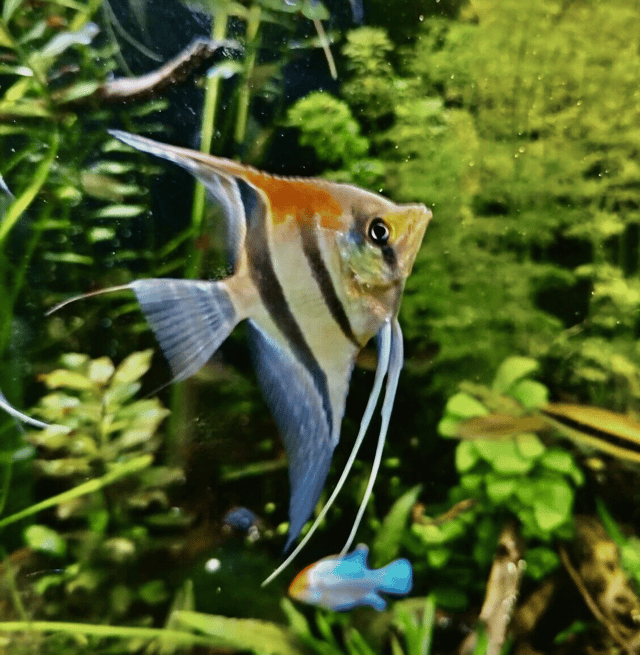
The gallery images are representative of this type of animal rather than photographs of the exact animal supplied, so colours can look slightly different from the live animal. The illustrated colour pattern is useful for recognising the koi diamond type, but individual marbling and orange coverage may differ.
Use the complete freshwater angelfish care guide to check the adult setup, social choices and routine before committing aquarium space. You can also browse the angelfish collection when comparing other forms, but colour should follow the welfare decision rather than replace it.
Plan for an adult length of 15 cm and a height of about 20–25 cm when the dorsal and anal fins are extended. The greater vertical measurement explains why a tank can appear long enough yet still be too shallow.
Seriously Fish gives 150 mm standard length and recommends a tank at least 50 cm tall for adult fish. FishBase also gives a 15 cm total-length maximum, so plan the aquarium for a 15 cm adult.
A nominal tank height can overstate the swimming depth once substrate, an air gap and decor are considered. For example, a tank sold as 50 cm high may provide less than 50 cm of usable water. Measure from the top of the substrate to the normal waterline and account for any wood or equipment extending into that space.
Watch how each fish uses the full height and width. Repeated fin contact with decor, difficulty turning, persistent confinement to one corner or exclusion from open water means the layout or social arrangement needs attention. Do not wait for visible fin damage before making more usable room.
Growth also changes compatibility. A companion that appears substantial beside a 4–5 cm angelfish may remain small enough to be swallowed when the angelfish matures. Compare adult dimensions for every species and reassess the community as body size, fin reach and territorial behaviour develop.
Use roughly 200 litres with a 100 × 40 cm footprint and about 50 cm of usable height as the planning point for a compatible adult pair. Seriously Fish describes an aquarium measuring 100 × 40 × 50 cm, around 200 litres, as the smallest that should be considered. The Tropical Fish Co plan uses the same approximate volume and dimensions for an adult pair.
OATA’s American-cichlid guidance gives at least 120 litres for a pair of smaller species and says an angelfish aquarium must be sufficiently tall. That is broad group guidance. The more conservative 200-litre plan leaves greater allowance for adult height, turning room and territorial behaviour.
A group number is only the start of the decision. Five fish in a cramped aquarium do not gain welfare from meeting a numerical target. Adult body size, sex, pair formation, filtration, decor and other inhabitants alter how much usable territory remains. Set up visual barriers, and have a second suitable aquarium or realistic rehoming route ready before conflict begins.
For a first aquarium, complete the preparation and maturation steps before adding livestock. A mature biological filter and measured zero ammonia and nitrite matter more than the number of weeks the aquarium has contained water.
Persistent exclusion is a reason to act. If one fish cannot reach food, remains hidden, has damaged fins or is chased whenever it enters open water, increase separation and territory immediately. More decor may help break sight lines, but it cannot make an incompatible pair or overcrowded group reliable.
Keep the aquarium at 24–27°C, pH 6.5–7.4 and 5–12 dGH. These values are the overlap of FishBase and Seriously Fish species ranges with OATA’s American-cichlid group guidance.
FishBase gives 24–30°C, pH 6.0–8.0 and 5–13 dGH. Seriously Fish gives 24–30°C, pH 6.0–7.4 and 0–15 dGH, while OATA gives 22–27°C, pH 6.5–8.0 and 4–12 dGH for American cichlids. The working range therefore takes the warm end permitted by OATA, the pH ceiling from Seriously Fish and the hardness interval shared by all three.
Stability matters within the range. Do not chase a single pH value or make abrupt elective adjustments because one test sits near a boundary. Compare results over time, confirm surprising readings, then correct the cause gradually unless ammonia or nitrite is detectable and urgent action is required.
Use the water chemistry guide to understand GH, KH, pH and nitrogen-cycle tests before altering source water. The water matcher can then compare measured aquarium values with stated guidance; it does not replace testing or the adult-space decision.
Keep the aquarium stable within the routine range before the fish arrives, so the arrival sequence needs no abrupt changes to the aquarium water. Do not copy a fixed tap-water and reverse-osmosis recipe; measure GH, KH and pH in both waters before changing chemistry. Different source waters can produce very different GH, KH and pH even when mixed in the same proportions.
If a result falls outside the working range, check the test method, temperature and recent water changes before making repeated corrections. A clear sequence of measurements is safer than several unmeasured adjustments made in quick succession.
Use tall leafy plants, vertical wood or similarly smooth structures to create cover and break long sight lines, while preserving open water for an adult to turn. Seriously Fish recommends a well-planted aquarium with tall leafy plants and gentle water flow. Dense vegetation also reflects the flooded and swamp habitats recorded for wild Pterophyllum scalare.
Arrange cover as several visual zones rather than one solid wall. A fish should be able to leave another’s view without becoming trapped behind decor. Smooth surfaces and secure hardscape reduce the chance of extended dorsal, anal or ventral fins catching on an edge.
The RSPCA’s aquarium guidance explains that a working biological filter supports bacteria that convert toxic ammonia into nitrite and then nitrate. No angelfish aquarium should operate without a well-established and maintained filter.
A gentle-flow preference does not mean stagnant water. Watch for waste collecting in dead spots, reduced surface movement or fish breathing faster than normal. Redirecting a return, using a spray bar or repositioning decor can spread circulation while retaining calmer resting areas.
Use fine aquarium gravel or sand, because OATA notes that many American cichlids will dig or sift the substrate when feeding or breeding. Secure plants and decor so digging cannot destabilise them.
Check the completed layout from the fish’s perspective: there should be tall cover, open turning room, more than one route through the aquarium and no narrow gap that can pin a deep-bodied fish. Filtration, shelter and usable swimming space must work together rather than competing for the same limited area.
Use a nutritionally complete cichlid pellet, granule or suitable flake as the staple, choosing a particle size each fish can swallow. Add suitable frozen or freeze-dried foods for variety. Seriously Fish describes the species as omnivorous and records wild fish feeding predominantly on small crustaceans and other aquatic invertebrates.
OATA’s group guidance says American cichlids often prefer meaty foods and names daphnia, brine shrimp and bloodworm for smaller species. These foods can add variety, but no single treat should replace a complete staple. A controlled angelfish feeding study also supports the importance of feed composition without creating one universal household menu.
Overfeeding can lead to excess faeces or uneaten food that breaks down and releases toxic waste into the water. If food remains after a few minutes, reduce the next portion and remove the excess. Do not compensate for missed access by adding more food to the same contested spot; spread the meal or address the social problem.
A practical meal uses the complete dried food first and a suitable frozen or freeze-dried item as planned variety. Bloodworm or brine shrimp may be eagerly taken, but appetite for a favourite food does not make it nutritionally complete.
Reduced feeding interest is a health and water-quality warning, especially when it appears with hiding, rapid breathing, damaged fins or unusual swimming. Test the water and inspect social access before changing the entire diet. Do not use fasting, peas, vitamins or medicated food as a substitute for identifying the cause of abnormal behaviour.
Test ammonia and nitrite at least once a week and keep both at zero. OATA strongly recommends a partial water change of 25% at least once every week as a starting routine for American cichlids. Stocking, feeding, plant growth and measured nitrate may justify more frequent or larger changes, but visible cloudiness should not be the trigger for maintenance.
If the filter needs cleaning, rinse the media lightly in aquarium water removed during the partial change. Do not rinse it under the tap, because chlorine or chloramine may kill part of the beneficial bacterial population. Clean only as needed to restore reliable flow rather than stripping every surface at the same time.
Add further fish slowly. Every increase in livestock and feeding asks the biological filter to process more waste. Stocking too quickly can outpace the bacterial population and produce new tank syndrome, with dangerous ammonia or nitrite.
During the first month, compare results rather than relying on memory. A simple written sequence of test readings, water changes, feeding changes and observed aggression makes patterns easier to identify. If ammonia or nitrite becomes detectable, treat that as urgent: stop adding livestock, test again, protect oxygenation and obtain immediate guidance on restoring safe water quality.
Prepare the mature aquarium before the parcel arrives, with temperature and water values already checked. Someone must be at the delivery address to receive live fish; the parcel cannot be left unattended.
Follow the Tropical Fish Co delivery and Live Arrival Guarantee policy in this order:
The video step is part of every arrival sequence, not something to begin after a problem is noticed. Starting with the sealed parcel preserves the continuous record required for a Live Arrival Guarantee claim.
Outside that delivery sequence, check the aquarium with the established care targets: 24–27°C, pH 6.5–7.4, 5–12 dGH, zero ammonia and zero nitrite. Those tests belong to preparing the aquarium and assessing water quality; they do not replace floating the bag for 20–30 minutes.
After release, judge settling by observable signs. Steady swimming, regular breathing, open fins and eventual feeding are useful signs. Gasping, loss of balance, damaged fins or an inability to move normally requires immediate water testing and a health response.
Healthy angelfish should show steady swimming, regular breathing, clear eyes, open undamaged fins, an appropriate body profile and consistent feeding. Learn each fish’s normal behaviour so a change in breathing, appetite, position or social access is noticed early.
The RSPCA’s fish-health guidance supports a water-quality-first response. Warning signs include hanging at the surface, sitting on the bottom, erratic swimming, darker or paler colour, increased hiding, altered aggression, faster or slower gill movement, white spots, fluffy growths, wounds, scale or fin loss and a sudden appetite change.
White spots, wounds, abnormal faeces, head lesions or unusual swimming are signs rather than diagnoses. Do not raise the aquarium to an arbitrary temperature, add preventive medication or copy a treatment recipe without identifying the problem and checking that a lawful product is labelled for the species and system.
If a fish jumps out, return it to suitable aquarium water immediately using wet hands or a wet soft net, minimise handling and monitor breathing, balance and visible injury. Check and secure the lid, including gaps around cables and pipework.
A social problem can become a health problem even when water tests are normal. Persistent chasing, hiding, missed meals and torn fins require separation or a revised territory plan. Do not wait for a subordinate fish to stop eating completely before acting.
Keep maintenance steady during investigation. Several abrupt changes to pH, hardness, temperature, decor and medication at the same time can add stress and make the cause harder to identify. Correct urgent water hazards first, document the response and change only what the observations justify.
Choose companions by adult size, fin behaviour, temperament, territory, water requirements and feeding speed. Angelfish can live in a robust community, but no companion is automatically safe. OATA permits calmer American cichlids such as angelfish in communities with appropriately robust, larger shoaling fish when conditions are compatible.
| Check | Decision |
|---|---|
| Adult body size | Exclude fish likely to fit into an adult angelfish’s mouth. |
| Fin behaviour | Exclude persistent nippers rather than relying on the angelfish to escape. |
| Temperament | Allow room for angelfish territorial behaviour and the companion’s own needs. |
| Water overlap | Keep every species inside a shared temperature, pH and hardness range. |
| Feeding access | Confirm each fish can obtain the right food without chronic competition. |
Use adult information for both species. A small juvenile companion may later become aggressive, while a tiny shoaling fish may remain small enough to be swallowed. Similar dispatch sizes do not establish long-term compatibility.
Invertebrates require the same predation assessment. Very small shrimp and fry remain at risk around an angelfish, so do not treat a different place in the aquarium as protection. Floor-dwelling fish also need adequate floor area, compatible water and reliable feeding access.
Before adding any companion, write down the aquarium dimensions, measured water values, filtration, existing inhabitants and their adult sizes, and check each proposed species against the table above. Treat every mix as a conditional plan and keep a separation route ready, because no companion is guaranteed safe.
Expect occasional squabbling because this generally peaceful community fish remains a cichlid. Seriously Fish notes that angelfish may squabble with their own kind, and the store care guide classifies their temperament as semi-aggressive. Pair formation and breeding can intensify territorial defence.
Do not interpret all chasing as harmless rank behaviour. The practical question is whether every fish can use the aquarium, reach food and rest without repeated attack. Persistent exclusion, torn fins, weight loss, continual hiding or confinement to a surface corner means the arrangement needs intervention.
A compatible pair is not the same as any two angelfish. Sex is difficult to determine reliably outside active spawning, and placing two fish together does not establish acceptance. If two fish repeatedly drive one another from food or shelter, more time alone is not a welfare plan.
A group of at least five follows FishBase’s aquarium guidance, but the number does not remove the need for substantially more space than the pair setup. As pairs and territories form, some fish may receive concentrated aggression. More hiding places can interrupt sight lines, yet overcrowding cannot be solved by adding decor until swimming room disappears.
Breeding behaviour changes community risk. Angelfish lay eggs on vertical surfaces such as broad leaves, slate or aquarium glass and may guard eggs and young. A pair defending a spawning site can claim space previously used by other inhabitants. A dedicated mature setup is safer than relying on all fish to retreat within a crowded community.
When conflict begins, identify the aggressor, the excluded fish, the defended location and whether food access is affected. Separate fish before severe injury develops. Rebuilding some visual boundaries may support a revised plan, but repeated conflict after changes is a reason to end that combination.
It reaches 15 cm in length and may stand about 20–25 cm tall with its extended fins, so plan for both adult length and height.
Plan roughly 200 litres with a 100 × 40 cm footprint and about 50 cm of usable height for a compatible adult pair; a group or community needs more room.
Keep a compatible pair or a deliberately planned group. FishBase gives five or more for group aquarium keeping; groups need extra space, visual barriers and a separation plan.
It carries an intermediate store care rating because it needs a mature filtered aquarium, stable measured water, adult-height planning and active management of social behaviour.
Feed a complete cichlid pellet, granule or suitable flake once daily in an amount eaten within a few minutes, adding suitable frozen or freeze-dried foods for variety.
Keep it at 24–27°C, pH 6.5–7.4 and 5–12 dGH, the routine overlap of FishBase and Seriously Fish species ranges with OATA’s American-cichlid guidance.
It is semi-aggressive and may squabble or defend a pair or spawning site. Its long fins make it a target for persistent fin-nippers, so keep it away from fish that nip.
Appropriately robust larger shoaling fish may work when adult size, water and temperament overlap. Avoid very small fish, tiny shrimp, persistent fin-nippers and highly aggressive or much faster-feeding species.
Tropical Fish Co hand-bags the fish in pure oxygen and uses an insulated box, with a heat pack when needed. Receive the sealed parcel in person, film continuously from the sealed parcel onwards, inspect the fish in its sealed bag and float the bag for 20–30 minutes before release.
No reviews for this item yet. Bought one? Honest reviews only, good or bad.
What customers say about ordering from us
Easy website plenty of info on fish your buying great to pick a time slot
TRACEY DURRANT · 7 Oct 2026
Got some lovely fish thank you
Kevin Mackie · 7 Oct 2026
Reviews of our shop, collected by Judge.me, an independent third-party review collector. Newest first.