Moderate
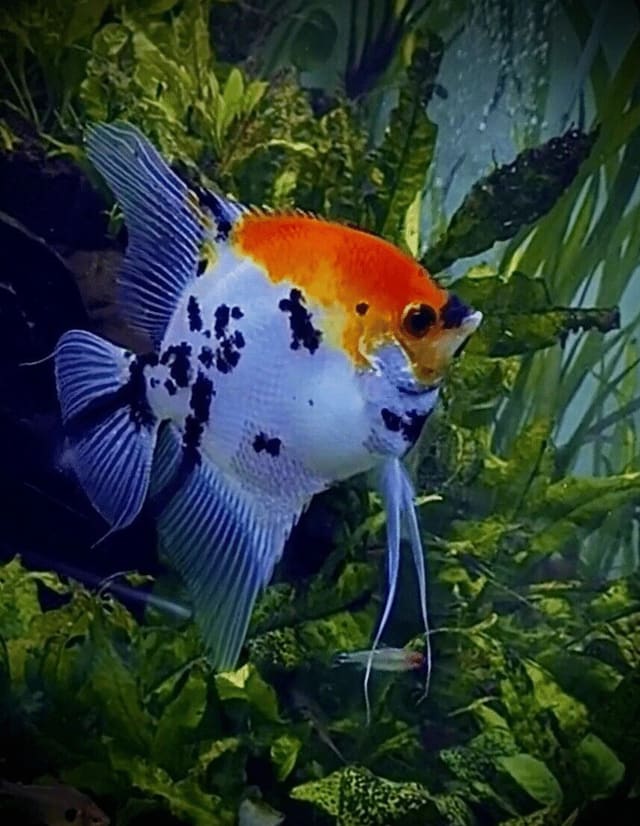
Full Orange Koi Angelfish (Pterophyllum scalare)
24–27°C · pH 6.5–8 · 200L
£12.99
The Black Angelfish (Pterophyllum scalare) is a South American cichlid from the Amazon basin that reaches 15 cm. It suits a prepared keeper with a tall, mature aquarium, a compatible pair or deliberately planned group, and the routine overlap of FishBase, Seriously Fish and OATA at 24–27°C, pH 6.5–7.4 and 5–12 dGH. Sold individually in dispatch sizes from 1 cm to XXL, labelled over 7 cm.
Adult size is the maximum length this species reaches at full maturity (scientific sources). The livestock you receive will be younger and smaller — pick a size above for the actual shipping size. Product-photo provenance and any image-specific limitations are stated on the listing.
Pterophyllum scalare
Save when buying multiple fish. Each quantity is one fish; sex and pair formation are not guaranteed unless the selected variant explicitly states them.
Minimum of 2 per order.
The Black Angelfish (Pterophyllum scalare) is a South American cichlid from the Amazon basin that reaches 15 cm. It suits a prepared keeper with a tall, mature aquarium, a compatible pair or deliberately planned group, and the routine overlap of FishBase, Seriously Fish and OATA at 24–27°C, pH 6.5–7.4 and 5–12 dGH. Sold individually in dispatch sizes from 1 cm to XXL, labelled over 7 cm.
Adult size is the maximum length this species reaches at full maturity (scientific sources). The livestock you receive will be younger and smaller — pick a size above for the actual shipping size. Product-photo provenance and any image-specific limitations are stated on the listing.
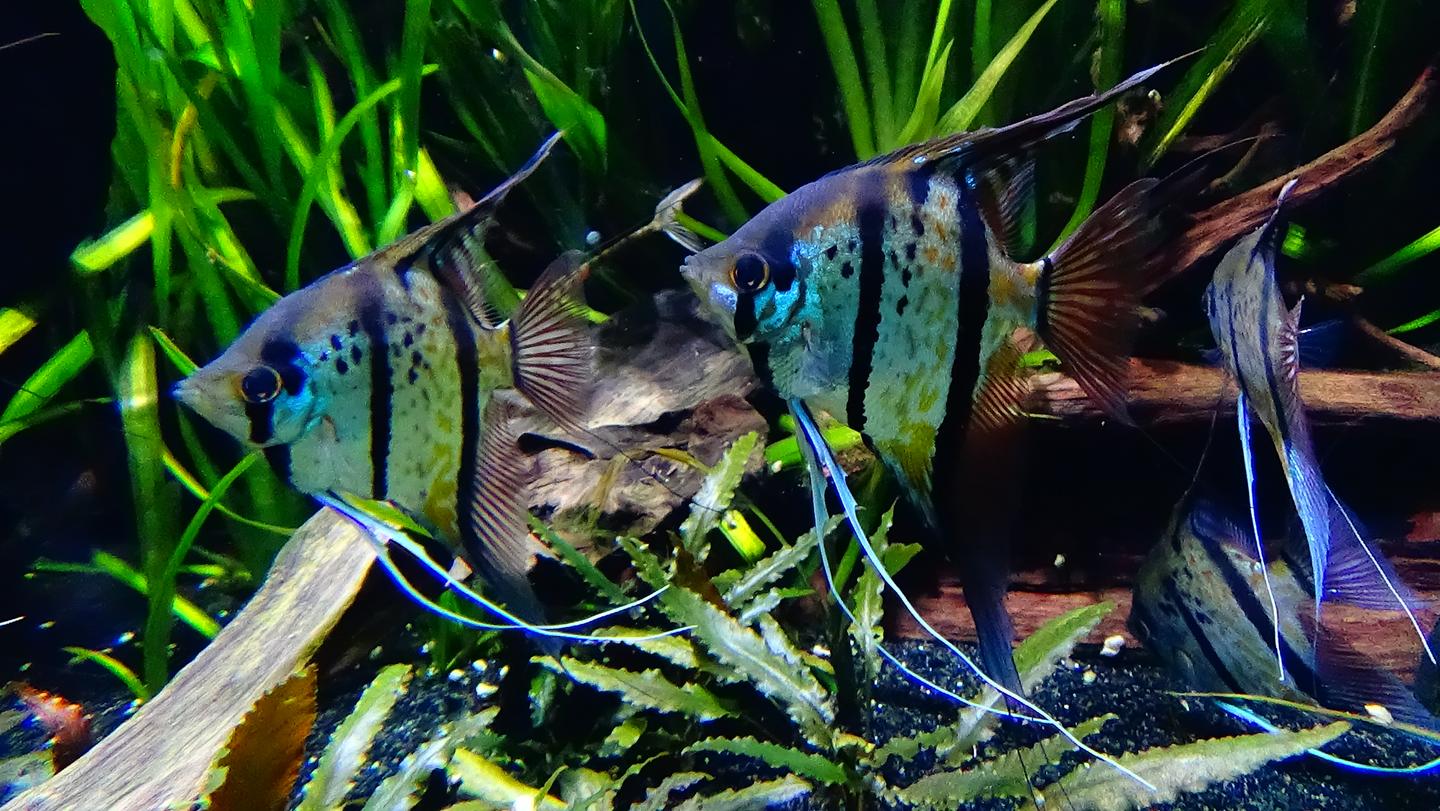
Freshwater angelfish are tall South American cichlids, not small community fish. OATA gives 120 litres as an industry floor for a compatible pair and says the aquarium must be sufficiently tall. We prefer planning around roughly 200 litres, a 100 × 40 cm footprint and about 50 cm height for an adult pair, with more space and an exit plan for a group.
Maintain these water conditions for optimal health and vibrant colors
The Black Angelfish is a black colour form of Pterophyllum scalare, a freshwater cichlid from South America. Its native range covers the Amazon basin in Brazil, Colombia and Peru, as well as waters in French Guiana and Guyana. FishBase places the species in the cichlid family Cichlidae and gives a maximum length of 15 cm. This is a tall-bodied fish whose extended dorsal and anal fins also need substantial vertical room.
This angelfish suits a prepared keeper who can provide a mature, filtered aquarium, stable measured water and a plan for adult social behaviour. Although angelfish are often kept in communities, they are cichlids rather than small, consistently placid community fish. Territorial behaviour can develop during pair formation or breeding, and very small fish may be eaten.
The black form shares the care requirements and adult planning needs of Pterophyllum scalare. Colour does not make it smaller, calmer or easier to house. Use the fish’s adult dimensions, long fins and potential territory when deciding whether your aquarium is suitable.
Eschmeyer’s Catalog of Fishes also accepts Pterophyllum scalare as the species name. “Black” identifies the colour form rather than a separate species.
Plan for around 200 litres, a footprint of about 100 × 40 cm and approximately 50 cm of usable height for an adult pair. Keep the routine water at 24–27°C, pH 6.5–7.4 and 5–12 dGH. A group or community requires more room, broken sight lines and a practical way to separate fish if persistent aggression develops.
Seriously Fish recommends 100 × 40 × 50 cm and approximately 200 litres as the smallest aquarium to consider. Our complete freshwater angelfish care guide uses roughly 200 litres as the preferred adult-pair plan. Aquarium shape matters alongside volume: a shallow aquarium can hold the same nominal litres while leaving too little vertical clearance for extended fins.
| Suits | Not suited to |
|---|---|
| A mature, fully filtered aquarium | An uncycled aquarium or one chosen only by age |
| About 200 litres with useful height for an adult pair | A shallow aquarium sized around a juvenile |
| A compatible pair or deliberately managed group | A single fish kept alone, or two random fish treated as a pair |
| Measured water within the stated range | Abrupt temperature or chemistry changes |
| Calm, appropriately sized companions | Tiny prey-sized fish, fin-nippers or highly aggressive competitors |
One purchase supplies one Black Angelfish in the selected size. Use the live size selector to choose among the labels shown on the page, which can include 1 cm, 1.5–2 cm, 2.5–3 cm, 3–3.5 cm, 4–5 cm, 5–5.5 cm, L (5.5–6 cm), XL (6–7 cm) and XXL (>7 cm). The size you select is the size supplied, not the adult size.
A smaller fish still needs an adult aquarium plan. Do not use the dispatch measurement to justify a short-term shallow tank or a final stocking level that will become crowded as body depth, fin height and territorial behaviour develop. You can compare other colour forms through our angelfish collection, but each fish must be assessed against the same adult welfare needs.
Sex is guaranteed only when the selected option explicitly states male or female. This Black Angelfish listing has no sex-guaranteed option.
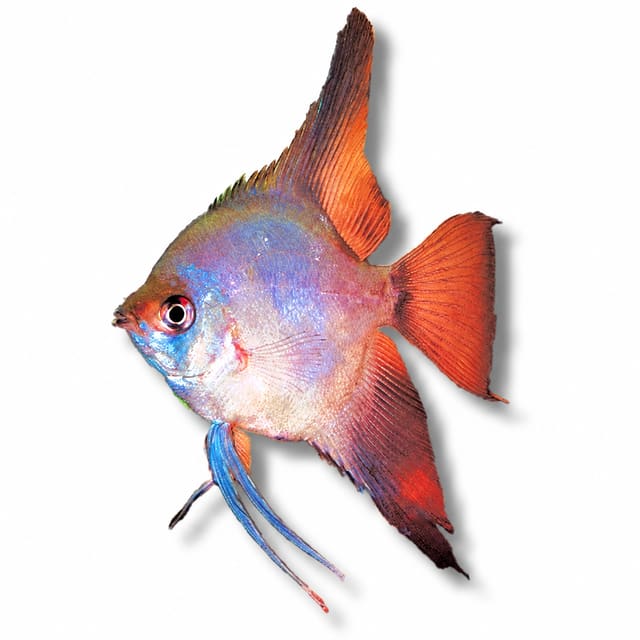
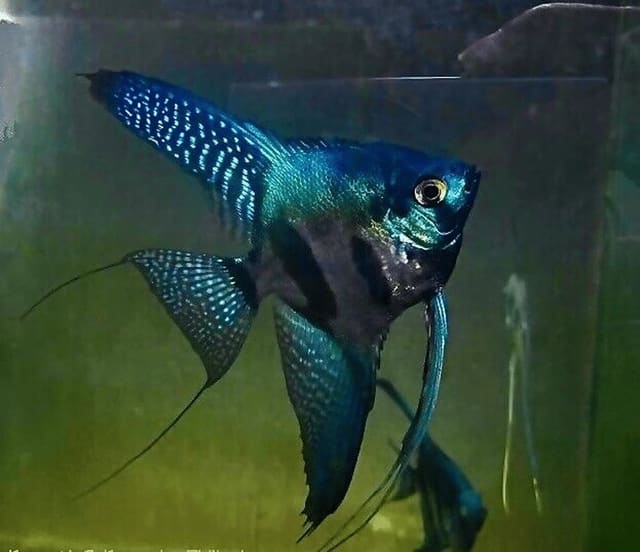
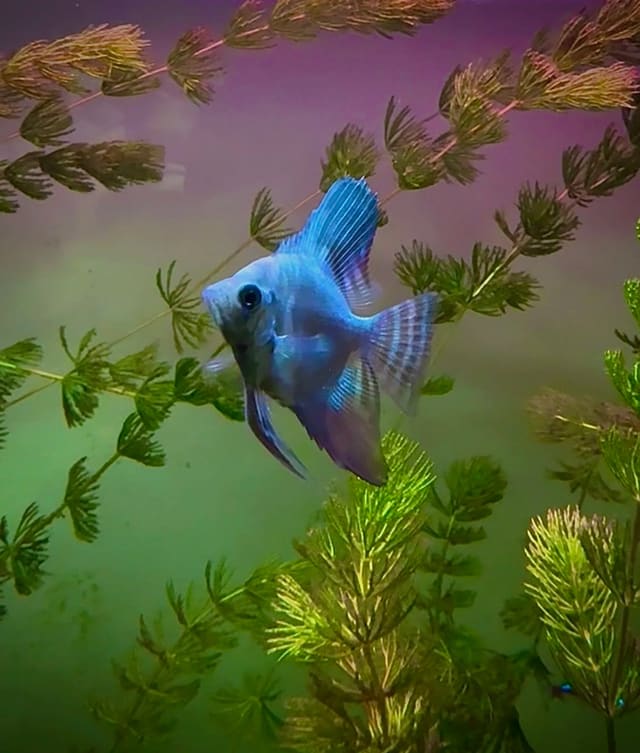
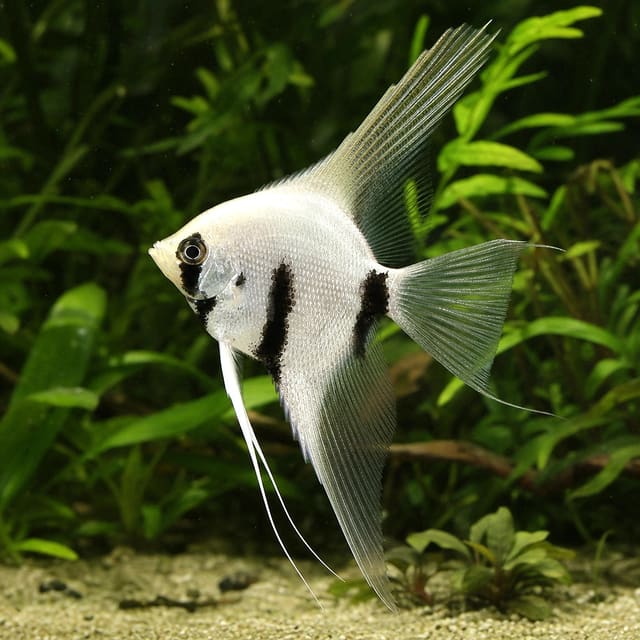
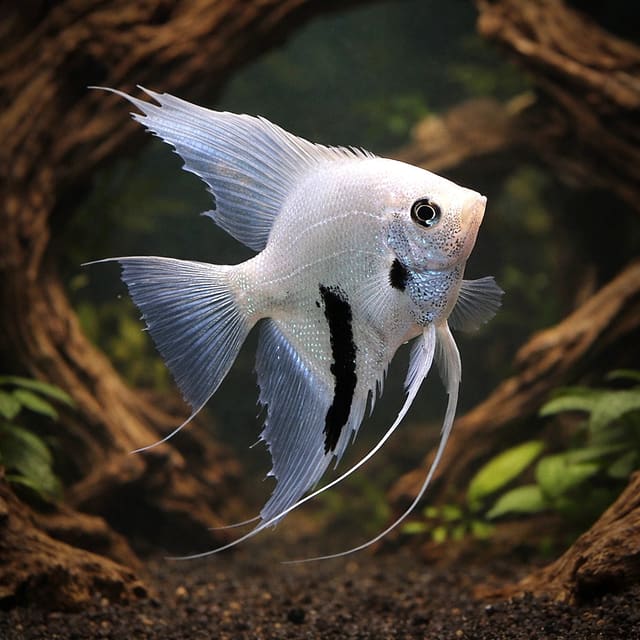
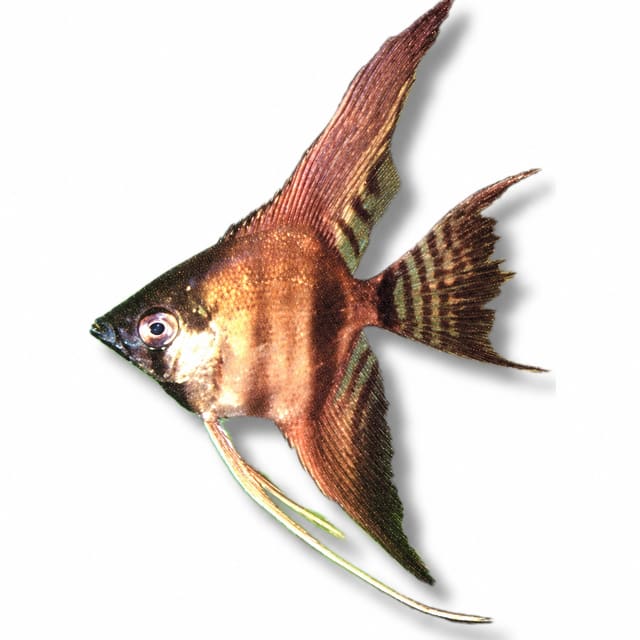
The gallery images are representative, based on reference photographs of this species, so colours can look slightly different from the live animal.
Black colour intensity, finnage and individual markings can vary. Choose this form for its identity and adult shape rather than expecting every fish to reproduce the exact lighting, pose or colour highlights shown in the gallery.
Plan for an adult length of 15 cm and a total height of about 20–25 cm from dorsal-fin tip to anal-fin tip. The aquarium must then provide clearance above and below the fish, open turning room and usable territory. A nominally long but shallow aquarium does not meet those needs simply because its litre figure looks adequate.
Body length and fin height are measured differently, so plan for both. An adult Black Angelfish reaches 15 cm in body length. Plan the aquarium, companions and stocking around that 15 cm adult body length. The Tropical Fish Co guide notes that extended-fin height can reach about 20–25 cm. Check the aquarium's usable height against that taller figure as well as its length.
Height must not replace footprint. The fish still needs room to turn, move away from a dominant individual and approach food without being trapped against decor. Measure usable internal dimensions after allowing for substrate, wood, equipment and the water line.
Keep the aquarium at 24–27°C, pH 6.5–7.4 and 5–12 dGH. These routine values sit within FishBase’s species range, the Seriously Fish aquarium range and OATA’s broad American-cichlid guidance. OATA gives 22–27°C, pH 6.5–8.0 and 4–12 dGH for the group, while the species references extend to 24–30°C, pH 6.0–7.4 or 8.0 and up to 13 or 15 dGH. Hold the aquarium steadily inside this narrower range.
Test the aquarium rather than relying on a heater dial, elapsed cycling time or a remembered tap-water value. Ammonia and nitrite should both read zero before the fish is introduced. OATA advises keeping nitrate to no more than 20 mg per litre above the normal tap-water level, then using maintenance and stocking decisions to prevent waste from accumulating.
If the chemistry terms are unfamiliar, read our water chemistry guide before changing the source water. You can then use the water matcher to check your measured aquarium values. Stability inside a suitable range is safer than repeatedly chasing one exact pH or hardness number.
Use tall plants, upright wood or other secure vertical structure to create cover and interrupt long sight lines. Leave open water where an adult can turn without brushing its dorsal, anal or trailing pelvic fins against sharp surfaces. FishBase describes wild adults among dense aquatic and riverside vegetation in swamps and flooded ground, while Seriously Fish recommends a well-planted aquarium with tall leafy plants and gentle water flow.
Those habitat details are useful layout inspiration, not a requirement to copy one exact river scene. The practical goals are vertical cover, safe fin clearance, behavioural choice and accessible swimming space. A dense wall of decor that removes turning room is no better than a bare aquarium with nowhere to retreat.
Gentle flow does not mean stagnant water. Position the outlet so it supports circulation and oxygen exchange without making the angelfish fight a forceful current continuously. Watch how the fish uses the aquarium: repeated sheltering only behind equipment, difficulty holding position or avoidance of a large area can indicate that the flow or territory layout needs adjustment.
Use a fully established biological filter and confirm zero ammonia and zero nitrite before adding the angelfish. The RSPCA explains that biological filtration supports bacteria that convert toxic ammonia first to toxic nitrite and then to safer nitrate. A running filter or a tank that has stood for a set number of weeks is not enough by itself; test results show whether waste is being processed.
If this is your first setup, follow our guide to preparing and maturing a tropical aquarium before livestock arrives. Add fish gradually because every addition increases feeding and waste, and the bacterial population must respond to that increased load.
A 200-litre setup with four to five turnovers per hour corresponds to approximately 800–1,000 litres per hour in the Seriously Fish example. Treat that as filter-planning guidance rather than a reason to create a harsh jet. Media capacity, actual flow after installation, oxygen exchange, stocking and maintenance all affect performance.
Cloudiness is not a maintenance schedule. Regular measurements let you act before waste produces gasping, appetite loss or abnormal swimming.
Use a nutritionally complete cichlid pellet, granule or suitable flake as the staple, choosing a particle size the fish can swallow easily. Add suitable frozen or freeze-dried foods for variety. Seriously Fish describes the species as omnivorous and notes that wild fish feed predominantly on zoobenthos such as small crustaceans and other aquatic invertebrates; aquarium fish accept dried, live and frozen foods.
OATA’s American-cichlid feeding guidance supplies the routine: feed once a day and offer only what the fish can consume within a few minutes. Suitable supplements for smaller cichlids include daphnia, brine shrimp and bloodworm. These attractive foods should add variety rather than become the entire diet.
The controlled angelfish feeding study by Kasiri, Farahi and Sudagar supports the importance of feed composition and variety, but it does not create one fixed household menu. A complete staple, measured portions and observed access are the practical priorities.
Overfeeding can raise ammonia, nitrite and nitrate through uneaten food and additional faeces. If appetite suddenly falls, test the water and inspect breathing, balance, fins and body condition instead of trying several rich foods in succession.
OATA advises checking that the aquarium is suitable before adding fish. Confirm that temperature is stable, ammonia and nitrite are zero, and the final layout provides safe cover and open turning room before the parcel arrives.
Our delivery and Live Arrival Guarantee policy explains the packing and arrival procedure. Fish are hand-bagged in pure oxygen, placed in an insulated poly box and given a heat pack when the weather calls for one. A tracked courier licensed to carry live animals transports the parcel, and someone must be present to receive it because live fish cannot be left unattended; open and inspect the parcel on the day it arrives.
After release, use OATA’s health checks to observe breathing, swimming, colour and visible condition. OATA also advises increasing the aquarium population slowly so filtration can adjust as feeding and waste rise. Do not introduce several additional animals simply because the first angelfish appears settled. Recheck ammonia and nitrite after stocking and respond promptly to any detectable reading.
Temporary caution after a move can occur, but worsening breathing, balance, wounds or appetite requires action rather than prolonged observation.
Use steady swimming, regular breathing, clear eyes, open undamaged fins, a consistent body profile and reliable feeding as everyday health checks. Warning signs include gasping, clamped or damaged fins, unusual balance, erratic swimming, prolonged isolation, white spots, fluffy growths, wounds, marked colour change or a sudden loss of appetite.
When a change appears, test ammonia, nitrite, nitrate, temperature and relevant chemistry immediately. Detectable ammonia or nitrite needs urgent correction and advice. Compare the readings with the aquarium’s established conditions before making elective pH, hardness or temperature changes.
The RSPCA’s fish health guidance supports checking visible condition and water quality promptly. A sign is not a diagnosis: white spots, abnormal faeces, head marks, rubbing or rapid breathing can have different causes and do not justify a universal medicine or temperature recipe.
Use only lawful treatments labelled for the species and aquarium system, following the product instructions or veterinary direction. Preventive medication can expose fish and biological filtration unnecessarily.
If an angelfish leaves the aquarium, return it to suitable aquarium water immediately using wet hands or a wet soft net, minimise handling and monitor breathing, balance and visible injury. Check the lid and close any escape gap before leaving the fish unattended.
Keep Black Angelfish as a genuine compatible pair or in a deliberately planned group, never as a single fish kept alone. OATA says angelfish should be kept as a pair or group at minimum and warns that a fish kept alone may become stressed. FishBase gives groups of at least five for aquarium keeping, while Seriously Fish recommends small groups because individuals may squabble with their own kind.
A pair means two fish that are behaviourally compatible, not simply any two animals placed together. Sex is difficult to determine outside spawning, and size or forehead shape should not be treated as a reliable shortcut. If two fish repeatedly chase, corner or exclude one another, the label “pair” does not make the arrangement safe.
Watch for repeated high-speed chasing, torn fins, one fish remaining behind equipment, refusal to enter feeding areas or progressive weight loss. Brief displays can occur, but persistent exclusion is a welfare problem. Rearrange visual barriers only when it can be done safely, and separate fish when the same individual cannot feed or occupy normal space.
Breeding can intensify territorial defence around a vertical leaf, slate or glass surface. A community that was calm before pair formation may need a different plan once eggs or fry are guarded.
Choose companions by adult size, fin behaviour, temperament, water overlap, feeding speed and territory. OATA says calmer American cichlids such as angelfish can sometimes live in a robust community with larger shoaling species. Seriously Fish also describes the species as generally peaceful but warns that it may eat small fish such as tetras.
Avoid very small prey-sized fish, persistent fin-nippers and highly aggressive competitors. The angelfish’s extended dorsal, anal and pelvic fins are vulnerable to repeated biting, while a small companion may fit into an adult angelfish’s mouth. Judge the companion’s adult and juvenile sizes separately: being introduced together while small does not remove later predation risk.
| Check | Decision |
|---|---|
| Adult body size | Reject fish likely to become swallowable prey. |
| Fin behaviour | Avoid species or individuals that persistently nip extended fins. |
| Temperament | Allow room for angelfish territory and any territory claimed by the companion. |
| Water requirements | Use an overlapping routine temperature, pH and hardness range. |
| Feeding speed | Ensure every angelfish can reach food before faster fish consume it. |
| Aquarium level | Different levels can reduce direct competition but do not guarantee compatibility. |
Corydoras and bristlenose plecos are sometimes considered because they use different areas, but the exact species, adult size, water requirements and floor space still need checking. Small shrimp and fry remain at predation risk. Larger shoaling fish still require enough room for their own group and swimming needs.
Individual behaviour and breeding condition create honest uncertainty even after the screening checks are passed. Observe the first week closely and continue checking fin condition, feeding access and hiding. Before adding any companion, check its exact species, adult size and water needs against your aquarium dimensions, measured water and existing inhabitants.
A Black Angelfish reaches 15 cm in adult length. Its extended fins can make it about 20–25 cm tall, so plan around body length and vertical fin clearance rather than the small dispatch measurement.
A Black Angelfish needs a tall aquarium of about 200 litres for an adult pair, with roughly a 100 × 40 cm footprint and 50 cm of usable height. Seriously Fish gives those dimensions as the smallest setup to consider.
Keep a genuine compatible pair or a deliberately planned group. FishBase gives at least five for group keeping, while OATA advises a pair or group at minimum; groups need substantially more than 200 litres and a separation plan.
Pterophyllum scalare is an intermediate-care fish suited to a prepared keeper with a fully cycled, tall aquarium, measured water and a plan for territorial behaviour. It is not a shortcut around filtration, testing or adult space.
Black Angelfish eat a complete cichlid pellet, granule or suitable flake as the staple, with appropriate frozen or freeze-dried variety. OATA advises feeding once daily in a portion consumed within a few minutes.
Keep it at 24–27°C, pH 6.5–7.4 and 5–12 dGH. This range sits inside the FishBase and Seriously Fish ranges for the species and OATA’s guidance for American cichlids.
It is generally peaceful, but as a semi-aggressive cichlid it may squabble with its own kind and defend a pair or spawning site. In a community, the main fin risk is other fish persistently nipping the angelfish’s extended fins.
Consider calm, robust, appropriately sized fish with matching water needs; OATA names larger shoaling species as a possible community type. Avoid tiny prey-sized fish, persistent fin-nippers and highly aggressive competitors, and treat small shrimp and fry as predation risks.
It is hand-bagged in pure oxygen, placed in an insulated poly box with a heat pack when weather calls for one, and carried by a tracked courier licensed for live animals. Someone must receive it. Start filming before opening the parcel and record one continuous video showing it sealed, being opened and the fish still in the bag; then float the bag for 20–30 minutes and never pour bag water into the aquarium.
No reviews for this item yet. Bought one? Honest reviews only, good or bad.
What customers say about ordering from us
Easy website plenty of info on fish your buying great to pick a time slot
TRACEY DURRANT · 7 Oct 2026
Got some lovely fish thank you
Kevin Mackie · 7 Oct 2026
Reviews of our shop, collected by Judge.me, an independent third-party review collector. Newest first.