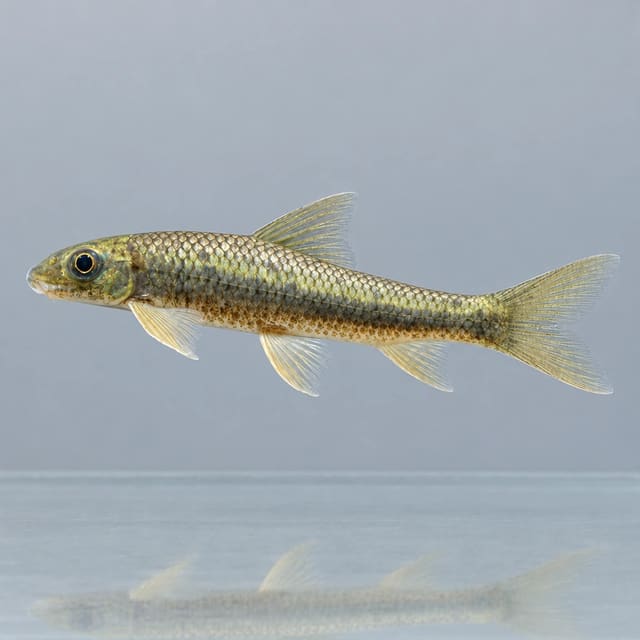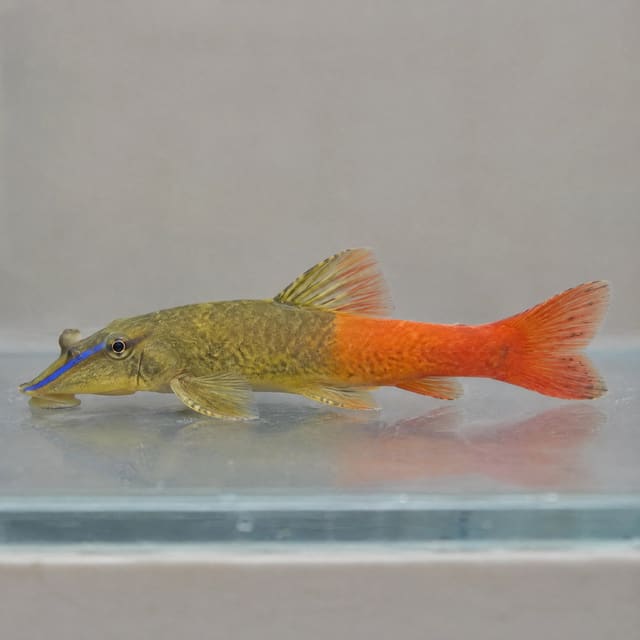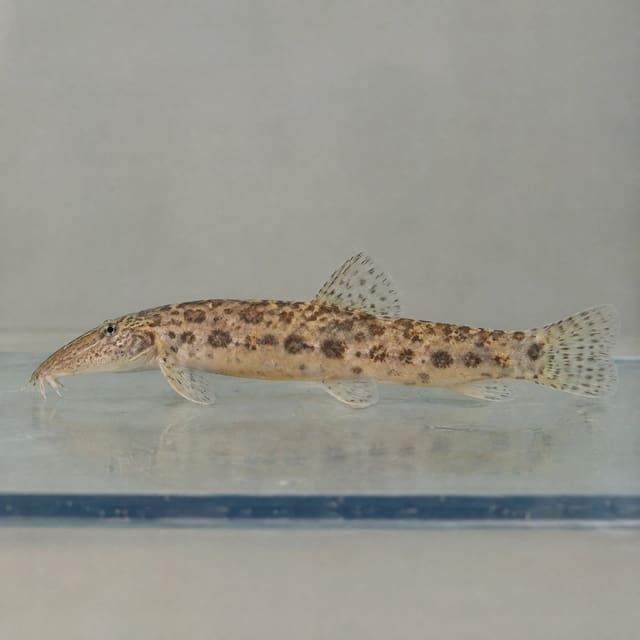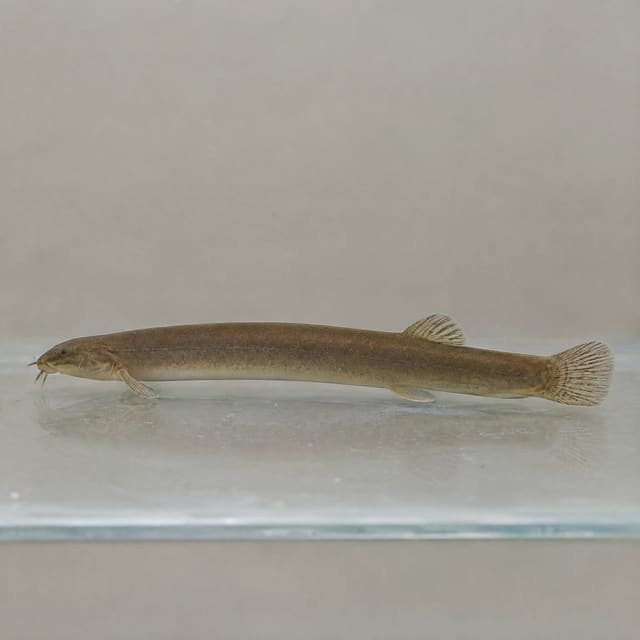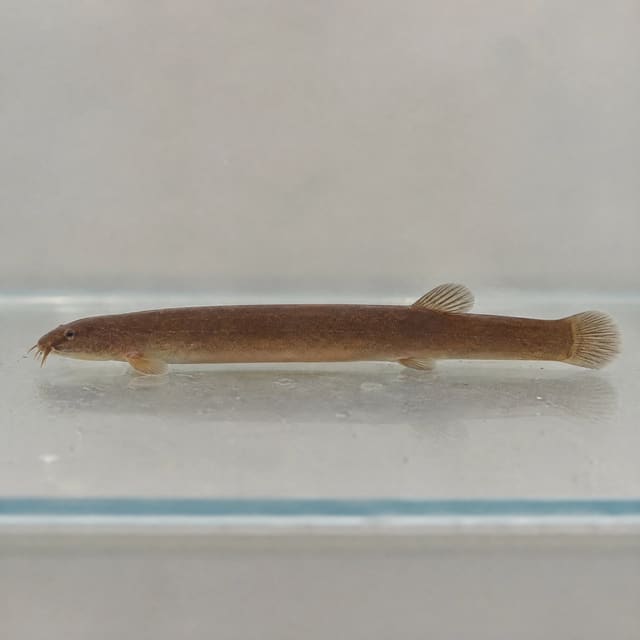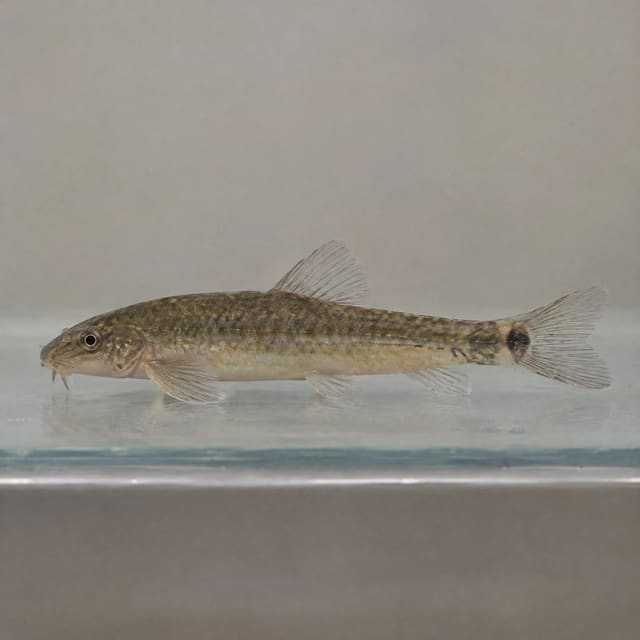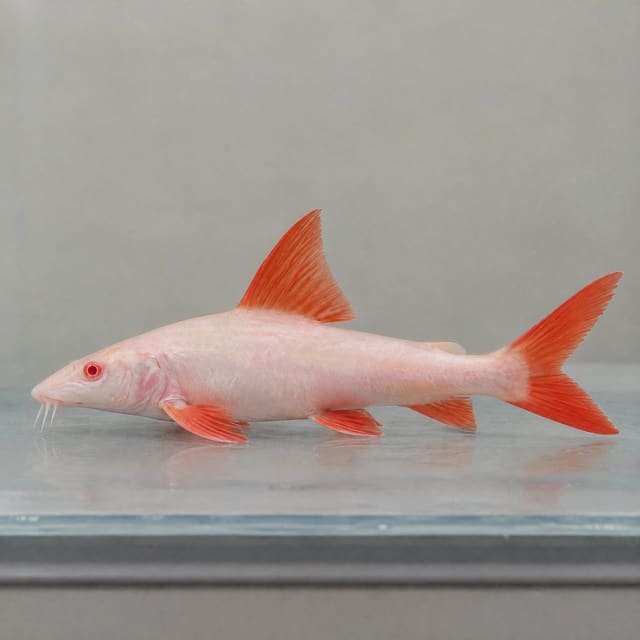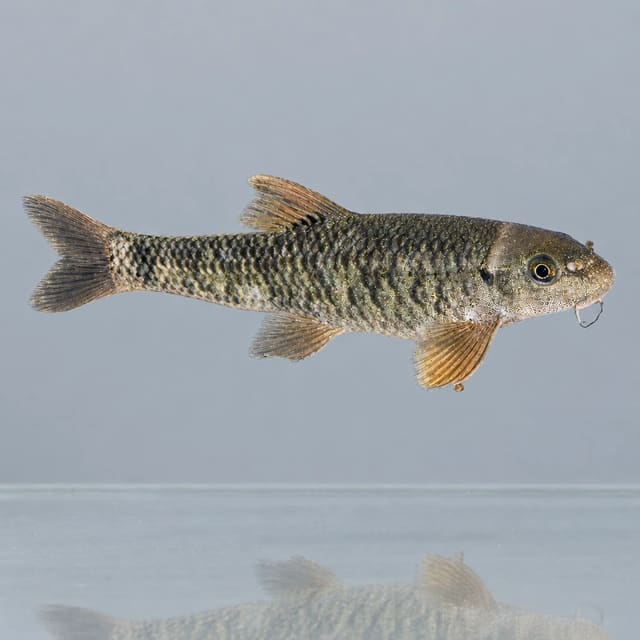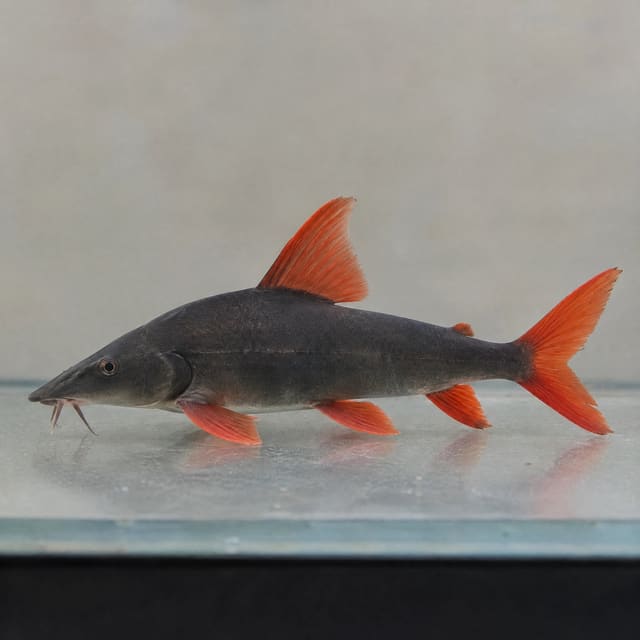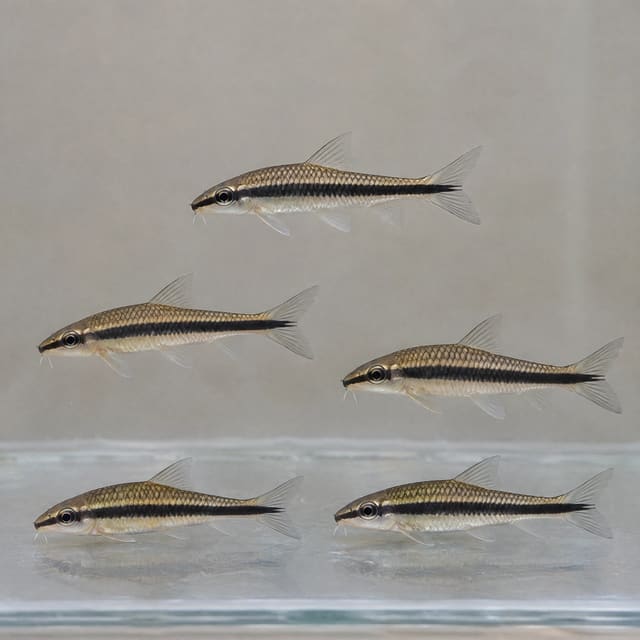
5 × Siamese Algae Eaters (Crossocheilus cf. langei)
£19.49
The Borneo Sucker (Gastromyzon borneensis) is a flattened hillstream loach from the fast, clear streams of northern Borneo, recorded at up to 10 cm standard length. Keep a group of four or more in a mature river-style aquarium with strong flow, high oxygen, 20–24°C and algae-covered stones to graze. Sold individually as one live fish.
Gastromyzon borneensis
Quantity discounts are pricing offers, not a group-size recommendation. Check the full care guidance and your existing animals before choosing a quantity.
The Borneo Sucker (Gastromyzon borneensis) is a flattened hillstream loach from the fast, clear streams of northern Borneo, recorded at up to 10 cm standard length. Keep a group of four or more in a mature river-style aquarium with strong flow, high oxygen, 20–24°C and algae-covered stones to graze. Sold individually as one live fish.
Read the full care guidance when planning conditions for your aquarium.
The Borneo sucker is a hillstream loach of the genus Gastromyzon, a group of fishes found only on the island of Borneo. This fish is sold as Gastromyzon borneensis (Günther, 1874), which FishBase records from northern Borneo, where it lives on the bottom of swift-flowing water and reaches up to 10 cm standard length (measured without the tail). Its head and body are flattened, its paired fins spread out horizontally and its pelvic fins are joined, so the whole underside works like a broad sucker that holds the fish against the current while it grazes.
Several trade names are attached to these fish: Borneo sucker, Hong Kong pleco, butterfly loach and simply hillstream loach. Despite the “pleco” name it is not a catfish. It belongs to the hillstream loach family Gastromyzontidae, which older books and some care sheets still place in Balitoridae. FishBase lists G. borneensis as Near Threatened on the IUCN Red List (assessed in December 2018).
| Suits | Not suited to |
|---|---|
| A mature aquarium with a base of about 120 × 30 cm | A newly set-up tank, or a small, tall aquarium |
| Strong, one-directional flow and high oxygen | Still water or gentle flow only |
| Water held at about 20–24°C | A warm community tank kept at 26°C or above |
| Smooth rocks carrying algae and biofilm | Bare, freshly scrubbed décor with nothing to graze |
| A small group with peaceful, flow-loving companions | Goldfish, or large, boisterous or territorial fish |
Seriously Fish rates every Gastromyzon species it profiles as “Moderate” to keep. That rating comes with clear conditions: clean, well-oxygenated water with strong flow, cool temperatures and plenty of grazing surfaces, which most standard community aquariums do not provide. If you can build that river set-up, the Borneo sucker is a fascinating fish to watch as it glides over stones and holds position in the current.
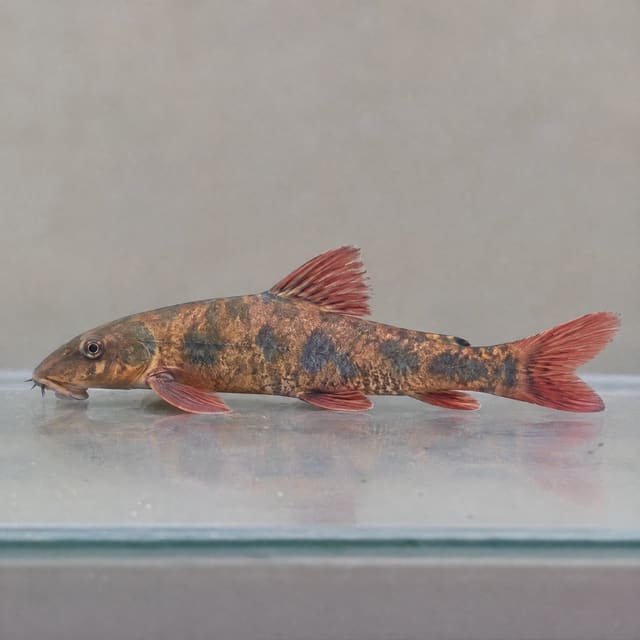
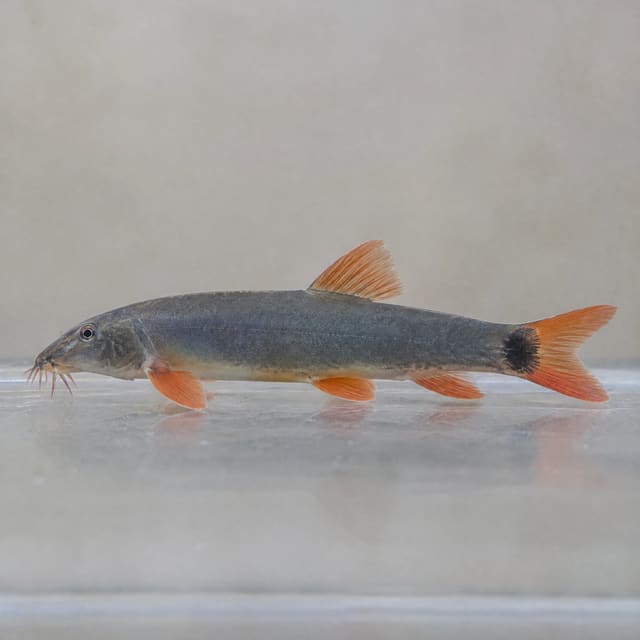
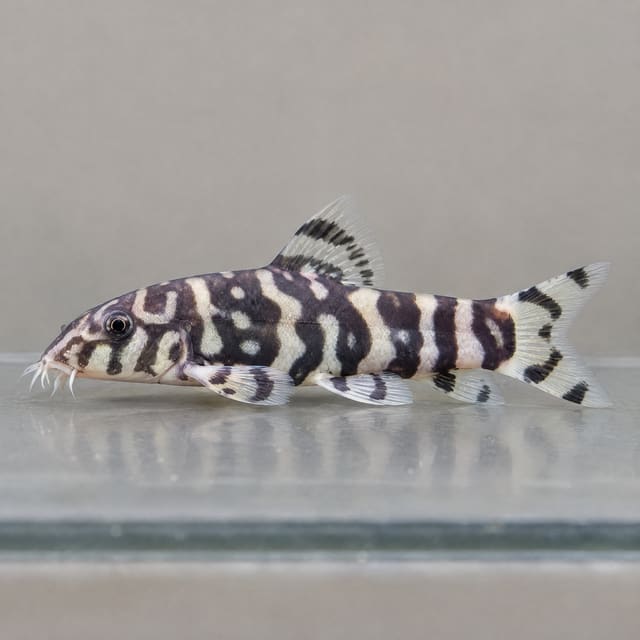
Browse our loaches and oddball fish or the wider loaches and algae eaters category to compare other flow-loving species before you decide. Some gallery images are representative, so colours and markings can look slightly different on the live fish.
One purchase quantity supplies one live Borneo sucker in the single standard size we offer. The fish is not sexed. The photographs show the type of fish, not the individual you will receive, so markings and body shape can differ from the gallery images.
Seriously Fish notes that shipments labelled “Borneo sucker”, “Hong Kong pleco” or “butterfly loach” often contain more than one Gastromyzon species, and sometimes the similar-looking Beaufortia kweichowensis. Several Gastromyzon form look-alike pairs that are easily confused even by specialists. We sell this fish under the name G. borneensis, but if you buy several they may not all be the same species, and adult size can range from about 4 cm to 10 cm standard length depending on which species you receive.
Prepare the aquarium fully before you order and check our delivery and Live Arrival Guarantee information for dispatch days. A river tank needs time to grow the algae these fish depend on, so the delivery date should be the last step of the plan, not the first.
Plan for the adult size, not the size that arrives. Seriously Fish suggests different minimum bases for different Gastromyzon: 60 × 30 cm for the smallest species of 40–50 mm, 75 × 30 cm for mid-sized species, and 120 × 30 cm for the largest, which reach 95–100 mm standard length. Because FishBase records G. borneensis at up to 10 cm, we recommend a base of at least 120 × 30 cm for a group.
The OATA hillstream loach care sheet gives a lower floor of 80 litres for a small group of hillstream loaches, which it describes as growing to about 6 cm. The larger base is the safer plan for a fish that may reach 10 cm, and it also leaves room to build a fast end and a calmer end in the same aquarium.
Our tank volume calculator works out the litres of any aquarium, which you need for the filter turnover described below. Fit a tight lid as well: Gastromyzon can climb the glass, and both Seriously Fish and OATA advise a secure cover. Close the gaps around filter pipes and cables too.
Copy the stream, not a planted community tank. Seriously Fish describes the genus as obligate dwellers of swift, shallow streams with clear, oxygen-saturated water, from sea level up to 1,350 m. They live in riffles and runs over gravel, rock, boulders and bedrock coated in biofilm, often in partial or full shade, and aquatic plants are uncommon there. They face into the current and shelter along the sides of rocks or underneath them.
| Area | Purpose |
|---|---|
| Fast lane along the length of the tank | Strong, one-way current over smooth stones, as in a riffle |
| Flat, water-worn rocks and pebbles | Grazing surfaces where algae and biofilm can grow |
| Rock edges and small overhangs | Sheltered spots just out of the main current |
| A calmer end | A place to rest, and room for slower companions |
| Plants tied to rock or wood | Extra surfaces for algae without a deep planted substrate |
Use sand, smooth gravel or a mix as the substrate (OATA advises smooth material to protect the skin) and top it with rounded river stones. Seriously Fish recommends only aged driftwood, because new wood leaches tannins, and suggests plants such as Microsorum (Java fern), Crinum and Anubias, which cope with flow and grow algae on their leaves. Bright lighting helps algae and micro-organisms cover the rocks.
For flow, Seriously Fish recommends an oversized filter turning the water over 10–15 times an hour, with powerheads or airstones as needed, and TFH Magazine recommends a strong current that runs in one direction if possible. OATA suggests a powerhead directed from one side. As a worked example, a 120 × 30 × 30 cm aquarium holds about 108 litres, so 10–15 turnovers means roughly 1,080–1,620 litres per hour of real flow. Treat a filter’s rated output as a guide and check the real flow once media and pipework are in place.
Hold the temperature steady in the cool tropical range. Seriously Fish gives 20–24°C for most Gastromyzon, OATA gives 18–24°C for hillstream loaches, and TFH Magazine reports that these fishes enjoy cool water of around 25°C. We aim for the 20–24°C range where the sources overlap. Seriously Fish adds that warmer water is tolerated only if dissolved oxygen stays high. Warm water holds less oxygen, so in a UK summer heatwave add aeration before the room heats up rather than after the fish start breathing hard.
| Reading | Target | Source |
|---|---|---|
| Temperature | 20–24°C (OATA allows 18–24°C) | Seriously Fish; OATA |
| pH | 6.0–7.5 (OATA: 6.5–8.0) | Seriously Fish; OATA |
| General hardness | 2–12 dGH (OATA: 4–12°dH) | Seriously Fish for G. ctenocephalus; OATA |
| Carbonate hardness | 3–10°dKH | OATA |
| Ammonia | 0 mg/l | OATA |
| Nitrite | 0 mg/l | OATA |
| Nitrate | No more than 20 mg/l above your tap water | OATA |
No source publishes water values for G. borneensis itself, so these are genus-level and group-level figures. OATA warns that hillstream loaches are sensitive to even small amounts of ammonia and nitrite, and TFH Magazine adds that they cannot handle excessive nitrate. Hardness and pH vary widely across UK tap supplies, so test your own water and compare it with our water matcher before you buy. If the terms are new, our water chemistry guide explains what each reading means and how to keep it stable.
A river tank looks clean but needs the same discipline as any aquarium. OATA advises a 25% partial water change at least once a week, siphoning solid waste from the substrate, treating new water with tap-water conditioner and testing the water at least weekly. Because the fish rely on strong flow for oxygen, filter care is also oxygen care.
Seriously Fish advises leaving biofilm on every surface except, if you wish, the front glass, because for these loaches it is food. Aim for balance: enough algae to graze, not so much that it smothers plants or blocks the view. Our guide to understanding aquarium filtration explains how flow, media and bacteria work together, which helps when you plan a filter strong enough for a river tank.
FishBase records G. borneensis feeding on small invertebrates, algae and bottom detritus, and Seriously Fish describes the genus as rasping mainly algae and micro-organisms from hard surfaces. Diatoms and soft green algae are preferred over tough black brush algae. The best long-term food source is a mature aquarium with algae-covered rocks, topped up with prepared foods.
If the stones are being stripped bare, Seriously Fish suggests growing algae on spare stones in a bright “nursery” tank or tub and rotating them into the aquarium. It also mentions homemade gel foods bound with vegetables and Spirulina.
Watch the belly through the front glass: a Borneo sucker in good condition has a rounded underside. Seriously Fish notes that wild-caught or poorly kept fish often arrive thin and need a constant supply of suitable food, without competitors, to recover.
Seriously Fish advises never adding Gastromyzon to a biologically immature set-up, because they need stable conditions and feed on biofilm that only grows with time. Have the flow running, the stones coloured with algae and the readings stable before delivery. TFH Magazine notes that these fish cope poorly with long journeys, so plan to be at home to unpack them promptly.
| Checkpoint | What to do |
|---|---|
| Before delivery | Confirm ammonia and nitrite at 0 mg/l, temperature at 20–24°C, and flow and aeration running |
| On arrival | Float the bag to match temperature, then release the fish with the tank lights off |
| Days 1–3 | Expect hiding under stones; check that each fish has found the current and the grazing stones |
| Every day | Look for rounded bellies, steady breathing and fish clinging normally to stones or glass |
| End of week one | Run a full test and a 25% water change; add more fish only if readings stay at zero |
Our guide to acclimatising new fish explains the floating-bag method that OATA recommends, step by step. Add fish gradually: OATA warns that adding too many at once overloads the filter bacteria and causes ammonia and nitrite to rise, which hillstream loaches tolerate poorly.
OATA describes a healthy hillstream loach as having clear, bright eyes, undamaged fins, intact scales, no ulcers or bumps, normal swimming and steady breathing. Learn what normal looks like for your group in the first month, so later changes stand out.
| If you see | Do this |
|---|---|
| Rapid breathing, or fish crowding into the most turbulent water | Test ammonia, nitrite and temperature, and increase aeration |
| A pinched or hollow belly | Add algae-covered stones and sinking algae food; check whether others are taking it all |
| Clamped fins, flicking against stones or shimmying | Test the water and look for other signs of disease |
| White spots, fluffy growths, lost scales or damaged fins | Test the water and seek fish-health advice |
| One fish chased from every grazing spot | Add more stones and sight-breaks so each fish has its own patch |
| Fish lying loose on the bottom instead of clinging | Check temperature first, then oxygen, flow and water quality |
Do not diagnose a disease from one sign alone: overheating, low oxygen and ammonia can all look similar. Record the reading, the sign and any recent change, such as a new fish or a cleaned filter, and you will usually find the cause faster.
Seriously Fish recommends keeping at least four Gastromyzon, as they form loose groups in the wild, and OATA advises groups of at least three to four hillstream loaches because they become stressed in smaller numbers. They are territorial to an extent: Seriously Fish notes that some individuals guard a favourite feeding spot from their own kind. Give every fish enough grazing surface that one individual cannot hold all the food.
In the closely related G. ctenocephalus, Seriously Fish describes adult females as heavier-bodied and often slightly larger, a difference easiest to see from above, while males carry small tubercles on the head and on the front rays of the pectoral fins. A mixed group is likely when you buy several, but it is not guaranteed.
Breeding at home is rare. OATA notes few recorded successes for hillstream loaches, while Seriously Fish reports that G. monticola, a member of the same species group as G. borneensis according to TFH Magazine, spawned repeatedly over 12 months in an unfiltered 160-litre aquarium at 24°C.
Seriously Fish describes Gastromyzon as very peaceful but notes that the choice of tank mates is limited. Companions must enjoy the same cool, fast, oxygen-rich water, and they must not beat the loaches to every scrap of food.
| Suits | Avoid |
|---|---|
| Small open-water cyprinids such as White Cloud Mountain Minnows, danios and small rasboras | Goldfish, which OATA calls completely unsuitable company for hillstream loaches |
| Stream gobies such as Rhinogobius, Sicyopterus and Stiphodon | Larger, aggressive or territorial fish |
| Flow-loving catfish such as Hara, Akysis and Glyptothorax | Fast, competitive bottom feeders that strip the algae first |
| Some other hillstream loaches, after research | Warm, still community aquariums |
Good starting points in our range are White Cloud Mountain Minnows, which share the cool temperature range, and stream gobies such as the Red Neon Sumatra Goby (Seriously Fish names Stiphodon among suitable genera); check each companion’s own temperature range against yours. Other river loaches such as the Marbled Hillstream Loach, the Sucker-Belly Loach and the Leveretti Hillstream Loach need very similar set-ups, but Seriously Fish advises research before mixing loach species, because some compete for the same grazing.
Our tank mates checker helps you test a planned mix before you buy, and our hillstream loach buying guide compares the river loaches we sell side by side.
No. It is sometimes sold as the Hong Kong pleco, but it is a hillstream loach of the family Gastromyzontidae from Borneo, not a South American suckermouth catfish. Its flattened body and joined pelvic fins work like a sucker in fast water.
FishBase records Gastromyzon borneensis at up to 10 cm standard length. Batches sold as Borneo suckers can include smaller Gastromyzon species, which Seriously Fish lists at roughly 4–10 cm standard length.
At least four. Seriously Fish recommends a minimum of four Gastromyzon, and OATA advises groups of at least three to four hillstream loaches. Give each fish its own grazing stones.
Plan a base of at least 120 × 30 cm for a group, following Seriously Fish’s guidance for the largest Gastromyzon, which reach about 10 cm. OATA’s minimum for a small group of hillstream loaches is 80 litres.
Aim for a steady 20–24°C, the Seriously Fish range for most Gastromyzon; OATA gives 18–24°C. Keep oxygen high at all times, and add aeration in warm weather.
Only if the aquarium is mature, cool and well oxygenated, with strong water flow. Many community tanks are too warm and too still, and fast feeders can leave it hungry.
Mainly algae and biofilm grazed from rocks, plus small invertebrates and detritus. Add sinking algae wafers, some fresh vegetables and occasional frozen daphnia or bloodworm, without overdoing protein.
No. OATA calls goldfish completely unsuitable company for hillstream loaches, which need fast, highly oxygenated water and a different set-up.
No reviews for this item yet. Bought one? Honest reviews only, good or bad.
What customers say about ordering from us
Easy website plenty of info on fish your buying great to pick a time slot
TRACEY DURRANT · 7 Oct 2026
Got some lovely fish thank you
Kevin Mackie · 7 Oct 2026
Reviews of our shop, collected by Judge.me, an independent third-party review collector. Newest first.
Moved by UK carriers licensed to handle live animals
Hand-packed with oxygen bags, poly box, heat pack
Email photos the same day; an optional unboxing video helps us review problems faster — claim terms apply
Klarna & PayPal Pay in 3 at checkout